Board Meeting For In California
Description

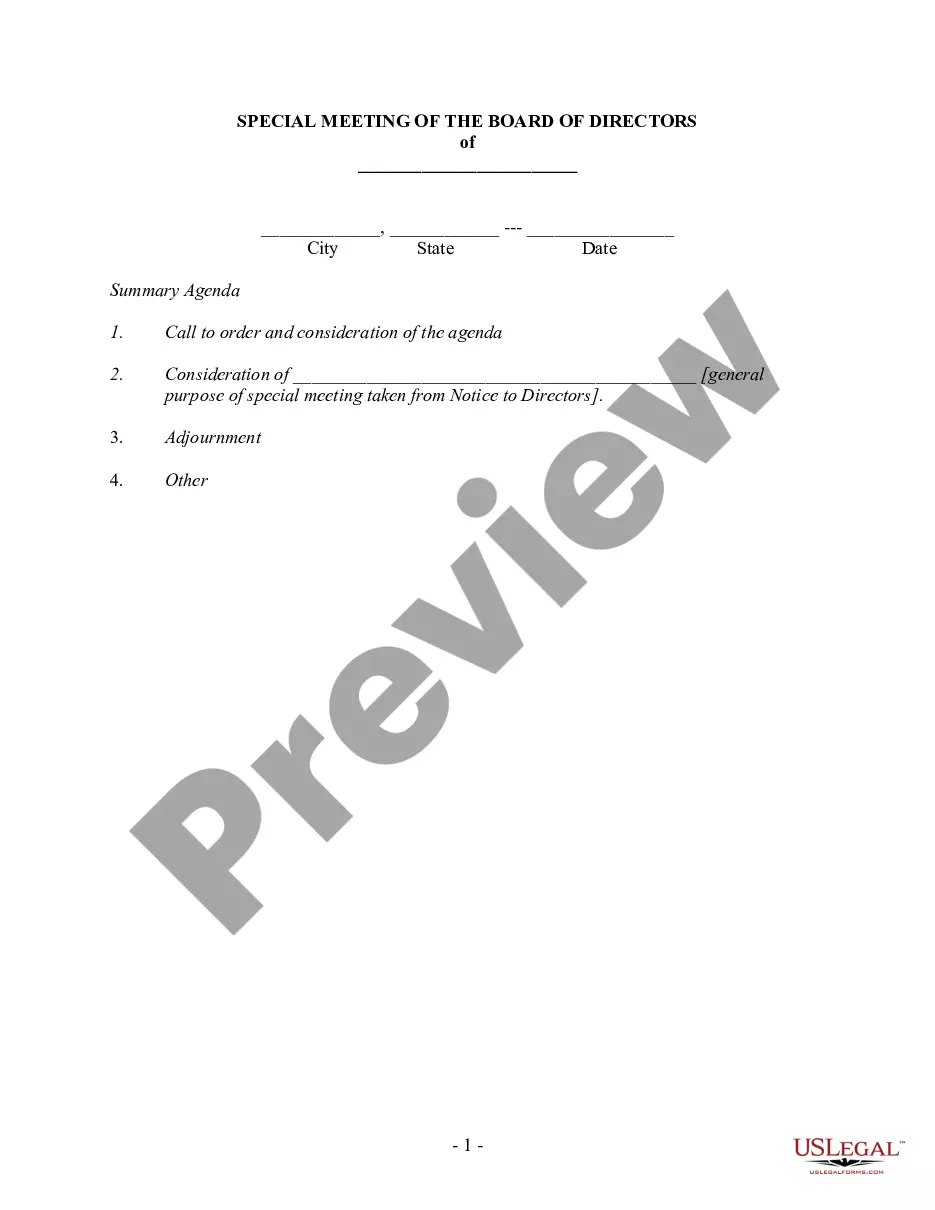


Get your form ready online
Our built-in tools help you complete, sign, share, and store your documents in one place.
Make edits, fill in missing information, and update formatting in US Legal Forms—just like you would in MS Word.
Download a copy, print it, send it by email, or mail it via USPS—whatever works best for your next step.
Sign and collect signatures with our SignNow integration. Send to multiple recipients, set reminders, and more. Go Premium to unlock E-Sign.
If this form requires notarization, complete it online through a secure video call—no need to meet a notary in person or wait for an appointment.
We protect your documents and personal data by following strict security and privacy standards.

Make edits, fill in missing information, and update formatting in US Legal Forms—just like you would in MS Word.

Download a copy, print it, send it by email, or mail it via USPS—whatever works best for your next step.

Sign and collect signatures with our SignNow integration. Send to multiple recipients, set reminders, and more. Go Premium to unlock E-Sign.

If this form requires notarization, complete it online through a secure video call—no need to meet a notary in person or wait for an appointment.

We protect your documents and personal data by following strict security and privacy standards.
Looking for another form?





Form popularity
FAQ
5 tips for opening a board meeting: Allow time for members to get settled and focused. Provide a way for members to share what's weighing on their minds. Include time for socializing. Clarify each person's specific role for the meeting. Take time to formally review and approve the agenda.
California Corporations Code Section 5227 limits the number of board members that may be an employee or contractor of their nonprofit. It states that: “Not more than 49 percent of the persons serving on the board … may be interested persons.”
Under California law, you must have a quorum of at least two directors or one-fifth of all authorized directors (whichever is larger) to take valid action at a board meeting. Your organization's bylaws may set higher quorum limits, so be sure to take a look through them before proceeding.
The IRS generally requires a minimum of three board members for every nonprofit, but does not dictate board term length. What is important to remember is that board service terms aren't intended to be perpetual, and are typically one to five years. Service terms must be outlined in the nonprofit bylaws.
Annual meetings are typically required under an organization's governing documents. The annual meeting serves multiple purposes including board elections, evaluating mission progress, affirming company values and culture, reviewing financials, setting the budget, and strategic planning for the upcoming year.
Use a formal statement: Clearly state, “I now call this meeting to order.” This signifies the official start of the meeting.
Code § 5510. A California nonprofit corporation must have: 1) either a chairperson of the board or a president or both; 2) a secretary; and 3) a treasurer or a chief financial officer or both.
Normally, non-director officers may be invited to attend all or particular meeting of the board, especially the secretary of the corporation for the purpose of keeping minutes of the proceeding. Also, outside counsel of the corporation are frequently invited to attend.
A call to order is the defined start to the meeting agenda and is usually called for by the Chairperson, by declaring that: “The meeting will now come to order”.

