Title Vii Rights With The Constitution In San Antonio
Description




Get your form ready online
Our built-in tools help you complete, sign, share, and store your documents in one place.
Make edits, fill in missing information, and update formatting in US Legal Forms—just like you would in MS Word.
Download a copy, print it, send it by email, or mail it via USPS—whatever works best for your next step.
Sign and collect signatures with our SignNow integration. Send to multiple recipients, set reminders, and more. Go Premium to unlock E-Sign.
If this form requires notarization, complete it online through a secure video call—no need to meet a notary in person or wait for an appointment.
We protect your documents and personal data by following strict security and privacy standards.
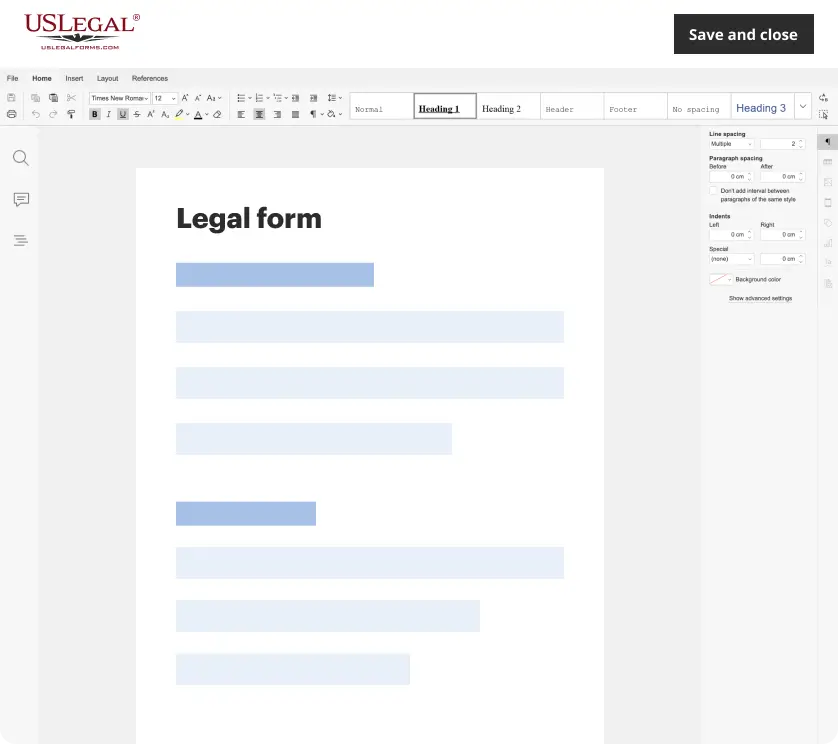
Make edits, fill in missing information, and update formatting in US Legal Forms—just like you would in MS Word.
Download a copy, print it, send it by email, or mail it via USPS—whatever works best for your next step.
Sign and collect signatures with our SignNow integration. Send to multiple recipients, set reminders, and more. Go Premium to unlock E-Sign.
If this form requires notarization, complete it online through a secure video call—no need to meet a notary in person or wait for an appointment.
We protect your documents and personal data by following strict security and privacy standards.
Looking for another form?

Form popularity
FAQ
(42 U.S.C. § 2000e.) Title VII specifically prohibits discrimination in the terms and conditions of employment, including hiring, compensation, employment benefits, advancement, employment training, assignments, and termination of employment.
The Civil Rights Act of 1991 amends several sections of Title VII to strengthen and improve Federal civil rights laws and provide for the recovery of compensatory damages in Federal sector cases of intentional employment discrimination.
To cite federal laws (also commonly referred to as statutes or acts) in APA Style, include the name of the law, “U.S.C.” (short for United States Code), the title and section of the code where the law appears, the year, and optionally the URL.
Discrimination in the private sector is not directly constrained by the Constitution, but has become subject to a growing body of federal and state law, including the Title VII of the Civil Rights Act of 1964.
If you have experienced workplace harassment and believe it is illegal, you can report it to your employer, file a complaint with the Equal Employment Opportunity Commission, or file an official lawsuit.
Discrimination in the private sector is not directly constrained by the Constitution, but has become subject to a growing body of federal and state law, including the Title VII of the Civil Rights Act of 1964.
In a monumental decision from a trio of cases issued on June 15, 2020, the United States Supreme Court ruled that Title VII of the Civil Rights Act of 1964 prohibits discrimination on the basis of sexual orientation and/or transgender status. In Bostock v. Clayton County, Georgia and Altitude Express, Inc.
14th Amendment to the U.S. Constitution: Civil Rights (1868)
Title VII of the Civil Rights Act does not cover federal employees or independent contractors. However, federal employees are protected against discrimination by other federal anti-discrimination laws.
Churches, synagogues, private clubs, and specific private organizations are exempt due to their adherence to membership requirements.