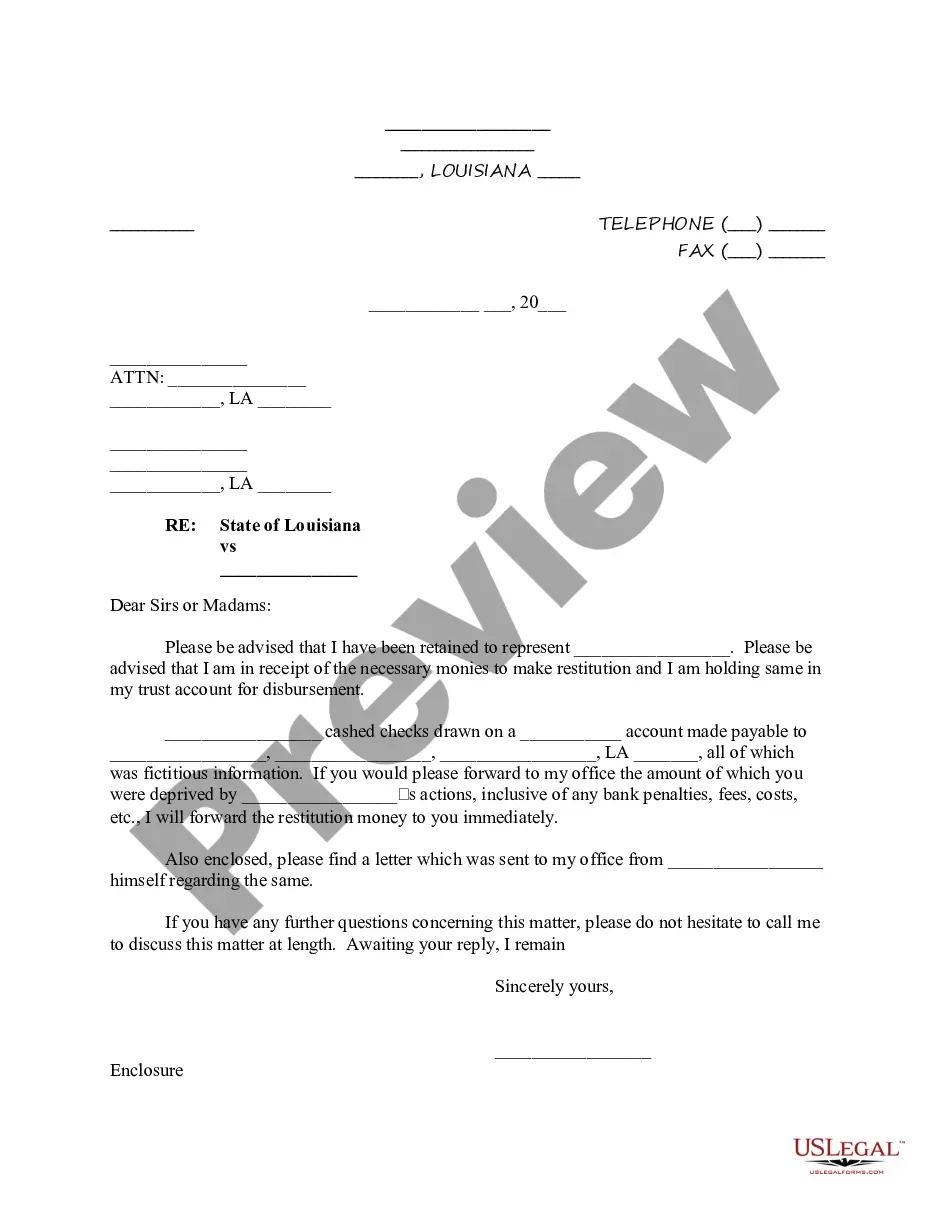
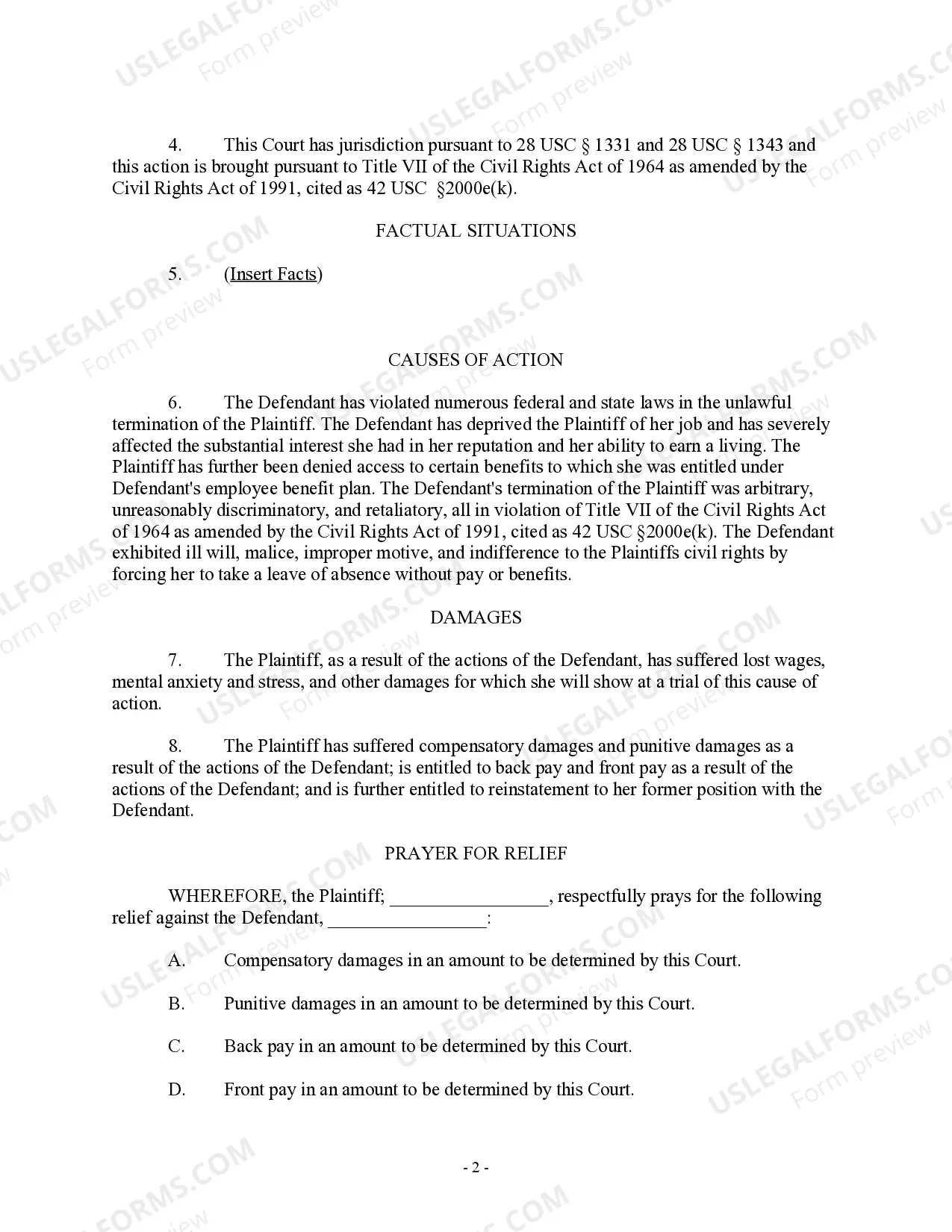
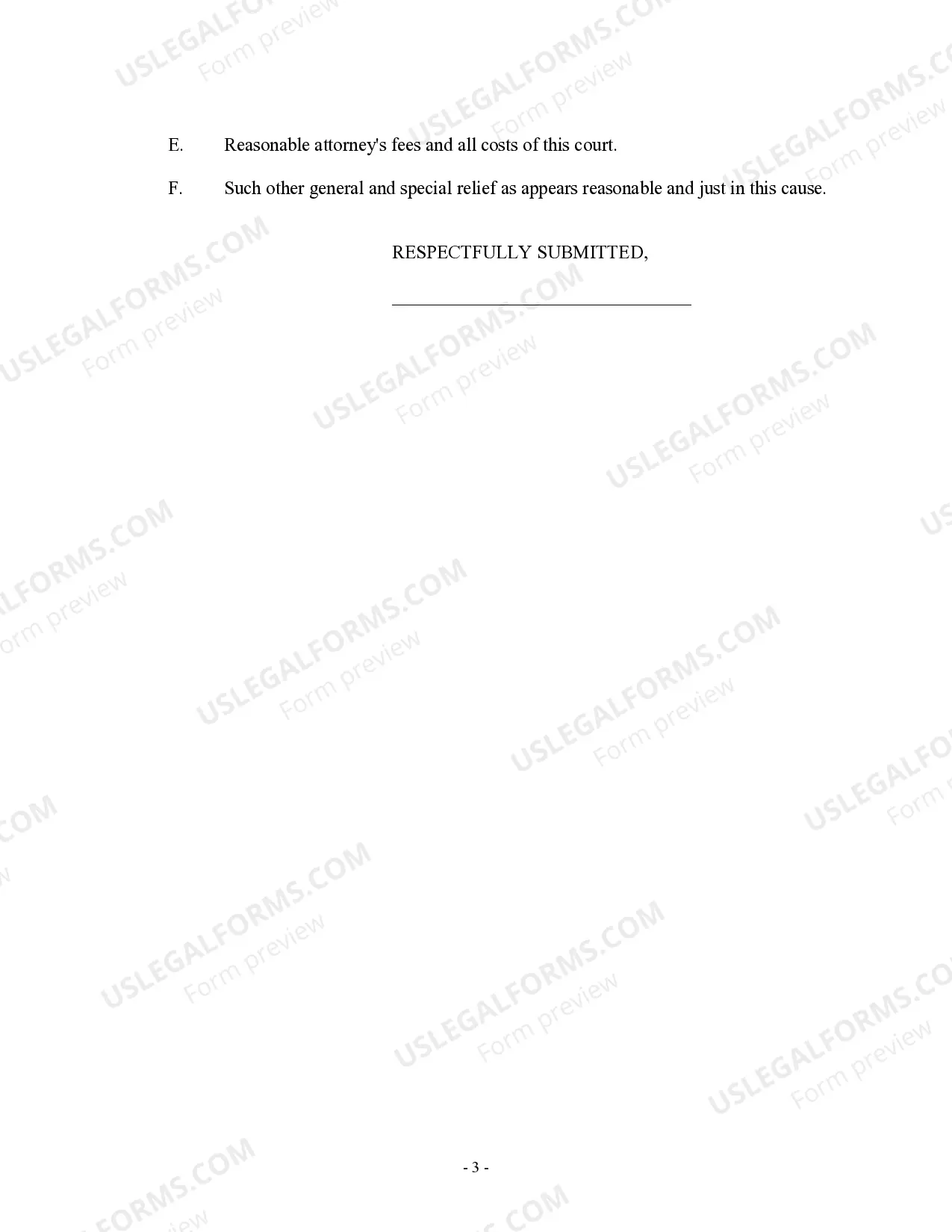
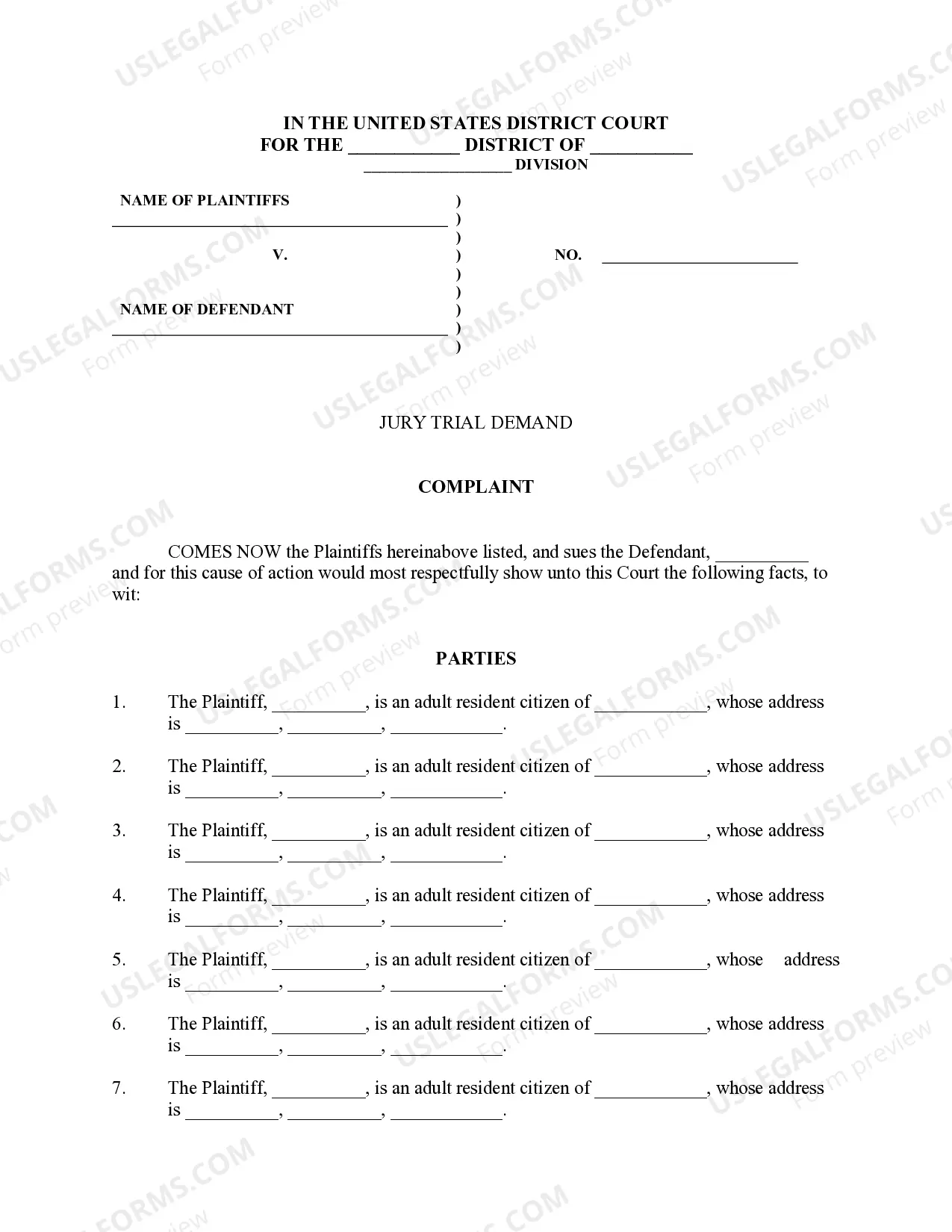
This is a multi-state form covering the subject matter of the title.
Wrongful Termination Court With Federal In Ohio
Category:
State:
Multi-State
Control #:
US-000291
Format:
Word;
Rich Text
Instant download
Description
Free preview




Get your form ready online
Our built-in tools help you complete, sign, share, and store your documents in one place.
Built-in online Word editor
Make edits, fill in missing information, and update formatting in US Legal Forms—just like you would in MS Word.
Export easily
Download a copy, print it, send it by email, or mail it via USPS—whatever works best for your next step.
E-sign your document
Sign and collect signatures with our SignNow integration. Send to multiple recipients, set reminders, and more. Go Premium to unlock E-Sign.
Notarize online 24/7
If this form requires notarization, complete it online through a secure video call—no need to meet a notary in person or wait for an appointment.
Store your document securely
We protect your documents and personal data by following strict security and privacy standards.
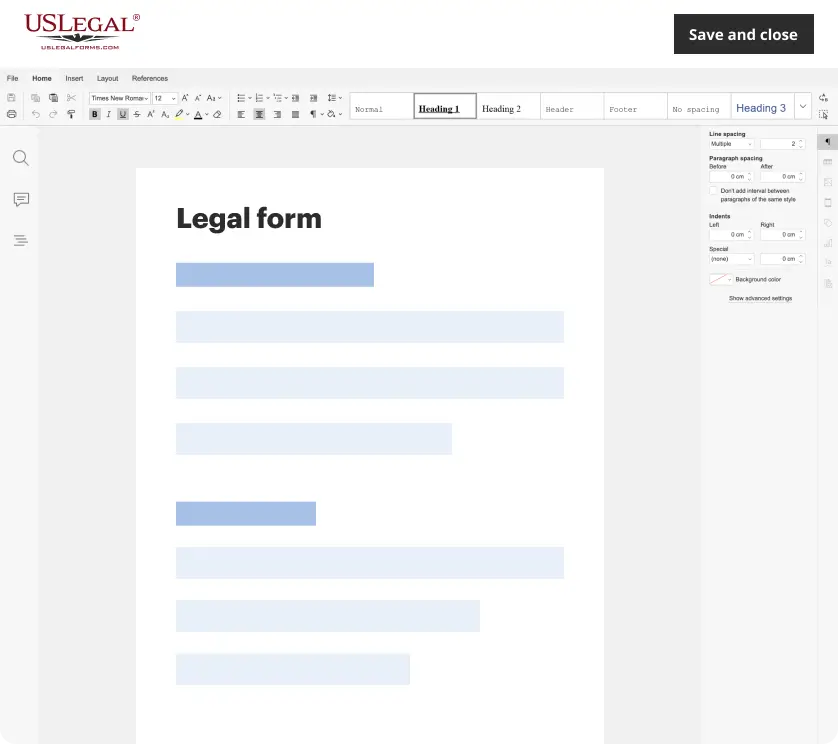
Make edits, fill in missing information, and update formatting in US Legal Forms—just like you would in MS Word.
Download a copy, print it, send it by email, or mail it via USPS—whatever works best for your next step.
Sign and collect signatures with our SignNow integration. Send to multiple recipients, set reminders, and more. Go Premium to unlock E-Sign.
If this form requires notarization, complete it online through a secure video call—no need to meet a notary in person or wait for an appointment.
We protect your documents and personal data by following strict security and privacy standards.
Looking for another form?

Form popularity
FAQ
Claims for wrongful discharge in violation of public policy have a four-year statute of limitations. A prevailing plaintiff is entitled to recover economic damages, emotional distress damages, and punitive damages.
Providing the proper evidence is essential when suing your former employer for wrongful termination in Ohio. With that in mind, you can further establish your case as an act of wrongful termination by doing the following: Documenting any communication with your employer, such as emails, digital messages, and letters.
Some common examples of wrongful termination include: Retaliation – for example, if an employee is fired after they complain about discrimination based on a protected class or sexual harassment, report illegal activities, or report discrimination. Violation of public policies. Breach of contract.
Exception to Workers' Compensation Exclusivity: While workers' compensation is the typical remedy for workplace injuries, Ohio law allows employees to sue their employer for intentional torts under certain conditions, such as deliberate intent to injure.
The termination process in Ohio doesn't have a specific mandated duration because the state follows the “at-will” employment doctrine, allowing employers to terminate employees at any time for any reason that is not illegal (as mandated by the state) without a notice period.
Factors That Must be Present to Sue for Emotional Distress Your employer acted with ill intent or was reckless. Your emotional stress was very severe. The actions that were taken against you caused your emotional distress. The action that caused your distress was extreme, outrageous, or illegal.
While it's true that Ohio is an at-will employment state – meaning your employer can terminate you with or without cause at any time – your employer cannot terminate you for an unlawful reason. You do have rights as a worker.
The termination process in Ohio doesn't have a specific mandated duration because the state follows the “at-will” employment doctrine, allowing employers to terminate employees at any time for any reason that is not illegal (as mandated by the state) without a notice period.