Amendment Constitution Of India In Utah
Description






Get your form ready online
Our built-in tools help you complete, sign, share, and store your documents in one place.
Make edits, fill in missing information, and update formatting in US Legal Forms—just like you would in MS Word.
Download a copy, print it, send it by email, or mail it via USPS—whatever works best for your next step.
Sign and collect signatures with our SignNow integration. Send to multiple recipients, set reminders, and more. Go Premium to unlock E-Sign.
If this form requires notarization, complete it online through a secure video call—no need to meet a notary in person or wait for an appointment.
We protect your documents and personal data by following strict security and privacy standards.
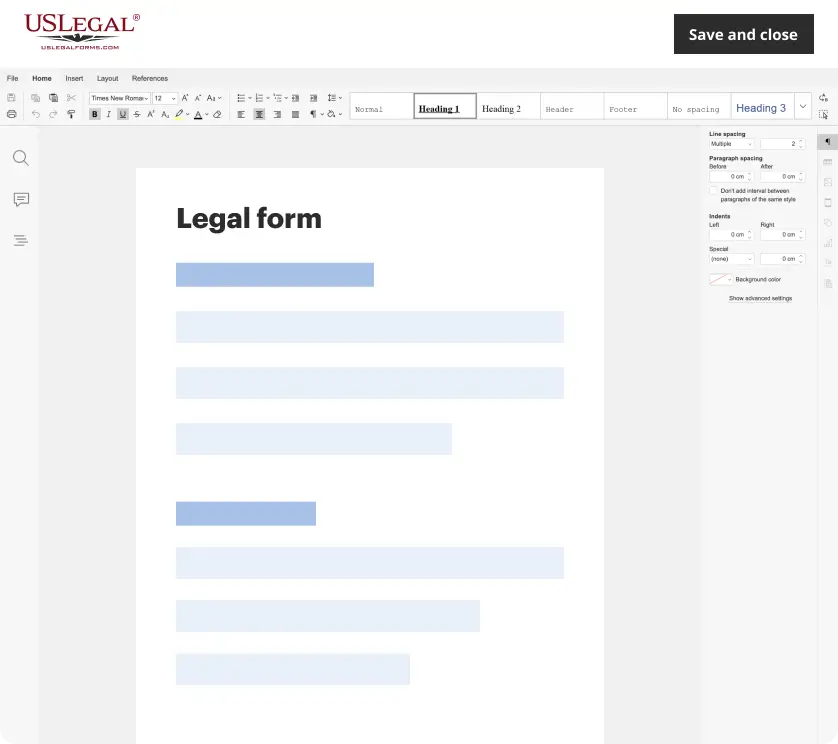
Make edits, fill in missing information, and update formatting in US Legal Forms—just like you would in MS Word.
Download a copy, print it, send it by email, or mail it via USPS—whatever works best for your next step.
Sign and collect signatures with our SignNow integration. Send to multiple recipients, set reminders, and more. Go Premium to unlock E-Sign.

If this form requires notarization, complete it online through a secure video call—no need to meet a notary in person or wait for an appointment.
We protect your documents and personal data by following strict security and privacy standards.
Looking for another form?

Form popularity
FAQ
It granted the exclusive power to amend the Constitution to Parliament and outlined the procedure for exercising this power. ing to the Draft Article, an amendment required the approval of a two-thirds majority in Parliament and, in some cases, the consent of half of India's states.
Any amendment or amendments to this Constitution may be proposed in either house of the Legislature, and if two-thirds of all the members elected to each of the two houses, shall vote in favor thereof, such proposed amendment or amendments shall be entered on their respective journals with the yeas and nays taken ...
The U.S. Constitution is difficult to change and has only been amended 27 times. State constitutions, on the other hand, are much easier to modify, and state constitutional amendments are adopted on a regular basis. The current constitutions of the 50 states have been amended around 7,000 times.
An amendment may be proposed by a two-thirds vote of both Houses of Congress, or, if two-thirds of the States request one, by a convention called for that purpose. The amendment must then be ratified by three-fourths of the State legislatures, or three-fourths of conventions called in each State for ratification.
An amendment may be proposed by a two-thirds vote of both Houses of Congress, or, if two-thirds of the States request one, by a convention called for that purpose. The amendment must then be ratified by three-fourths of the State legislatures, or three-fourths of conventions called in each State for ratification.
Any amendment or amendments to this Constitution may be proposed in either house of the Legislature, and if two-thirds of all the members elected to each of the two houses, shall vote in favor thereof, such proposed amendment or amendments shall be entered on their respective journals with the yeas and nays taken ...
The Constitution provides that an amendment may be proposed either by the Congress with a two-thirds majority vote in both the House of Representatives and the Senate or by a constitutional convention called for by two-thirds of the State legislatures.
Constitutional Amendments Proposal by convention of the states, with ratification by state conventions. Proposal by convention of the states, with ratification by state legislatures. Proposal by Congress, with ratification by state conventions. Proposal by Congress, with ratification by the state legislatures.
