Motion To Strike For More Definite Statement In Harris
Description





Get your form ready online
Our built-in tools help you complete, sign, share, and store your documents in one place.
Make edits, fill in missing information, and update formatting in US Legal Forms—just like you would in MS Word.
Download a copy, print it, send it by email, or mail it via USPS—whatever works best for your next step.
Sign and collect signatures with our SignNow integration. Send to multiple recipients, set reminders, and more. Go Premium to unlock E-Sign.
If this form requires notarization, complete it online through a secure video call—no need to meet a notary in person or wait for an appointment.
We protect your documents and personal data by following strict security and privacy standards.
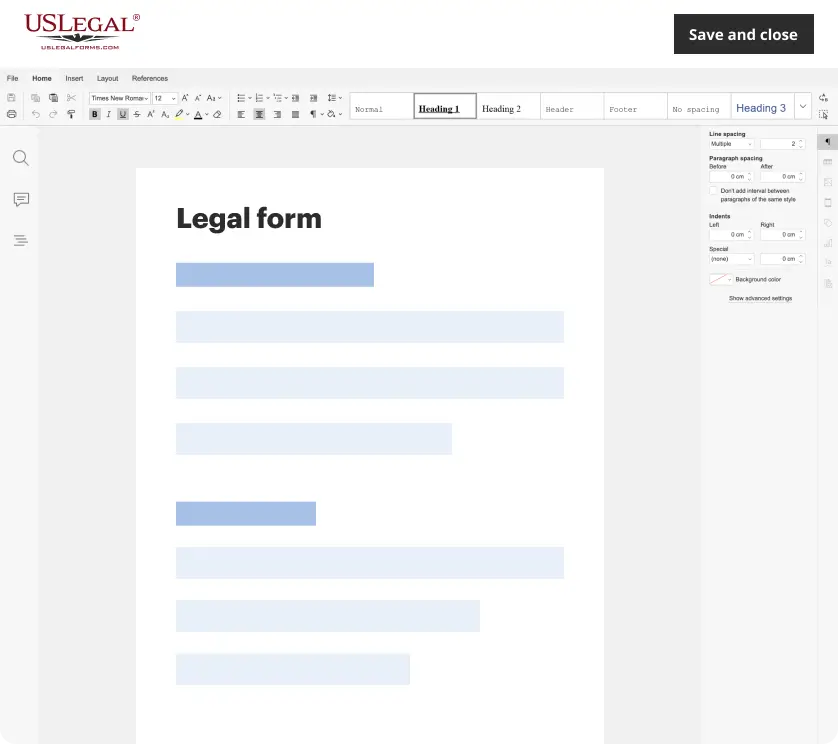
Make edits, fill in missing information, and update formatting in US Legal Forms—just like you would in MS Word.
Download a copy, print it, send it by email, or mail it via USPS—whatever works best for your next step.
Sign and collect signatures with our SignNow integration. Send to multiple recipients, set reminders, and more. Go Premium to unlock E-Sign.
If this form requires notarization, complete it online through a secure video call—no need to meet a notary in person or wait for an appointment.
We protect your documents and personal data by following strict security and privacy standards.
Looking for another form?




Form popularity
FAQ
Court may strike a pleading if: It discloses no reasonable claim or defence. Is unnecessary, scandalous, frivolous, or vexatious.
The key to drafting a successful pleading is to make sure that you have a clear idea of what the claims are that your client is making and relevant proof for each of those claims. Then you should state the events in a chronological and logical order.
The court shall grant the motion to strike unless a defendant produces sufficient evidence to raise a genuine issue of fact regarding the designated person's responsibility for the claimant's injury or damage.
The Federal Rules of Civil Procedure states that "The court may strike from a pleading an insufficient defense or any redundant, immaterial, impertinent, or scandalous matter." Similarly, for example, the California Code of Civil Procedure provides that a motion to strike may be made to strike out any "irrelevant, ...
To strike a legal document means to have it thrown out or ruled invalid.
To have your pleadings stricken means that your complaint, petition, or lawsuit will be dismissed. This is a common order entered in family court to obtain compliance by one or both parties to move the case forward.
The main types of pleadings are described below. Complaint. This is the initial pleading filed by the plaintiff (the party bringing the lawsuit). Answer. The defendant (the party being sued) responds to the complaint with an answer. Counterclaim. Cross-Claim. Third-Party Complaint. Amended Pleadings. Reply.
Motion to strike the Statement of Defence Subrule 30.08(2)(b) provides the Court with the authority to strike out a statement of defence where the defendant fails to serve an affidavit of documents in compliance with the Rules of Civil Procedure.
