Texas Criminal Form With Motion To Dismiss
Description
Get your form ready online
Our built-in tools help you complete, sign, share, and store your documents in one place.
Make edits, fill in missing information, and update formatting in US Legal Forms—just like you would in MS Word.
Download a copy, print it, send it by email, or mail it via USPS—whatever works best for your next step.
Sign and collect signatures with our SignNow integration. Send to multiple recipients, set reminders, and more. Go Premium to unlock E-Sign.
If this form requires notarization, complete it online through a secure video call—no need to meet a notary in person or wait for an appointment.
We protect your documents and personal data by following strict security and privacy standards.

Make edits, fill in missing information, and update formatting in US Legal Forms—just like you would in MS Word.

Download a copy, print it, send it by email, or mail it via USPS—whatever works best for your next step.

Sign and collect signatures with our SignNow integration. Send to multiple recipients, set reminders, and more. Go Premium to unlock E-Sign.

If this form requires notarization, complete it online through a secure video call—no need to meet a notary in person or wait for an appointment.

We protect your documents and personal data by following strict security and privacy standards.
Looking for another form?
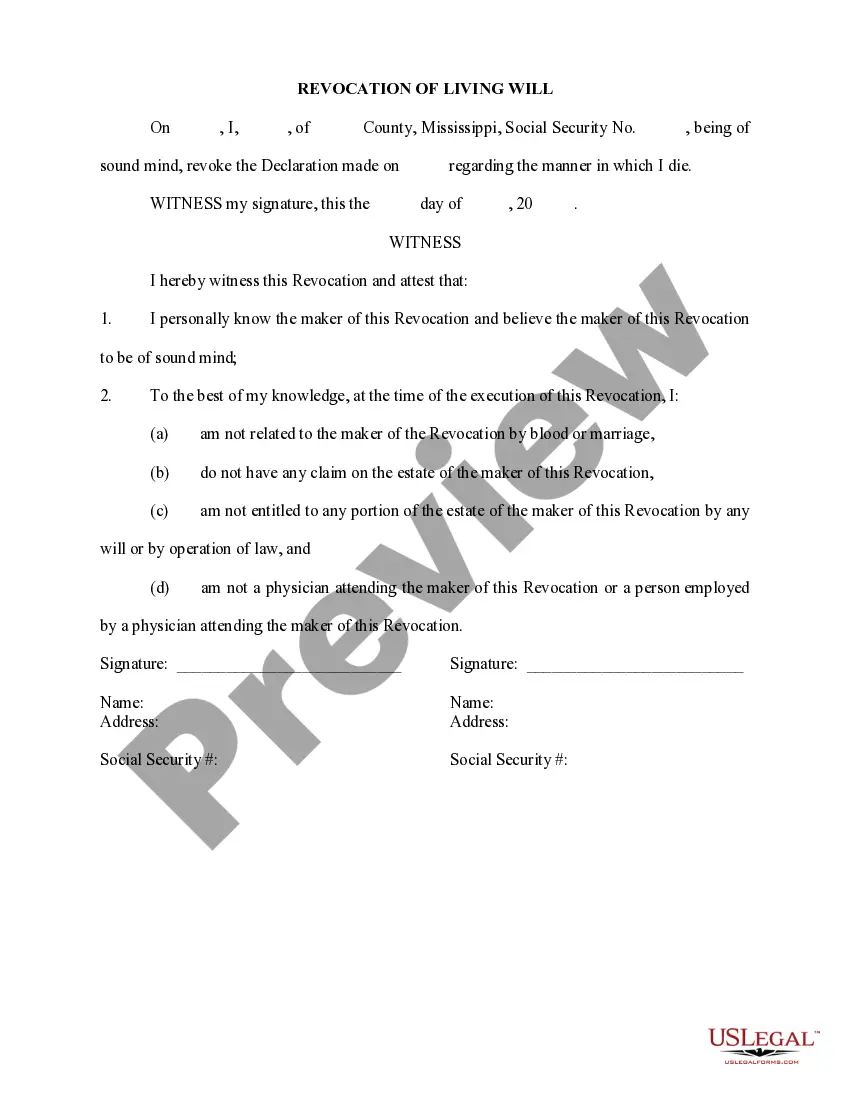






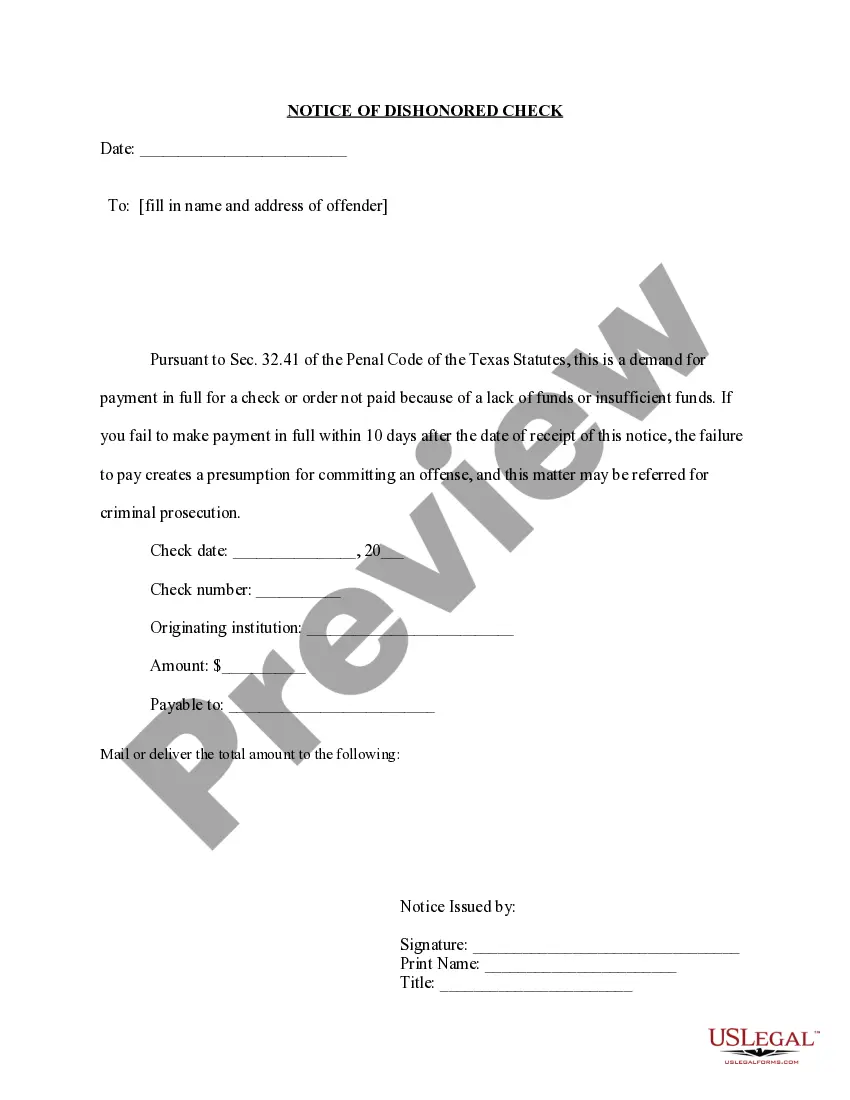
How to fill out Texas Notice Of Dishonored Check - Criminal - Keywords: Bad Check, Bounced Check?
Whether for business purposes or for individual affairs, everyone has to handle legal situations sooner or later in their life. Filling out legal documents needs careful attention, starting with choosing the right form sample. For instance, if you pick a wrong edition of a Texas Criminal Form With Motion To Dismiss, it will be rejected when you send it. It is therefore important to have a trustworthy source of legal documents like US Legal Forms.
If you need to obtain a Texas Criminal Form With Motion To Dismiss sample, stick to these easy steps:
- Get the sample you need by using the search field or catalog navigation.
- Look through the form’s description to make sure it matches your case, state, and region.
- Click on the form’s preview to examine it.
- If it is the incorrect form, return to the search function to locate the Texas Criminal Form With Motion To Dismiss sample you need.
- Download the template when it meets your requirements.
- If you already have a US Legal Forms profile, click Log in to gain access to previously saved documents in My Forms.
- In the event you do not have an account yet, you can download the form by clicking Buy now.
- Select the correct pricing option.
- Complete the profile registration form.
- Choose your transaction method: use a credit card or PayPal account.
- Select the file format you want and download the Texas Criminal Form With Motion To Dismiss.
- After it is saved, you are able to complete the form with the help of editing applications or print it and finish it manually.
With a vast US Legal Forms catalog at hand, you never have to spend time looking for the appropriate sample across the internet. Make use of the library’s straightforward navigation to find the appropriate template for any occasion.
Form popularity
FAQ
3 Time for Motion and Ruling. A motion to dismiss must be: (a) filed within 60 days after the first pleading containing the challenged cause of action is served on the movant; (b) filed at least 21 days before the motion is heard; and (c) granted or denied within 45 days after the motion is filed.
Likewise, a judge can dismiss the case if they find no legal basis for the charge, if the defendant's rights have been violated, or if the state has failed to prove its case. Judges can dismiss a case either on their own motion or on the motion of the defendant.
Some of the most common reasons criminal cases are dismissed include: The statute of limitations for the offense expired during the investigation period. Witnesses and/or victims become uncooperative or attempt to recant their statements, leaving the state with little other evidence.
Only a judge or a prosecutor can decide if a case gets dismissed. Prosecutors can drop charges against someone, or a judge can rule that a case be thrown out after the defendant makes a motion to dismiss.
You may dismiss or ?nonsuit? a case you filed at any time before you have introduced all your evidence by filing a Notice of Nonsuit with the court. See Texas Rules of Civil Procedure, Rule 162. Talk to a lawyer if you need help understanding the legal significance of dismissing a case you filed.