Texas Correction Deed Prior Uslegal For The Application
Description

Get your form ready online
Our built-in tools help you complete, sign, share, and store your documents in one place.
Make edits, fill in missing information, and update formatting in US Legal Forms—just like you would in MS Word.
Download a copy, print it, send it by email, or mail it via USPS—whatever works best for your next step.
Sign and collect signatures with our SignNow integration. Send to multiple recipients, set reminders, and more. Go Premium to unlock E-Sign.
If this form requires notarization, complete it online through a secure video call—no need to meet a notary in person or wait for an appointment.
We protect your documents and personal data by following strict security and privacy standards.

Make edits, fill in missing information, and update formatting in US Legal Forms—just like you would in MS Word.

Download a copy, print it, send it by email, or mail it via USPS—whatever works best for your next step.

Sign and collect signatures with our SignNow integration. Send to multiple recipients, set reminders, and more. Go Premium to unlock E-Sign.

If this form requires notarization, complete it online through a secure video call—no need to meet a notary in person or wait for an appointment.

We protect your documents and personal data by following strict security and privacy standards.
Looking for another form?


How to fill out Texas Correction Deed - Prior Deed From An Individual To An Individual?
- Log in to your US Legal Forms account. Ensure your subscription is active to avoid any interruption. If it's expired, renew according to your payment plan.
- Preview the form description carefully. Make sure the correction deed aligns with your needs and complies with local jurisdiction standards.
- In case you need an alternative, utilize the Search feature to find a different template that fits your requirements.
- Purchase the necessary form by clicking on the Buy Now button and selecting the most suitable subscription option for your usage.
- Complete your transaction by providing your payment details via credit card or PayPal.
- Finally, download your Texas correction deed and save it to your device for easy access anytime from the My Forms section in your account.
With US Legal Forms, accessing legal documents is both quick and efficient. Users benefit from a vast selection of over 85,000 fillable forms, ensuring they find exactly what they need.
Empower yourself with the right legal resources today. Visit US Legal Forms and take the next step toward managing your legal affairs effortlessly.
Form popularity
FAQ
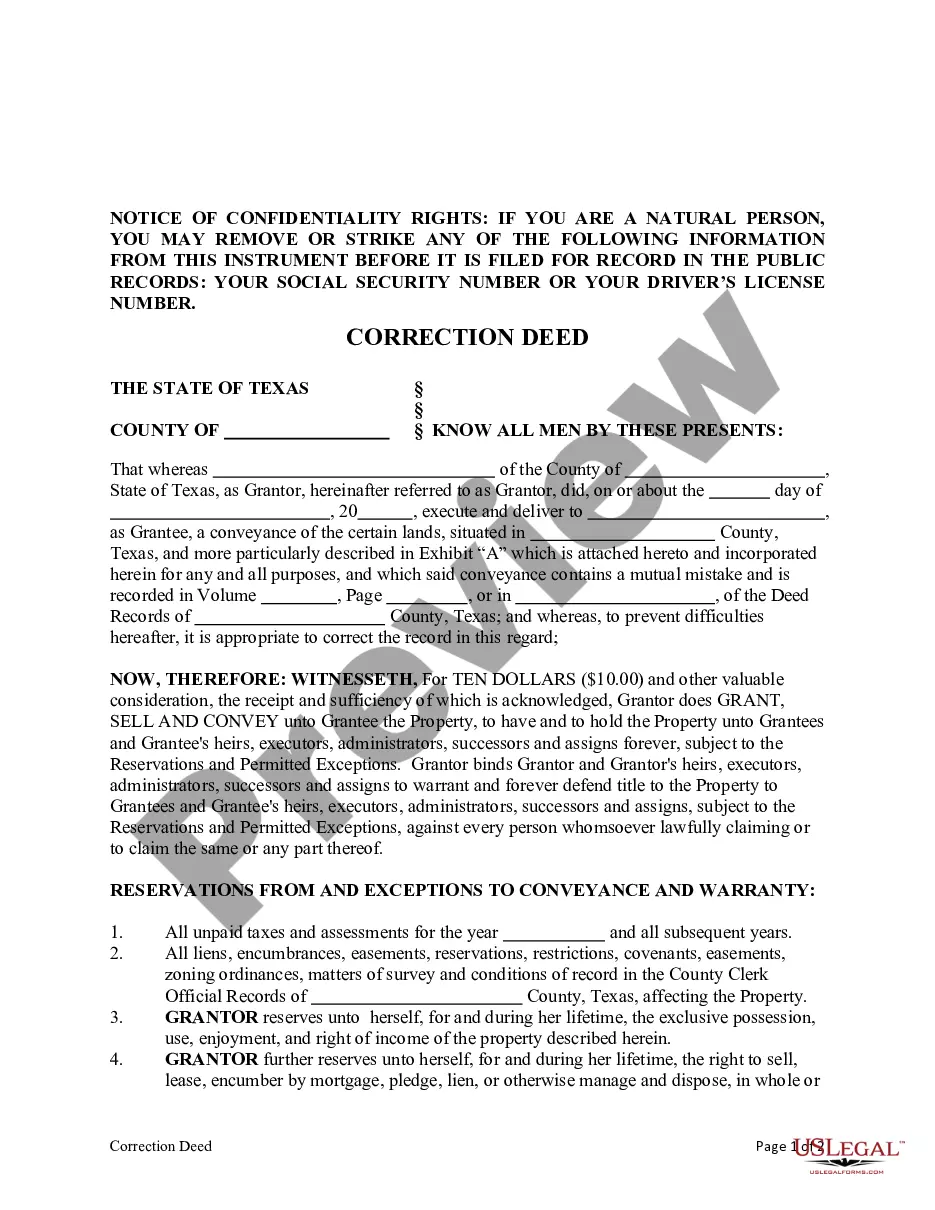
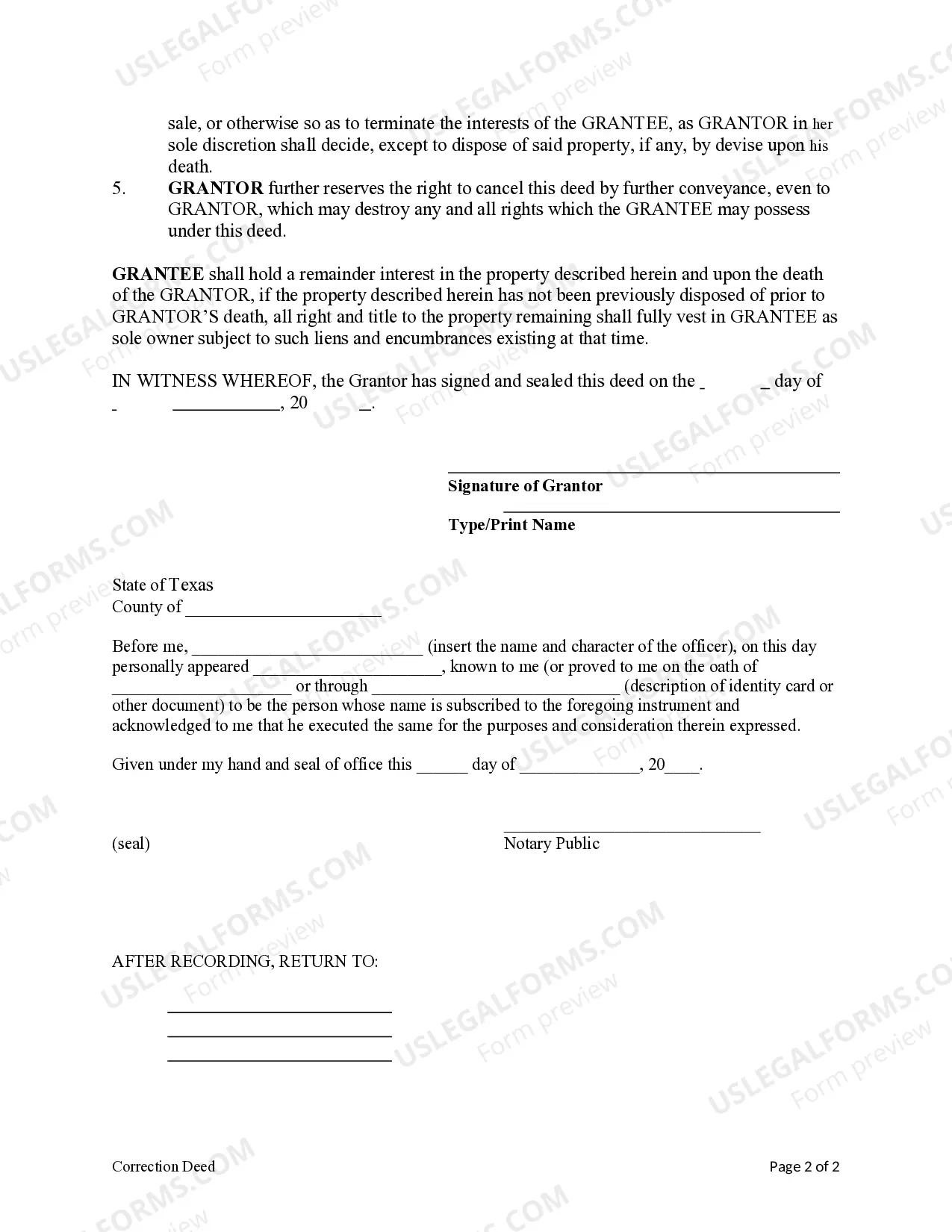
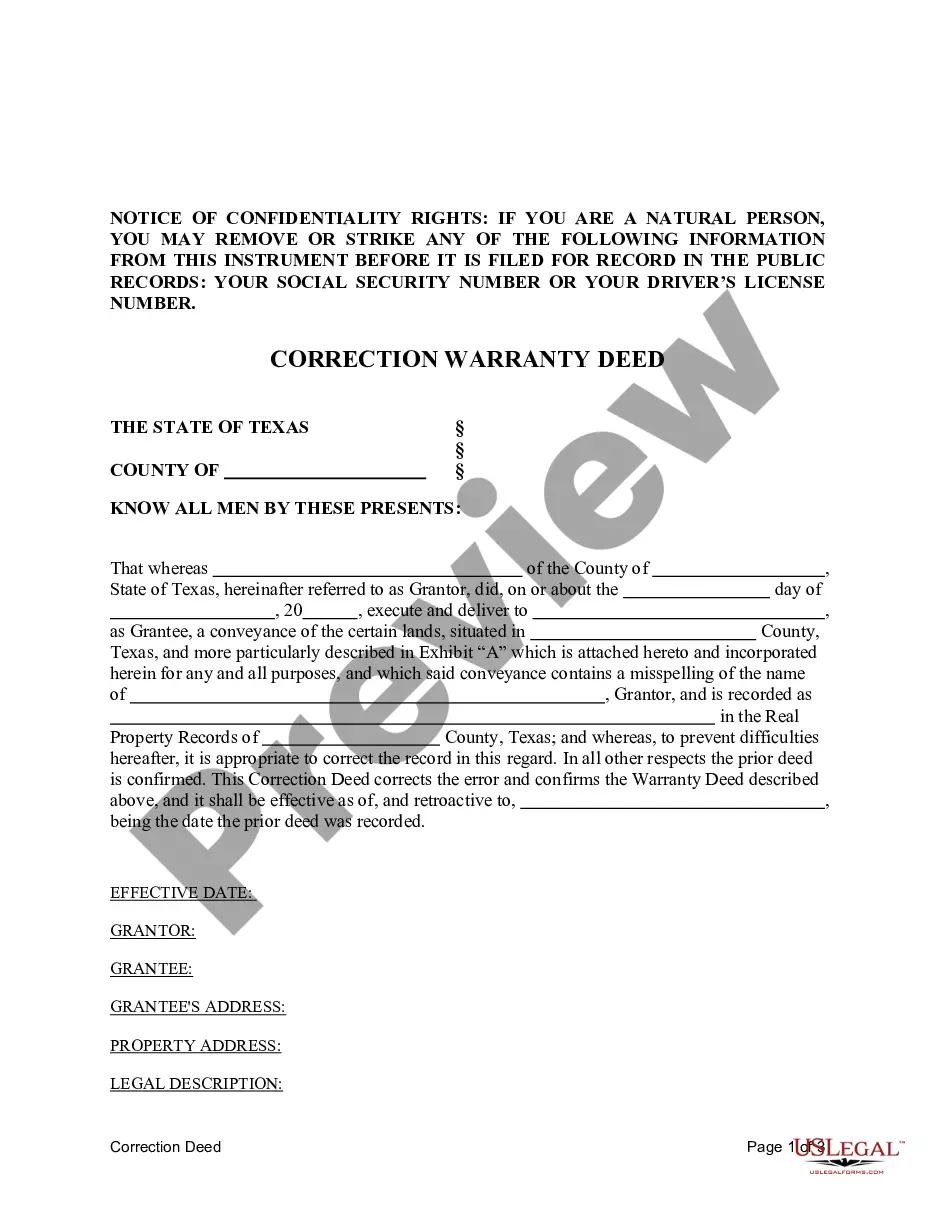
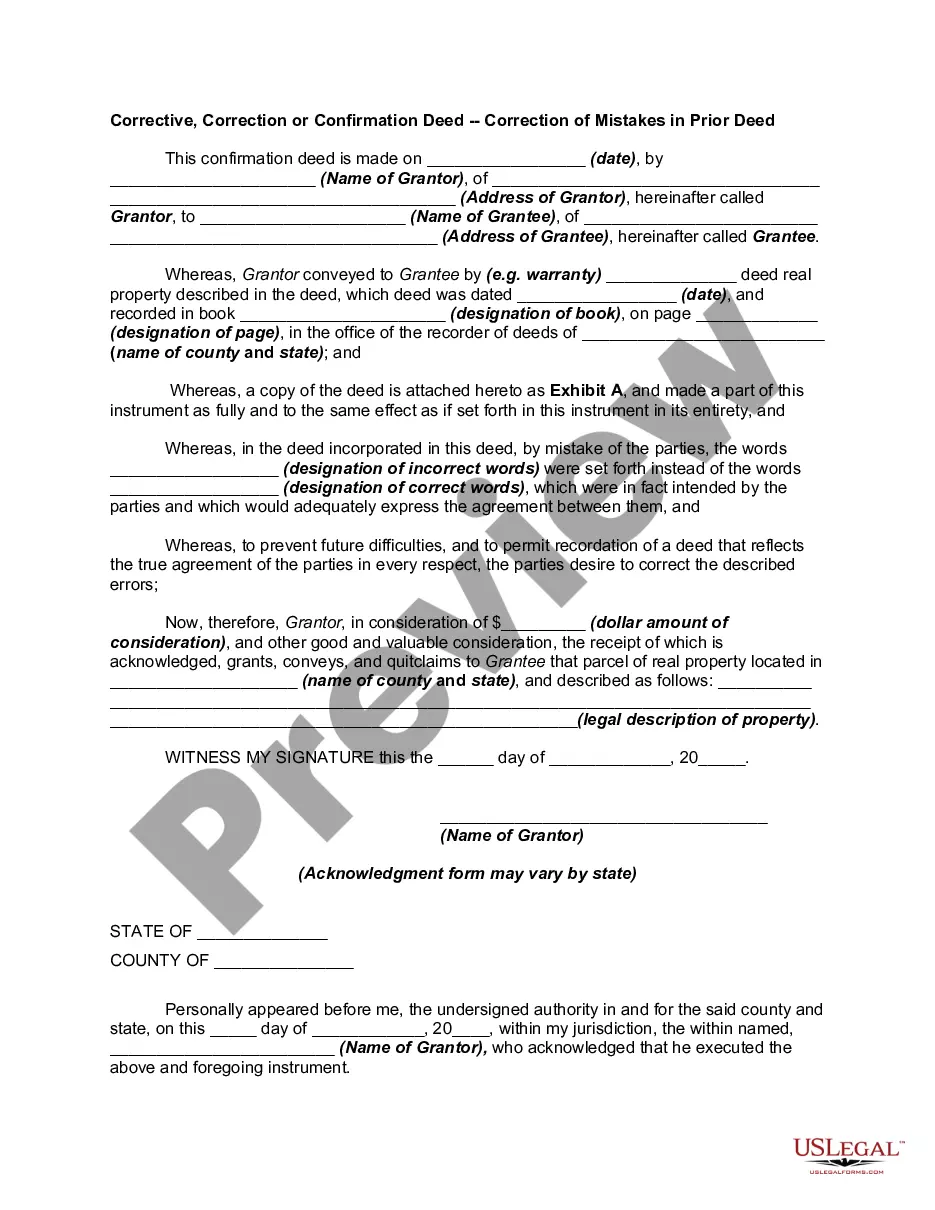
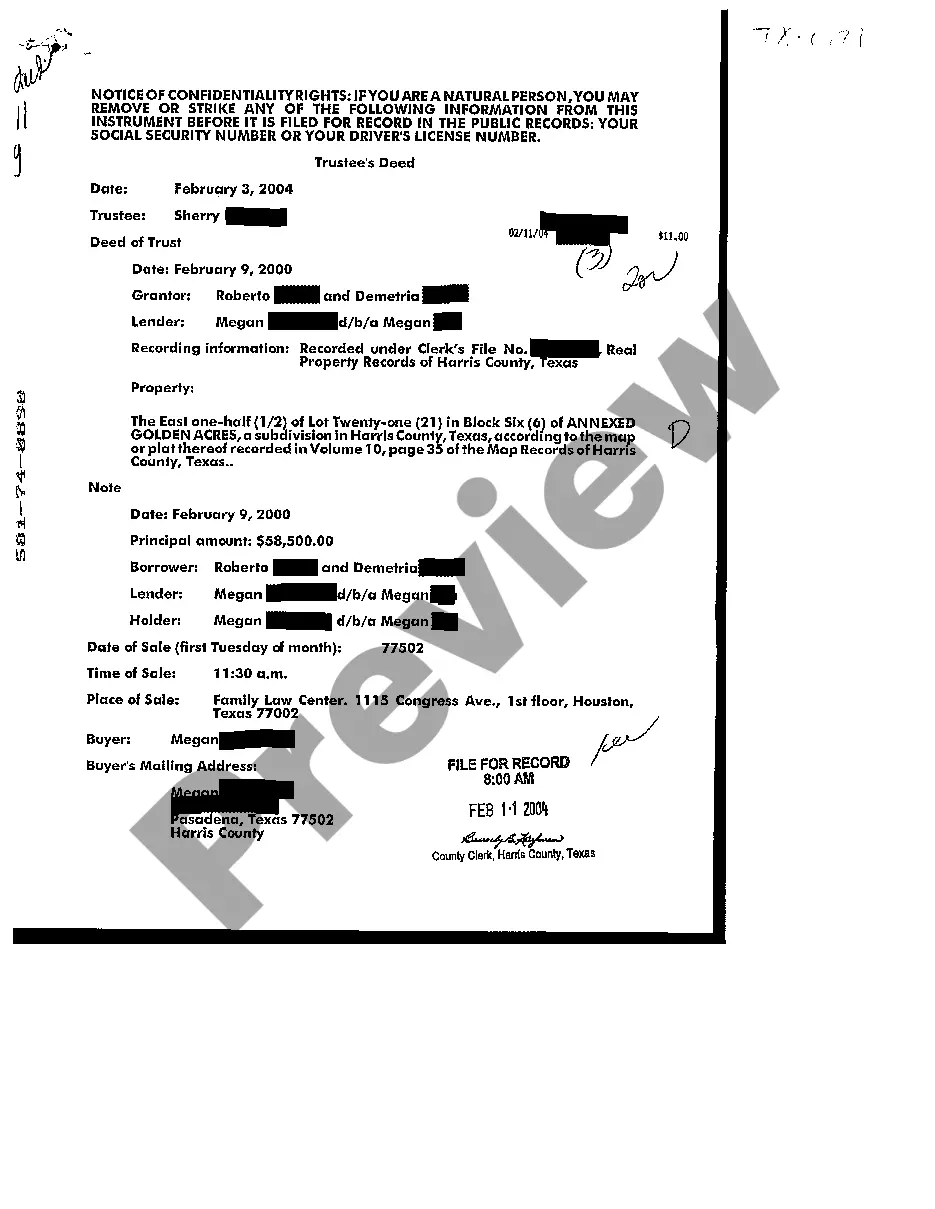
Correcting a deed in Texas involves preparing a correction deed that specifically addresses the errors or omissions in the original document. You will need to provide clear details about the corrections to make sure they are understood by the local authorities. Utilizing a Texas correction deed prior uslegal for the application helps streamline this process. The uslegalforms platform can provide you with the necessary forms and instructions to facilitate your corrections efficiently.
To update a deed in Texas, you must file a new deed that reflects the changes. This could involve creating a Texas correction deed prior uslegal for the application, which allows you to clearly indicate the updates needed. It is essential to follow the proper filing procedures to ensure the changes are legally recognized. Consider using the uslegalforms platform for guidance and support during this process.
Yes, you can amend a deed in Texas. To do this, you will need to create a correction deed. This process ensures that any errors or necessary updates in the original deed are officially recorded. Using a Texas correction deed prior uslegal for the application simplifies this process and helps you ensure that all changes are legally valid.
Yes, you can do a quitclaim deed yourself. However, it's essential to ensure that you accurately complete the form and fulfill all legal requirements for your state. While many individuals manage this independently, you might find it beneficial to refer to reputable resources. uslegalforms offers the Texas correction deed prior uslegal for the application, making the process easier and helping you avoid common mistakes.
An example of a quitclaim deed involves a parent transferring property to a child without a formal sale. In this case, the parent relinquishes any claim to the property, allowing the child to take ownership. This type of deed is often used for family transactions or to correct title issues. Platforms like uslegalforms provide simplified templates for executing the Texas correction deed prior uslegal for the application.
To fill in a quit claim deed, start by identifying the grantor, who is the person transferring the property, and the grantee, who is receiving it. Next, include a clear legal description of the property, ensuring all required details are present. It's important to state the consideration, which can be a nominal amount, and sign the document in front of a notary. For your convenience, the Texas correction deed prior uslegal for the application can guide you through this process seamlessly.
To obtain a copy of a deed in Texas, you can visit the local county clerk's office where the property is located. Many counties also offer online access to their property records. If you're unsure about the process, uslegal can simplify your experience by providing resources and applications, including the Texas correction deed prior uslegal for the application.
Correcting a deed in Texas often involves filing a correction deed with the county clerk's office. This process ensures that the errors are officially rectified in public records. It is advisable to consult legal professionals or use reliable services like uslegalforms to guide you through obtaining the Texas correction deed prior uslegal for the application.
In Texas, a deed may be deemed void for several reasons. Common issues include lack of proper execution, failure to meet legal requirements, or fraud. If the deed contradicts state regulations, it may face challenges in a legal context. To address such matters, consider utilizing the Texas correction deed prior uslegal for the application.
An amended deed is a document that modifies the existing deed to include changes or updates. This may involve updating names, adding conditions, or altering the terms of a property transfer. For Texas property owners, understanding when to use an amended deed versus a correction deed is essential, and utilizing UsLegal forms can streamline this process.