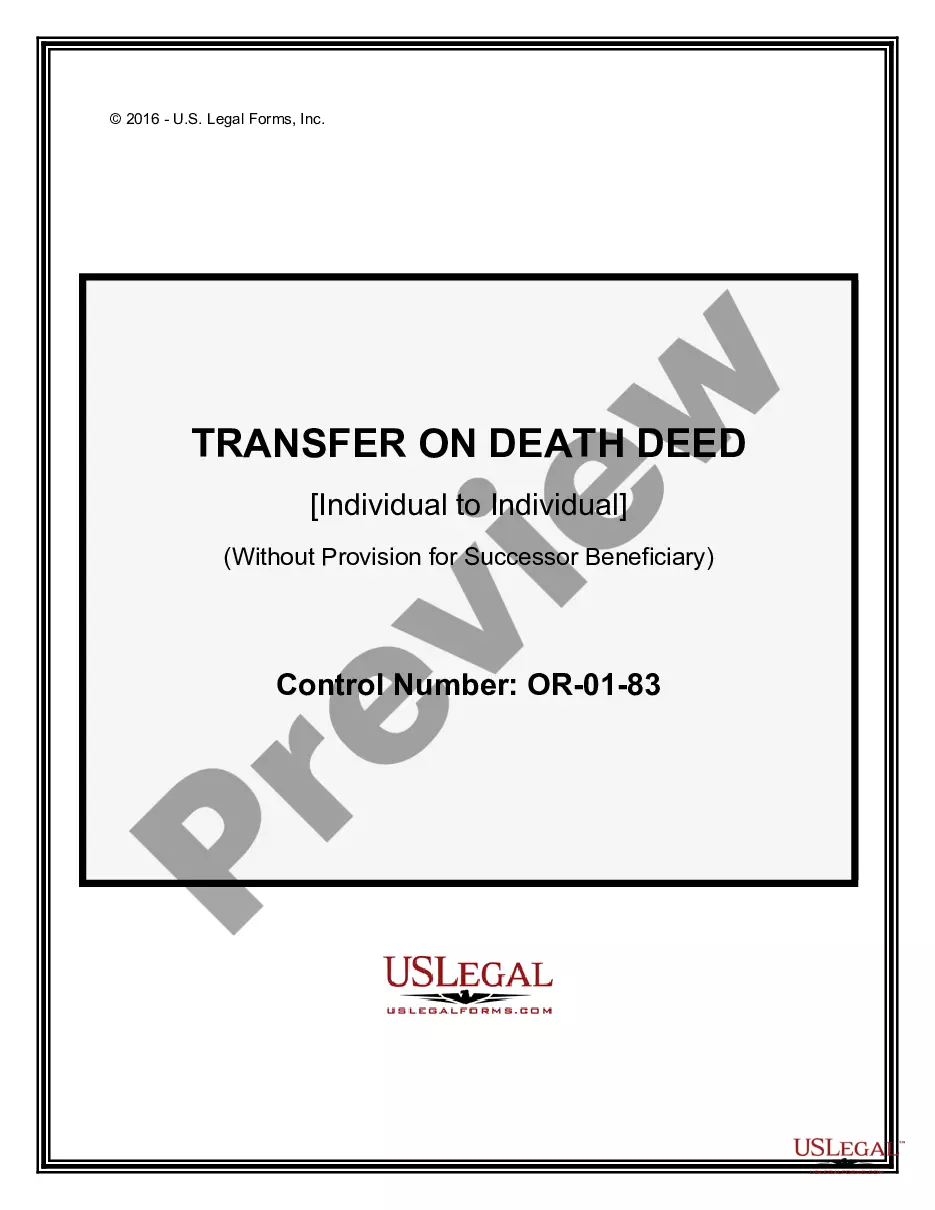
Transfer On Death Deed Oregon With Life Estate
Description

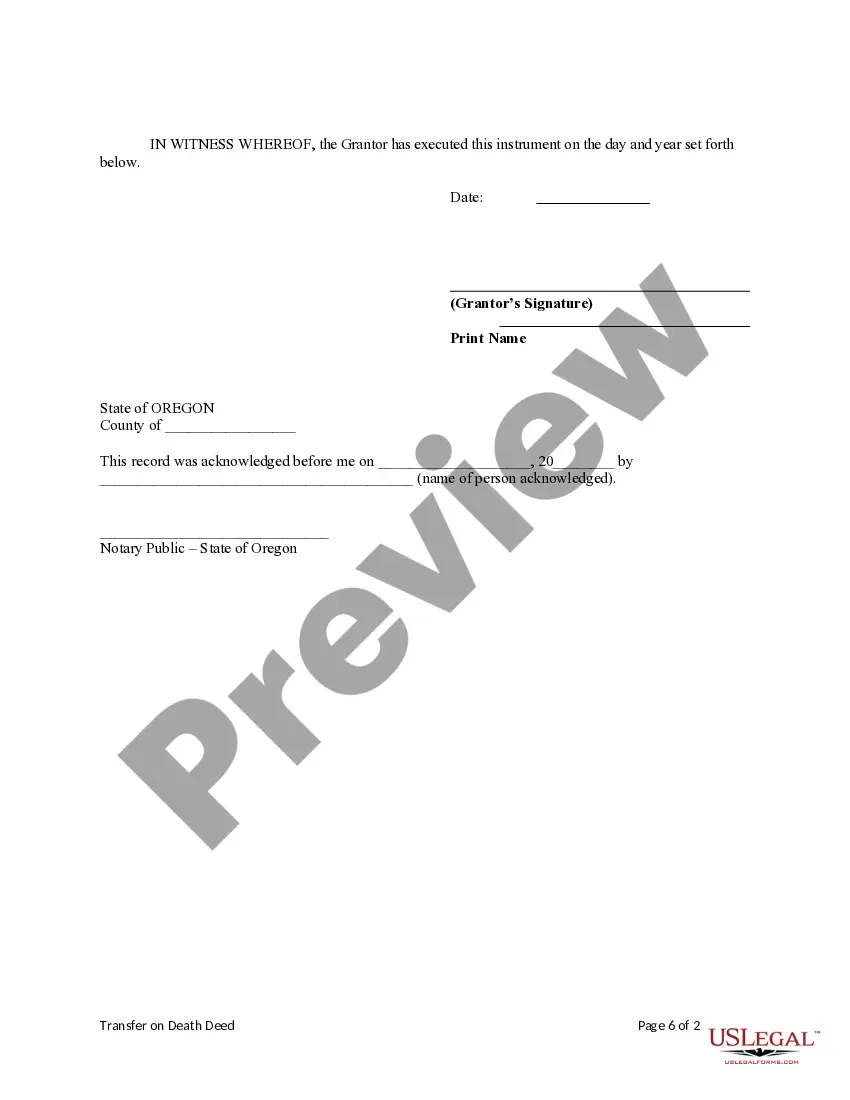
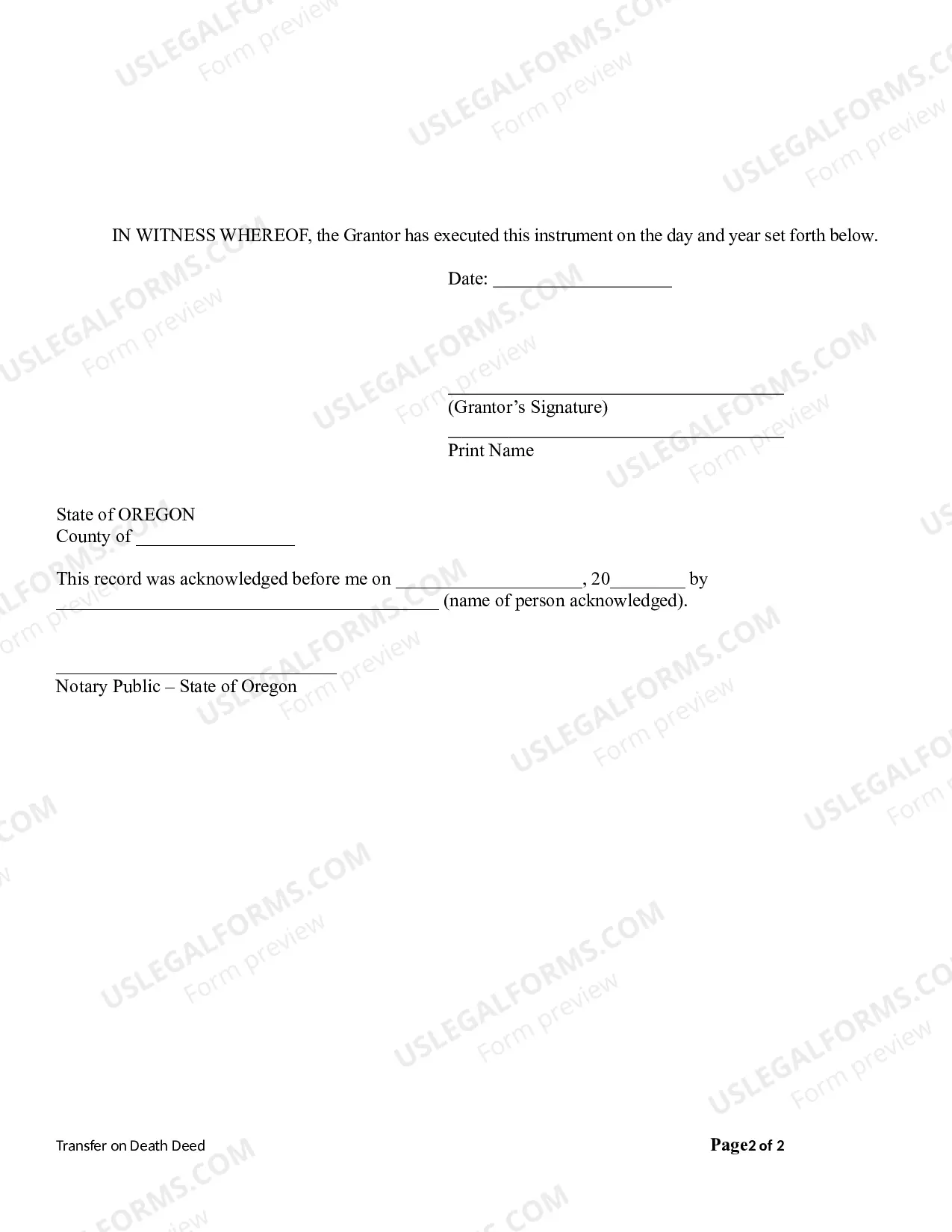

Get your form ready online
Our built-in tools help you complete, sign, share, and store your documents in one place.
Make edits, fill in missing information, and update formatting in US Legal Forms—just like you would in MS Word.
Download a copy, print it, send it by email, or mail it via USPS—whatever works best for your next step.
Sign and collect signatures with our SignNow integration. Send to multiple recipients, set reminders, and more. Go Premium to unlock E-Sign.
If this form requires notarization, complete it online through a secure video call—no need to meet a notary in person or wait for an appointment.
We protect your documents and personal data by following strict security and privacy standards.

Make edits, fill in missing information, and update formatting in US Legal Forms—just like you would in MS Word.

Download a copy, print it, send it by email, or mail it via USPS—whatever works best for your next step.

Sign and collect signatures with our SignNow integration. Send to multiple recipients, set reminders, and more. Go Premium to unlock E-Sign.

If this form requires notarization, complete it online through a secure video call—no need to meet a notary in person or wait for an appointment.

We protect your documents and personal data by following strict security and privacy standards.
Looking for another form?
How to fill out Oregon Transfer On Death Deed From An Individual Owner/Grantor To An Individual Beneficiary.?
Individuals frequently link legal documentation with intricate processes that only experts can manage.
In a sense, this is accurate, as creating a Transfer On Death Deed Oregon With Life Estate necessitates extensive understanding of subject matter standards, including regional and state laws.
However, with US Legal Forms, the process has become simpler: pre-prepared legal templates for various personal and business situations tailored to state statutes are compiled in a single online collection and are now accessible to all.
Sign up for an account or Log In to go to the payment page. Process your subscription payment using PayPal or a credit card. Choose the format for your file and click Download. Print your document or upload it to an online editor for quicker completion. All templates in our library are reusable: once bought, they remain saved in your profile, allowing you to access them anytime through the My documents tab. Experience all advantages of utilizing the US Legal Forms platform. Subscribe today!
- US Legal Forms provides over 85,000 current documents categorized by state and area of application, making it easy to locate Transfer On Death Deed Oregon With Life Estate or any other specific template in just a few minutes.
- Existing users with an active subscription must Log In to their account and select Download to obtain the form.
- New users must first create an account and subscribe before they can download any documentation.
- Here is a detailed guide on how to obtain the Transfer On Death Deed Oregon With Life Estate.
- Review the content on the page thoroughly to confirm it meets your requirements.
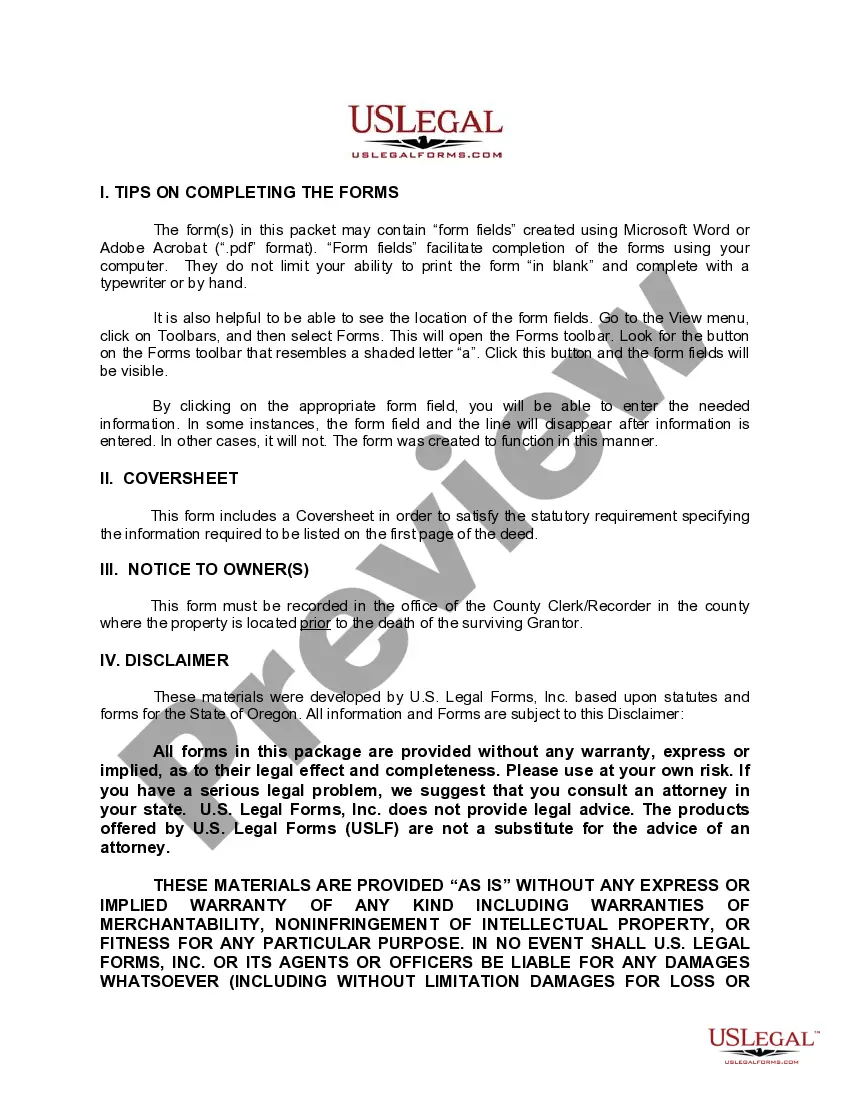
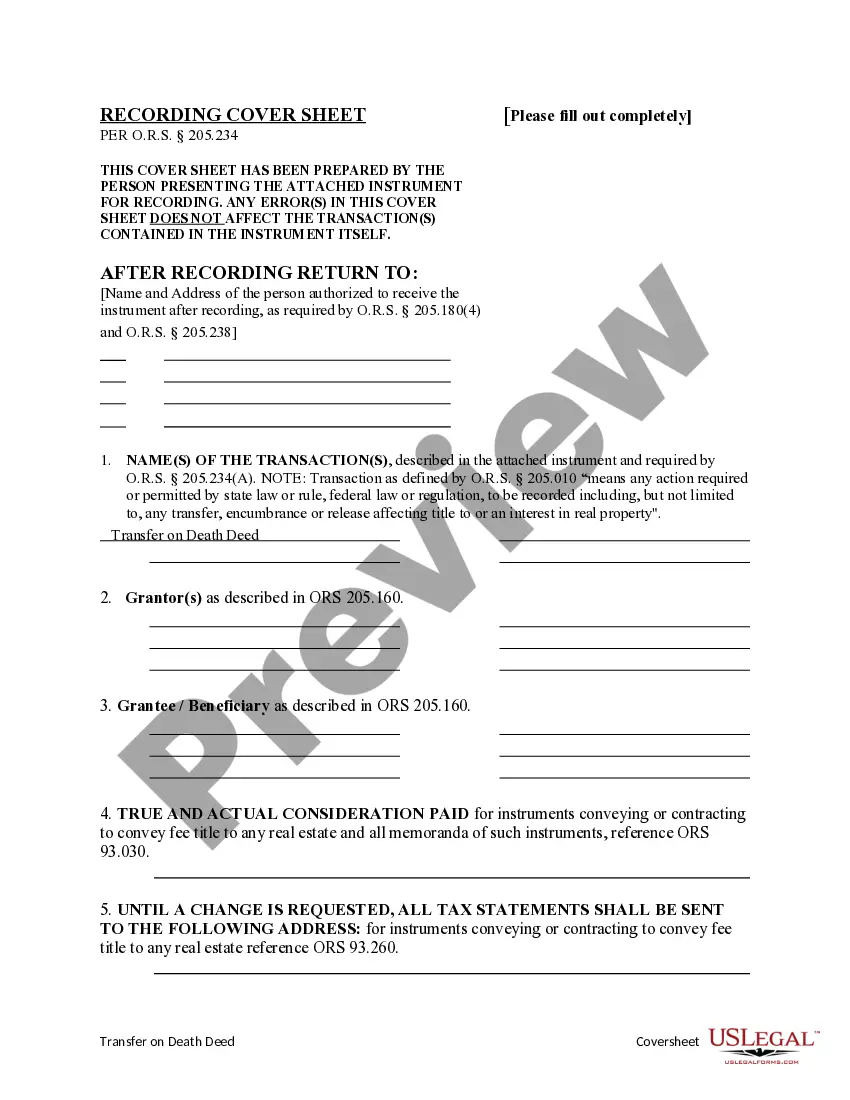
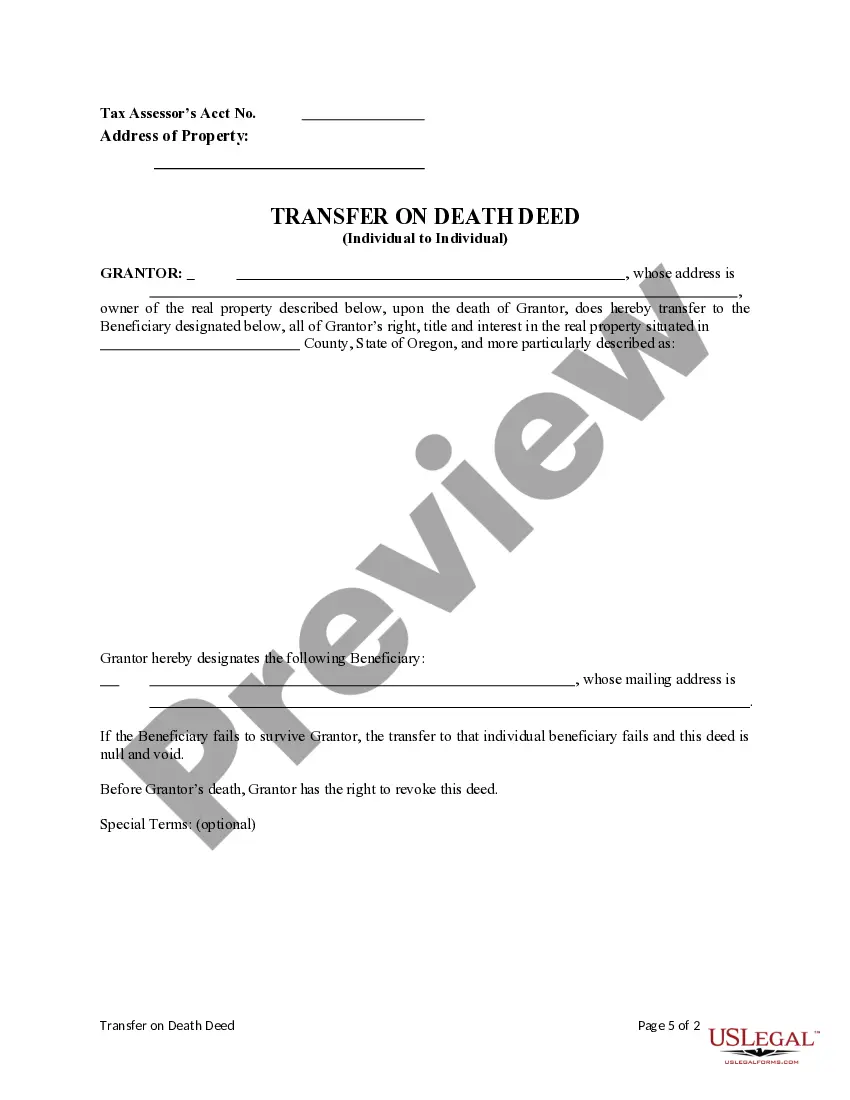
- Read the form description or verify it through the Preview option.
- If the previous form is not suitable, search for another example using the Search bar above.
- When you discover the appropriate Transfer On Death Deed Oregon With Life Estate, click Buy Now.
- Select the subscription plan that suits your needs and financial constraints.
Form popularity
FAQ
The 3-year rule for a deceased estate refers to certain tax implications and potential claims against the estate that arise within three years following the owner's death. Understanding this rule is crucial for beneficiaries to ensure compliance and avoid unexpected taxes. Utilizing a Transfer on Death Deed in Oregon with a life estate can help mitigate complexities, offering a direct transfer of ownership without lengthy probate processes. To navigate these issues seamlessly, consider solutions available through platforms like USLegalForms.
The best way to leave a house to someone is by using a Transfer on Death Deed in Oregon with a life estate. This strategy allows you to retain control of the property during your lifetime while ensuring that it automatically transfers to your chosen beneficiary upon your death. It simplifies the process, avoiding probate and providing clarity for everyone involved. You can use platforms like USLegalForms to easily create the necessary documents.
Filing a transfer on death deed in Oregon involves several steps. First, complete the deed form, ensuring it includes all required information about the property and the designated beneficiary. Then, you must sign the deed in front of a notary public and record it with the county clerk's office where the property is located. The uslegalforms platform offers a user-friendly approach, making it easy to navigate the filing process and stay compliant with Oregon's regulations.
Yes, you can create a transfer on death deed in Oregon. This legal document allows you to transfer your property to a designated beneficiary upon your passing, while retaining full control over the property during your lifetime. It's essential to follow state guidelines to ensure validity. Using the uslegalforms platform simplifies the process, providing templates and guidance tailored for Oregon's requirements.
In Oregon, certain assets can bypass probate, including property held in a transfer on death deed or assets within a living trust. Small estates, usually valued under a specific threshold, also qualify for streamlined procedures. It's beneficial to understand these exceptions, as they can save time and reduce legal complexities. Therefore, considering tools like a transfer on death deed in Oregon with a life estate can provide a solid strategy for avoiding probate.
The best trust to avoid probate is often a revocable living trust. This trust allows you to maintain control over your assets while you are alive, and upon your death, assets transfer directly to your beneficiaries. This can streamline the process and eliminate the need for probate court. Additionally, utilizing a transfer on death deed in Oregon with a life estate can further help avoid probate and ensure a smooth transition of property.
To transfer a property deed from a deceased relative in Oregon, first check if a transfer on death deed was established. If it exists, simply file it with the county clerk to transfer ownership. If no such deed exists, you may need to go through probate to probate the estate and transfer the property according to state laws.
The best way to transfer property after death often involves using a transfer on death deed, as it avoids the complexities of probate. This method allows for a direct transfer to the beneficiary, making it fast and efficient. Consulting with professionals, like those at US Legal Forms, can also help you tailor the transfer to meet your specific needs.
After death, a deed in Oregon can be transferred using either a transfer on death deed or through probate proceedings if no such deed exists. If you have a transfer on death deed, the designated beneficiary must file the recorded deed with the county clerk to officially transfer the property. This simplifies the process significantly compared to probate.
To transfer ownership of a property in Oregon, you typically need to prepare a new deed, such as a quitclaim deed or a transfer on death deed. This deed must be signed, notarized, and recorded with the county clerk's office. If you are considering a transfer on death deed in Oregon with a life estate, it is advisable to consult a legal professional or utilize platforms like US Legal Forms.