Shared Driveway Laws Nyc With Parking
Description
Get your form ready online
Our built-in tools help you complete, sign, share, and store your documents in one place.
Make edits, fill in missing information, and update formatting in US Legal Forms—just like you would in MS Word.
Download a copy, print it, send it by email, or mail it via USPS—whatever works best for your next step.
Sign and collect signatures with our SignNow integration. Send to multiple recipients, set reminders, and more. Go Premium to unlock E-Sign.
If this form requires notarization, complete it online through a secure video call—no need to meet a notary in person or wait for an appointment.
We protect your documents and personal data by following strict security and privacy standards.

Make edits, fill in missing information, and update formatting in US Legal Forms—just like you would in MS Word.

Download a copy, print it, send it by email, or mail it via USPS—whatever works best for your next step.

Sign and collect signatures with our SignNow integration. Send to multiple recipients, set reminders, and more. Go Premium to unlock E-Sign.

If this form requires notarization, complete it online through a secure video call—no need to meet a notary in person or wait for an appointment.

We protect your documents and personal data by following strict security and privacy standards.
Looking for another form?


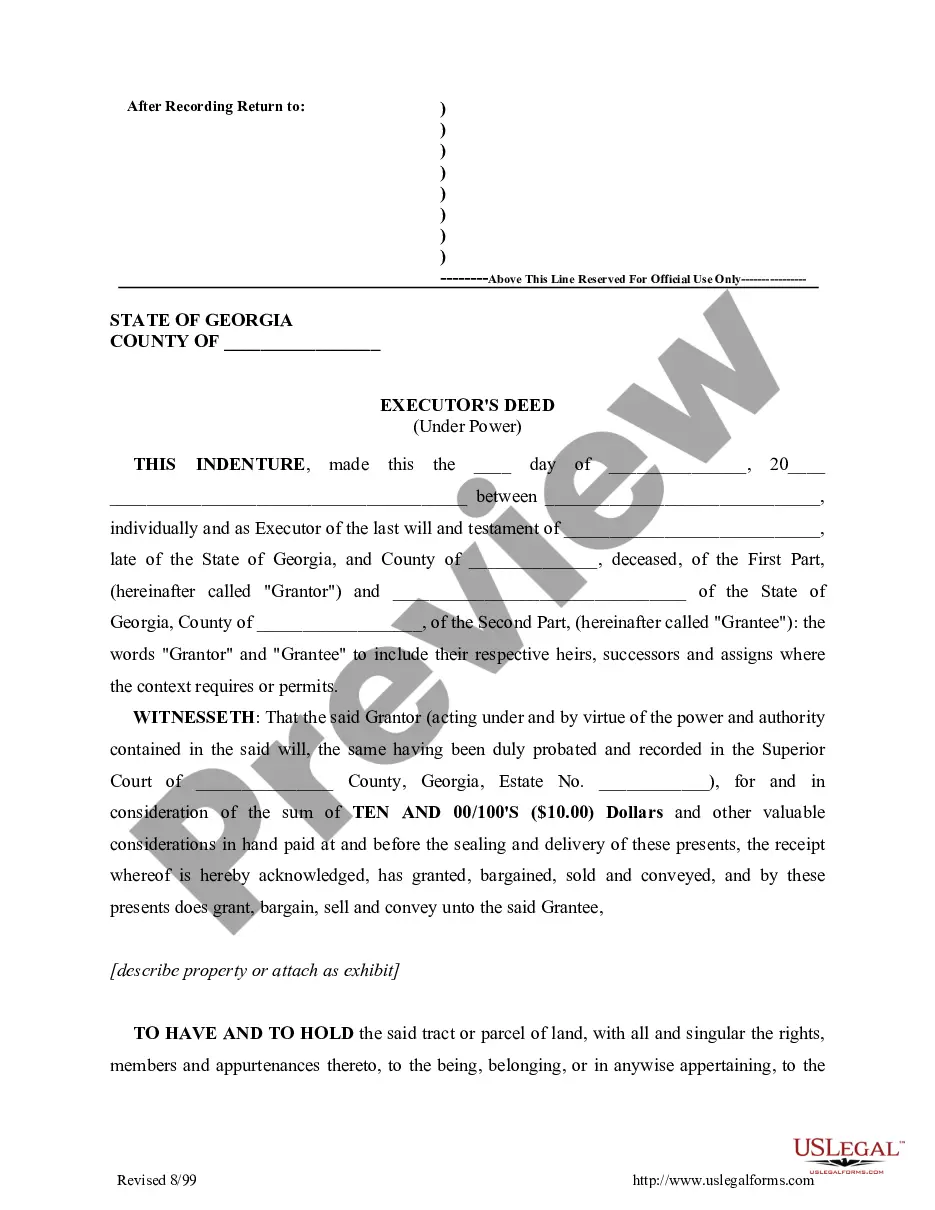
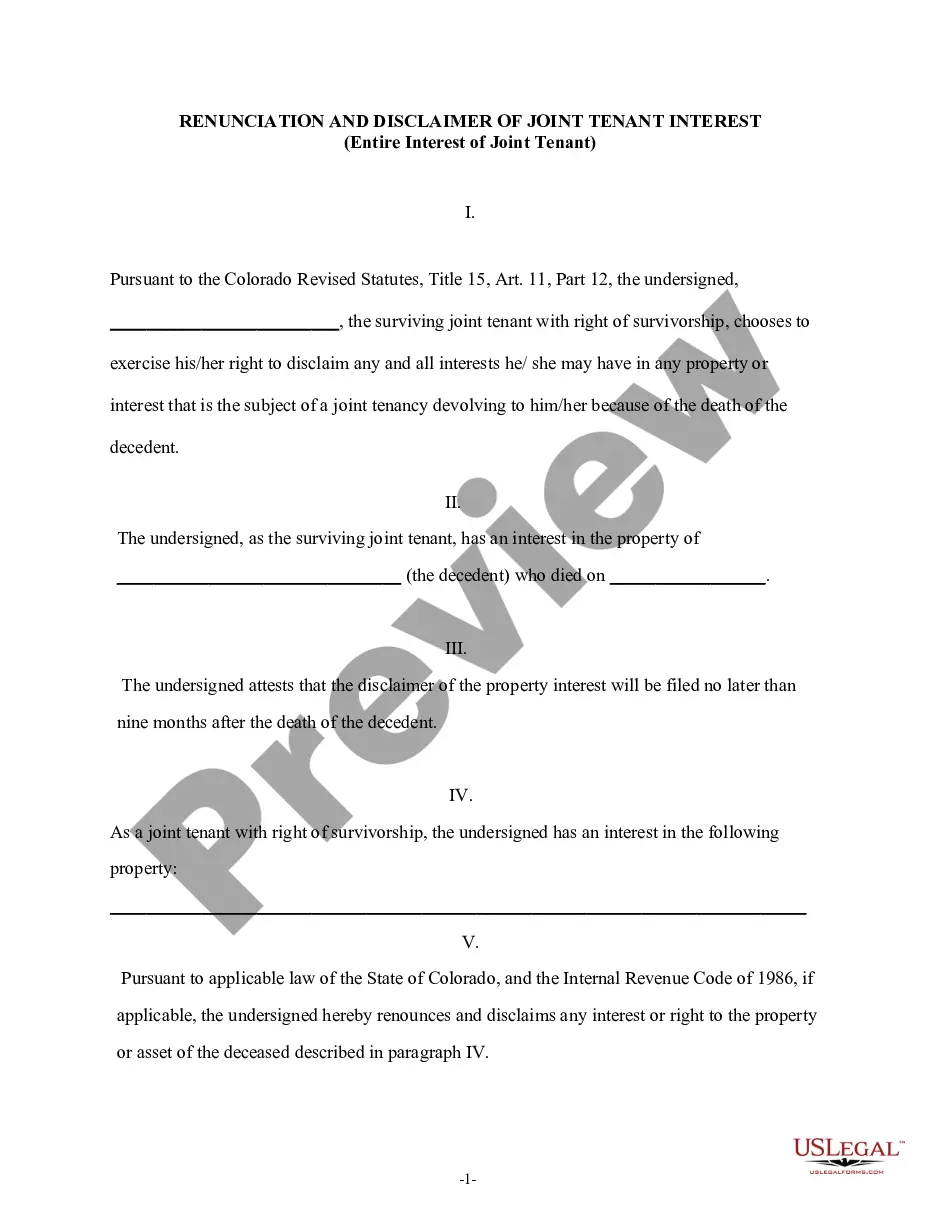



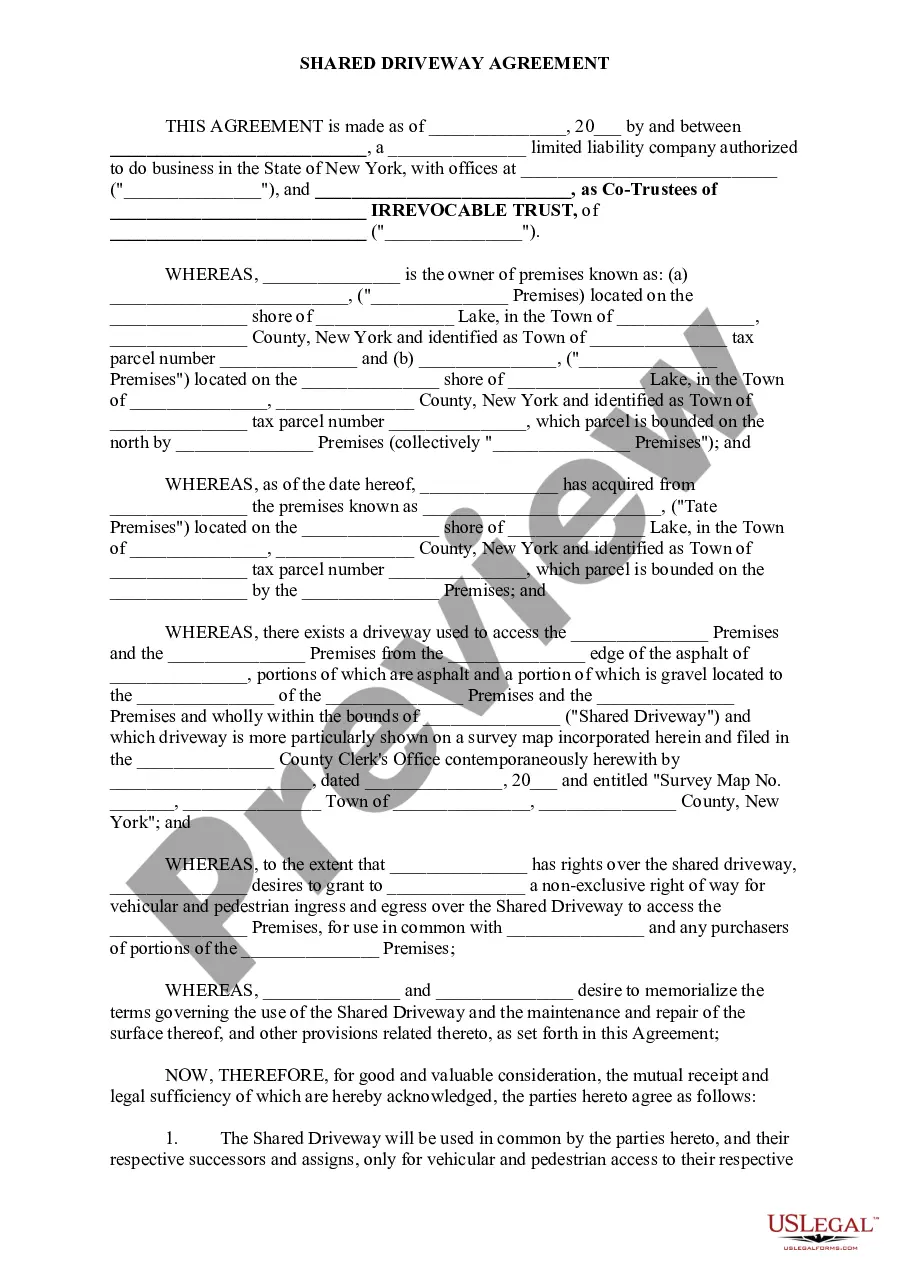
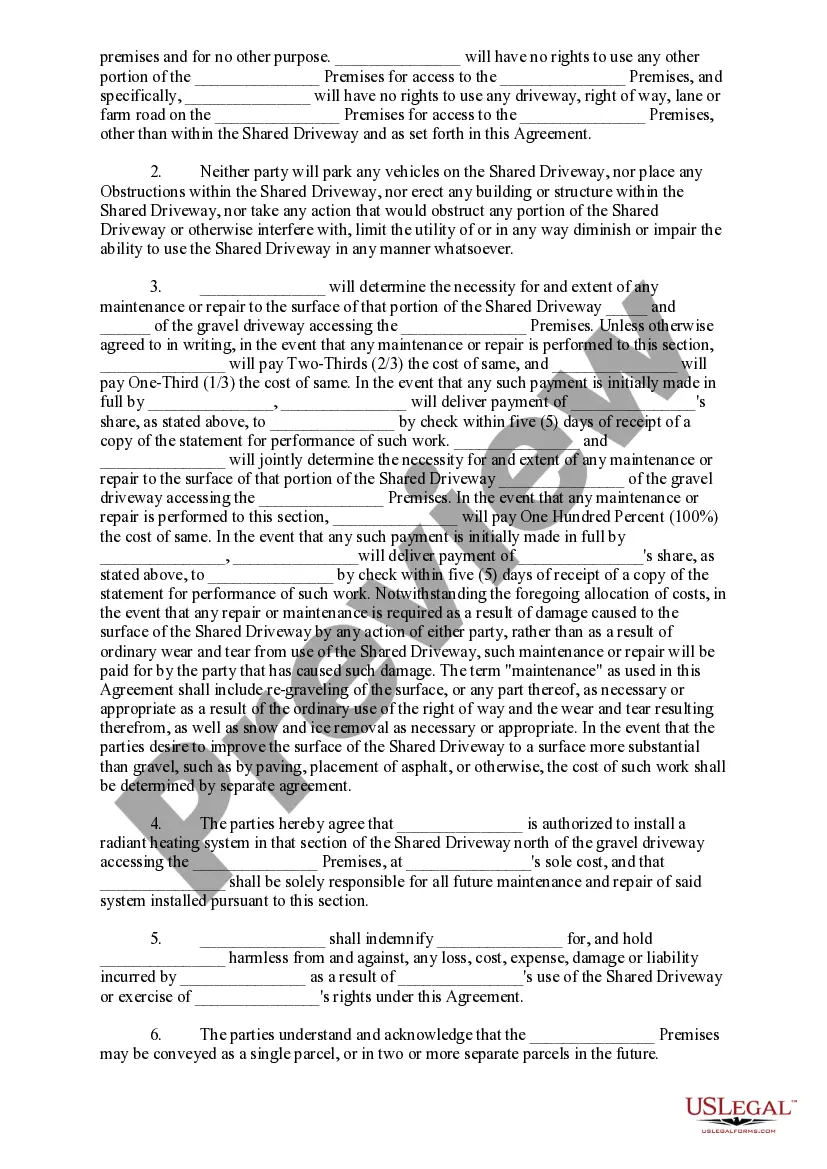
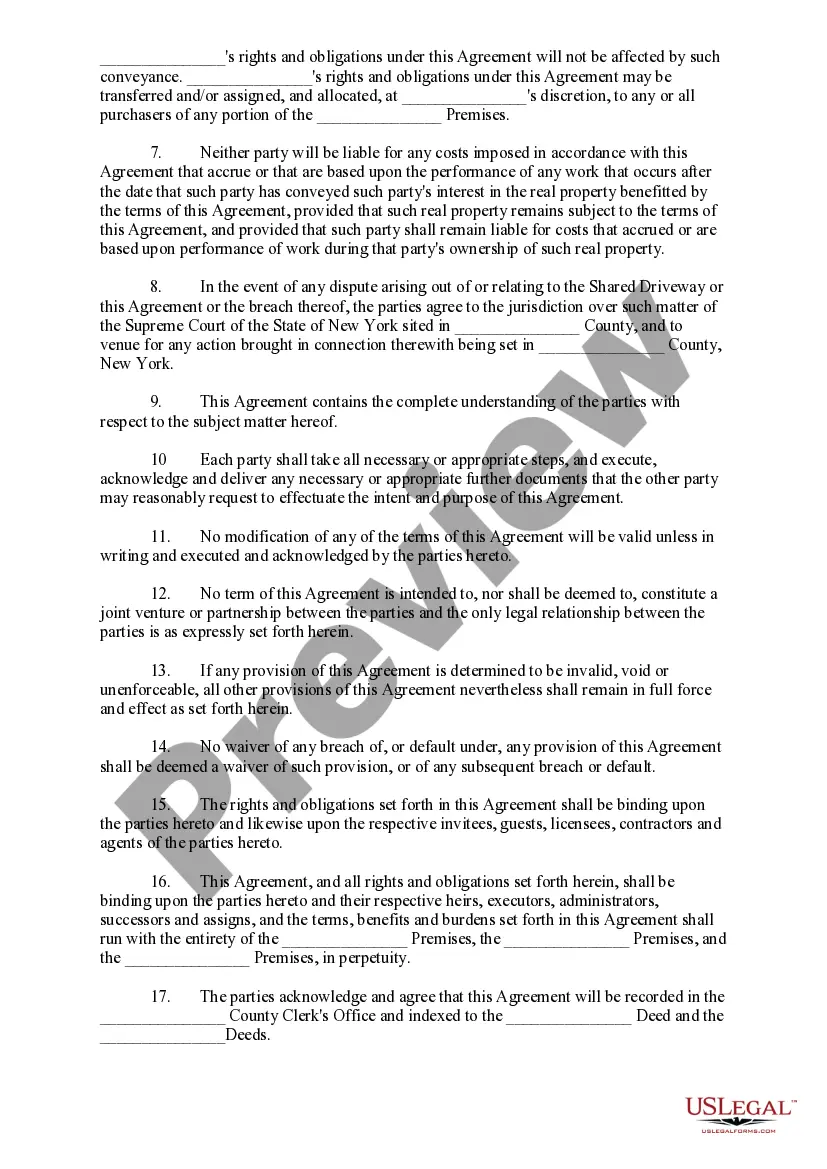
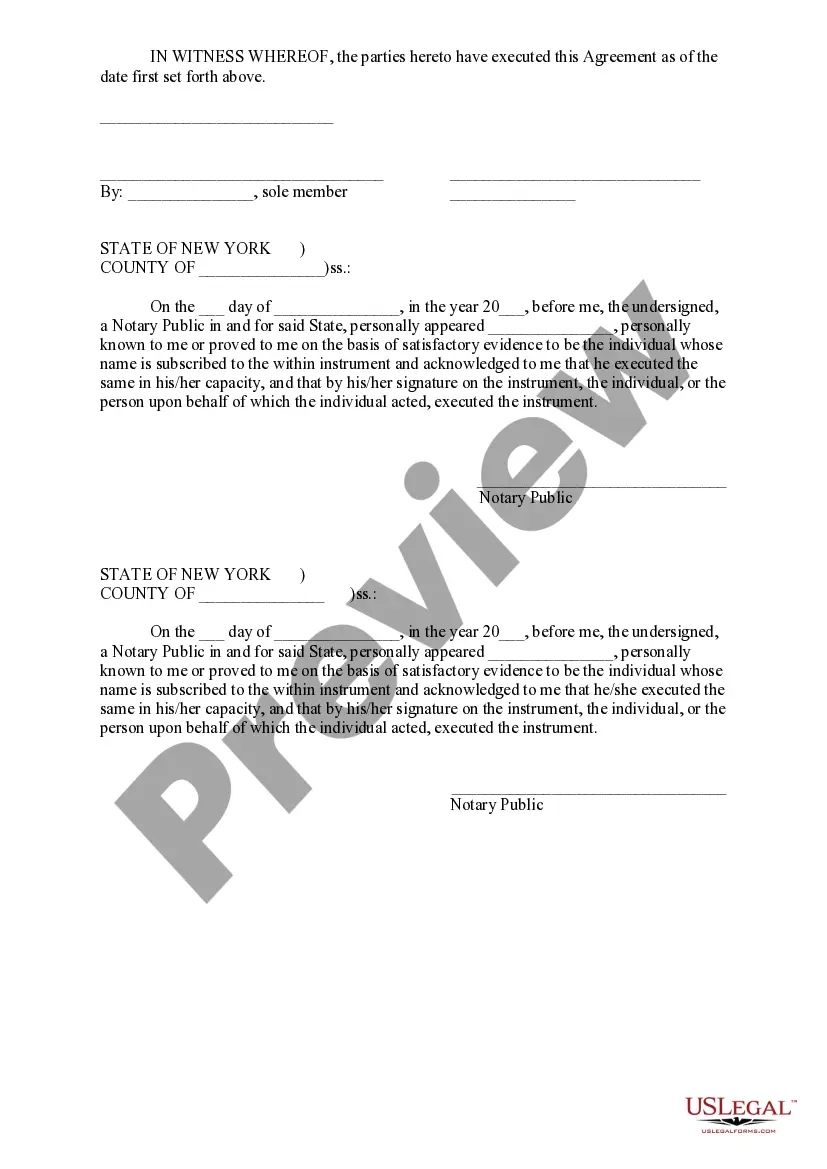
How to fill out New York Shared Driveway Agreement?
Whether for professional endeavors or personal issues, everyone must confront legal matters at some stage in their life.
Filling out legal documents requires meticulous care, starting from selecting the correct form example.
Once it is saved, you can fill out the form using editing software or print it and complete it by hand. With an extensive US Legal Forms catalog available, you won’t have to waste time searching for the right example online. Utilize the library’s intuitive navigation to acquire the suitable template for any circumstance.
- Locate the document you require using the search bar or catalog browsing.
- Check the form's description to verify it meets your case, jurisdiction, and area.
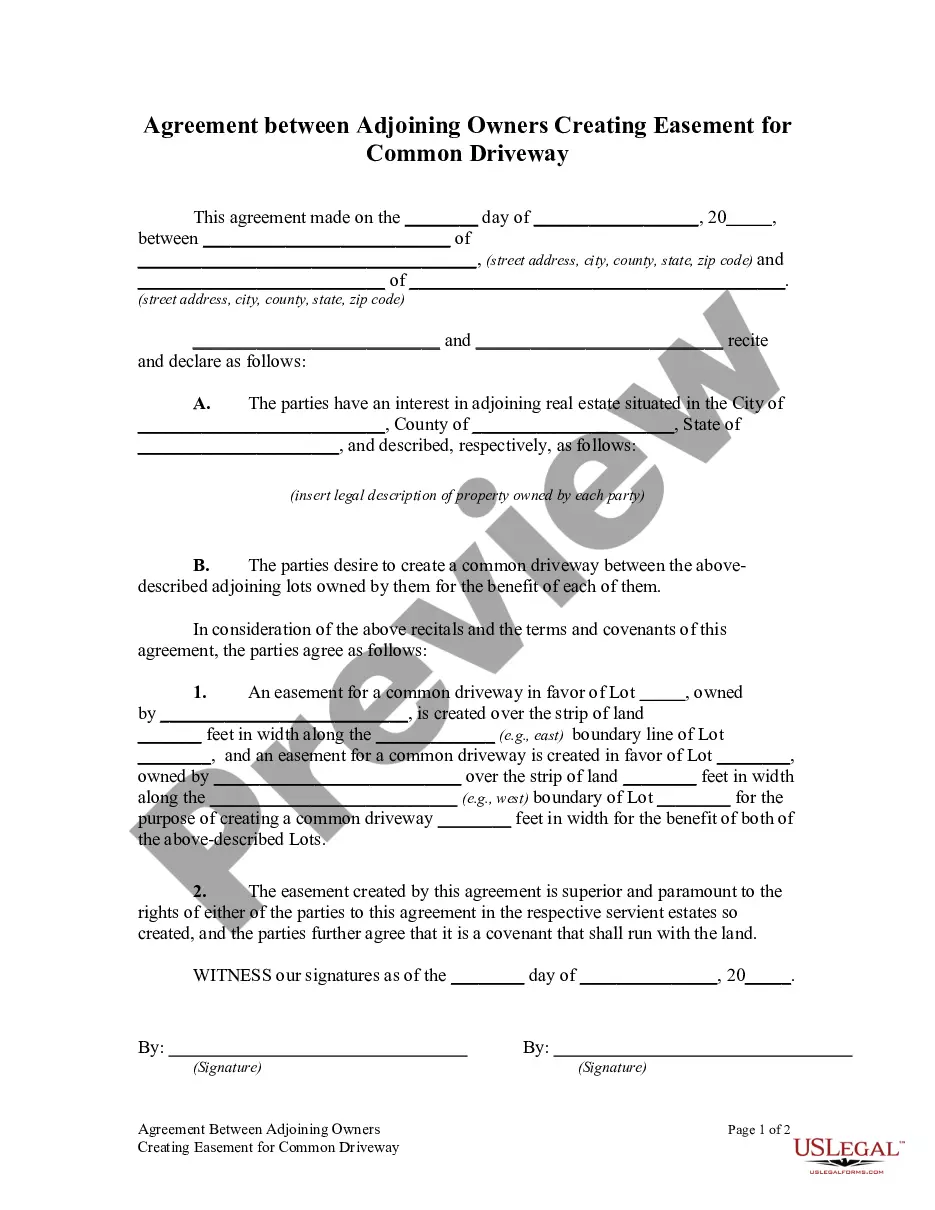
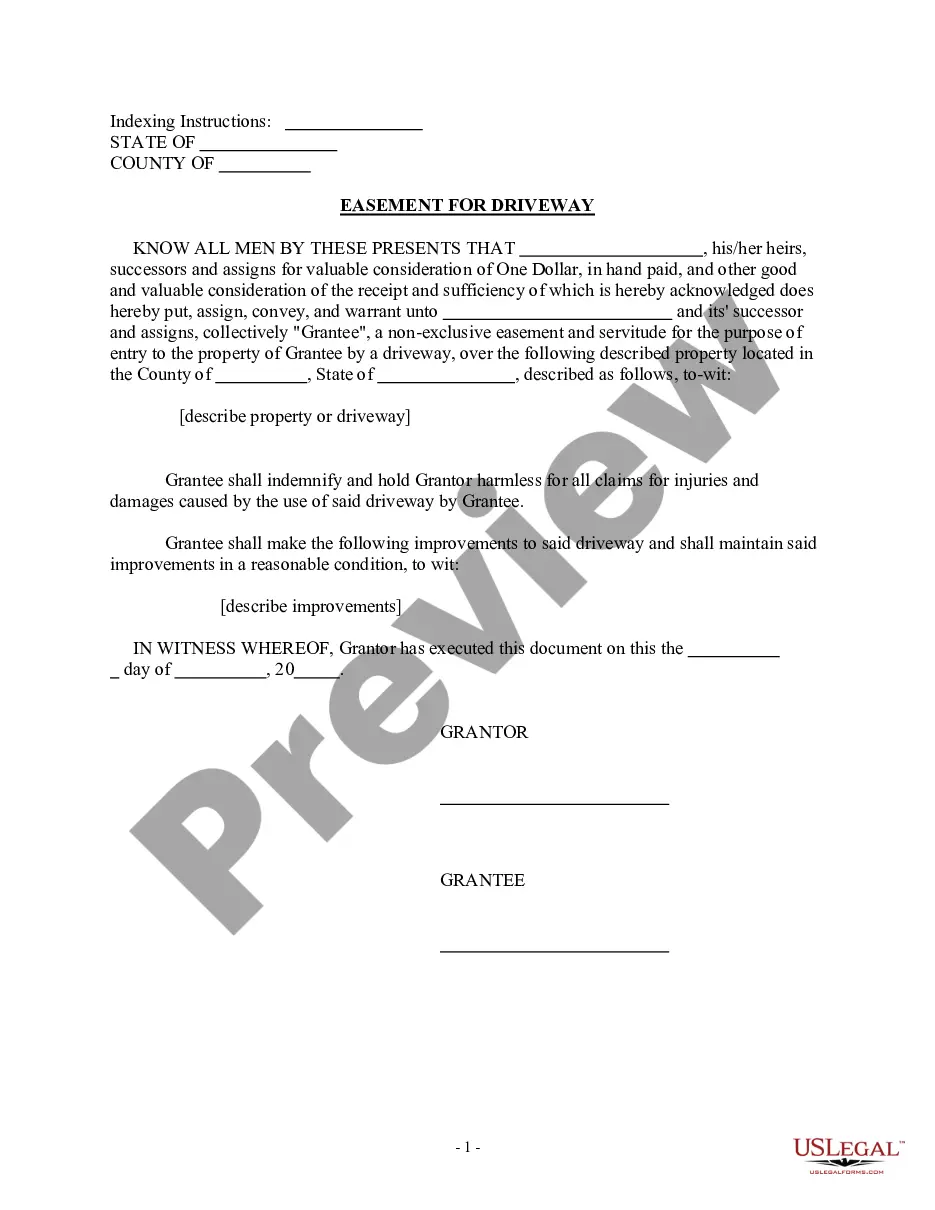
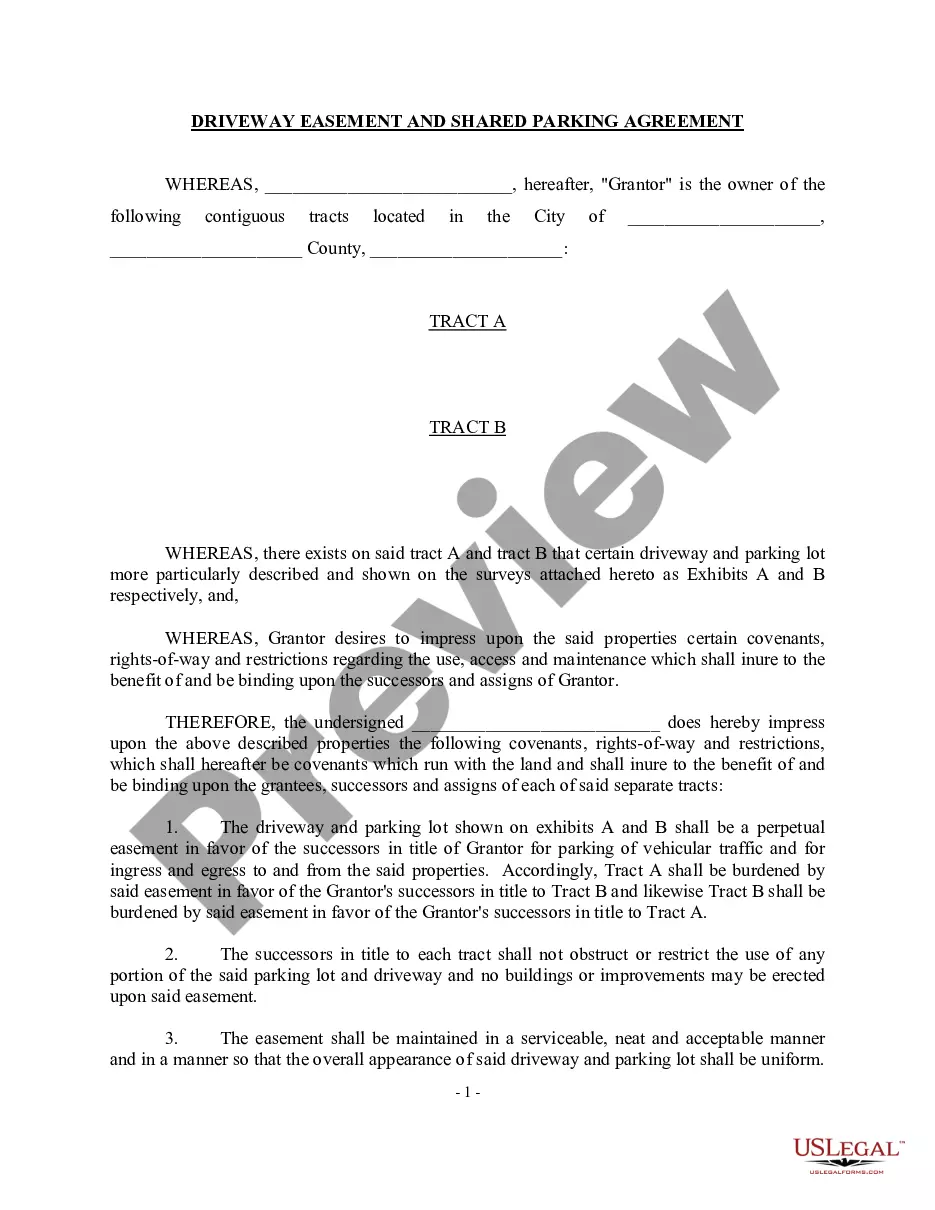
- Click on the form's preview to examine it.
- If it is the wrong file, return to the search feature to find the Shared Driveway Laws Nyc With Parking template you need.
- Obtain the document when it aligns with your requirements.
- If you possess a US Legal Forms account, simply click Log in to access previously stored documents in My documents.
- If you do not have an account yet, you can acquire the form by clicking Buy now.
- Select the suitable payment option.
- Complete the account registration form.
- Choose your payment method: you can utilize a credit card or PayPal account.
- Select the file format you desire and download the Shared Driveway Laws Nyc With Parking.
Form popularity
FAQ
Look at your title deeds to see if your boundaries are clearly defined (if they aren't, or you can't understand them, then contact a surveyor to help you resolve the confusion) Use a mediation service to try and come to a mutually beneficial solution. Contact your local council if your neighbour refuses to collaborate.
An easement is the right to use the land of another for a limited purpose. Such easements are known as affirmative easements. Some easements limit how a property owner may use his property.
Never block or allow your visitors to block the shared driveway, and make it impossible for your neighbour to use it. If you wish to a gate, wall or fence anywhere along the perimeter or at either end of the shared driveway, you should gain permission from your neighbour.
Shared driveway rights Generally, a shared driveway is owned by all parties with the section of the driveway a party uses owned by them. However, the maintenance of the entire driveway area should be shared between all parties.
Shared driveways in New York are governed by statutory law, case/decisional law and local municipal zoning requirements. Section 335-a of the New York Real Property Law provides an easement of necessity for landlocked parcels without public access.