Letter Landlord Building For Rent
Description


Get your form ready online
Our built-in tools help you complete, sign, share, and store your documents in one place.
Make edits, fill in missing information, and update formatting in US Legal Forms—just like you would in MS Word.
Download a copy, print it, send it by email, or mail it via USPS—whatever works best for your next step.
Sign and collect signatures with our SignNow integration. Send to multiple recipients, set reminders, and more. Go Premium to unlock E-Sign.
If this form requires notarization, complete it online through a secure video call—no need to meet a notary in person or wait for an appointment.
We protect your documents and personal data by following strict security and privacy standards.

Make edits, fill in missing information, and update formatting in US Legal Forms—just like you would in MS Word.

Download a copy, print it, send it by email, or mail it via USPS—whatever works best for your next step.

Sign and collect signatures with our SignNow integration. Send to multiple recipients, set reminders, and more. Go Premium to unlock E-Sign.

If this form requires notarization, complete it online through a secure video call—no need to meet a notary in person or wait for an appointment.

We protect your documents and personal data by following strict security and privacy standards.
Looking for another form?

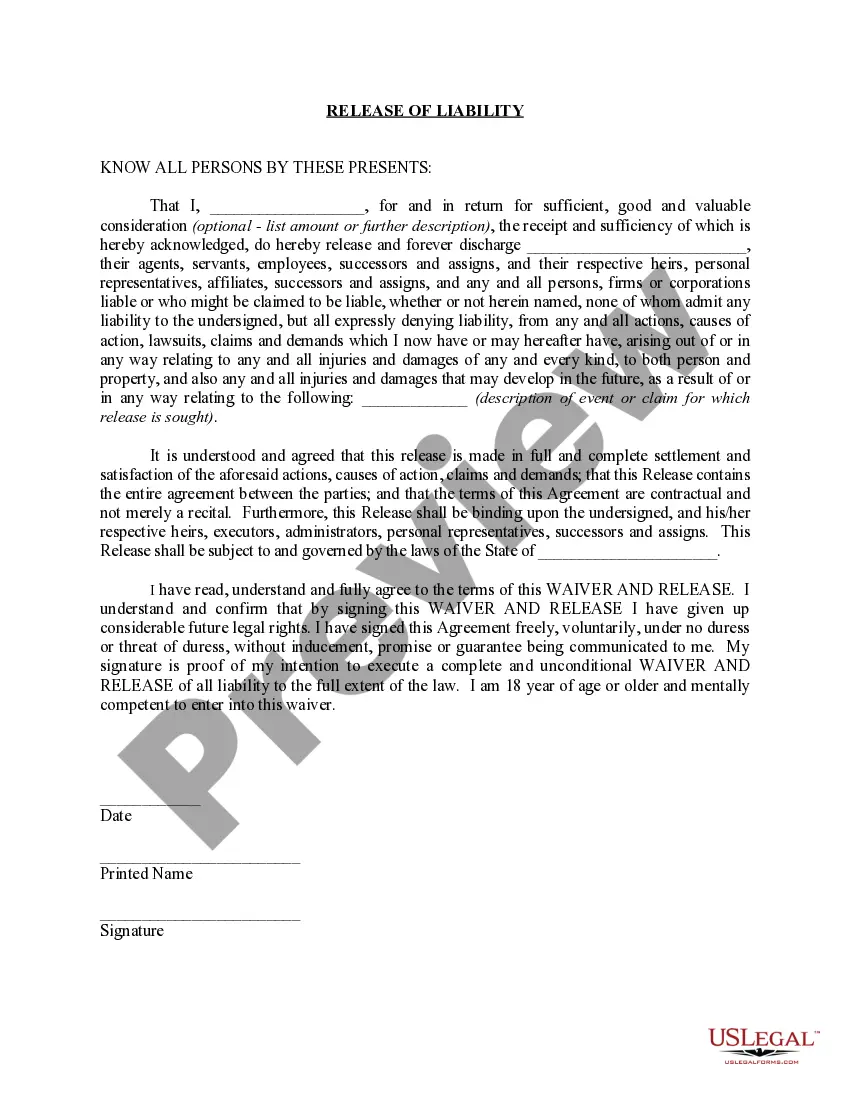
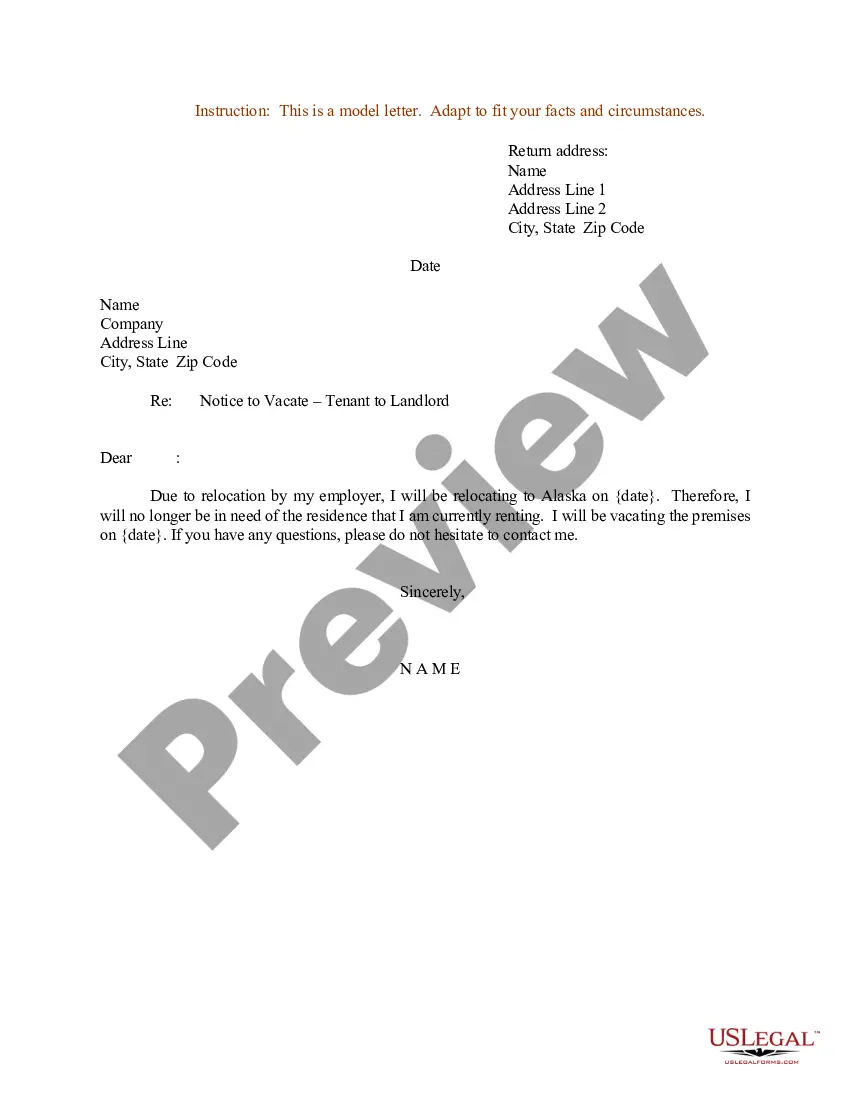
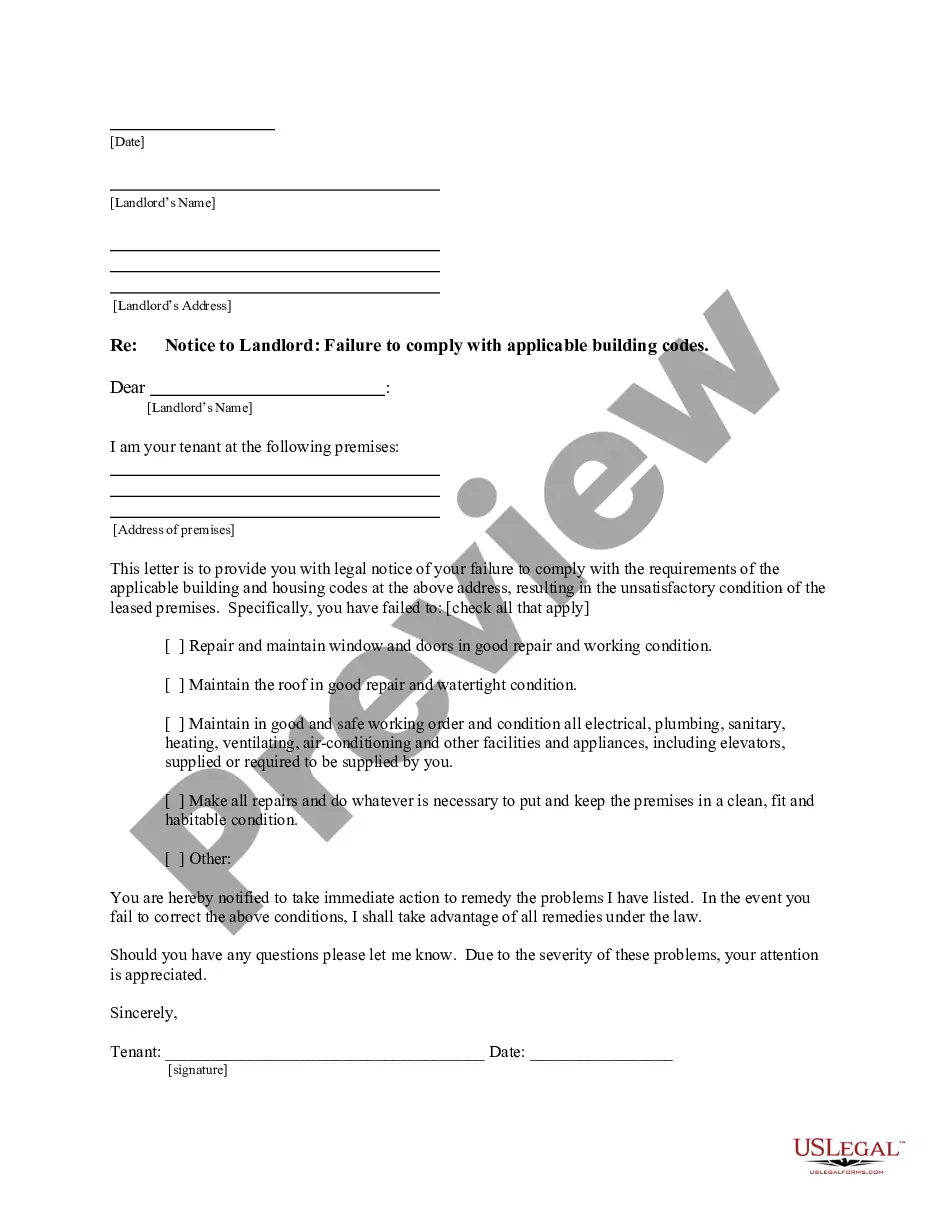
How to fill out North Dakota Letter From Tenant To Landlord For Failure Of Landlord To Comply With Building Codes Affecting Health And Safety Or Resulting In Untenantable Condition - Demand For Remedy?
- Login to your existing account on US Legal Forms and ensure your subscription is up to date. If necessary, renew your subscription based on your payment plan.
- If you're using US Legal Forms for the first time, start by previewing the available form options. Check that you select a template compliant with your local jurisdiction.
- If you need a different template, use the search function to find the exact form that meets your specifications.
- Purchase the selected document by clicking the 'Buy Now' button and choose a suitable subscription plan. Remember to create an account for full access.
- Complete your purchase by entering your payment details, either through credit card or PayPal.
- Download your chosen form to your device. You can access it anytime in the 'My Forms' section of your profile.
Upon following these steps, you'll have the appropriate letter at your fingertips for communicating with your landlord effectively.
Utilizing US Legal Forms not only streamlines your form acquisition process but also provides access to a vast library of legal resources. Start your journey today and ensure your documents are straightforward and legally binding.
Form popularity
FAQ
When writing a letter to prove rent, start by stating your name and the tenant's name, followed by the rental property address. Be clear and concise about the purpose of the letter, including details of rent payments and the period they cover. Don't forget to sign and date the letter for authenticity. To simplify the process, consider looking at the templates offered on US Legal Forms, which provide guidance for such documents.
To obtain a landlord letter, simply reach out to your landlord or property management team and request the document. Be specific about what information you need included, such as confirmation of your rental history or proof of residency. Ensure you give them adequate time to prepare and send the letter, as they may have other tasks to manage. For a regulated approach, consult US Legal Forms for templates that could assist your landlord in crafting the letter.
A landlord verification letter is a document confirming a tenant's rental history with a specific landlord. This letter typically includes the tenant's name, rental property address, duration of tenancy, and payment history. Such letters are essential for various applications, such as securing a new rental or applying for loans. Our US Legal Forms platform offers templates that you can customize easily for this purpose.
To write a rent receipt, start by including the date of the payment, the amount received, and the name of the tenant. Additionally, add a brief description, such as 'Payment for rent of address or unit number'. Always keep a copy of the receipt for your records, as it serves as proof of payment in the event of disputes. For a comprehensive resource, consider using our US Legal Forms platform to access templates related to rent agreements.
In Maryland, landlords are typically required to register rental properties with the county or city where the property is located. This process helps ensure compliance with local housing standards and tenant rights. If you're navigating rental regulations, consider using a trusted resource like USLegalForms to access the necessary forms and guides regarding your letter landlord building for rent.
To write a letter to a landlord to avoid eviction, address the situation directly and express your willingness to resolve any issues. Outline your plan for future payments and attempt to negotiate a repayment schedule if you are behind. Showing commitment through a letter landlord building for rent can demonstrate your intent to remain a responsible tenant.
When considering a letter to a potential landlord, include your personal details and rental history. Express your interest in the property and your suitability as a tenant, highlighting your steady income and responsible nature. This kind of letter landlord building for rent can act as a strong introduction and improve your chances of securing a lease.
To write a letter to a landlord moving out, start with your current address and the date. Clearly state your intention to vacate the property, providing the agreed-upon move-out date. Be polite and mention any arrangements for the return of your security deposit. A well-crafted letter landlord building for rent can ensure smooth communication during your transition.
Writing a letter of permission to a tenant should begin with a formal greeting and a clear statement of the request being approved. Be specific about the permissions granted, along with any conditions that apply. A well-crafted letter ensures that expectations are clearly communicated and understood, fostering a positive rental relationship.
Red flags on a rental application include inconsistent information or a lack of verifiable references. Landlords often look for discrepancies in income or rental history that may signal potential issues. Awareness of these factors can help you present a stronger application and avoid common pitfalls when seeking your ideal letter landlord building for rent.