Mi Enhanced Individuals For Behavior Change Are
Description

Get your form ready online
Our built-in tools help you complete, sign, share, and store your documents in one place.
Make edits, fill in missing information, and update formatting in US Legal Forms—just like you would in MS Word.
Download a copy, print it, send it by email, or mail it via USPS—whatever works best for your next step.
Sign and collect signatures with our SignNow integration. Send to multiple recipients, set reminders, and more. Go Premium to unlock E-Sign.
If this form requires notarization, complete it online through a secure video call—no need to meet a notary in person or wait for an appointment.
We protect your documents and personal data by following strict security and privacy standards.

Make edits, fill in missing information, and update formatting in US Legal Forms—just like you would in MS Word.

Download a copy, print it, send it by email, or mail it via USPS—whatever works best for your next step.

Sign and collect signatures with our SignNow integration. Send to multiple recipients, set reminders, and more. Go Premium to unlock E-Sign.

If this form requires notarization, complete it online through a secure video call—no need to meet a notary in person or wait for an appointment.

We protect your documents and personal data by following strict security and privacy standards.
Looking for another form?




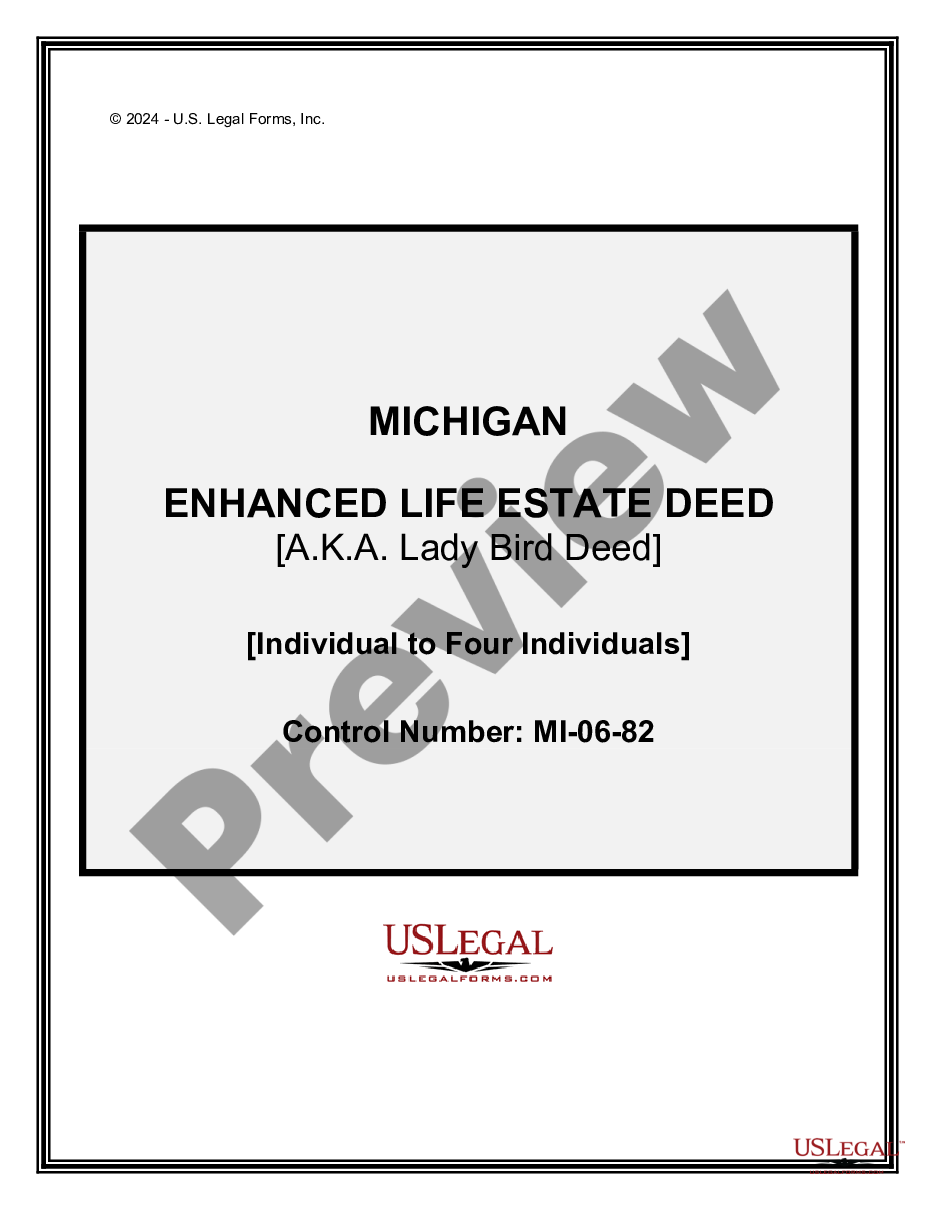
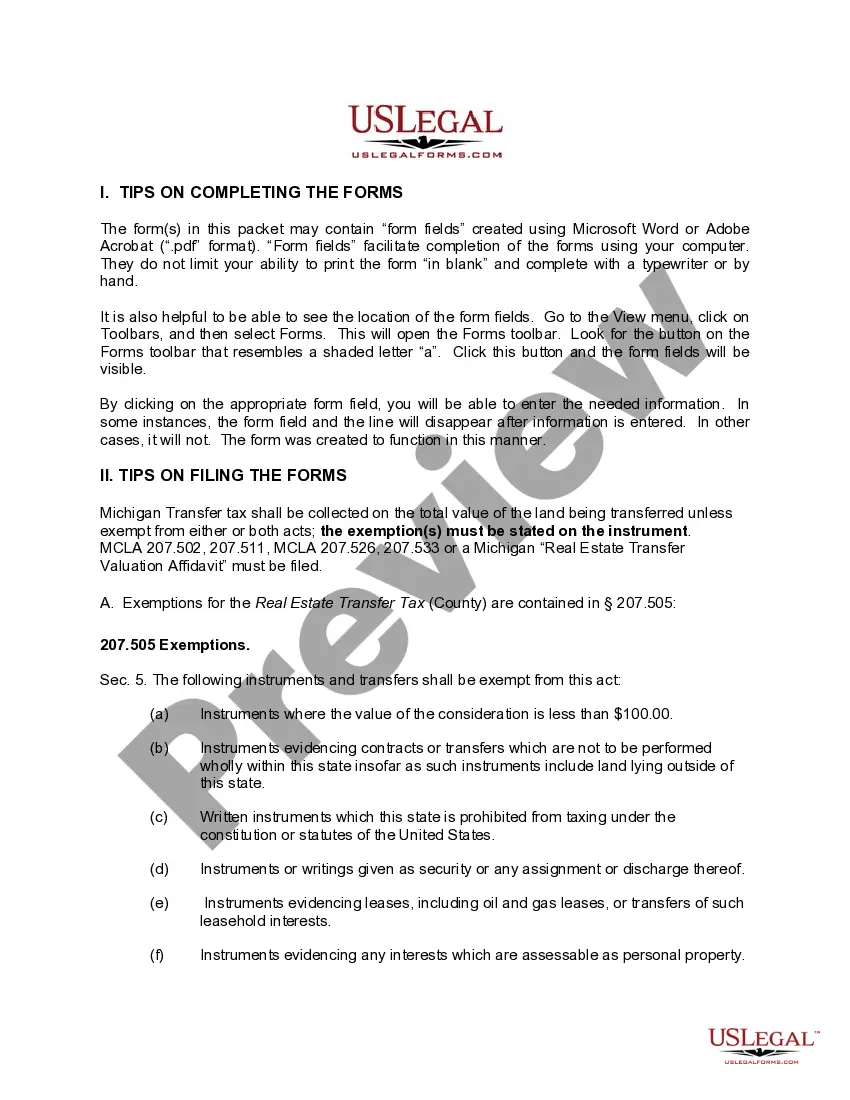
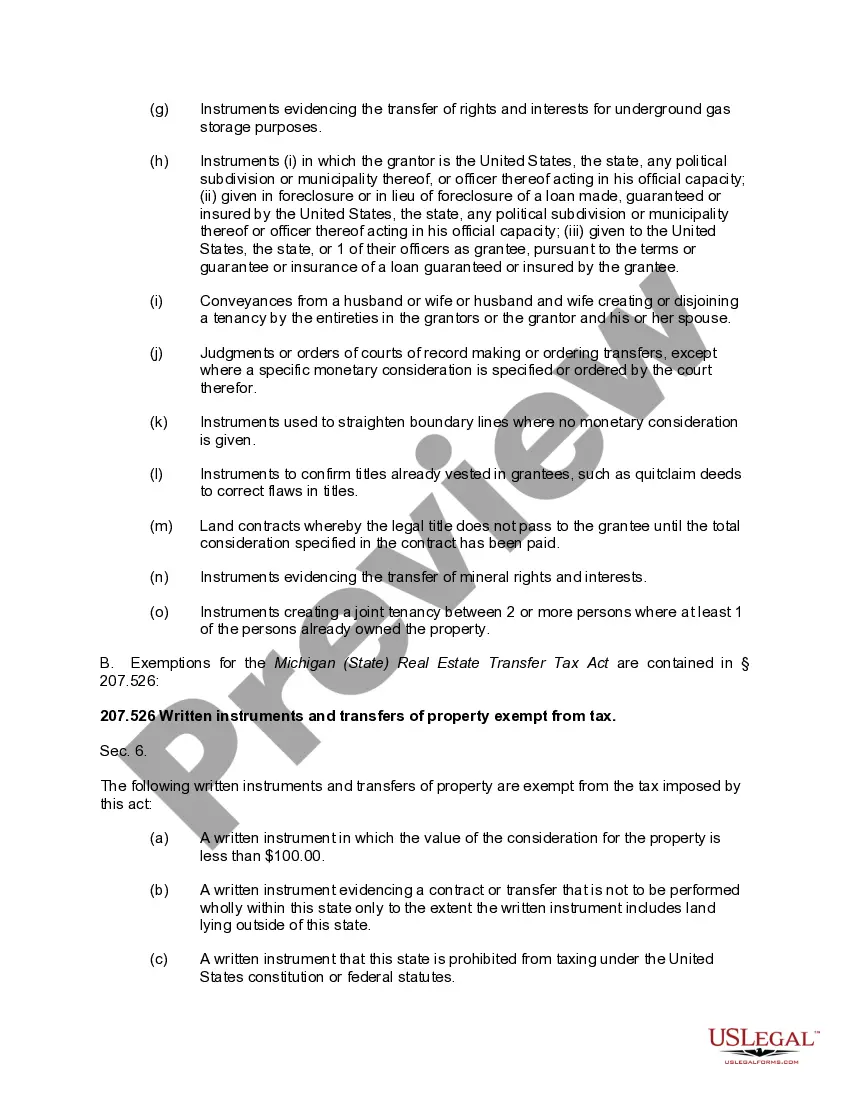
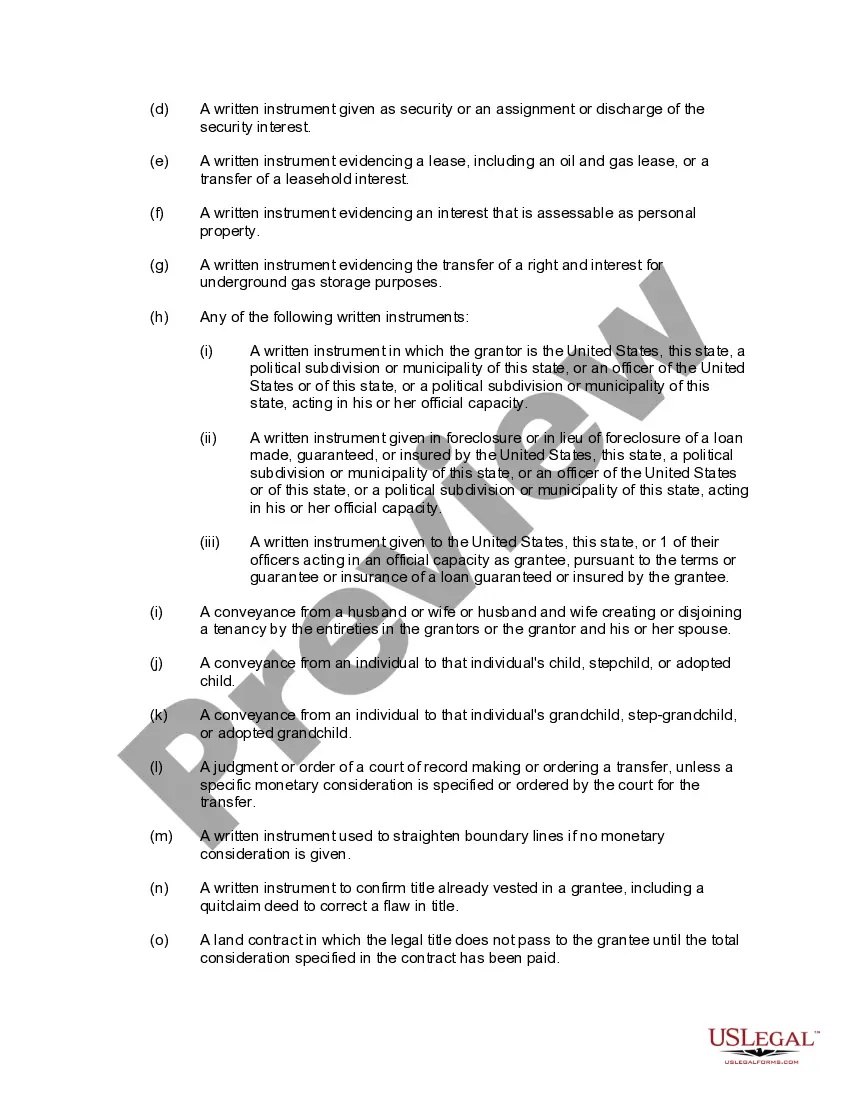
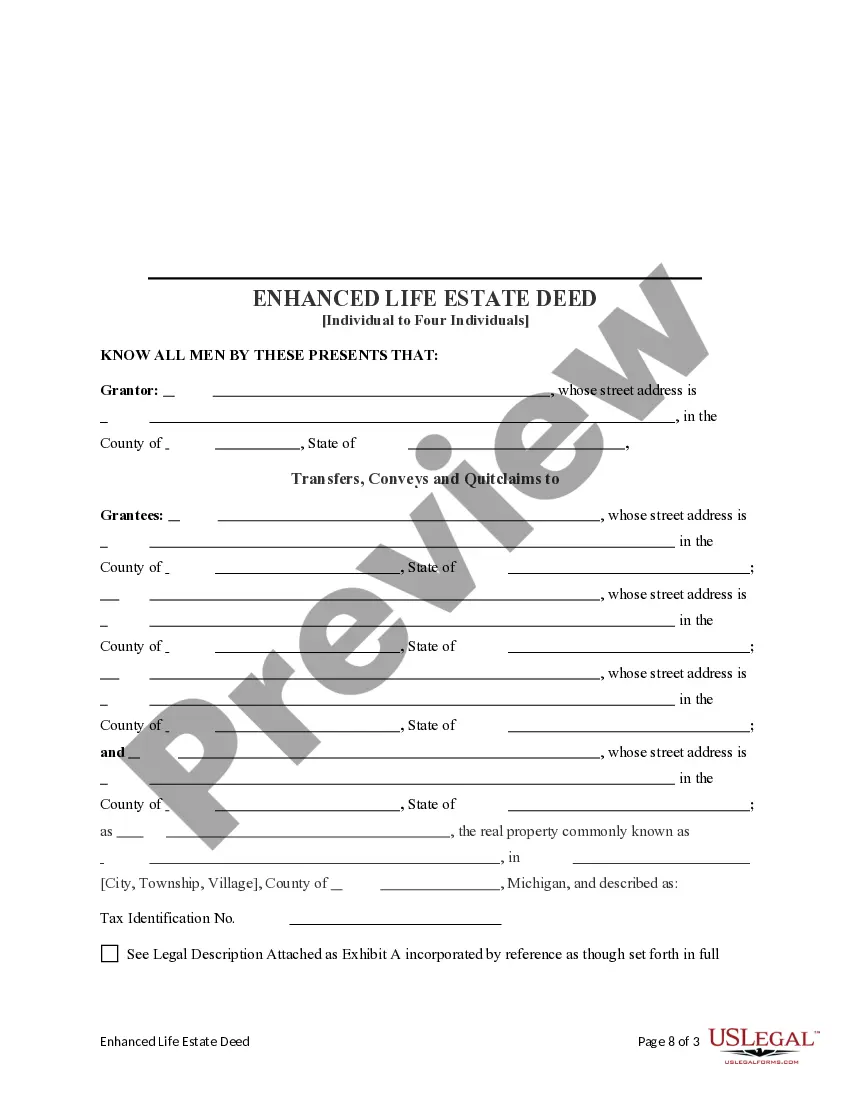
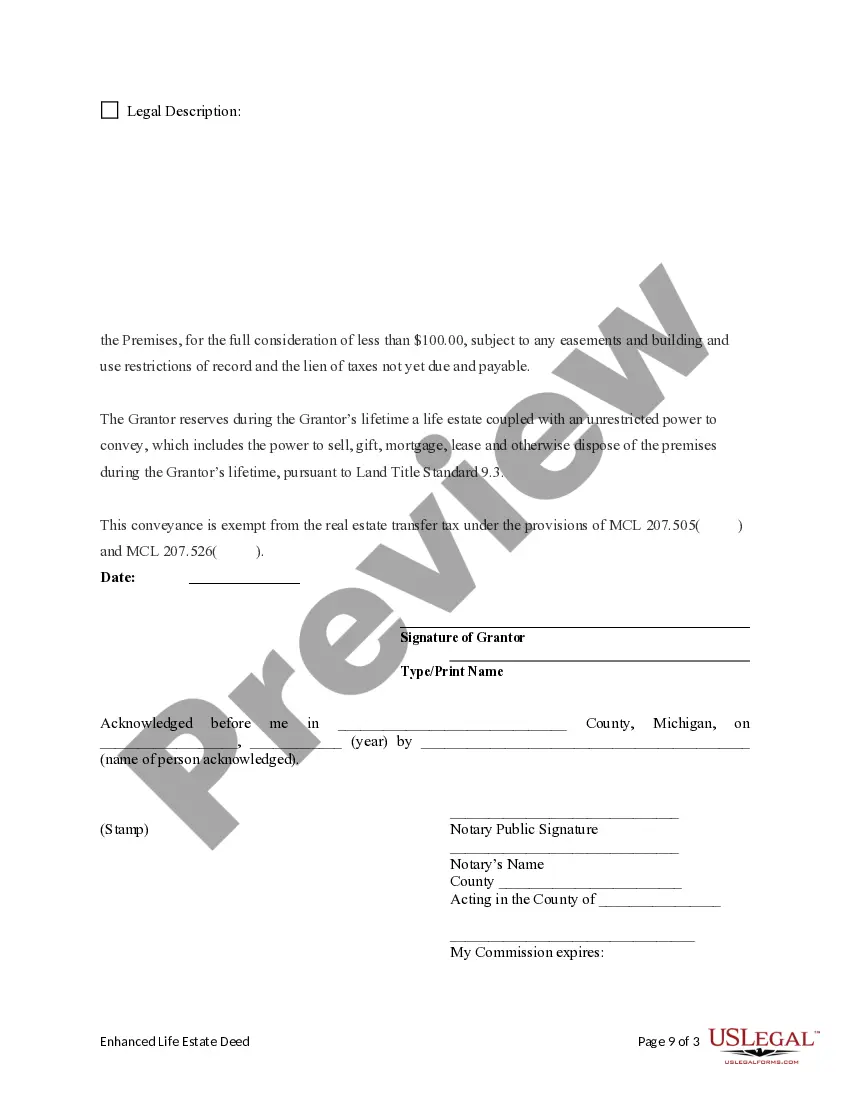
How to fill out Michigan Enhanced Life Estate Or Lady Bird Deed - Individual To Four Individuals?
Whether for corporate objectives or for personal matters, everyone inevitably has to navigate legal issues at some point in their lives.
Filling out legal documentation requires meticulous focus, starting with choosing the appropriate form template.
Once downloaded, you can complete the form using editing software or print it out and fill it in manually. With an extensive US Legal Forms catalog available, you will never need to waste time searching for the correct template online. Take advantage of the library’s easy navigation to find the suitable form for any scenario.
- For example, if you select an incorrect version of a Mi Enhanced Individuals For Behavior Change Are, it will be declined once submitted.
- Thus, it is essential to find a trustworthy resource for legal documents such as US Legal Forms.
- If you need a Mi Enhanced Individuals For Behavior Change Are template, adhere to these straightforward instructions.
- Retrieve the template you require through the search bar or catalog browsing.
- Review the form’s details to ensure it aligns with your circumstances, state, and locale.
- Click on the form’s preview to review it.
- If it is the wrong document, return to the search feature to locate the Mi Enhanced Individuals For Behavior Change Are sample you need.
- Acquire the template if it meets your specifications.
- If you possess a US Legal Forms account, simply click Log in to access any previously saved documents in My documents.
- Should you not have an account yet, you can purchase the form by selecting Buy now.
- Choose the appropriate payment option.
- Fill out the profile registration form.
- Select your payment method: utilize a credit card or PayPal account.
- Determine the document format you prefer and download the Mi Enhanced Individuals For Behavior Change Are.
Form popularity
FAQ
Motivational interviewing is a counselling method that involves enhancing a patient's motivation to change by means of four guiding principles, represented by the acronym RULE: Resist the righting reflex; Understand the patient's own motivations; Listen with empathy; and Empower the patient.
It is also beneficial to record the client's readiness, motivation, confidence for change, strengths, values, goals, ambivalence, barriers, and challenges. Furthermore, it is important to document the interviewer's use of MI principles, skills, and strategies as well as their reflections and feedback on the session.
MI typically involves utilizing 5 key strategies: express empathy, avoid arguments, develop discrepancy, resolve ambivalence, and support self-efficacy. Developing discrepancy identifies the mismatch between patients' current behavior and their health goals.
Recognize and affirm that it is the individual's decision to make. ?Of course, it really doesn't matter what I think, because this is your decision to make.? Inquire about the client's thoughts. ?I wonder what you think.? Emphasize change statements, provide affirmations and statements of hope.
Motivational interviewing emphasises eliciting reasons for change from the patient, rather than advising them of the reasons why they should change their drinking. What concerns does he have about the effects of his drinking? What future goals or personal values are impacted by his drinking?