Lead Based Paint Dangers
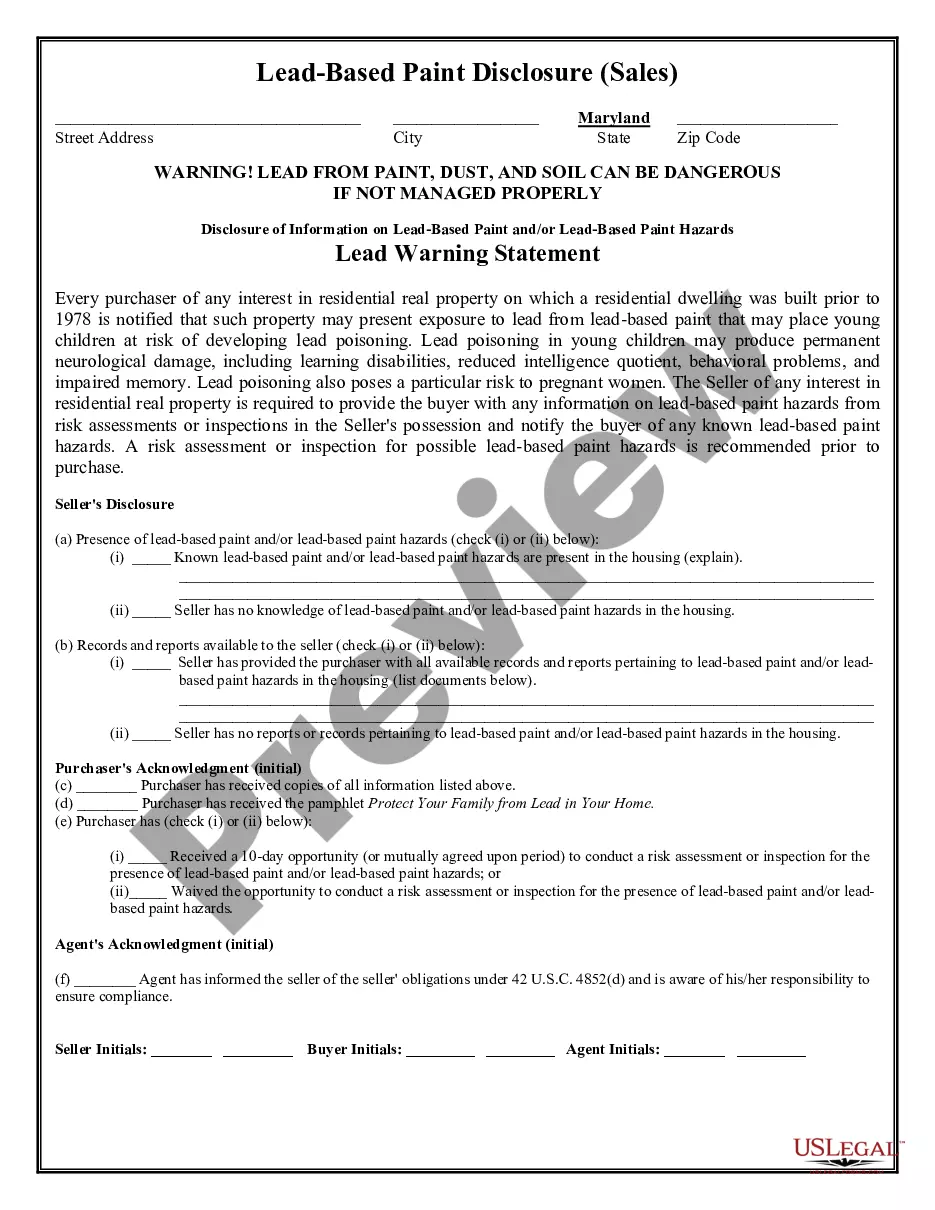
Description
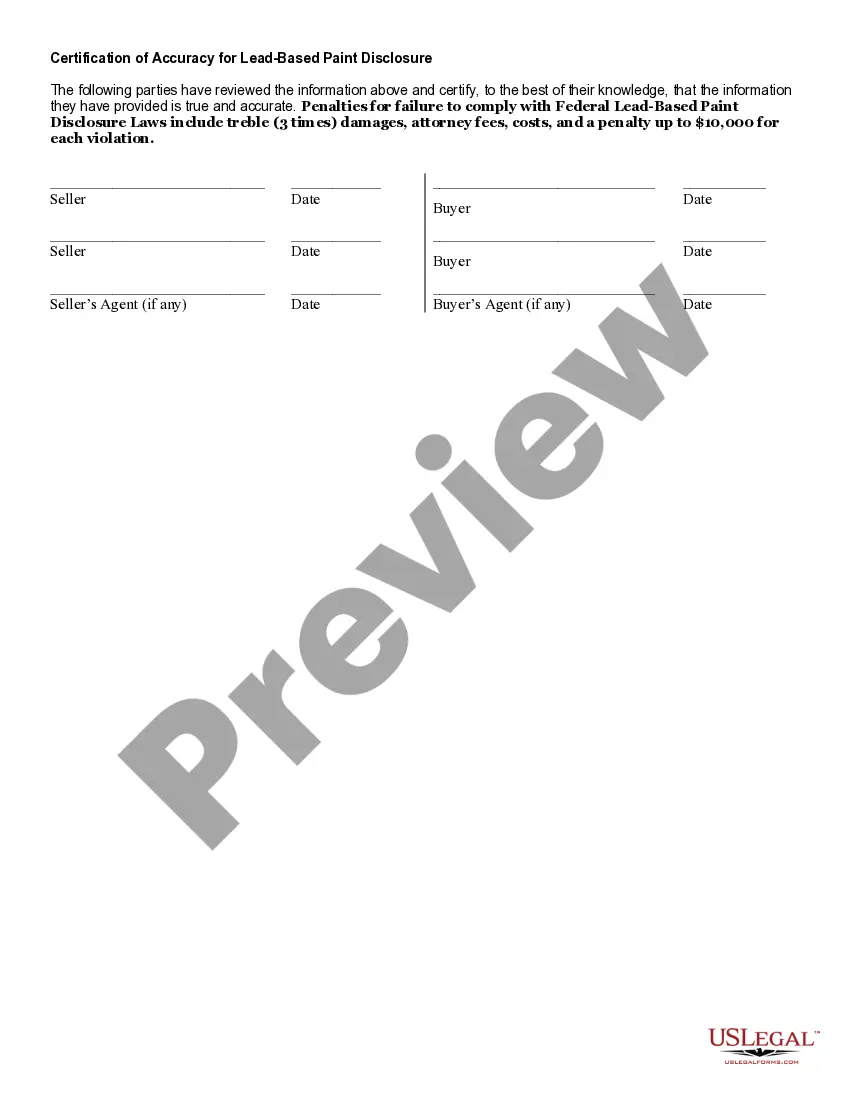
Get your form ready online
Our built-in tools help you complete, sign, share, and store your documents in one place.
Make edits, fill in missing information, and update formatting in US Legal Forms—just like you would in MS Word.
Download a copy, print it, send it by email, or mail it via USPS—whatever works best for your next step.
Sign and collect signatures with our SignNow integration. Send to multiple recipients, set reminders, and more. Go Premium to unlock E-Sign.
If this form requires notarization, complete it online through a secure video call—no need to meet a notary in person or wait for an appointment.
We protect your documents and personal data by following strict security and privacy standards.

Make edits, fill in missing information, and update formatting in US Legal Forms—just like you would in MS Word.

Download a copy, print it, send it by email, or mail it via USPS—whatever works best for your next step.

Sign and collect signatures with our SignNow integration. Send to multiple recipients, set reminders, and more. Go Premium to unlock E-Sign.

If this form requires notarization, complete it online through a secure video call—no need to meet a notary in person or wait for an appointment.

We protect your documents and personal data by following strict security and privacy standards.
Looking for another form?







How to fill out Maryland Lead Based Paint Disclosure For Sales Transaction?
The hazards associated with Lead Based Paint displayed on this page is a versatile legal template created by experienced attorneys in accordance with federal and state regulations.
For over 25 years, US Legal Forms has supplied individuals, businesses, and lawyers with over 85,000 validated, state-specific documents for any professional and personal scenario. It’s the quickest, easiest, and most reliable method to acquire the paperwork you require, as the service ensures the utmost level of data safety and anti-virus protection.
Subscribe to US Legal Forms to access authenticated legal templates for every situation in life.
- Search for the document you need and review it.
- Choose the template you require and click Buy Now.
- Select and Log In.
- Obtain the editable template.
- Fill out and sign the document.
Form popularity
FAQ
The Centers for Disease Control and Prevention states that a blood lead level of 3.5 ?g/dL or above is a cause for concern; however, lead may impair development and have harmful health effects even at lower levels, and there is no known safe exposure level.
However, you should not scrape or rub lead paint as this could release dust that you could breathe in. There is no safe level of exposure to lead, and the health consequences from lead exposure can be severe.
Painting over lead paint can be considered a form of ?encapsulation,? which is one of the EPA-approved ways to remediate lead paint hazards. However, this requires the use of a special material called an ?encapsulant.? Regular store-bought paint by itself is not sufficient to safely encapsulate lead paint.
If allowed to deteriorate, lead from paint can threaten the health of occupants, especially children under six years old. If families and building owners are aware of the presence of lead-based paint and the proper actions to take, most lead-based paint hazards can be managed.
Painting over lead paint, or encapsulation, is only effective if the old finish of the lead paint is still in excellent condition ? that is, not peeling or chipped. In addition, the encapsulated area must be monitored over time to prevent exposure to lead paint chips and dust.