Maryland Divorce With Without Attorney
Description


Get your form ready online
Our built-in tools help you complete, sign, share, and store your documents in one place.
Make edits, fill in missing information, and update formatting in US Legal Forms—just like you would in MS Word.
Download a copy, print it, send it by email, or mail it via USPS—whatever works best for your next step.
Sign and collect signatures with our SignNow integration. Send to multiple recipients, set reminders, and more. Go Premium to unlock E-Sign.
If this form requires notarization, complete it online through a secure video call—no need to meet a notary in person or wait for an appointment.
We protect your documents and personal data by following strict security and privacy standards.

Make edits, fill in missing information, and update formatting in US Legal Forms—just like you would in MS Word.

Download a copy, print it, send it by email, or mail it via USPS—whatever works best for your next step.

Sign and collect signatures with our SignNow integration. Send to multiple recipients, set reminders, and more. Go Premium to unlock E-Sign.

If this form requires notarization, complete it online through a secure video call—no need to meet a notary in person or wait for an appointment.

We protect your documents and personal data by following strict security and privacy standards.
Looking for another form?

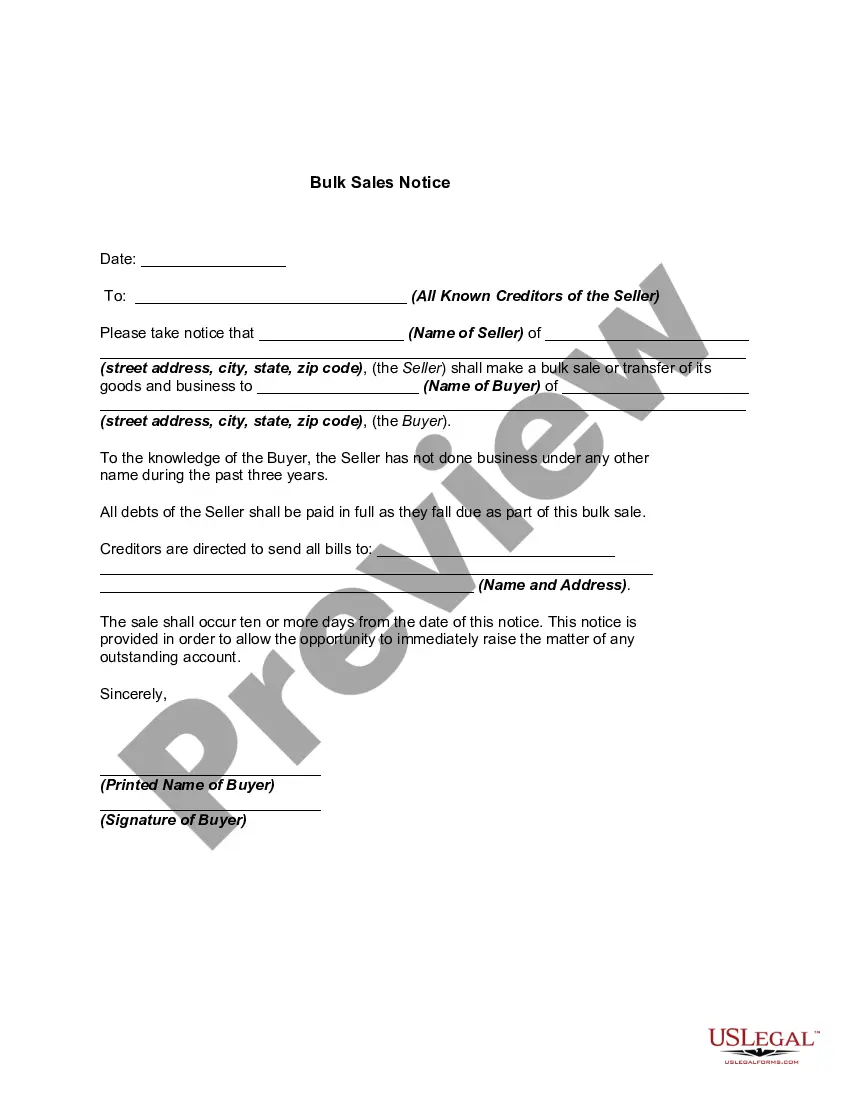
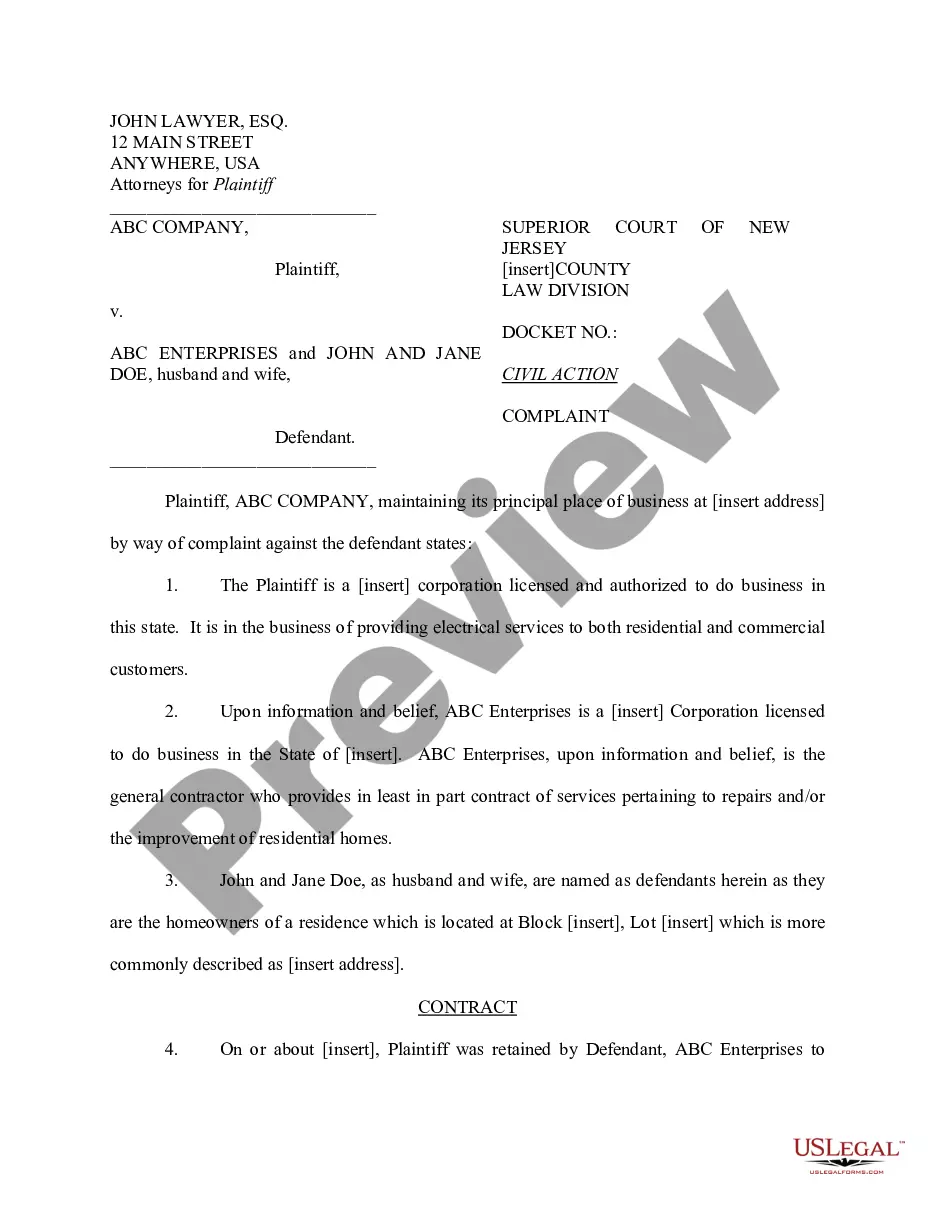
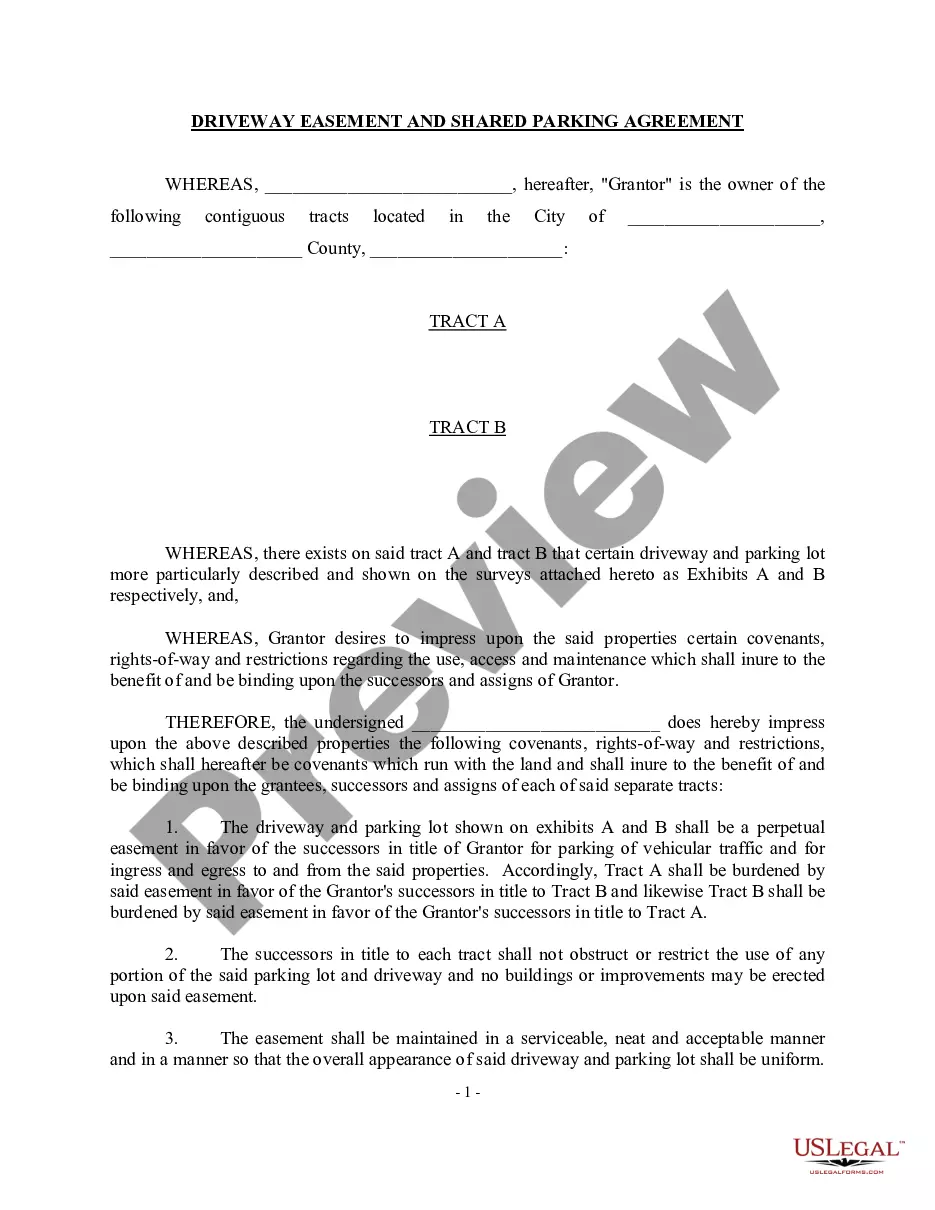
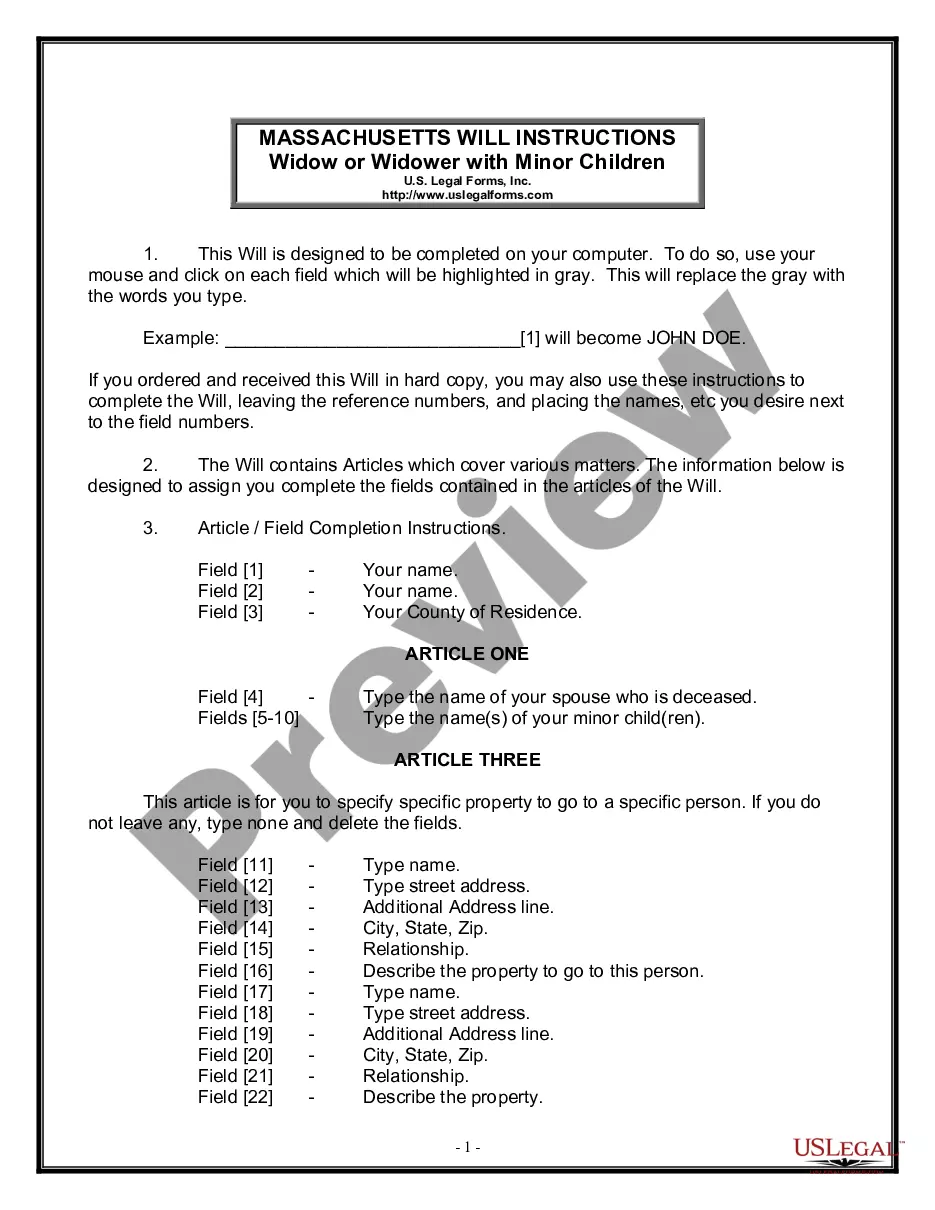
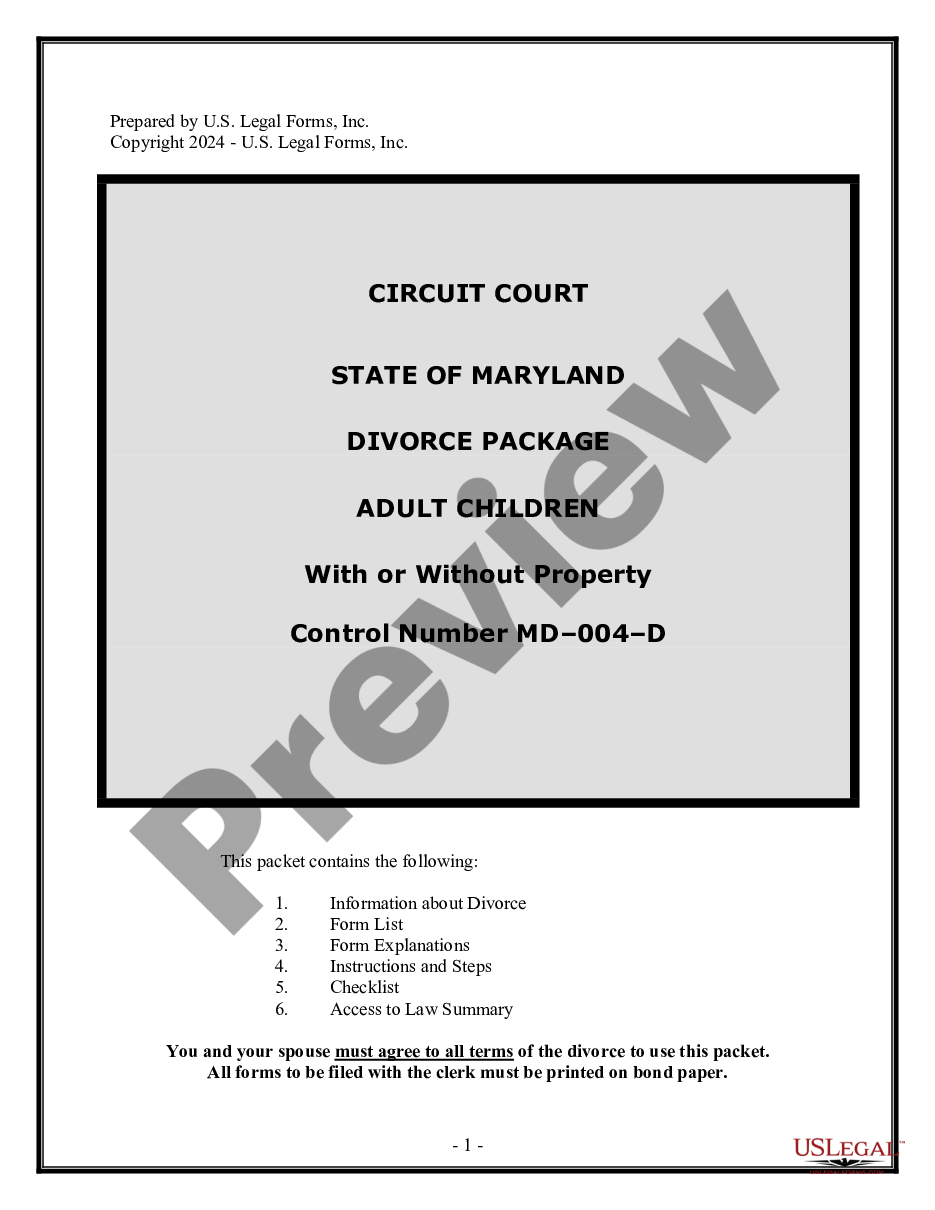
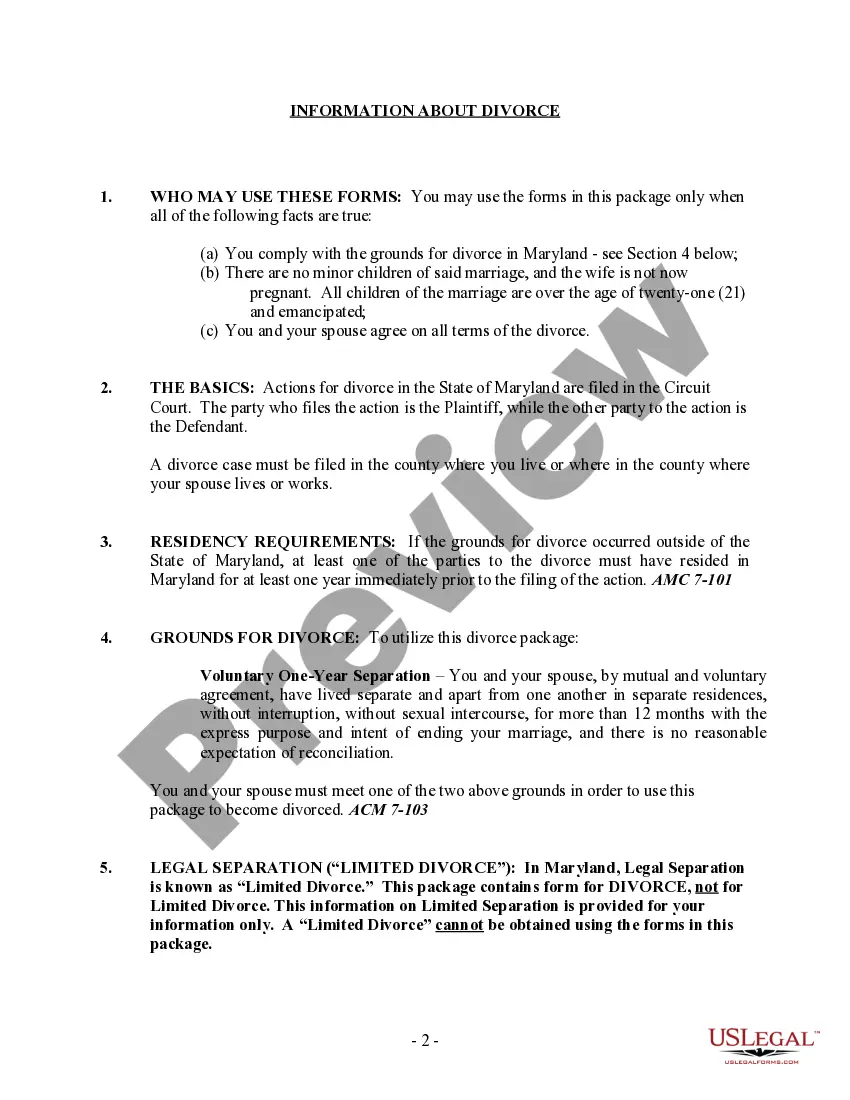
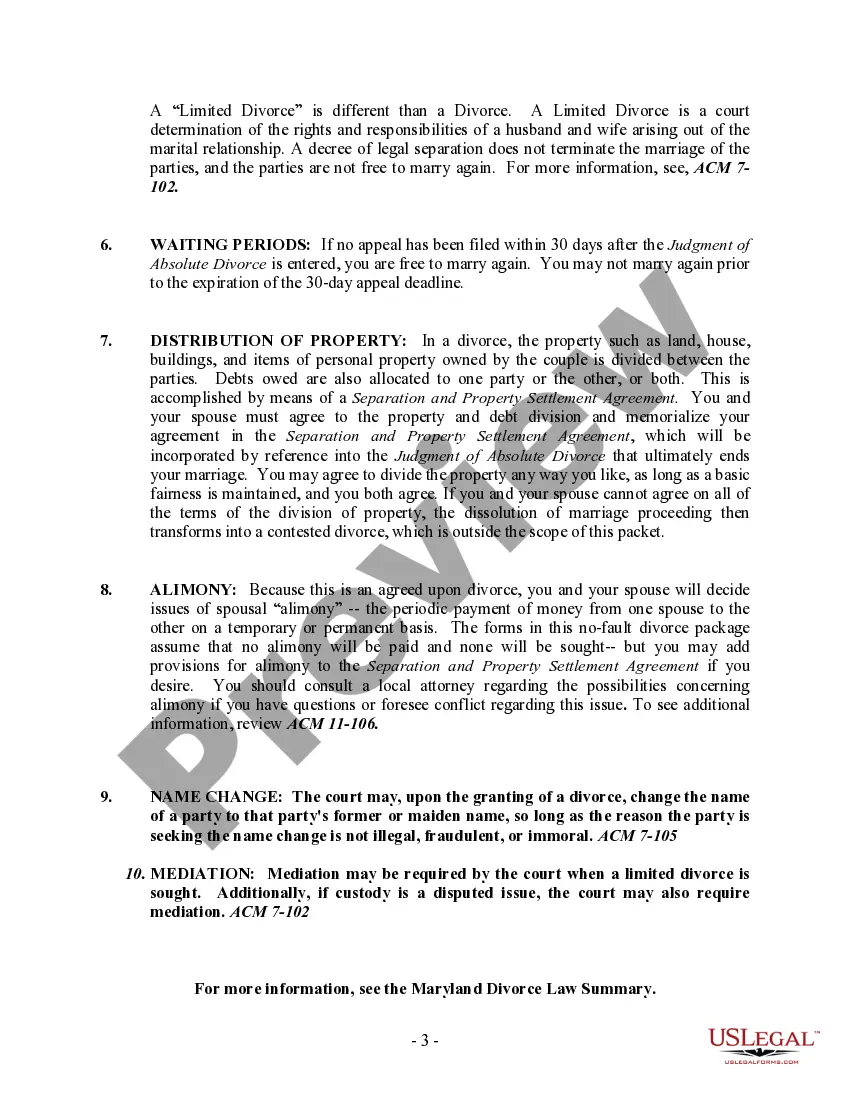
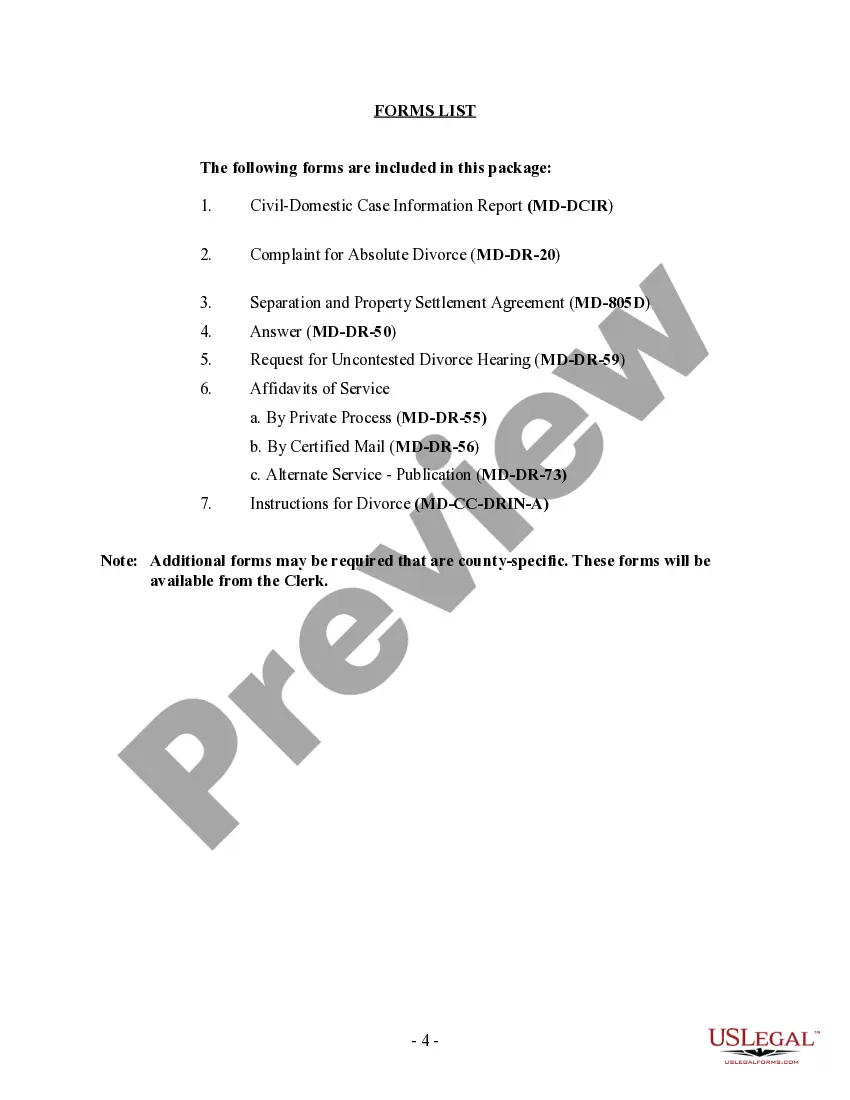
How to fill out Maryland No-Fault Uncontested Agreed Divorce Package For Dissolution Of Marriage With Adult Children And With Or Without Property And Debts?
Finding a reliable source for the most up-to-date and suitable legal forms is a significant part of managing administrative processes.
Locating the appropriate legal documents requires accuracy and careful consideration, which is why it's essential to obtain samples of Maryland Divorce With Without Attorney solely from trustworthy sources, such as US Legal Forms. An incorrect template will consume your time and prolong your situation.
Eliminate the hassle associated with your legal paperwork. Explore the vast US Legal Forms catalog where you can find legal templates, verify their relevance to your case, and download them immediately.
- Utilize the library navigation or search bar to locate your template.
- Review the form’s details to confirm it complies with your state and county's requirements.
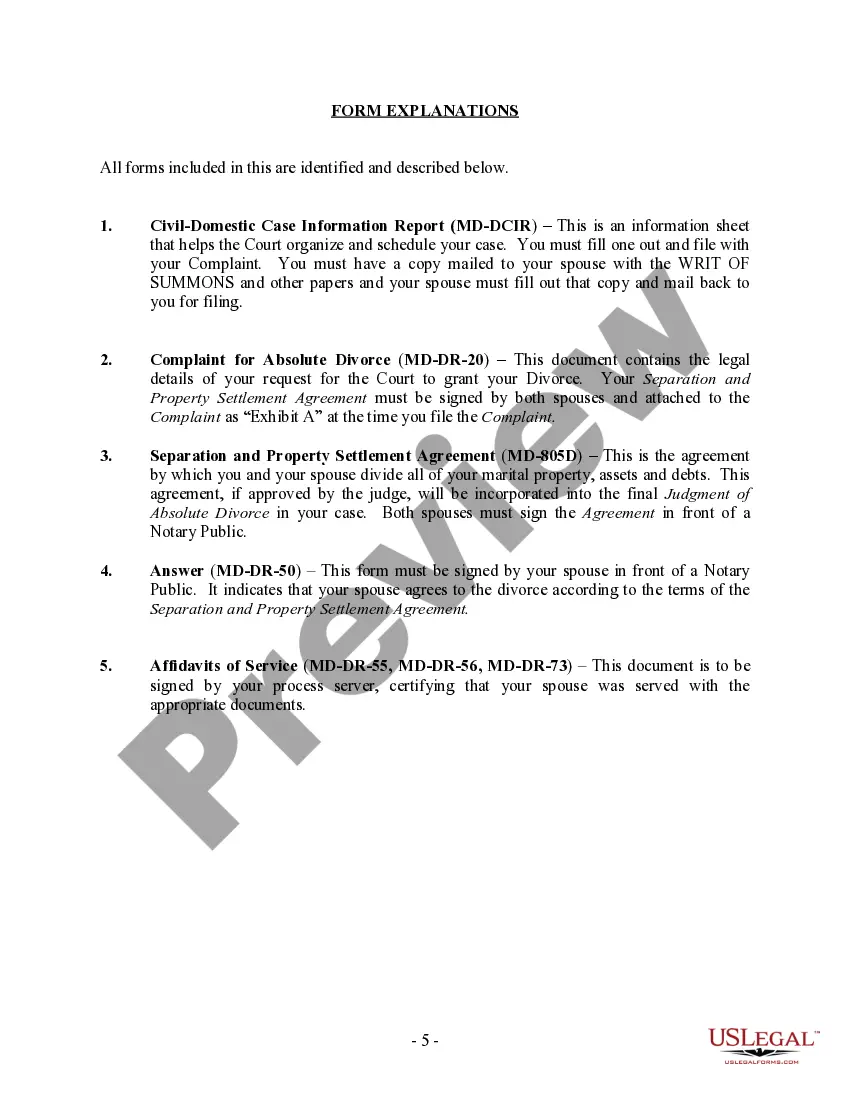
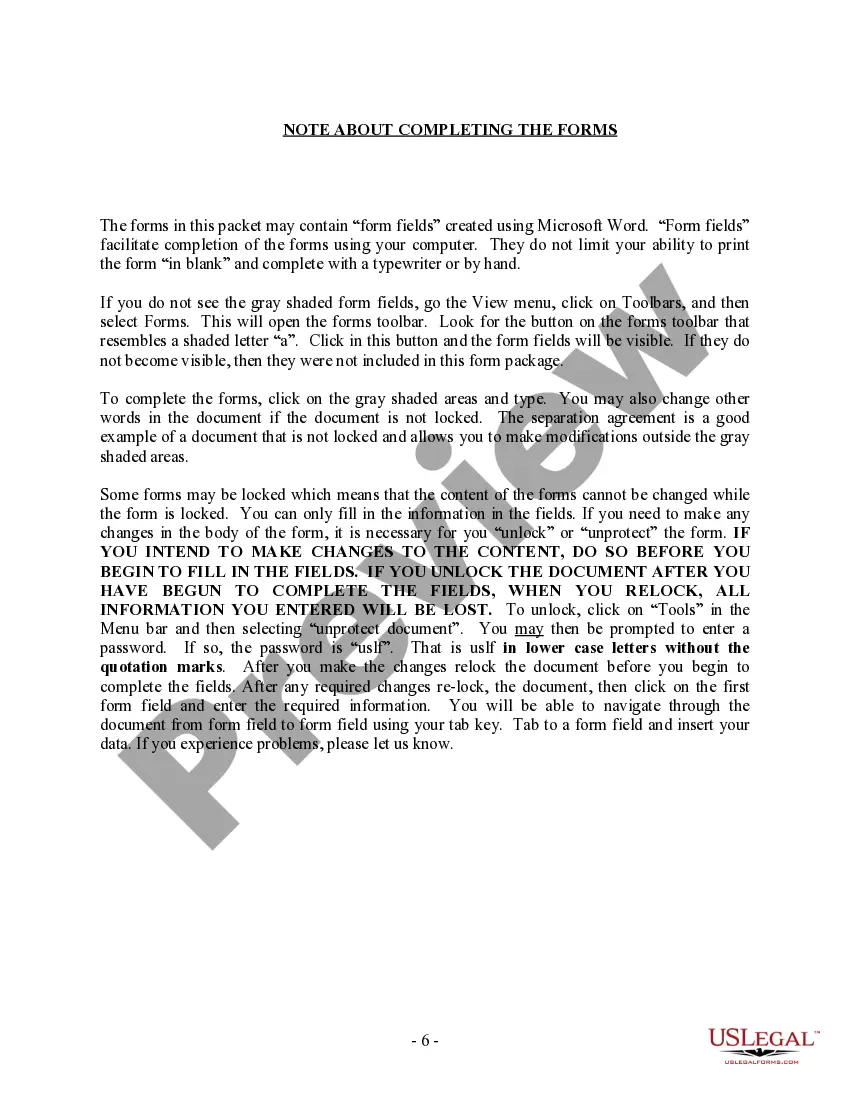
- Examine the form preview, if available, to verify that the template is what you are looking for.
- Return to your search and identify the correct template if the Maryland Divorce With Without Attorney does not fulfill your needs.
- If you are confident about the form’s applicability, download it.
- If you are an authorized user, click Log in to verify and access your selected templates in My documents.
- If you do not possess an account yet, click Buy now to acquire the template.
- Choose the pricing plan that meets your preferences.
- Proceed to registration to finalize your purchase.
- Complete your purchase by selecting a payment option (credit card or PayPal).
- Choose the document format to download Maryland Divorce With Without Attorney.
- Once you have the form on your device, you can modify it with the editor or print it out and complete it manually.
Form popularity
FAQ
During Your Lease You have the right to live in a home that is in good, habitable condition. This means both your home and the premises, such as a yard, should be safe and in good repair. Your landlord must also keep any common areas in good enough shape for their normal use.
Your landlord can't enter your home without permission except in an emergency. If there is a problem that your landlord needs to enter your home to fix, you should be given notice a reasonable time before the landlord plans to enter.
Verbal threats, threats of physical violence, or actual physical contact are all examples of landlord harassment. Also, keep in mind that verbal threats can occur via face-to-face interaction, over the phone, or in writing.
If the landlord fails to maintain the upkeep and safety premises, you may have grounds for a negligence lawsuit in violation of Michigan law. Some of the most common causes of these lawsuits include: Defective staircases. Accidents involving elevators.
The lease agreement is between the landlord and tenant only. Occupants are not tenants; they are not named on the lease, but you can authorize them to stay on the property as a landlord. Occupants do not have financial responsibility for the lease and have no specific rights under landlord/tenant law.
Michigan and U.S. fair housing laws say that landlords cannot discriminate against tenants or applicants because of their race, color, religion, sex, familial status (kids under 18), national origin, disability, age, or marital status.
Some circumstances that can amount to a breach of the implied warranty of habitability include a non-functioning furnace, the presence of significant mold or holes in the roof (provided they were not caused by the tenant AND the landlord did not take reasonable steps to repair them.
Aside from their rights, tenants in Michigan have an obligation to: Pay rent on time. Make small repair jobs to the rental unit (If they see any small damages during the lease). Not disturb other people living nearby (Other tenants or neighbors)