Kentucky Life Estate Deed Withdrawal

Description
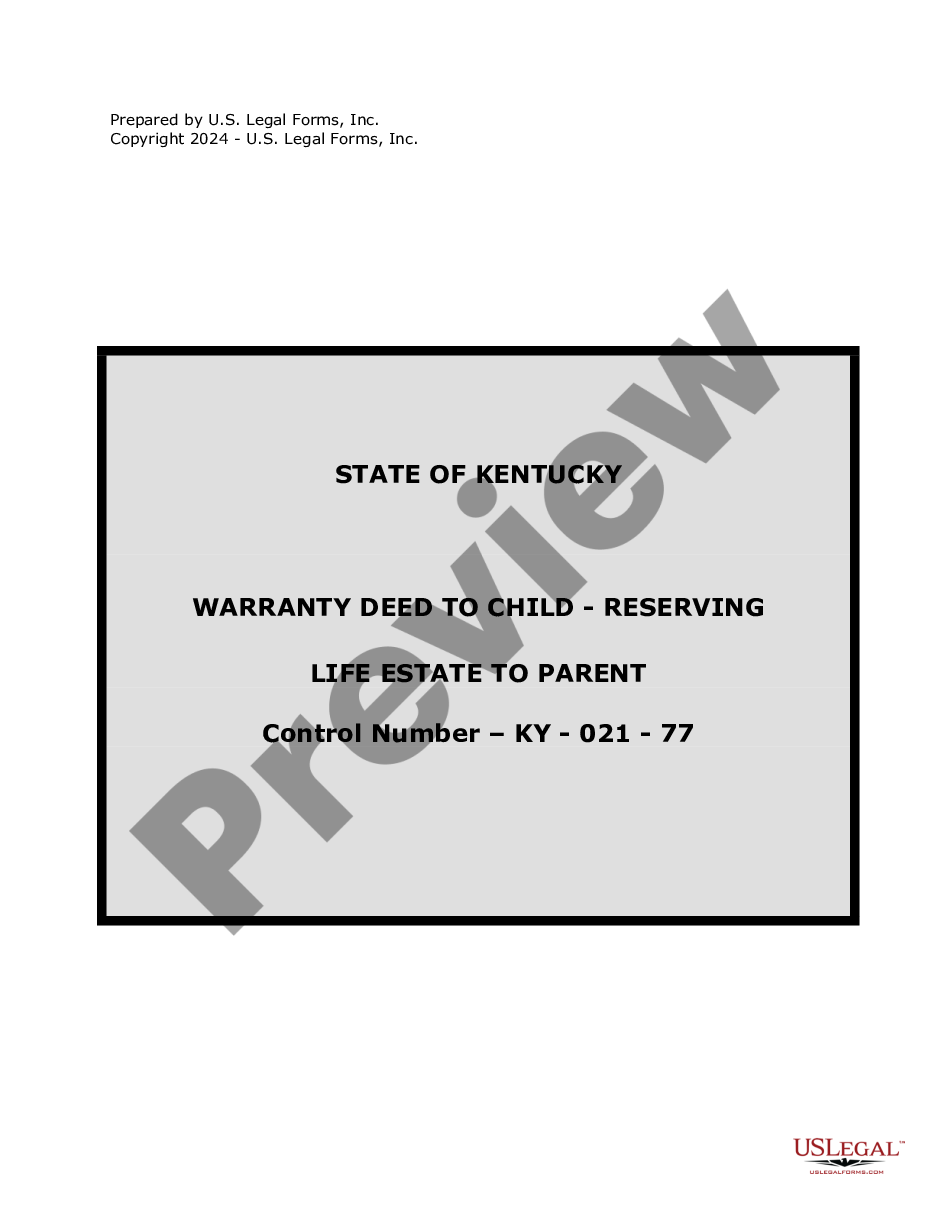
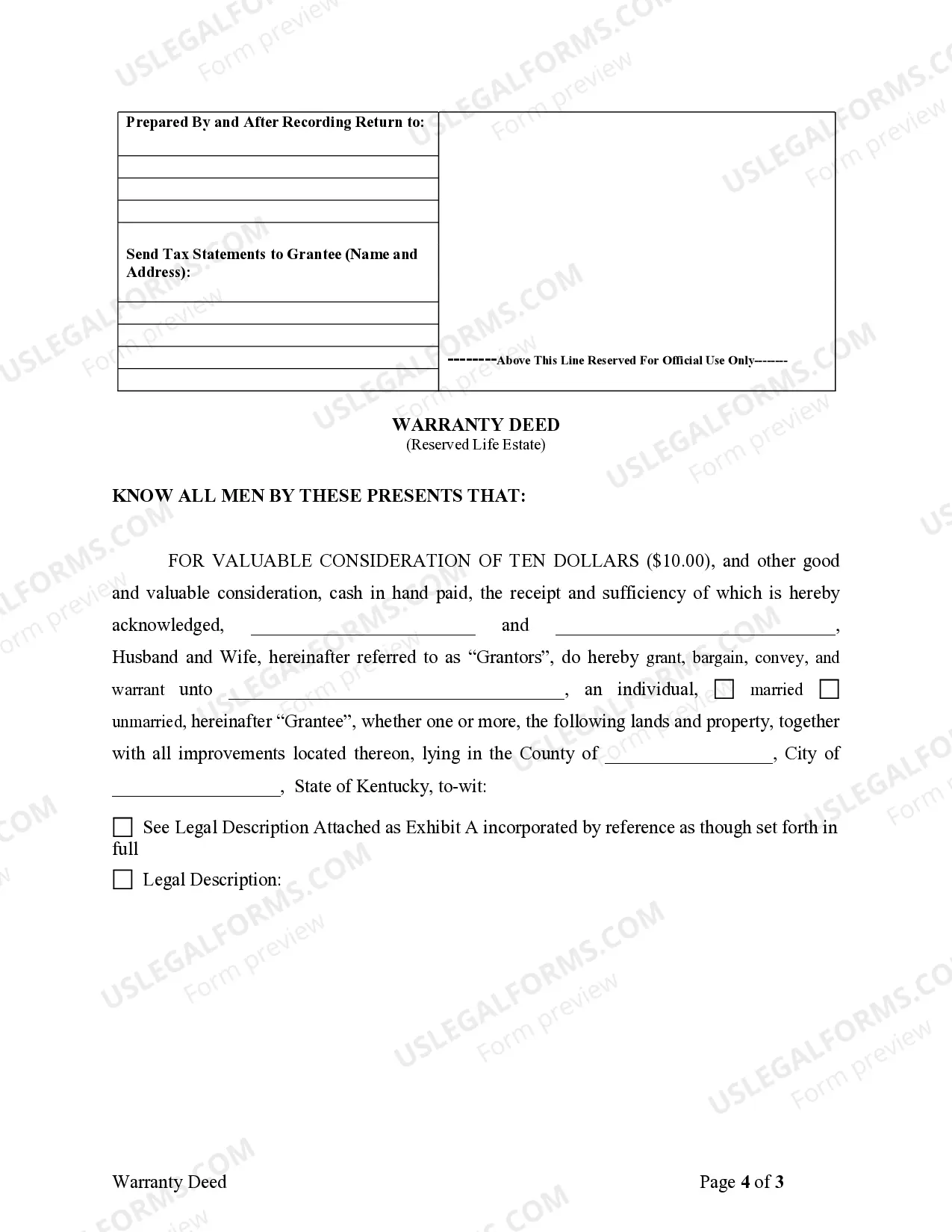


Get your form ready online
Our built-in tools help you complete, sign, share, and store your documents in one place.
Make edits, fill in missing information, and update formatting in US Legal Forms—just like you would in MS Word.
Download a copy, print it, send it by email, or mail it via USPS—whatever works best for your next step.
Sign and collect signatures with our SignNow integration. Send to multiple recipients, set reminders, and more. Go Premium to unlock E-Sign.
If this form requires notarization, complete it online through a secure video call—no need to meet a notary in person or wait for an appointment.
We protect your documents and personal data by following strict security and privacy standards.

Make edits, fill in missing information, and update formatting in US Legal Forms—just like you would in MS Word.

Download a copy, print it, send it by email, or mail it via USPS—whatever works best for your next step.

Sign and collect signatures with our SignNow integration. Send to multiple recipients, set reminders, and more. Go Premium to unlock E-Sign.

If this form requires notarization, complete it online through a secure video call—no need to meet a notary in person or wait for an appointment.

We protect your documents and personal data by following strict security and privacy standards.
Looking for another form?
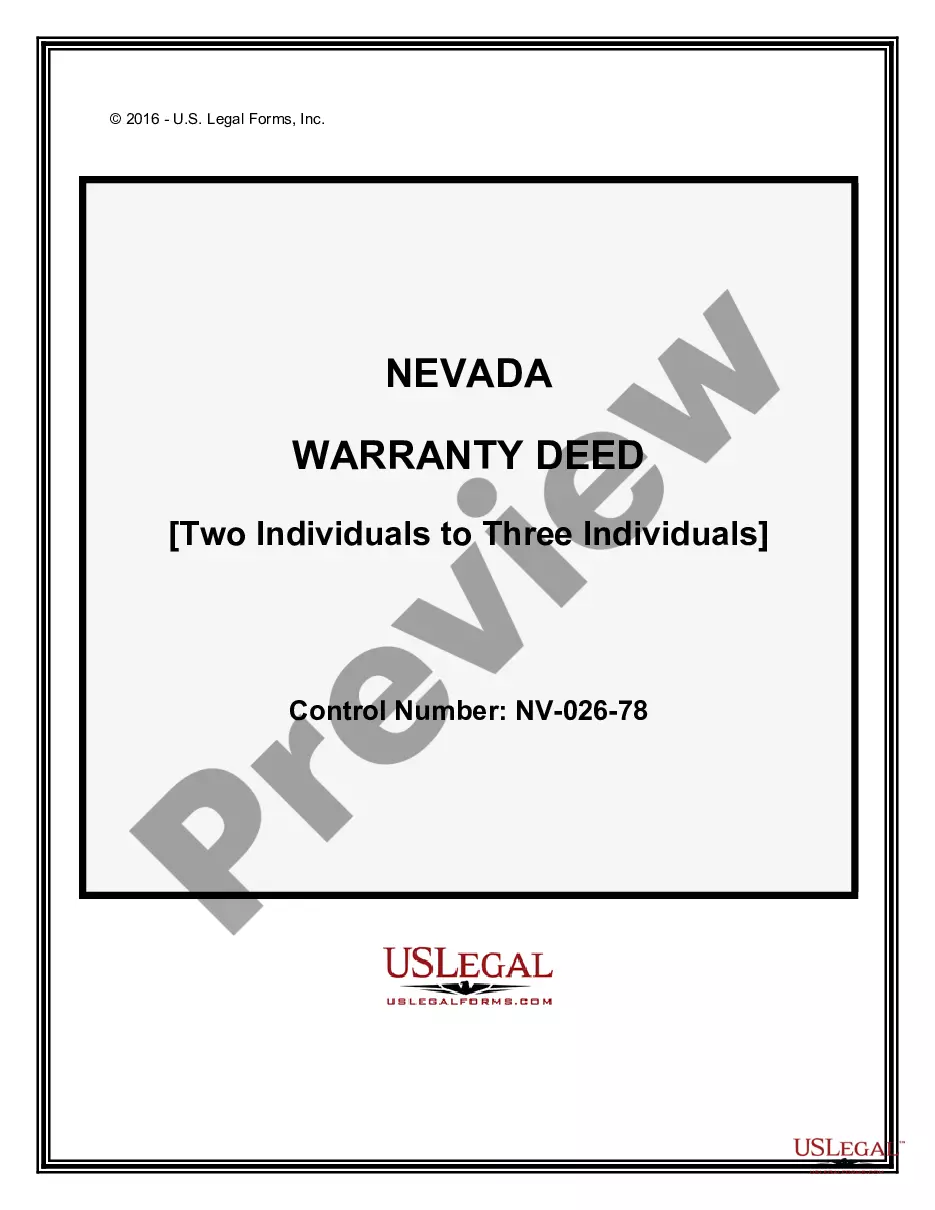
How to fill out Kentucky Warranty Deed To Child Reserving A Life Estate In The Parents?
Whether for commercial objectives or for individual issues, everyone must confront legal matters at some stage in their existence.
Filling out legal documentation requires meticulous consideration, starting from selecting the correct form example.
With a vast US Legal Forms catalog at your disposal, you do not need to waste time searching for the suitable template across the internet. Utilize the library’s straightforward navigation to find the correct form for any situation.
- Locate the template you require by using the search bar or browsing the catalog.
- Review the document’s details to confirm it aligns with your scenario, state, and county.
- Click on the form’s preview to inspect it.
- If it is not the correct document, return to the search feature to find the Kentucky Life Estate Deed Withdrawal sample you need.
- Download the document if it satisfies your requirements.
- If you possess a US Legal Forms account, simply click Log in to access previously stored documents in My documents.
- In case you don’t have an account yet, you can acquire the form by clicking Buy now.
- Choose the appropriate pricing option.
- Fill out the registration form for your account.
- Select your payment option: utilize a credit card or PayPal account.
- Choose the desired file format and download the Kentucky Life Estate Deed Withdrawal.
- Once it is saved, you can complete the form using editing software or print it and finish it by hand.
Form popularity
FAQ
Life Estates establish two different categories of property owners: the Life Tenant Owner and the Remainder Owner. The Life Tenant Owner maintains the absolute and exclusive right to use the property during his or her lifetime. This can be a sole owner or joint Life Tenants.
A life estate deed is a legal document that changes the ownership of a piece of real property. The person who owns the real property (in this example, Mom) signs a deed that will pass the ownership of the property automatically upon her death to someone else, known as the "remainderman" (in this example, Son).
Unlike most other states, Kentucky utilizes the ?dower and curtesy? inheritance structure. If a spouse dies without a will, the spouse receives the dower share, but not the entire estate. Because of these laws, you'll want to consider a will to designate how you want your assets distributed, despite being married.
There is no simple way to reverse a life estate because a life estate deed is a legal transfer of the title of a property. This is legally binding and the transaction is complete when the life estate is executed. Essentially, in order to reverse a life estate both parties would need to agree to make it happen.
As noted in the Kentucky Revised Statute 395.010, you must file for probate within 10 years of the individual's death. However, filing as soon as possible after the person's death will allow you to complete the probate process promptly.