Iowa Life Estate Form With Decimals
Description
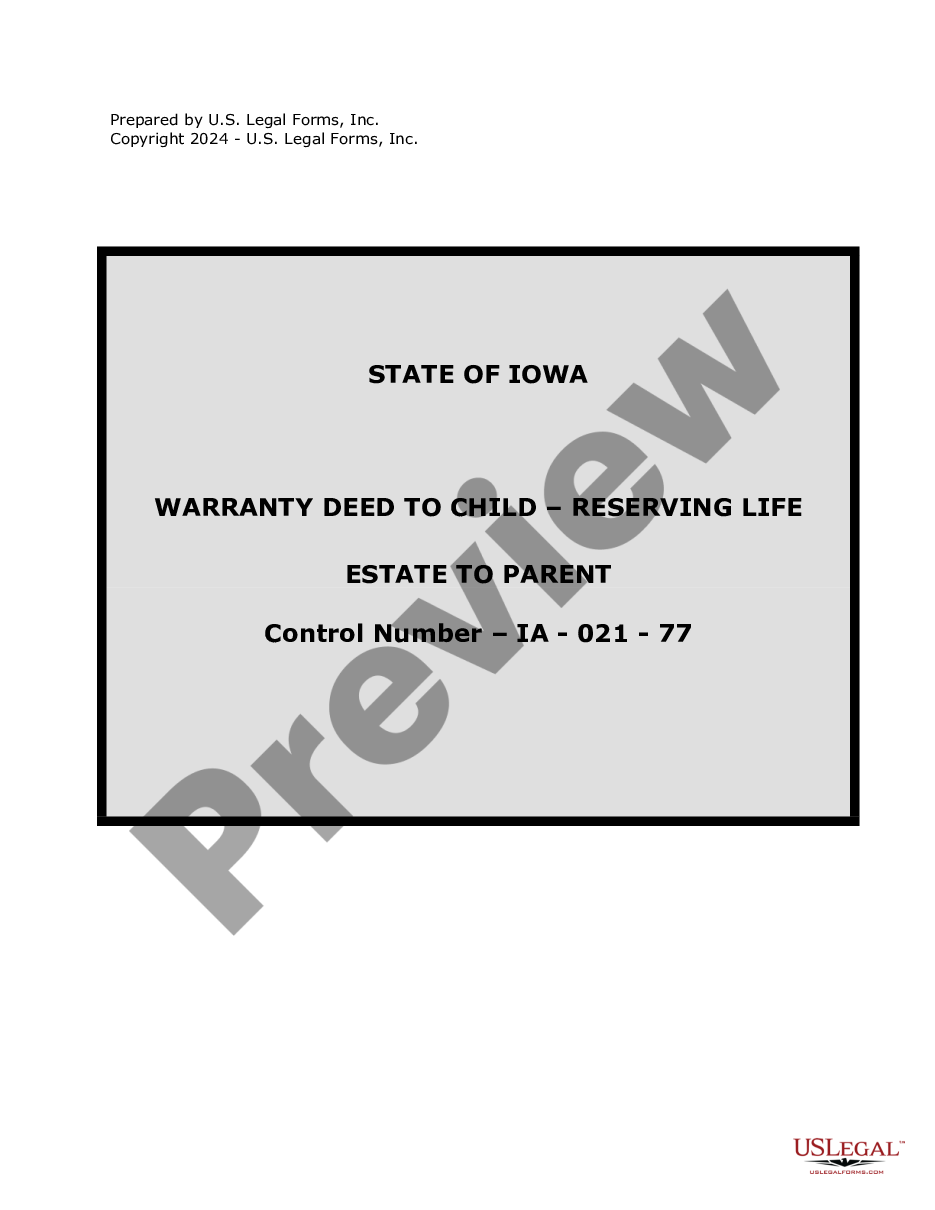
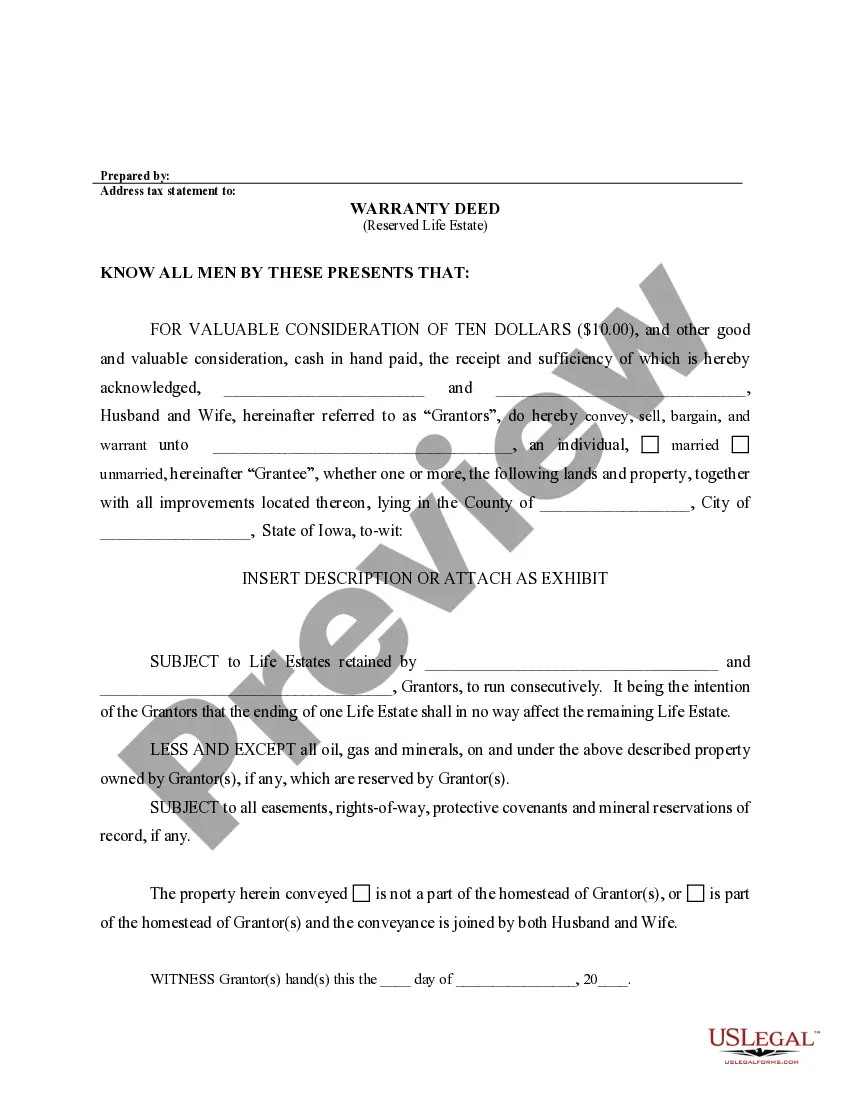
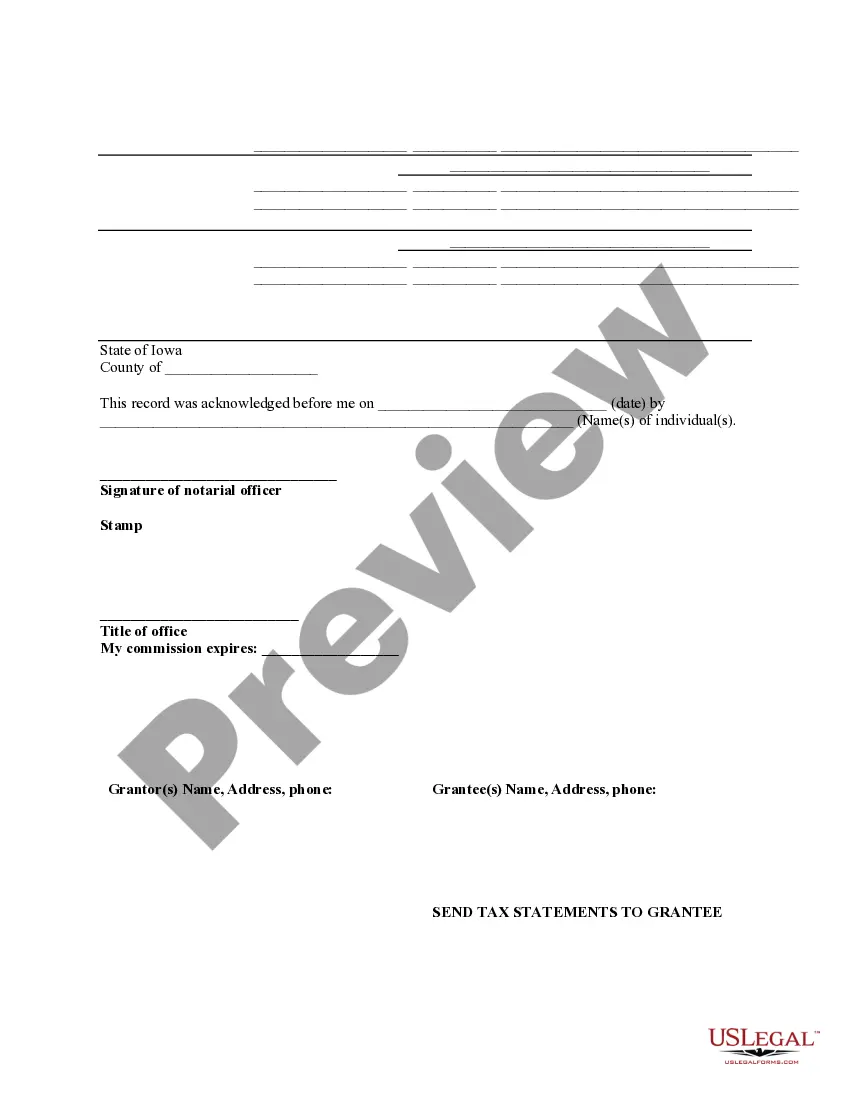
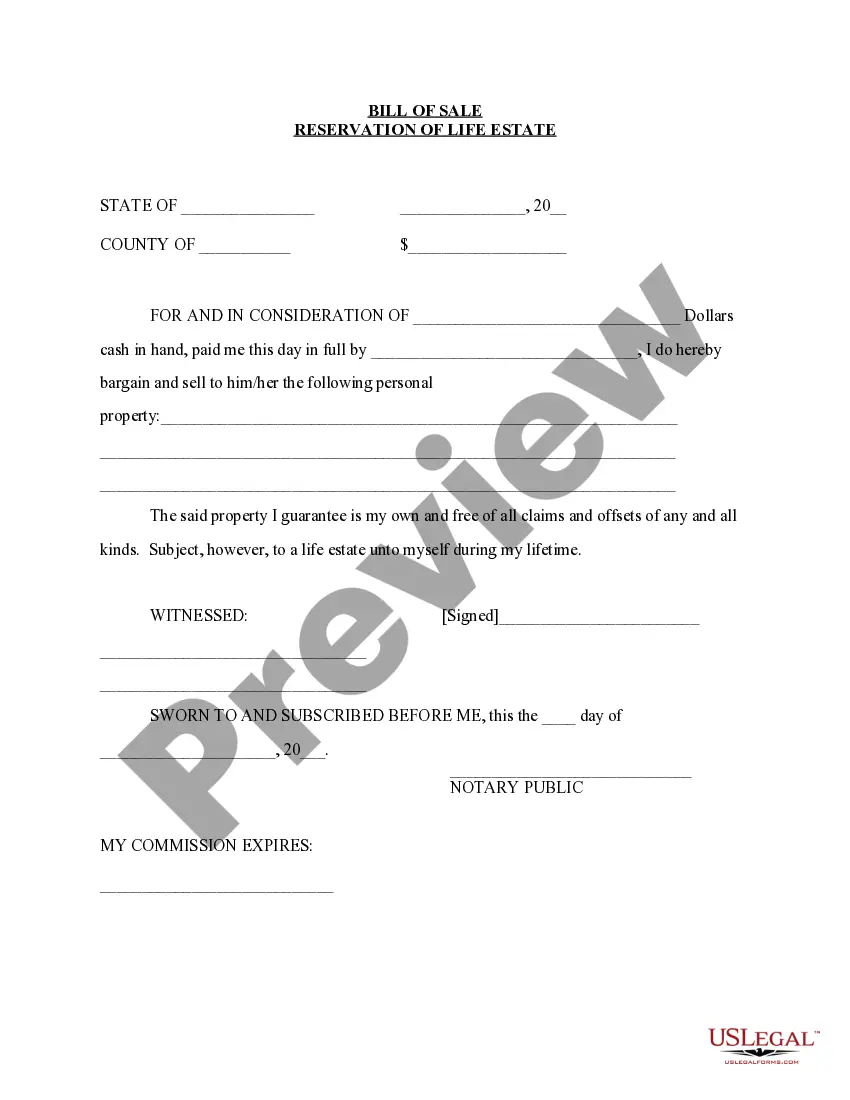
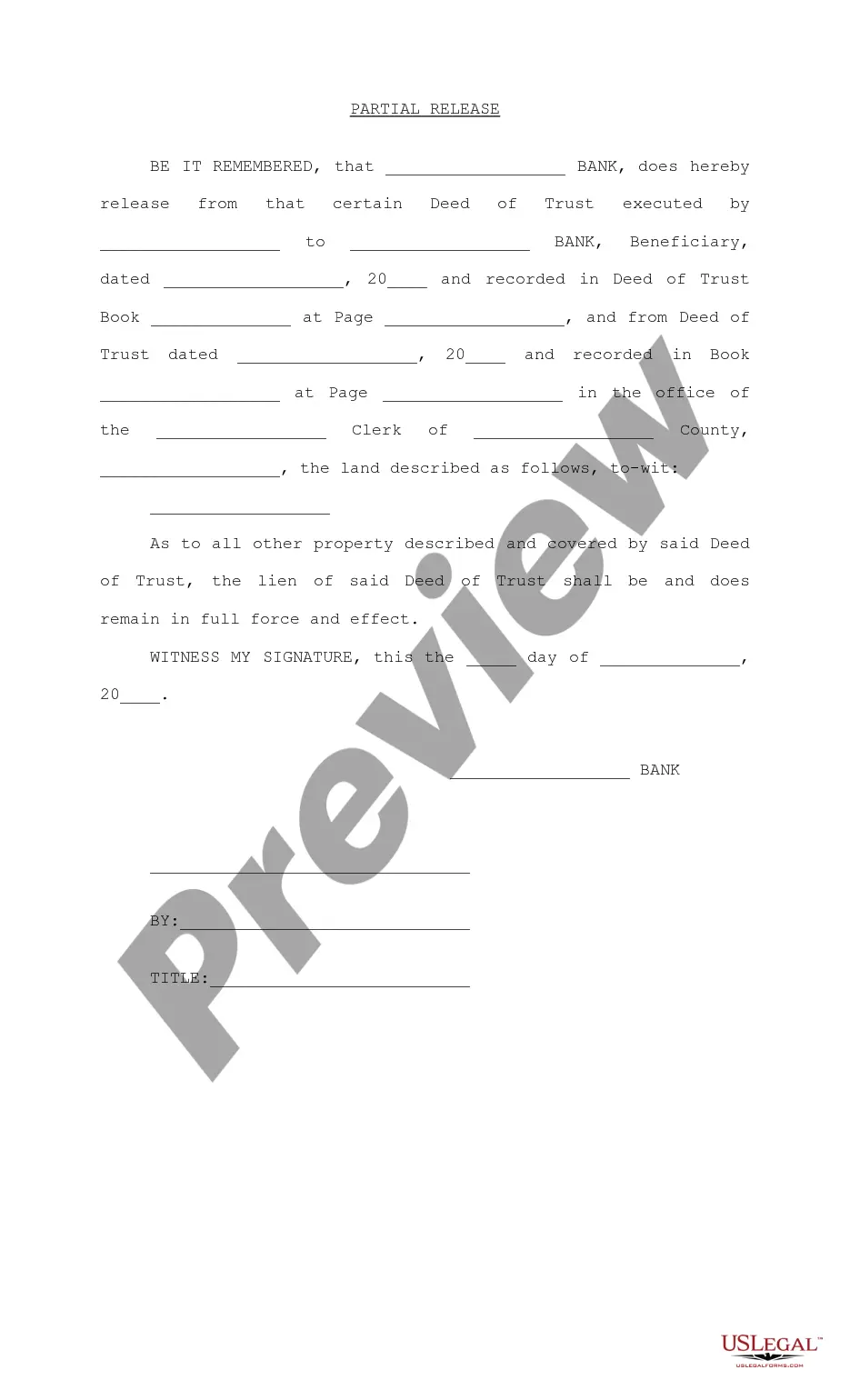
Get your form ready online
Our built-in tools help you complete, sign, share, and store your documents in one place.
Make edits, fill in missing information, and update formatting in US Legal Forms—just like you would in MS Word.
Download a copy, print it, send it by email, or mail it via USPS—whatever works best for your next step.
Sign and collect signatures with our SignNow integration. Send to multiple recipients, set reminders, and more. Go Premium to unlock E-Sign.
If this form requires notarization, complete it online through a secure video call—no need to meet a notary in person or wait for an appointment.
We protect your documents and personal data by following strict security and privacy standards.

Make edits, fill in missing information, and update formatting in US Legal Forms—just like you would in MS Word.

Download a copy, print it, send it by email, or mail it via USPS—whatever works best for your next step.

Sign and collect signatures with our SignNow integration. Send to multiple recipients, set reminders, and more. Go Premium to unlock E-Sign.

If this form requires notarization, complete it online through a secure video call—no need to meet a notary in person or wait for an appointment.

We protect your documents and personal data by following strict security and privacy standards.
Looking for another form?
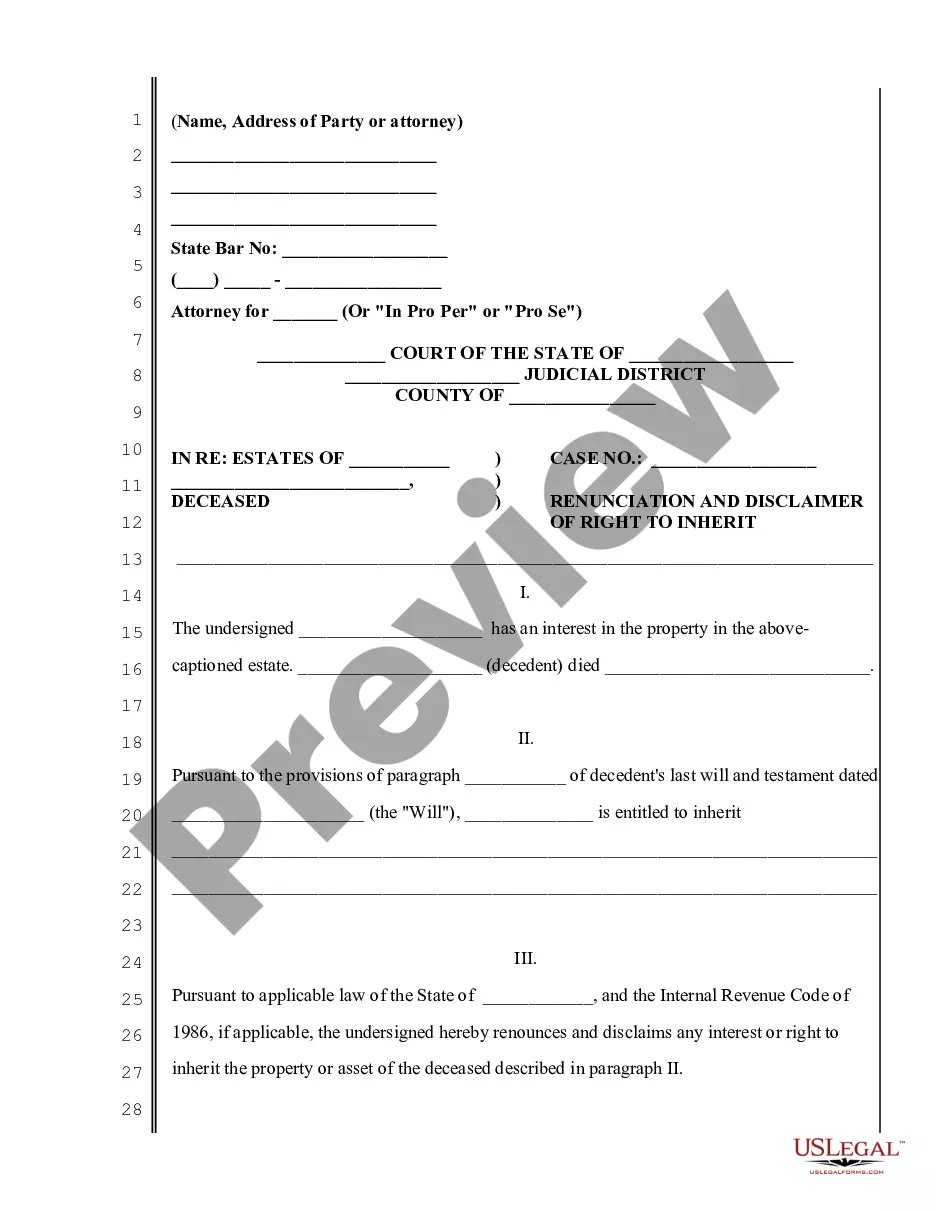


How to fill out Iowa Warranty Deed To Child Reserving A Life Estate In The Parents?
- If you are a returning user, log in to your account and verify your subscription status. Ensure you can access the desired form template by clicking the Download button.
- For new users, begin by accessing the form library. Browse or utilize the search function to locate the Iowa life estate form that meets your jurisdictional needs.
- Review the form description and preview mode to confirm this is the correct document for your purposes.
- If necessary, explore additional templates using the search bar to find the appropriate form.
- Once you find the right document, click on the Buy Now button and select a subscription plan that suits your legal needs.
- Complete your purchase by providing your payment details through credit card or PayPal.
- After payment, download the Iowa life estate form to your device. You can also find it later in the My Forms section of your account.
US Legal Forms empowers users with a robust library of over 85,000 easily editable legal forms, more extensive than many competitors. This ensures individuals can always find the exact document needed for their legal situations.
Streamline your legal form procurement today with US Legal Forms. Start now to gain access to expert assistance and ensure your documents are filled out correctly!
Form popularity
FAQ
To calculate the value of a life estate, you first need to know the age of the life tenant and their life expectancy. You then apply a specific valuation table that offers a percentage based on these factors. This will allow you to determine the present value of the life estate. Utilizing the Iowa life estate form with decimals can streamline this process, ensuring precise valuations aligned with legal requirements.
The value of an estate is calculated by assessing all its assets and liabilities. Typically, the total value includes real estate, personal property, and financial accounts. After determining these amounts, you subtract any outstanding debts. For a clear understanding, using the Iowa life estate form with decimals can help ensure accurate calculations that comply with local laws.
There are several forms of life estate, including conventional life estates, pur autre vie, and legal life estates that arise from marriage. Each type has different implications for ownership and rights after the death of the life tenant. By using an Iowa life estate form with decimals, you can create a tailored document that specifies the type of life estate you desire, ensuring all terms are legally binding and clear.
The life estate is calculated by assessing the fair market value of the property and factoring in the age and health of the individual holding the life estate. Life expectancy tables can assist in this calculation by providing a more detailed estimate. Employing an Iowa life estate form with decimals can help clarify these calculations, ensuring all parties understand the implications of the life estate arrangement.
Calculating a life estate involves determining the present value of the life estate based on the property’s value and the life expectancy of the individual holding it. Generally, this calculation takes into account IRS tables for life expectancy and applies a suitable discount rate. Utilizing an Iowa life estate form with decimals can help facilitate these calculations accurately and ensure they meet legal standards.
A common example of a life estate involves a parent who transfers their home to their child while retaining the right to live there until their death. This arrangement allows the parent to maintain a home without fear of eviction, while ensuring the property passes to the child after their passing. This type of agreement is often documented using an Iowa life estate form with decimals to ensure legal compliance and clarity.
To calculate the value of an estate, you consider the total worth of all assets, including real estate, personal property, and any investments. You need to subtract any debts or liabilities from this total. This calculation provides a clear picture of the estate's value, especially when filling out an Iowa life estate form with decimals for legal clarity. Accurate calculations can help avoid disputes among heirs.
A will generally cannot override a life estate deed. When you create a life estate, it establishes a property arrangement that exists independent of a will. This means that the life estate deed will dictate the distribution of the property, even if a will states otherwise. For clarity on creating an effective Iowa life estate form with decimals, consider using our platform.
An estate may need to file Form 706 if its total value exceeds the federal estate tax exemption limit. It’s necessary to gather all assets and submit a complete valuation, and the Iowa life estate form with decimals may factor into that valuation. Navigating this requirement can be challenging, but leveraging professional legal services can provide the needed support to correctly file.
Individuals who do not make gifts over the annual exclusion limit are generally not required to file Form 709. If your gifts fall within the limits, you might not need to report them. However, when dealing with property interests like life estates, especially the Iowa life estate form with decimals, it's essential to verify your specific obligations. Seeking expert advice ensures compliance and clarity.