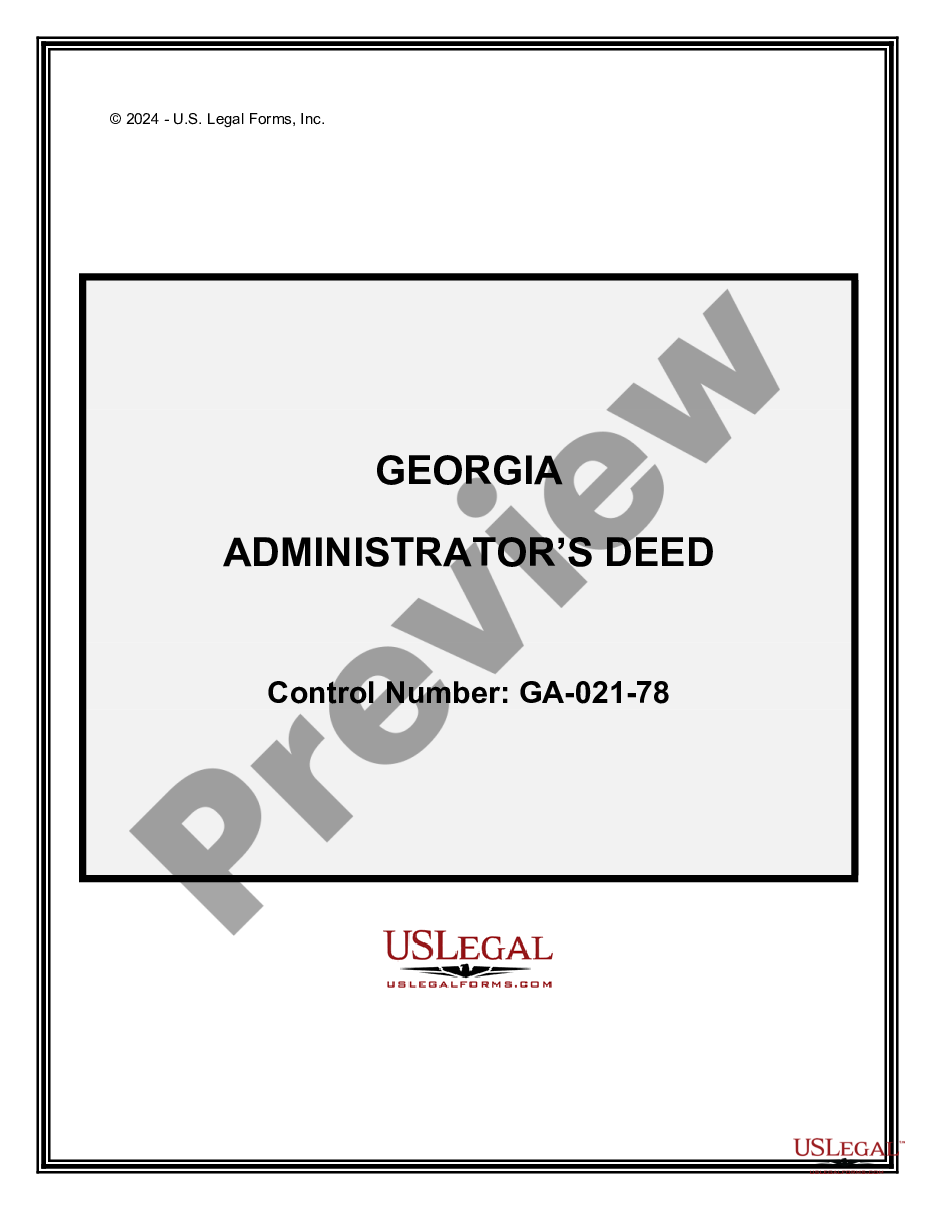
Administrators Deed Real Contract With The Government
Description
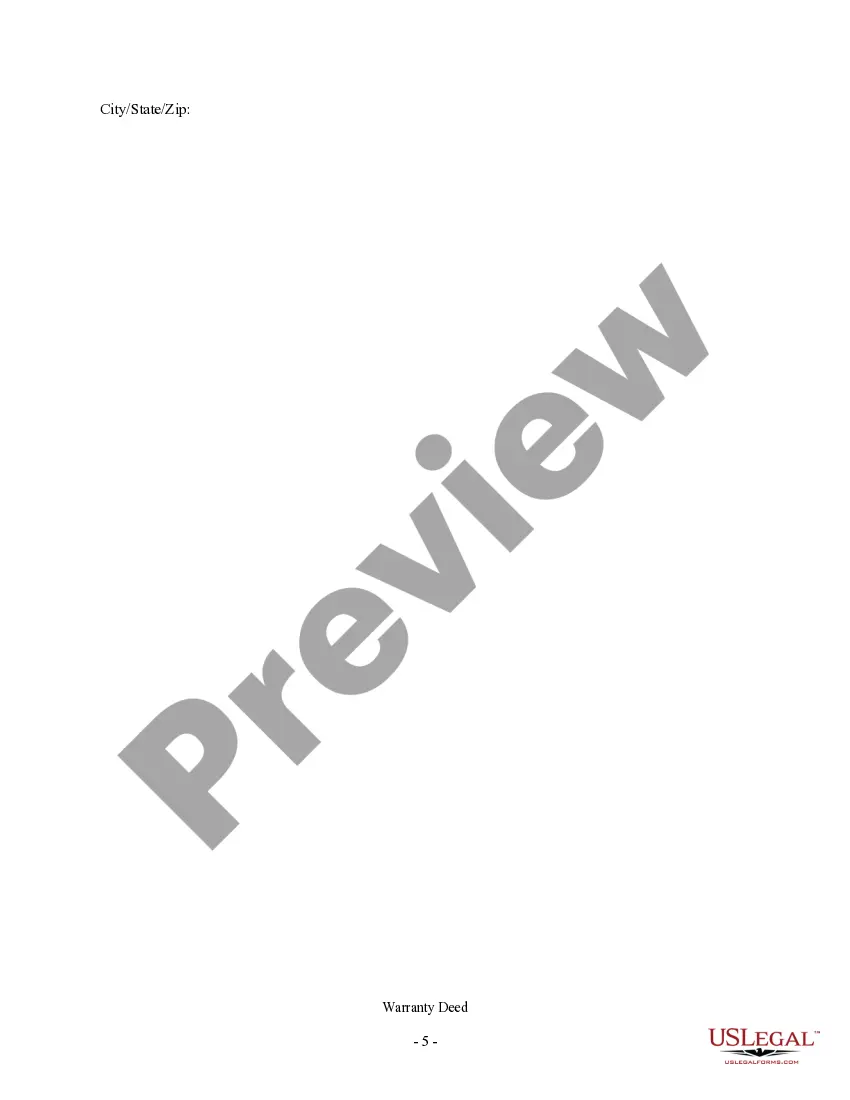
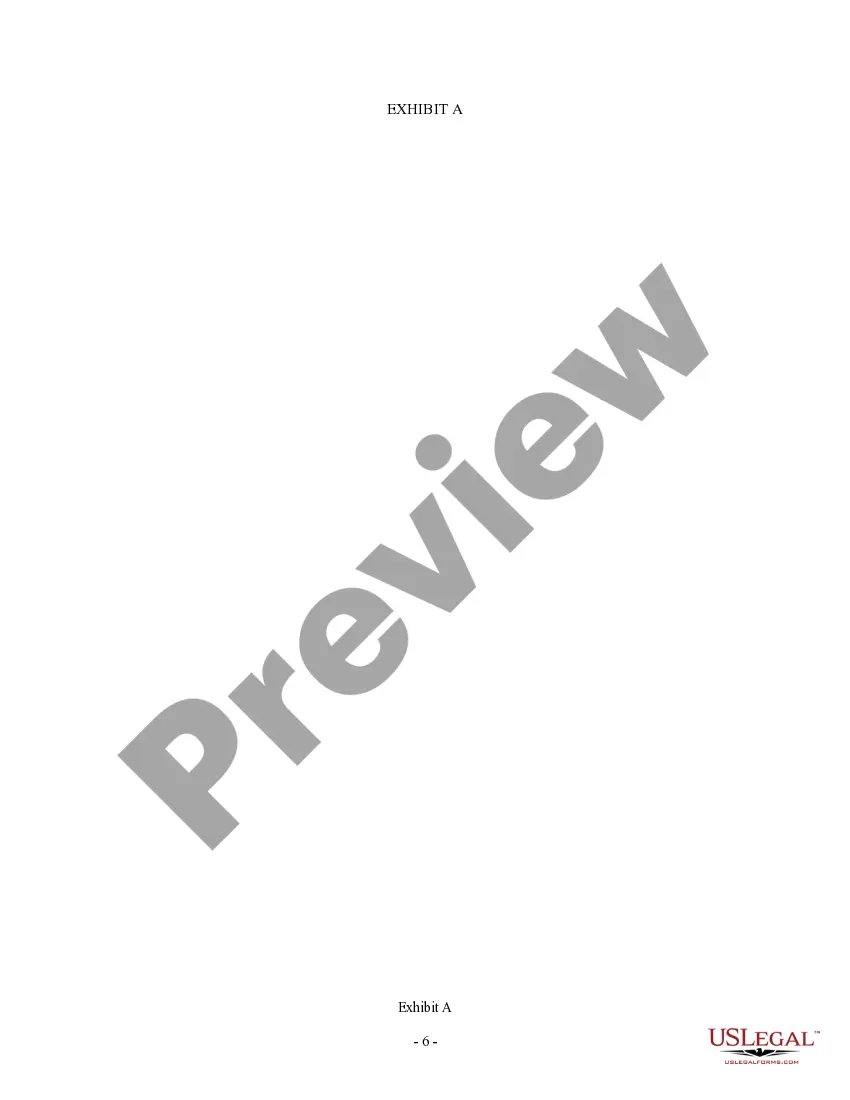
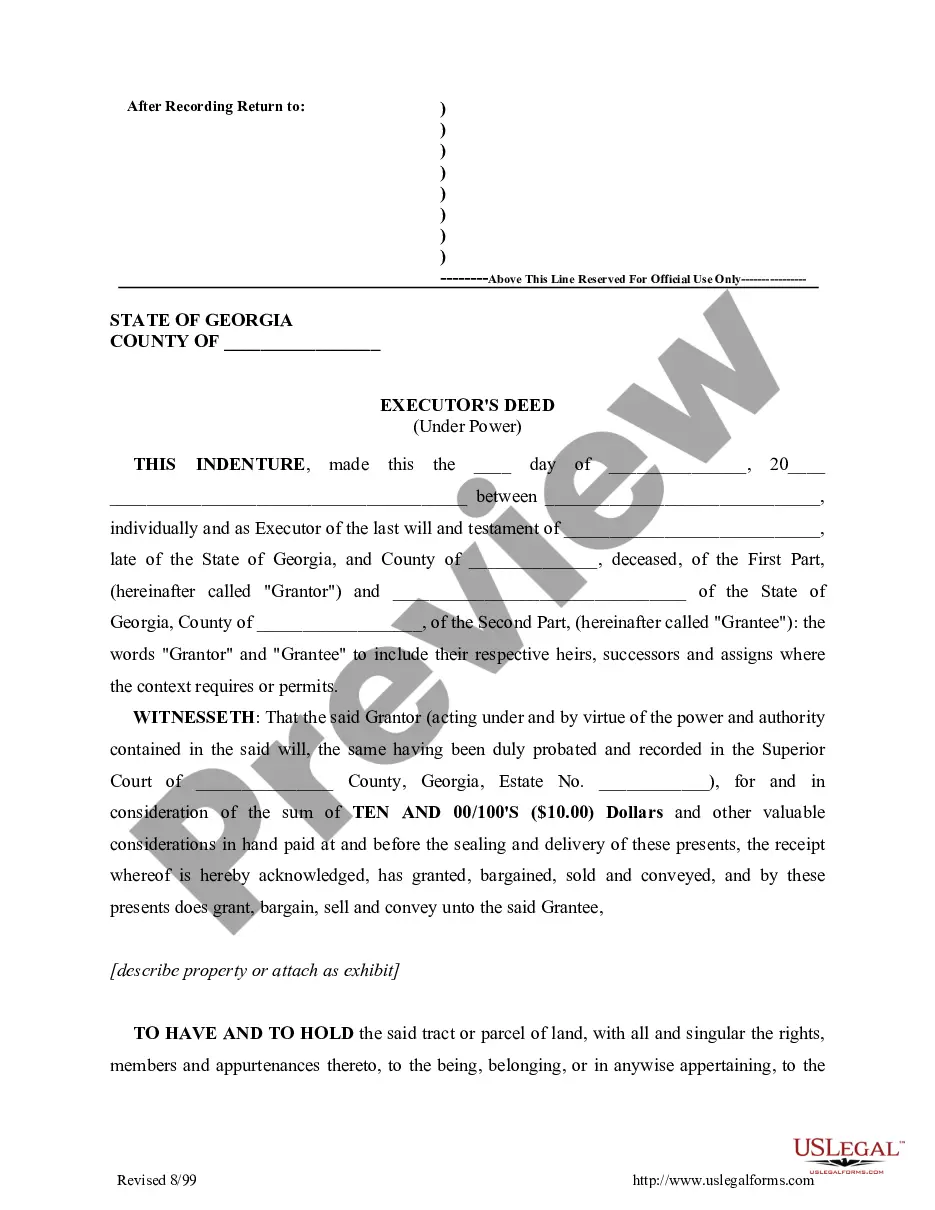

Get your form ready online
Our built-in tools help you complete, sign, share, and store your documents in one place.
Make edits, fill in missing information, and update formatting in US Legal Forms—just like you would in MS Word.
Download a copy, print it, send it by email, or mail it via USPS—whatever works best for your next step.
Sign and collect signatures with our SignNow integration. Send to multiple recipients, set reminders, and more. Go Premium to unlock E-Sign.
If this form requires notarization, complete it online through a secure video call—no need to meet a notary in person or wait for an appointment.
We protect your documents and personal data by following strict security and privacy standards.

Make edits, fill in missing information, and update formatting in US Legal Forms—just like you would in MS Word.

Download a copy, print it, send it by email, or mail it via USPS—whatever works best for your next step.

Sign and collect signatures with our SignNow integration. Send to multiple recipients, set reminders, and more. Go Premium to unlock E-Sign.

If this form requires notarization, complete it online through a secure video call—no need to meet a notary in person or wait for an appointment.

We protect your documents and personal data by following strict security and privacy standards.
Looking for another form?

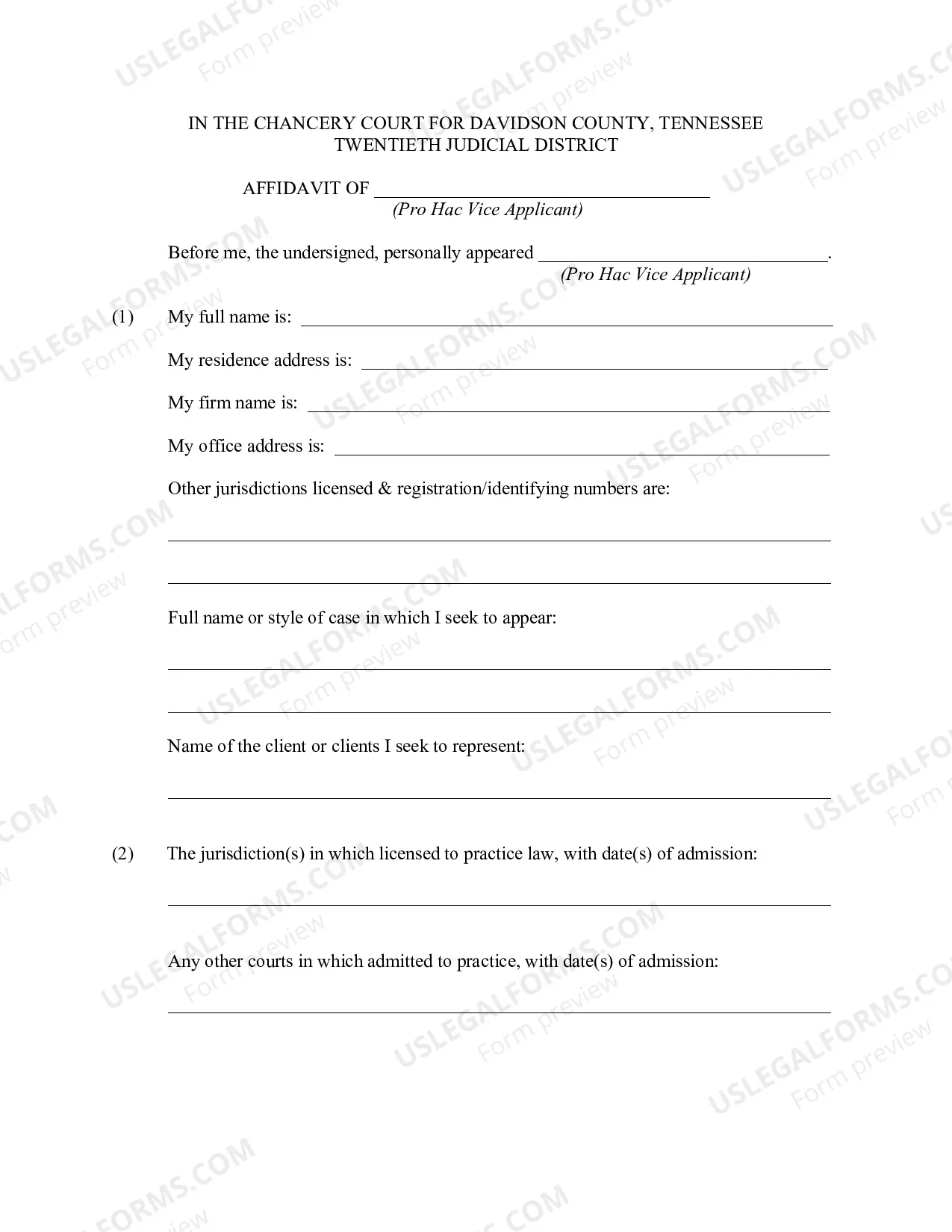






How to fill out Georgia Administrator's Deed?
- If you are a returning user, log in to your account and select the desired form template to download by clicking the Download button. Ensure your subscription is active; renew as necessary.
- For first-time users, start by examining the Preview mode and description of the forms. Choose one that fulfills your specific needs and complies with local jurisdiction requirements.
- If the selected template is not suitable, use the Search feature at the top to locate an appropriate alternative.
- Once you find the correct document, click on the Buy Now button. Choose a subscription plan that fits your requirements and create your account to access the complete library.
- Proceed to purchase by entering your payment information through credit card or PayPal to finalize the subscription.
- Download the completed form to your device, and you can access it anytime from the My Forms section of your account.
US Legal Forms revolutionizes the way individuals and attorneys manage legal documents, providing a user-friendly experience with over 85,000 fillable and editable forms, making it easier than ever to create legally binding contracts.
Don’t let legal documentation intimidate you. Get started with US Legal Forms today and ensure you have the right contracts in place—your legal peace of mind is just a click away!
Form popularity
FAQ
GFE stands for Good Faith Estimate, which outlines the estimated costs of closing a real estate transaction, while GFP refers to Government-Furnished Property, which indicates items provided by the government for project completion. Understanding these differences is essential, especially when dealing with the administrators deed real contract with the government, as it helps in budgeting and understanding obligations.
The property administrator can find the government property clause typically located in the restrictions section of the contract. This clause outlines specific limitations or responsibilities tied to the property under the administrators deed real contract with the government. Clear understanding of this section ensures that administrators manage the property in accordance with government regulations.
A typical contract for deed outlines the terms of sale, where the buyer makes payments directly to the seller, rather than obtaining a mortgage. This agreement allows the buyer to take possession of the property while completing payments over time. When an administrators deed real contract with the government is involved, clarity about payment terms and responsibilities can simplify the transaction process.
Yes, you can prepare a deed yourself, but it requires careful attention to legal requirements and proper formatting. If you are dealing with an administrator's deed real contract with the government, consider utilizing resources like USLegalForms to ensure accuracy. Using professional guidance can help you avoid common mistakes. Making informed choices can significantly simplify your process.
The most common type of deed used in contract for deed agreements is a land contract or agreement for deed. This arrangement allows the buyer to make payments directly to the seller while maintaining possession of the property. In situations involving an administrator's deed real contract with the government, it can be a practical solution for parties looking to navigate property transfers. This type of deed can simplify complex transactions and provide clarity to all parties involved.
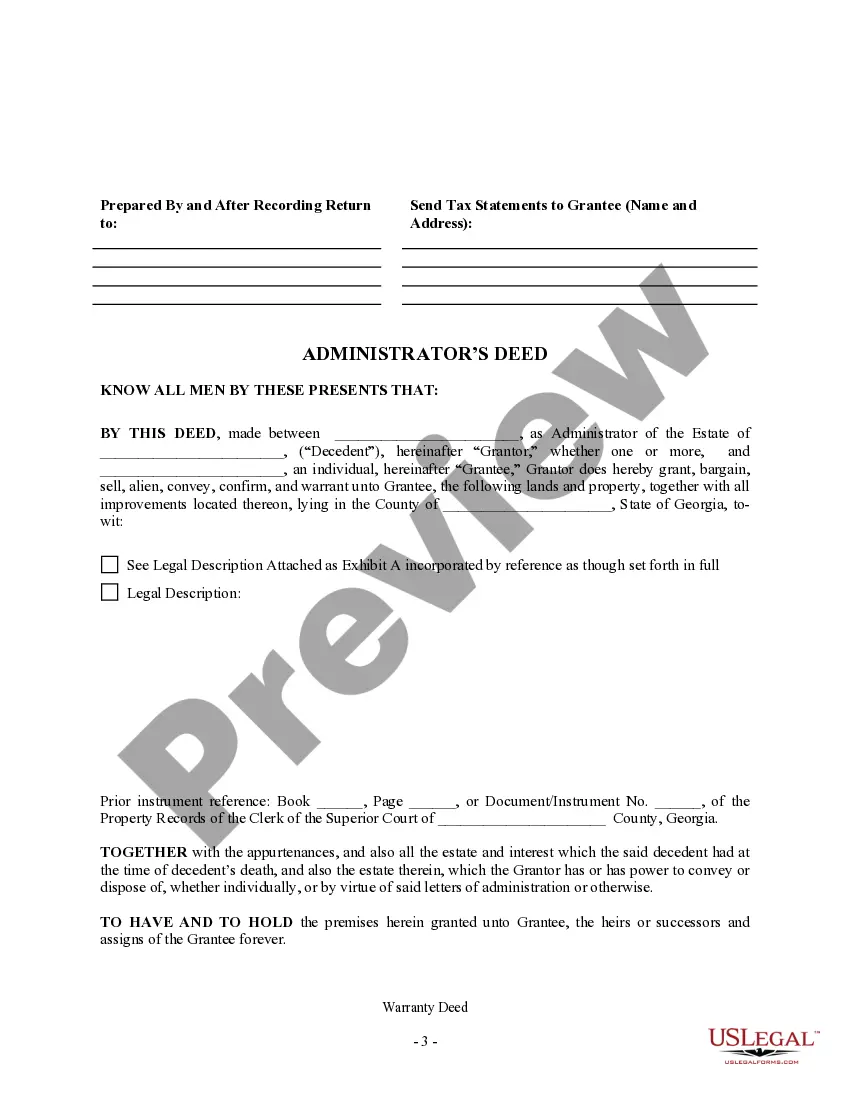
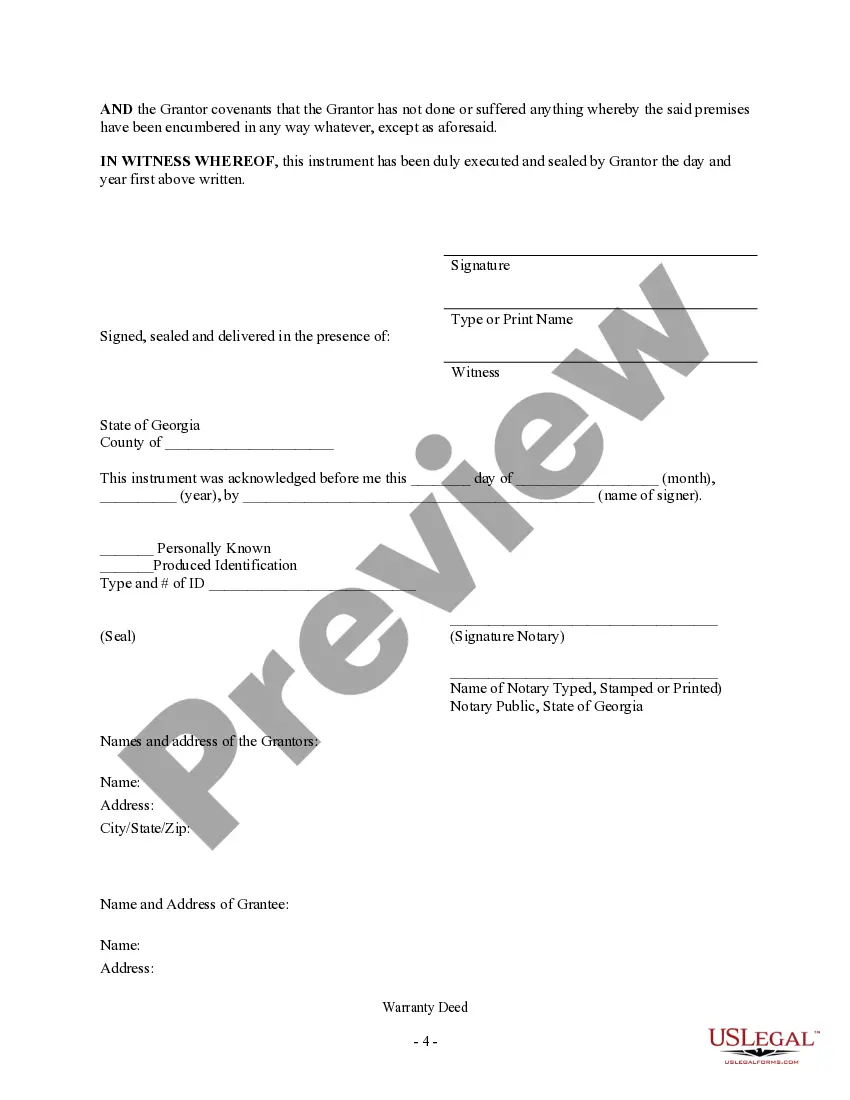
An administrator's deed is used to transfer property from a deceased person's estate to a new owner. This type of deed becomes necessary when the property is sold or otherwise conveyed under the supervision of the court. In the context of an administrator's deed real contract with the government, it enables the proper handling of estate assets in compliance with various legal requirements. This ensures that the estate's final wishes are respected and fulfilled.
A deed is a legal document that conveys real property from one party to another. An example of a deed would be a warranty deed, which guarantees the grantor has the right to transfer the property. In the case of an administrator's deed real contract with the government, this document can be pivotal in transferring ownership of estate properties. It outlines the specifics of the transaction, providing clarity and protection to all parties involved.
In New Jersey, you do not necessarily need an attorney to prepare a deed. However, having legal assistance can ensure that the document meets all necessary requirements. If you are dealing with an administrator's deed real contract with the government, an attorney can provide valuable insight. Their expertise will help you avoid potential pitfalls during the process.
The role of a contract administrator involves reviewing, negotiating, and ensuring the execution of contracts. They act as a liaison between the parties to address any issues that arise during the contract duration. A solid understanding of their responsibilities is beneficial for anyone working on an administrator's deed real contract with the government.
A government contract administrator is a professional responsible for overseeing the lifecycles of government contracts. They ensure that terms are upheld and that the contract's objectives are met efficiently. Knowing the functions of contract administrators is essential, especially when dealing with an administrator's deed real contract with the government.