Life Tenant Of Estate
Description
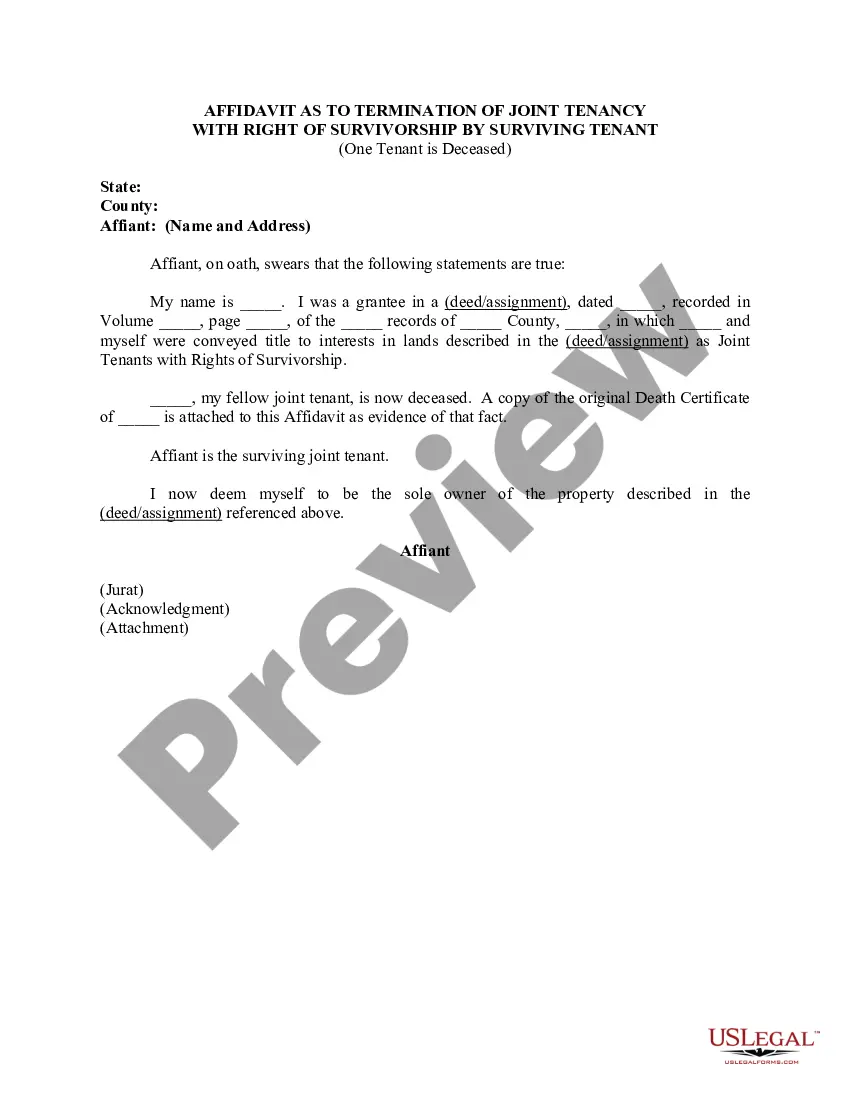
Get your form ready online
Our built-in tools help you complete, sign, share, and store your documents in one place.
Make edits, fill in missing information, and update formatting in US Legal Forms—just like you would in MS Word.
Download a copy, print it, send it by email, or mail it via USPS—whatever works best for your next step.
Sign and collect signatures with our SignNow integration. Send to multiple recipients, set reminders, and more. Go Premium to unlock E-Sign.
If this form requires notarization, complete it online through a secure video call—no need to meet a notary in person or wait for an appointment.
We protect your documents and personal data by following strict security and privacy standards.

Make edits, fill in missing information, and update formatting in US Legal Forms—just like you would in MS Word.

Download a copy, print it, send it by email, or mail it via USPS—whatever works best for your next step.

Sign and collect signatures with our SignNow integration. Send to multiple recipients, set reminders, and more. Go Premium to unlock E-Sign.

If this form requires notarization, complete it online through a secure video call—no need to meet a notary in person or wait for an appointment.

We protect your documents and personal data by following strict security and privacy standards.
Looking for another form?
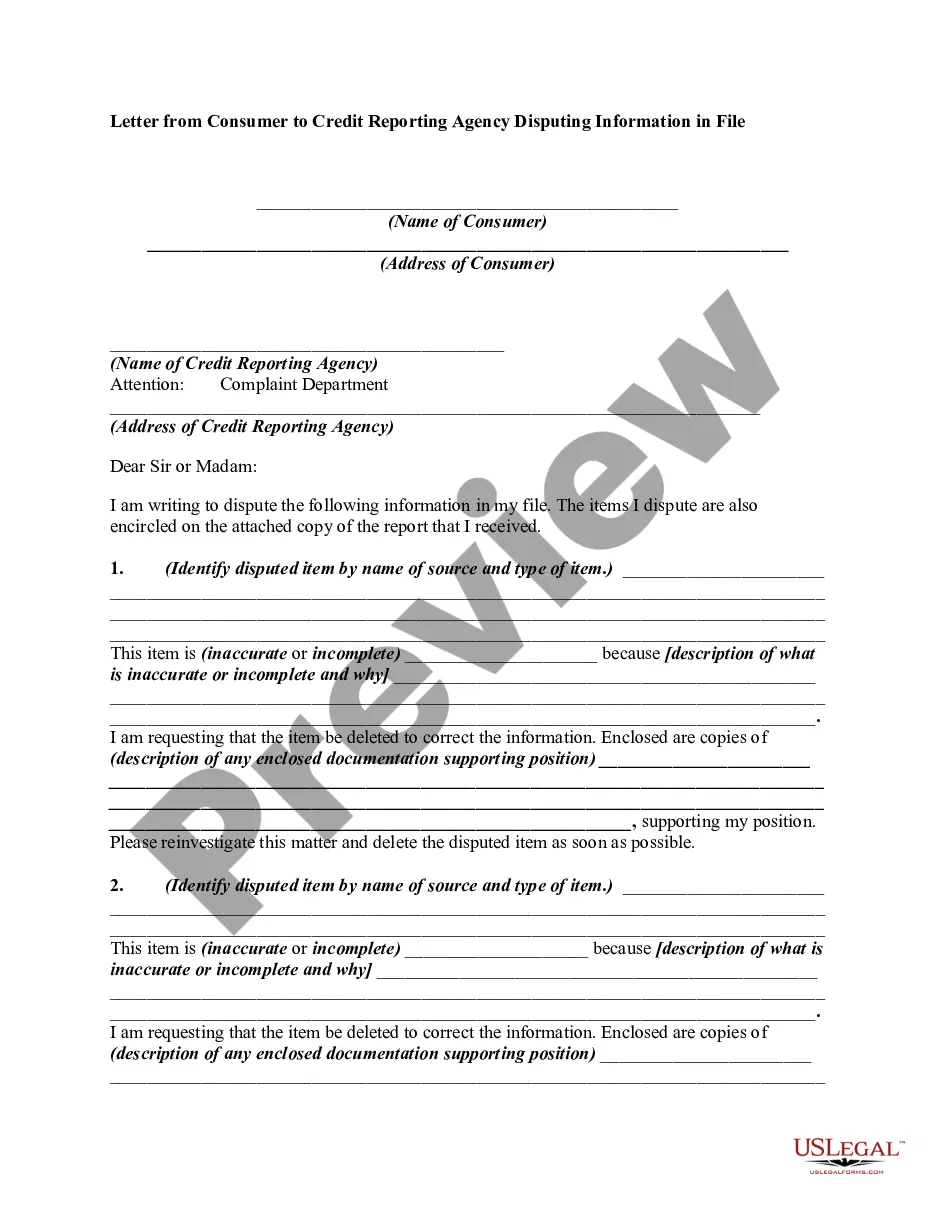
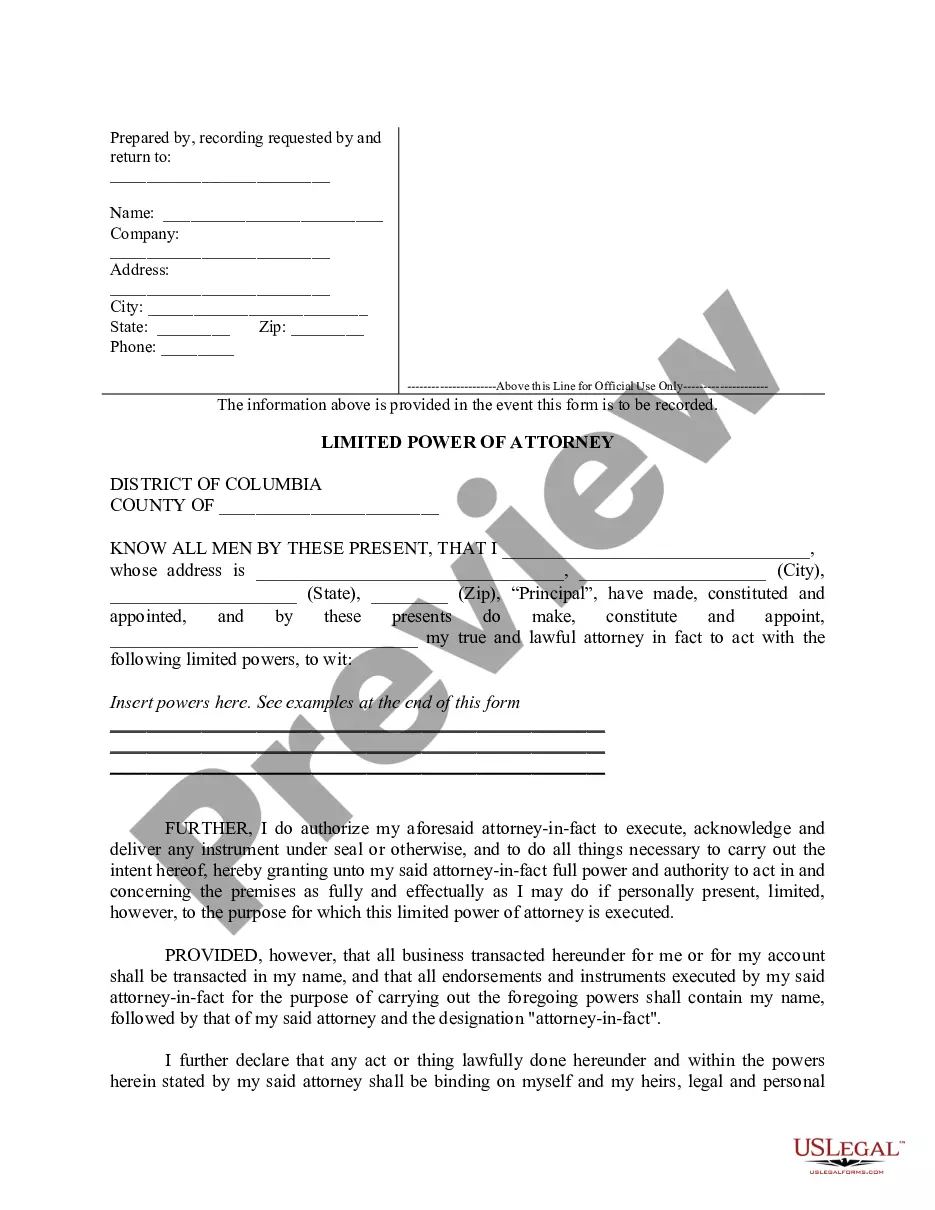
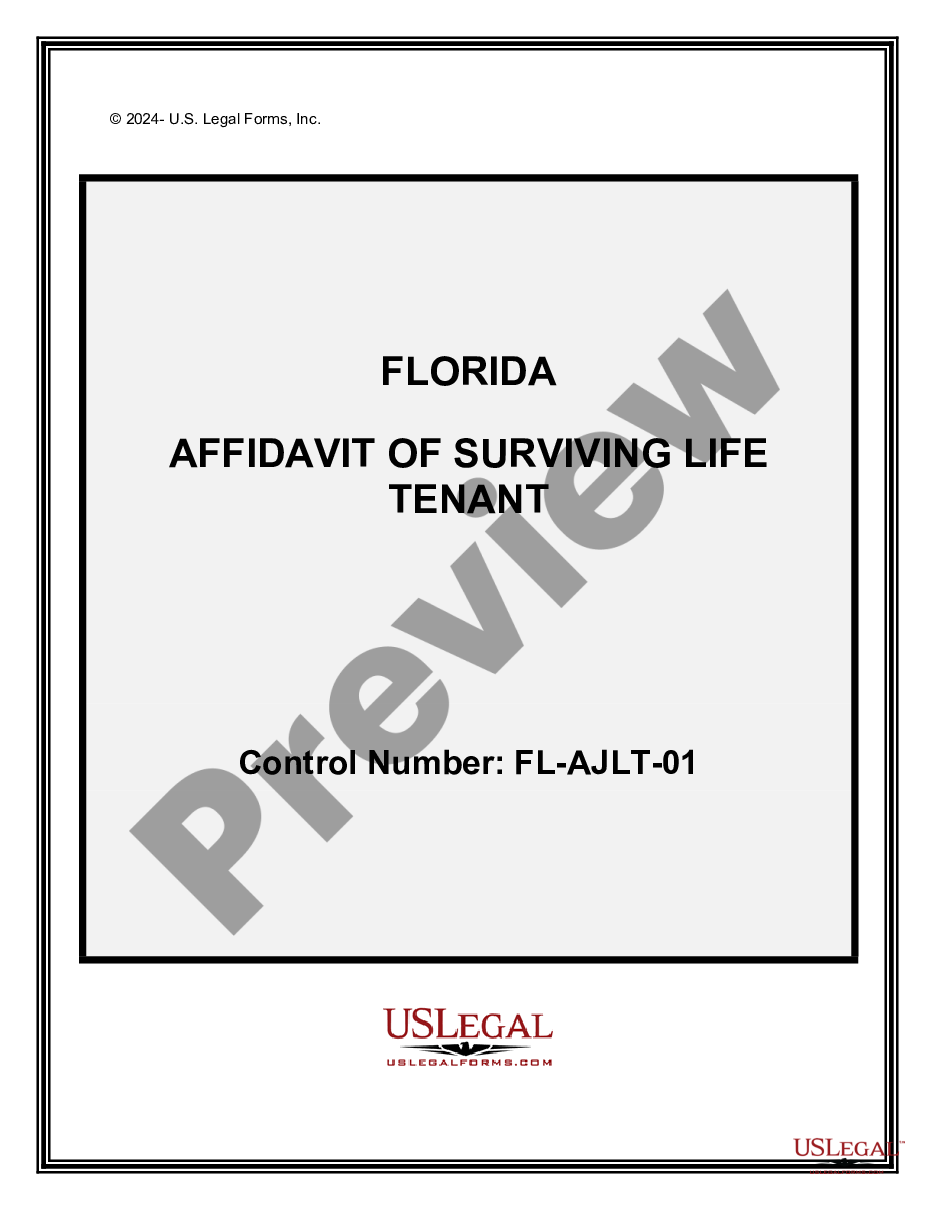
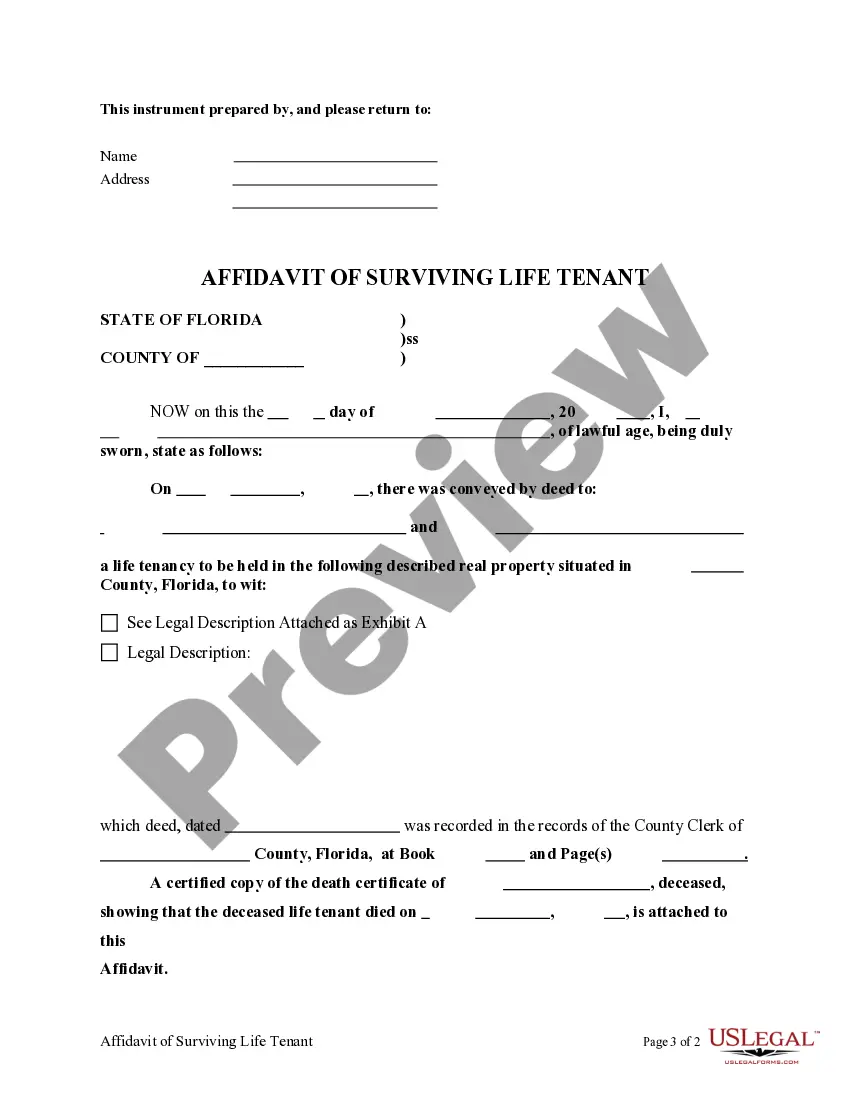
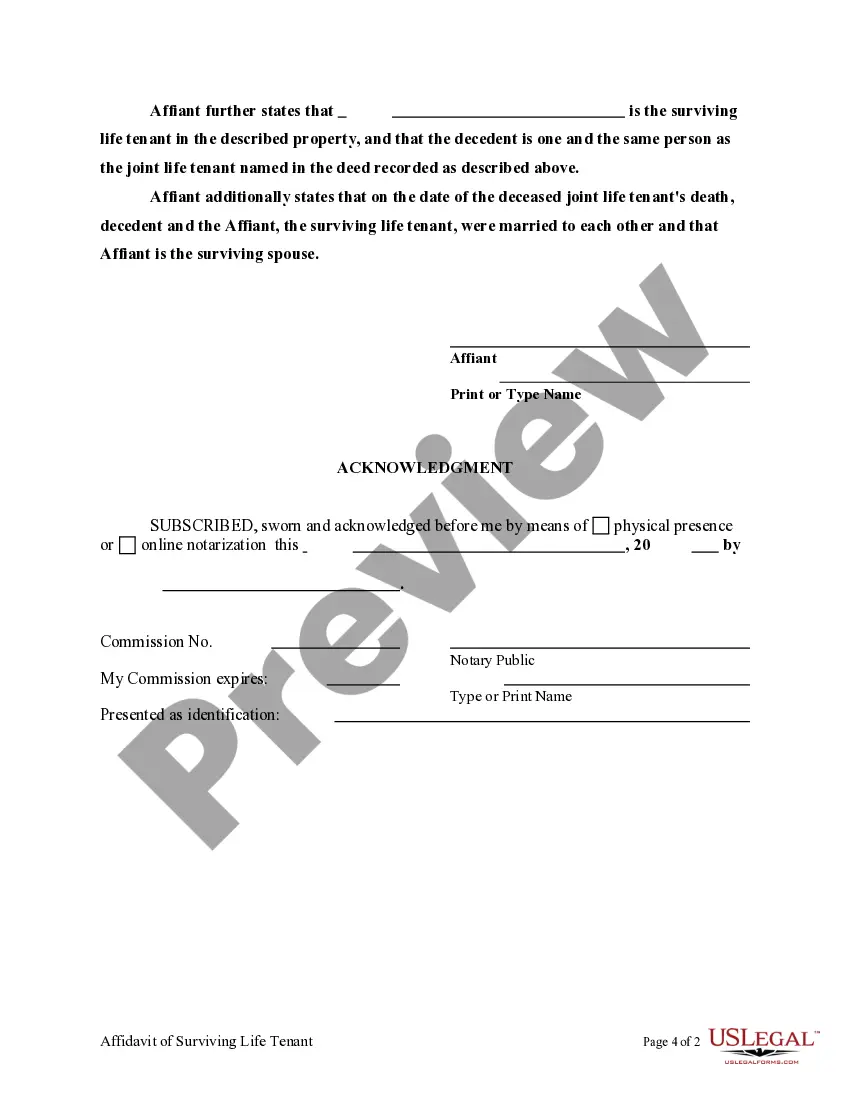
How to fill out Florida Affidavit Of Surviving Life Tenant?
Finding a go-to resource for obtaining the most up-to-date and pertinent legal templates is half the challenge of dealing with red tape.
Selecting the appropriate legal documents requires precision and careful attention, which is why it is crucial to obtain samples of Life Tenant Of Estate only from trustworthy sources, such as US Legal Forms.
Eliminate the complexities associated with your legal documents. Explore the extensive US Legal Forms library to locate legal templates, verify their suitability for your circumstance, and download them without delay.
- Use the library navigation or search bar to find your sample.
- Examine the form’s description to ensure it meets the criteria of your state and region.
- Check the form preview, if available, to confirm that the template is indeed what you are looking for.
- Return to the search to seek the correct template if the Life Tenant Of Estate does not fulfill your needs.
- If you are confident about the form’s applicability, download it.
- As an authorized user, click Log in to verify and access your selected templates in My documents.
- If you do not have an account yet, click Buy now to acquire the form.
- Choose the pricing plan that meets your specifications.
- Proceed to register to complete your purchase.
- Conclude your purchase by selecting a payment option (credit card or PayPal).
- Choose the document format for downloading Life Tenant Of Estate.
- Once you possess the form on your device, you can edit it with the editor or print it and complete it by hand.
Form popularity
FAQ
The life tenant is the property owner for life and is responsible for costs such as property taxes, insurance, and maintenance. Additionally, the life tenant also retains any tax benefits of homeownership.
The life tenant must maintain the property, make any existing mortgage payments, pay property taxes, and keep the property adequately insured. Without the consent of the remainderman, the life tenant may not take out a new mortgage or otherwise encumber the property.
A life tenant has the right to sell the life at will. A person who gives a life estate to another is called a life tenant. A life tenant can possess the life estate to the point of rendering it worthless by permanent damage. A life tenant is treated as the owner of the property for the duration of the life.
An additional potential problem with a Life Estate is that it does not offer creditor protection to the beneficiary, so if the heir has a debt or is sued, the creditor or court can come after the house. As you can see, a traditional Life Estate has the potential to create major conflict within a family.
Life Estates establish two different categories of property owners: the Life Tenant Owner and the Remainder Owner. The Life Tenant Owner maintains the absolute and exclusive right to use the property during his or her lifetime. This can be a sole owner or joint Life Tenants.