Notice Intent Enter Landlord With No Notice
Description
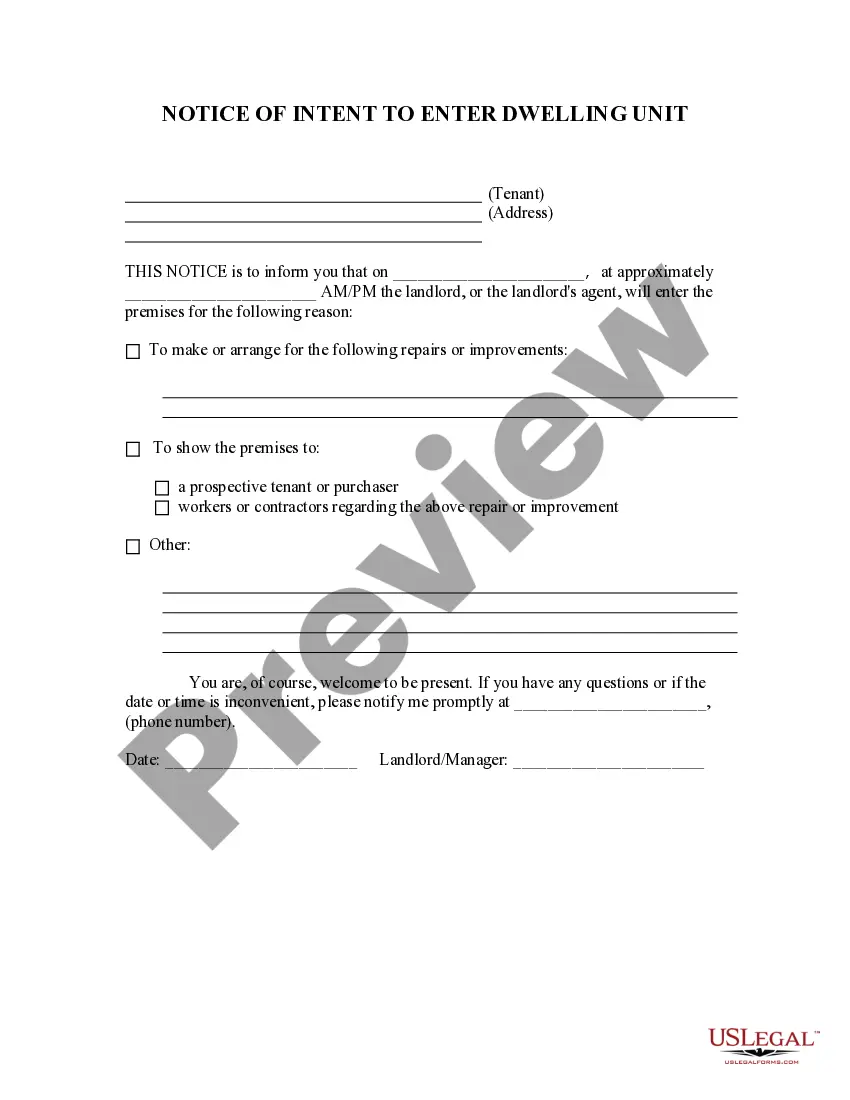

Get your form ready online
Our built-in tools help you complete, sign, share, and store your documents in one place.
Make edits, fill in missing information, and update formatting in US Legal Forms—just like you would in MS Word.
Download a copy, print it, send it by email, or mail it via USPS—whatever works best for your next step.
Sign and collect signatures with our SignNow integration. Send to multiple recipients, set reminders, and more. Go Premium to unlock E-Sign.
If this form requires notarization, complete it online through a secure video call—no need to meet a notary in person or wait for an appointment.
We protect your documents and personal data by following strict security and privacy standards.

Make edits, fill in missing information, and update formatting in US Legal Forms—just like you would in MS Word.

Download a copy, print it, send it by email, or mail it via USPS—whatever works best for your next step.

Sign and collect signatures with our SignNow integration. Send to multiple recipients, set reminders, and more. Go Premium to unlock E-Sign.

If this form requires notarization, complete it online through a secure video call—no need to meet a notary in person or wait for an appointment.

We protect your documents and personal data by following strict security and privacy standards.
Looking for another form?
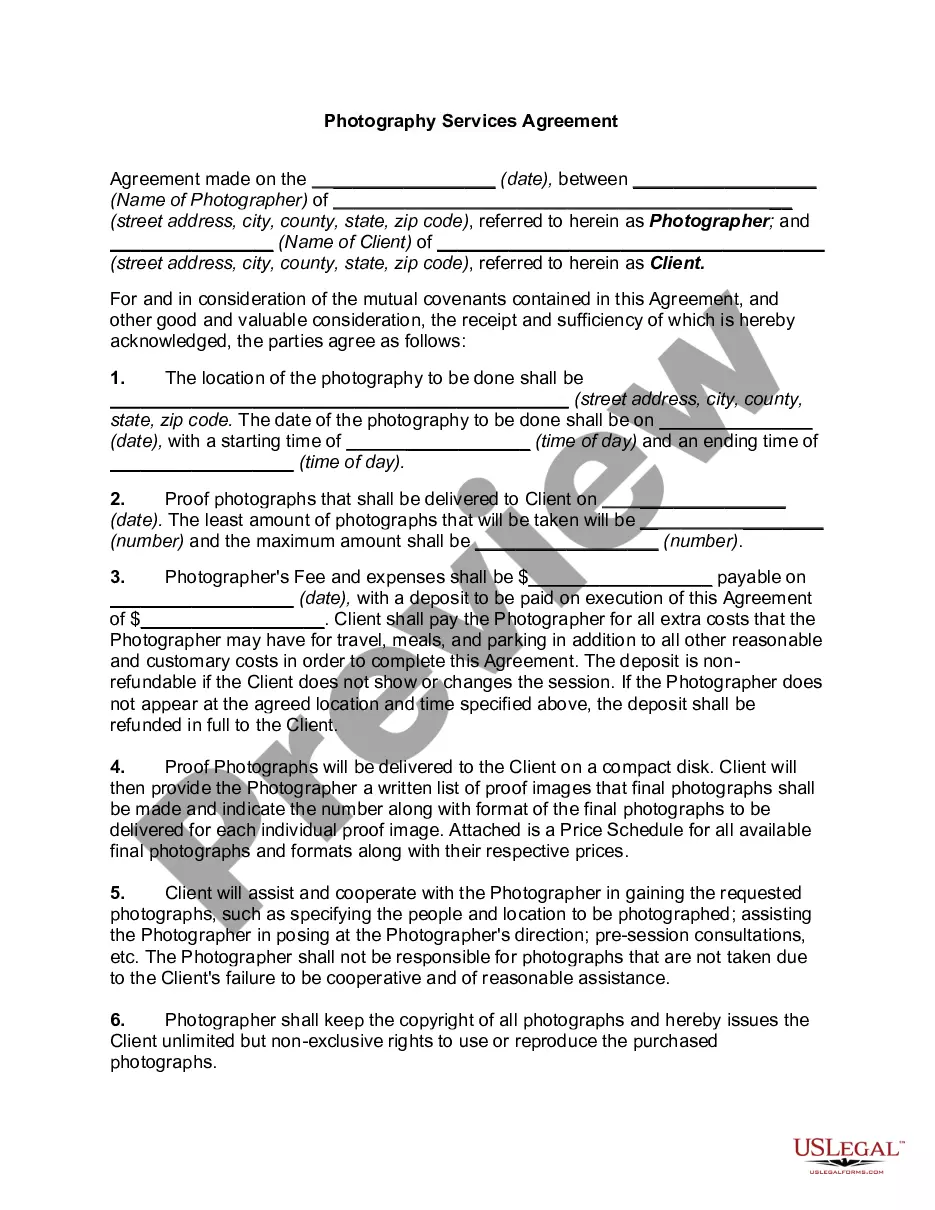




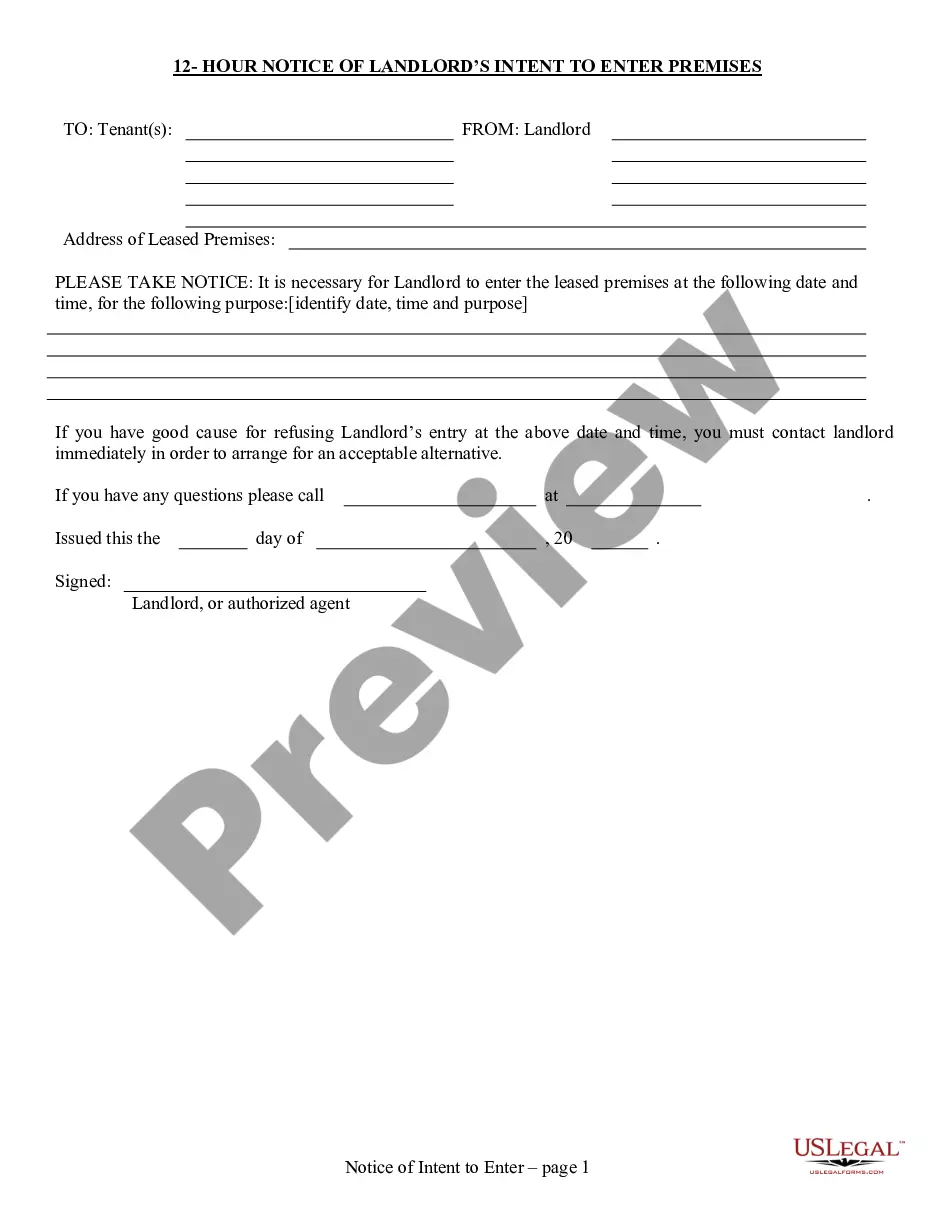
How to fill out Florida 12 Hour Notice Of Landlord's Intent To Enter Premises For Residential From Landlord To Tenant?
- Log into your account if you're a returning user. Click the Download button to access the necessary form template, ensuring your subscription is active.
- If you're new to our service, start by previewing the form descriptions. Verify that the selected form meets your requirements and aligns with local jurisdiction.
- Should you need a different template, utilize the Search feature to find the appropriate one. If it meets your criteria, proceed to the next step.
- Purchase the document by selecting the Buy Now button and choosing your desired subscription plan. You’ll need to create an account for library access.
- Complete your purchase using credit card details or your PayPal account to finalize your subscription.
- Download the form to your device so you can easily fill it out. Access it anytime from the My Forms section of your profile.
With US Legal Forms, you can take advantage of a robust collection of legal documents tailored to your needs. Our library includes over 85,000 fillable and editable forms, making it easier than ever for users to obtain legal assistance.
Don't hesitate to start your journey with US Legal Forms today and ensure your legal documents are accurate and professionally completed!
Form popularity
FAQ
In most cases, maintenance must provide notice before entering a tenant's home. This requirement ensures that tenants are prepared for any maintenance work. However, emergencies are the exception, allowing maintenance to enter without prior notice. For more detailed information about your situation regarding notice intent enter landlord with no notice, refer to our extensive resources.
Yes, a tenant in New Jersey can refuse entry if the landlord has not provided proper notice. Tenants have the right to privacy within their homes, and landlords must respect that. If you believe your landlord is violating these terms, it’s imperative to know your rights. Our platform can offer clear guidance on how to address such issues.
In New Jersey, landlords cannot typically enter an apartment without giving notice, except in emergency situations. The law mandates reasonable advance notice, usually 24 hours, unless otherwise agreed in the lease. If you're unsure about your rights in this matter, you can find helpful information on our platform about notice intent enter landlord with no notice.
In New Jersey, maintenance generally cannot enter an apartment without giving proper notice to the tenant. This notice needs to comply with the rental agreement and state laws. However, in emergencies, maintenance may enter without notice. If you're facing a situation about notice intent enter landlord with no notice, consider reviewing your tenant rights with our platform.
Landlords cannot come around unannounced in most circumstances. Tenants should receive proper notice before a landlord enters their rented space. This notice must specify the date and time of entry, allowing tenants to prepare. If you have questions about notice intent enter landlord with no notice, our resources can guide you.
In Illinois, a tenant can refuse entry to their landlord if the landlord has not provided proper notice. The law typically requires landlords to give notice before entering a rental unit, except in emergencies. Therefore, if you are concerned about your landlord's intent, it's essential to understand your rights. Using our platform, you can find resources to help you communicate your rights effectively.
Yes, a tenant can deny a landlord entry if proper notice has not been given as required by Minnesota law. The tenant has the right to privacy and can request that a landlord adhere to the legally mandated notice period. If a landlord tries to enter without sufficient notice, knowing your rights can help you manage the situation effectively and assertively.
If a tenant leaves without notice, a landlord may take several steps to address the situation. This can include retaining the security deposit or seeking to recover unpaid rent through legal channels. Understanding your rights regarding a landlord’s actions in this case can provide clarity and support, especially if you are facing disputes about your lease terms.
In Minnesota, a landlord must typically provide at least 24 hours' notice before entering a rental unit, except in emergency situations. This notice must be reasonable and inform the tenant of the landlord's intent to enter the property. If you are dealing with a situation where your landlord is attempting to enter without notice, understanding these regulations can empower you to protect your rights.
Renters in Minnesota have several important rights designed to protect them. These rights include the right to privacy, the right to a safe and habitable living environment, and the right to receive notice before a landlord enters the rental unit. If you feel a landlord is attempting to enter without following the correct notice procedures, it is essential to know you have resources available to address these concerns effectively.