Fl Estate Quitclaim Without A Will
Description
Get your form ready online
Our built-in tools help you complete, sign, share, and store your documents in one place.
Make edits, fill in missing information, and update formatting in US Legal Forms—just like you would in MS Word.
Download a copy, print it, send it by email, or mail it via USPS—whatever works best for your next step.
Sign and collect signatures with our SignNow integration. Send to multiple recipients, set reminders, and more. Go Premium to unlock E-Sign.
If this form requires notarization, complete it online through a secure video call—no need to meet a notary in person or wait for an appointment.
We protect your documents and personal data by following strict security and privacy standards.

Make edits, fill in missing information, and update formatting in US Legal Forms—just like you would in MS Word.

Download a copy, print it, send it by email, or mail it via USPS—whatever works best for your next step.

Sign and collect signatures with our SignNow integration. Send to multiple recipients, set reminders, and more. Go Premium to unlock E-Sign.

If this form requires notarization, complete it online through a secure video call—no need to meet a notary in person or wait for an appointment.

We protect your documents and personal data by following strict security and privacy standards.
Looking for another form?





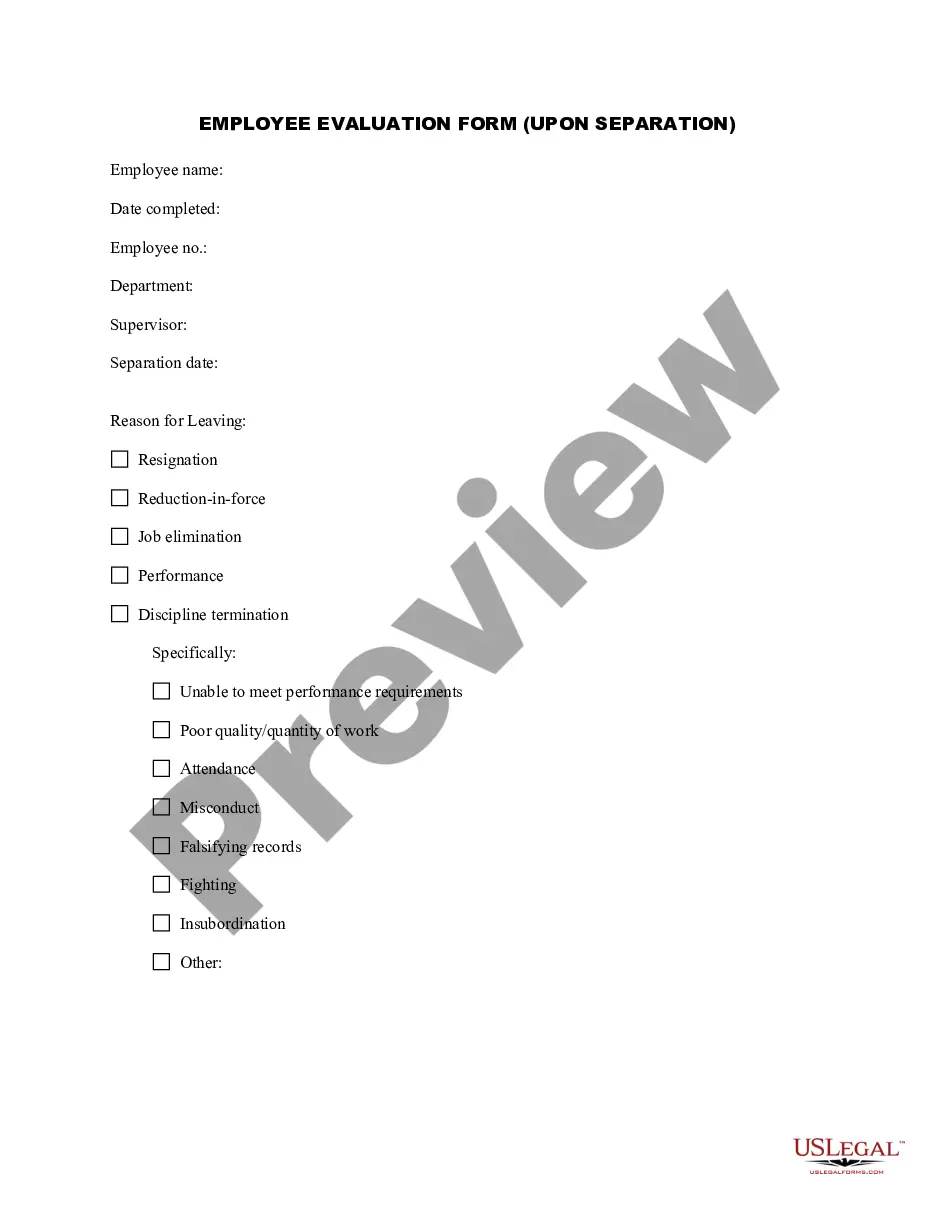




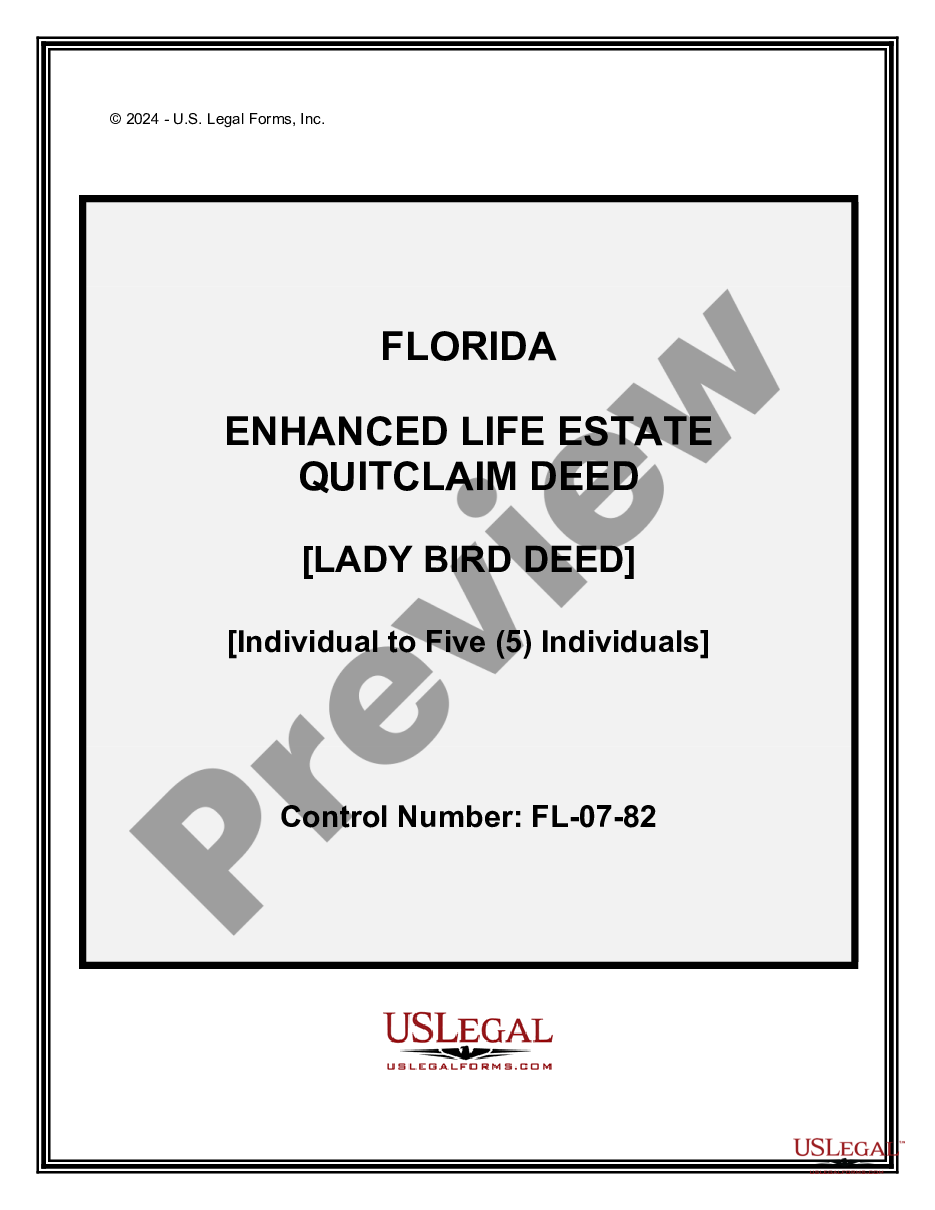
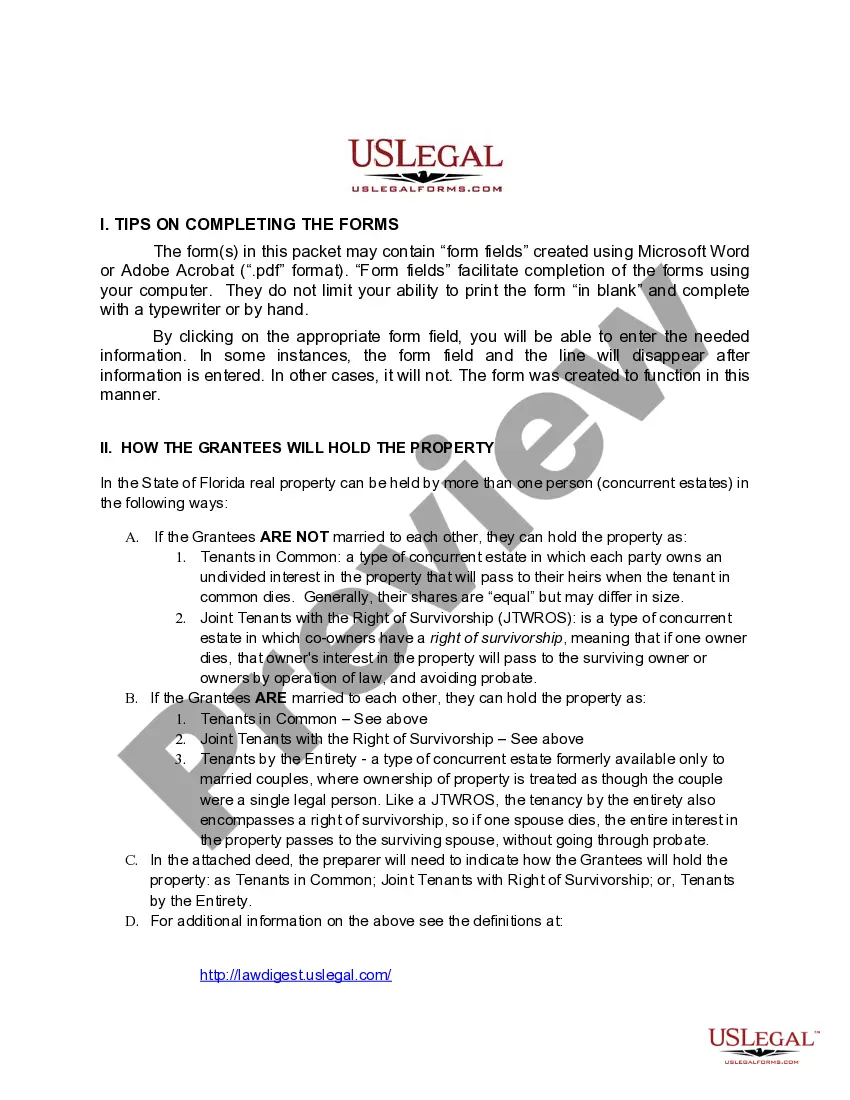
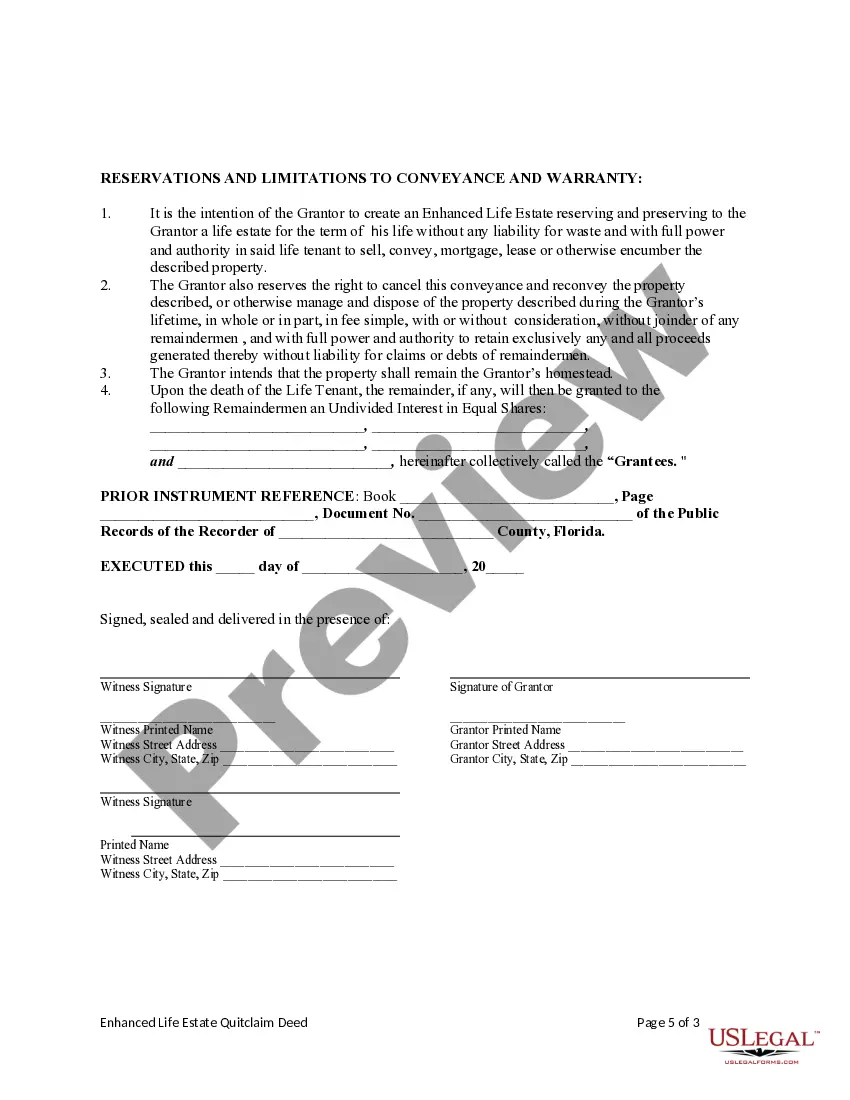
How to fill out Florida Enhanced Life Estate Or Lady Bird Deed - Quitclaim - Individual To Five Individuals?
Whether for commercial objectives or personal matters, everyone must handle legal scenarios at some point in their life.
Filling out legal documents requires meticulous care, starting with selecting the correct form template.
With a vast catalog from US Legal Forms available, you will not have to waste time searching for the correct sample across the internet. Utilize the library’s user-friendly organization to find the appropriate form for any situation.
- Obtain the necessary sample using the search box or directory browsing.
- Review the document’s details to ensure it meets your situation, state, and county.
- Click on the form’s preview to examine it.
- If it is the wrong document, return to the search feature to locate the Fl Estate Quitclaim Without A Will sample you need.
- Download the file once it aligns with your needs.
- If you already possess a US Legal Forms account, click Log in to access previously saved documents in My documents.
- If you do not yet have an account, you can acquire the form by clicking Buy now.
- Choose the suitable pricing option.
- Fill out the account registration form.
- Select your payment method: either use a credit card or PayPal account.
- Choose the desired file format and download the Fl Estate Quitclaim Without A Will.
- Once it has been downloaded, you can complete the form with editing software or print it and fill it out manually.
Form popularity
FAQ
Although you can make a quitclaim deed yourself, we suggest hiring a real estate lawyer to ensure your deed is done right and meets the legal and filing requirements for Flordia and the local country recorders office where the property is located.
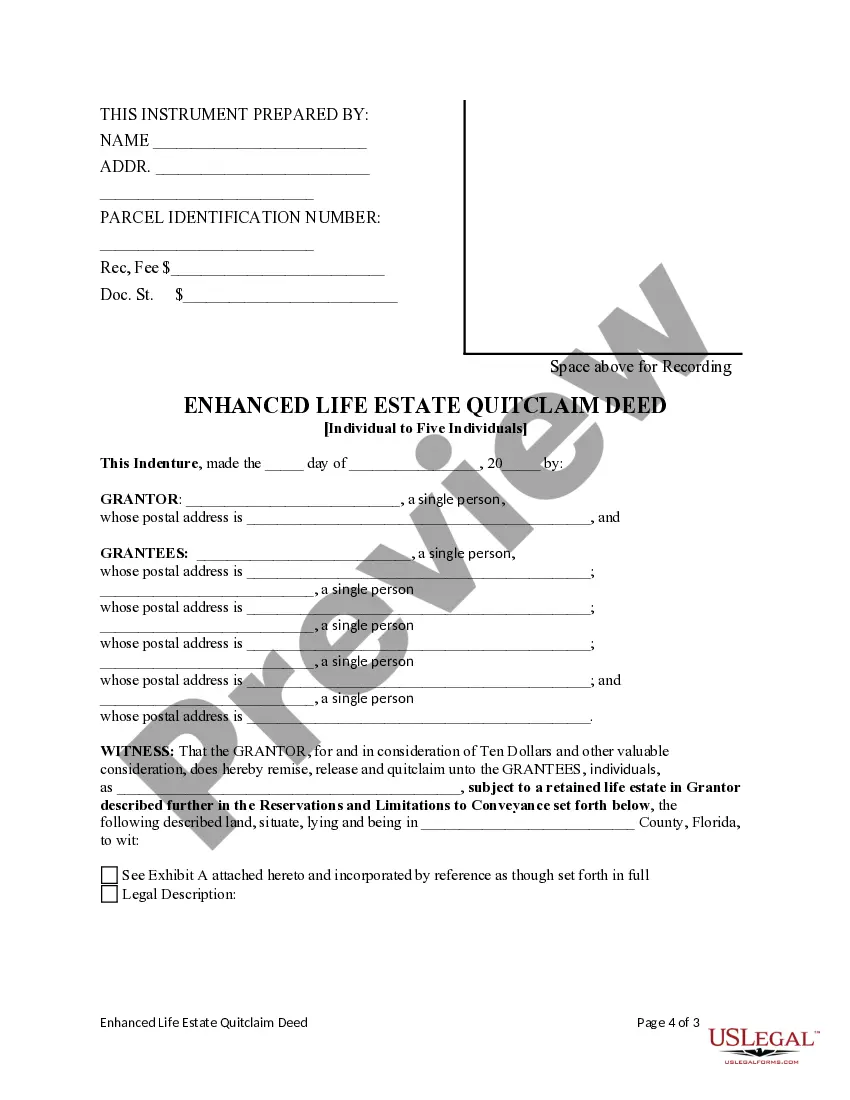
Requirements for Quit Claim Deeds in Florida The name of the current owner of the property who intends to transfer some or all their interest in the property. This is known as the Grantor. The name of the person or entity who will be receiving the grantor's interest in the property. This party is known as the Grantee.
Florida quit claim deed requirements The quit claim deed needs to include the full legal name of both the grantor(s) and the grantee(s). For a grantor, this should be the name as it appeared on the deed when the grantor obtained title. For the grantee, this should be the full legal name of the grantee.
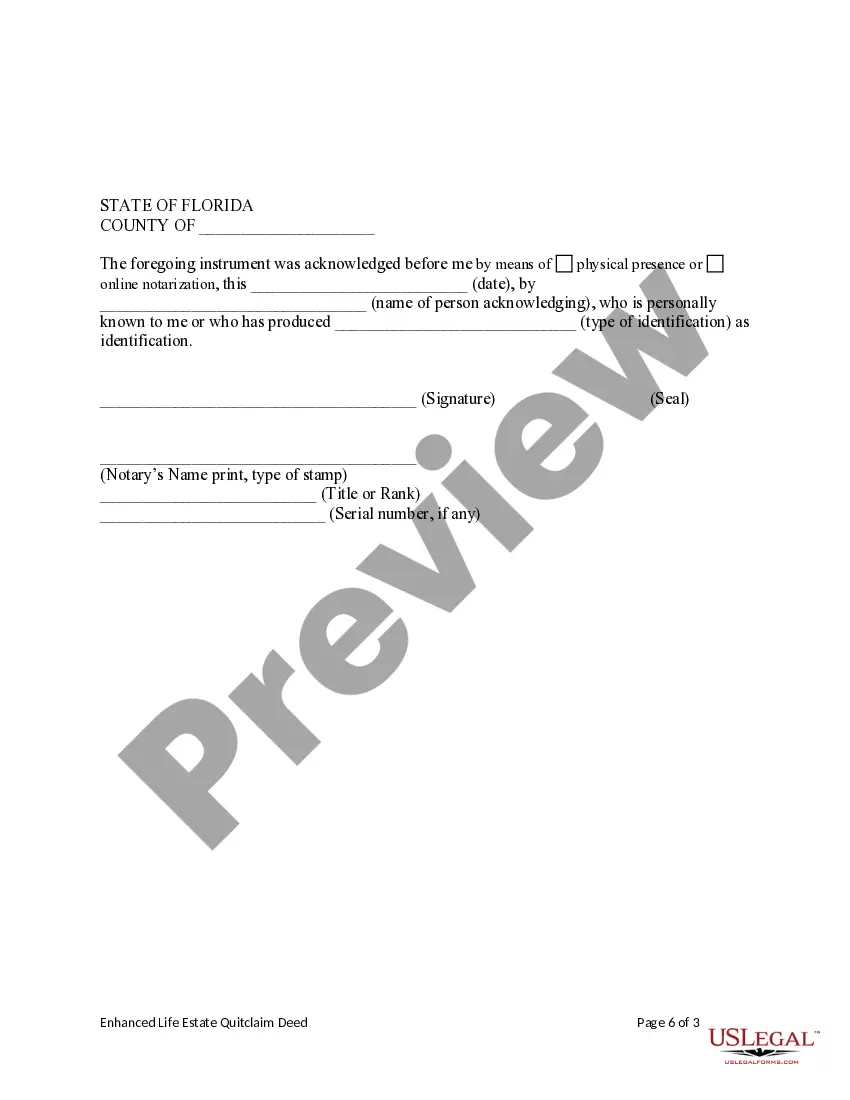
The grantor's signature must be witnessed and notarized in order to be recorded in the public record. Then, the grantee delivers the signed, witnessed, and notarized quitclaim deed to the county comptroller's office for the county where the property is located for recording.
Ing to Florida Statute 695.26, a quitclaim deed must contain these certain elements: Name and address of person preparing the deed. Grantor's name and address. Grantee's name and address. Signatures of the grantors. Two witnesses for each signature/ Notary acknowledgment with signature.