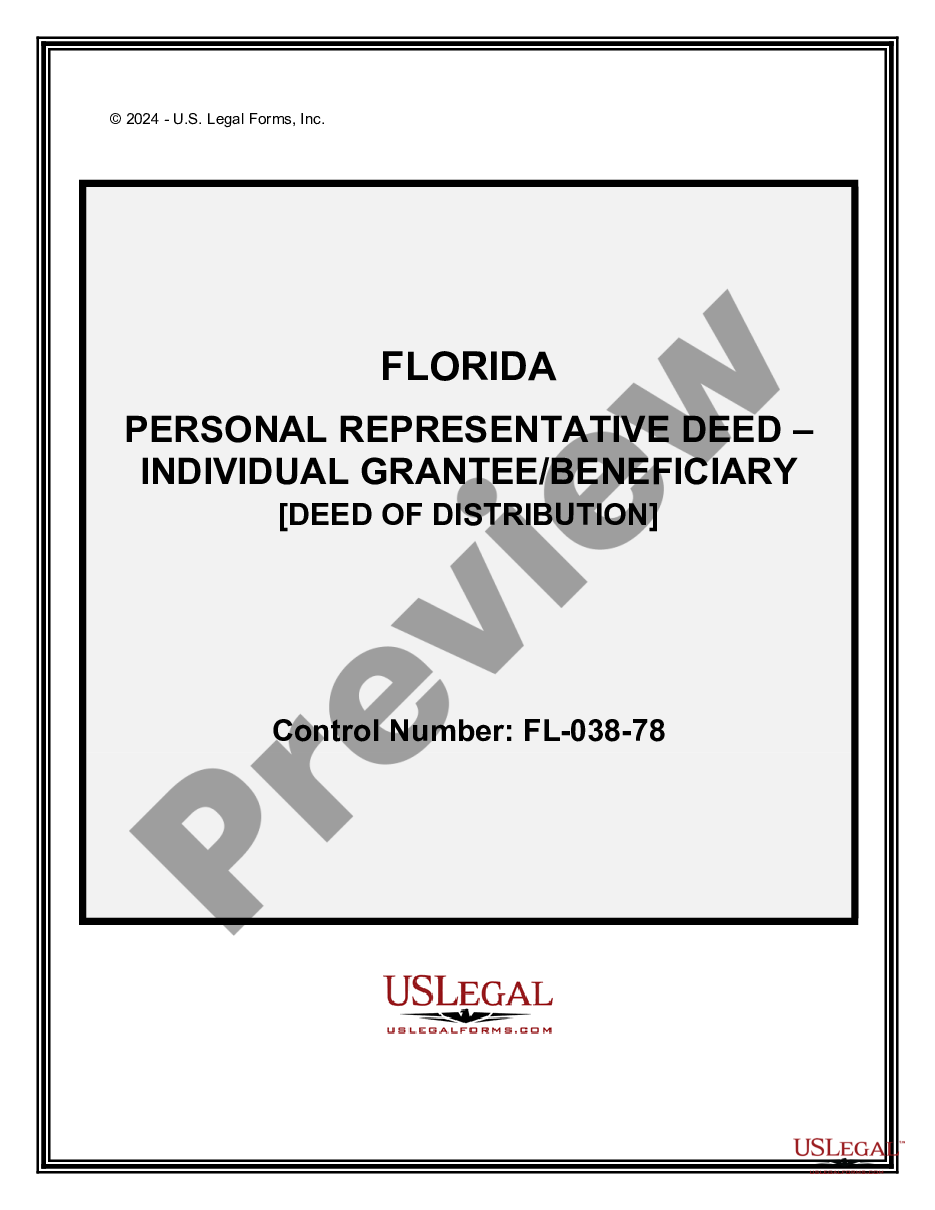
Florida Deed To Trustee
Description
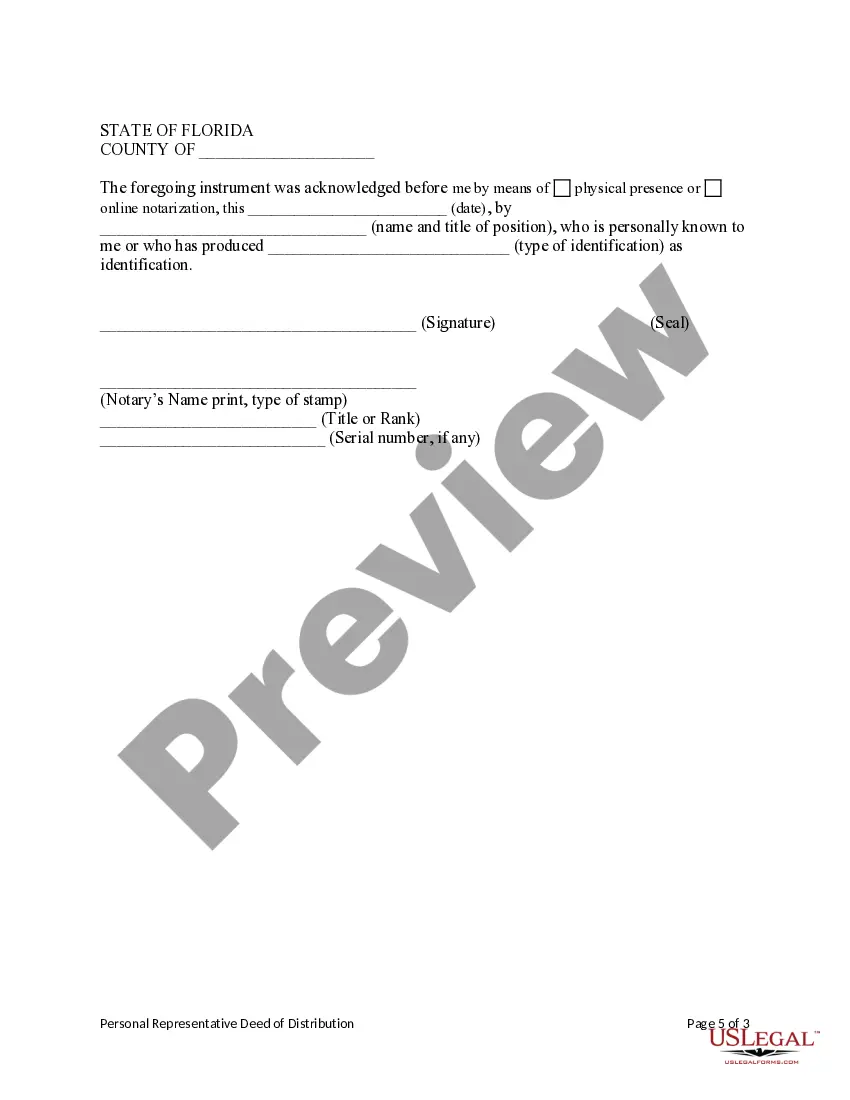
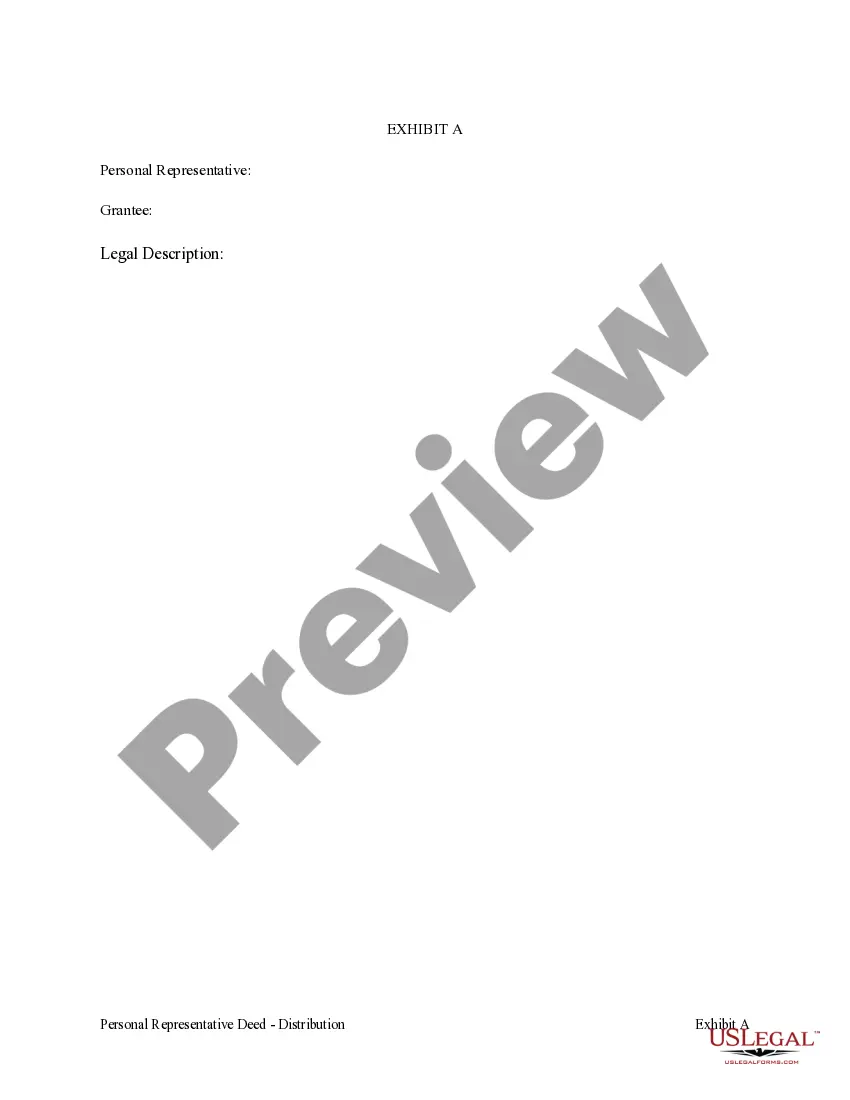

Get your form ready online
Our built-in tools help you complete, sign, share, and store your documents in one place.
Make edits, fill in missing information, and update formatting in US Legal Forms—just like you would in MS Word.
Download a copy, print it, send it by email, or mail it via USPS—whatever works best for your next step.
Sign and collect signatures with our SignNow integration. Send to multiple recipients, set reminders, and more. Go Premium to unlock E-Sign.
If this form requires notarization, complete it online through a secure video call—no need to meet a notary in person or wait for an appointment.
We protect your documents and personal data by following strict security and privacy standards.

Make edits, fill in missing information, and update formatting in US Legal Forms—just like you would in MS Word.

Download a copy, print it, send it by email, or mail it via USPS—whatever works best for your next step.

Sign and collect signatures with our SignNow integration. Send to multiple recipients, set reminders, and more. Go Premium to unlock E-Sign.

If this form requires notarization, complete it online through a secure video call—no need to meet a notary in person or wait for an appointment.

We protect your documents and personal data by following strict security and privacy standards.
Looking for another form?




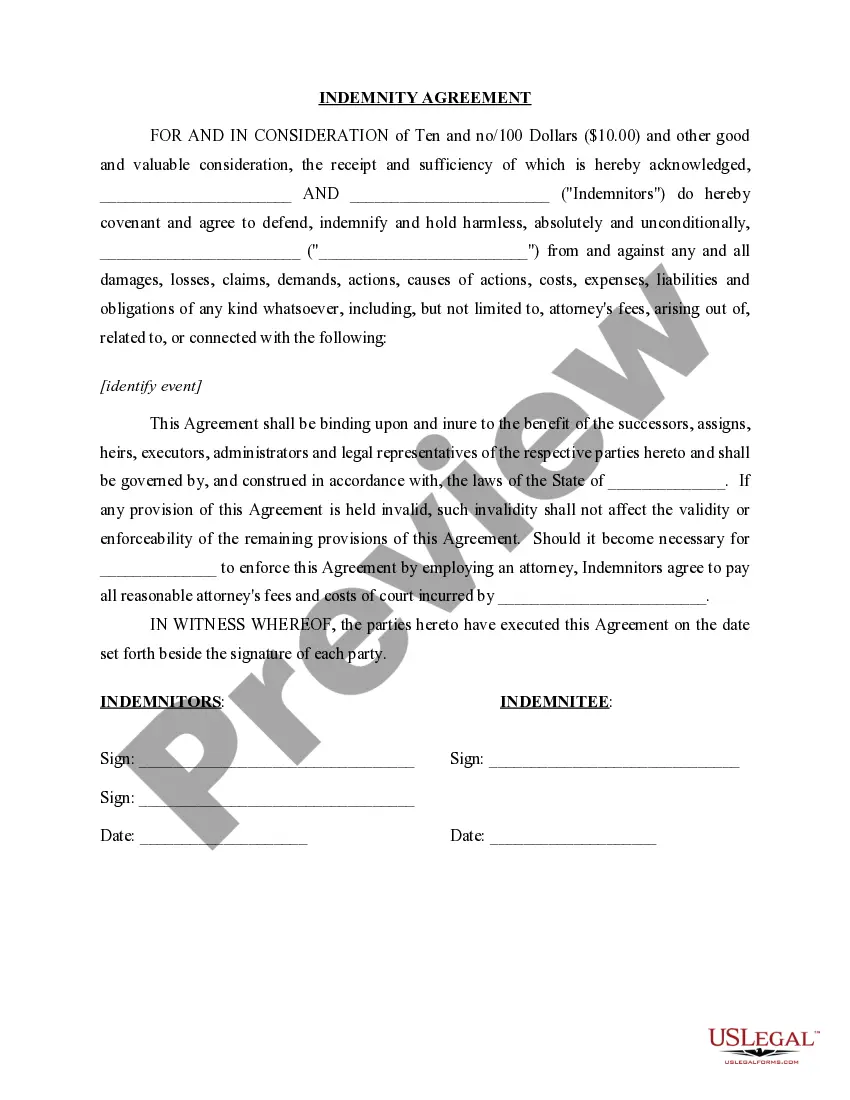
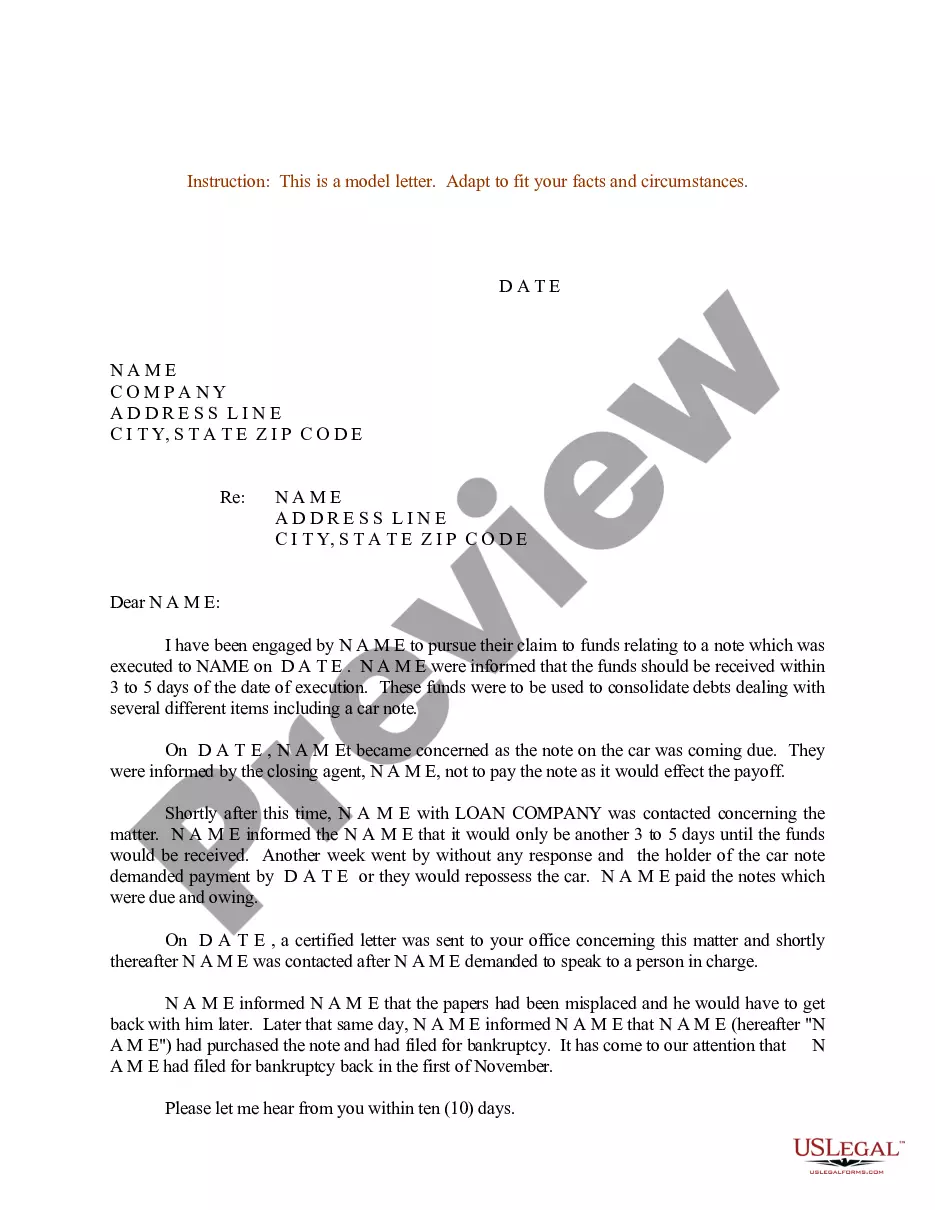

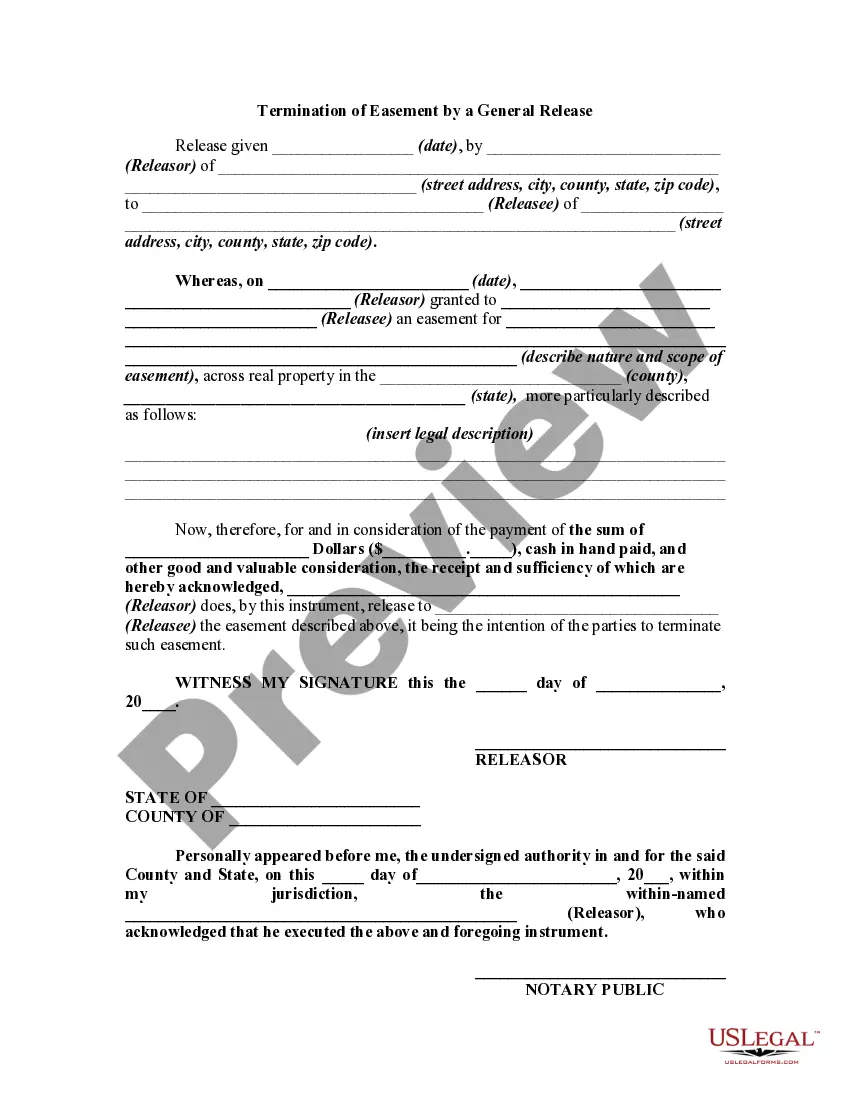
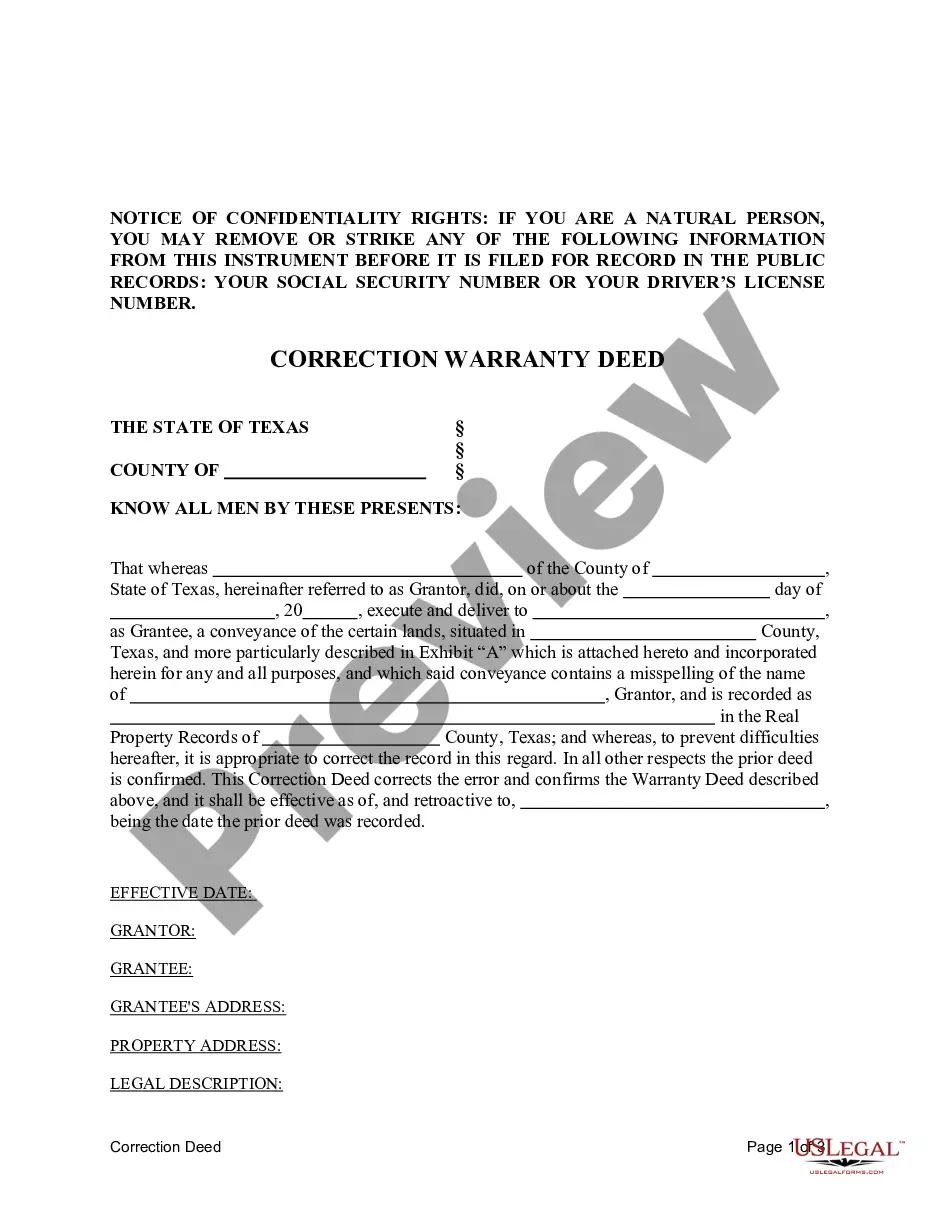
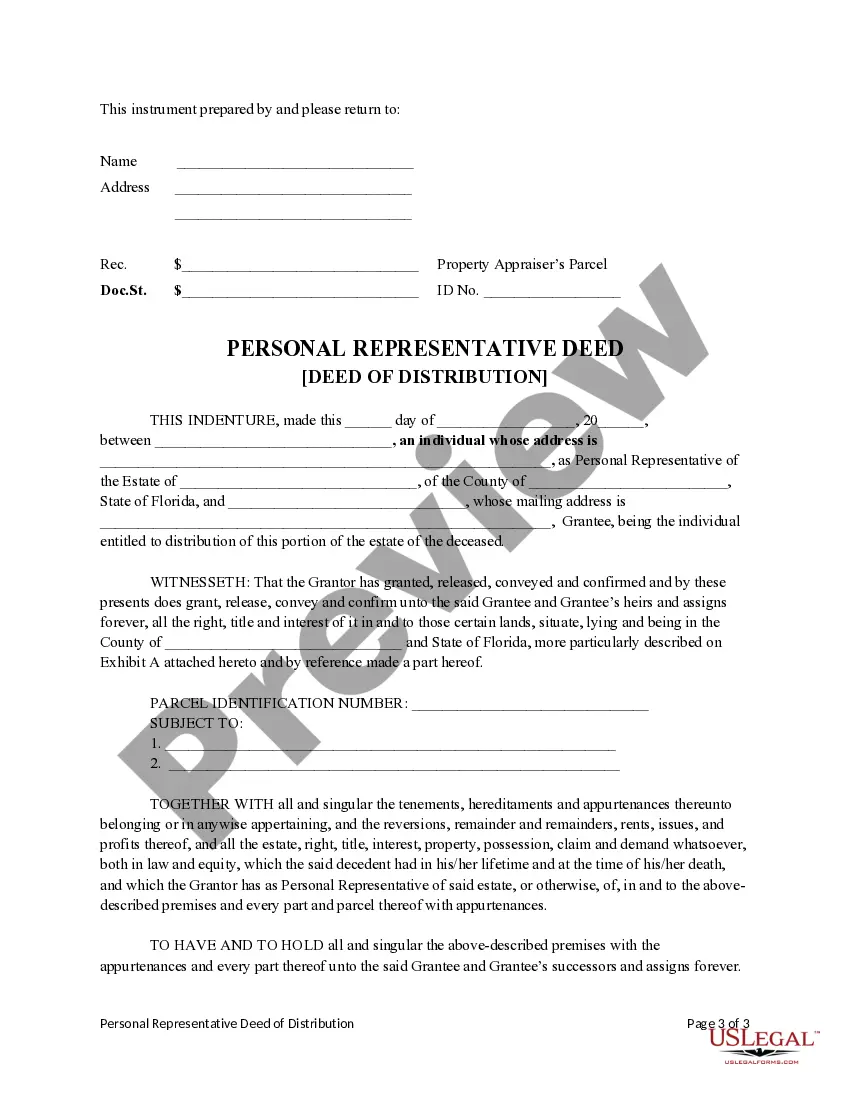
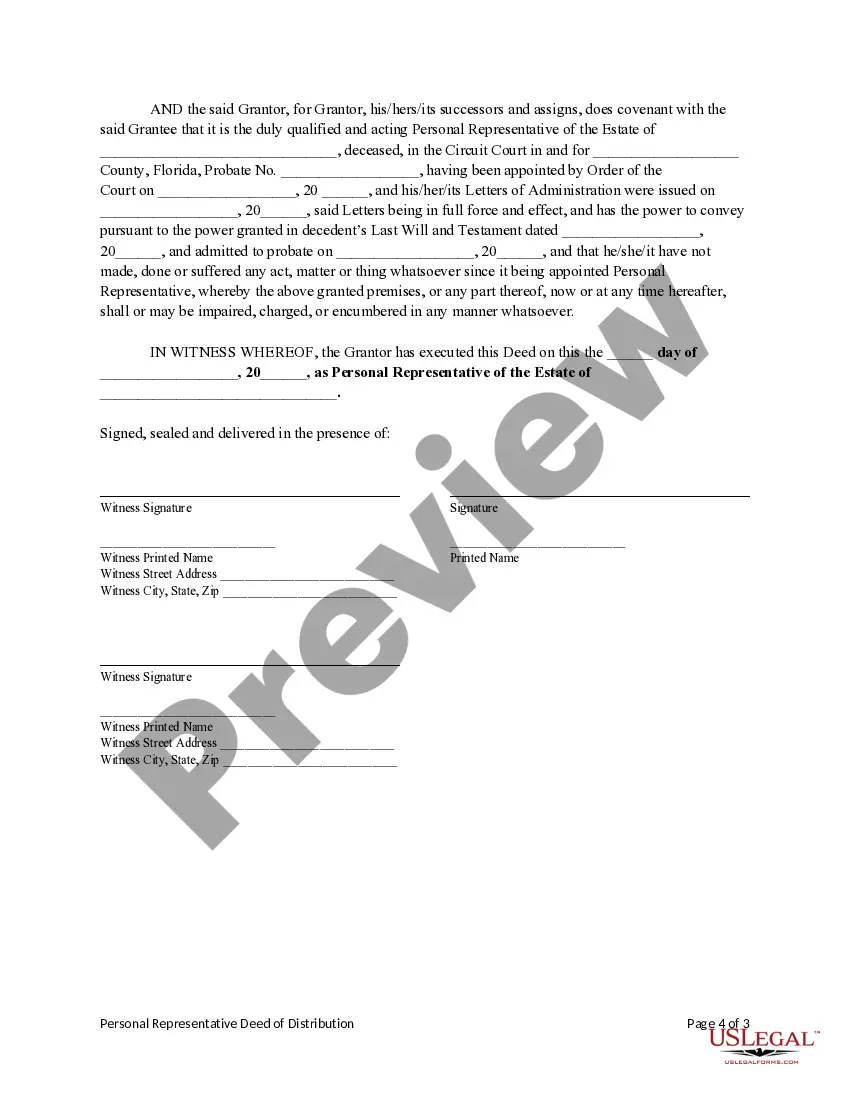
How to fill out Florida Personal Representative's Deed Of Distribution?
Dealing with legal paperwork and protocols can be a lengthy addition to your overall day.
Florida Deed To Trustee and similar forms typically necessitate you to seek them out and maneuver the process to complete them properly.
Consequently, if you are managing financial, legal, or personal affairs, having a comprehensive and straightforward online repository of forms readily available will greatly assist.
US Legal Forms is the premier online platform for legal templates, featuring over 85,000 state-specific documents and various tools to help you fill out your paperwork effortlessly.
Is this your first experience with US Legal Forms? Register and create an account in a matter of minutes, granting you access to the form library and Florida Deed To Trustee. Then, follow the steps below to finalize your document.
- Browse the collection of relevant documents available with just one click.
- US Legal Forms provides you with state- and county-specific templates accessible at any time for download.
- Protect your document management workflows using quality support that enables you to compile any form in minutes without extra or hidden fees.
- Simply Log In to your account, locate Florida Deed To Trustee, and obtain it immediately from the My documents section.
- You can also access previously saved forms.
Form popularity
FAQ
In Florida, you do not have to be an attorney to prepare a deed, including a Florida deed to trustee. However, understanding the legal requirements and implications is crucial for ensuring that the deed is valid. To simplify the process, using a platform like USLegalForms can help guide you through creating the deed correctly. This approach can save you time and effort while ensuring compliance with Florida laws.
To record a new deed in Florida, first, ensure that the deed is completed with all necessary information, including signatures and notarization. Next, take the deed to the county clerk's office for recording. It is important to also provide any additional documentation that may be required, such as proof of payment of taxes. Recording your Florida deed to trustee ensures that the trust holds the property officially in its name and protects your interests.
For a deed to be valid in Florida, it must have a legal description of the property, the signatures of the grantor and the grantee, and it should be notarized. Additionally, it is essential to ensure that the deed is delivered to the grantee to transfer ownership. If you are dealing with a Florida deed to trustee, remember that it should clearly indicate the trust's name and the trustee's role. Always review the deed for compliance with Florida laws.
To put your house in a trust in Florida, you first need to create the trust document, which specifies the terms and designates the trustee. After the trust is established, you will need to execute a Florida deed to trustee, transferring the property into the trust. This deed must be properly signed and notarized. Finally, filing the deed with the county clerk will officially complete the process.
To obtain the deed to your property in Florida, you need to contact your local county clerk's office. They can provide you with a copy of the recorded deed, which serves as proof of ownership. If you need assistance navigating this process, consider using US Legal Forms, where you can find resources and templates for a Florida deed to trustee, ensuring you have everything you need.
The trustor, or the person placing the property in trust, usually selects the trustee. This individual or institution is responsible for managing the trust in accordance with its terms. When creating a Florida deed to trustee, it's essential to choose a reliable trustee, as this person will play a key role in the management and protection of the trust assets.
The main difference between a trustee deed and a quitclaim deed lies in the guarantees provided. A trustee deed secures a transfer managed by a trustee, ensuring the transfer aligns with the trust's terms. On the other hand, a quitclaim deed offers no warranties regarding the property interest conveyed. Understanding this distinction is crucial when preparing a Florida deed to trustee.
The strongest form of deed is typically a warranty deed. This type of deed guarantees that the grantor holds clear title to the property and has the right to sell it. In the context of a Florida deed to trustee, a warranty deed provides the most protection to the buyer against any potential claims or liens that may arise in the future.
No, a trustee deed and a quitclaim deed are not the same. A trustee deed transfers property from a trustee to a beneficiary, often used in estate planning. In contrast, a quitclaim deed transfers whatever interest the grantor has in a property without guaranteeing it. When dealing with a Florida deed to trustee, it's important to understand these differences to ensure proper conveyance.
Writing a trust deed involves several key steps, including defining the parties involved and clearly stating the property details. You must also outline the specific terms of the trust and the roles of the trustee. To simplify the process, you can leverage platforms like US Legal Forms, which provide templates tailored for the Florida deed to trustee, ensuring that all legal requirements are met.