Tenant Troubles Have This Landlord Seeing Red
Description



Get your form ready online
Our built-in tools help you complete, sign, share, and store your documents in one place.
Make edits, fill in missing information, and update formatting in US Legal Forms—just like you would in MS Word.
Download a copy, print it, send it by email, or mail it via USPS—whatever works best for your next step.
Sign and collect signatures with our SignNow integration. Send to multiple recipients, set reminders, and more. Go Premium to unlock E-Sign.
If this form requires notarization, complete it online through a secure video call—no need to meet a notary in person or wait for an appointment.
We protect your documents and personal data by following strict security and privacy standards.

Make edits, fill in missing information, and update formatting in US Legal Forms—just like you would in MS Word.

Download a copy, print it, send it by email, or mail it via USPS—whatever works best for your next step.

Sign and collect signatures with our SignNow integration. Send to multiple recipients, set reminders, and more. Go Premium to unlock E-Sign.

If this form requires notarization, complete it online through a secure video call—no need to meet a notary in person or wait for an appointment.

We protect your documents and personal data by following strict security and privacy standards.
Looking for another form?

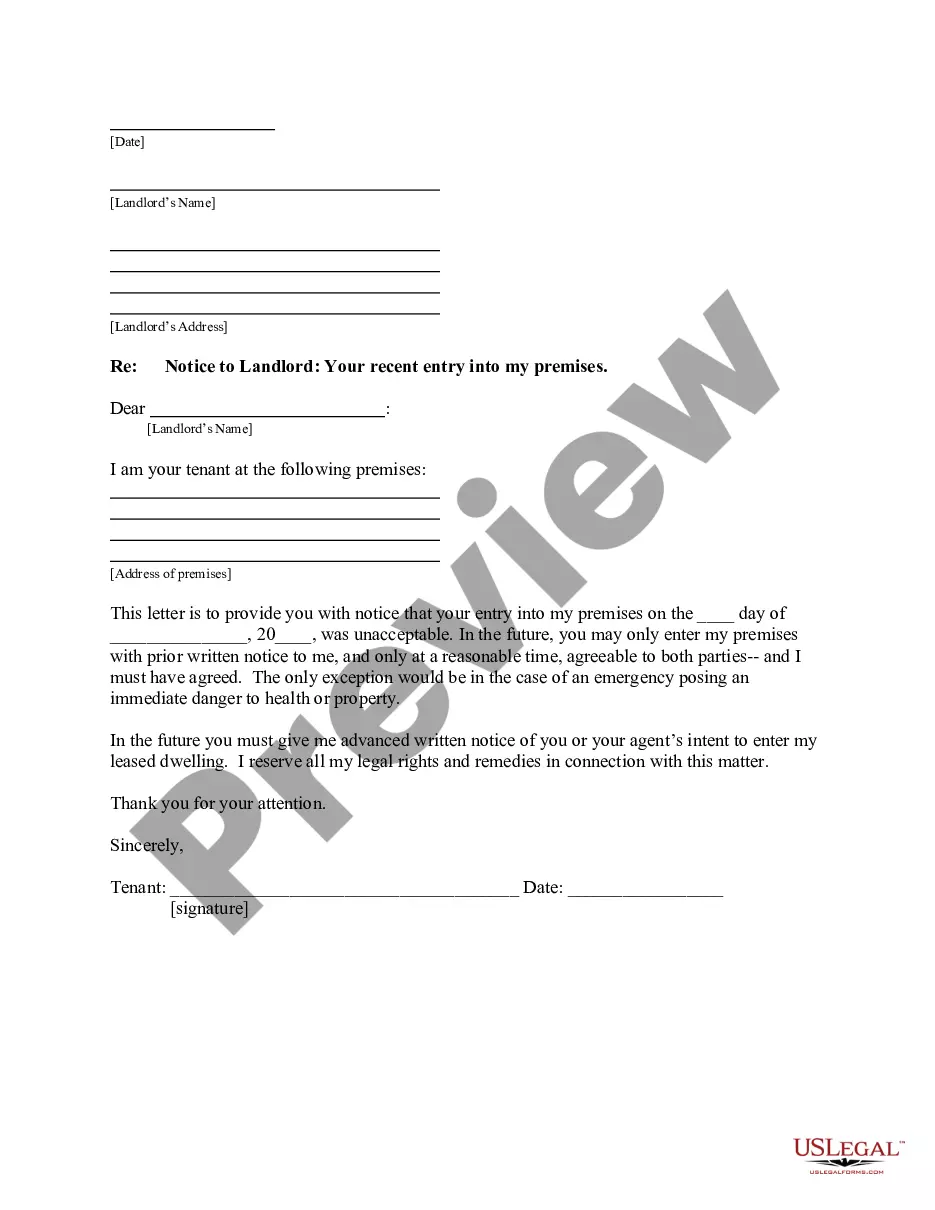

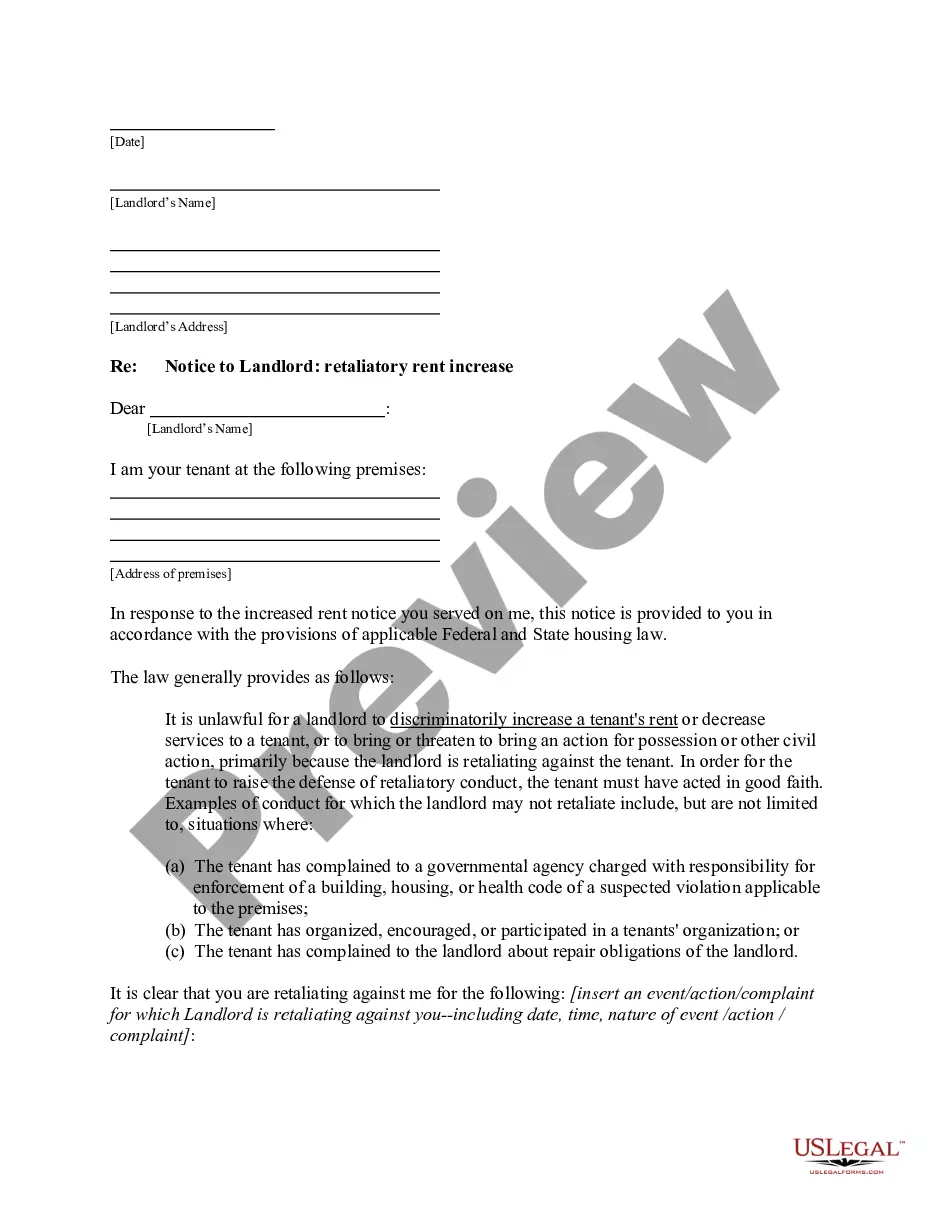
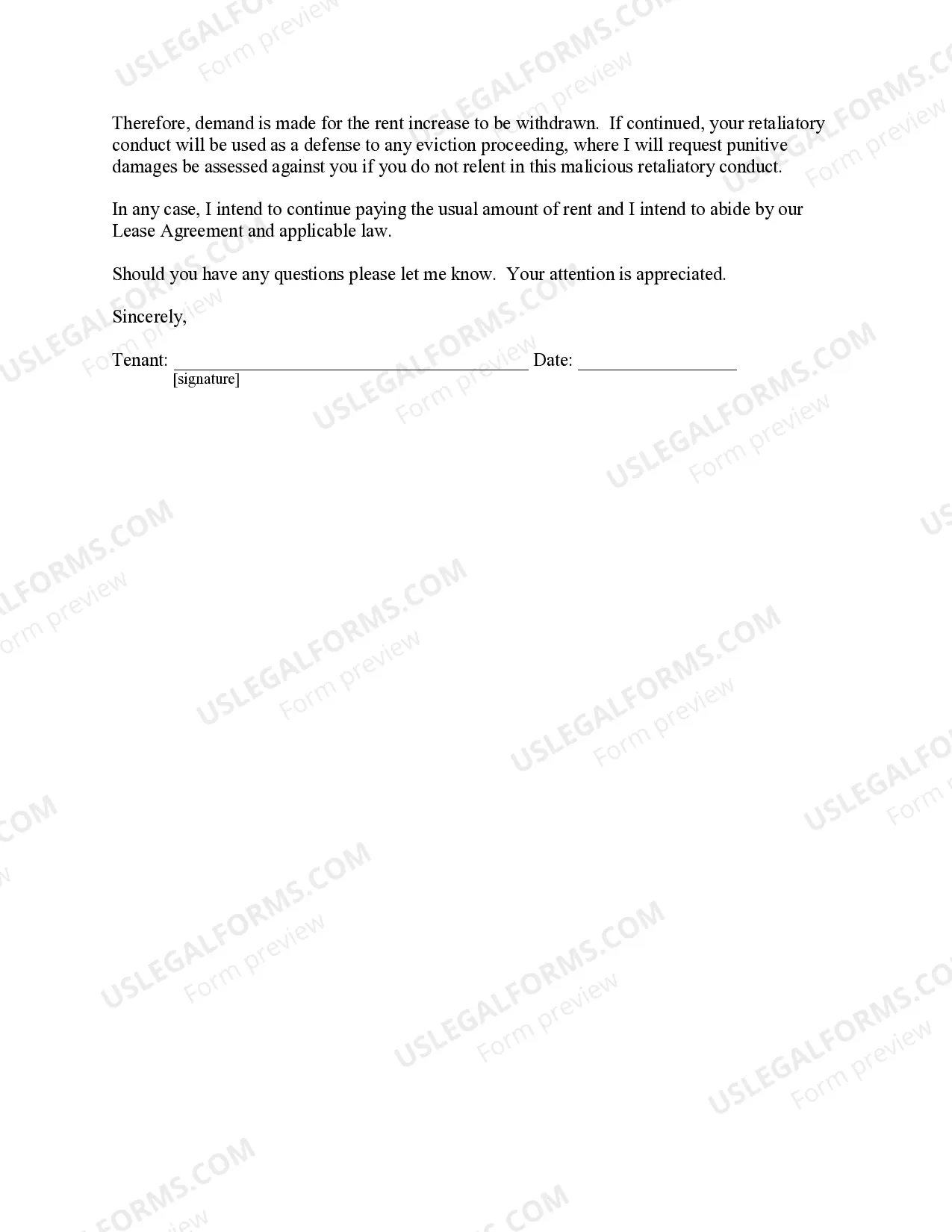
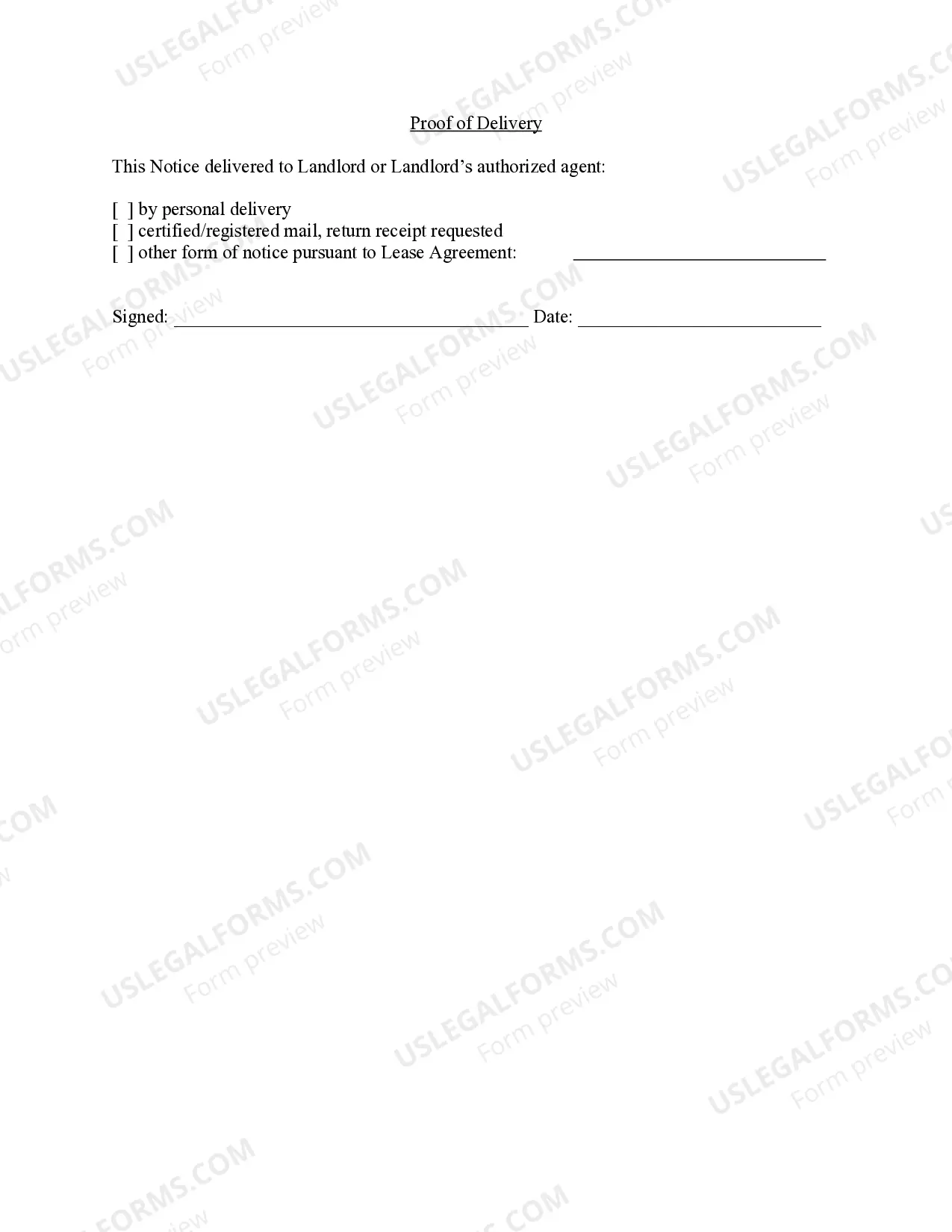
How to fill out Colorado Letter From Tenant To Landlord Containing Notice To Landlord To Withdraw Retaliatory Rent Increase?
- Log in to your existing US Legal Forms account to access your saved documents. Ensure your subscription is active; if not, you can easily renew it under your payment plan.
- If you’re a first-time user, begin by checking the Preview mode and form description to select the appropriate legal form that suits your requirements.
- If the selected form doesn't meet your needs, use the Search tab to find another template that aligns with your local regulations.
- Click on the Buy Now button to purchase your chosen document and select a suitable subscription plan. You’ll need to register to unlock further resources.
- Process your payment by entering your credit card details or using your PayPal account to complete your transaction.
- Finally, download the completed form to your device, enabling you to fill it out and access it anytime via the My Forms section of your profile.
Using US Legal Forms not only simplifies the document acquisition process but also ensures that you have a legally sound and precise outcome.
Don’t let tenant troubles overwhelm you. Start your journey with US Legal Forms today and simplify your legal documentation!
Form popularity
FAQ
In Connecticut, you can sue your landlord for various issues such as failure to provide a habitable living space, violation of lease terms, or unlawful eviction. Keep detailed records of incidents and communications to support your case. Consulting with an attorney experienced in tenant law can help clarify your rights and the best course of action. If tenant troubles have this landlord seeing red, knowing your legal options is crucial.
To take legal action against a landlord, you should first document all relevant interactions and issues. Then, determine the appropriate legal grounds for your case, such as breach of contract or failure to maintain the property. After this, seek advice from a legal professional to navigate the process. Remember, tenant troubles have this landlord seeing red, and with the right plan, you can hold them accountable.
Yes, there are several websites where you can report bad landlords, such as the Better Business Bureau and local tenant advocacy organizations. These platforms allow you to share your experiences and warn other renters about problematic landlords. You might also consider using online reviews and social media to raise awareness about tenant troubles that have this landlord seeing red. Your voice can help others in similar situations.
In Kansas, you can report landlords to the Kansas Attorney General’s Consumer Protection Division. They will review your complaint and may take action if they find violations of Kansas landlord-tenant laws. Additionally, documenting your issues and reaching out to local tenant advocacy groups can provide valuable support. When tenant troubles have this landlord seeing red, reporting the problem is a crucial step.
Deciding whether it’s worth taking a landlord to court depends on the severity of the issue and the potential compensation involved. If your landlord continually violates your rights or disregards lease terms, legal action may be necessary. Consider consulting with a lawyer who specializes in tenant rights to evaluate your situation. In many cases, tenant troubles have this landlord seeing red, and seeking justice can lead to positive outcomes.
In Nevada, you should report your landlord to the Nevada Division of Housing. They handle issues related to tenant rights and can guide you on how to proceed with your complaint. It’s essential to provide them with as much information as possible, as this will help them investigate your claim. Tenant troubles have this landlord seeing red, so don't hesitate to reach out for assistance.
To file legal action against a landlord, start by gathering all relevant documentation, such as your lease agreement, correspondence, and evidence of the issue. Next, consult with a legal professional to understand your rights and options. After that, you can usually file a complaint in your local small claims court. Remember, tenant troubles have this landlord seeing red, but being well-prepared can make a significant difference.
To handle an unreasonable landlord, maintain a record of any issues and attempts to communicate. Be sure to express your concerns in writing to create a clear paper trail. If necessary, seek mediation or legal advice to resolve conflicts effectively. Tenant troubles have this landlord seeing red, but taking the right steps can help you gain control over the situation.
When facing an unreasonable landlord, start by documenting all interactions and issues. This evidence can support your case if further action is necessary. Next, communicate your concerns clearly and respectfully, stating your expectations. Remember, tenant troubles have this landlord seeing red, but you can seek support from US Legal Forms to help navigate disputes professionally.
Signs of a bad landlord include poor communication, neglecting maintenance, and failing to provide safe living conditions. If they ignore your requests or treat tenants unfairly, it's a red flag. Additionally, checking reviews from previous tenants can provide valuable insight. Tenant troubles have this landlord seeing red, and it’s vital to be aware of these signs before renting.