Tenant Landlord Failure For Sale
Description


Get your form ready online
Our built-in tools help you complete, sign, share, and store your documents in one place.
Make edits, fill in missing information, and update formatting in US Legal Forms—just like you would in MS Word.
Download a copy, print it, send it by email, or mail it via USPS—whatever works best for your next step.
Sign and collect signatures with our SignNow integration. Send to multiple recipients, set reminders, and more. Go Premium to unlock E-Sign.
If this form requires notarization, complete it online through a secure video call—no need to meet a notary in person or wait for an appointment.
We protect your documents and personal data by following strict security and privacy standards.

Make edits, fill in missing information, and update formatting in US Legal Forms—just like you would in MS Word.

Download a copy, print it, send it by email, or mail it via USPS—whatever works best for your next step.

Sign and collect signatures with our SignNow integration. Send to multiple recipients, set reminders, and more. Go Premium to unlock E-Sign.

If this form requires notarization, complete it online through a secure video call—no need to meet a notary in person or wait for an appointment.

We protect your documents and personal data by following strict security and privacy standards.
Looking for another form?







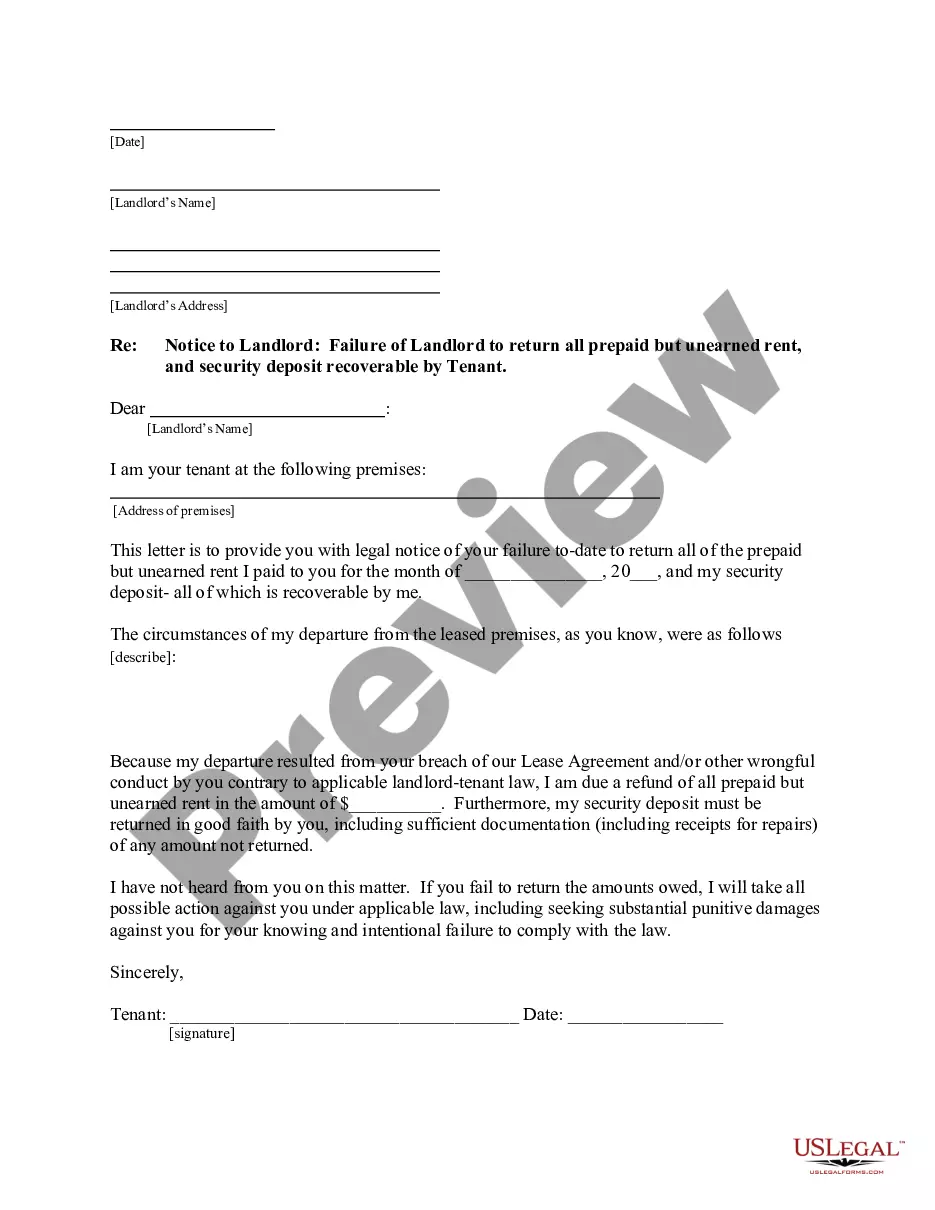
How to fill out California Letter From Tenant To Landlord For Failure Of Landlord To Return All Prepaid And Unearned Rent And Security Recoverable By Tenant?
- If you have utilized US Legal Forms before, simply log into your account and download the required template by pressing the Download button. Confirm that your subscription is active, and if it has expired, renew it according to your plan.
- For first-time users, begin by reviewing the available templates in the Preview mode. Make sure the one you select meets your specific needs and complies with local jurisdiction regulations.
- If your requirements change, use the Search tab to find other relevant templates. Ensure the one you select suits your needs before proceeding.
- To purchase the document, click the Buy Now button, select your preferred subscription plan, and register for an account to gain access to the extensive library.
- Complete your purchase by entering your credit card information or using your PayPal account to finalize the transaction.
- Download your form and save it on your device, making it easy to complete and access through your profile's My Forms section whenever needed.
In conclusion, US Legal Forms provides a valuable resource for individuals and attorneys to create legally binding documents quickly and effectively. With access to an extensive library and expert assistance, you can ensure that your tenant-landlord agreements are accurate and enforceable.
Don't wait for misunderstandings to escalate; start your process with US Legal Forms today!
Form popularity
FAQ
Tenants have rights that protect them when their rental property is being sold, including the right to remain until the lease ends. The new owner must adhere to the current lease terms, ensuring that tenants are not unfairly displaced. This practice is crucial in cases of tenant landlord failure for sale. For further details, US Legal Forms offers tools and articles that help tenants understand their rights and navigate the selling process.
In California, a landlord must provide at least 60 days' notice to tenants before terminating a lease due to the property sale, unless the lease specifies otherwise. If the tenant has lived in the rental unit for over a year, additional notice may apply. This is part of ensuring fair treatment in tenant landlord failure for sale situations. Always check your lease for specific terms and consider consulting legal resources or professionals if you have questions.
Generally, tenants cannot break a lease just because the landlord is selling the property. Your lease remains valid until its end, unless there are specific clauses that allow for early termination. In tenant landlord failure for sale situations, reviewing your lease and seeking legal advice may clarify your options. Utilizing resources from US Legal Forms can provide valuable insights and support regarding your rights.
When the owner sells a property, tenants have a right to remain in their rental unit until the lease ends, even if the property is sold. The new owner must honor the existing lease agreement unless both parties agree to a change. This is an important aspect of tenant landlord failure for sale scenarios, ensuring you have legal protection. Remember, it's beneficial to communicate with your landlord about the sale and how it affects your rental situation.
If one person on a lease moves out, the remaining tenants are typically still responsible for the lease terms. It’s important to discuss the situation with your landlord, especially if tenant landlord failure for sale is a concern. The landlord may need to amend the lease or address any impacts on the rental agreement, so communication is key.
When crafting a letter to inform a tenant about selling your property, include specific details and timelines. It’s helpful to reference the tenant landlord failure for sale issue, providing clarity on how the sale may impact them. Always express appreciation for the tenant and reassure them about their rights during this transition.
In your letter to a tenant regarding selling the property after their lease, convey your intent and explain any relevant timelines. Mention the concept of tenant landlord failure for sale and how it may pertain to their current living situation. Offering reassurance about their rights and next steps can help ease any concerns they may have.
To compose a formal letter to a tenant, start with a proper greeting and clearly state the purpose of your communication. If you are addressing issues related to tenant landlord failure for sale, be straightforward yet kind in your explanation. Always conclude with an invitation for the tenant to discuss their concerns, ensuring a respectful and productive dialogue.
Writing a considerate letter to request a tenant move out involves expressing your appreciation for their time in the property and providing a clear timeline for the move. You can include details about the tenant landlord failure for sale situation that necessitates this decision. A polite tone, along with an offer of support during their transition, can make this process smoother for both you and your tenant.
In Texas, if you face issues with your landlord related to tenant landlord failure for sale, you can report them to the local housing authority or file a complaint with the Texas Department of Housing and Community Affairs. You may also consider seeking legal advice or contacting a tenant advocacy organization. They can guide you on how to resolve the situation effectively.