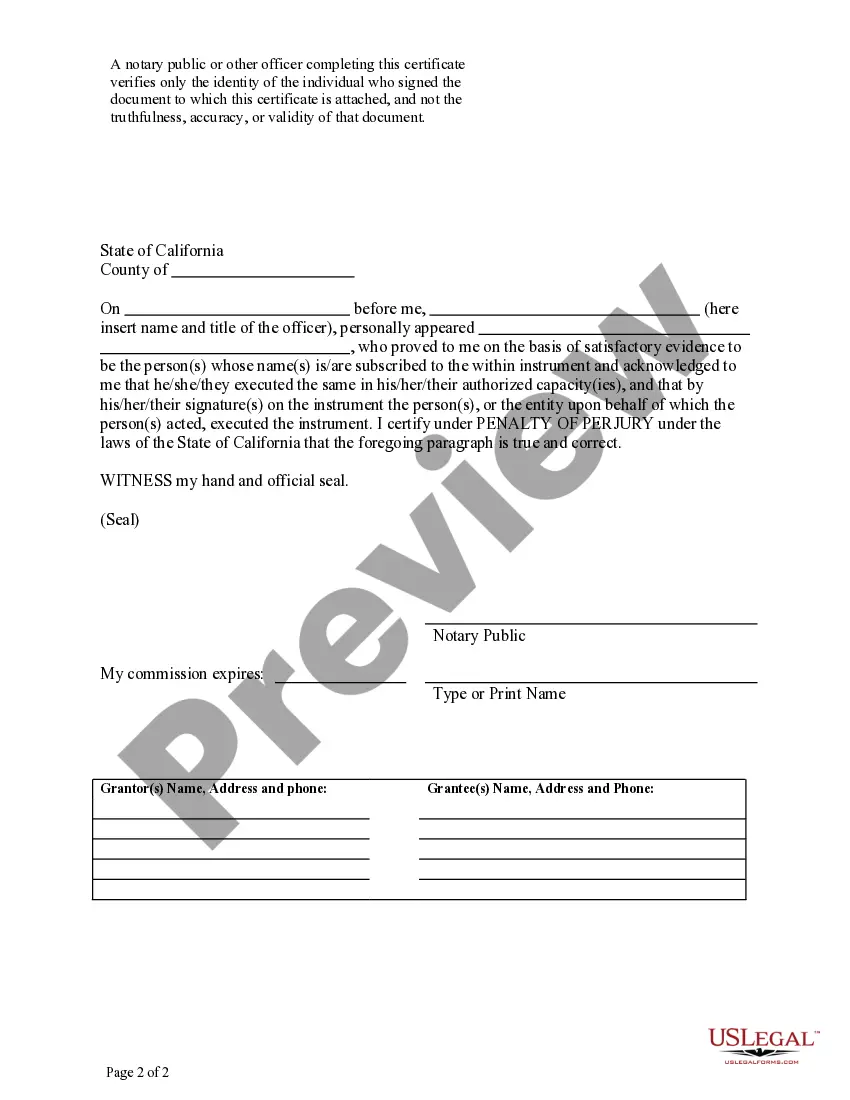
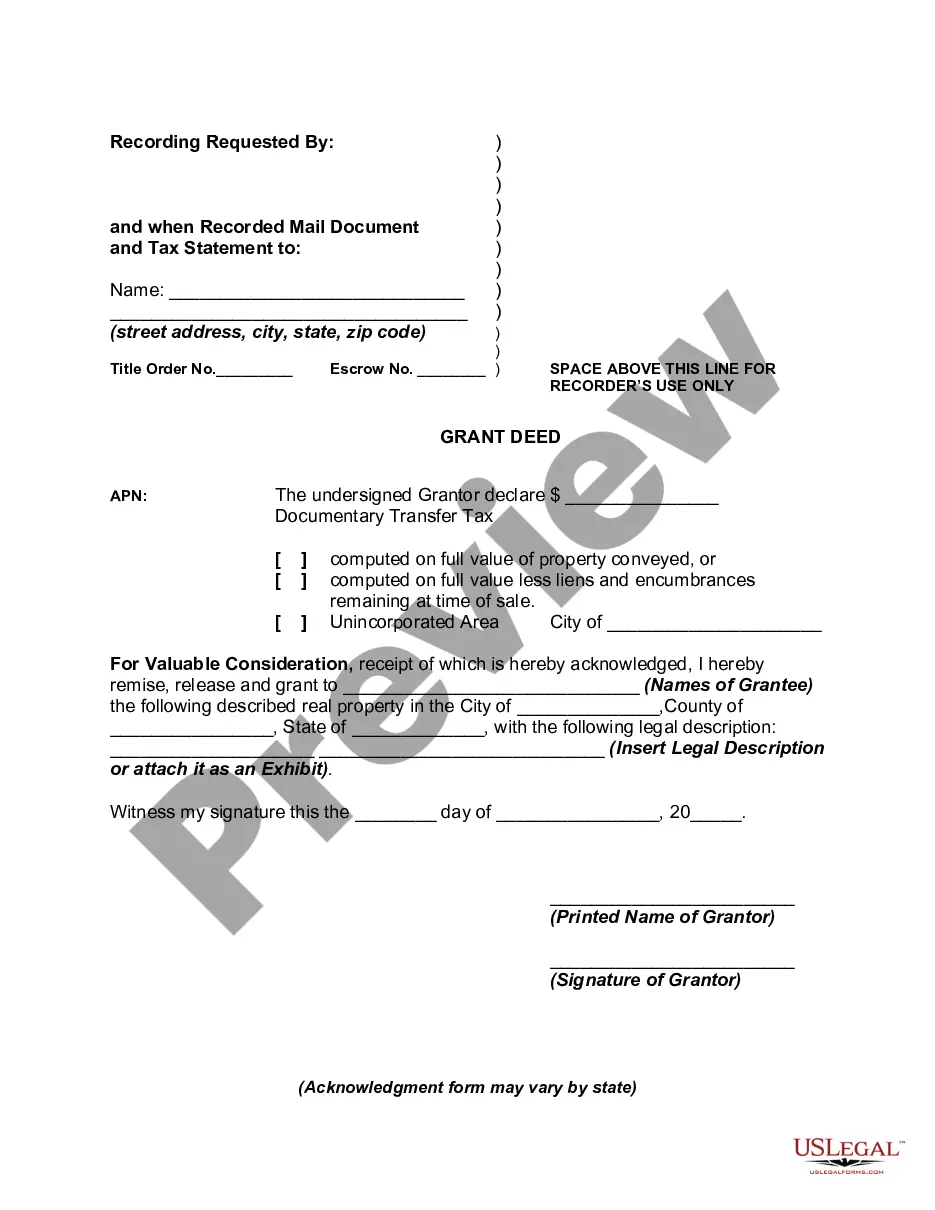
Ca Grant Deed Form Printable With Instructions
Description
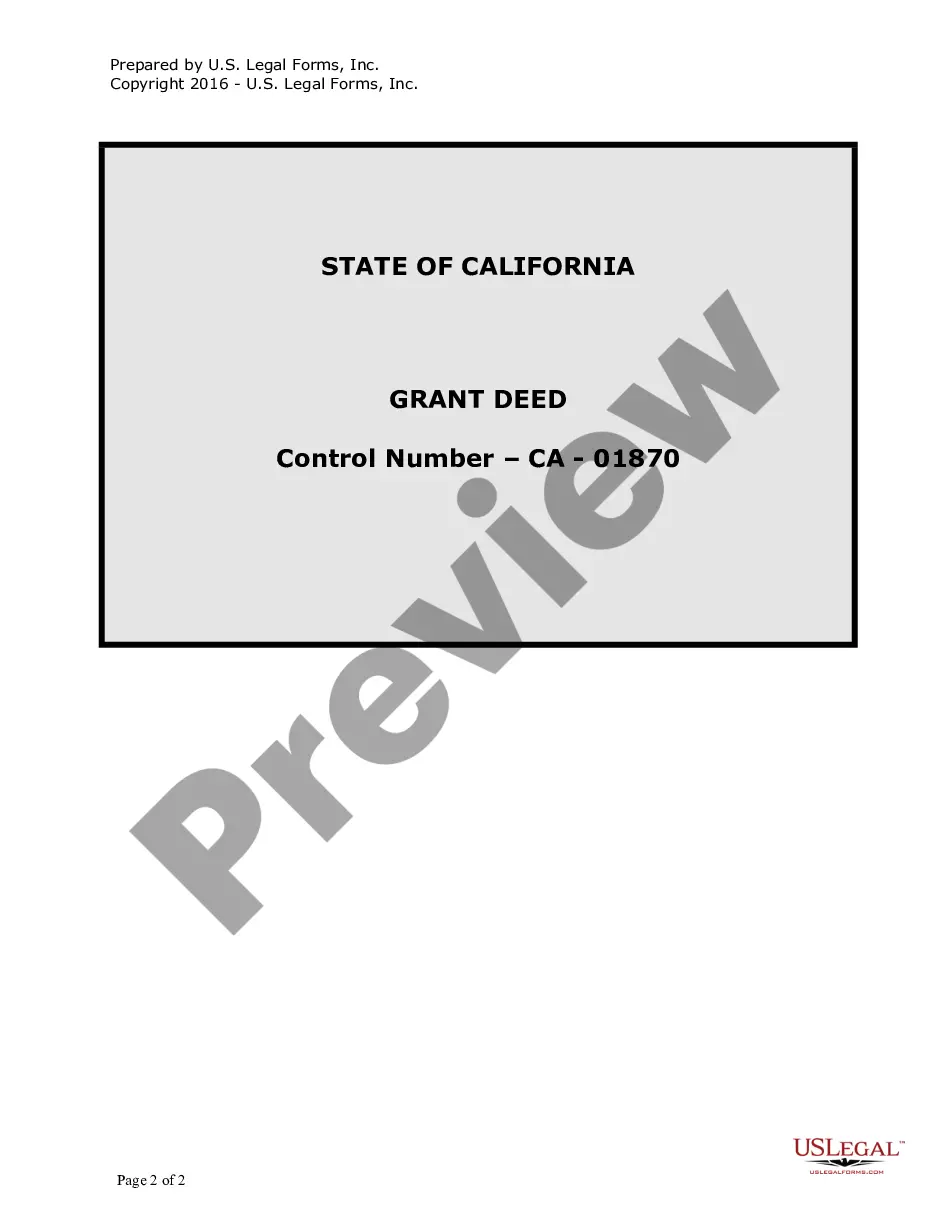
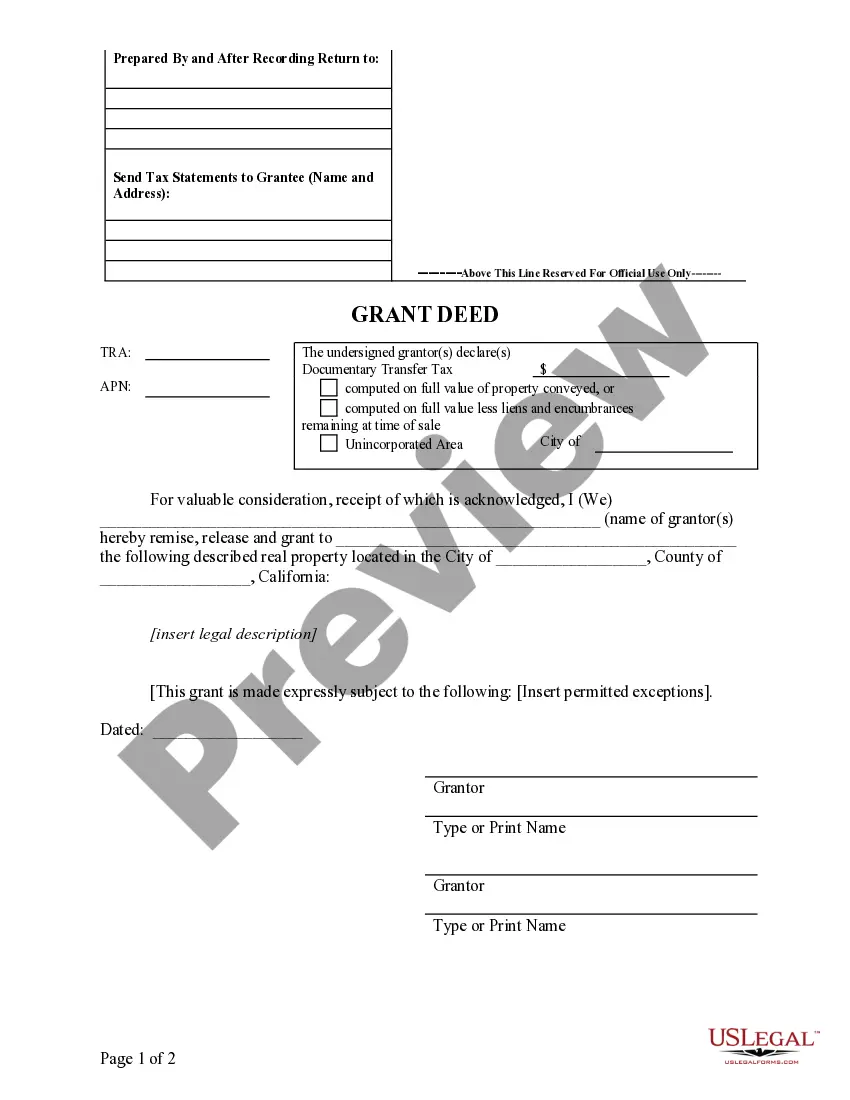
Get your form ready online
Our built-in tools help you complete, sign, share, and store your documents in one place.
Make edits, fill in missing information, and update formatting in US Legal Forms—just like you would in MS Word.
Download a copy, print it, send it by email, or mail it via USPS—whatever works best for your next step.
Sign and collect signatures with our SignNow integration. Send to multiple recipients, set reminders, and more. Go Premium to unlock E-Sign.
If this form requires notarization, complete it online through a secure video call—no need to meet a notary in person or wait for an appointment.
We protect your documents and personal data by following strict security and privacy standards.

Make edits, fill in missing information, and update formatting in US Legal Forms—just like you would in MS Word.

Download a copy, print it, send it by email, or mail it via USPS—whatever works best for your next step.

Sign and collect signatures with our SignNow integration. Send to multiple recipients, set reminders, and more. Go Premium to unlock E-Sign.

If this form requires notarization, complete it online through a secure video call—no need to meet a notary in person or wait for an appointment.

We protect your documents and personal data by following strict security and privacy standards.
Looking for another form?



How to fill out California Grant Deed?
Legal papers management can be mind-boggling, even for the most skilled professionals. When you are searching for a Ca Grant Deed Form Printable With Instructions and do not have the time to commit searching for the appropriate and up-to-date version, the operations might be stress filled. A robust web form library could be a gamechanger for anyone who wants to manage these situations effectively. US Legal Forms is a industry leader in online legal forms, with over 85,000 state-specific legal forms available whenever you want.
With US Legal Forms, you may:
- Gain access to state- or county-specific legal and business forms. US Legal Forms handles any demands you might have, from individual to business documents, all-in-one place.
- Employ innovative tools to complete and deal with your Ca Grant Deed Form Printable With Instructions
- Gain access to a resource base of articles, guides and handbooks and materials relevant to your situation and needs
Help save time and effort searching for the documents you will need, and utilize US Legal Forms’ advanced search and Preview feature to find Ca Grant Deed Form Printable With Instructions and get it. In case you have a membership, log in to your US Legal Forms account, look for the form, and get it. Take a look at My Forms tab to find out the documents you previously downloaded and also to deal with your folders as you see fit.
If it is the first time with US Legal Forms, register a free account and get unlimited use of all advantages of the platform. Here are the steps to take after accessing the form you want:
- Verify this is the correct form by previewing it and reading its description.
- Ensure that the sample is approved in your state or county.
- Select Buy Now once you are ready.
- Choose a subscription plan.
- Pick the formatting you want, and Download, complete, sign, print out and deliver your document.
Benefit from the US Legal Forms web library, backed with 25 years of expertise and stability. Change your everyday document managing into a easy and user-friendly process today.
Form popularity
FAQ
The biggest difference between a title versus a deed is the physical component. A deed is an official written document declaring a person's legal ownership of a property, while a title refers to the concept of ownership rights.
Step 1: Locate the Current Deed for the Property. ... Step 2: Determine What Type of Deed to Fill Out for Your Situation. ... Step 3: Determine How New Owners Will Take Title. Step 4: Fill Out the New Deed (Do Not Sign) ... Step 5: Grantor(s) Sign in Front of a Notary. ... Step 6: Fill Out the Preliminary Change of Ownership Report (PCOR)
Having your name on a deed means that you have property title, which represents a set of rights you have as a homeowner.
From here, the process looks like this: Choose the most appropriate deed. Prepare the deed. Complete the deed with accurate information about the property and the person being added. Sign the deed in the presence of a notary public. File the deed with the county recorder's office. Update the property records.
While recording a deed does not affect its validity, it is extremely important to record since recordation protects the grantee. If a grantee fails to record, and another deed or any other document encumbering or affecting the title is recorded, the first grantee is in jeopardy.