Appurtenant Easement Example With Parameters
Description
Get your form ready online
Our built-in tools help you complete, sign, share, and store your documents in one place.
Make edits, fill in missing information, and update formatting in US Legal Forms—just like you would in MS Word.
Download a copy, print it, send it by email, or mail it via USPS—whatever works best for your next step.
Sign and collect signatures with our SignNow integration. Send to multiple recipients, set reminders, and more. Go Premium to unlock E-Sign.
If this form requires notarization, complete it online through a secure video call—no need to meet a notary in person or wait for an appointment.
We protect your documents and personal data by following strict security and privacy standards.

Make edits, fill in missing information, and update formatting in US Legal Forms—just like you would in MS Word.

Download a copy, print it, send it by email, or mail it via USPS—whatever works best for your next step.

Sign and collect signatures with our SignNow integration. Send to multiple recipients, set reminders, and more. Go Premium to unlock E-Sign.

If this form requires notarization, complete it online through a secure video call—no need to meet a notary in person or wait for an appointment.

We protect your documents and personal data by following strict security and privacy standards.
Looking for another form?


How to fill out Alabama Agreement And Conveyance Of Easement Appurtenant?
The Appurtenant Easement Example With Parameters displayed on this page is a versatile legal template created by experienced attorneys in accordance with national and local laws and guidelines.
For over 25 years, US Legal Forms has been supplying individuals, businesses, and legal professionals with more than 85,000 authenticated, state-specific documents for any commercial and personal situation. It’s the quickest, simplest, and most reliable way to access the materials you need, as the service ensures bank-level data protection and anti-malware safeguards.
Subscribe to US Legal Forms to have verified legal templates for all of life's circumstances readily available.
- Search for the document you require and review it. Browse through the example you searched for and preview it or examine the form description to verify it meets your criteria. If it doesn’t, use the search feature to find the correct one. Click Buy Now once you’ve identified the template you require.
- Subscribe and Log In. Select the pricing option that works for you and set up an account. Use PayPal or a credit card to make a quick payment. If you already possess an account, Log In and verify your subscription to proceed.
- Obtain the fillable template. Choose the format you desire for your Appurtenant Easement Example With Parameters (PDF, Word, RTF) and download the example onto your device.
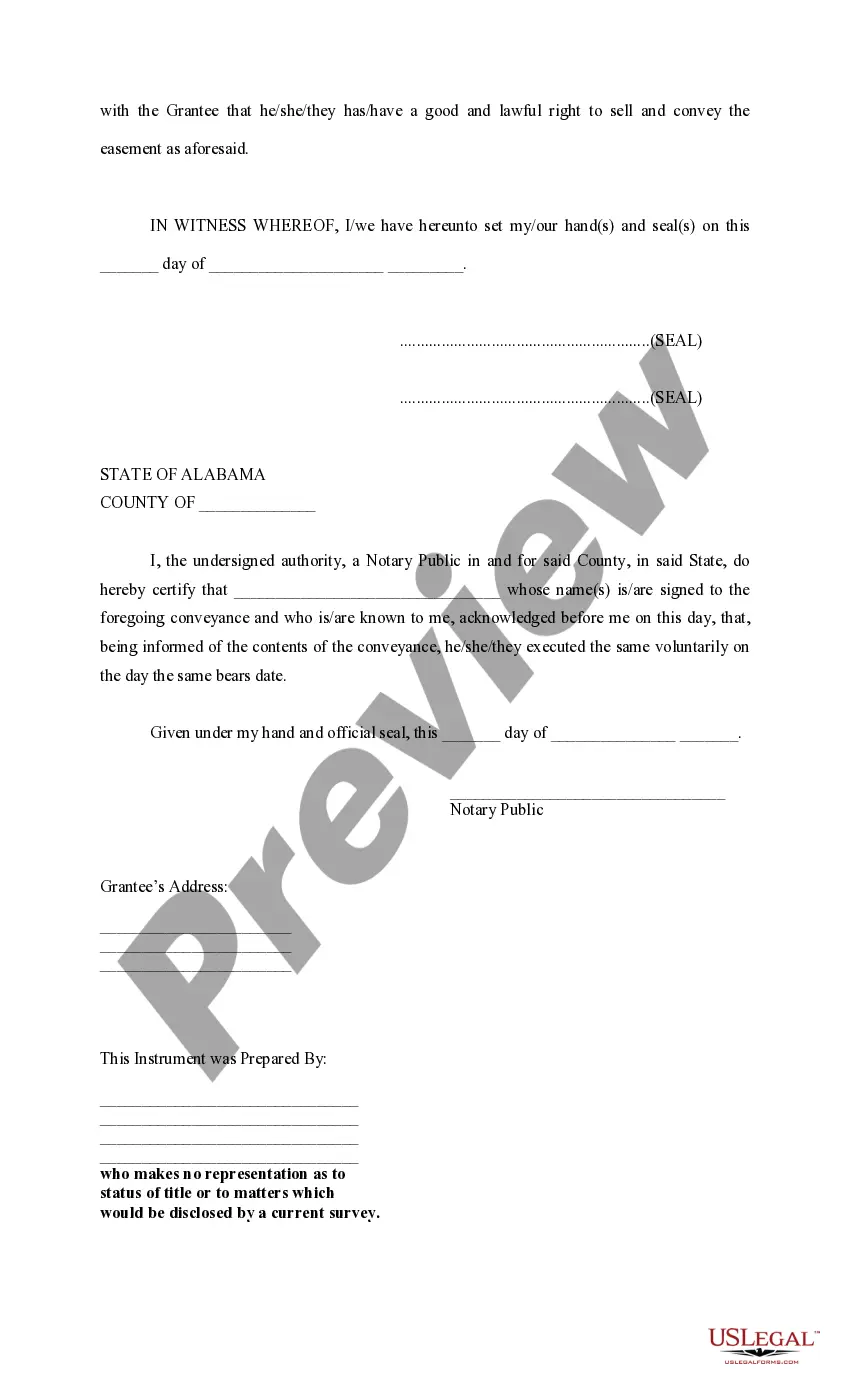
- Complete and sign the documents. Print the template to fill it out by hand. Alternatively, use an online multifunctional PDF editor to efficiently and accurately complete and sign your form with a valid signature.
- Download your documents once more. Use the same document again whenever necessary. Navigate to the My documents section in your profile to redownload any previously acquired forms.
Form popularity
FAQ
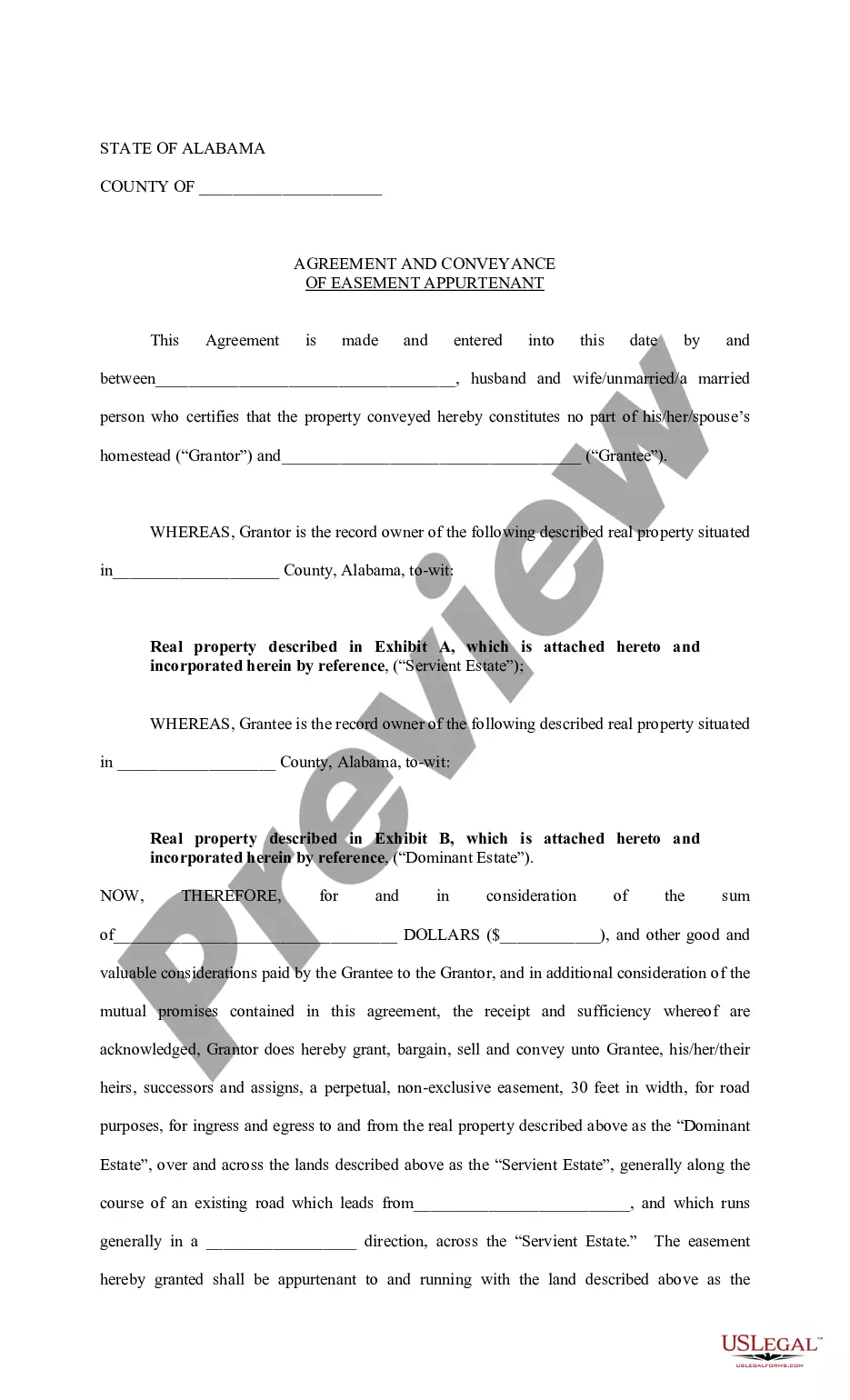
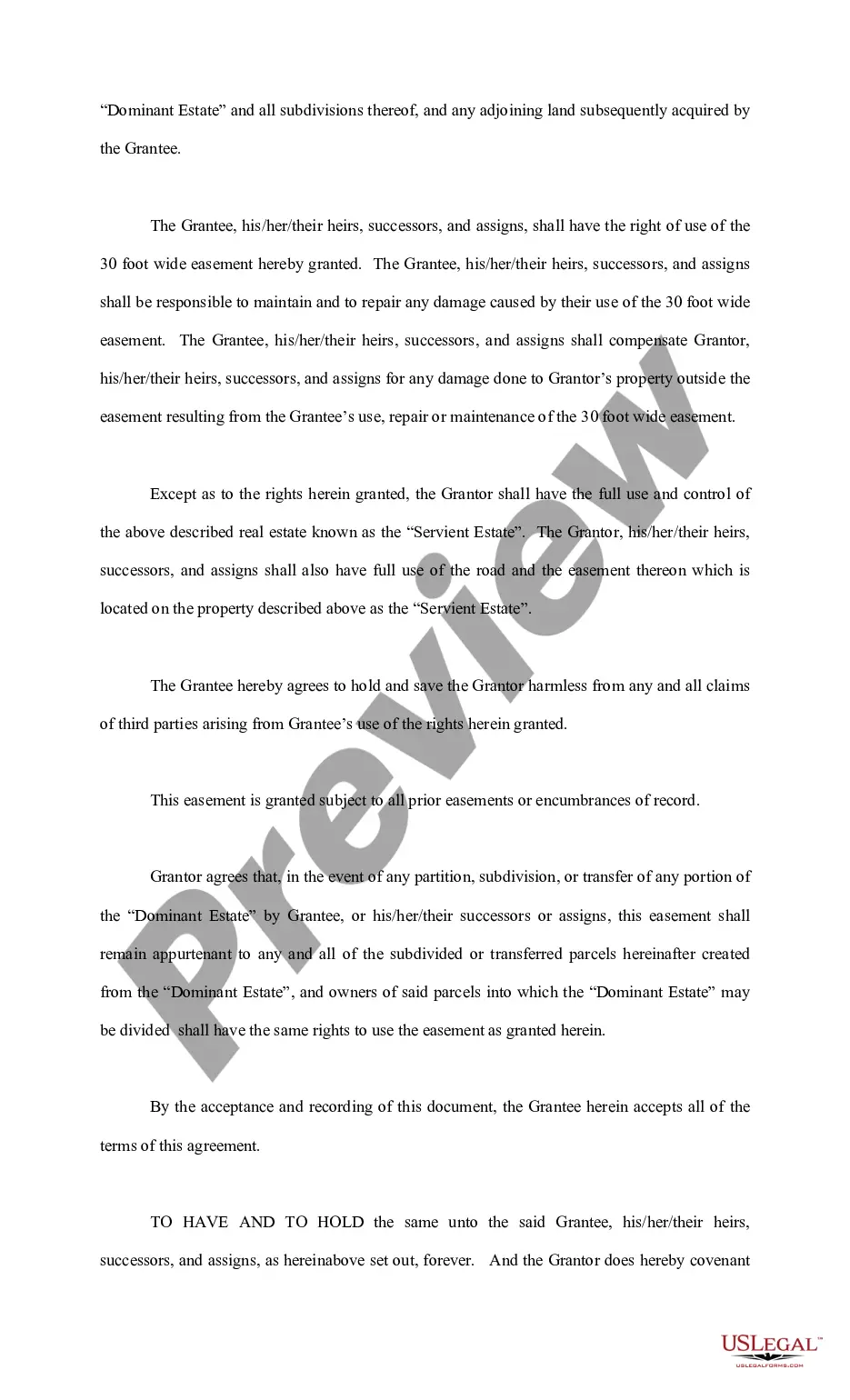
An example of an appurtenant easement is the public or private access to a street across a property that is landlocked.
Appurtenant commonly refers to easements or covenants, and also refers to permanent additions or improvements to the land. Appurtenant rights and restrictions pass to new owners as the land is sold or transferred. Most frequently, a house, garage, or swimming pool would be considered appurtenant property examples.
Common examples of appurtenances are driveways, drainage ditches, fences, and rights of way.
Let's say you live in a place where your neighbors regularly walk through your yard to get to a park or a lake. If they did that consistently over a period of time, it could allow them to eventually have rights to your property. This situation is one example of an easement appurtenant.
The dominant tenement property is the property that benefits from the easement while the servient tenement property is burdened by the easement. The word appurtenant refers to something that is a legal attachment.