Texas Divorce
Divorce documents help individuals navigate the ending of a marriage. Our attorney-drafted templates are quick and easy to fill out.

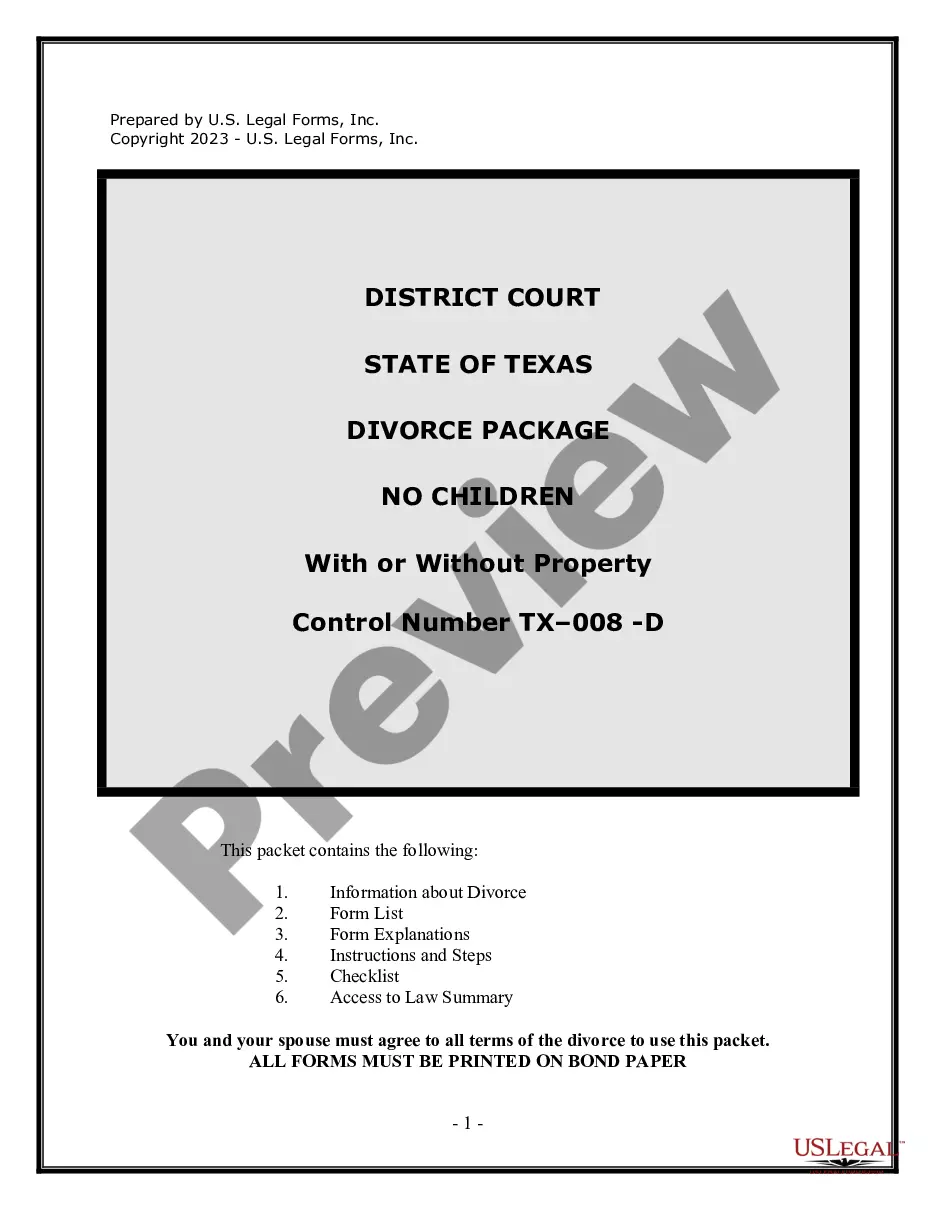
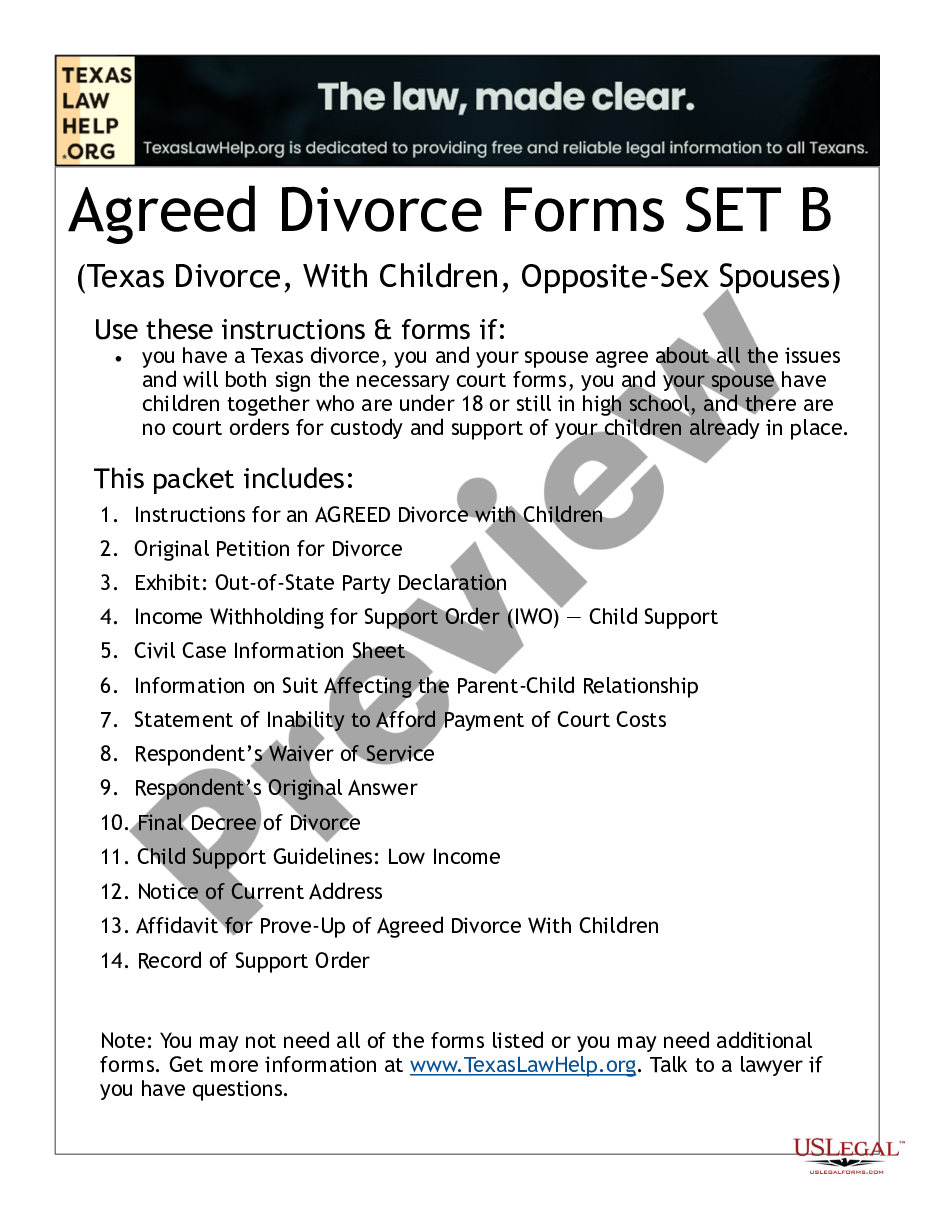
Similar documents: key differences
- Divorce vs. Legal Separation — Divorce ends the marriage, while legal separation allows spouses to live apart without terminating the marriage.
- Contested Divorce vs. Uncontested Divorce — Contested involves disputes over terms, while uncontested means both parties agree.
- Divorce Agreement vs. Settlement Agreement — Both describe terms, but a divorce agreement is specific to divorce proceedings.
- No-Fault Divorce vs. Fault Divorce — No-fault does not require proving wrongdoing, while fault requires showing one spouse is at fault.
Search for more forms
Types of Divorce forms
Separation Agreement
Establish clear terms for separating partners, detailing property division and support obligations.
Separation + Support: Joint Custody & Mutual Support
Create a binding agreement for custody, visitation, and support of children after separation, ensuring both parents maintain shared responsibilities.
Counterclaim for Divorce
Use this form to respond to a divorce petition and assert your own claims, including custody and support issues.
Affidavit — Divorce
Ideal for couples seeking a divorce without children, this affidavit simplifies the legal process.
Petition for Divorce
Use this legal document to file for divorce when you have adult children or no children, ensuring proper legal procedures are followed.
Petition for Divorce and Temporary Orders on Child Custody and Support
Initiate divorce proceedings and request temporary child custody and support orders in urgent situations involving children.
Motion: Contempt for Unpaid Alimony (Order to Show Cause)
Use this form to seek enforcement of alimony payments through a contempt proceeding when the other party fails to comply with a court order.
Waiver of Citation
This document allows the responding spouse to waive their right to formal service of the divorce petition, streamlining the divorce process.
Final Decree of Divorce
Finalize your divorce with this essential legal decree, which officially ends a marriage and addresses division of property and debts.
tx-807d
Final Decree of Divorce
Finalize your divorce when you have adult children or no children, ensuring a legal conclusion to your marriage.
Motion to Modify Decree
Modify a divorce decree to establish joint legal custody and shared responsibilities for a child, reflecting changed circumstances since the original ruling.
tx-806d
Motion for Order of Contempt for Failure to Pay Spousal Maintenance
Use this form to request court action against a partner who hasn't paid ordered spousal maintenance, ensuring compliance with financial obligations.
Motion to Modify Decree — Restore Name
Easily request a court order to revert your name to your married name after a divorce, addressing difficulties you've faced with your maiden name.
Civil Case Information Sheet
Complete this sheet when filing a new civil, family law, or probate case to provide vital case details.
Notice of Hearing on Temporary Orders
Indicate the date and location for a court hearing on temporary orders related to family law matters.
Waiver of Citation
Sign to waive the formal notice requirement in a divorce case, allowing the court to proceed without your presence.
Affidavit — Divorce (No Children, Form B)
Secure a divorce without children using this form, which simplifies the process when both parties agree on key terms.
Affidavit — Divorce (No Children, Form A)
Ideal for couples without children seeking a divorce, this form simplifies the process with a mediated settlement agreement.
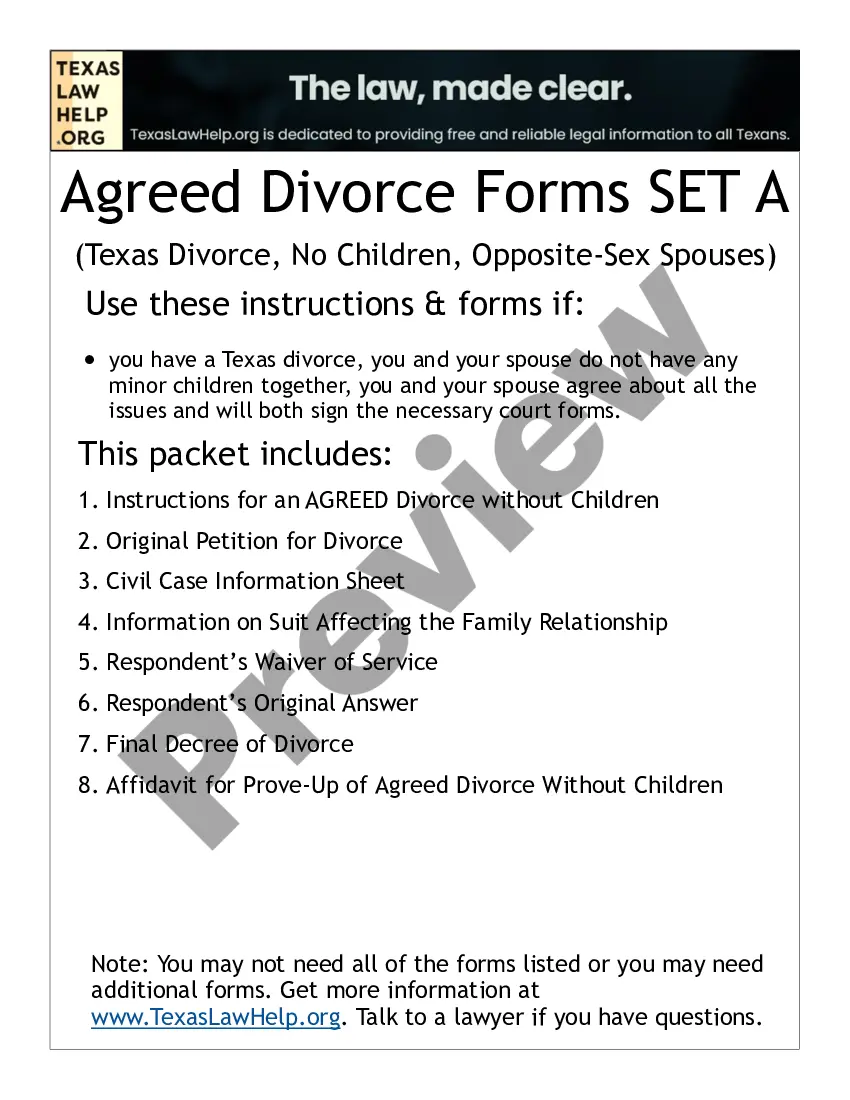
Original Petition for Divorce with No Children
Initiate your divorce process easily without child custody concerns, ensuring each spouse's rights are addressed.
Affidavit — Divorce (with Children)
Use this affidavit to address child custody and support agreements during a divorce when children are involved.
Divorce Worksheet and Law Summary for Contested
Essential for individuals exploring a divorce, this worksheet aids in gathering crucial information for legal proceedings.
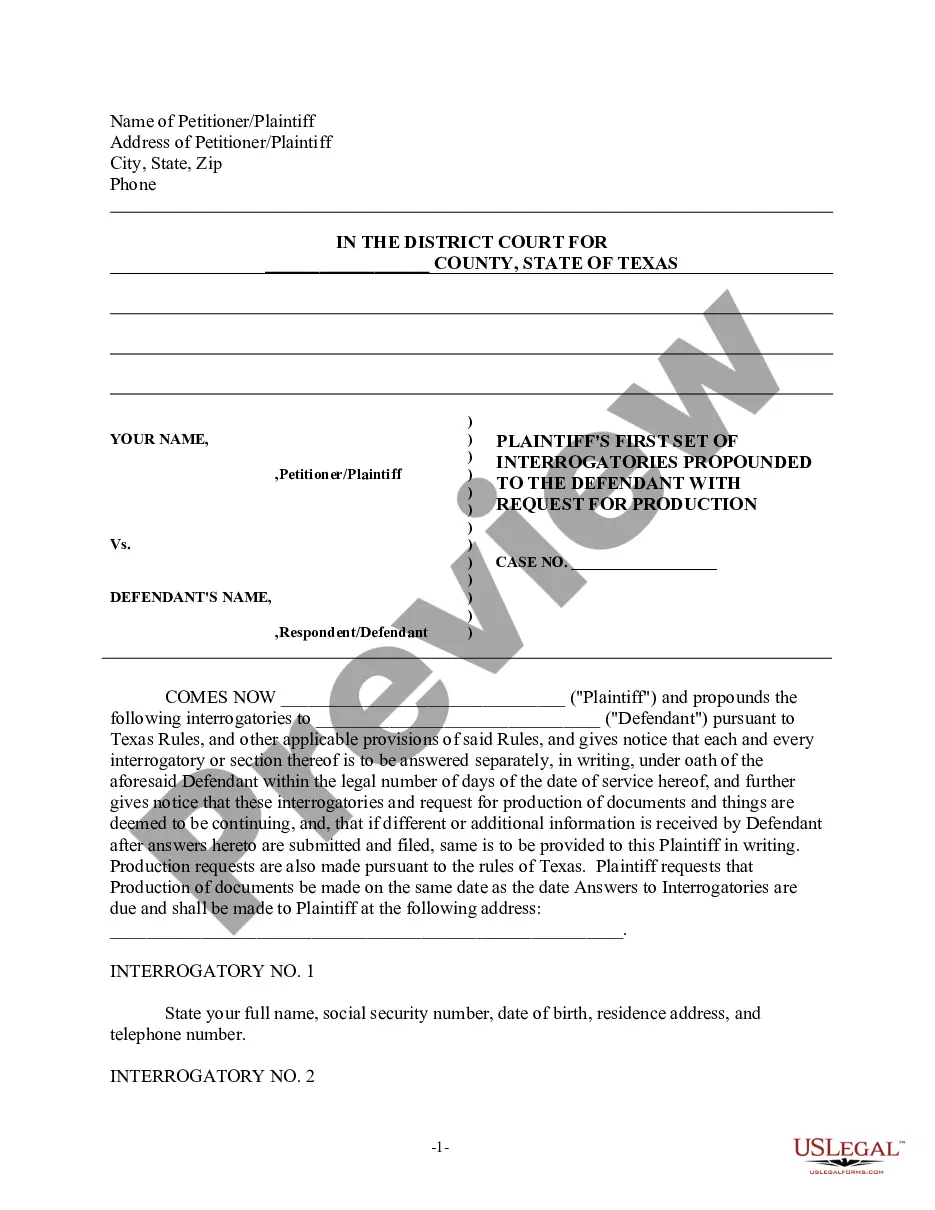
Discovery Interrogatories: Plaintiff → Defendant
Engage in the discovery process by requesting detailed information and documents from the defendant to support your case.
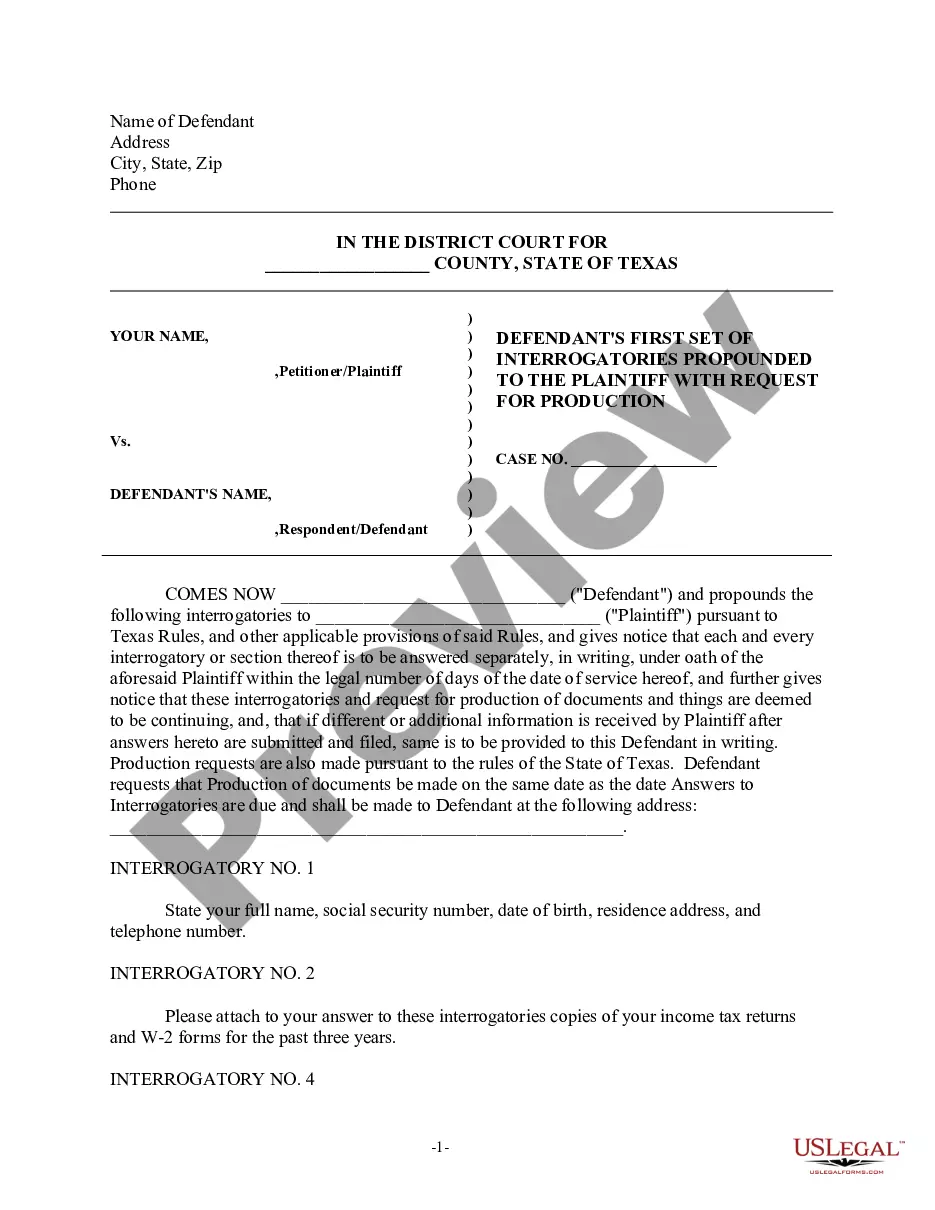
Discovery Interrogatories: Defendant → Plaintiff
Gather detailed information from the plaintiff and request necessary documents to support your defense in a legal proceeding.
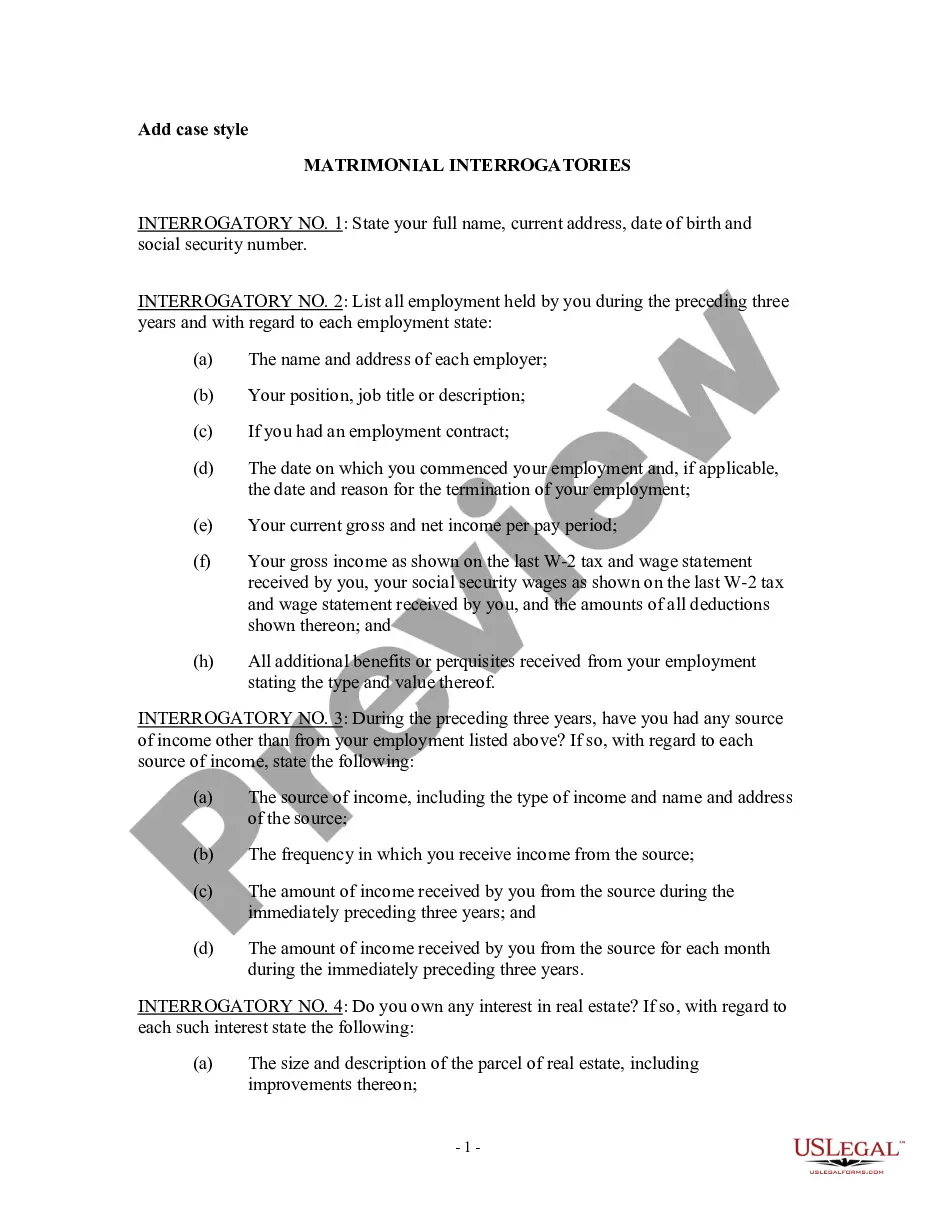
Discovery Interrogatories: Divorce (Either Party)
Gather essential information for divorce proceedings with targeted questions for financial, employment, and asset disclosures.
Common Texas Divorce documents
- Divorce Petition — Initiates the process of legally dissolving a marriage.
- Divorce Agreement — Outlines the terms agreed upon by both parties.
- Separation Agreement — Defines the terms of living apart before a divorce.
- Divorce Decree — Official court order finalizing the divorce.
- Marital Settlement Agreement — Details the division of assets and responsibilities.
- Complaint for Divorce — Formal statement to request a divorce from the court.
- Joint Petition for Divorce — Filed by both spouses together to request a divorce.
Complete Texas Divorce packages
Bundle every form you need for a complete situation — not just one document.

 0 forms
5 forms
0 forms
5 forms
Texas Newly Divorced Individuals Package
Get everything you need for your legal life after divorce in one convenient package, including multiple essential forms to protect your interests.
- Texas Name Change Notification Form
- Texas General Durable Power of Attorney for Property and Finances or Financial Effective upon Disability
- Texas Statutory Directive to Physicians and Family or Surrogates includes Living Will provisions
- Texas Written Revocation of Will
- Personal Planning Information and Document Inventory Worksheets - A Legal Life Document
FAQs
Divorce ends a marriage, while legal separation maintains the marital status but allows for separate living.
Yes, individuals can file for divorce pro se, but legal guidance can simplify the process.
Commonly required documents include a divorce petition, financial disclosures, and a marital settlement agreement.
The duration varies; it can take months depending on complexity and whether it’s contested or uncontested.
Yes, you can withdraw your petition before the divorce is finalized.
Key legal points
- Divorce can be initiated by either spouse in Texas.
- Both parties can negotiate terms to reach an agreement.
- Documents may require notarization for validity.
- Filing fees are typically associated with divorce proceedings.
- Timeframes for divorce can vary based on case complexity.
How to get started
Begin your journey with these simple steps.
- Find a template or package that fits your situation.
- Review the description, preview, and signing requirements.
- Get full access with a subscription.
- Complete it in the online editor.
- Export or send: download, email, USPS mail, notarize online, or send for e-signature.
Practical tip
Consider discussing child custody arrangements early in the process to avoid conflicts later.