Delaware Last Will and Testament for Divorced and Remarried Person with Mine, Yours and Ours Children
About this form
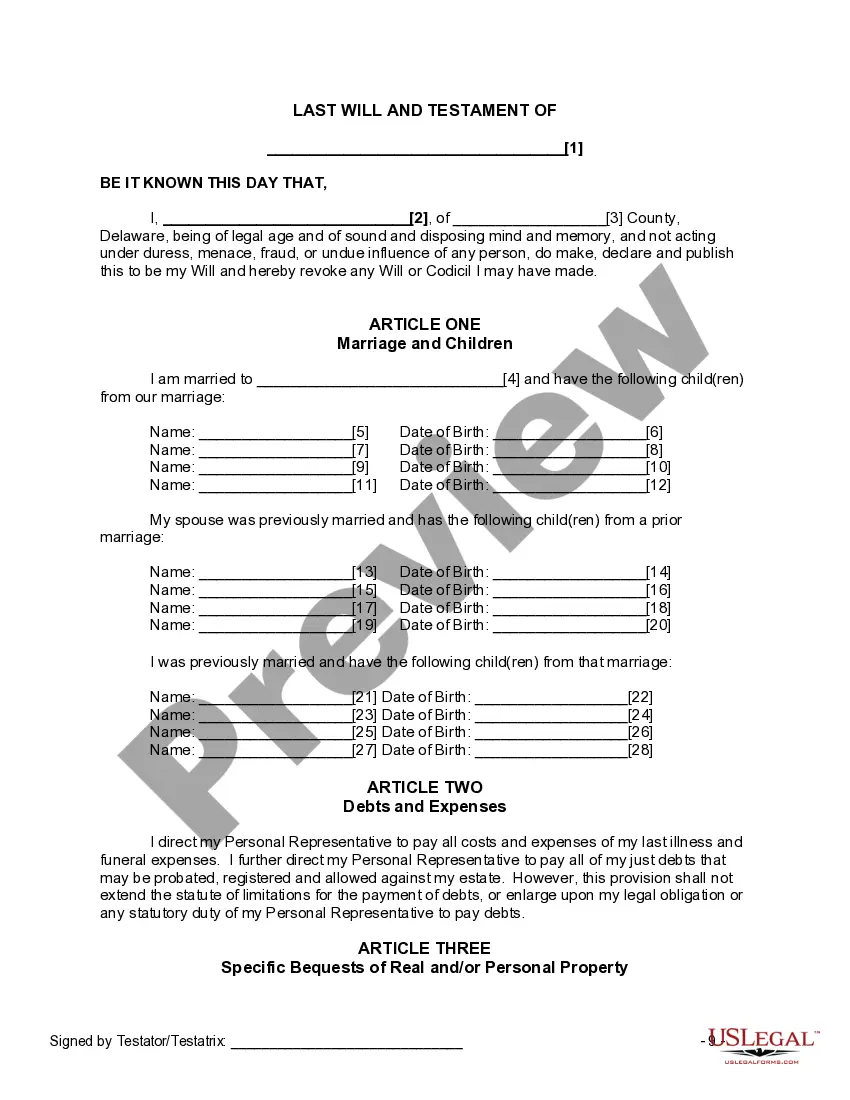
This Last Will and Testament for a Divorced and Remarried Person with Mine, Yours and Ours Children is a legal document designed for individuals who have remarried and have children from both their current and previous marriages. This form delineates how your assets will be distributed upon your death and ensures that all children, regardless of the marriage in which they were born, are considered in your estate plan. Unlike a standard will, this document includes provisions that account for blended families, ensuring clarity and fairness in asset distribution.
What’s included in this form
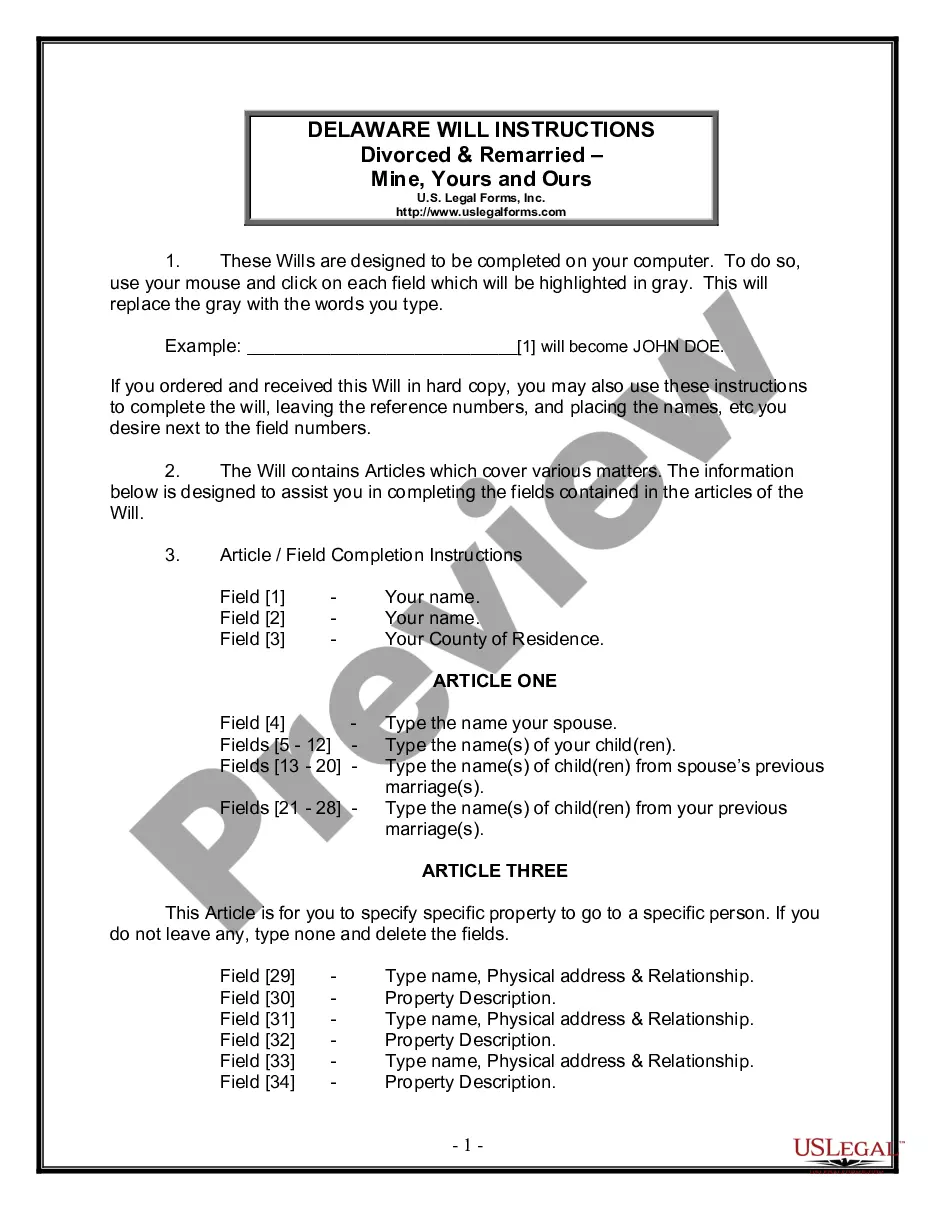
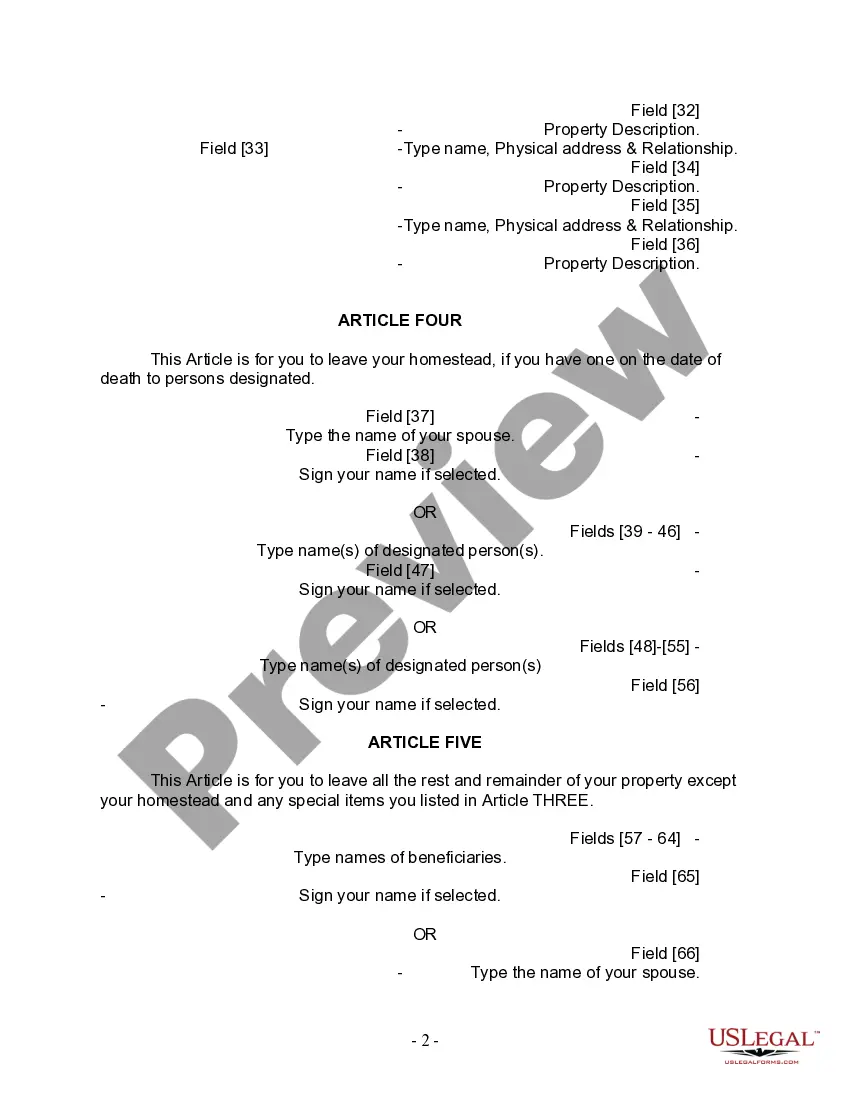
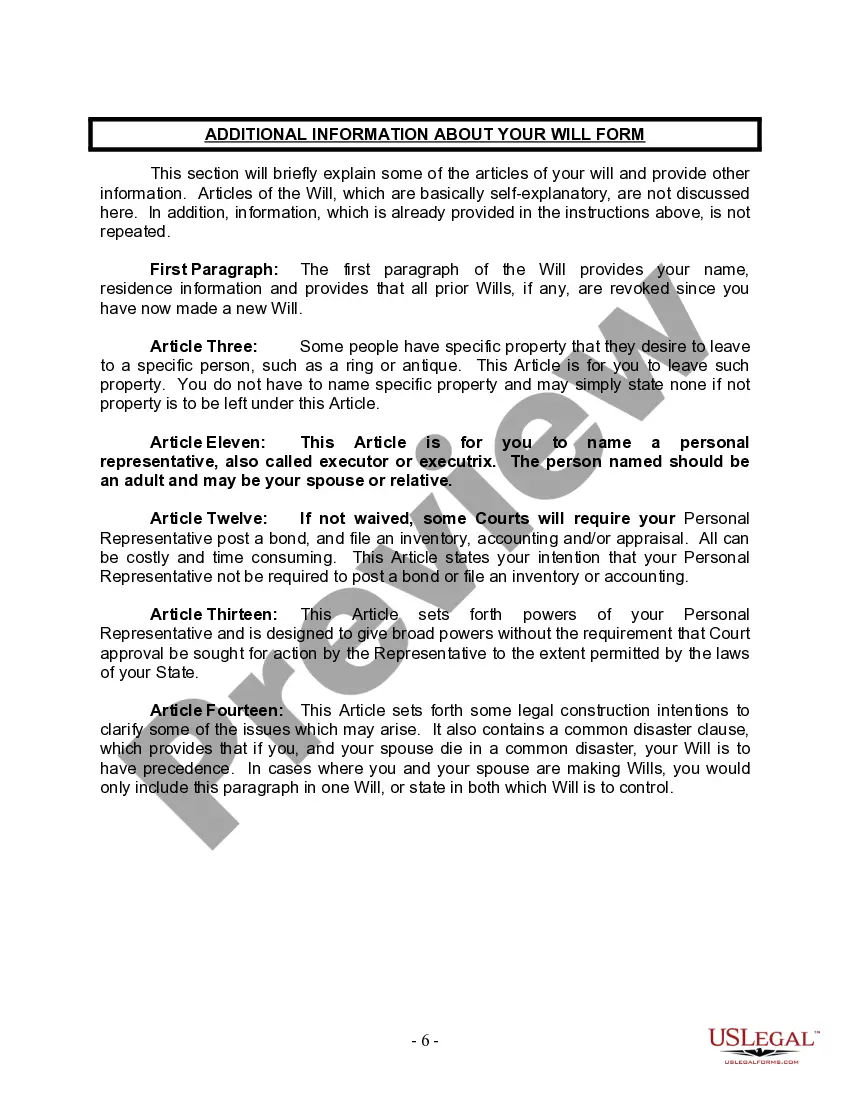
- Article regarding marriage and children, specifying your current spouse and children from all marriages.
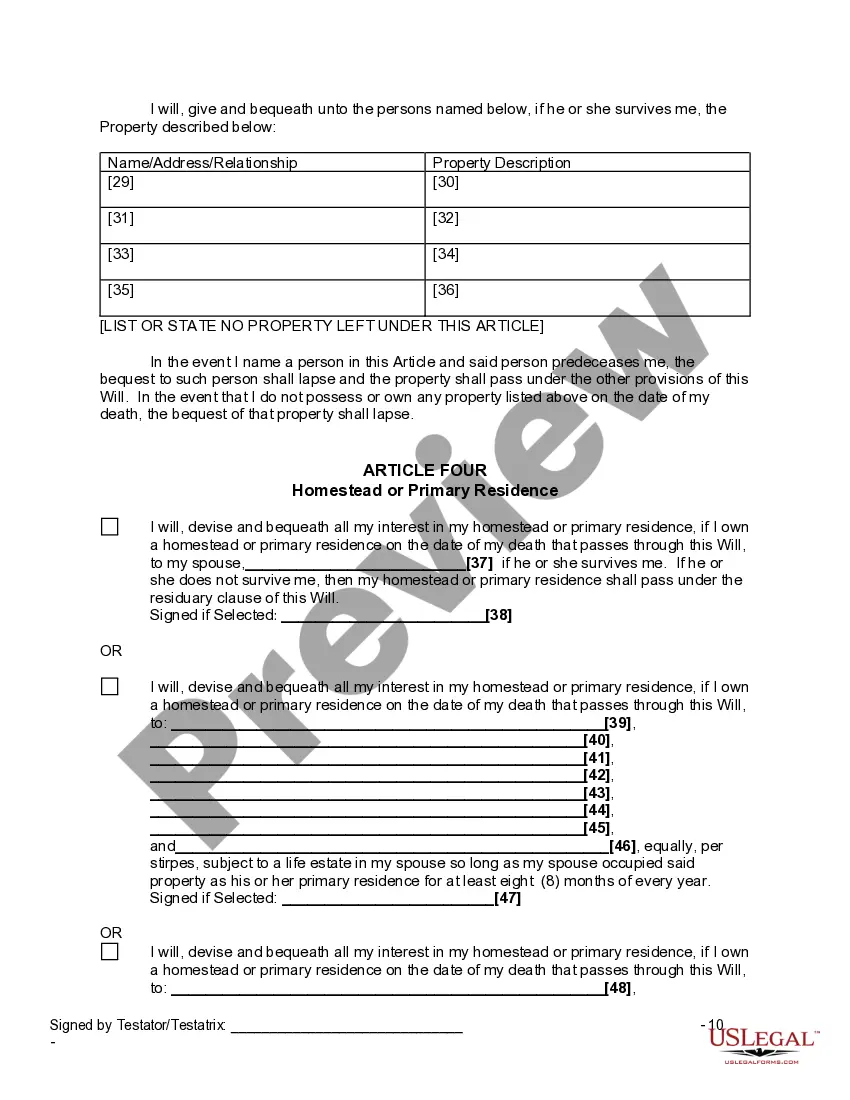
- Provisions for specific bequests, allowing you to designate particular assets to chosen individuals.
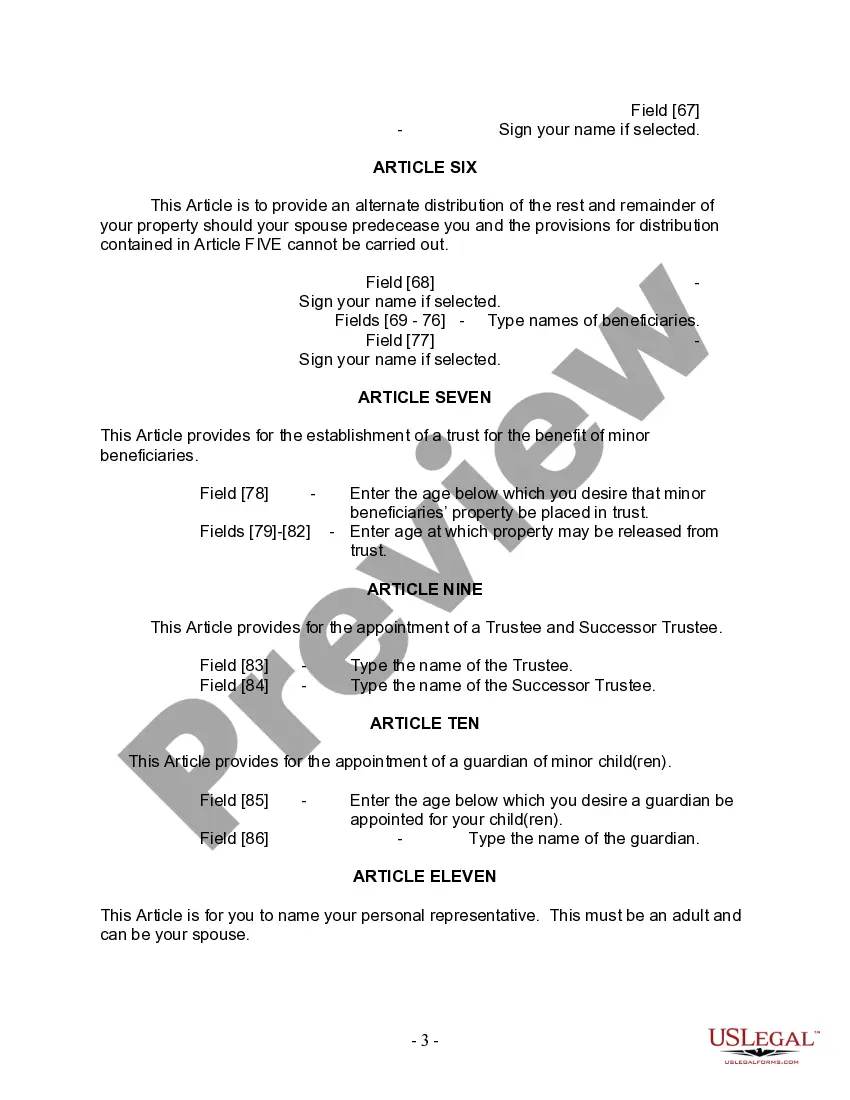
- Instructions for appointing guardians for minor children and a personal representative for your estate.
- Establishment of a trust for minor beneficiaries, detailing terms for asset distribution.
- Self-proving affidavit section to facilitate easier probate proceedings if required in your state.





When to use this form
This form is essential when creating a will that accurately reflects your wishes in a complex family situation involving children from multiple marriages. It is particularly useful in circumstances such as when you want to ensure fair distribution of your assets among all children and prevent any disputes or oversights regarding inheritance. Use this will if you are remarried, have children from previous relationships, and wish to address the specific needs of your blended family.
Who should use this form
- Individuals who are currently remarried.
- Parents with children from multiple marriages.
- Anyone seeking to clarify asset distribution among children from different relationships.
- Individuals who want to establish legal guardianship for minor children.
- Those wanting to create a trust for the benefit of minor children.
Completing this form step by step
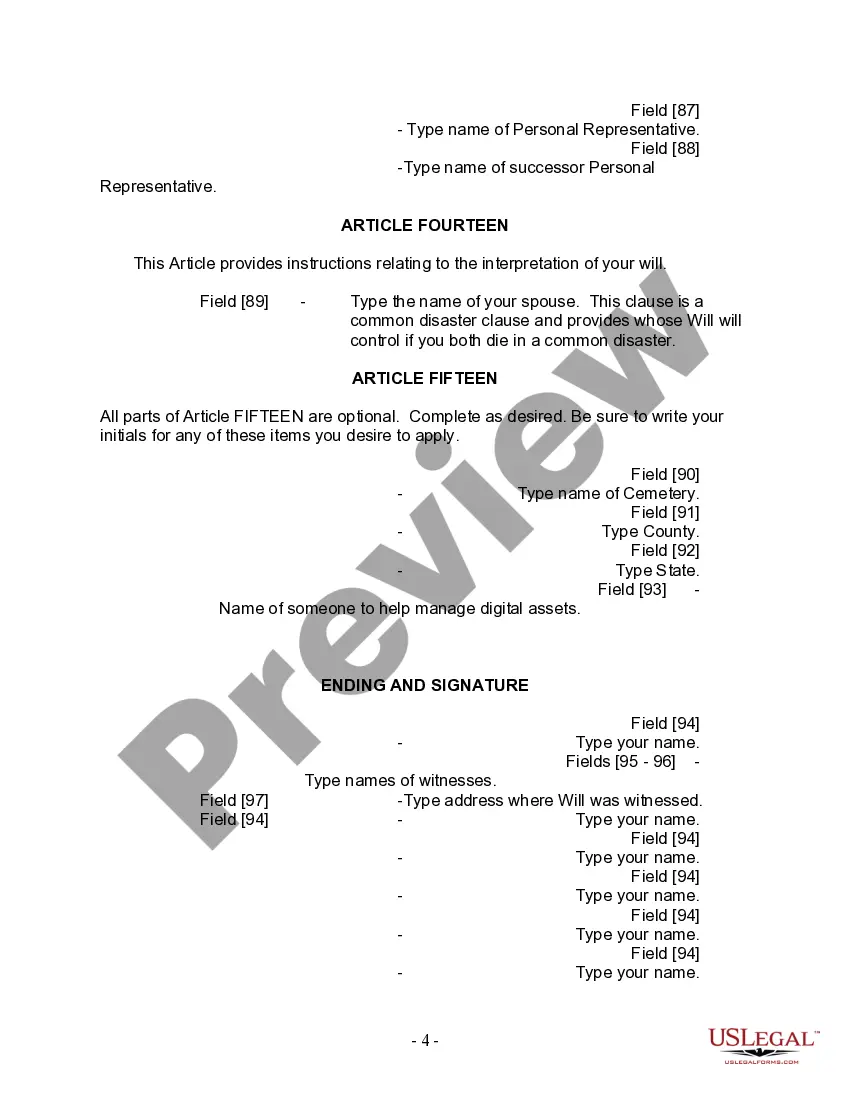
- Begin by entering your name and county of residence.
- Specify the name of your current spouse and all children from both your current and previous marriages.
- Detail any specific property you wish to leave to particular individuals, listing their names and relationship to you.
- Designate a personal representative and a successor representative who will oversee the administration of your estate.
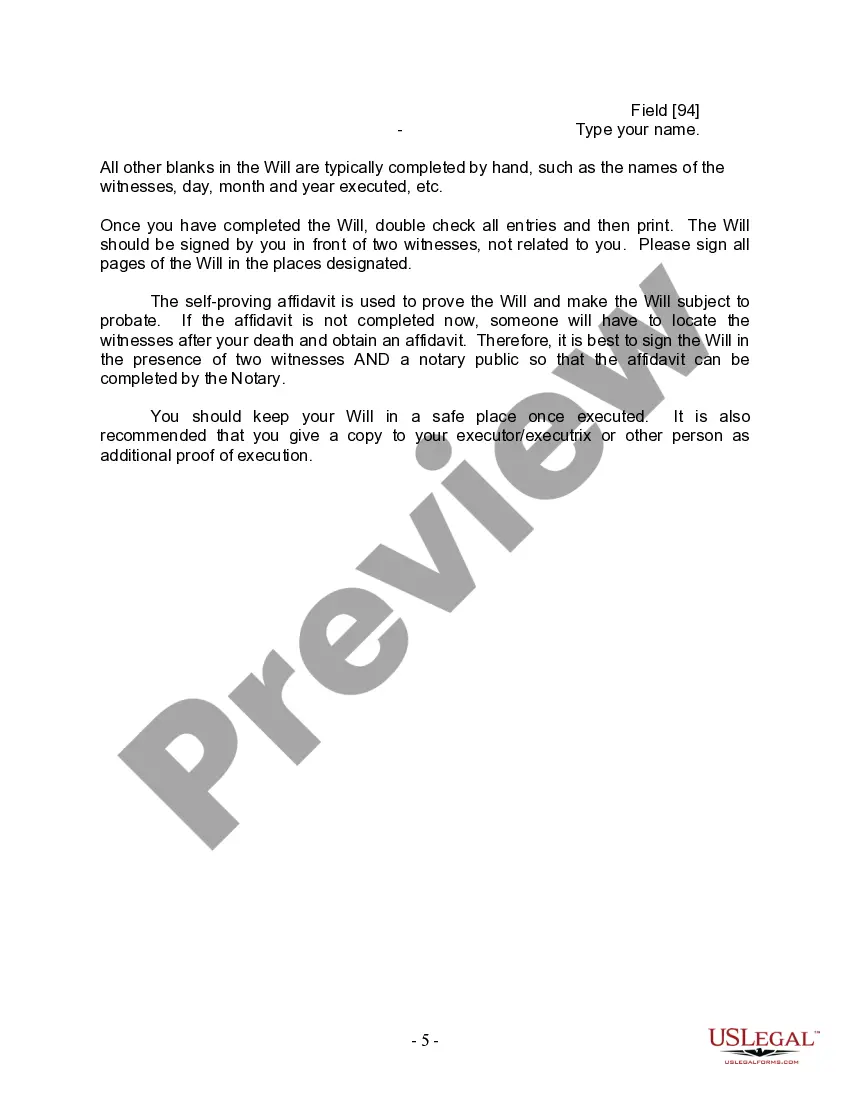
- Sign the document in front of two witnesses and, where applicable, a notary public to ensure legal validity.
Notarization requirements for this form
This document requires notarization to meet legal standards. US Legal Forms provides secure online notarization powered by Notarize, allowing you to complete the process through a verified video call, available 24/7.
Get your form ready online
Our built-in tools help you complete, sign, share, and store your documents in one place.
Make edits, fill in missing information, and update formatting in US Legal Forms—just like you would in MS Word.
Download a copy, print it, send it by email, or mail it via USPS—whatever works best for your next step.
Sign and collect signatures with our SignNow integration. Send to multiple recipients, set reminders, and more. Go Premium to unlock E-Sign.
If this form requires notarization, complete it online through a secure video call—no need to meet a notary in person or wait for an appointment.
We protect your documents and personal data by following strict security and privacy standards.

Make edits, fill in missing information, and update formatting in US Legal Forms—just like you would in MS Word.

Download a copy, print it, send it by email, or mail it via USPS—whatever works best for your next step.

Sign and collect signatures with our SignNow integration. Send to multiple recipients, set reminders, and more. Go Premium to unlock E-Sign.

If this form requires notarization, complete it online through a secure video call—no need to meet a notary in person or wait for an appointment.

We protect your documents and personal data by following strict security and privacy standards.
Mistakes to watch out for
- Failing to properly designate all children in blended families, which can lead to future disputes.
- Not having the will signed by the required number of witnesses.
- Neglecting to account for any state-specific requirements, such as the need for notarization.
- Not updating the will after significant life changes, such as divorce or birth of a child.
Benefits of completing this form online
- Convenient access to legally accurate and professionally drafted documents.
- Editability to customize the form according to your personal and family needs.
- Immediate download for quick implementation and peace of mind.
Looking for another form?
Form popularity
FAQ
Assets in a Delaware divorce are typically divided through a process called equitable distribution. This means the court assesses factors like each spouse's financial situation, contributions to the marriage, and the needs of any children involved. When drafting your Delaware Last Will and Testament for Divorced and Remarried Person with Mine, Yours and Ours Children, it’s crucial to account for how these divisions will impact your estate plan.
The exact amount a wife is entitled to in a divorce in Delaware varies based on the couple’s assets, debts, and other unique circumstances. Delaware law mandates equitable distribution, meaning assets are divided fairly, but not always equally. This understanding is essential when considering how it impacts your Delaware Last Will and Testament for Divorced and Remarried Person with Mine, Yours and Ours Children.
A divorced wife may be entitled to alimony, a portion of marital assets, or a share of pensions and retirement accounts, depending on various factors. The court looks at the marriage's specifics to determine fair distribution. Knowing these potential entitlements can guide you in creating a Delaware Last Will and Testament for Divorced and Remarried Person with Mine, Yours and Ours Children.
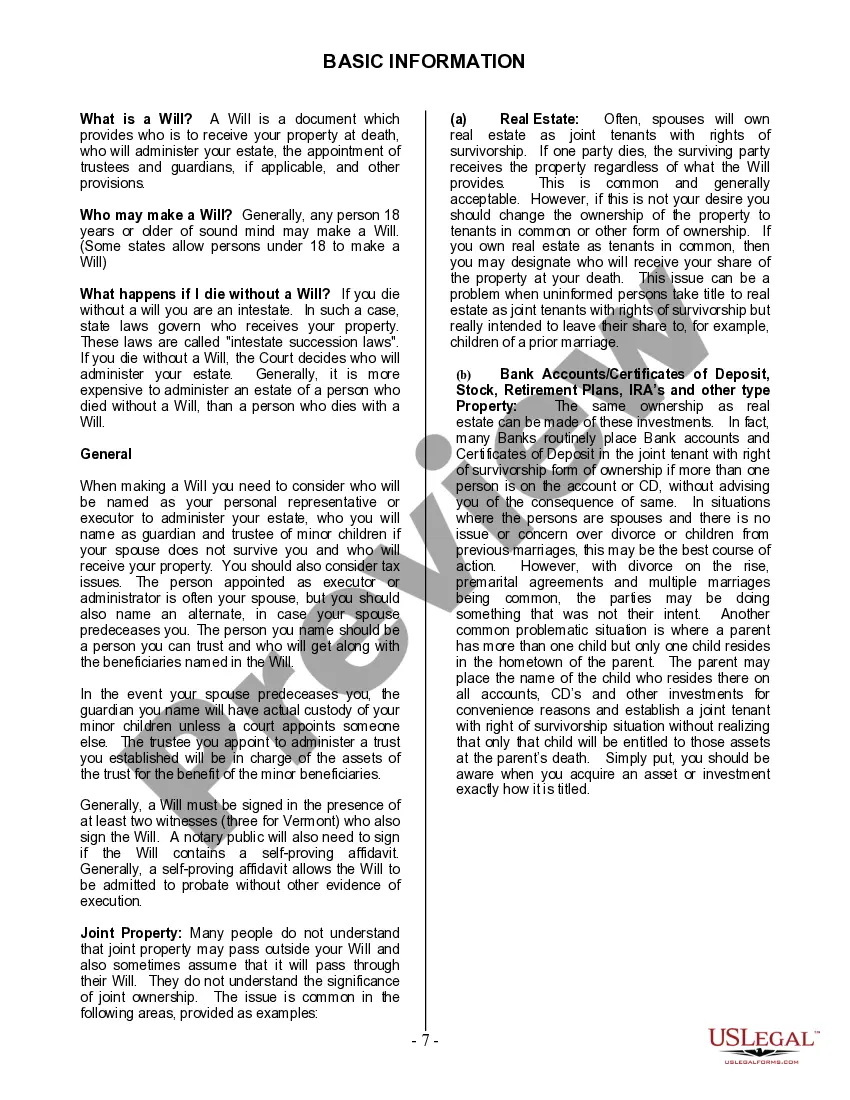
Delaware law requires that a will be in writing, signed by the person making the will, and witnessed by at least two individuals. These witnesses must be present at the same time when witnessing the signature. Ensuring your Delaware Last Will and Testament for Divorced and Remarried Person with Mine, Yours and Ours Children meets these criteria is vital for it to be legally binding.
In Delaware, a wife typically has rights to marital property, which includes assets acquired during the marriage. Courts may also consider factors such as financial contributions, needs, and the duration of the marriage while determining entitlements. Understanding your rights is crucial, especially when preparing a Delaware Last Will and Testament for Divorced and Remarried Person with Mine, Yours and Ours Children.
It's important to consider the implications of notifying your spouse about your decision to file for divorce. Communicating openly may lead to a more amicable process, which can benefit both parties, especially when children are involved. Additionally, addressing these matters before drafting your Delaware Last Will and Testament for Divorced and Remarried Person with Mine, Yours and Ours Children is vital to ensure that your intentions are clear.
Divorce can result in the loss of shared assets, financial stability, and emotional support. The specific impact varies based on your situation, and it’s essential to think about future planning. Updating your Delaware Last Will and Testament for Divorced and Remarried Person with Mine, Yours and Ours Children can help secure your children's future, providing peace of mind during this transition.
Filing for divorce in Delaware requires going to the Family Court in your county. It involves submitting necessary forms and following the court's procedures. If you're unsure about the process, consider using resources like USLegalForms to guide you through, especially while planning your Delaware Last Will and Testament for Divorced and Remarried Person with Mine, Yours and Ours Children.
A divorced wife generally cannot claim her ex-husband's property after his death unless specified in the divorce settlement. Therefore, it is crucial to have a clear Delaware Last Will and Testament for Divorced and Remarried Person with Mine, Yours and Ours Children that explicitly states your wishes regarding asset distribution. This helps avoid potential claims and ensures the security of your children's inheritance.
Yes, you can obtain a divorce without going to court through a process called uncontested divorce. This typically requires both parties to agree on the terms. Utilizing a legal service like USLegalForms can simplify the paperwork and allow you to reach your goals without additional stress, ensuring your Delaware Last Will and Testament for Divorced and Remarried Person with Mine, Yours and Ours Children aligns with your new circumstances.