Delaware Last Will and Testament for Married person with Minor Children
What this document covers
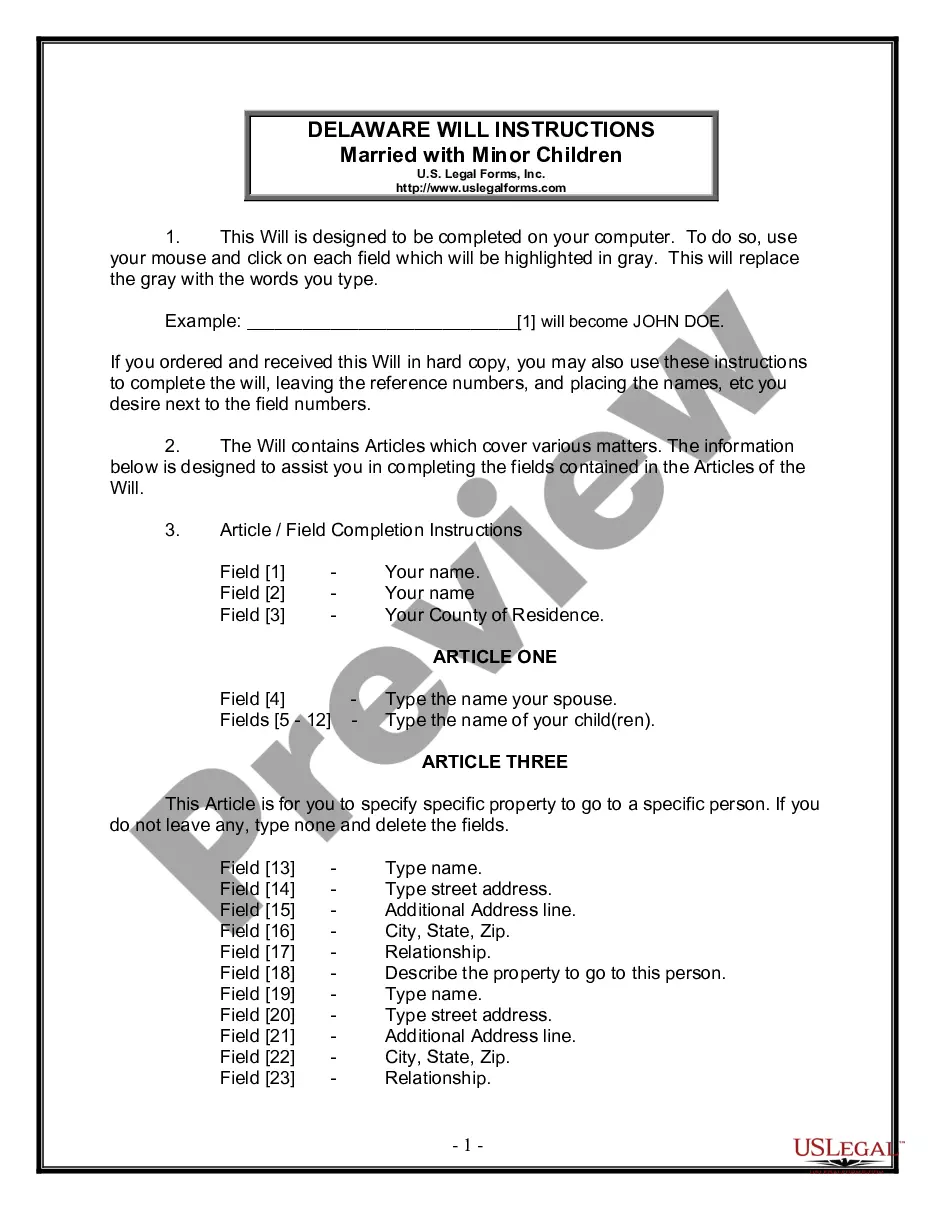
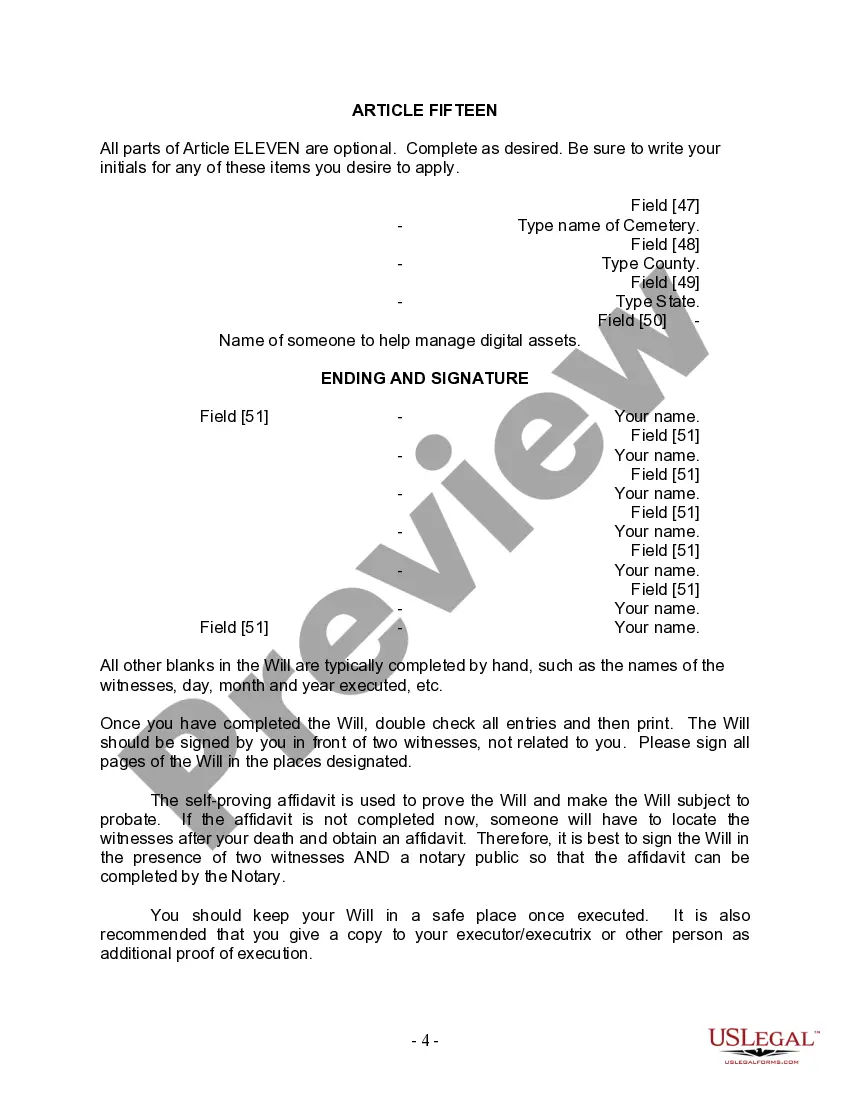
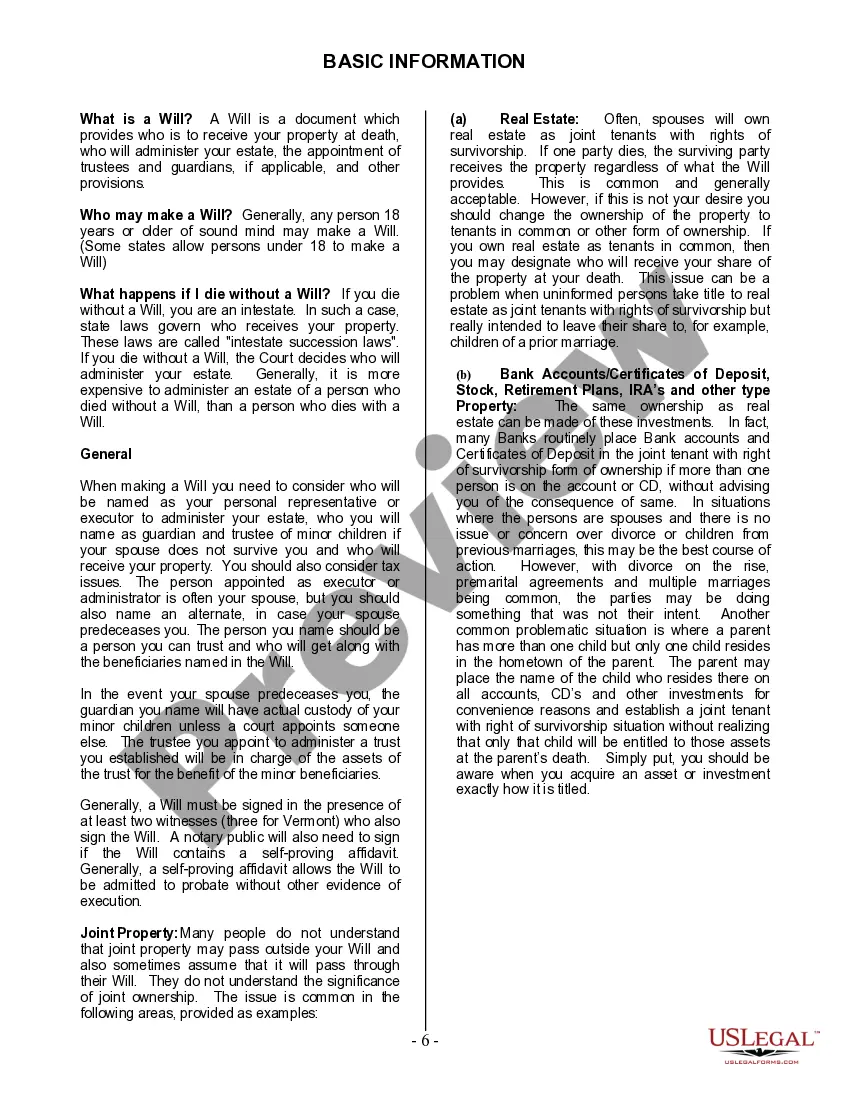
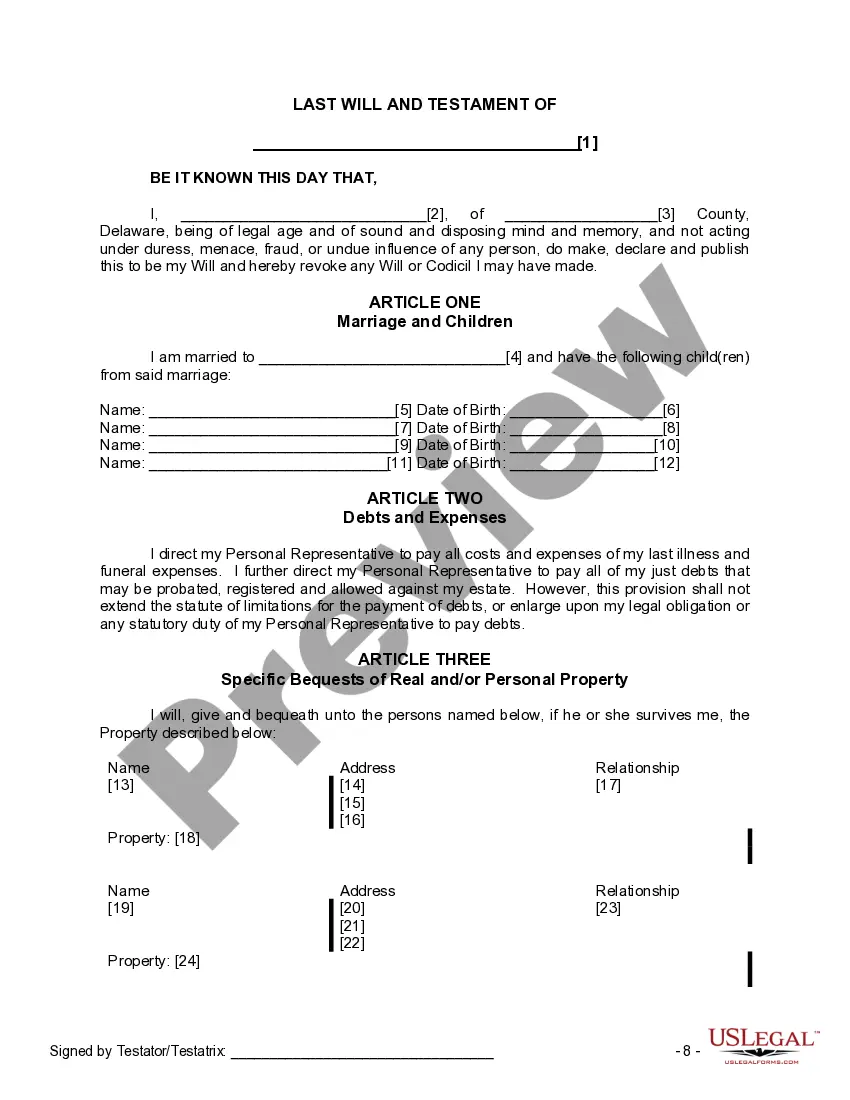
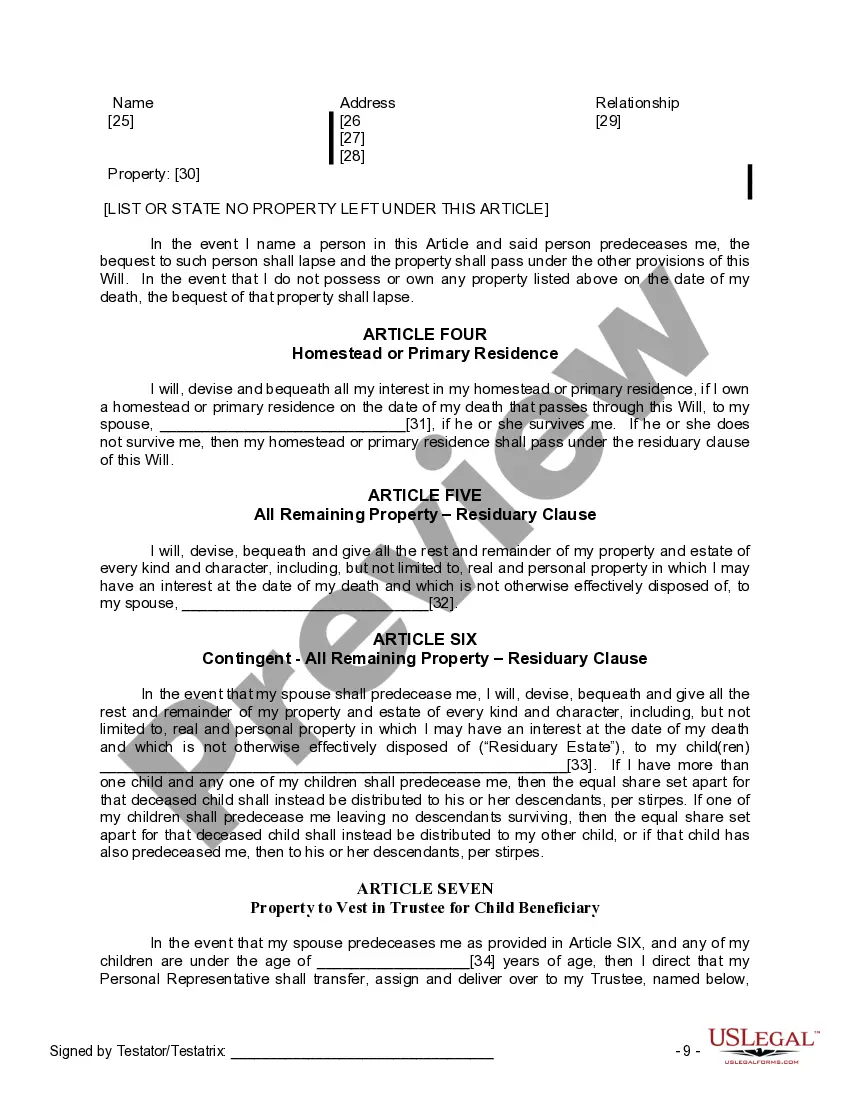
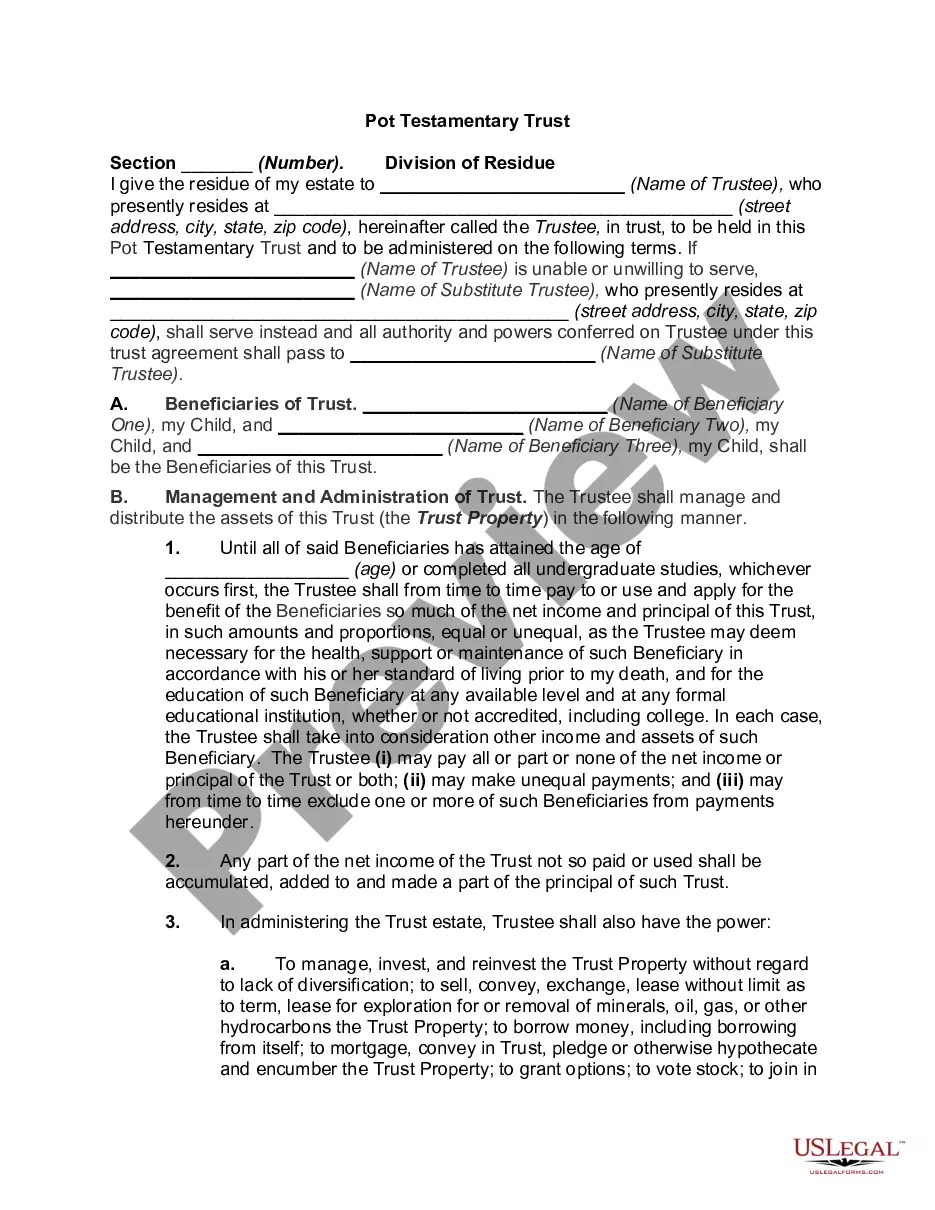
The Last Will and Testament for Married Person with Minor Children is a vital legal document that specifies how your assets will be distributed after your death. This form is specifically tailored for individuals who are married and have minor children, allowing you to appoint a personal representative or executor, designate beneficiaries, and include provisions for your spouse and children. It also establishes a trust for your minor children's inheritance, ensuring their financial security.
Key parts of this document
- Appointment of a personal representative or executor to manage the estate.
- Details regarding the distribution of property among the spouse and children.
- Provisions for establishing a trust for minor childrenâs inheritances.
- Appointment of a guardian for minor children in case both parents pass away.
- A residuary clause that covers any remaining assets not specifically mentioned.








When this form is needed
This form should be used when a married individual with minor children wishes to outline their final wishes and designate how their estate should be managed and distributed. Common scenarios include the passing of a spouse or planning for unforeseen circumstances that may leave minor children without parental care or financial support.
Who this form is for
- Married individuals with one or more minor children.
- Individuals who want to ensure their family is financially secure after their passing.
- Anyone looking to clearly outline their estate distribution wishes.
- Those who wish to appoint a guardian for their minor children.
How to complete this form
- Begin by entering your full name and address at the top of the form.
- Clearly state your marital status and list all your minor children with their dates of birth.
- Designate your personal representative and any beneficiaries for specific bequests.
- Include provisions for the appointment of a guardian for your children, if needed.
- Sign the will in the presence of two witnesses who are not related to you or named in the will.
Is notarization required?
Yes, this form must be notarized to be legally valid in Delaware. US Legal Forms offers an integrated online notarization service that allows you to complete the process securely through a video call, ensuring convenience and compliance without the need to travel.
Get your form ready online
Our built-in tools help you complete, sign, share, and store your documents in one place.
Make edits, fill in missing information, and update formatting in US Legal Forms—just like you would in MS Word.
Download a copy, print it, send it by email, or mail it via USPS—whatever works best for your next step.
Sign and collect signatures with our SignNow integration. Send to multiple recipients, set reminders, and more. Go Premium to unlock E-Sign.
If this form requires notarization, complete it online through a secure video call—no need to meet a notary in person or wait for an appointment.
We protect your documents and personal data by following strict security and privacy standards.

Make edits, fill in missing information, and update formatting in US Legal Forms—just like you would in MS Word.

Download a copy, print it, send it by email, or mail it via USPS—whatever works best for your next step.

Sign and collect signatures with our SignNow integration. Send to multiple recipients, set reminders, and more. Go Premium to unlock E-Sign.

If this form requires notarization, complete it online through a secure video call—no need to meet a notary in person or wait for an appointment.

We protect your documents and personal data by following strict security and privacy standards.
Avoid these common issues
- Failing to have the will signed in the presence of two witnesses.
- Not updating the will after significant life changes, such as a divorce or the birth of additional children.
- Overlooking the need for a notary if required by state law.
- Neglecting to clarify how debts will be handled, leaving beneficiaries unsure.
Why use this form online
- Convenience of filling out the form at your own pace and in your own home.
- Editability allows you to make adjustments easily before finalizing.
- Access to guidance based on state-specific legal standards, ensuring compliance and validity.
Looking for another form?
Form popularity
FAQ
Yes, it’s essential to have a will after you have a child. A Delaware Last Will and Testament for Married person with Minor Children allows you to designate guardianship, ensuring your child is cared for by someone you trust. It also facilitates the distribution of your assets according to your preferences and secures your child’s financial future.
You do not need a lawyer to create a will in Delaware, but having legal guidance can be beneficial. A lawyer can help ensure that your Delaware Last Will and Testament for Married person with Minor Children complies with state laws and effectively reflects your wishes. Platforms like USLegalForms can also provide you with easy-to-use templates and guidance.
Not having a will can lead to complications and stress for your loved ones. Without a Delaware Last Will and Testament for Married person with Minor Children, the state decides how to distribute your estate, which may not reflect your wishes. This situation could also prolong the legal process, leaving your family in uncertainty.
In Delaware, a spouse does not automatically inherit everything if there are children involved. Instead, state laws dictate that a surviving spouse typically receives half of the estate, with the remainder going to the children. To ensure your wishes are respected, a Delaware Last Will and Testament for Married person with Minor Children is essential.
While you may not need a trust if you have one adult child, it can still be beneficial. A trust can provide extra protection and flexibility for your assets, especially in managing them until your child is ready. It also helps avoid probate, which can save time and costs in the long run.
Yes, having a Delaware Last Will and Testament for Married person with Minor Children is important, even if you have one child. A will ensures that your assets are distributed according to your wishes and protects your child's future. Without a will, state laws dictate how your assets are divided, which may not align with your intentions.
Yes, you can write your own will in Delaware, but it’s important to adhere to the state’s legal standards to ensure its validity. A well-formed Delaware Last Will and Testament for Married person with Minor Children should include key components such as executor designation and specific bequests. Utilizing resources from uslegalforms can provide you with templates and support to craft a will that meets your needs effectively.
Writing a will for a married couple involves outlining how you want your assets to be distributed and ensuring both partners’ wishes are clearly stated. Consider including provisions for your minor children in your Delaware Last Will and Testament for Married person with Minor Children, such as guardianship and inheritance. Collaboration between spouses can lead to a comprehensive document that reflects shared goals and protects your family’s future.
Yes, you can write your own will and have it notarized in Delaware, provided it meets the state's legal requirements. However, it's advisable to follow guidelines to ensure your will is valid and adequately reflects your desires, especially if you are addressing complex matters involving a Delaware Last Will and Testament for Married person with Minor Children. Taking advantage of platforms like uslegalforms can guide you through this process and help you create a compliant document.
Avoiding probate in Delaware can simplify the distribution of your assets after your passing. One common method is to create a trust as part of your estate plan, which allows your assets to bypass the probate process. Additionally, designating beneficiaries in your Delaware Last Will and Testament for Married person with Minor Children can help facilitate this process, ensuring your family receives your intended legacy efficiently.