Delaware Statutory Advance Health Care Directive - Health Care, Standby Guardian and Living Will Provisions
About this form
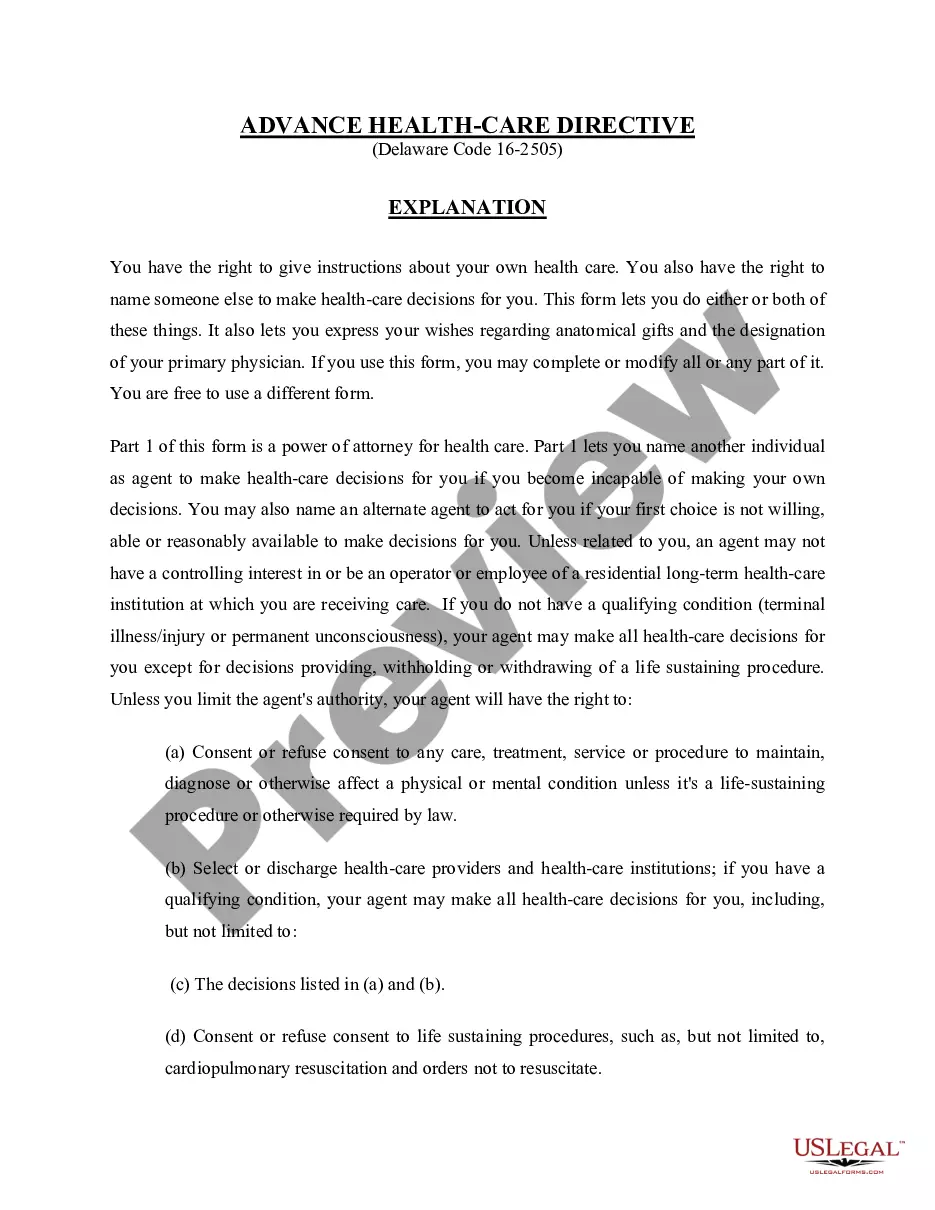
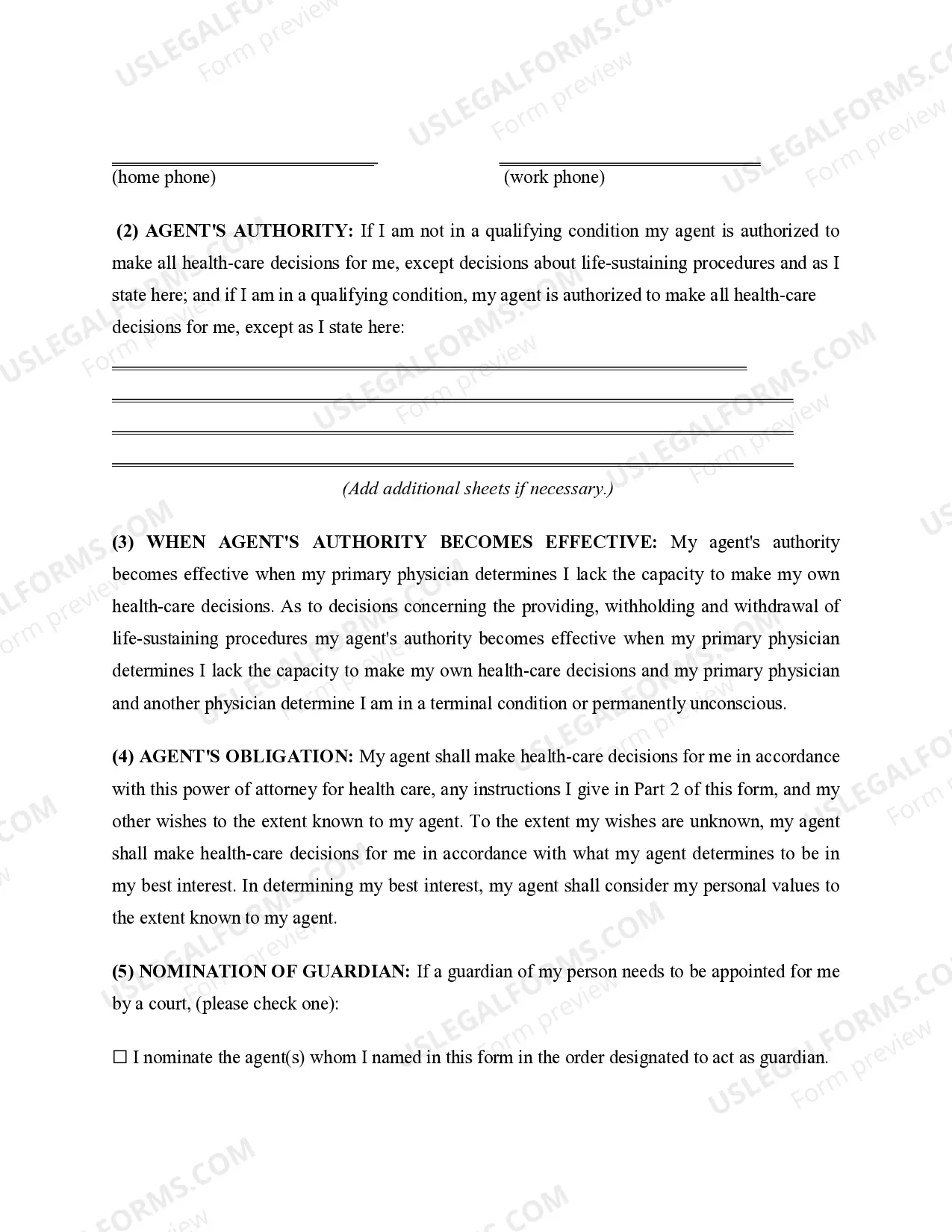
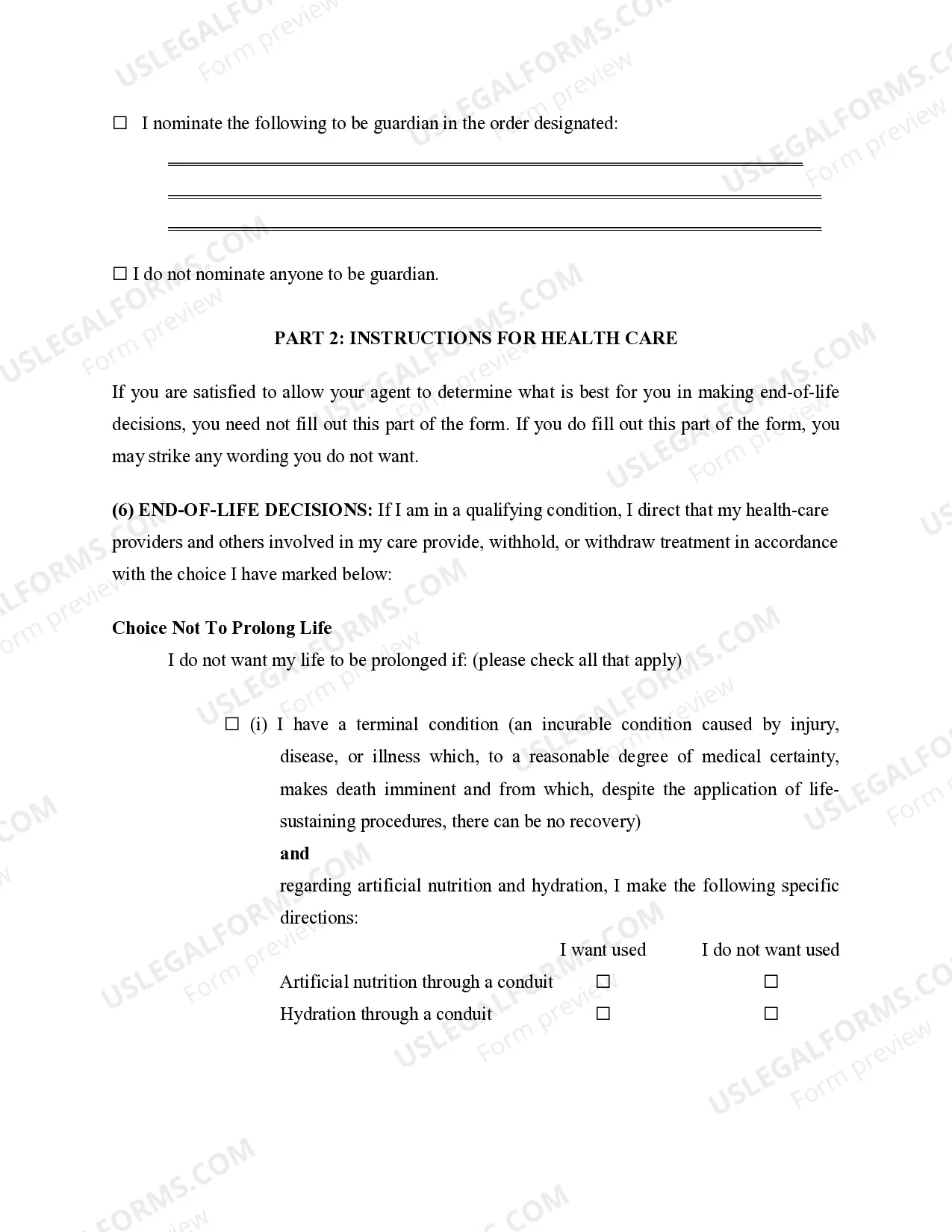
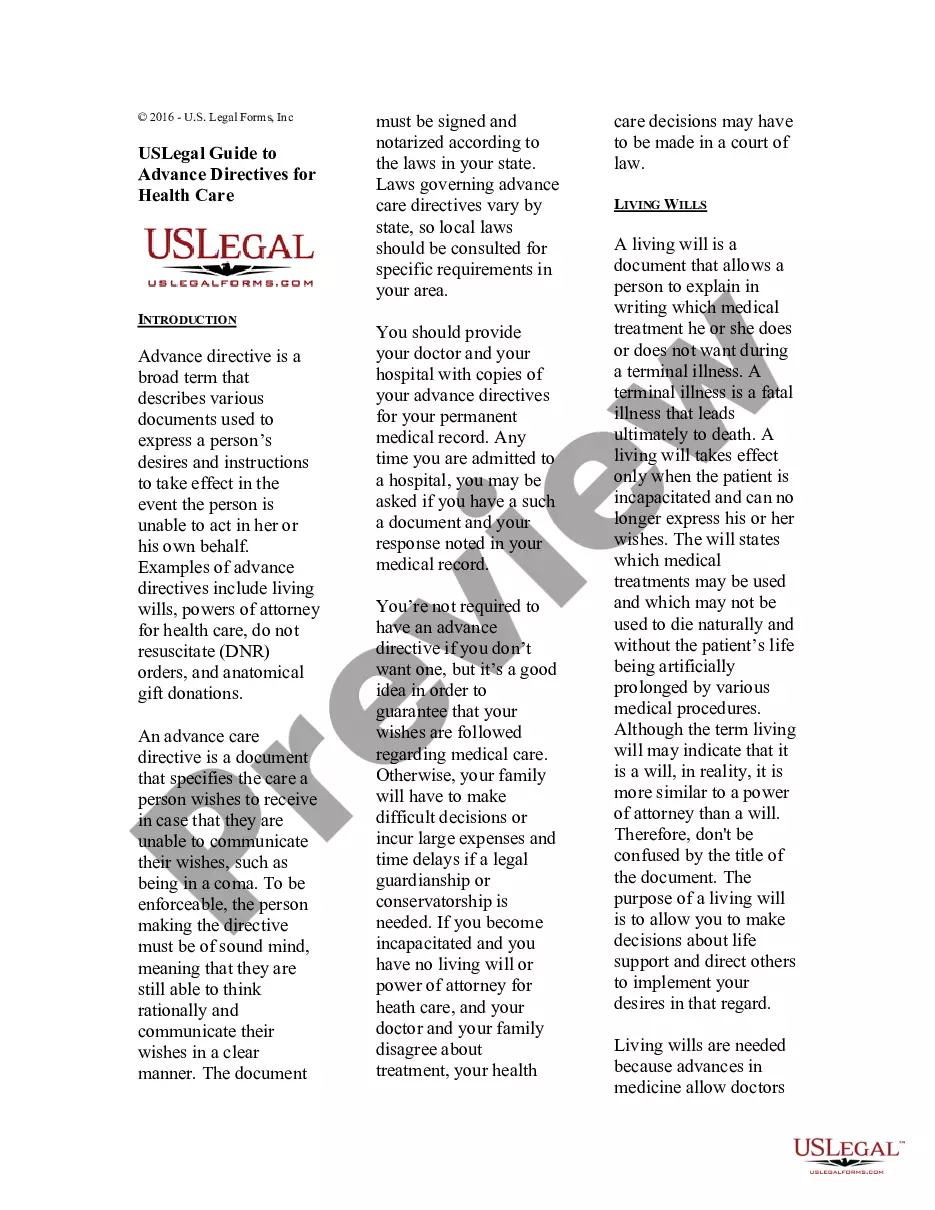
The Statutory Advance Health Care Directive is a legally recognized document in Delaware that allows individuals to outline their healthcare preferences. This form empowers you to make decisions about your medical treatment preferences, including end-of-life care, appointing a healthcare agent, and expressing your desires regarding anatomical gifts. Unlike a standard living will, this directive integrates components of a power of attorney specifically for health care, ensuring that your wishes are respected even when you may not be able to communicate them.
Main sections of this form
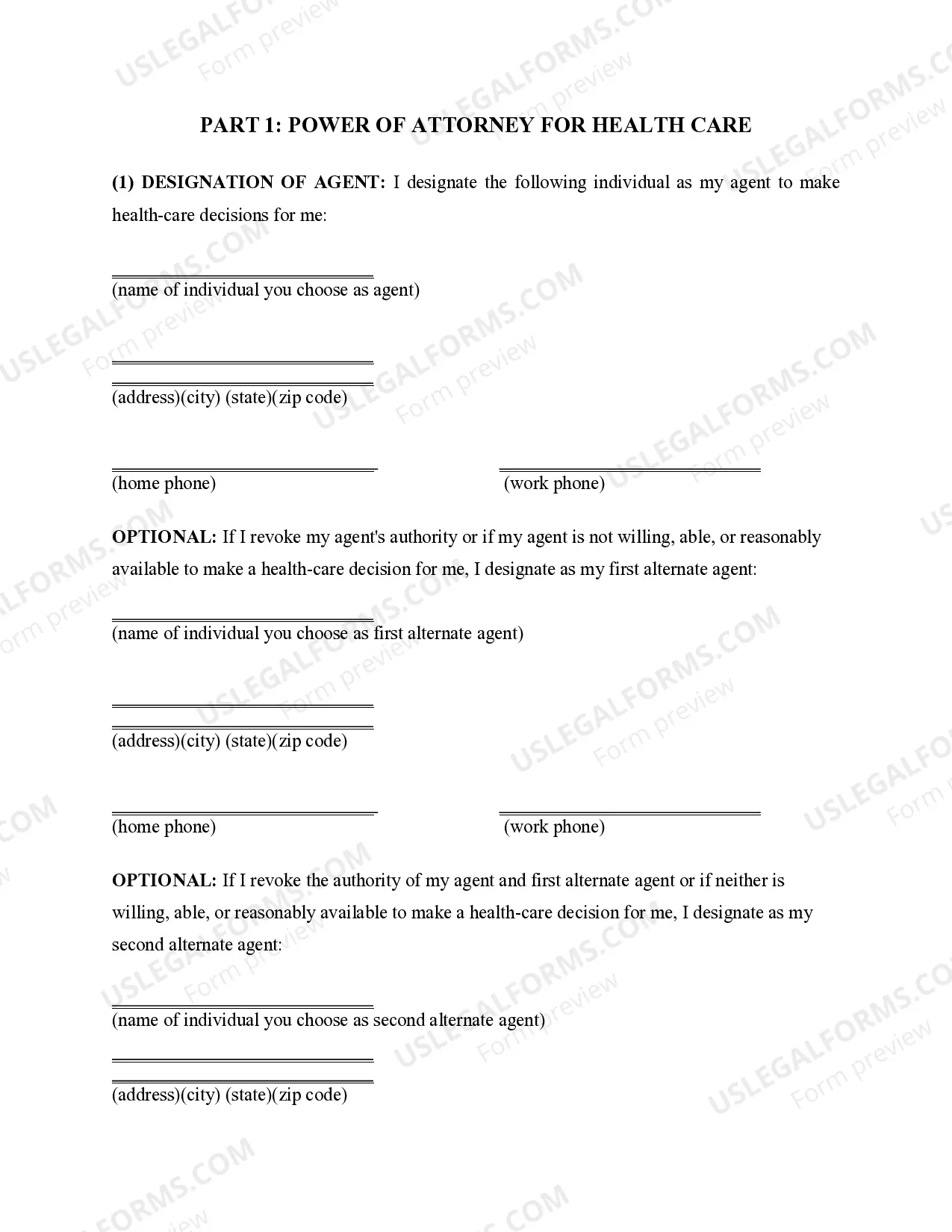
- Part 1: Designation of a healthcare agent to make decisions on your behalf.
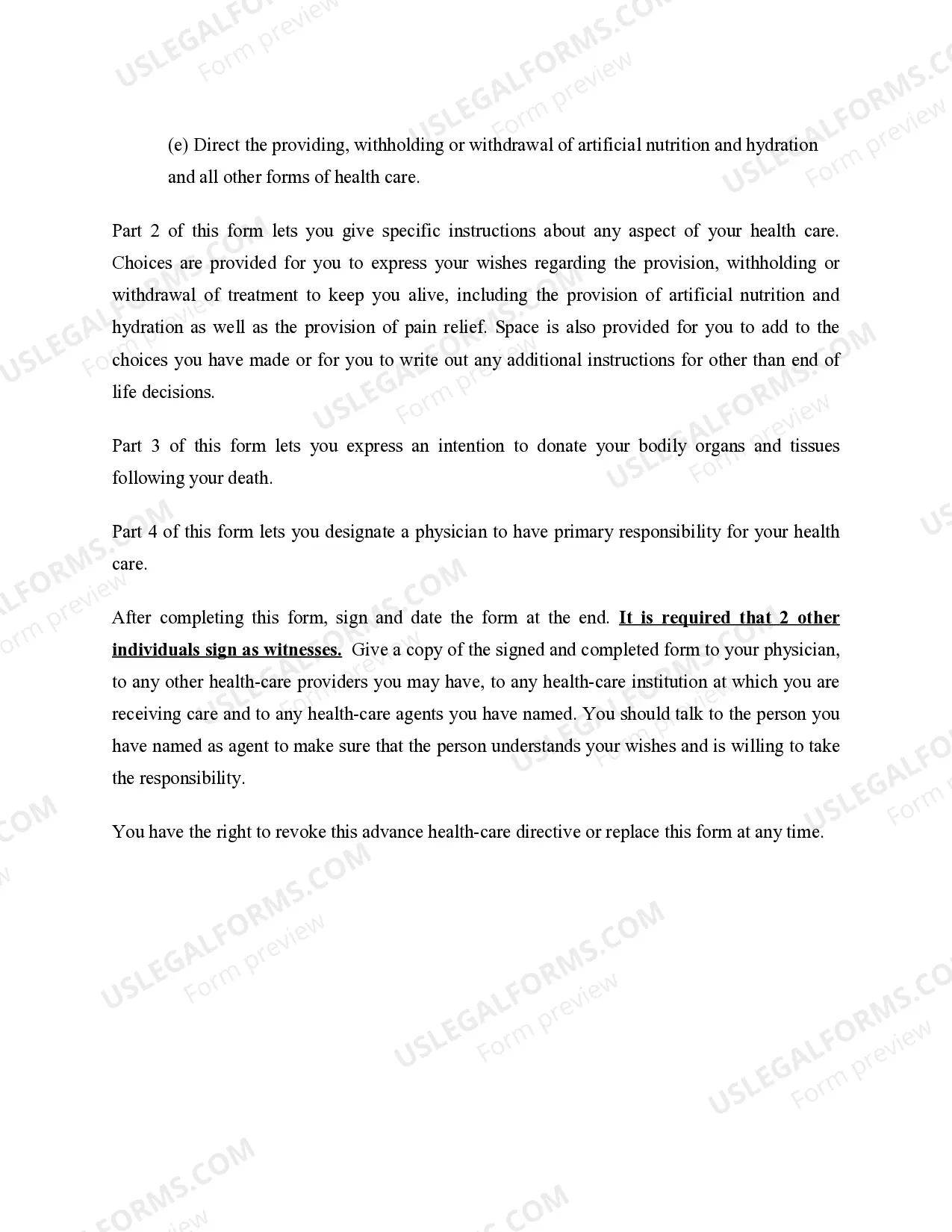
- Part 2: Specific instructions regarding end-of-life medical care and pain management.
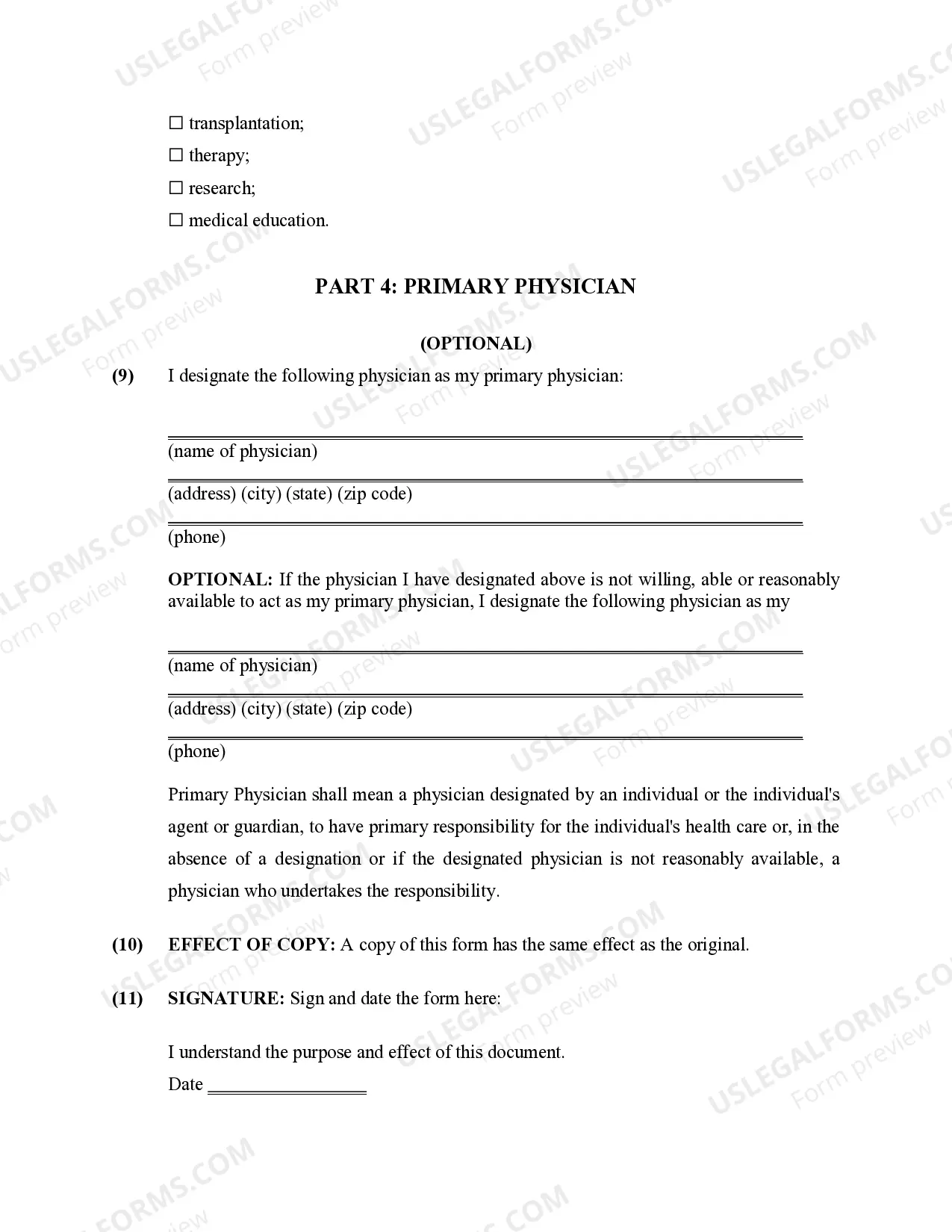
- Part 3: Instructions for anatomical gifts after your death.
- Part 4: Designation of a primary physician responsible for your healthcare.
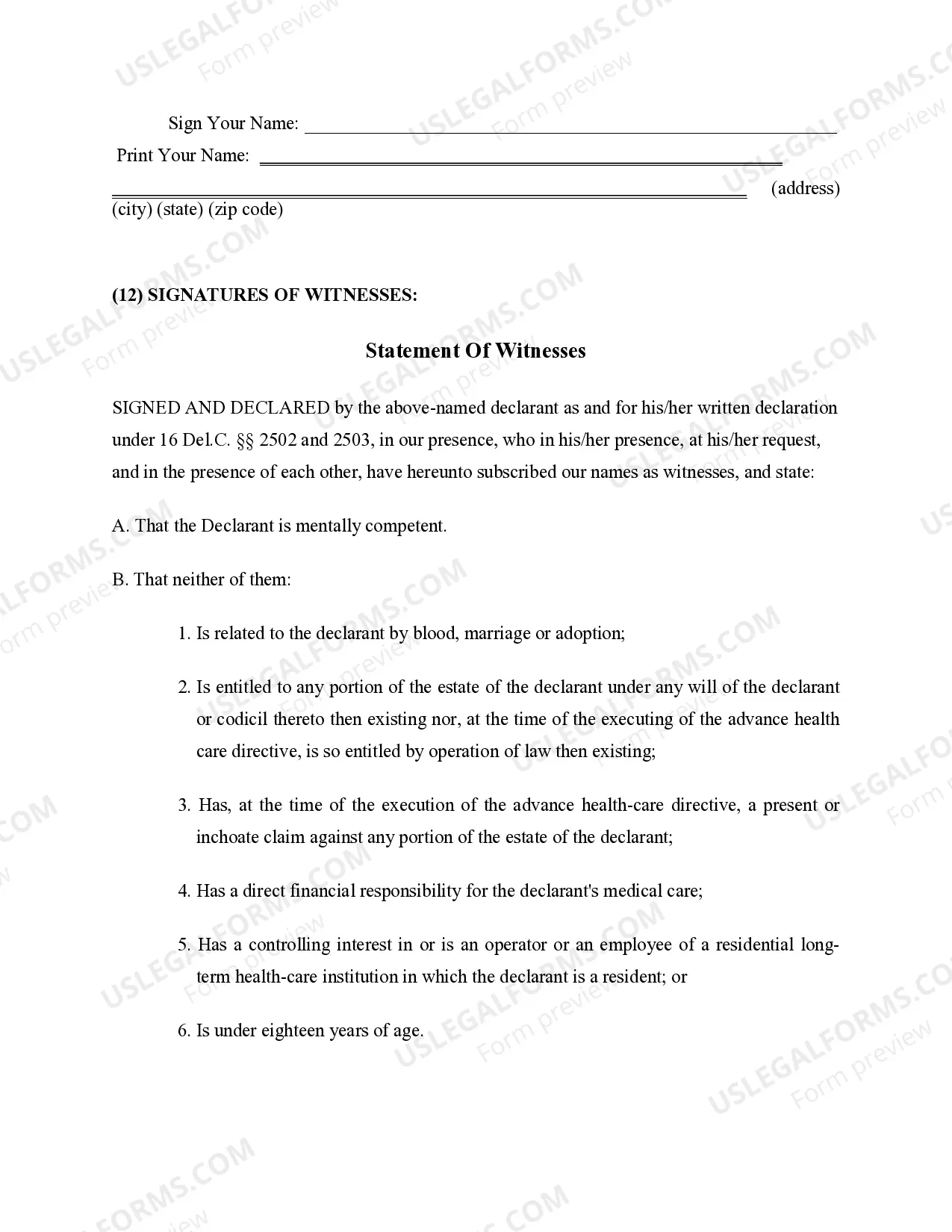
- Witness signatures required to validate the document.




When this form is needed
This form should be used when you want to ensure your healthcare preferences are known and respected in future medical situations. It is particularly important if you have a chronic illness, are undergoing major surgery, or simply wish to have peace of mind regarding your medical decisions in case you become incapacitated or unable to communicate.
Who should use this form
- Individuals aged 18 and over wishing to outline their medical treatment preferences.
- Those who want to appoint someone to make healthcare decisions for them.
- Anyone wishing to express their views on anatomical gifts after passing.
- People looking to clarify their desires regarding end-of-life care.
How to complete this form
- Designate your healthcare agent and any alternate agents in Part 1.
- Complete Part 2 by indicating your preferences for life-sustaining treatments and pain management.
- If you wish to make anatomical gifts, fill out Part 3 accordingly.
- Designate your primary physician in Part 4, if desired.
- Sign and date the form in the presence of two witnesses who are eligible to sign.
Notarization guidance
In most cases, this form does not require notarization. However, some jurisdictions or signing circumstances might. US Legal Forms offers online notarization powered by Notarize, accessible 24/7 for a quick, remote process.
Get your form ready online
Our built-in tools help you complete, sign, share, and store your documents in one place.
Make edits, fill in missing information, and update formatting in US Legal Forms—just like you would in MS Word.
Download a copy, print it, send it by email, or mail it via USPS—whatever works best for your next step.
Sign and collect signatures with our SignNow integration. Send to multiple recipients, set reminders, and more. Go Premium to unlock E-Sign.
If this form requires notarization, complete it online through a secure video call—no need to meet a notary in person or wait for an appointment.
We protect your documents and personal data by following strict security and privacy standards.

Make edits, fill in missing information, and update formatting in US Legal Forms—just like you would in MS Word.

Download a copy, print it, send it by email, or mail it via USPS—whatever works best for your next step.

Sign and collect signatures with our SignNow integration. Send to multiple recipients, set reminders, and more. Go Premium to unlock E-Sign.

If this form requires notarization, complete it online through a secure video call—no need to meet a notary in person or wait for an appointment.

We protect your documents and personal data by following strict security and privacy standards.
Common mistakes
- Not signing the form in front of required witnesses.
- Failing to clearly outline treatment preferences in Part 2.
- Choosing witnesses with conflicts of interest, such as family members.
- Leaving sections of the form incomplete, causing ambiguity in your wishes.
Why use this form online
- Convenience of completing the form at your own pace from anywhere.
- Edit the document to suit your specific wishes before printing.
- Access to professionally drafted templates crafted by licensed attorneys.
- Immediate availability without the need for appointments with legal professionals.
Legal use & context
- This form complies with Delaware law, specifically the Delaware Code Title 16.
- Once executed, the directive must be followed by healthcare providers as long as it is valid.
- The form can be revoked or replaced at any time, reflecting changes in your wishes.
Summary of main points
- The Statutory Advance Health Care Directive is crucial for managing your healthcare preferences.
- Ensure all parts are completed accurately and witnessed to maintain legal validity.
- This directive can provide peace of mind, knowing your medical wishes are respected.
Looking for another form?










Form popularity
FAQ
Yes, a healthcare surrogate can override a living will under certain conditions, especially if they believe a different course of action aligns better with your wishes. It's crucial that the selected surrogate fully understands your values and preferences, as their role is to advocate for your care. However, the Delaware Statutory Advance Health Care Directive - Health Care, Standby Guardian and Living Will Provisions can help clarify the surrogate's authority and ensure they make decisions in your best interest. Utilizing platforms like US Legal Forms can guide you in properly setting up these legal documents.
A living will can be overridden by a court decision or a legally appointed healthcare surrogate if specific circumstances arise. For instance, if medical professionals determine that changes to your health situation require different treatment than what is laid out in the living will, those changes may take priority. Moreover, state laws, including the provisions in the Delaware Statutory Advance Health Care Directive - Health Care, Standby Guardian and Living Will Provisions, may allow for such overrides. Ensuring all documents comply with state laws is essential for clarity.
One major issue with living wills is that they may not clearly express your wishes in every situation. As medical technology advances, certain scenarios may arise that your living will does not address. Consequently, healthcare providers might struggle to interpret your intentions. The Delaware Statutory Advance Health Care Directive - Health Care, Standby Guardian and Living Will Provisions provides a more comprehensive framework for ensuring your preferences are followed.
A living will is a type of advance directive specifically addressing your wishes regarding medical treatment at the end of life, while an advance directive encompasses broader instructions, including appointing a health care proxy. The Delaware Statutory Advance Health Care Directive - Health Care, Standby Guardian and Living Will Provisions combines these elements, offering a comprehensive guide for your health care choices. Understanding these distinctions helps you communicate your desires clearly, ensuring your preferences are respected during critical times.
To complete a Delaware Statutory Advance Health Care Directive - Health Care, Standby Guardian and Living Will Provisions, you need to clearly outline your healthcare preferences in writing. You can use a template for the directive, which helps ensure you include all necessary details. After filling it out, make sure to sign it in front of a witness and, if required, get it notarized. This completed document guides your healthcare providers in making decisions that reflect your wishes.
Generally, a living will does not include a health care proxy; these are distinct legal documents. The Delaware Statutory Advance Health Care Directive - Health Care, Standby Guardian and Living Will Provisions encompasses both components, allowing you to articulate your medical care preferences and appoint someone to make decisions on your behalf. Having this comprehensive document helps provide clarity to healthcare professionals and your loved ones. Using USLegalForms can simplify the process of creating both a living will and health care proxy.
The main drawback of a living will is its inability to cover all medical scenarios that may arise. A Delaware Statutory Advance Health Care Directive - Health Care, Standby Guardian and Living Will Provisions provides guidelines for specific situations but may lack clarity in unexpected circumstances. This limitation means that healthcare providers may interpret your wishes differently. To better ensure your preferences are followed, think about including a health care proxy.
In general, living wills do not designate a health care proxy; they primarily articulate your medical treatment preferences when you cannot communicate them. A Delaware Statutory Advance Health Care Directive - Health Care, Standby Guardian and Living Will Provisions can designate a health care proxy while also outlining your treatment desires. It's vital to understand that having both documents ensures your wishes are respected. Consider using USLegalForms to easily create a comprehensive directive.
A living will is a specific type of advance directive that focuses solely on your wishes regarding medical treatment at the end of life. Meanwhile, an advance care directive, like the Delaware Statutory Advance Health Care Directive - Health Care, Standby Guardian and Living Will Provisions, encompasses living wills and may also include provisions for appointing a health care proxy. Essentially, a living will provides detailed instructions, while an advance directive offers a broader framework for your health care planning.
The Delaware advance directive, officially known as the Delaware Statutory Advance Health Care Directive - Health Care, Standby Guardian and Living Will Provisions, enables individuals to outline their health care preferences in advance. This legal document allows you to specify the type of medical interventions you want or do not want, as well as appoint a standby guardian to make decisions for you. It serves to ensure that your health care choices are respected, even when you are not able to voice them.