Delaware Warning of Default on Residential Lease
Understanding this form
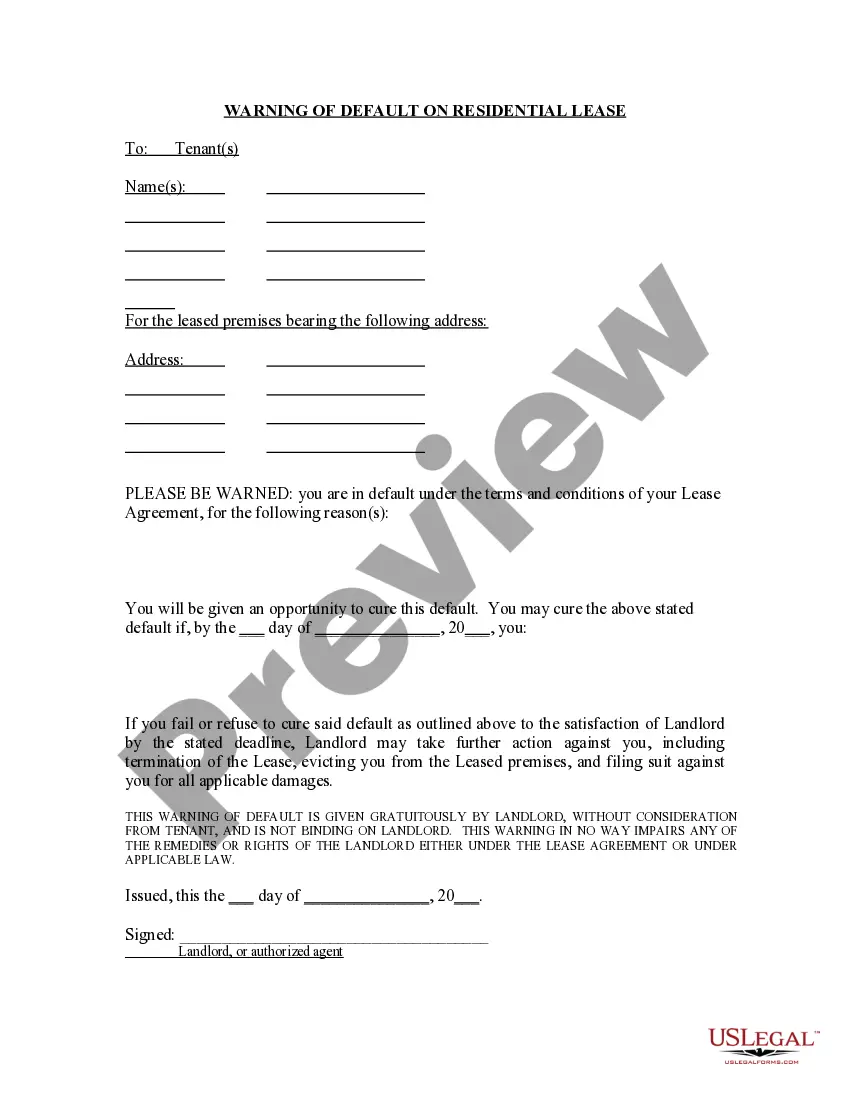
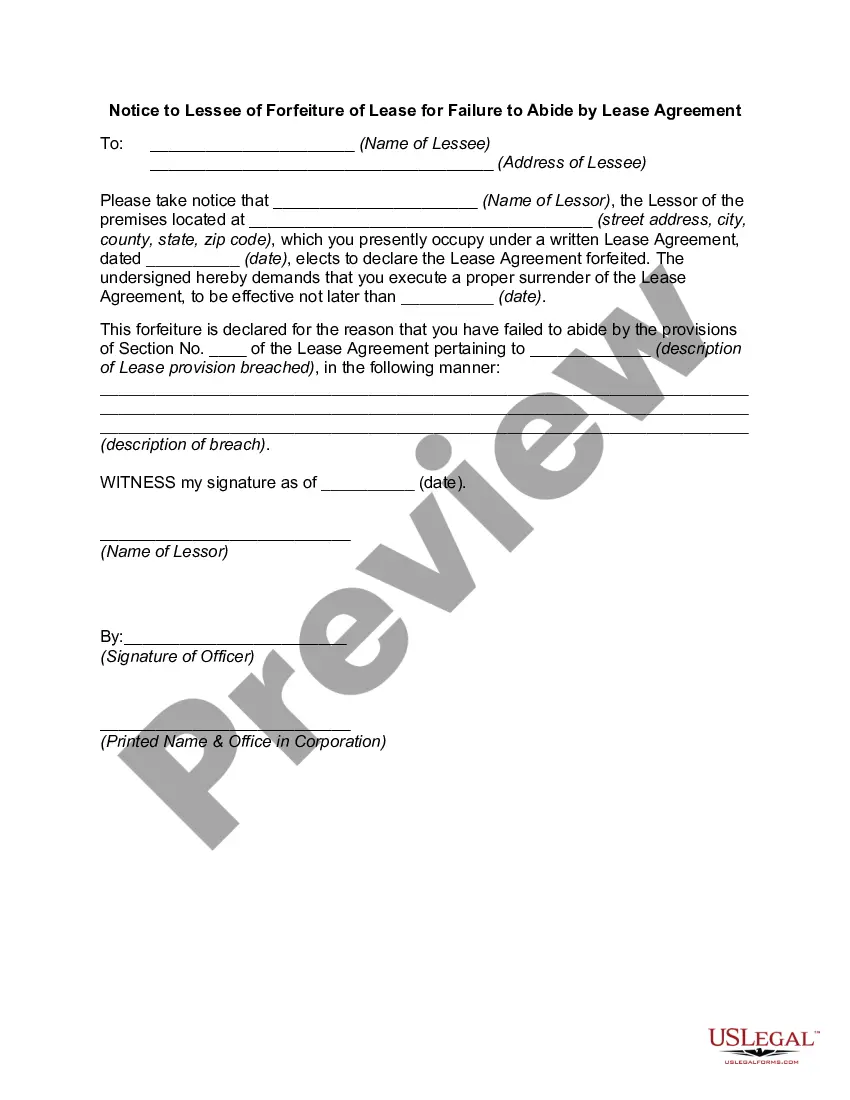
The Warning of Default on Residential Lease is a letter issued by a landlord to a tenant, signaling potential default under the lease agreement. This form serves as a formal notice that the landlord is concerned about specific conditions that need to be remedied. It is distinct from eviction notices because it offers the tenant an opportunity to address the issues before any further action is taken.
Main sections of this form
- Identification of the landlord and tenant
- Date of issuance
- Details of the specific lease default or concern
- Landlord's signature or that of an authorized agent
- Disclaimer regarding the non-binding nature of the warning


When this form is needed
This form should be used when a landlord wishes to formally notify a tenant of a breach or default under their lease agreement. It is typically employed in situations where the tenant has failed to meet specific obligations, such as timely rental payments or maintenance duties. Using this form can help facilitate communication between the landlord and tenant before pursuing more severe actions like eviction.
Who can use this document
This form is intended for:
- Residential landlords managing rental properties
- Property management professionals overseeing tenant relations
- Tenants receiving notice of default who need to understand their rights and responsibilities
How to prepare this document
- Identify the parties involved by entering the names of the landlord and tenant.
- Specify the date the warning is issued.
- Detail the specific conditions that constitute the default.
- Have the landlord or authorized agent sign the document.
- Provide a copy of the warning to the tenant, ensuring they acknowledge receipt.
Does this document require notarization?
This form does not typically require notarization unless specified by local law. However, it is essential to check state regulations for any specific requirements regarding signatures.
Get your form ready online
Our built-in tools help you complete, sign, share, and store your documents in one place.
Make edits, fill in missing information, and update formatting in US Legal Forms—just like you would in MS Word.
Download a copy, print it, send it by email, or mail it via USPS—whatever works best for your next step.
Sign and collect signatures with our SignNow integration. Send to multiple recipients, set reminders, and more. Go Premium to unlock E-Sign.
If this form requires notarization, complete it online through a secure video call—no need to meet a notary in person or wait for an appointment.
We protect your documents and personal data by following strict security and privacy standards.

Make edits, fill in missing information, and update formatting in US Legal Forms—just like you would in MS Word.

Download a copy, print it, send it by email, or mail it via USPS—whatever works best for your next step.

Sign and collect signatures with our SignNow integration. Send to multiple recipients, set reminders, and more. Go Premium to unlock E-Sign.

If this form requires notarization, complete it online through a secure video call—no need to meet a notary in person or wait for an appointment.

We protect your documents and personal data by following strict security and privacy standards.
Avoid these common issues
- Failing to include specific details about the default.
- Not signing the document or using an unauthorized signature.
- Not providing a copy to the tenant.
- Confusing this warning with a formal eviction notice.
Benefits of using this form online
- Convenience of instant downloading and printing.
- Editability allows customization to fit specific situations.
- Reliability with templates drafted by licensed attorneys.
Legal use & context
- Serves as documented proof of the landlordâs attempts to resolve issues.
- Essential in establishing a timeline before pursuing eviction if necessary.
- May affect security deposit return and other claims if taken to court.
Key takeaways
- The Warning of Default is a proactive measure before legal action.
- Includes essential details regarding the default and remedies.
- Important for both landlords and tenants to understand their rights.
Looking for another form?





Form popularity
FAQ
There is no statewide limit on rent increases in Delaware; however, landlords must follow local regulations that may impose specific limitations. For example, certain municipalities may have rent control measures that affect how much rent can be raised. Understanding these dynamics is crucial for both tenants and landlords to avoid issues like a Delaware Warning of Default on Residential Lease.
In Delaware, landlords must provide written notice of at least 60 days before terminating a month-to-month lease. For fixed-term leases, the landlord must fulfill the lease duration unless there is a valid reason for termination. Awareness of this requirement ensures tenants have ample time to find new housing, mitigating risks associated with a Delaware Warning of Default on Residential Lease.
Defaulting on a lease typically occurs when a tenant fails to adhere to the lease terms, such as not paying rent or violating other important clauses. To avoid facing a Delaware Warning of Default on Residential Lease, it's crucial to understand your lease obligations. If a tenant anticipates difficulties in meeting those terms, they should communicate with their landlord and seek potential solutions early.
Section 5514 of the Delaware landlord-tenant code outlines the rights of landlords to access rental property. It mandates that landlords provide reasonable notice before entering a tenant’s property, except in emergencies. This balance protects tenant privacy while ensuring landlords can fulfill their responsibilities, an essential factor in avoiding a Delaware Warning of Default on Residential Lease.
Section 5513 of the Delaware landlord-tenant code pertains to the responsibilities of landlords regarding tenant security deposits. It requires landlords to return security deposits within a specified timeframe after the lease ends, deducting only appropriate charges. Understanding this section helps both landlords and tenants avoid potential disputes, especially when considering issues like a Delaware Warning of Default on Residential Lease.
In Delaware, there is no specific law detailing how often landlords must replace carpet. However, landlords are required to maintain the premises in a habitable condition. If the carpet holds stains, or is damaged or worn out, it may be advisable for landlords to replace it. Failure to do so could lead to a Delaware Warning of Default on Residential Lease if it significantly affects the tenant's living conditions.
Section 5314 of the Delaware Residential Landlord Tenant Code outlines tenant rights and landlord responsibilities regarding lease defaults. This section ties closely to the Delaware Warning of Default on Residential Lease, as it governs what actions landlords must take when a tenant is in default. Knowing this section can help you understand the legal framework protecting you as a tenant. Engaging with platforms like US Legal Forms can provide valuable insights into your rights under this code.
The default clause in real estate contracts delineates the circumstances that would lead to a party being in default. When dealing with the Delaware Warning of Default on Residential Lease, understanding this clause can prevent disputes between landlords and tenants. It includes details about notices and potential remedies. Familiarize yourself with this clause to safeguard your interests.
The default clause on a residential lease specifies what actions lead to default and what remedies are available. This clause is central to the Delaware Warning of Default on Residential Lease, as it often details the notice requirements and timelines for resolving default issues. Knowing the specifics helps tenants avoid unintentional violations. It’s advisable to discuss any uncertainties with a trusted legal resource or platform like US Legal Forms.
The default clause in a lease outlines the conditions under which a tenant or landlord can be considered in default. In the context of the Delaware Warning of Default on Residential Lease, this clause may specify the actions that constitute a breach of lease terms. Understanding this clause is vital, as it helps you comprehend your responsibilities and potential risks. Review your lease carefully to avoid surprises.