Delaware Assignment of Lease and Rent from Borrower to Lender
What is this form?
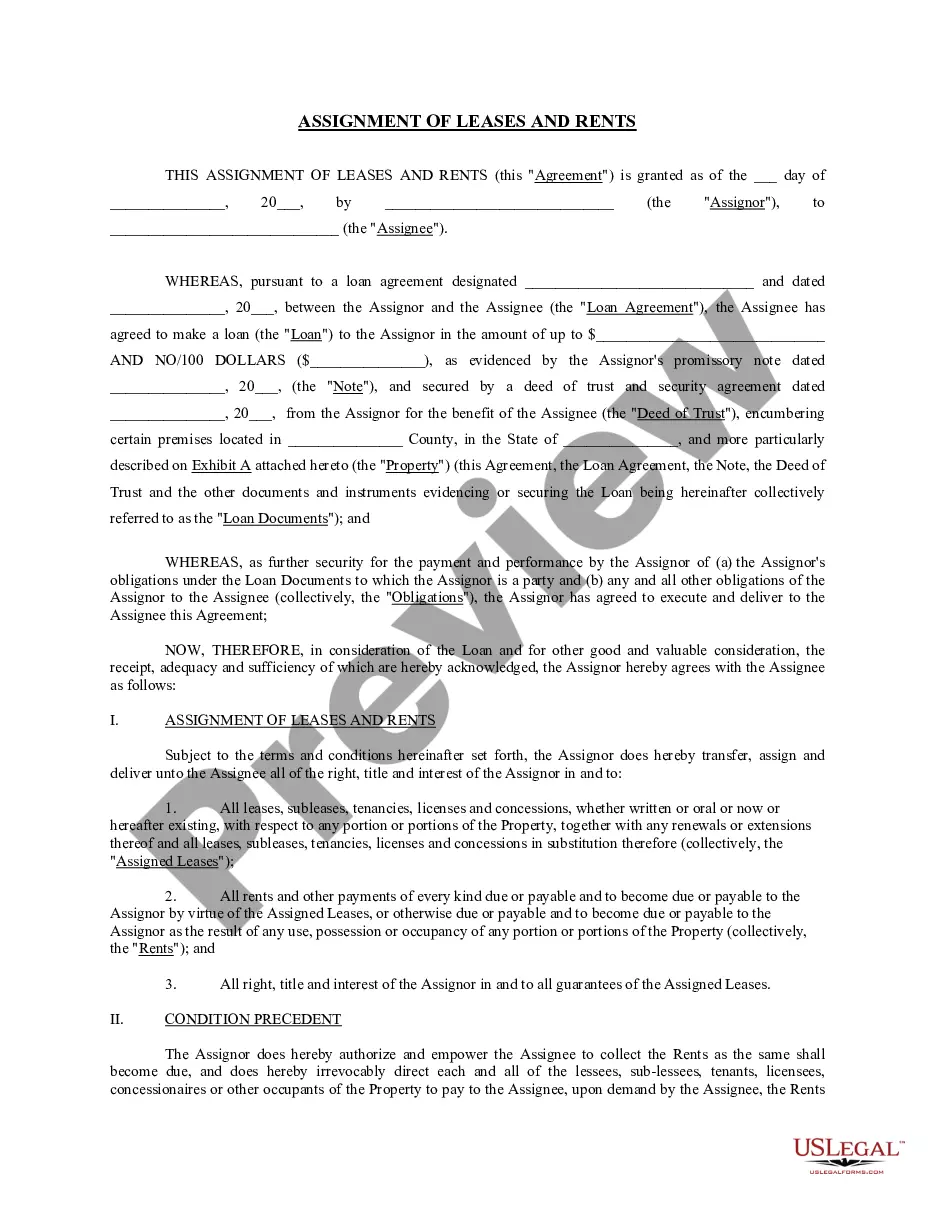
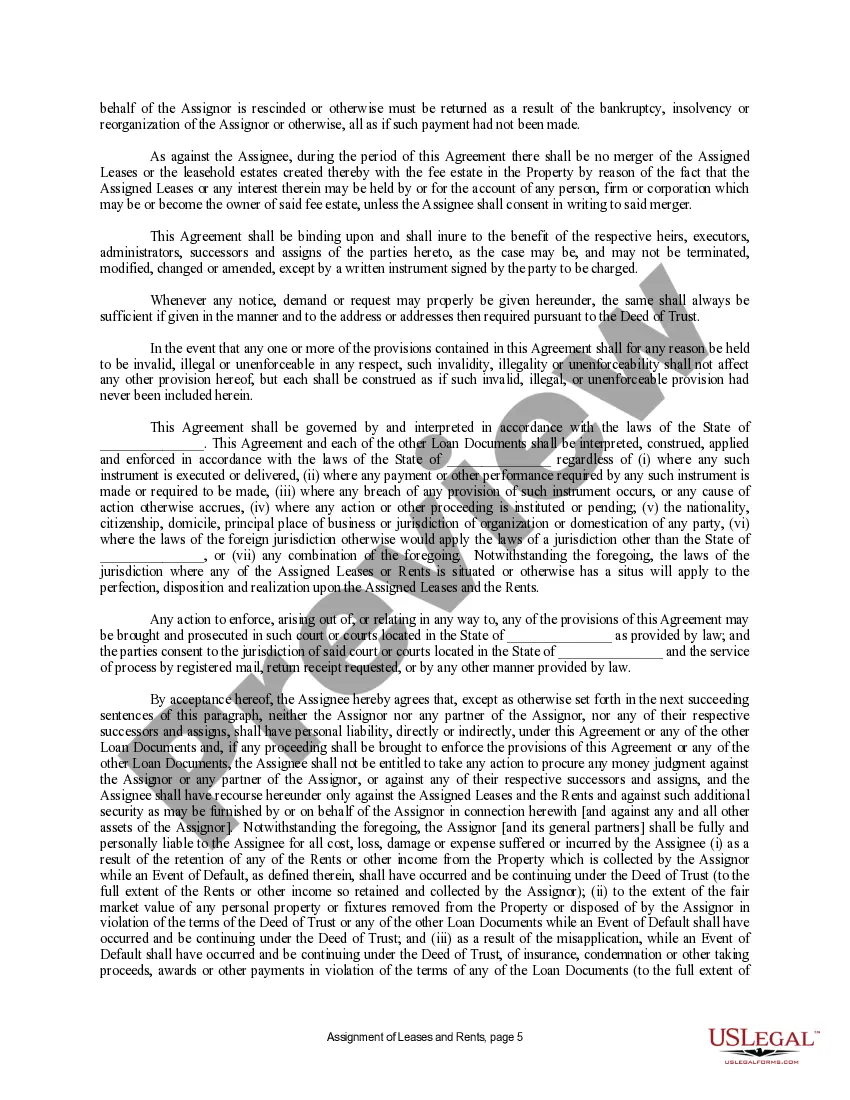
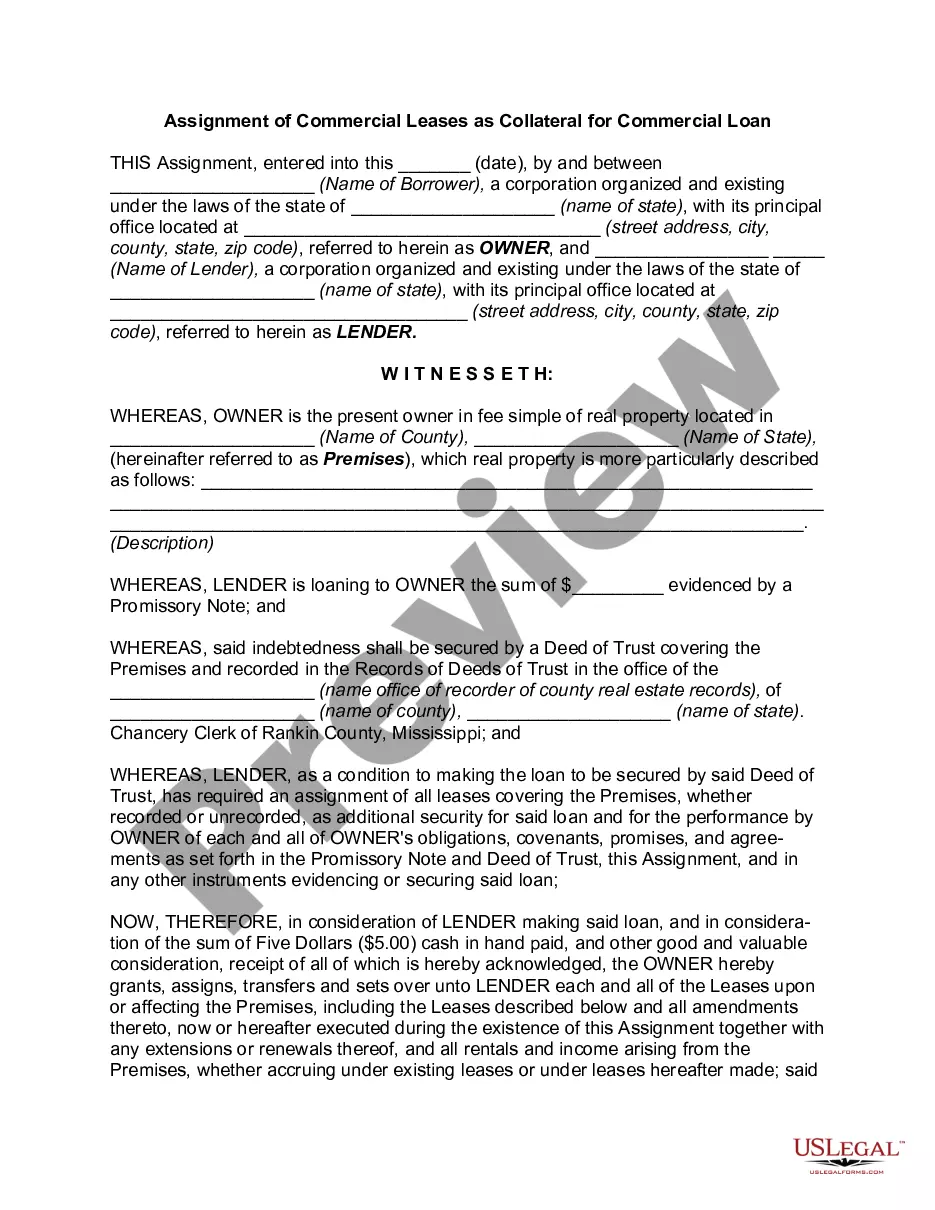
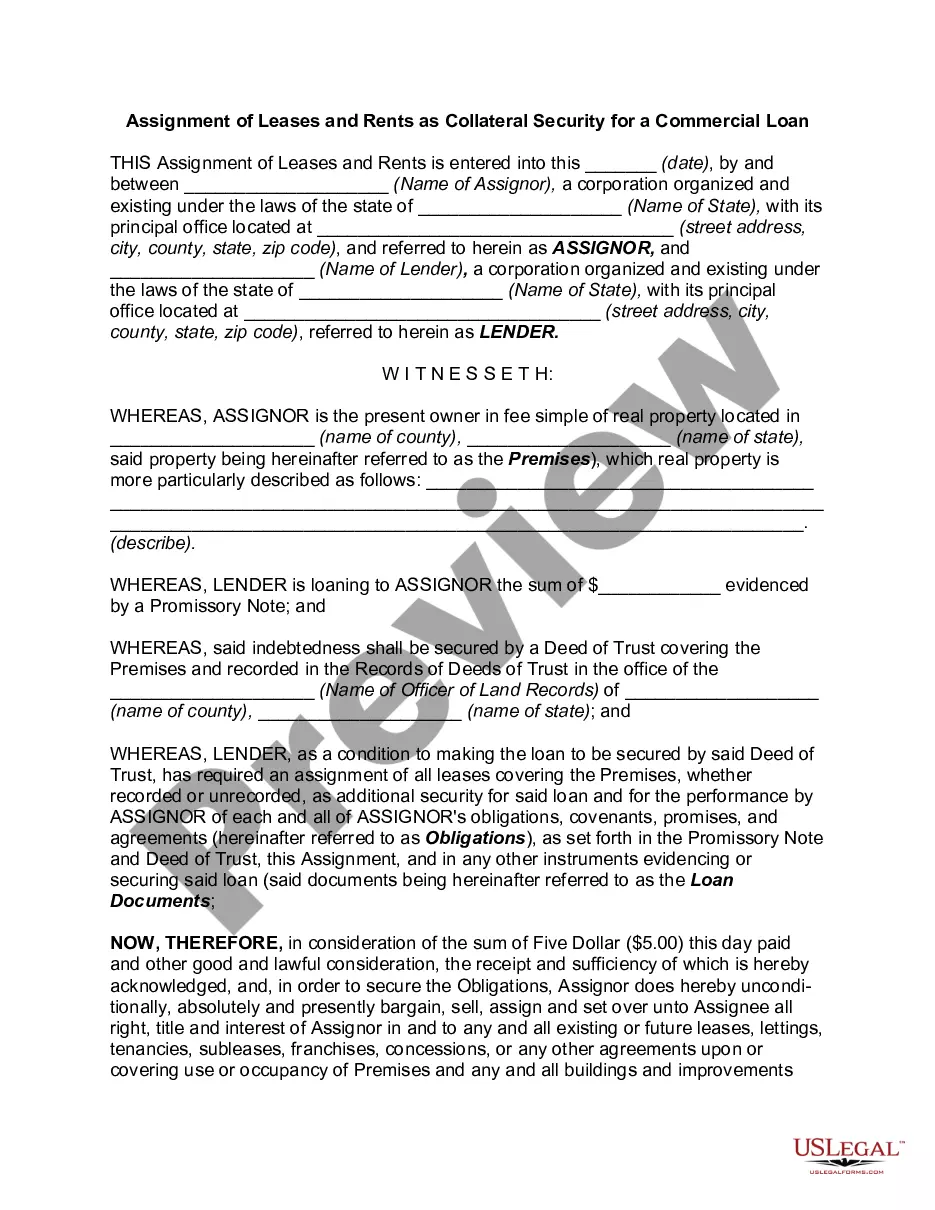
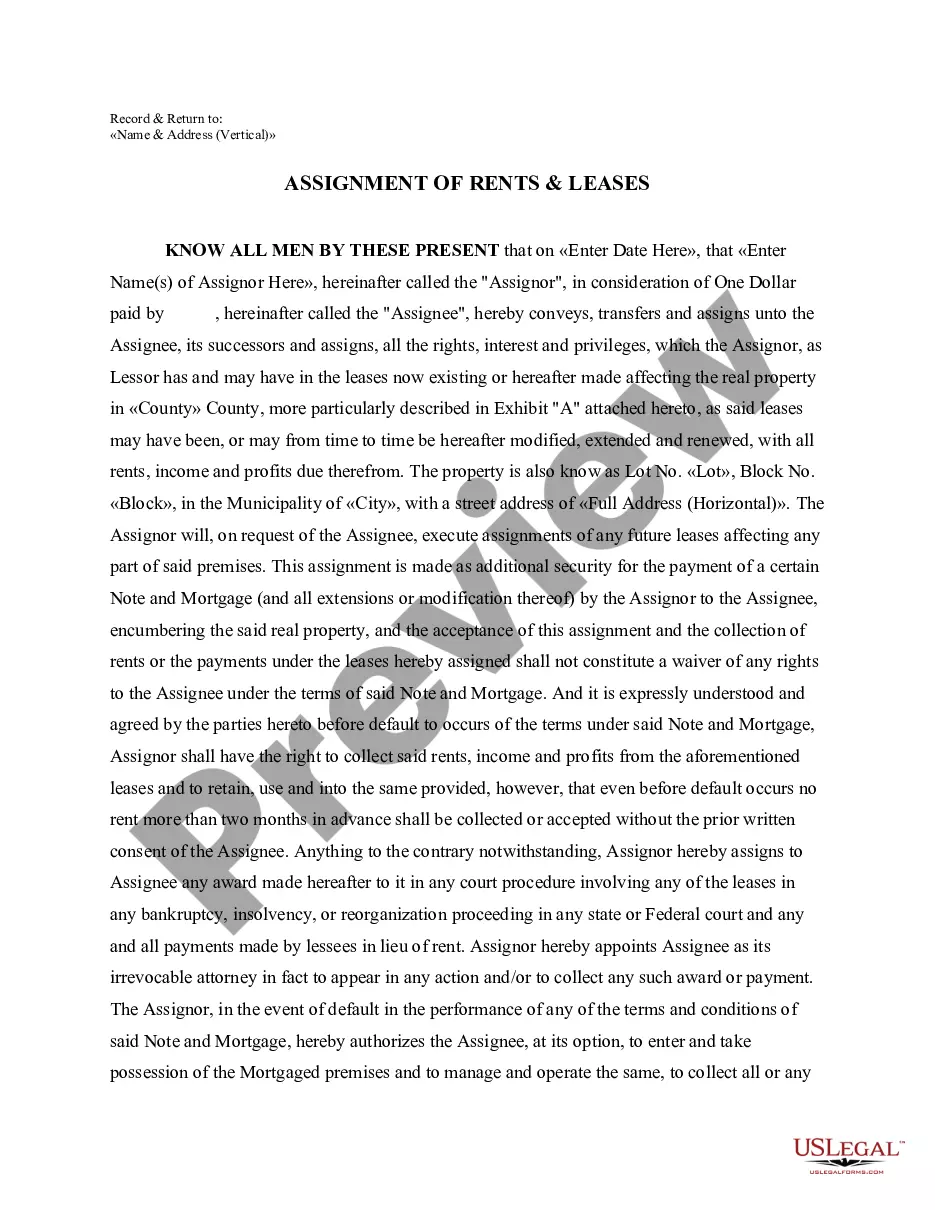
The Assignment of Lease and Rent from Borrower to Lender is a legal document that allows a borrower (the Assignor) to transfer their rights to leases and rental income to a lender (the Assignee) as security for a loan. This form is crucial because it formalizes the assignment of leases and rents, which typically includes contractual rights and obligations under lease agreements, rather than the property itself. It differs from similar forms, such as general loan agreements, as it specifically focuses on leases and rental rights, providing a clear structure for repayment of debt directly linked to property income.
Form components explained
- Identifies the parties involved: Assignor (borrower) and Assignee (lender).
- Details about the loan agreement and the specific amount being loaned.
- Transfer of rights related to leases and rents.
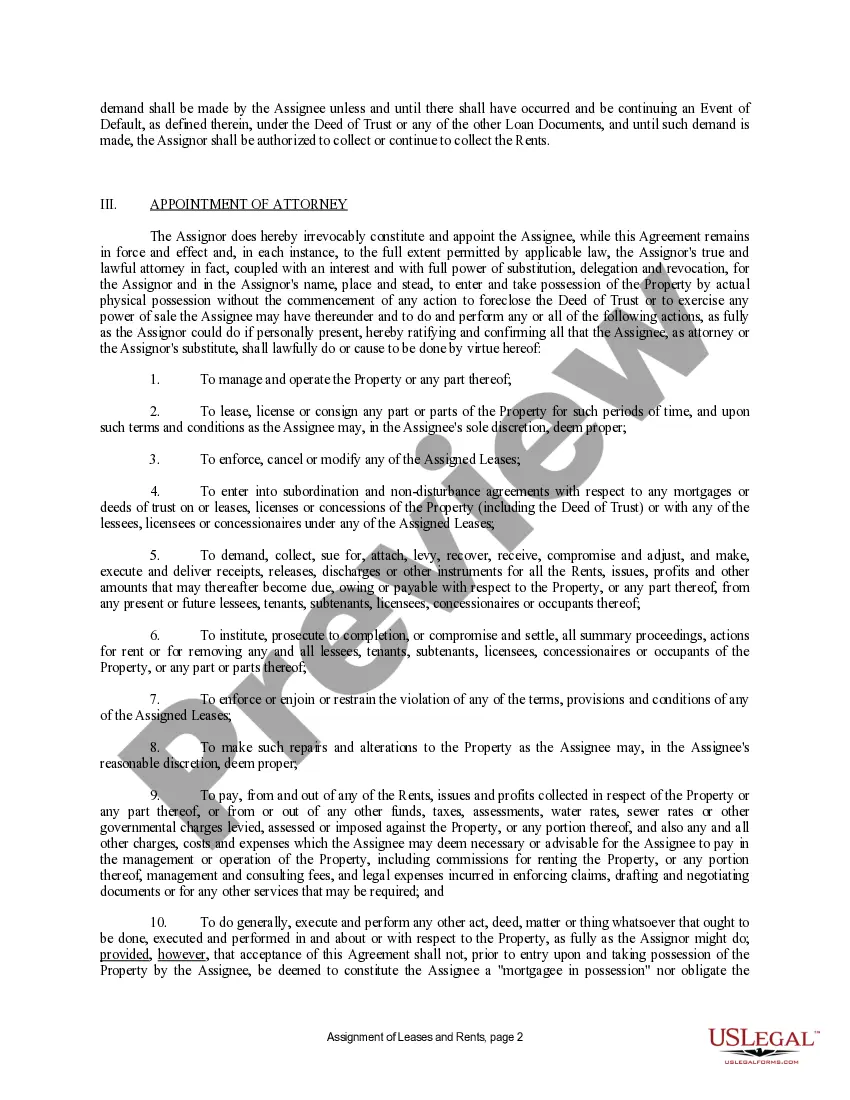
- Conditions under which the Assignee may collect rents and enforce leases.
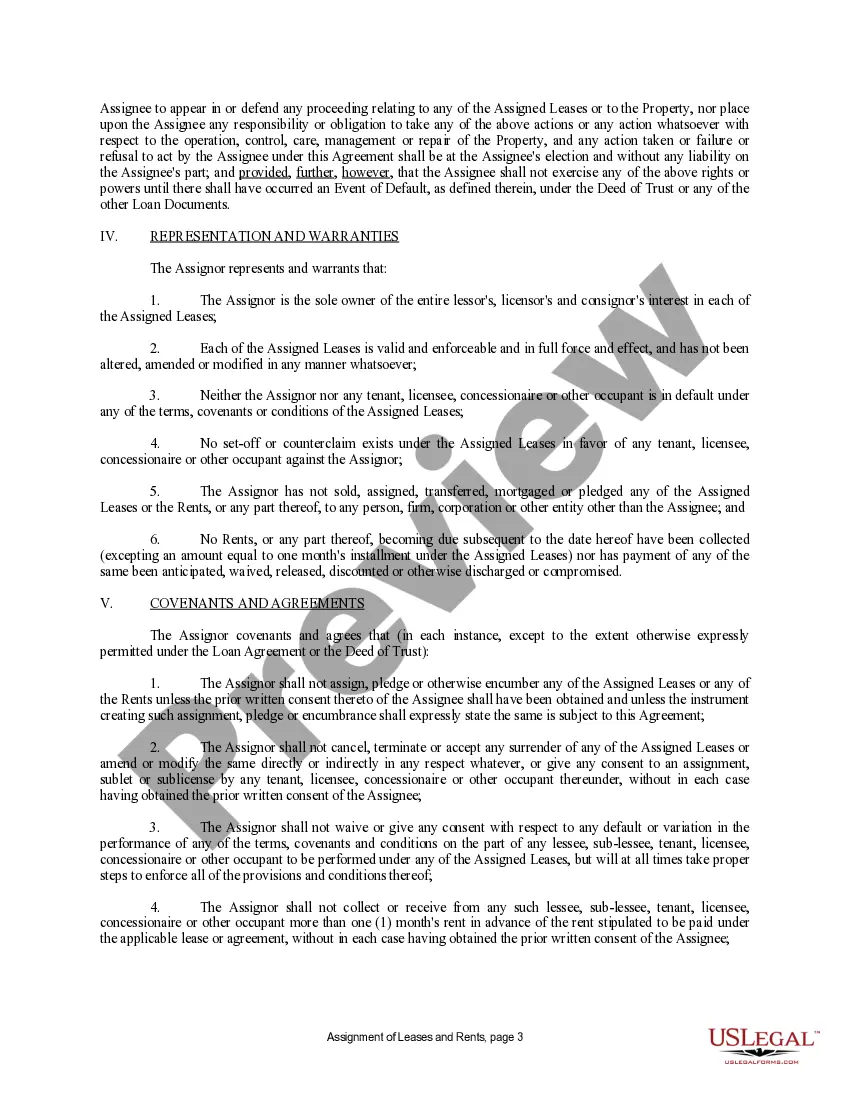
- Representation and warranties from the Assignor regarding the leases.
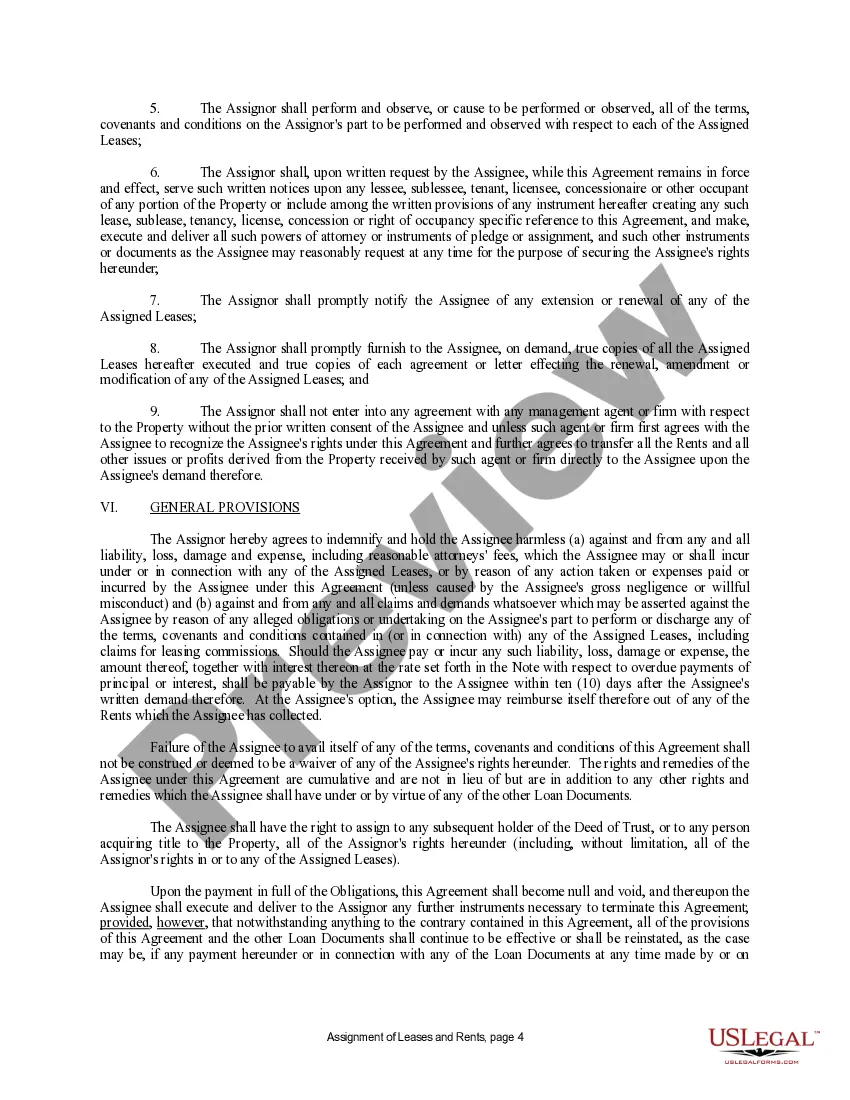
- Covenants and responsibilities of the Assignor to maintain the leases.

Situations where this form applies
This form should be used when a borrower needs to secure a loan by assigning their rights to receive rental income from properties they lease. Scenarios may include refinancing existing debt, obtaining new financing for investment properties, or when facing financial difficulties that necessitate providing additional collateral to lenders. It is essential for borrowers looking to formalize such agreements in a legally binding manner.
Who this form is for
- Property owners who are borrowing money and need to provide rental income as collateral.
- Investors looking to secure loans with rental property income.
- Lenders requiring legal assurance of income from rental properties as repayment for loans.
- Real estate professionals managing leases for clients seeking financing.
Steps to complete this form
- Identify the parties: Fill in the names of the Assignor and Assignee.
- Specify the date: Enter the effective date of the assignment.
- Detail the loan agreement: Include the amount of the loan and date of the promissory note.
- List the property: Describe the property related to the leases and attach any legal descriptions.
- Include signatures: Ensure the Assignor and authorized agent sign the form, with dates.
- Notarize the form if required: Ensure any notary language is completed to validate the document.
Notarization requirements for this form
This document requires notarization to meet legal standards. US Legal Forms provides secure online notarization powered by Notarize, allowing you to complete the process through a verified video call, available 24/7.
Get your form ready online
Our built-in tools help you complete, sign, share, and store your documents in one place.
Make edits, fill in missing information, and update formatting in US Legal Forms—just like you would in MS Word.
Download a copy, print it, send it by email, or mail it via USPS—whatever works best for your next step.
Sign and collect signatures with our SignNow integration. Send to multiple recipients, set reminders, and more. Go Premium to unlock E-Sign.
If this form requires notarization, complete it online through a secure video call—no need to meet a notary in person or wait for an appointment.
We protect your documents and personal data by following strict security and privacy standards.

Make edits, fill in missing information, and update formatting in US Legal Forms—just like you would in MS Word.

Download a copy, print it, send it by email, or mail it via USPS—whatever works best for your next step.

Sign and collect signatures with our SignNow integration. Send to multiple recipients, set reminders, and more. Go Premium to unlock E-Sign.

If this form requires notarization, complete it online through a secure video call—no need to meet a notary in person or wait for an appointment.

We protect your documents and personal data by following strict security and privacy standards.
Common mistakes to avoid
- Failing to properly identify all parties involved in the assignment.
- Not including a clear property description or relevant legal details.
- Omitting to get necessary signatures or notarization, if required.
- Not explaining the relevant loan obligations in detail.
- Using incorrect dates that could affect the enforceability of the agreement.
Benefits of using this form online
- Convenience of downloading and filling out the form at your own pace.
- Easy editability allows customization to fit specific situations.
- Access to forms drafted by licensed attorneys ensures legal compliance.
- Quick delivery of forms without the need to visit a lawyer's office.
Looking for another form?








Form popularity
FAQ
Yes, a lease can still be valid even if it is not notarized, provided that it meets all other legal requirements. However, not having a notarized document could expose you to challenges regarding its authenticity. In scenarios involving Delaware Assignment of Lease and Rent from Borrower to Lender, having a properly executed lease can protect all parties involved. It is advisable to follow best practices in documentation for peace of mind.
An assignment of lease generally does not require notarization to be valid. However, notarizing the document can enhance its credibility and offer additional protection if disputes arise. In the process of Delaware Assignment of Lease and Rent from Borrower to Lender, having a notarized assignment can serve as valuable evidence of the transaction. It's wise to consult with a legal professional to discuss the benefits of notarization in your specific situation.
Typically, an assignment agreement does not need to be notarized to be legally binding. However, it is often recommended to have it notarized as a precaution to avoid future disputes. This step can provide additional proof of the agreement should any issues arise later on. When dealing with Delaware Assignment of Lease and Rent from Borrower to Lender, ensuring your documents are in order can provide peace of mind.
A lease agreement is a contract between a landlord and a tenant outlining the terms of renting a property. On the other hand, a lease assignment transfers the tenant's rights and obligations to another party. In the context of Delaware Assignment of Lease and Rent from Borrower to Lender, understanding this difference is crucial as it affects who is responsible for payments and property care. Knowing these terms can help you navigate lease arrangements more effectively.
A consent to assignment of a lease is a formal approval from a landlord allowing a tenant to transfer their lease agreement obligations to another party. This is significant in the context of Delaware Assignment of Lease and Rent from Borrower to Lender, as it ensures that the original landlord acknowledges the change in responsibility. Without this consent, the assignment might not be valid, and the landlord can retain the right to deny the new tenant. This process helps protect both the landlord's interests and the new tenant's legitimacy.
No, the assignment of mortgage does not automatically mean foreclosure. Instead, it reflects the transfer of the mortgage from one lender to another or the lender's rights under the mortgage agreement. In the context of the Delaware Assignment of Lease and Rent from Borrower to Lender, this assignment helps secure the lender’s interests while keeping options open for the borrower.
The right of transfer or assignment allows mortgage lenders to pass their interest in a mortgage to another party. This can include transferring the right to collect lease and rental income directly from tenants in a property. By facilitating this transfer, the Delaware Assignment of Lease and Rent from Borrower to Lender helps maintain the lender's financial security.
An assignment of lease is a legal transfer of a tenant's rights and obligations under a lease agreement to another party. This often occurs when a borrower wants to transfer their lease to a different entity while keeping the lender informed. In the realm of the Delaware Assignment of Lease and Rent from Borrower to Lender, this assignment can impact the lender's ability to collect rents directly.
The lender's right of assignment allows them to transfer their rights in a mortgage contract, including lease and rental income, to another party. This legal right safeguards the lender's interests by ensuring that they can collect rent directly if the borrower fails to meet their obligations. Understanding this right is essential for both borrowers and lenders in Delaware.
The Delaware Assignment of Lease and Rent from Borrower to Lender involves transferring the rights to lease payments and rent from the borrower to the lender. This process protects lenders by providing them with direct access to rent income, thus ensuring security for the mortgage. By using this assignment, lenders can improve their chances of recovering funds in case of default.