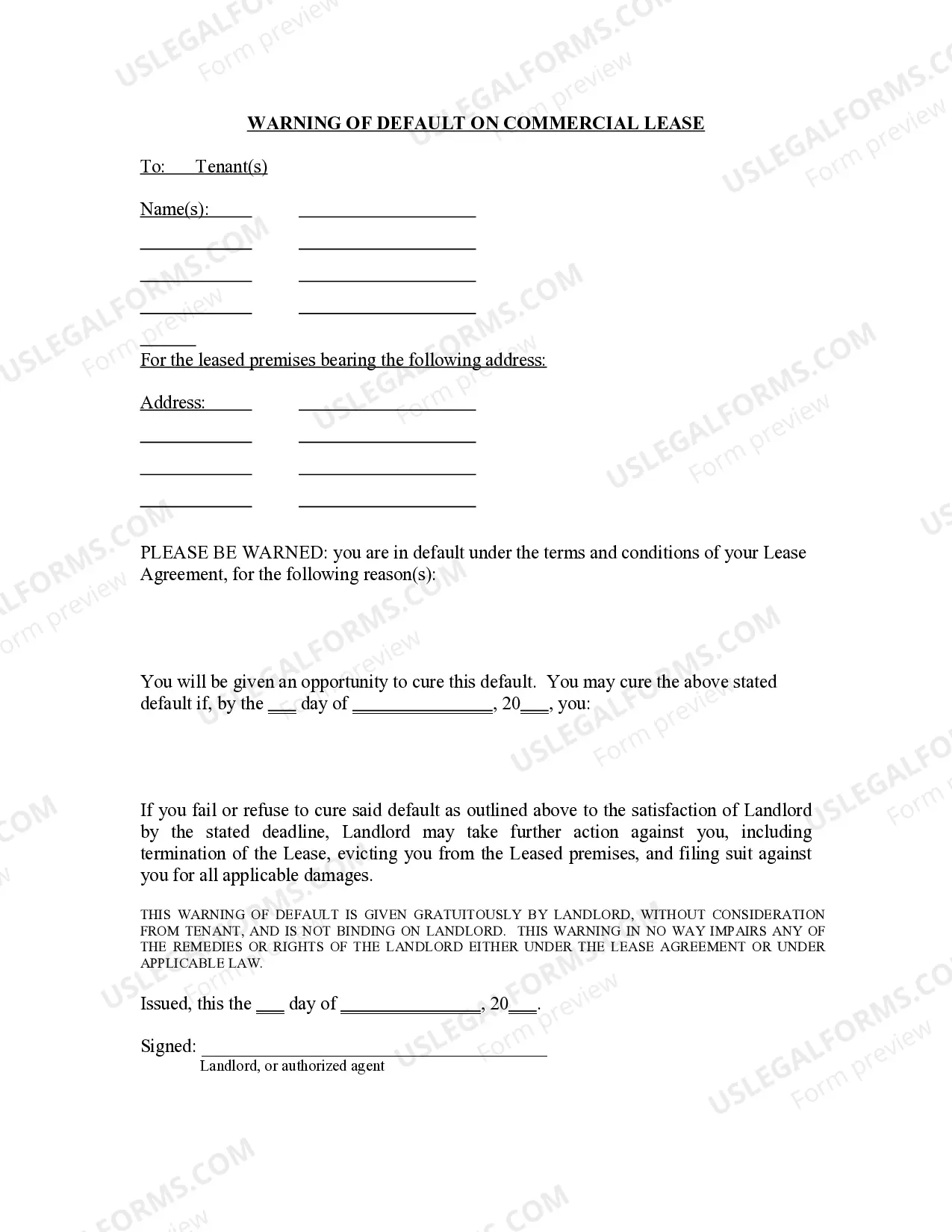
Delaware Letter from Landlord to Tenant that Sublease granted - Rent Paid by Subtenant, Old Tenant Released from Liability for Rent
About this form
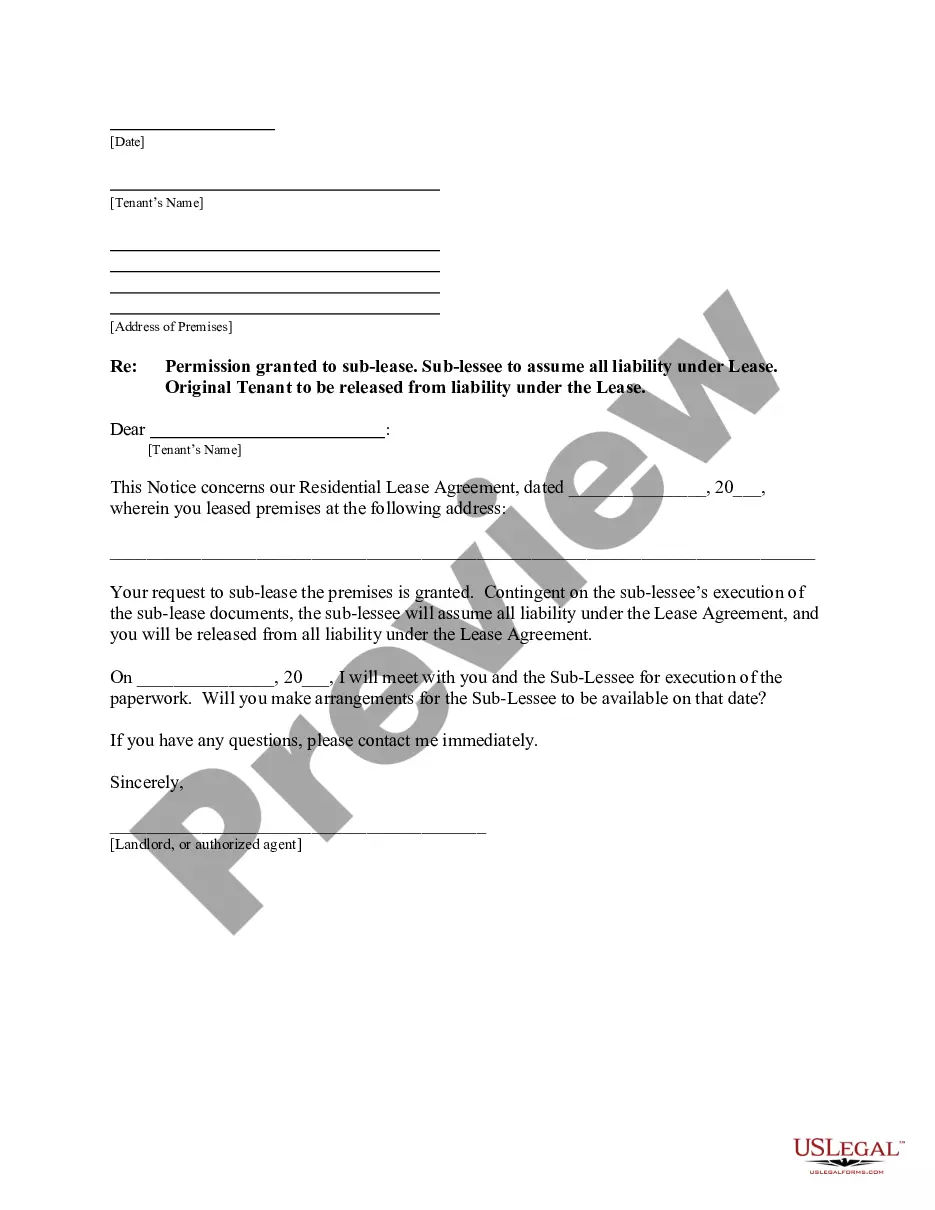
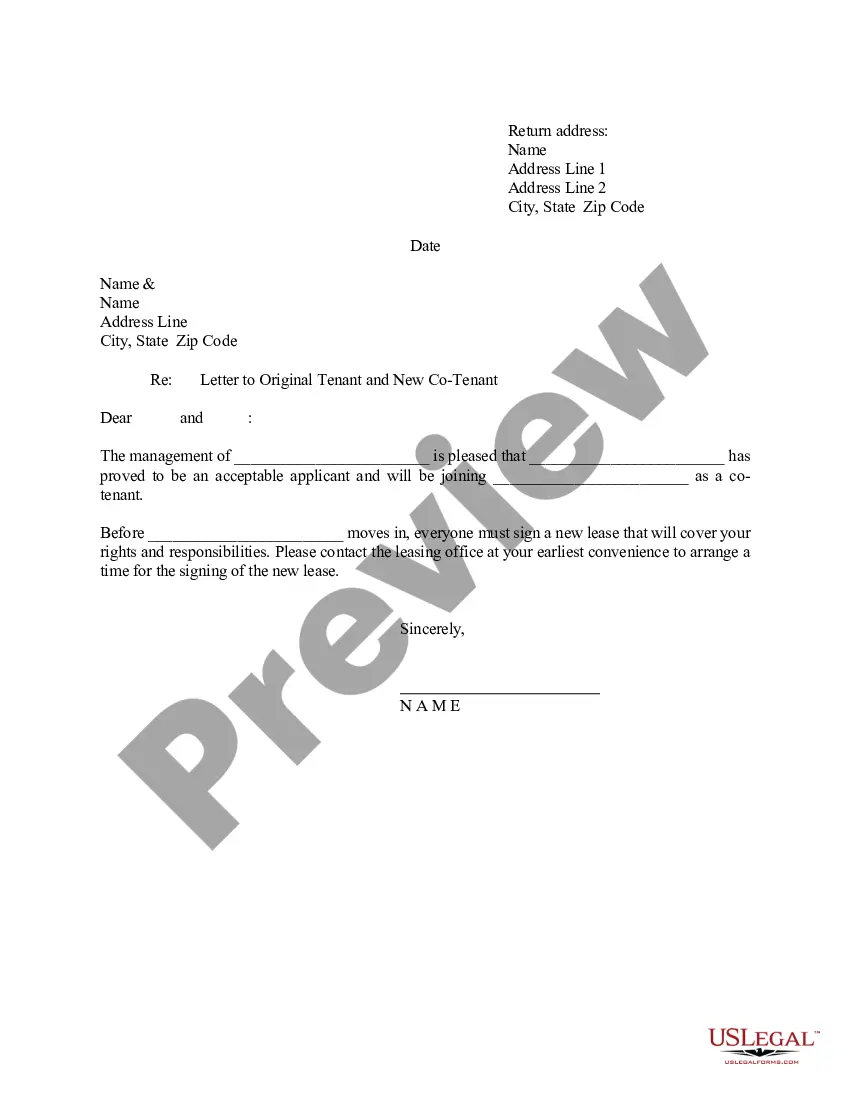
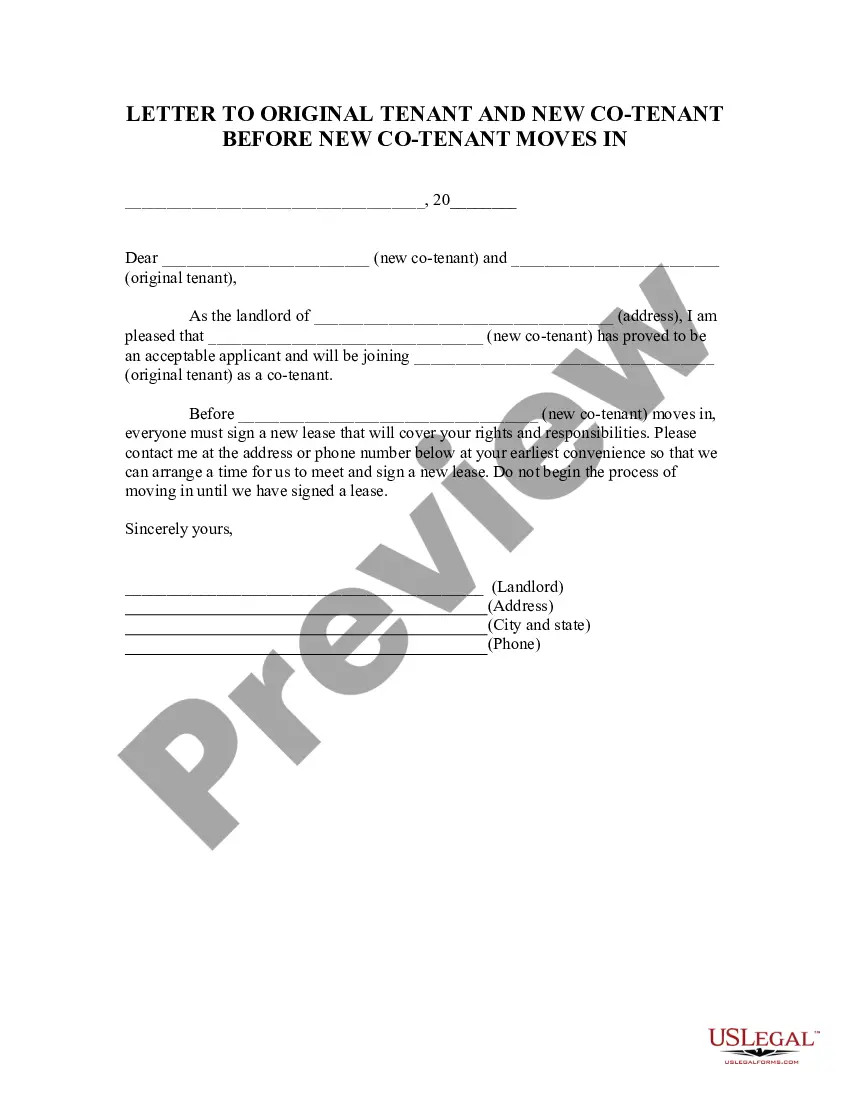
This Letter from Landlord to Tenant confirms that a sublease has been granted. It outlines that the sub-tenant will be responsible for rent payments, and the original tenant will be released from liability regarding these payments. This form is essential for clarifying roles and responsibilities among all parties involved in the rental agreement.
Form components explained
- Confirmation of sublease approval.
- Details regarding the assumption of liability by the sub-tenant.
- Release of the original tenant from rent payment obligations.
- Date for execution of the necessary sub-lease paperwork.
- Contact information for the landlord or authorized agent.

Common use cases
This form should be used when a tenant wishes to sublease their rental property and needs formal approval from their landlord. It is appropriate in situations where the landlord agrees to allow a new tenant to take over the lease responsibilities temporarily. It is crucial for ensuring that all parties understand their rights and liabilities.
Who this form is for
- Landlords who approve a sublease arrangement.
- Original tenants wanting to sublease their property.
- Sub-tenants who will assume rental responsibilities temporarily.
Instructions for completing this form
- Identify and enter the involved parties (landlord, tenant, sub-tenant).
- Clearly state the property address subject to the sublease.
- Include the date when the landlord will meet for executing the paperwork.
- Have the landlord or authorized agent sign the letter.
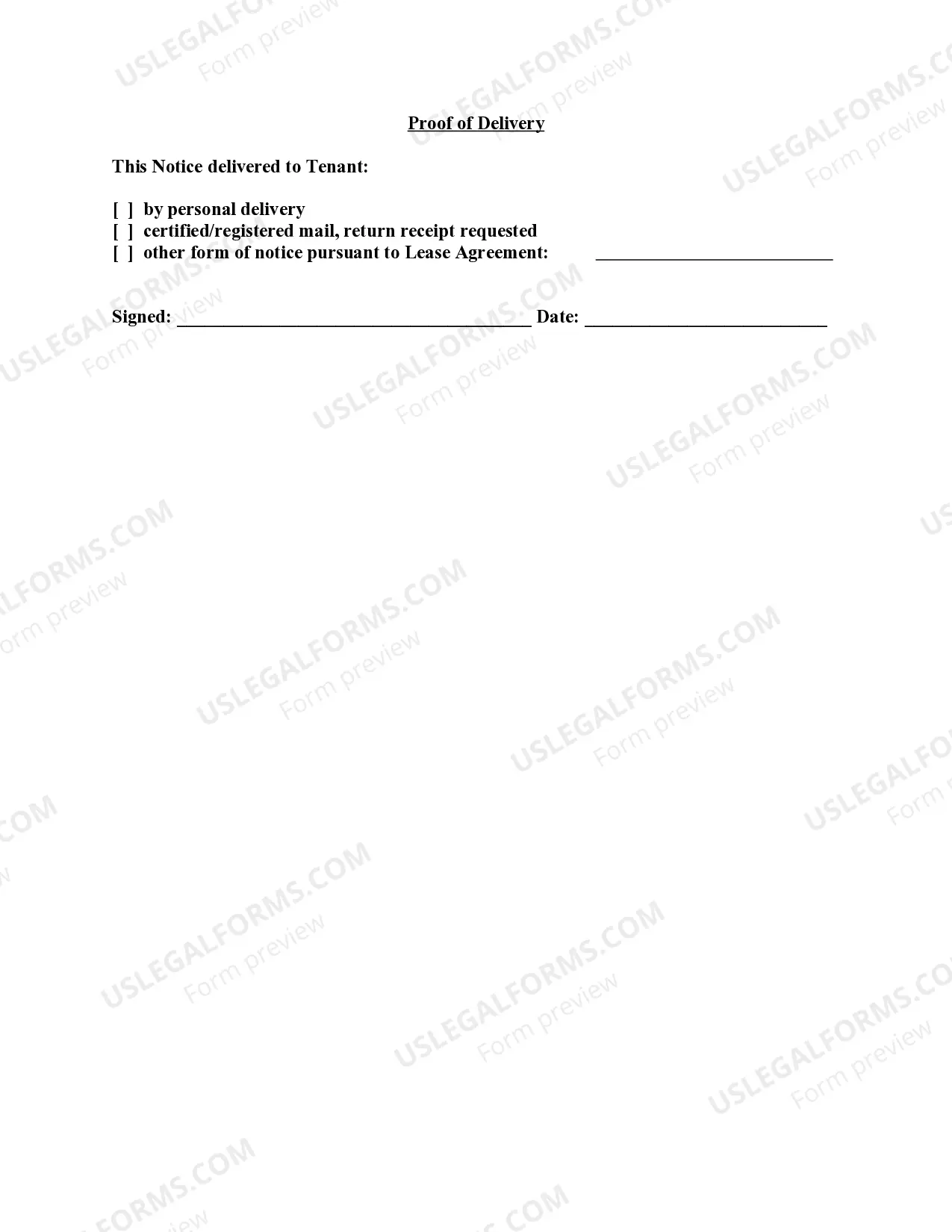
- Provide proof of delivery method used to notify the tenant.
Notarization guidance
This form does not typically require notarization unless specified by local law. However, it is advisable to check with your state's regulations to confirm whether additional measures are necessary.
Get your form ready online
Our built-in tools help you complete, sign, share, and store your documents in one place.
Make edits, fill in missing information, and update formatting in US Legal Forms—just like you would in MS Word.
Download a copy, print it, send it by email, or mail it via USPS—whatever works best for your next step.
Sign and collect signatures with our SignNow integration. Send to multiple recipients, set reminders, and more. Go Premium to unlock E-Sign.
If this form requires notarization, complete it online through a secure video call—no need to meet a notary in person or wait for an appointment.
We protect your documents and personal data by following strict security and privacy standards.

Make edits, fill in missing information, and update formatting in US Legal Forms—just like you would in MS Word.

Download a copy, print it, send it by email, or mail it via USPS—whatever works best for your next step.

Sign and collect signatures with our SignNow integration. Send to multiple recipients, set reminders, and more. Go Premium to unlock E-Sign.

If this form requires notarization, complete it online through a secure video call—no need to meet a notary in person or wait for an appointment.

We protect your documents and personal data by following strict security and privacy standards.
Avoid these common issues
- Not including all necessary parties in the letter.
- Failing to specify the date for paperwork execution.
- Omitting the landlordâs contact information for questions.
- Using unclear language that could lead to misunderstandings.
Benefits of using this form online
- Instant access to legally vetted templates drafted by licensed attorneys.
- Ability to download and customize the form to fit your specific situation.
- Convenience of managing legal documentation from home.
Summary of main points
- The letter formalizes the approval of a sublease arrangement.
- It ensures the original tenant is released from rent liability, provided all terms are met.
- Clear communication of responsibilities helps prevent future disputes.
Looking for another form?
Form popularity
FAQ
The primary difference between a lease assignment and a sublease lies in the tenant’s remaining obligations. In a lease assignment, the original tenant transfers their entire interest in the lease to another person, freeing them from future responsibilities. In contrast, a sublease allows the original tenant to retain some responsibilities, such as paying rent, while allowing another person to occupy the property.
Yes, the original tenant remains responsible under the lease even after signing an assignment or sublease. This responsibility includes paying rent in full and maintaining the property. Understanding these obligations helps protect the original tenant from potential disputes over rent or property damage.
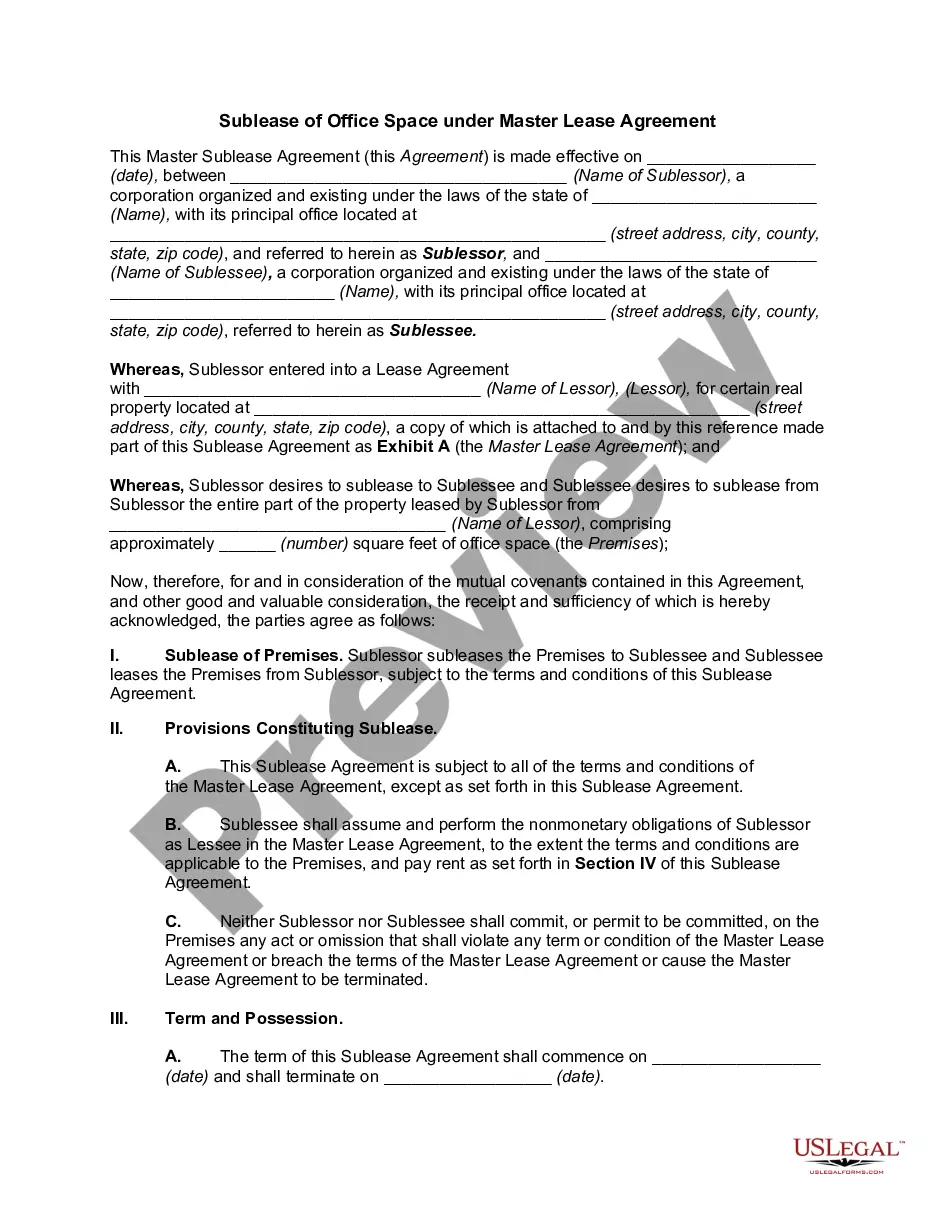
Writing a sublet involves preparing a formal document that details the terms of the sublease agreement. It should include information about the original lease, the subtenant, rent amounts, and duration. This written agreement minimiz38es misunderstandings and confirms that all parties agree to the terms laid out.
Tenant assignment occurs when a tenant transfers their interest in a leased property to another person. The new tenant assumes the original tenant's rights and responsibilities under the lease. This process can involve significant legal considerations, similar to a sublease but usually without retaining the original tenant's involvement.
Section 5514 of the Delaware landlord/tenant code details the rights and responsibilities of landlords regarding tenant subleasing. It stipulates that landlords cannot unreasonably withhold consent for a sublease. Understanding this section can help tenants navigate the subleasing process and advocate for their interests effectively.
To write a sublet letter, begin by addressing your landlord and clearly stating your request to sublease your rented property. Include details about the potential subtenant, the duration of the sublease, and how rent will be handled. The letter should also express your acknowledgment of responsibilities, ensuring that all parties understand the terms involved.
An example of a sublet is when a college student who rents an apartment wants to spend the summer away. They may sublease their unit to a friend, allowing that friend to live there while they are gone. The friend pays rent directly to the original tenant, and the original tenant remains responsible for fulfilling lease obligations.