Delaware Letter from Tenant to Landlord containing Notice to landlord to cease retaliatory decrease in services
About this form
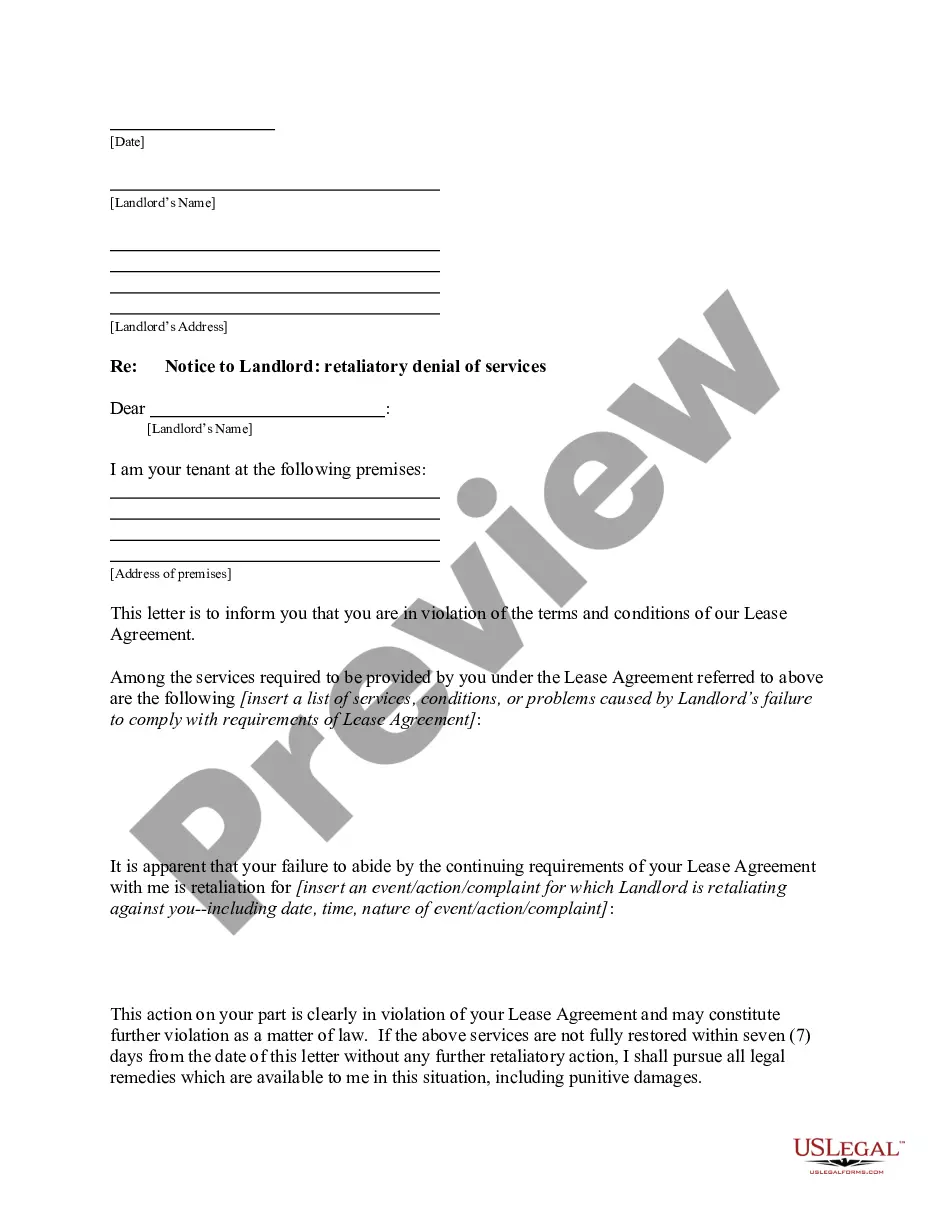
This Letter from Tenant to Landlord serves as a notice to the landlord regarding their retaliatory decrease in services. It is important for tenants who believe their landlord has reduced essential services as a response to their complaints or actions. This form emphasizes the landlordâs breach of the lease agreement and alerts them of potential legal violations, setting it apart from other tenant communication templates.
Main sections of this form
- Introduction stating the purpose of the letter
- Details of the services required under the lease agreement
- Explanation of the tenant's claims regarding the landlord's retaliatory actions
- A request for the landlord to cease such actions
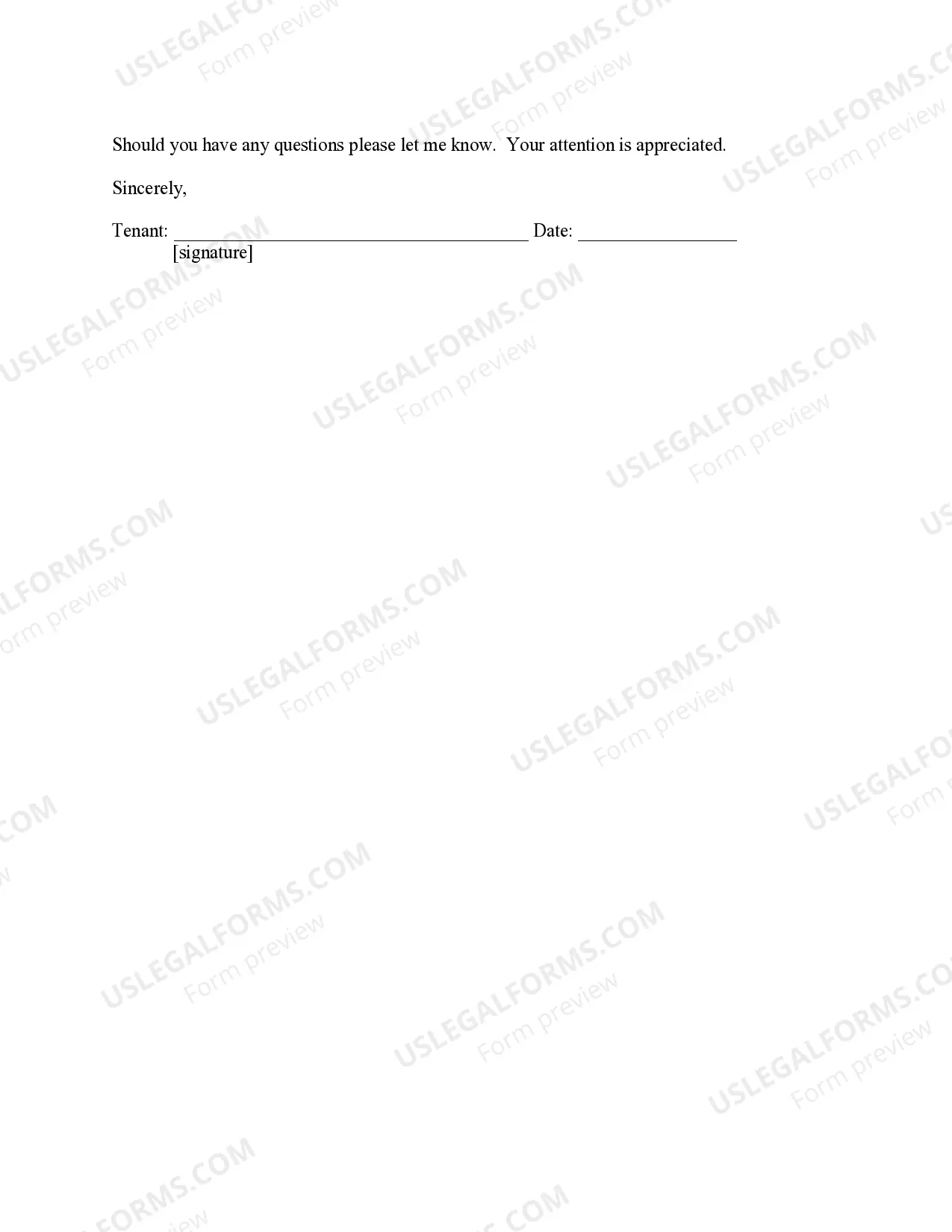
- Signature and date fields for tenant confirmation
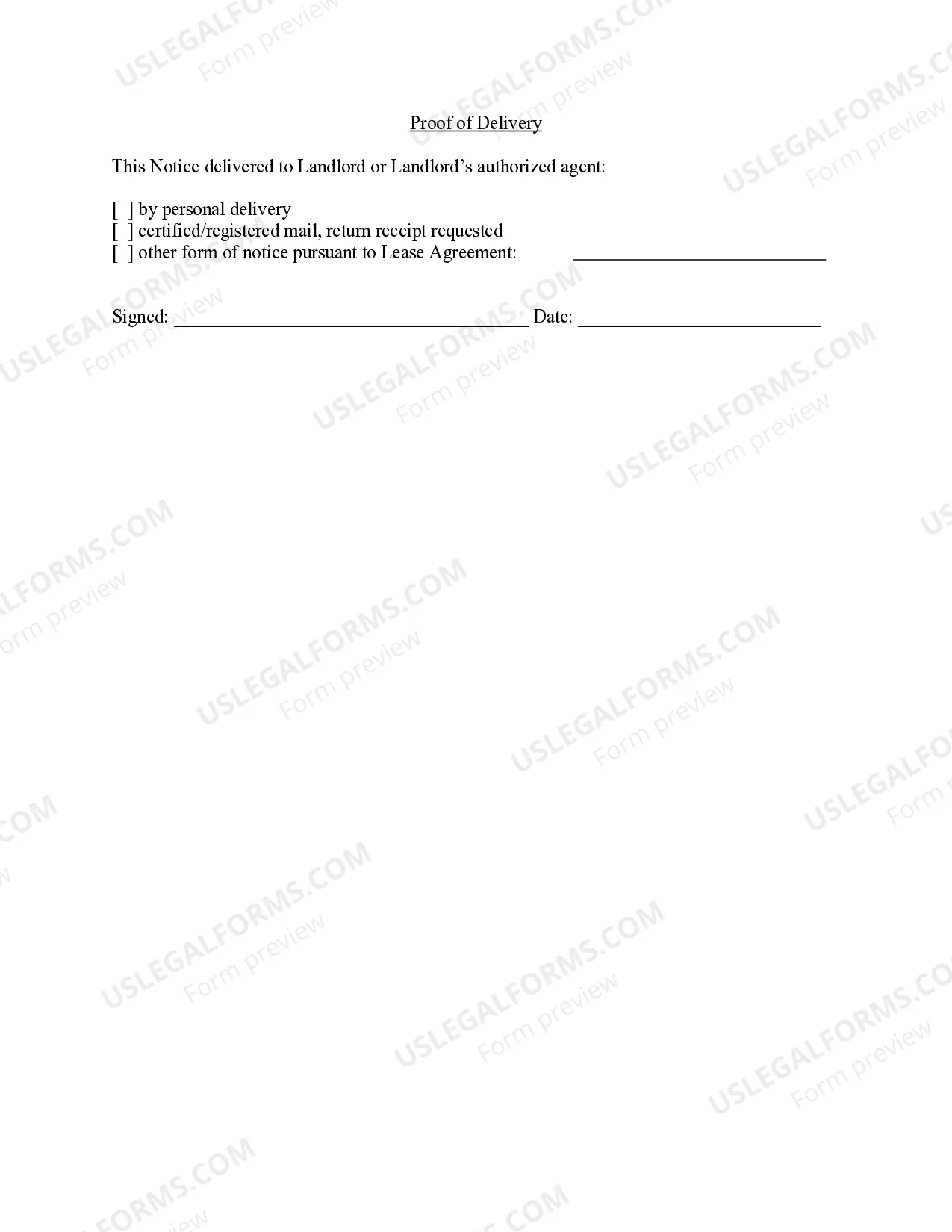
- Proof of delivery options to ensure the landlord receives the notice

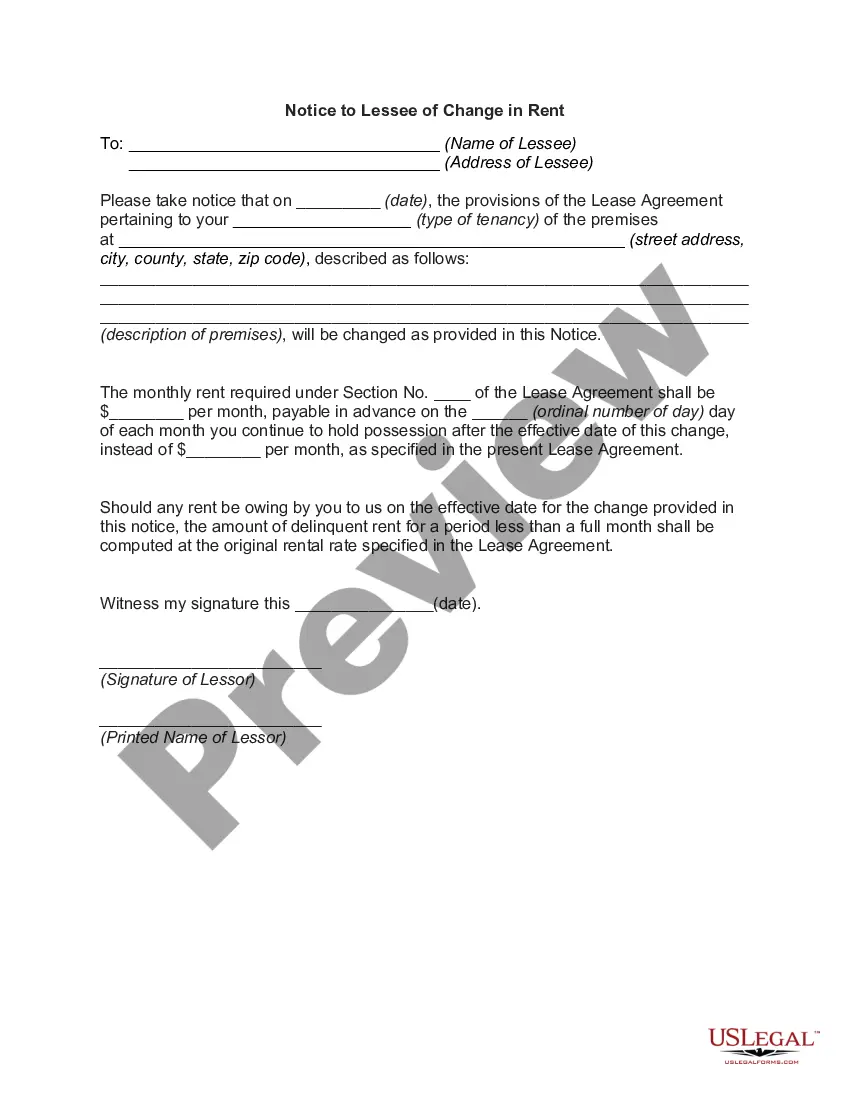

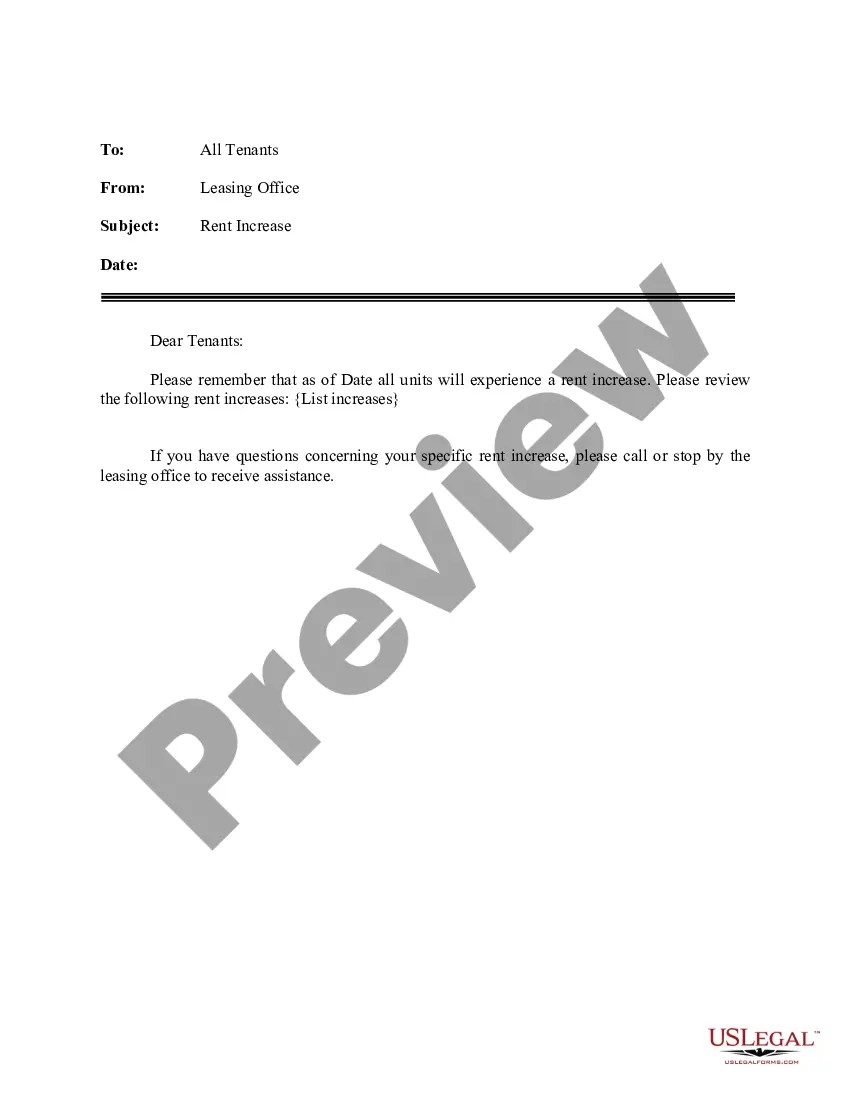

When to use this form
This form should be used when a tenant suspects that their landlord is retaliating against them by reducing critical services, such as heating, water, or repairs, after the tenant has initiated complaints or actions regarding the lease. It formally communicates the tenant's concerns and serves as a legal record of the claim.
Who should use this form
- Tenants who have experienced a decrease in services from their landlord
- Individuals who believe the decrease in services is a form of retaliation
- Those looking to formally document their concerns for potential legal action
How to complete this form
- Identify the parties involved, including the tenant's and landlord's names.
- Specify the property address related to the lease agreement.
- List the services that are required under the lease but have been reduced.
- Document the timeline and context of the alleged retaliatory actions.
- Sign and date the letter in the designated fields to validate the notice.
- Choose the method of delivery and ensure proof of delivery is obtained.
Notarization requirements for this form
This form does not typically require notarization unless specified by local law. It is advisable to check local regulations to ensure compliance.
Get your form ready online
Our built-in tools help you complete, sign, share, and store your documents in one place.
Make edits, fill in missing information, and update formatting in US Legal Forms—just like you would in MS Word.
Download a copy, print it, send it by email, or mail it via USPS—whatever works best for your next step.
Sign and collect signatures with our SignNow integration. Send to multiple recipients, set reminders, and more. Go Premium to unlock E-Sign.
If this form requires notarization, complete it online through a secure video call—no need to meet a notary in person or wait for an appointment.
We protect your documents and personal data by following strict security and privacy standards.

Make edits, fill in missing information, and update formatting in US Legal Forms—just like you would in MS Word.

Download a copy, print it, send it by email, or mail it via USPS—whatever works best for your next step.

Sign and collect signatures with our SignNow integration. Send to multiple recipients, set reminders, and more. Go Premium to unlock E-Sign.

If this form requires notarization, complete it online through a secure video call—no need to meet a notary in person or wait for an appointment.

We protect your documents and personal data by following strict security and privacy standards.
Common mistakes to avoid
- Not including specific details about the reduced services.
- Failing to keep a copy of the notice for personal records.
- Overlooking the importance of proof of delivery.
- Not specifying the timeline of events related to the retaliation.
Benefits of completing this form online
- Convenient access for immediate download and use.
- Editable templates allow customization for specific situations.
- Accurate legal language drafted by licensed attorneys ensures reliability.
- Prompt guidance to create well-structured legal documents.
Legal use & context
- This letter can be presented as evidence if legal action is pursued.
- Retaliation against a tenant is often unlawful and may result in penalties for the landlord.
- Understanding tenant rights can enhance a tenant's position in disputes.
Main things to remember
- The form is essential for tenants experiencing retaliation regarding service decreases.
- It formalizes the complaint and documents the landlord's potential legal violations.
- Ensure clarity and specificity when describing the services affected.
Looking for another form?


Form popularity
FAQ
To break a lease in Delaware without facing penalties, tenants must provide valid reasons outlined in the law, such as uninhabitable living conditions or illegal eviction practices. If you find yourself in this situation, you can use a Delaware Letter from Tenant to Landlord containing Notice to landlord to cease retaliatory decrease in services to document your case. Utilizing uslegalforms can help you draft this letter correctly, ensuring that your rights are protected throughout the process.
Section 5106 of the Delaware landlord-tenant code addresses retaliatory actions by landlords toward tenants. It explicitly prohibits landlords from diminishing services or evicting tenants as retaliation for lawful actions taken by tenants. Understanding this section is crucial, as tenants can use the Delaware Letter from Tenant to Landlord containing Notice to landlord to cease retaliatory decrease in services to assert their rights effectively.
A retaliatory eviction notice occurs when a landlord attempts to evict a tenant in response to the tenant exercising their rights, such as reporting unsafe living conditions or requesting repairs. In Delaware, tenants may respond to such actions with a Delaware Letter from Tenant to Landlord containing Notice to landlord to cease retaliatory decrease in services. This letter establishes that the tenant is aware of their rights and seeks to protect themselves from unfair treatment.
To write a letter requesting a reduction in rent, begin with a respectful salutation. Clearly articulate your reasons for the request, such as financial difficulties or the need for improved services. It's helpful to reference relevant laws, including those in the Delaware landlord/tenant code, and mention the Delaware Letter from Tenant to Landlord containing Notice to landlord to cease retaliatory decrease in services as a formal approach to support your case.
When crafting a strongly worded letter of complaint to your landlord, ensure you clearly outline the issues you are facing. Describe the incidents in detail and explain how they violate your rights as a tenant. In this letter, it can be beneficial to refer to the Delaware Letter from Tenant to Landlord containing Notice to landlord to cease retaliatory decrease in services, as this underscores your seriousness and knowledge of your rights.
Section 5514 of the Delaware landlord/tenant code provides important protections for tenants, particularly against retaliatory actions by landlords. This section prohibits landlords from reducing services in response to tenant complaints or actions that are legally protected. Understanding this section is crucial when drafting a Delaware Letter from Tenant to Landlord containing Notice to landlord to cease retaliatory decrease in services, as it empowers tenants to defend their rights.
To write a letter to your landlord regarding a rent decrease, start by clearly stating your request. Include specific details about the rent amount you are seeking and the reasons behind this decrease. Make sure to mention your rights as a tenant in Delaware, particularly referencing the Delaware Letter from Tenant to Landlord containing Notice to landlord to cease retaliatory decrease in services. Always keep your tone polite yet firm.
An example of a letter from a tenant to a landlord could focus on notifying the landlord of decreased services or retaliatory actions being taken. This letter should clearly state the issues and reference your rights under Delaware law. Including a Delaware Letter from Tenant to Landlord containing Notice to landlord to cease retaliatory decrease in services creates a formal record, enhancing your position in any discussions.
Section 5314 of the Delaware Residential landlord-tenant Code outlines the responsibilities of landlords regarding tenant complaints and retaliation. It emphasizes that landlords cannot retaliate against tenants for contacting authorities or asserting their rights under the law. Utilizing a Delaware Letter from Tenant to Landlord containing Notice to landlord to cease retaliatory decrease in services can help you enforce your rights as a tenant.
Constructive eviction occurs when a landlord fails to maintain livable conditions, forcing the tenant to leave, while retaliatory eviction happens when a landlord acts against a tenant for exercising their legal rights. Constructive eviction focuses on unlivable conditions, but retaliatory eviction centers on the landlord's motives. In either case, a Delaware Letter from Tenant to Landlord containing Notice to landlord to cease retaliatory decrease in services can help keep your rights intact.