Delaware Letter from Tenant to Landlord for Failure of Landlord to comply with building codes affecting health and safety or resulting in untenantable condition - demand for remedy
What this document covers
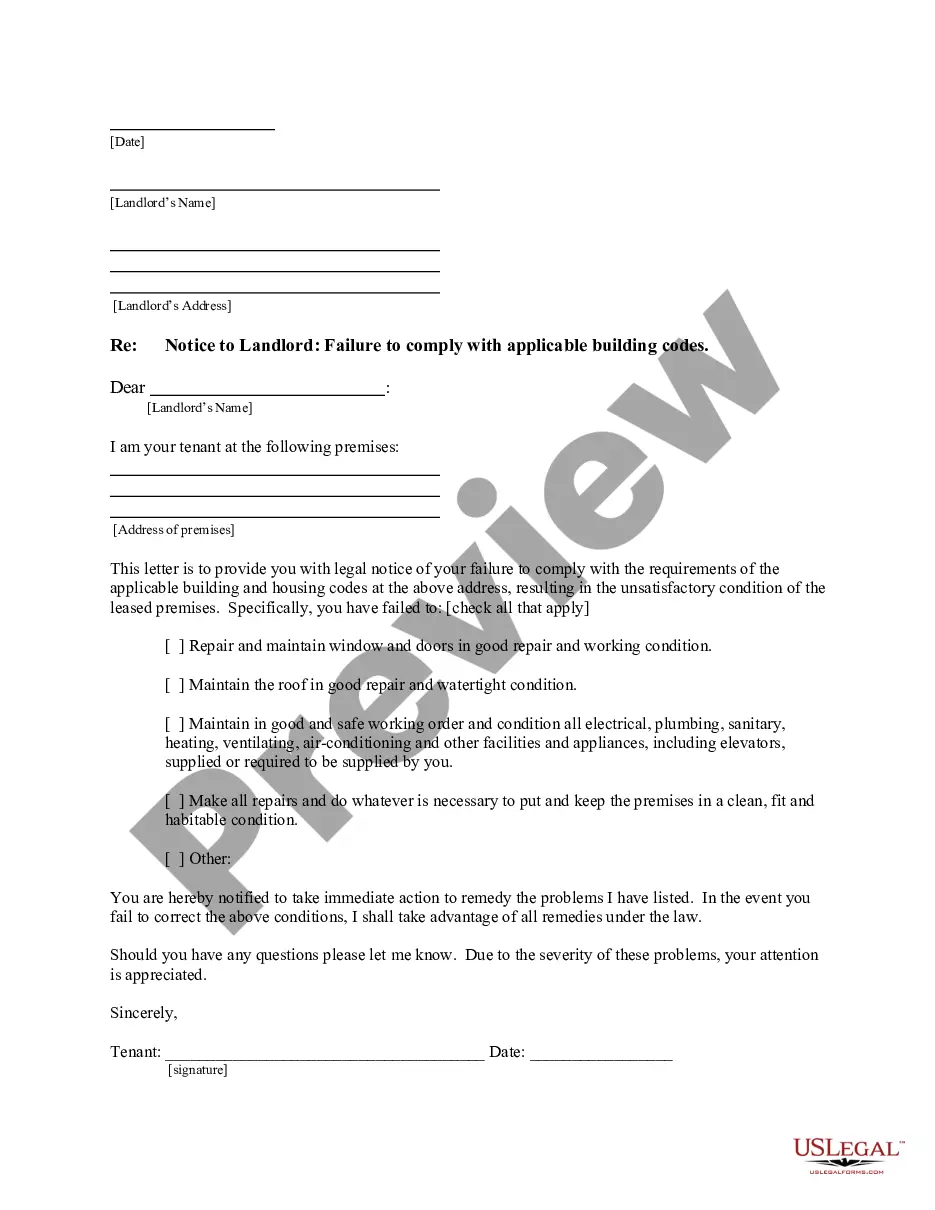
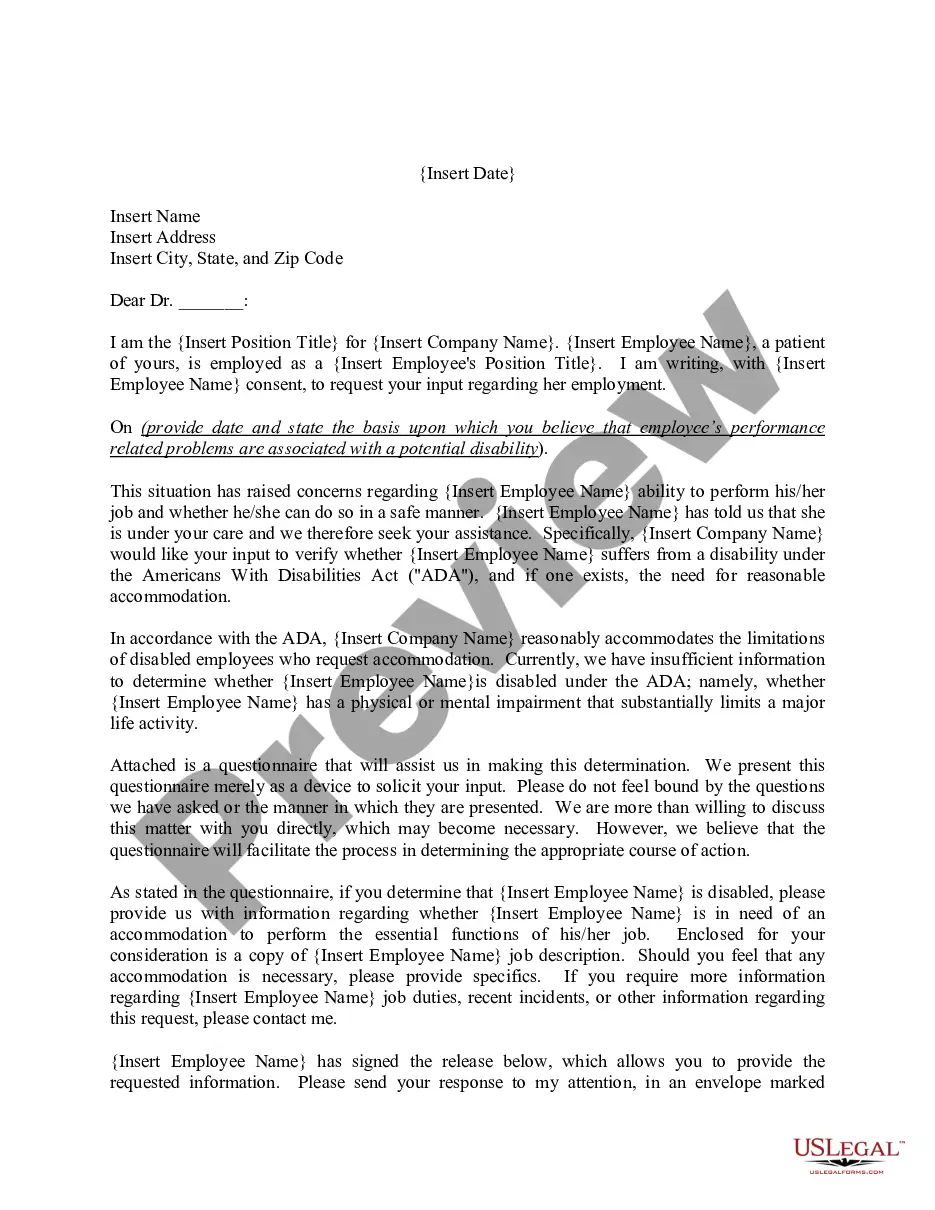
This form serves as a Letter from Tenant to Landlord for failure to comply with building codes affecting health and safety or resulting in untenantable conditions. It is a formal demand letter requesting necessary repairs to ensure that the leased premises are safe and compliant with local building codes. This document is important because it establishes a written record of the tenant's request and the landlord's obligation to address serious safety issues.
What’s included in this form
- Tenant's contact information to establish identity.
- Landlordâs contact details to ensure proper communication.
- Specific description of the health and safety issues needing remedy.
- Demands for action that include a specified timeline for repairs.
- Signature line and date to formalize the communication.

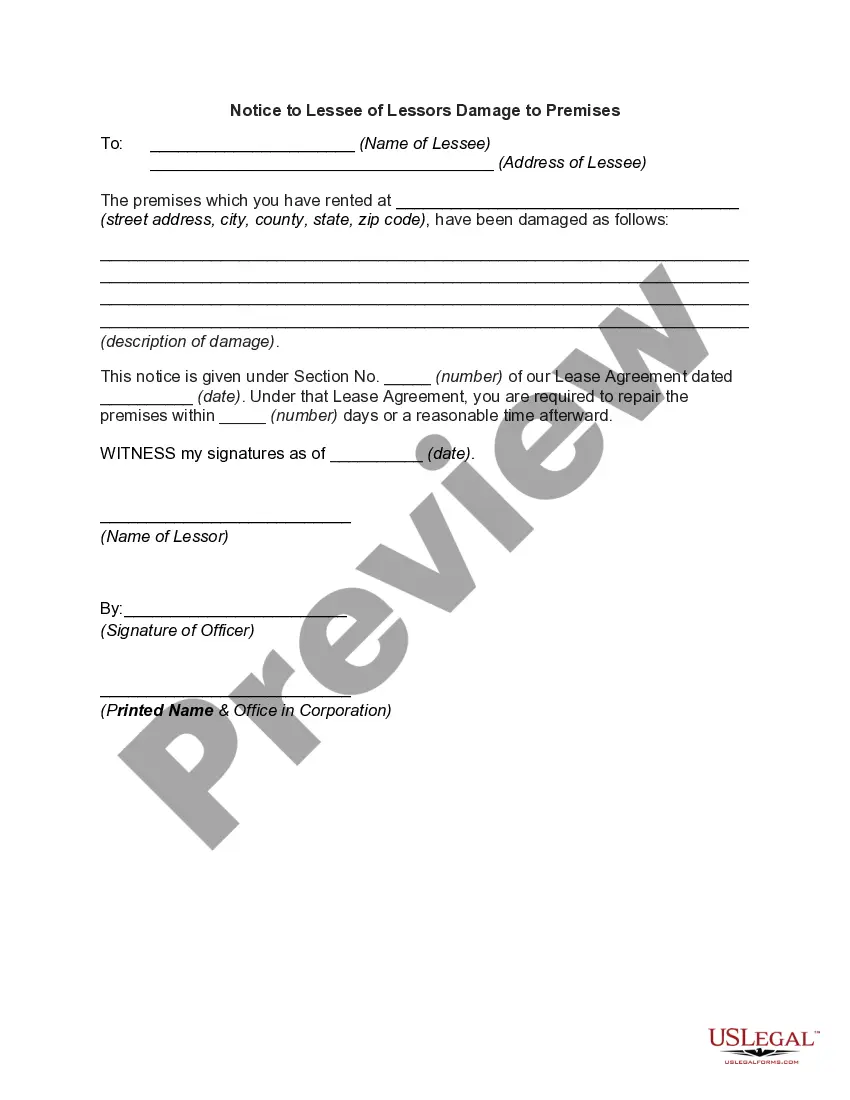
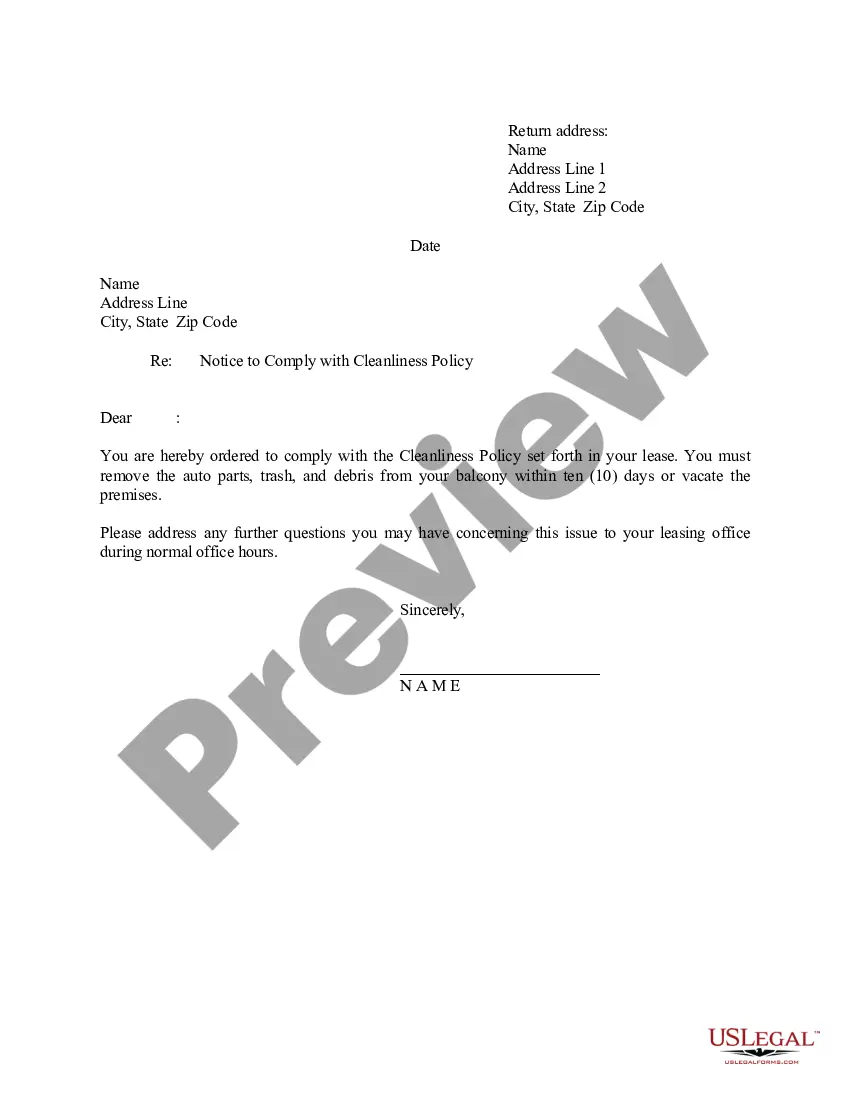

When to use this form
This form should be used when a tenant identifies health and safety violations in their rented property that the landlord has not addressed. It is applicable in situations where the living conditions have become untenantable due to issues such as broken windows, doors, or leaking roofs. When a landlord fails to respond to verbal complaints, this demand letter is a necessary step to prompt action within a reasonable time frame.
Who this form is for
- Tenants experiencing health and safety issues in their rental property.
- Individuals seeking to formally document their complaints to a landlord.
- Renters wanting to ensure compliance with building codes and safe living conditions.
Completing this form step by step
- Identify the parties involved by providing the tenant's and landlord's names and contact information.
- Clearly describe the specific health or safety issues that need to be addressed.
- State the timeframe for repairs, typically within ten days.
- Sign and date the letter to formalize your demand.
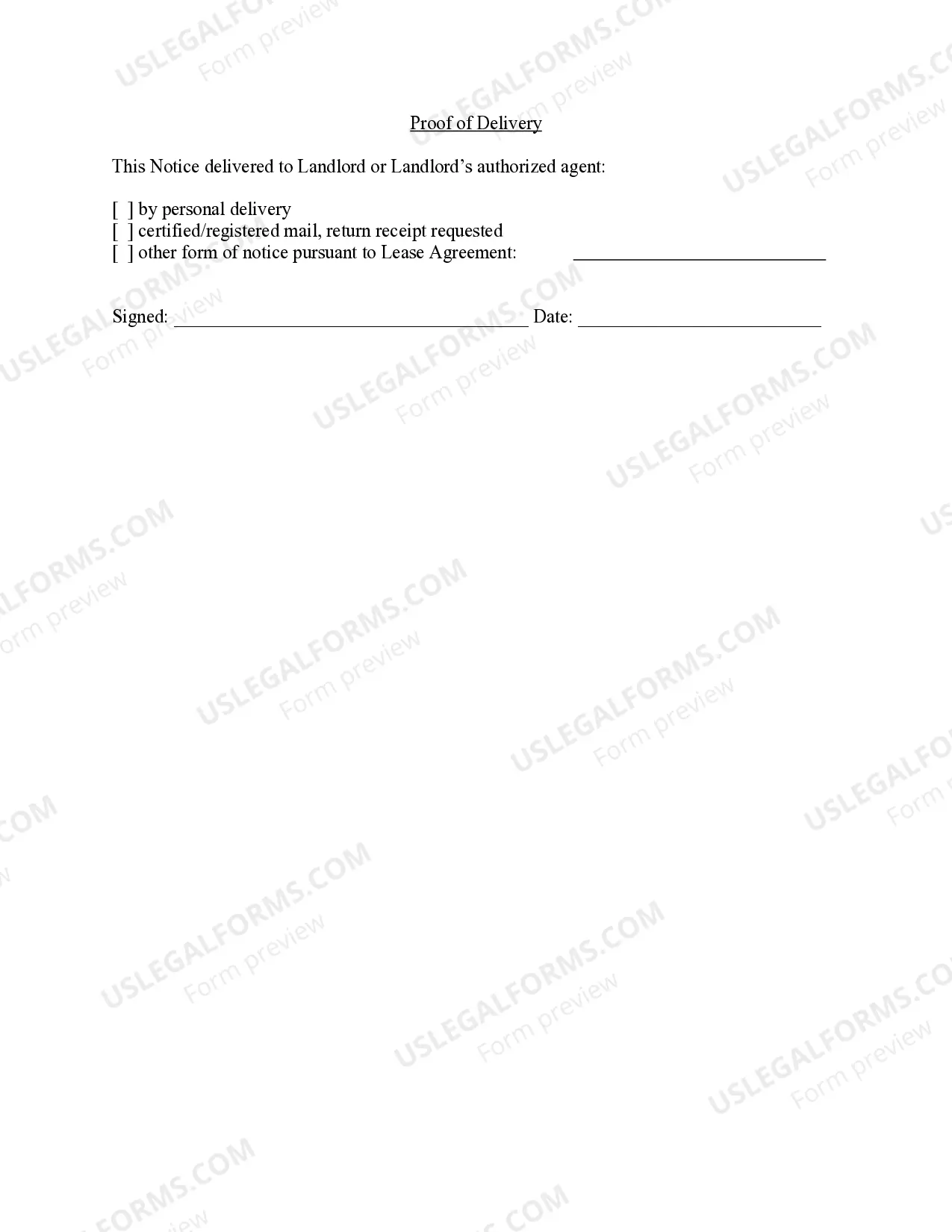
- Deliver the notice directly to the landlord or their authorized agent.
Does this form need to be notarized?
This form does not typically require notarization unless specified by local law. Ensure to check any additional requirements in your jurisdiction.
Get your form ready online
Our built-in tools help you complete, sign, share, and store your documents in one place.
Make edits, fill in missing information, and update formatting in US Legal Forms—just like you would in MS Word.
Download a copy, print it, send it by email, or mail it via USPS—whatever works best for your next step.
Sign and collect signatures with our SignNow integration. Send to multiple recipients, set reminders, and more. Go Premium to unlock E-Sign.
If this form requires notarization, complete it online through a secure video call—no need to meet a notary in person or wait for an appointment.
We protect your documents and personal data by following strict security and privacy standards.

Make edits, fill in missing information, and update formatting in US Legal Forms—just like you would in MS Word.

Download a copy, print it, send it by email, or mail it via USPS—whatever works best for your next step.

Sign and collect signatures with our SignNow integration. Send to multiple recipients, set reminders, and more. Go Premium to unlock E-Sign.

If this form requires notarization, complete it online through a secure video call—no need to meet a notary in person or wait for an appointment.

We protect your documents and personal data by following strict security and privacy standards.
Typical mistakes to avoid
- Failing to provide a clear and detailed description of the issues.
- Not specifying the required timeline for compliance.
- Sending the letter without proper delivery proof to confirm receipt.
Benefits of using this form online
- Easy access to professionally drafted legal forms tailored to your state.
- Immediate download allows for quick action on urgent issues.
- Customizable fields ensure the letter fits your unique situation.
Looking for another form?
Form popularity
FAQ
Delaware Code 5502 establishes the legal framework for tenant rights in rental agreements. This code emphasizes the necessities of maintaining safe and healthy living environments for tenants. If you are facing issues where your landlord is not adhering to these laws, sending a Delaware Letter from Tenant to Landlord for Failure of Landlord to comply with building codes affecting health and safety or resulting in untenantable condition - demand for remedy can help assert your rights and initiate corrective action.
Tenant code 5502 in Delaware outlines specific rights and responsibilities for both landlords and tenants regarding the condition of rental properties. This code helps to ensure that tenants receive proper housing that meets health and safety standards. If you believe your landlord is failing to meet these standards, you may find it useful to craft a Delaware Letter from Tenant to Landlord for Failure of Landlord to comply with building codes affecting health and safety or resulting in untenantable condition - demand for remedy, which is aligned with the regulations under this code.
In Delaware, a landlord cannot harass tenants, change locks without notice, or retaliate against tenants for asserting their rights. Moreover, landlords must comply with local building codes affecting health and safety. If you find yourself in a situation where your landlord is violating these rights, consider using a Delaware Letter from Tenant to Landlord for Failure of Landlord to comply with building codes affecting health and safety or resulting in untenantable condition - demand for remedy, ensuring your grievances are documented officially.
To report a landlord in Delaware, you should first gather evidence that supports your claim regarding code violations. You can file a complaint with the Delaware Division of Public Health or your local housing authority. It may also be beneficial to draft a Delaware Letter from Tenant to Landlord for Failure of Landlord to comply with building codes affecting health and safety or resulting in untenantable condition - demand for remedy. This letter can formally communicate your concerns and request necessary action from your landlord.
Section 5106 of the Delaware landlord-tenant code outlines the rules governing deposits and advance rent payments. It stipulates the conditions under which these funds can be retained and must be returned. If disputes arise regarding deposits and these circumstances relate to health and safety code violations, a Delaware Letter from Tenant to Landlord for Failure of Landlord to comply with building codes affecting health and safety or resulting in untenantable condition - demand for remedy may help effectively navigate the situation.
A landlord in Delaware may increase rent based on the lease agreement terms and any local laws or regulations applicable. While there is no specific cap on the increase, reasonable notice is required prior to the change. If the increase coincides with unaddressed health and safety violations, consider utilizing a Delaware Letter from Tenant to Landlord for Failure of Landlord to comply with building codes affecting health and safety or resulting in untenantable condition - demand for remedy as a strategic response.
Delaware does not have a statewide limit on rent increases, allowing landlords to set their own increase amounts, within reason. However, landlords must provide adequate notice per the lease terms or state laws. If a rent increase is due to neglect in maintaining health and safety standards, tenants may respond with a Delaware Letter from Tenant to Landlord for Failure of Landlord to comply with building codes affecting health and safety or resulting in untenantable condition - demand for remedy.
Section 5314 of the Delaware Residential Landlord Tenant Code specifically discusses the landlord's obligations to maintain the rental property in a livable condition. It establishes standards for safety and repair, which landlords must meet. If these obligations are not met, consider issuing a Delaware Letter from Tenant to Landlord for Failure of Landlord to comply with building codes affecting health and safety or resulting in untenantable condition - demand for remedy to seek the necessary corrections.
To break your lease without facing penalties, you need to identify valid reasons, such as a lack of compliance with health and safety codes by your landlord. Document any issues and directly communicate them using a Delaware Letter from Tenant to Landlord for Failure of Landlord to comply with building codes affecting health and safety or resulting in untenantable condition - demand for remedy. This formal demand can strengthen your position and protect you legally.
Section 5513 of the Delaware Landlord Tenant Code outlines the rights and responsibilities of both landlords and tenants, particularly regarding maintenance obligations. This section ensures that landlords provide a habitable living environment. If your landlord neglects these responsibilities, you can utilize a Delaware Letter from Tenant to Landlord for Failure of Landlord to comply with building codes affecting health and safety or resulting in untenantable condition - demand for remedy to formally address the issue.