Delaware Release of Mechanic's Lien - Corporation
Overview of this form
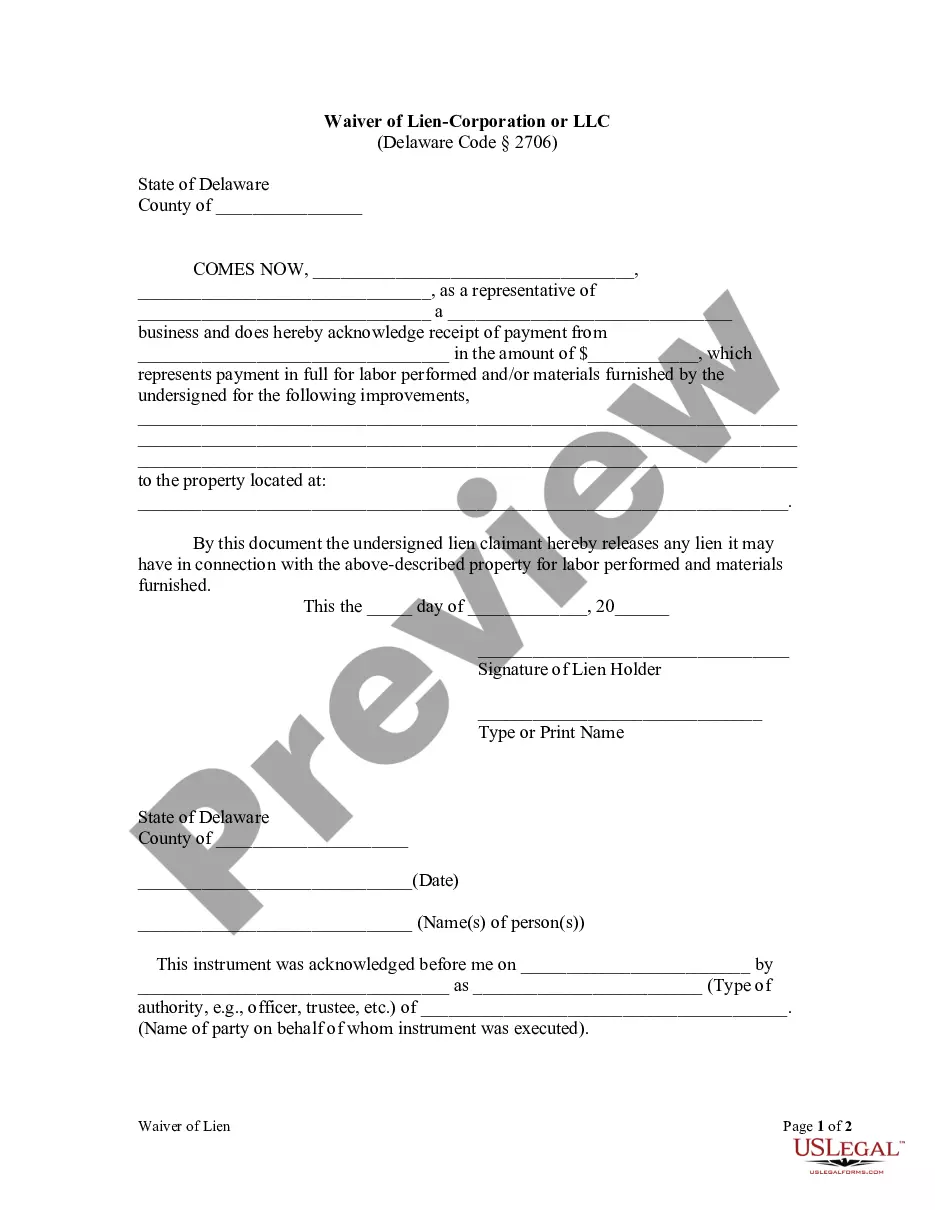
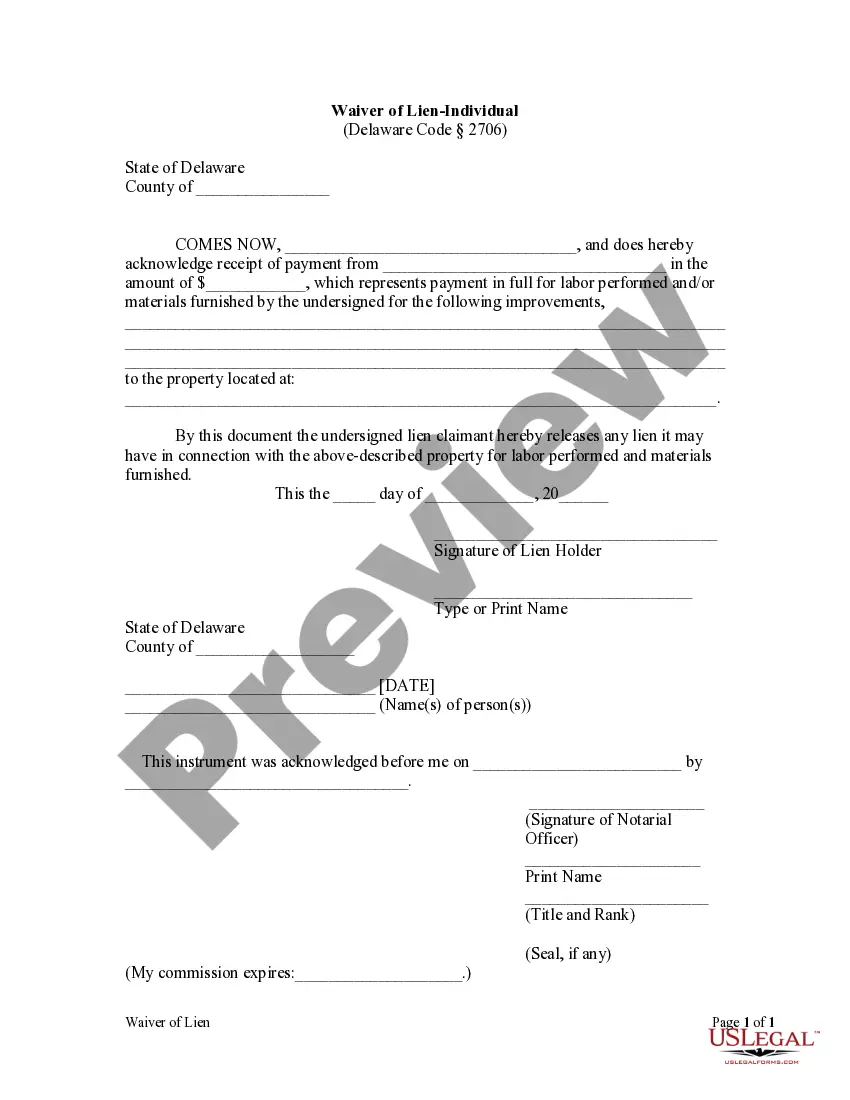
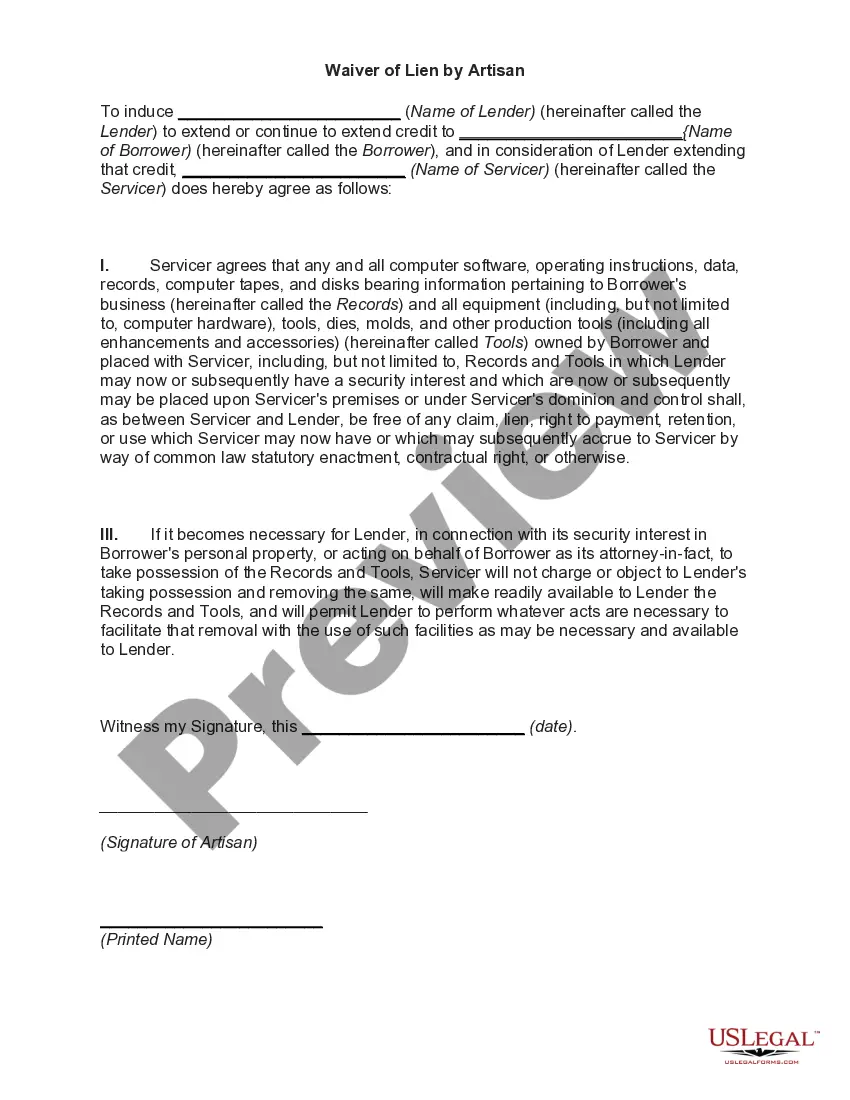
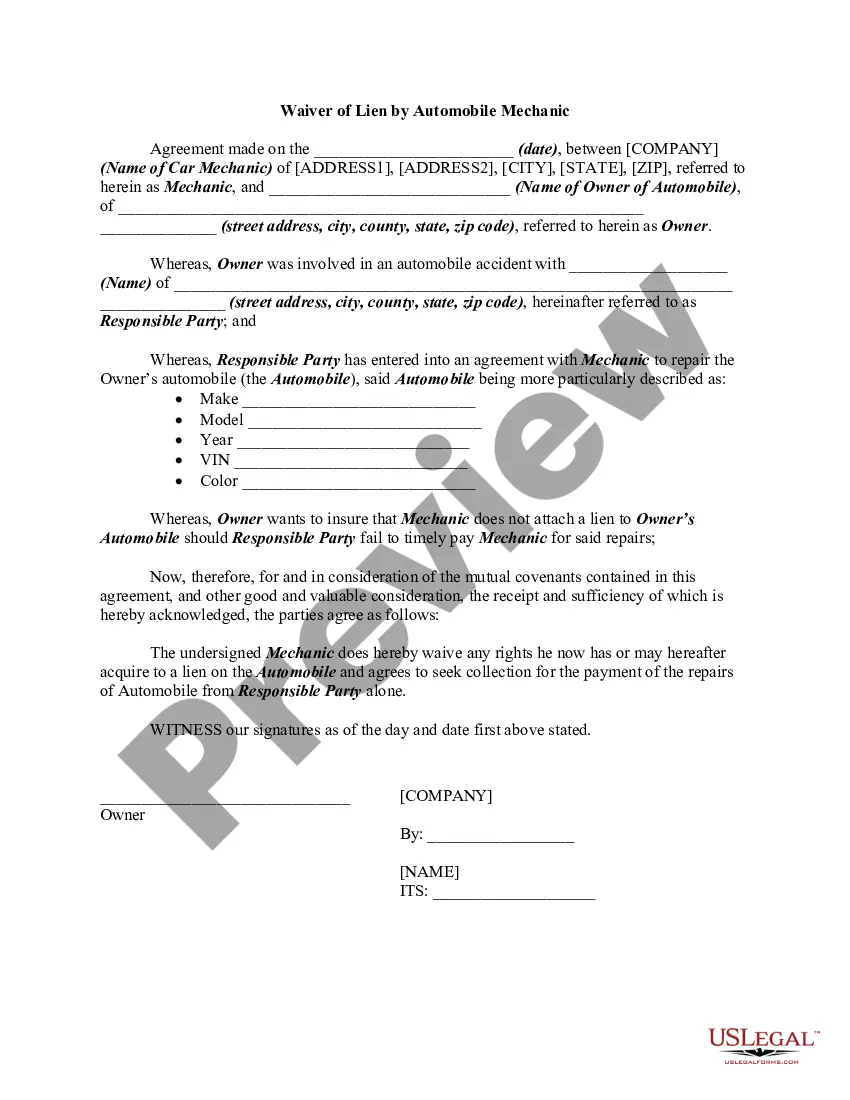
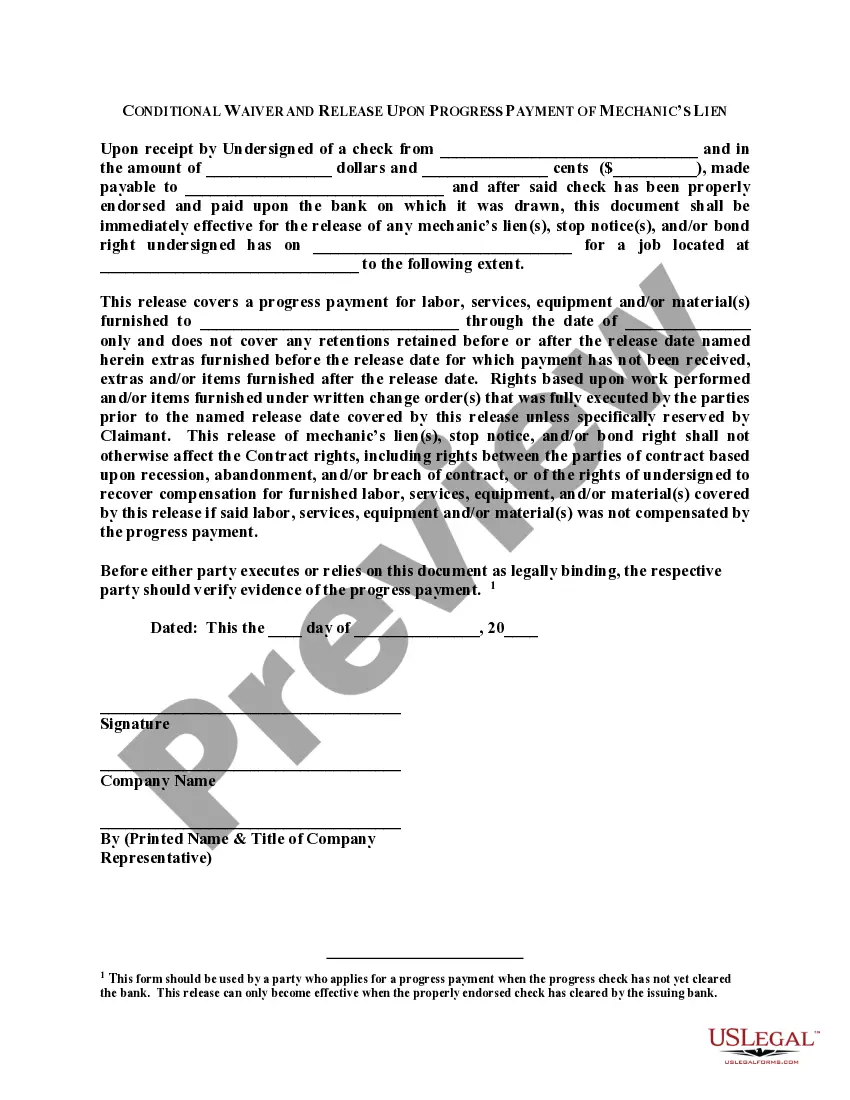
The Release of Mechanic's Lien - Corporation is a legal document used by corporate contractors to formally notify property owners that all parties involved in a construction project have been compensated for their labor and materials. This release ensures that the contractor and any subcontractors waive their rights to file a lien against the property for the specified work. This form is essential for protecting property owners from future claims related to unpaid services once they have made full payment for the completed project.
Key components of this form
- Details of the contractor and their corporation.
- Information about the property where the improvements were made.
- Statement acknowledging receipt of payment from the property owner.
- Release of any lien rights associated with the property.
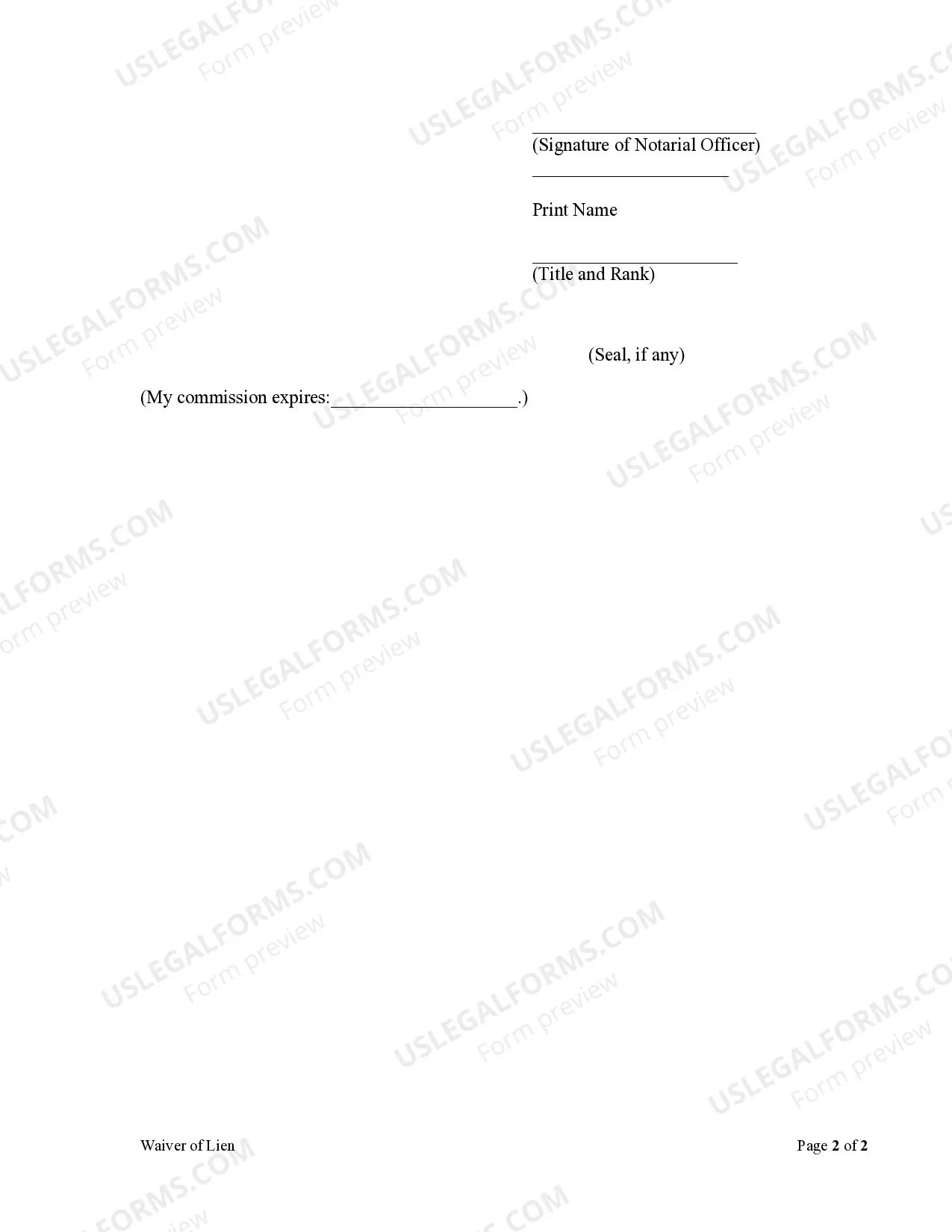
- Notary acknowledgment to validate the document.
Common use cases
This form should be used when a corporate contractor has completed a project and has received full payment for their services and materials. It is typically required at the end of construction projects to ensure that property owners are not held liable for future lien claims by subcontractors or suppliers after payment is made. Additionally, this form can be crucial in maintaining good relationships between contractors and property owners, ensuring all financial obligations are clear and settled.
Who this form is for
- Corporate contractors who have completed work on a property.
- Property owners who have paid their contractors in full.
- Subcontractors or suppliers needing to confirm their lien rights are waived.
How to prepare this document
- Identify all parties involved, including the contractor and property owner.
- Specify the total amount paid for the work performed and materials used.
- Describe the improvements made to the property in detail.
- Enter the date of completion and signatures of the involved parties.
- Have the document notarized to validate its legality.
Does this document require notarization?
Yes, this form must be notarized to be legally valid. The notarization process ensures that the signatures on the document are verified and provides additional protection for all parties involved. US Legal Forms offers integrated online notarization services that are available 24/7 through secure video calls, allowing for efficient and legally recognized notarization without the need for travel.
Get your form ready online
Our built-in tools help you complete, sign, share, and store your documents in one place.
Make edits, fill in missing information, and update formatting in US Legal Forms—just like you would in MS Word.
Download a copy, print it, send it by email, or mail it via USPS—whatever works best for your next step.
Sign and collect signatures with our SignNow integration. Send to multiple recipients, set reminders, and more. Go Premium to unlock E-Sign.
If this form requires notarization, complete it online through a secure video call—no need to meet a notary in person or wait for an appointment.
We protect your documents and personal data by following strict security and privacy standards.

Make edits, fill in missing information, and update formatting in US Legal Forms—just like you would in MS Word.

Download a copy, print it, send it by email, or mail it via USPS—whatever works best for your next step.

Sign and collect signatures with our SignNow integration. Send to multiple recipients, set reminders, and more. Go Premium to unlock E-Sign.

If this form requires notarization, complete it online through a secure video call—no need to meet a notary in person or wait for an appointment.

We protect your documents and personal data by following strict security and privacy standards.
Mistakes to watch out for
- Failing to include all necessary parties in the contract.
- Not providing a clear description of the work completed.
- Neglecting to have the document notarized.
- Leaving out important dates or signatures, which can render the form invalid.
Why use this form online
- Convenient access to download and fill out the form at any time.
- Editable document allows for customized input to fit specific project needs.
- Reliable source, ensuring the form is drafted in compliance with legal standards.
Legal use & context
- This form serves as a formal acknowledgment that the obligations concerning payments have been met.
- Failure to file this release may result in legal claims against the property owner.
- It supports the protection of the contractorâs license by ensuring compliance with state law.
What to keep in mind
- The Release of Mechanic's Lien provides essential protection for property owners and contractors alike.
- Timely use of this form can prevent future legal issues regarding unpaid services.
- Ensure all details are completed accurately to maintain the document's validity.
Looking for another form?

Form popularity
FAQ
Avoid harassing the people that owe you money. Keep phone calls short. Write letters. Get a collection agency to write demand letters. Offer to settle for less than is due. Hire a collection agency. Small claims court. File a lawsuit.
It basically states that you've paid the subcontractor what is owed, they accept the payment in full, and they waive the right to put a lien on your property. Simply present this form to the subcontractor with your payment and ask them to sign it. Make sure you get their signature!
When your efforts to collect a bill from a business that owes you money have been unsuccessful, you can place a lien on the assets of the business. As a lienholder, you gain legal rights to the company's property and the authority to sell the property and use the proceeds to repay what is owed to you.
11) immediately dispute the lien (whether through statutorily provided preliminary means, a demand to/against the claimant, or a full-blown lawsuit)22) force the claimant to file suit to enforce the lien in a shorter period (if available in your state)33) just wait it out.
A federal tax lien is the government's legal claim against your business assets. The IRS will file a lien, and this happens as a result of tax debt not being paid.By filing a lien, the IRS is marking your business assets bank accounts, building, land, etc.
Generally, this requires the assistance of a lawyer. The homeowner may petition the courts under Civil Code Section 8480 in California to remove the mechanic's lien when it is not timely issued or recorded. A lawsuit is usually necessary to file it against the owner by the contractor or subcontractor.
The main purpose of a lien waiver is to provide protection to the paying party. In exchange for such payment, the lien waiver waives the payee's right to file a lien for the exact value of the payment they have received.
1Formalize a defense for disputing the amount of the lien.2Gather supporting documentation for your rebuttal, depending on the type of lien.3Contact the agent representing the creditor to dispute the amount of the claim.4Negotiate a payment settlement with the creditor if you cannot pay the amount you owe in full.
To enforce the lien, the contractor must file a lawsuit within 90 days from the date of recording the lien. If this deadline is passed, the contractor may not be able to enforce the lien and may be required to remove the lien.