Delaware Quitclaim Deed from Corporation to Two Individuals
What is this form?
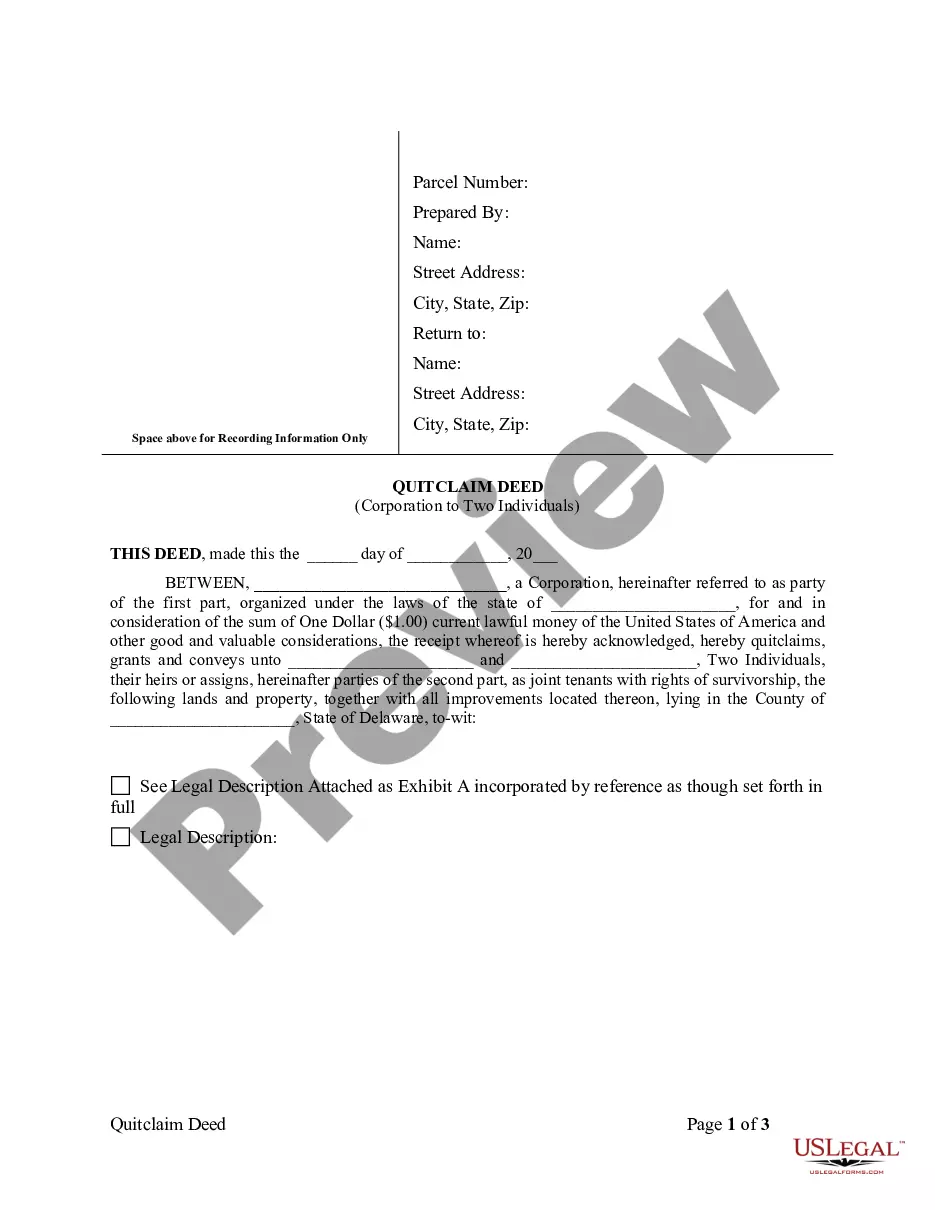
The Quitclaim Deed from Corporation to Two Individuals is a legal document that allows a corporation (the grantor) to transfer its property rights to two individuals (the grantees). Unlike a warranty deed, which guarantees that the grantor has a clear title to the property, a quitclaim deed simply conveys whatever interest the grantor has, with no warranties included. This form is specifically designed for situations where a corporation transfers property to joint individuals, while reserving certain mineral rights and adhering to state laws.
Key parts of this document
- Identification of the grantor and grantees, including names and addresses.
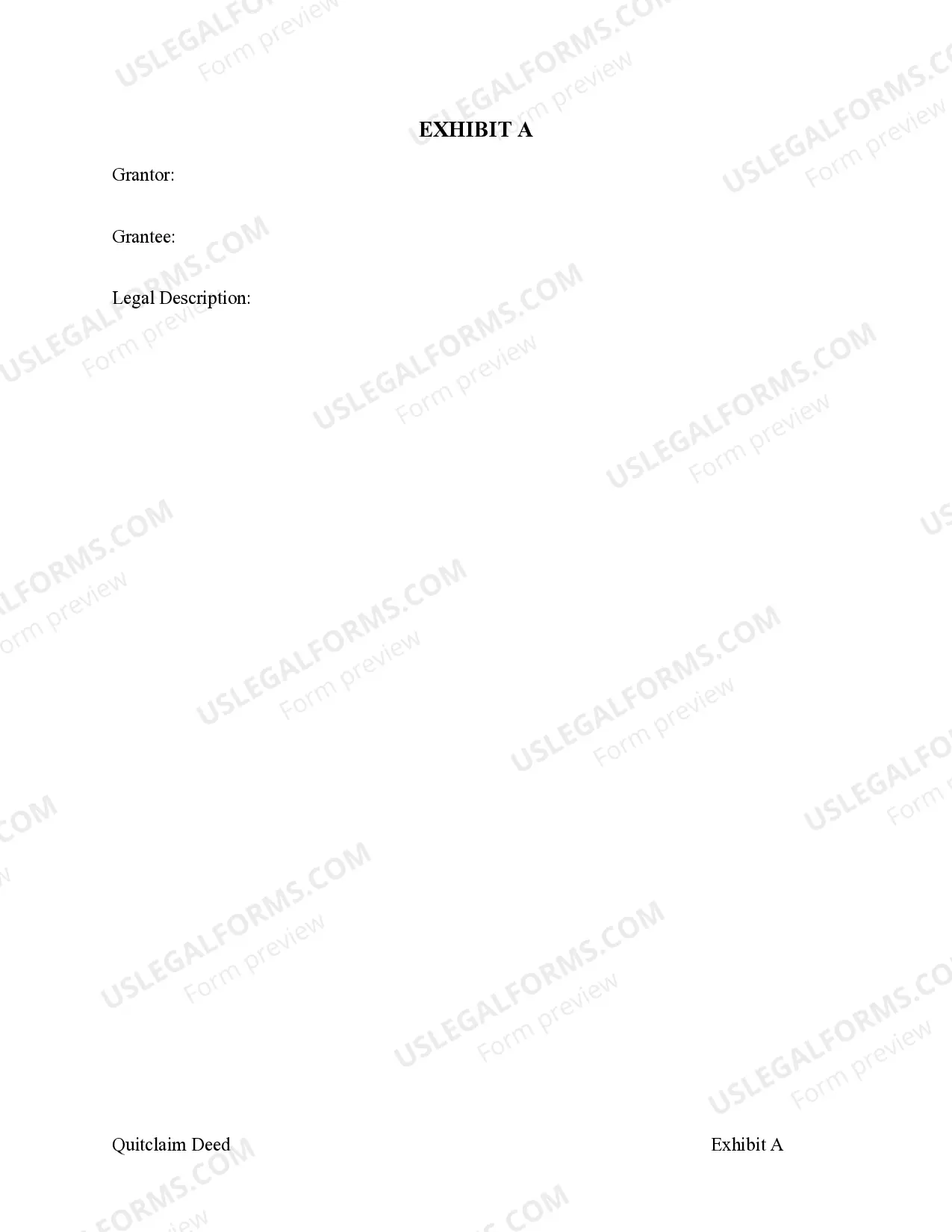
- A legal description of the property being transferred, typically attached as an exhibit.
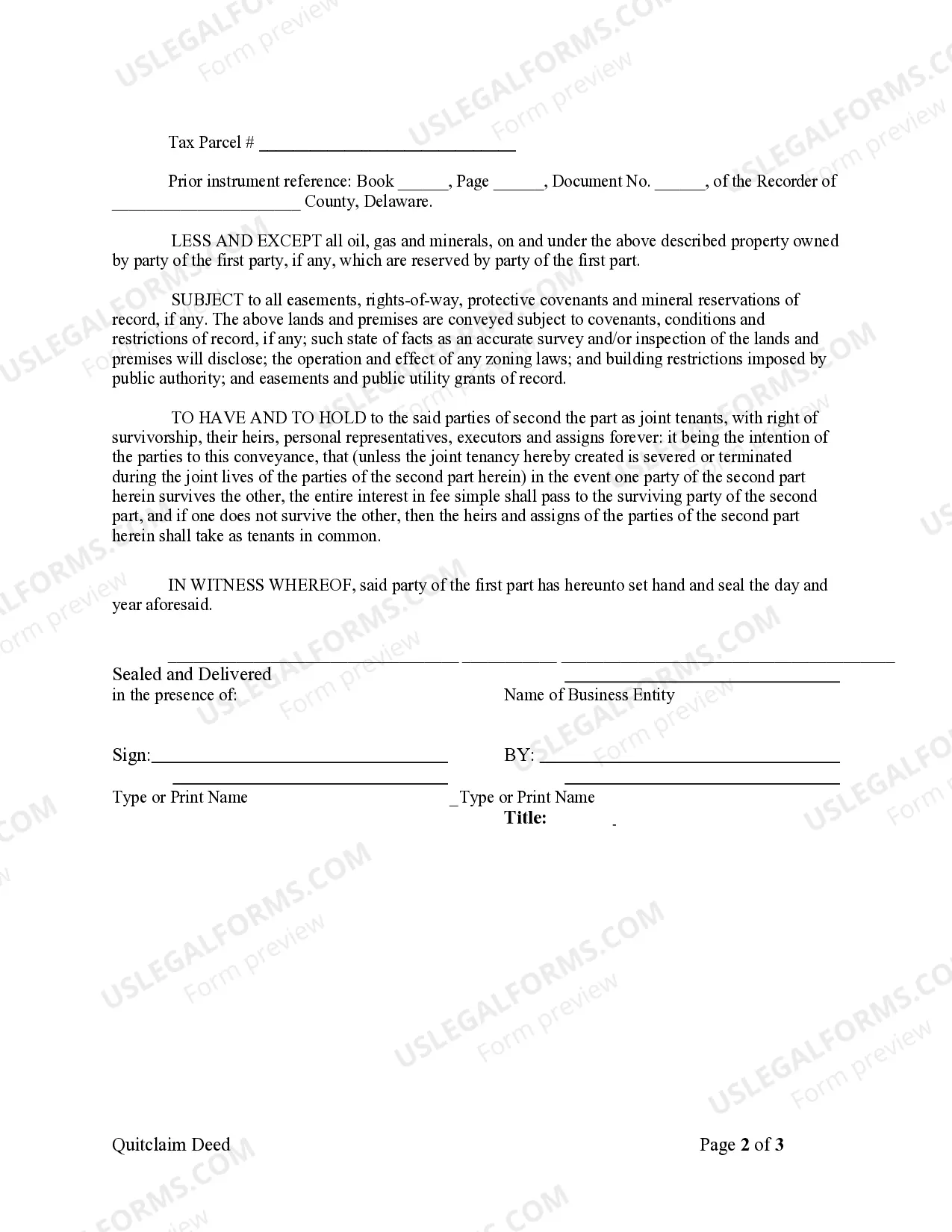
- Reservation of rights to oil, gas, and minerals by the grantor.
- Joint tenancy provisions for the grantees, ensuring rights of survivorship.
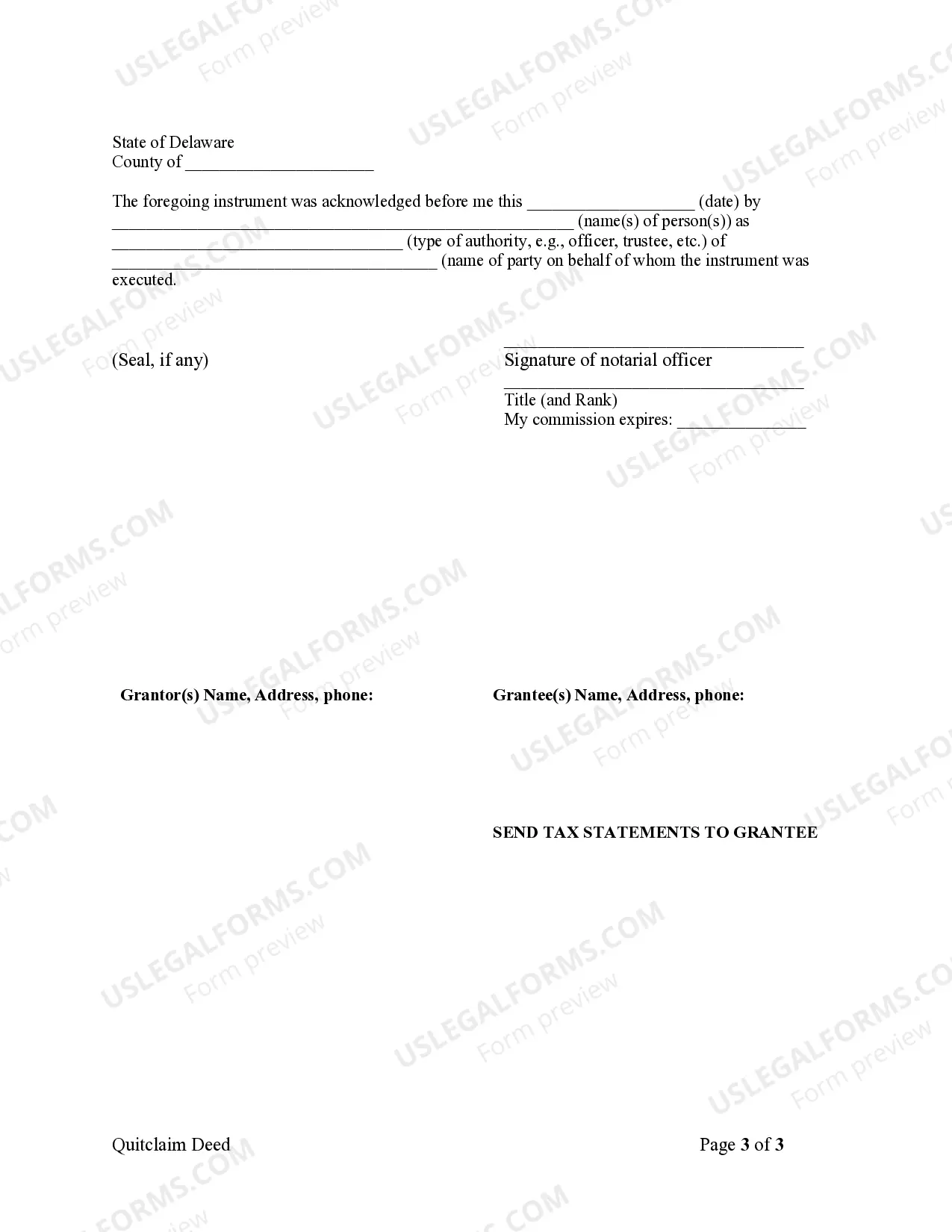
- Signatures of the grantor and a notary public for validation.



When to use this document
This form is appropriate when a corporation is transferring property ownership to two individuals, such as in cases of family property transfers, estate planning, or joint investments. It's often utilized in situations where the corporation is divesting property without providing guarantees about the title quality and when the intention is to establish joint ownership with survivorship rights.
Intended users of this form
- Corporations looking to transfer property ownership to individuals.
- Individuals receiving property from a corporation in a joint tenancy arrangement.
- Estate planners managing family property transfers.
- Real estate professionals facilitating transactions involving corporate property transfers.
Steps to complete this form
- Identify the parties involved: enter the full name and address of the corporation as the grantor, and the names and addresses of the two individuals as grantees.
- Specify the property: include a detailed legal description of the property being transferred, typically as an attachment (Exhibit A).
- Note reserved rights: indicate that all oil, gas, and mineral rights are reserved by the grantor.
- Include terms of joint tenancy: clarify how the property will be held and the rights of survivorship for the grantees.
- Sign and date the document: ensure all parties provide their signatures in the presence of a notary public.
Is notarization required?
This form must be notarized to be legally valid. US Legal Forms provides secure online notarization powered by Notarize, allowing you to complete the process through a verified video call.
Get your form ready online
Our built-in tools help you complete, sign, share, and store your documents in one place.
Make edits, fill in missing information, and update formatting in US Legal Forms—just like you would in MS Word.
Download a copy, print it, send it by email, or mail it via USPS—whatever works best for your next step.
Sign and collect signatures with our SignNow integration. Send to multiple recipients, set reminders, and more. Go Premium to unlock E-Sign.
If this form requires notarization, complete it online through a secure video call—no need to meet a notary in person or wait for an appointment.
We protect your documents and personal data by following strict security and privacy standards.

Make edits, fill in missing information, and update formatting in US Legal Forms—just like you would in MS Word.

Download a copy, print it, send it by email, or mail it via USPS—whatever works best for your next step.

Sign and collect signatures with our SignNow integration. Send to multiple recipients, set reminders, and more. Go Premium to unlock E-Sign.

If this form requires notarization, complete it online through a secure video call—no need to meet a notary in person or wait for an appointment.

We protect your documents and personal data by following strict security and privacy standards.
Mistakes to watch out for
- Failing to include a complete legal description of the property.
- Omitting the required signatures or not notarizing the document.
- Not clearly stating the reserved rights for oil, gas, and minerals.
- Misunderstanding the implications of joint tenancy versus tenants in common.
Advantages of online completion
- Convenience of immediately downloading and customizing the form to suit individual needs.
- Easy access to legal templates drafted by licensed attorneys.
- Ability to edit the form as needed, ensuring it meets specific requirements.
- Secure online platform to manage and store legal documents.
Looking for another form?



Form popularity
FAQ
Yes, a title company can assist in preparing a quitclaim deed. When you want a Delaware Quitclaim Deed from Corporation to Two Individuals, a title company often has the expertise to ensure all legal requirements are met. They can guide you through the process, provide necessary forms, and help with recording the deed in your county. This support can simplify your property transfer and provide peace of mind.
To add someone to your deed in Delaware, you will need to prepare a Delaware Quitclaim Deed from Corporation to Two Individuals. This document allows you to transfer property rights to the new individual. Make sure to include their name and ensure all necessary details are accurate. Once completed, you must sign the deed, have it notarized, and file it with the county recorder’s office.
While a Delaware Quitclaim Deed from Corporation to Two Individuals is straightforward, it comes with disadvantages. One downside is that it does not provide warranties, meaning the grantees have no legal recourse if issues arise with the property title. It’s also important to consider that this type of deed may not be accepted by all lenders when applying for financing.
To remove a person from a deed, you must execute a new Delaware Quitclaim Deed from Corporation to Two Individuals that specifies the change. Just like adding, this process includes completing the deed, having it notarized, and filing it with the local Recorder of Deeds. Platforms like USLegalForms provide helpful instructions to ensure that all steps are followed correctly.
In Delaware, a quitclaim deed can include multiple individuals as grantees. However, clarity is vital; ensure all names appear correctly to prevent legal complications. The Delaware Quitclaim Deed from Corporation to Two Individuals can accommodate two individuals, but you can list more if needed, just make sure to follow state regulations.
Filling out a quit claim deed requires clear and accurate information. Begin by including the property's legal description and the names of the parties involved, ensuring that it specifies 'Delaware Quitclaim Deed from Corporation to Two Individuals.' Use a reliable template from USLegalForms for guidance, as they offer user-friendly resources to simplify this process.
To add someone to a deed in Delaware, you typically need to file a Delaware Quitclaim Deed from Corporation to Two Individuals. This involves completing the deed with the names of both parties, signing it before a notary, and submitting it to the local Recorder of Deeds. For an easy process, consider using platforms like USLegalForms, which provide templates specific to Delaware.
When considering a Delaware Quitclaim Deed from Corporation to Two Individuals, it is vital to recognize potential issues. One significant problem is that a quitclaim deed does not guarantee clear title; it merely transfers whatever interest the grantor has. This lack of warranty means that if there are any liens or claims against the property, the new owners may face unexpected financial burdens. Furthermore, without thorough property research, individuals can inadvertently take on legal disputes, emphasizing the importance of using resources like USLegalForms to ensure a clean transfer.
You cannot use a Delaware Quitclaim Deed from Corporation to Two Individuals if there is a need for a clear title or assurance against liens. If parties require legal protection or a guarantee of clear ownership, a quitclaim deed is inappropriate. It's essential to understand these limitations and explore alternative deed options when necessary.
A Delaware Quitclaim Deed from Corporation to Two Individuals can effectively resolve situations involving the transfer of property ownership within a family or between friends. It can also address title corrections when there was a clerical error in previous property records. This deed simplifies the process, making it an ideal solution for straightforward transfers.