Delaware Bylaws for Corporation
What is this form?
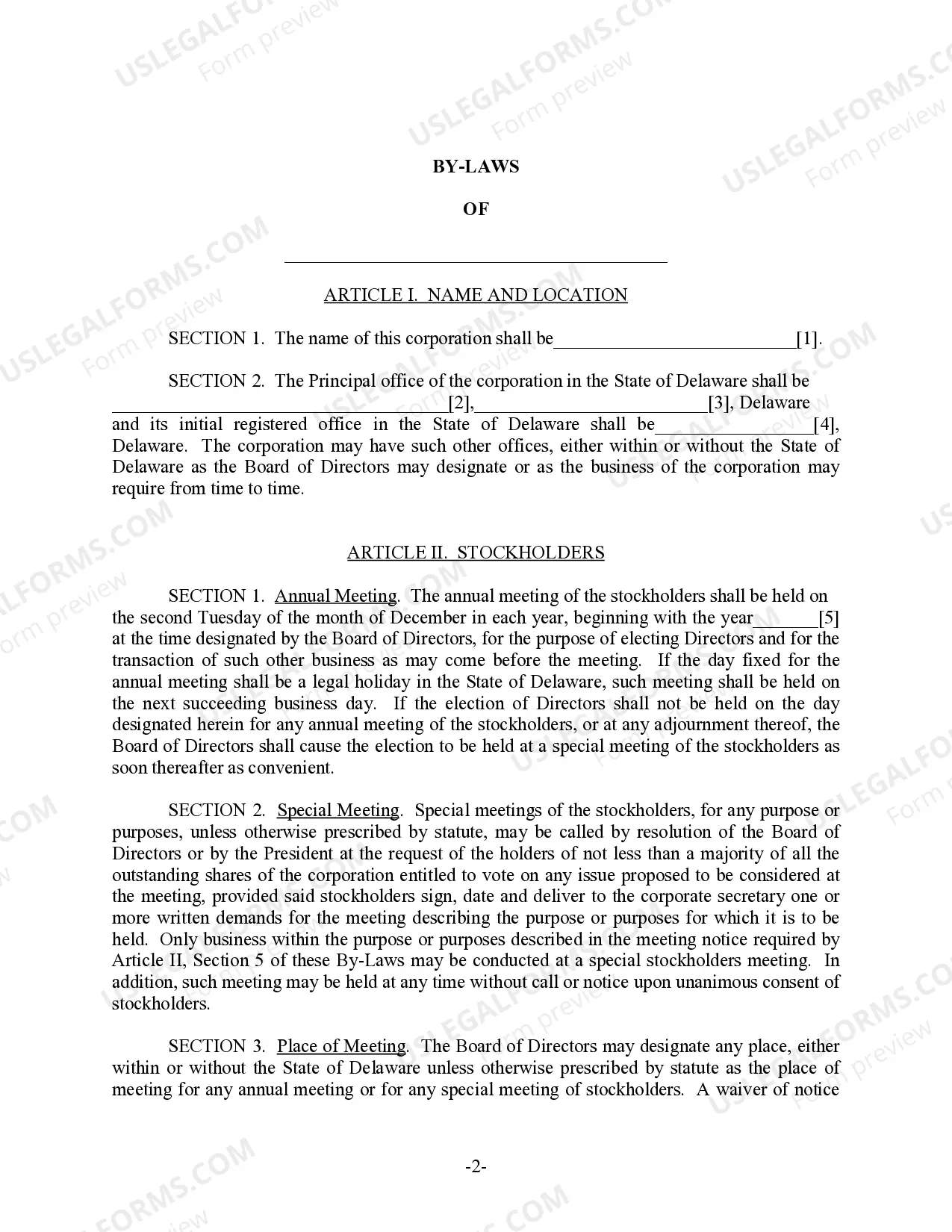
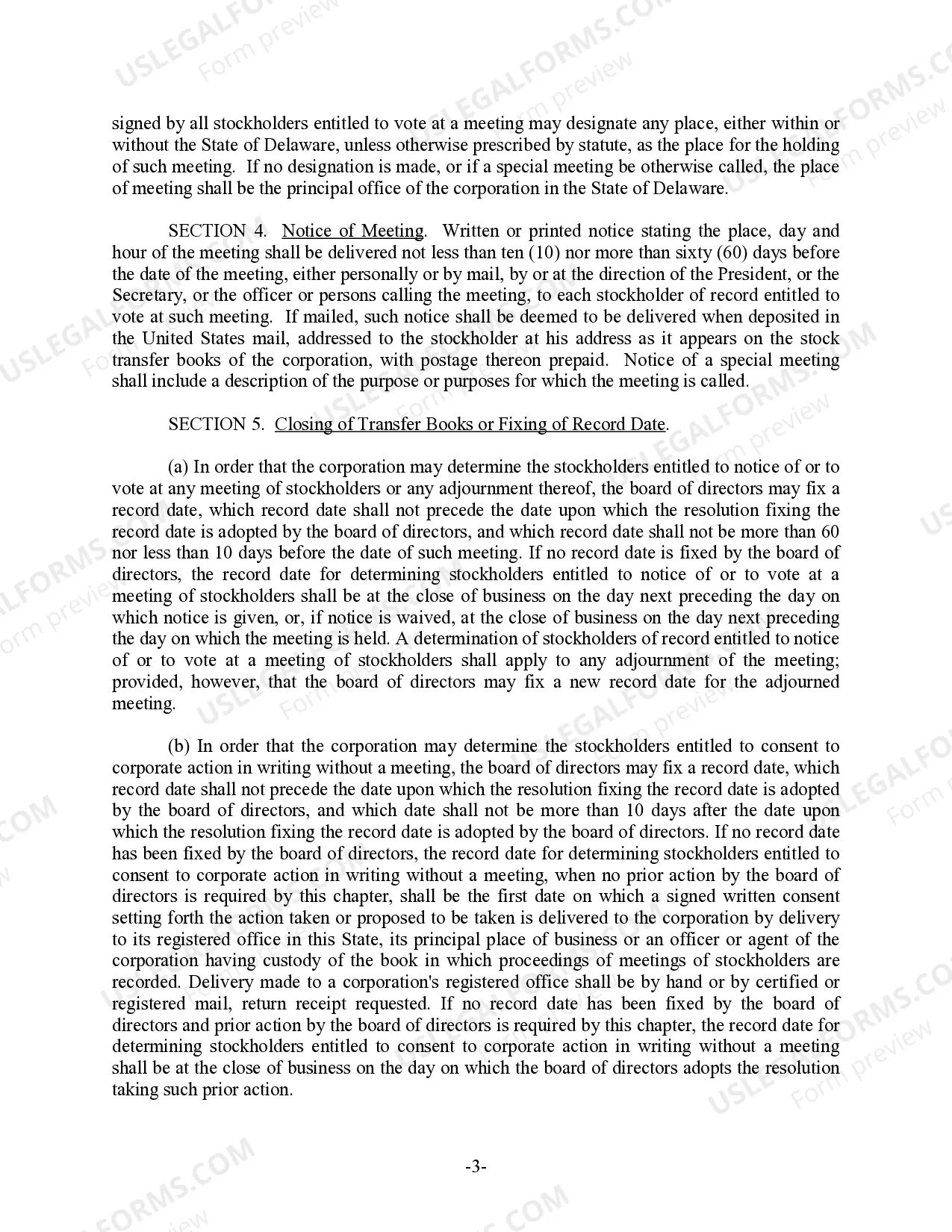
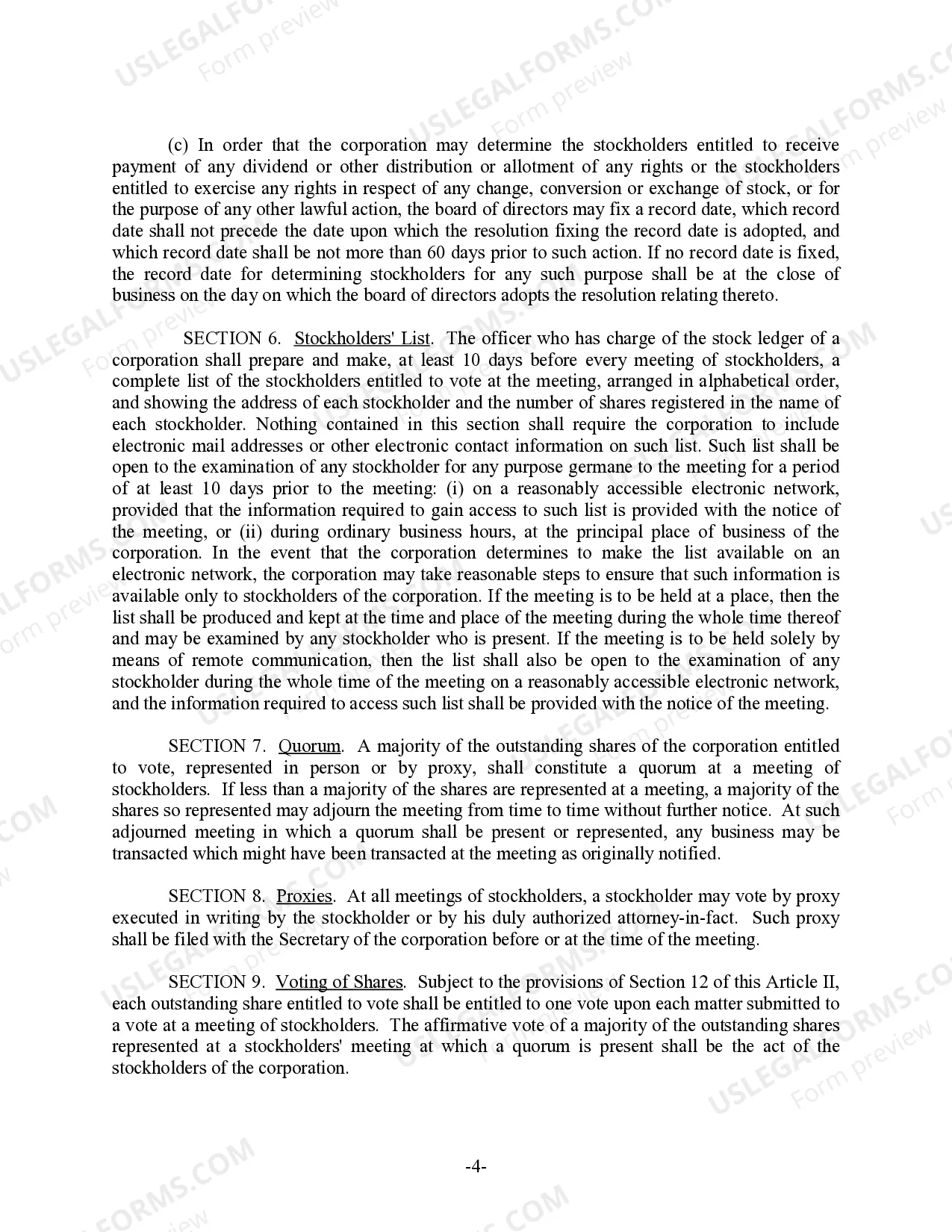
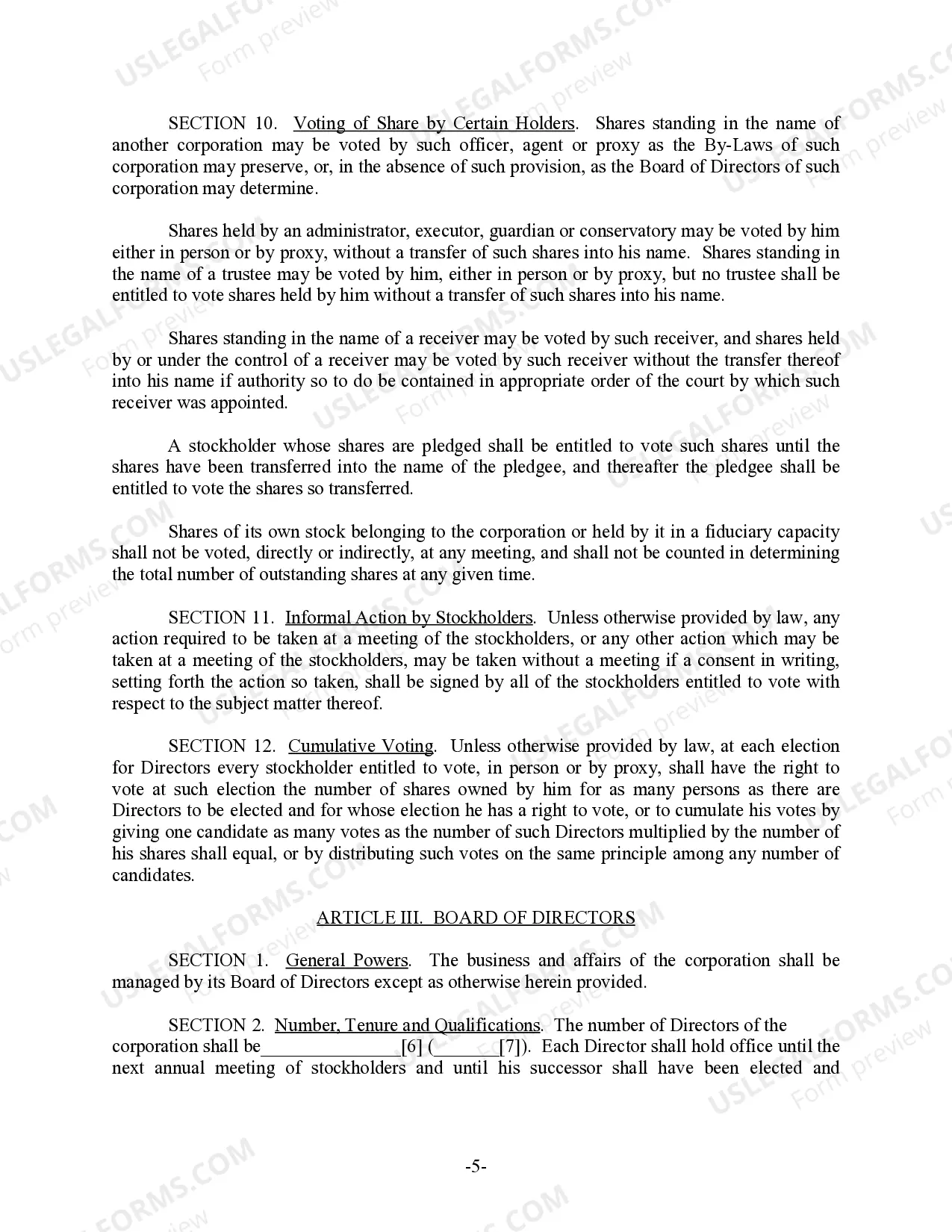
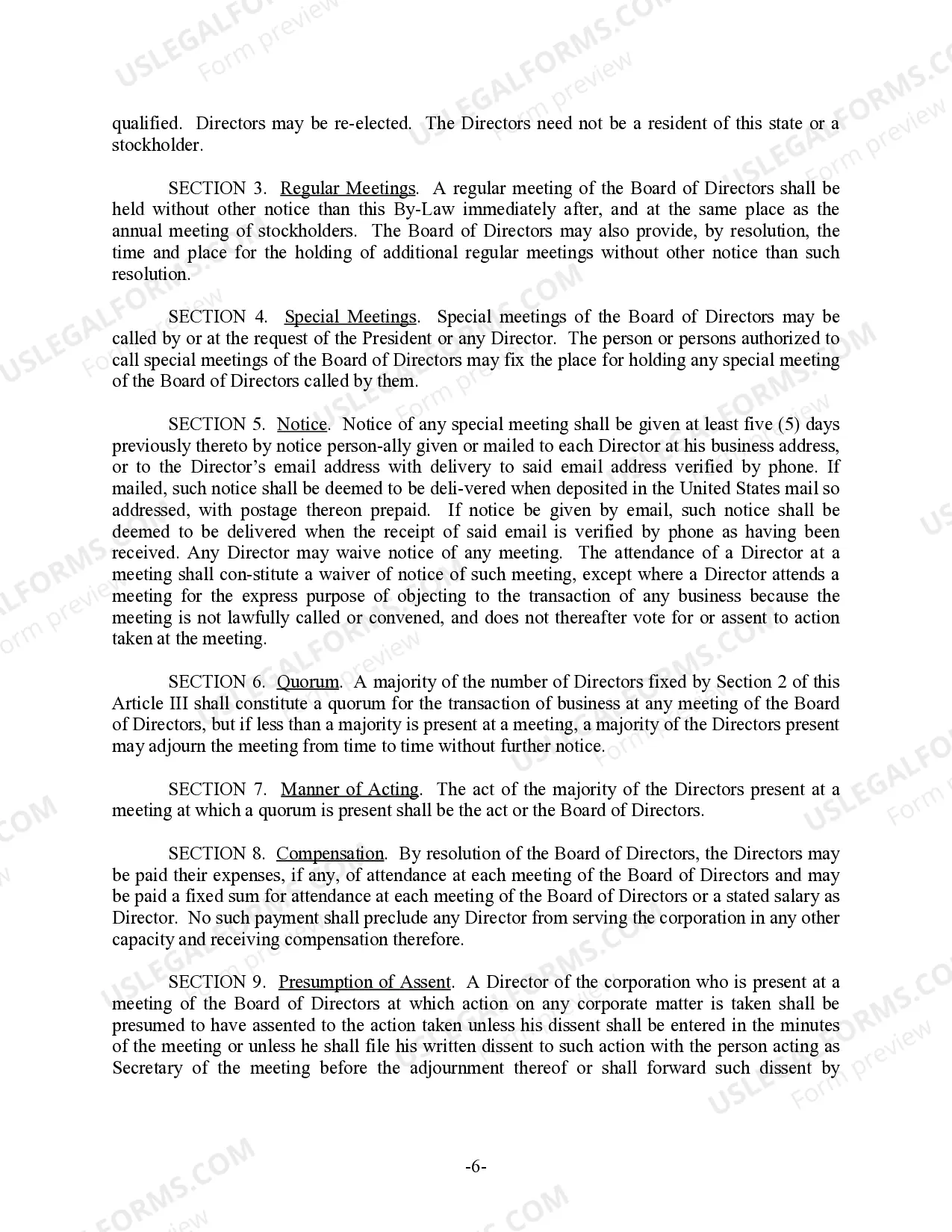
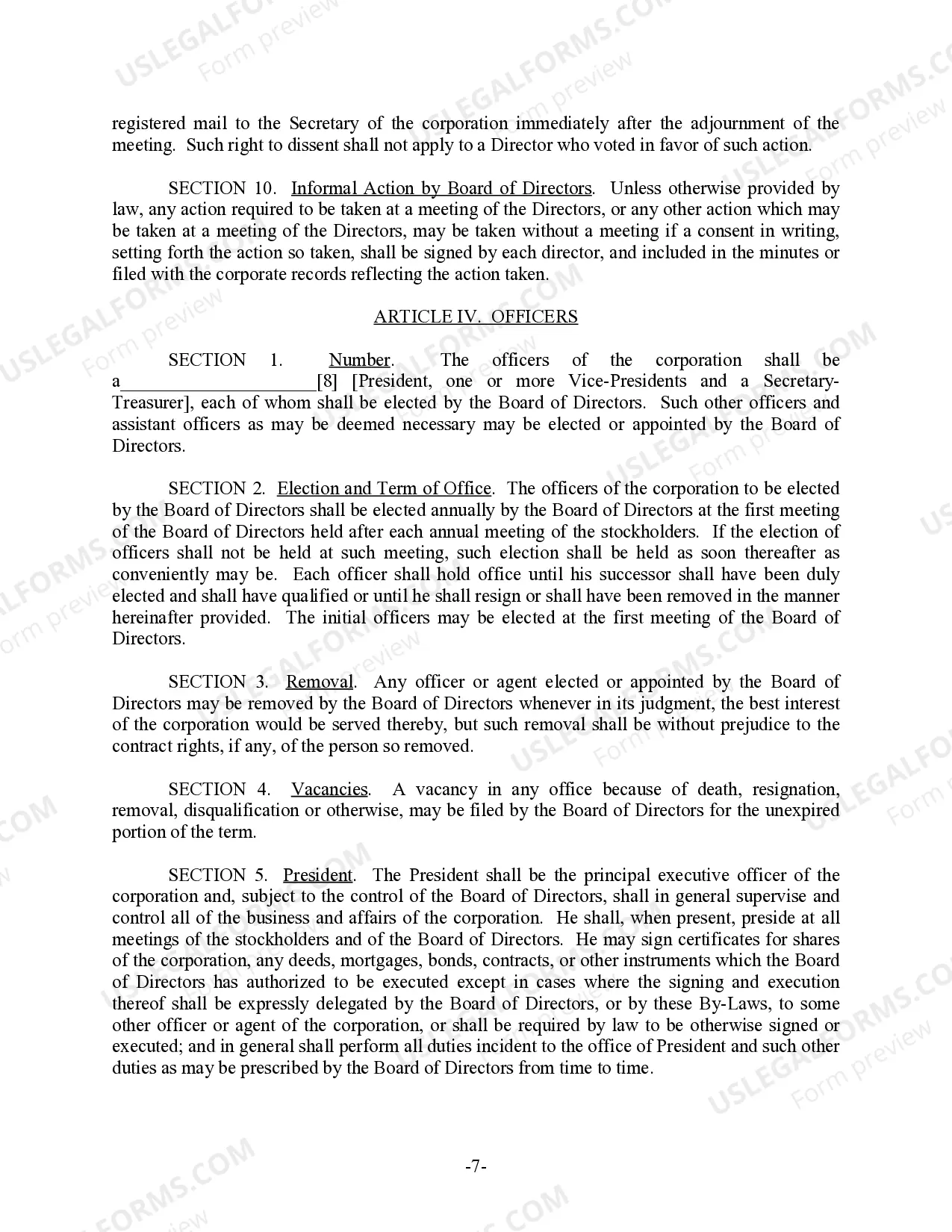
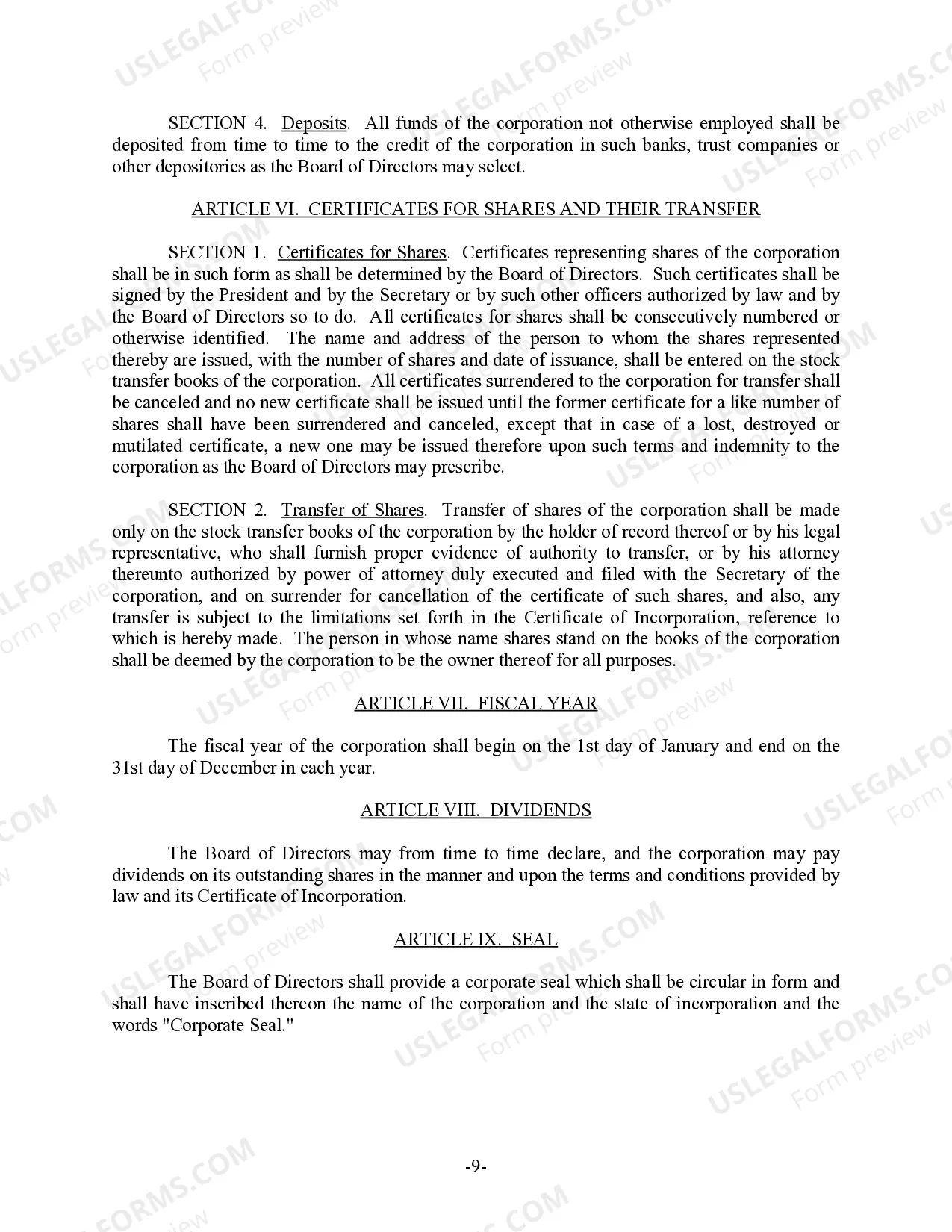
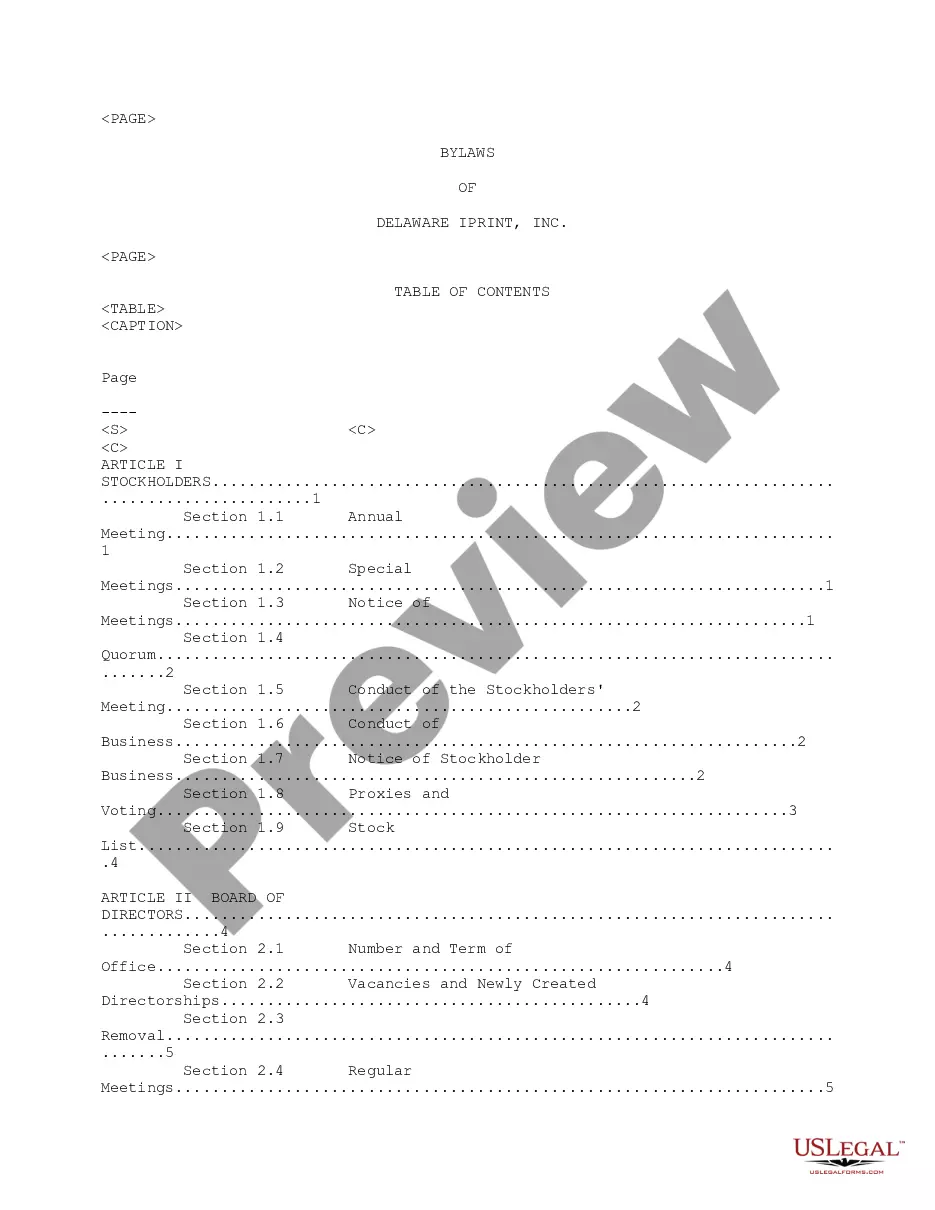
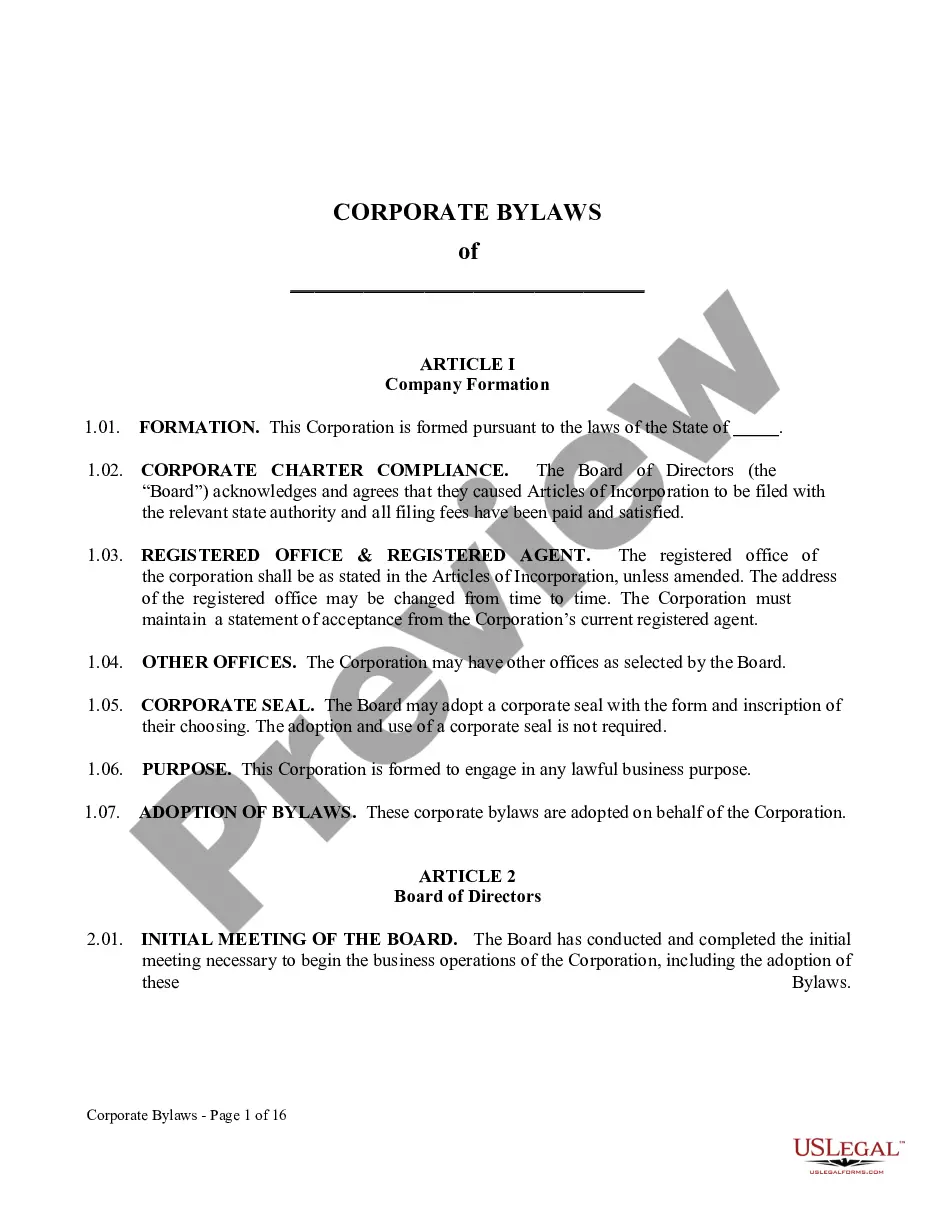
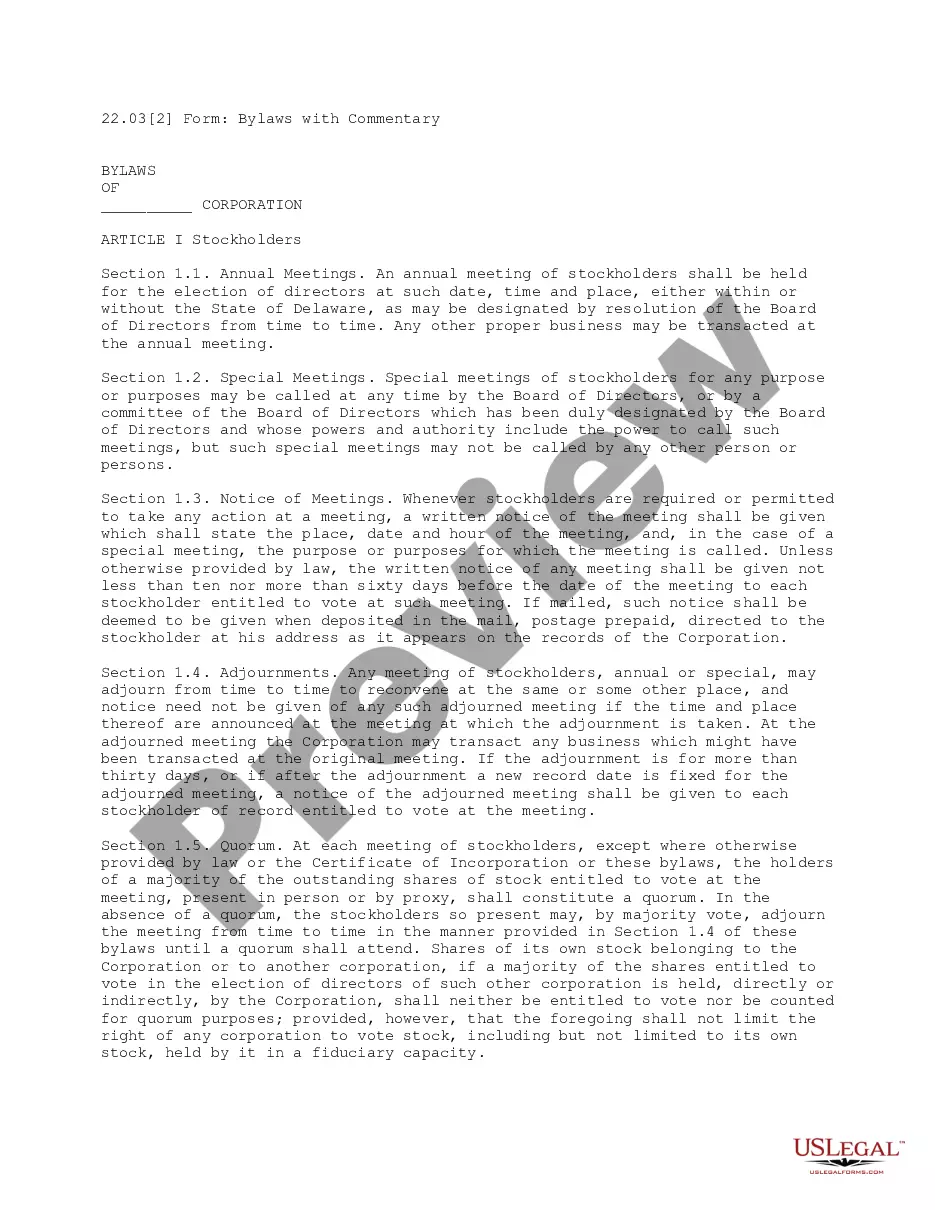
The Delaware Bylaws for Corporation establish the operational framework for a corporation in Delaware. This legal document outlines the rules for governance, including details on shareholder meetings, roles of officers and directors, voting procedures, and stock management. Unlike other corporate documents, the bylaws are tailored to your specific corporation's needs, making them essential for compliance and effective governance.
Form components explained
- Name and location of the corporation
- Schedules for annual and special shareholder meetings
- Number and qualifications of directors
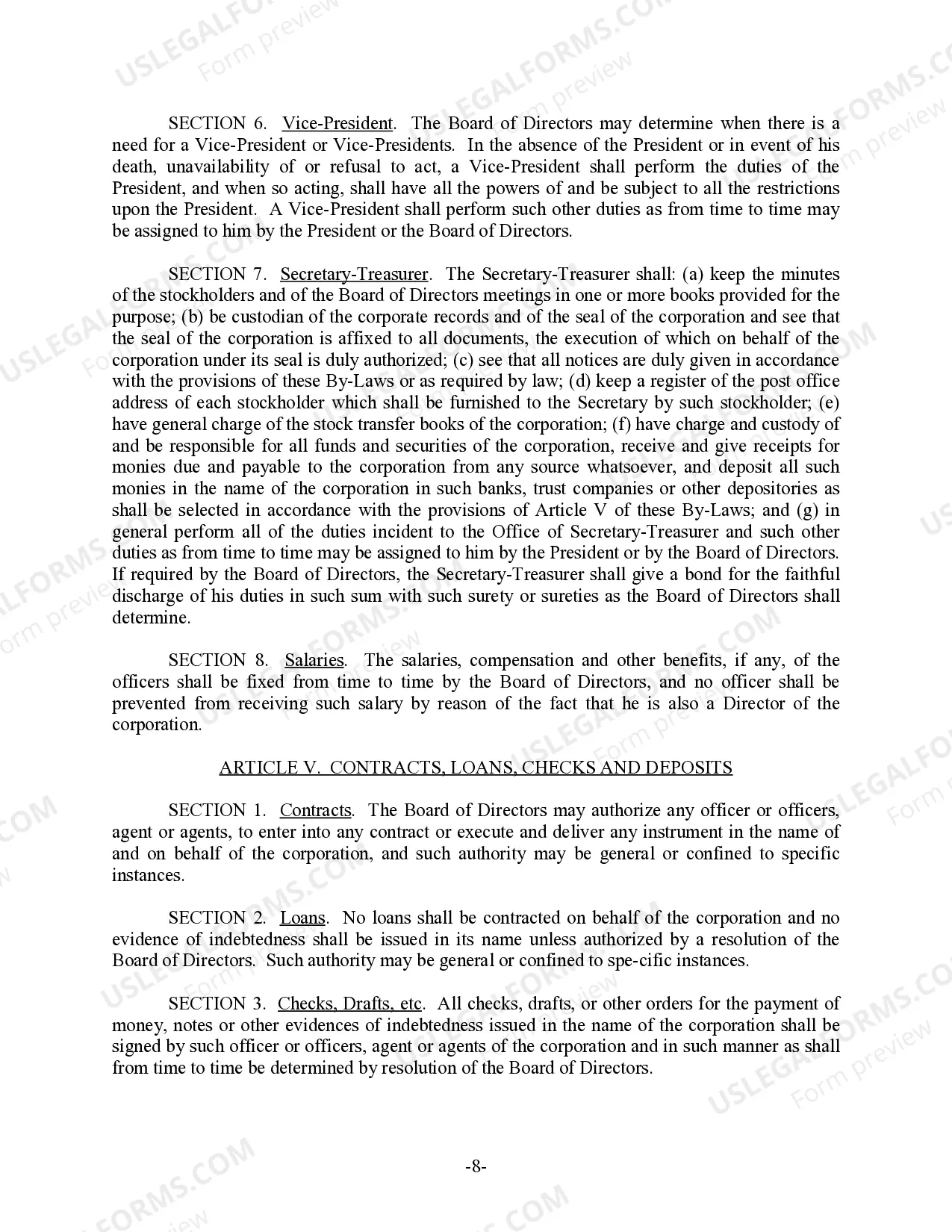
- Roles and duties of officers, including the President and Secretary-Treasurer
- Voting procedures for stockholders
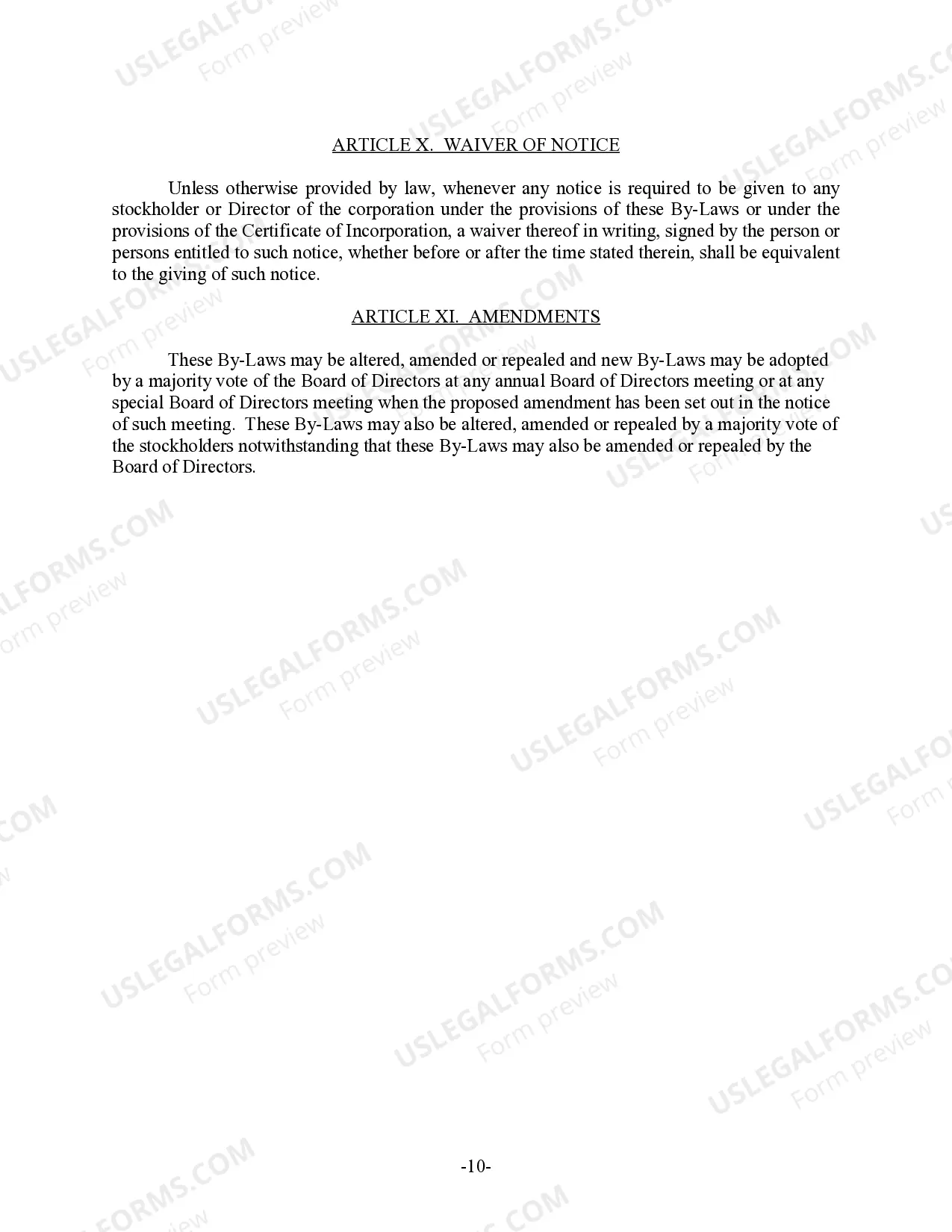
- Amendment procedures for bylaws


When to use this form
This form should be used when forming a new corporation in Delaware or when amending the existing bylaws. It's essential for establishing clear governance rules and procedures essential for the organization's internal management functions.
Who this form is for
- Business owners establishing a new corporation in Delaware
- Corporate officers and directors involved in governance
- Legal professionals assisting clients with corporate compliance
How to complete this form
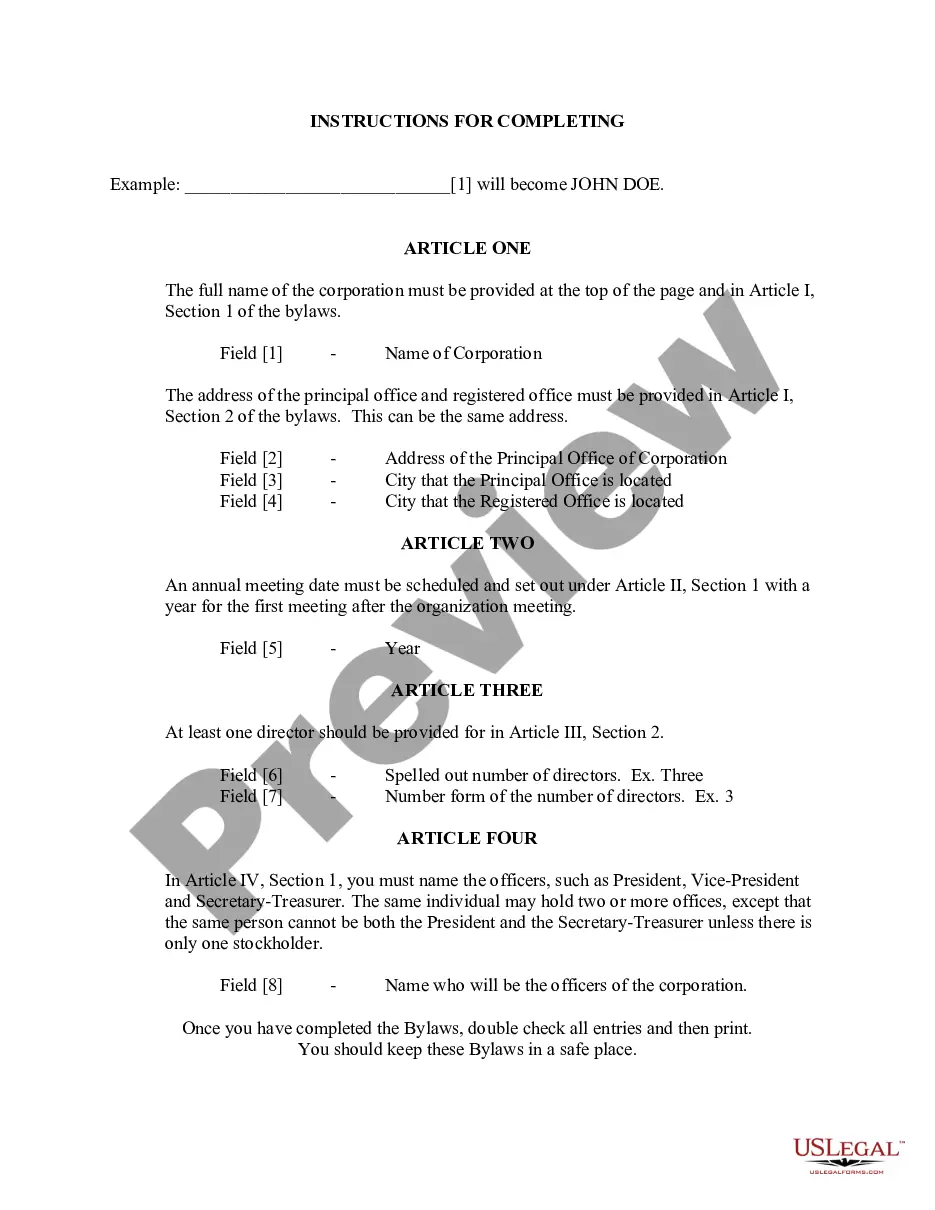
- Enter the full name and address of the corporation at the top and in Article I.
- Specify the date and time for the annual shareholder meeting in Article II, Section 1.
- Identify the number of directors you will appoint in Article III, Section 2.
- Name the officers of the corporation in Article IV, Section 1.
- Review and finalize the bylaws, ensuring all fields are correctly filled in.
Notarization guidance
This form does not typically require notarization unless specified by local law. Make sure to review local regulations or consult with a legal professional if you have questions regarding notarization requirements.
Get your form ready online
Our built-in tools help you complete, sign, share, and store your documents in one place.
Make edits, fill in missing information, and update formatting in US Legal Forms—just like you would in MS Word.
Download a copy, print it, send it by email, or mail it via USPS—whatever works best for your next step.
Sign and collect signatures with our SignNow integration. Send to multiple recipients, set reminders, and more. Go Premium to unlock E-Sign.
If this form requires notarization, complete it online through a secure video call—no need to meet a notary in person or wait for an appointment.
We protect your documents and personal data by following strict security and privacy standards.

Make edits, fill in missing information, and update formatting in US Legal Forms—just like you would in MS Word.

Download a copy, print it, send it by email, or mail it via USPS—whatever works best for your next step.

Sign and collect signatures with our SignNow integration. Send to multiple recipients, set reminders, and more. Go Premium to unlock E-Sign.

If this form requires notarization, complete it online through a secure video call—no need to meet a notary in person or wait for an appointment.

We protect your documents and personal data by following strict security and privacy standards.
Typical mistakes to avoid
- Using incorrect or outdated corporate names and addresses.
- Failing to specify all necessary officer roles.
- Not scheduling an annual meeting or not specifying the date clearly.
- Neglecting to keep a signed and dated copy of the bylaws for corporate records.
Benefits of completing this form online
- Convenient access from anywhere, allowing for quick updates and changes.
- Editability ensures that all information can be customized to fit your corporationâs needs.
- Reliable templates drafted by licensed attorneys, ensuring legal compliance and effectiveness.
Legal use & context
- Bylaws are essential for defining the internal management rules of a corporation.
- They serve as a guide for maintaining corporate governance and compliance with state laws.
- Failure to adopt or properly maintain bylaws can lead to disputes among shareholders and legal complications.
Main things to remember
- The Delaware Bylaws for Corporation establish important governance rules.
- Correctly completing and maintaining this document is vital for legal compliance.
- Utilizing this form online offers flexibility and reliability.
Looking for another form?
Form popularity
FAQ
Yes, bylaws are indeed rules that a corporation establishes for its operations. They dictate how the corporation will conduct its activities, from governance to decision-making processes. By setting clear bylaws, a corporation can ensure consistency and prevent misunderstandings among its members. Therefore, having tailored Delaware Bylaws for Corporation is key to maintaining orderly governance.
Corporate names in Delaware must adhere to certain rules set by the state. The name has to be unique and include a designation like 'Corporation' or 'Incorporated'. Additionally, Delaware prohibits the use of terms that imply a different business purpose or may mislead the public. To navigate these rules effectively, consider using resources like uslegalforms to create a compliant name.
To check if a business name is available in Delaware, you can use the online Business Entity Search provided by the Delaware Division of Corporations. This tool allows you to see if your desired name is already in use or if similar names exist. Ensuring your corporation's name is available is crucial before finalizing your registration. For added convenience, the uslegalforms platform can guide you through this search process.
Yes, you can incorporate in Delaware even if you don’t reside there. Delaware is known for its business-friendly laws and favorable tax structure, making it a popular choice for many entrepreneurs. When incorporating from out of state, you must designate a registered agent in Delaware who can receive legal documents on behalf of your corporation. This process is straightforward, and platforms like uslegalforms can assist you in navigating the steps.
In Delaware, corporation names must be unique and distinguishable from existing entities registered in the state. The name should contain a term indicating its corporate status, such as 'Corporation', 'Incorporated', or an abbreviation of these terms. Additionally, it is prohibited to use certain words that may mislead or confuse the public. To help streamline this process, you can utilize services like uslegalforms to ensure compliance with state naming regulations.
The primary purpose of Delaware Bylaws for Corporation is to govern the internal workings of the business. These bylaws establish how decisions are made, outline governance structures, and provide guidelines for conflict resolution. In essence, they ensure that the corporation operates in an organized manner, making it easier to achieve its goals. Without effective bylaws, a corporation might face confusion and disputes.
Bylaws are a specific type of rule created by a corporation to regulate its internal affairs. While bylaws may include various rules regarding governance, they are not interchangeable with general rules. Instead, bylaws offer a comprehensive framework that adapts to the needs of the corporation. It's important to establish clear Delaware Bylaws for Corporation to ensure everyone understands their roles and responsibilities.
Yes, Delaware Bylaws for Corporation serve as the internal rules that govern how a corporation operates. These bylaws outline important procedures such as how meetings are conducted, how directors are elected, and the duties of officers. They provide structure and clarity, helping organizations function smoothly. Having clear bylaws is essential for effective management and compliance with state laws.
Many states recommend adopting bylaws, even if they do not legally require them, like Delaware. States such as California and New York have specific laws concerning bylaws for corporations. Regardless of your location, implementing Delaware Bylaws for Corporation can enhance your organization's operational framework and foster best practices.
Bylaws can hold up in court, provided they comply with state laws and the corporation's articles of incorporation. If challenged, Delaware Bylaws for Corporation serve as key evidence of the company's internal governance. Courts generally respect these documents, particularly when they are clear and consistently followed.