District of Columbia Last Will and Testament for Divorced person not Remarried with Adult Children
What is this form?
This Last Will and Testament is specifically designed for individuals who are divorced, not remarried, and have adult children. This legal document allows you to detail how your estate will be distributed upon your death, appoint an executor, and specify your wishes for any personal and real property. It serves as an essential tool to ensure that your assets are passed on according to your preferences, distinguishing itself from standard wills by considering the unique circumstances of divorced individuals with adult children.
Key components of this form
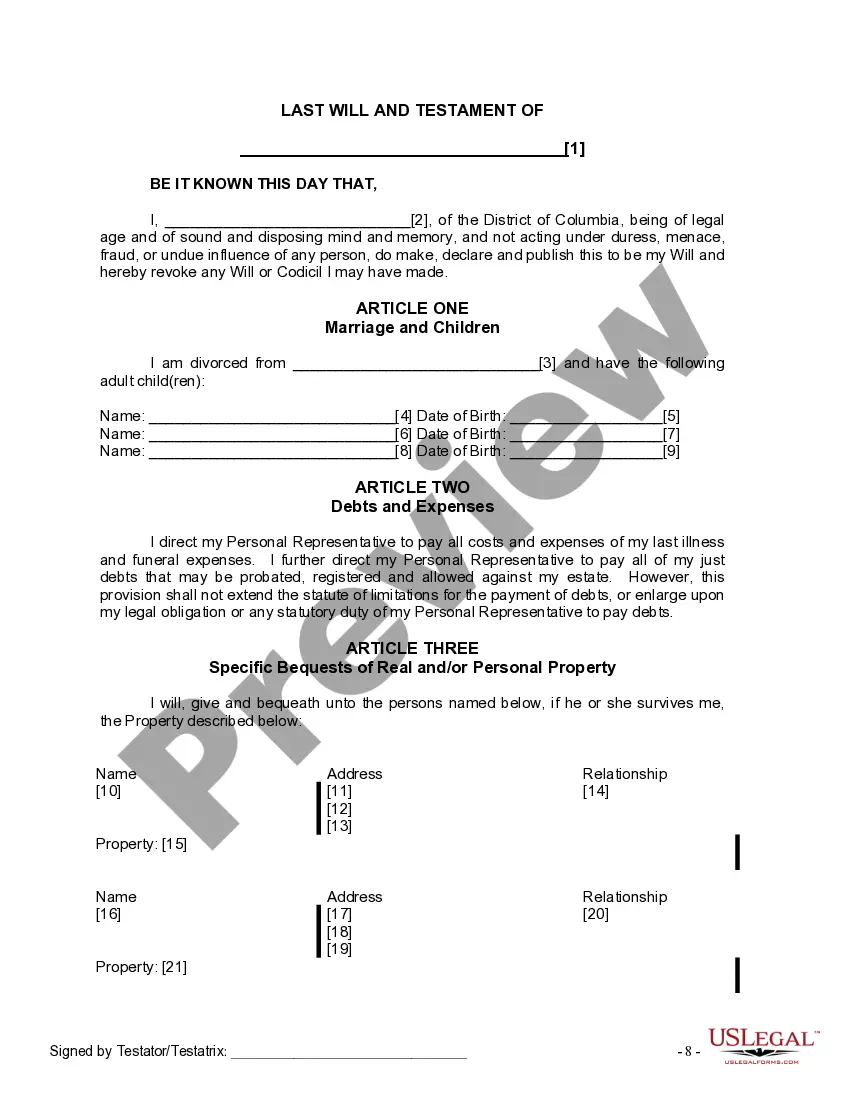
- Article One: Identifies your marital status and lists your adult children.
- Article Two: Directs the payment of your debts and funeral expenses.
- Article Three: Allows you to specify particular bequests of property to individuals.
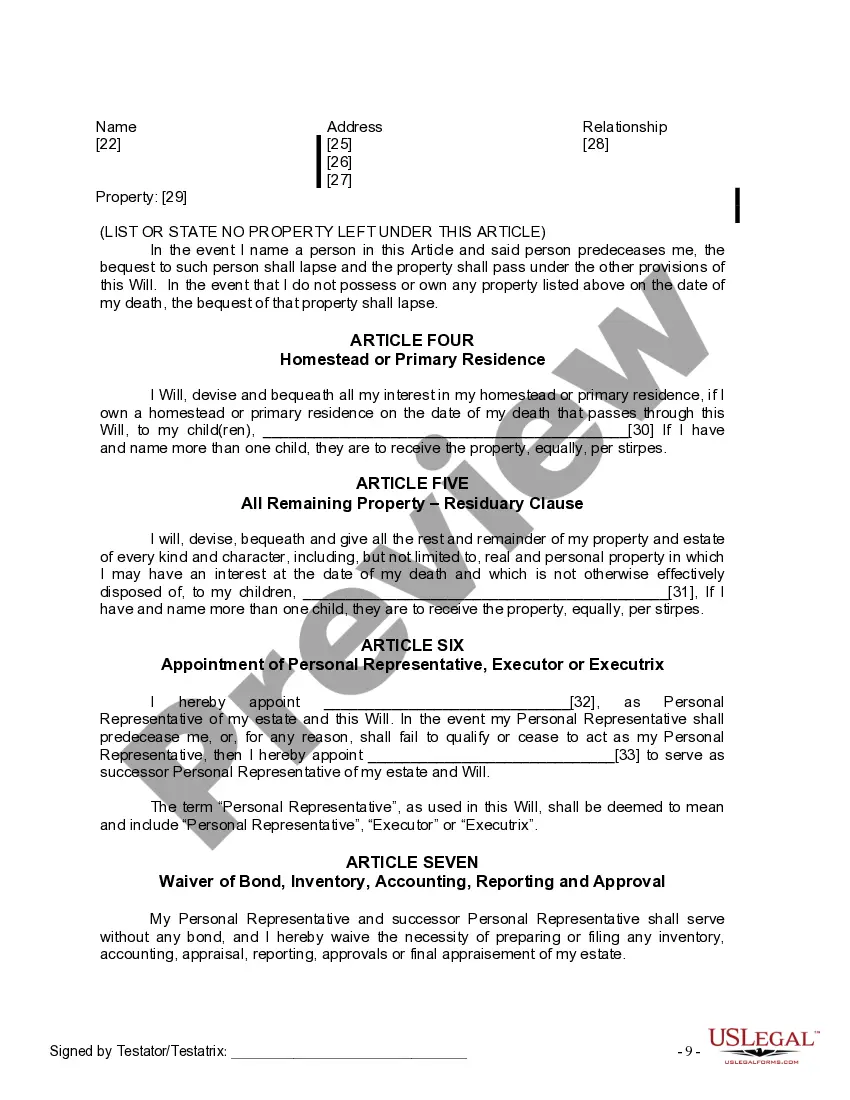
- Article Four: Details the distribution of your homestead or primary residence.
- Article Five: Declares who will receive the rest of your assets.
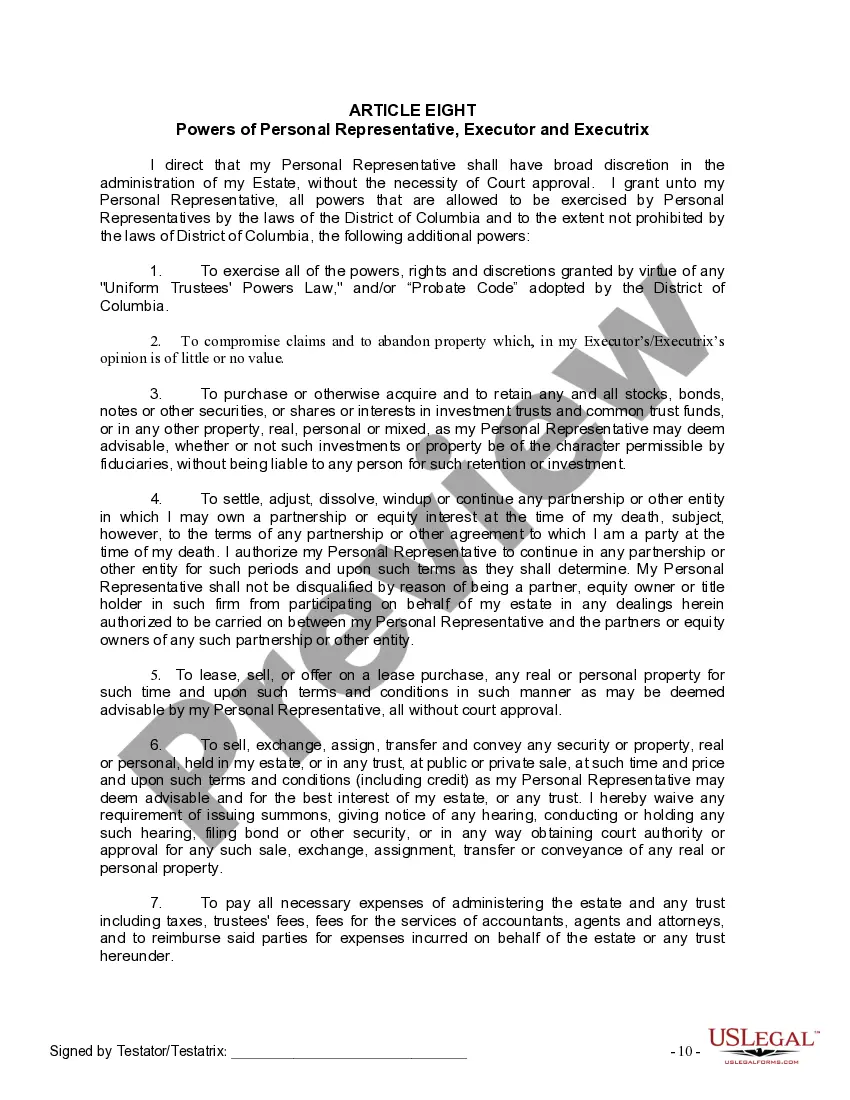
- Article Six: Appoints a personal representative to manage your estate.






When to use this form
This form should be used when you want to outline how your assets will be allocated after your death, especially if you are divorced with adult children. It is important to have a will to avoid intestate succession laws, which dictate how your property will be distributed if you do not have a will. Additionally, it is suitable when you wish to designate a personal representative to oversee the distribution of your estate and ensure that your final wishes are honored.
Who this form is for
The following individuals should consider using this form:
- Persons who are divorced and have adult children.
- Individuals who have not remarried and wish to create a legally binding will.
- Anyone wanting to specify how their property, funds, and possessions should be divided among heirs.
- People looking for a straightforward way to communicate their final wishes to heirs and executors.
Steps to complete this form
To properly complete this Last Will and Testament, follow these steps:
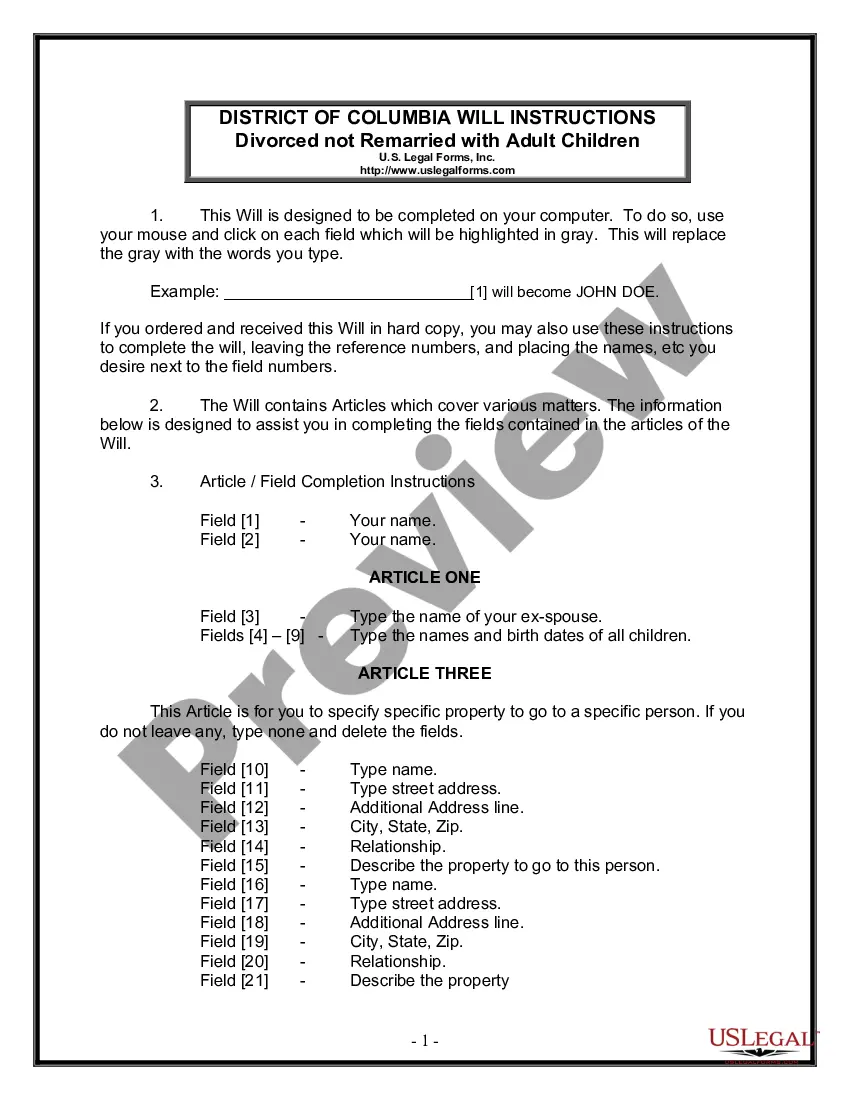
- Begin by entering your full legal name and residence in the designated fields.
- List your ex-spouse's name and the names and dates of birth for all your adult children.
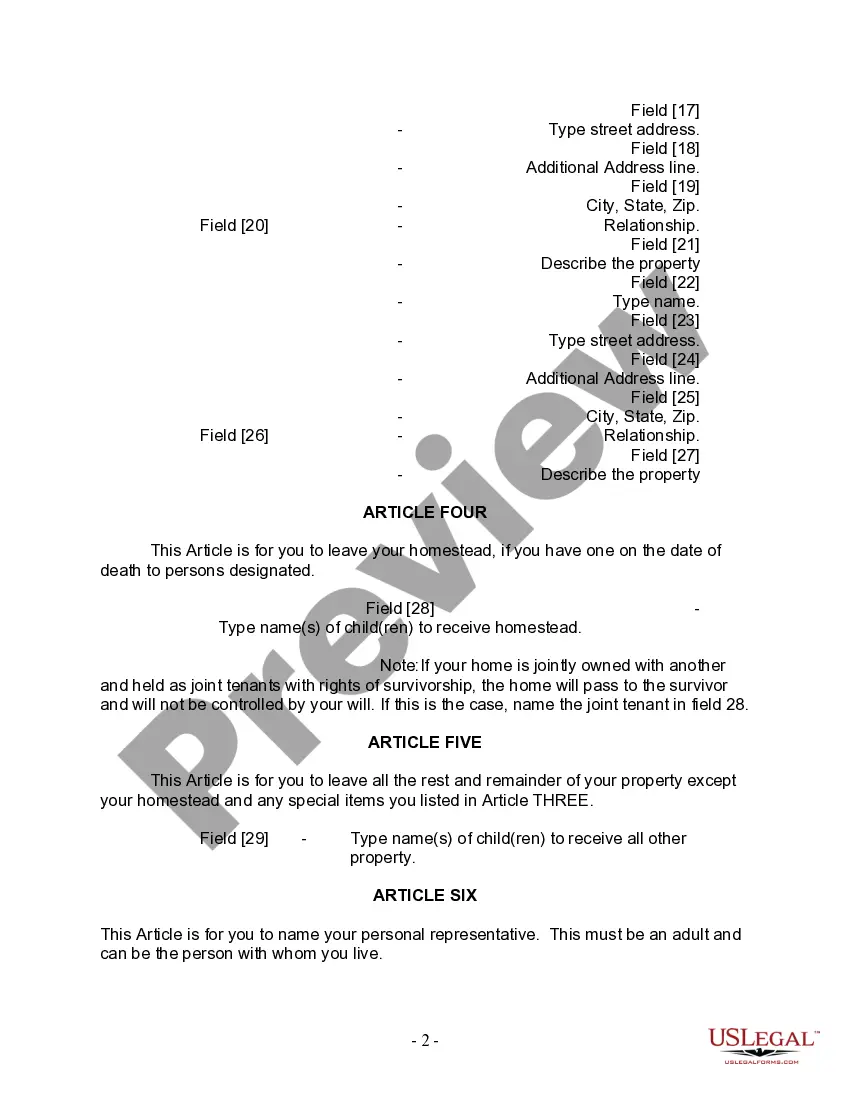
- Specify any property you wish to bequeath to individuals and provide their details.
- Identify your homestead and state which of your children will inherit it.
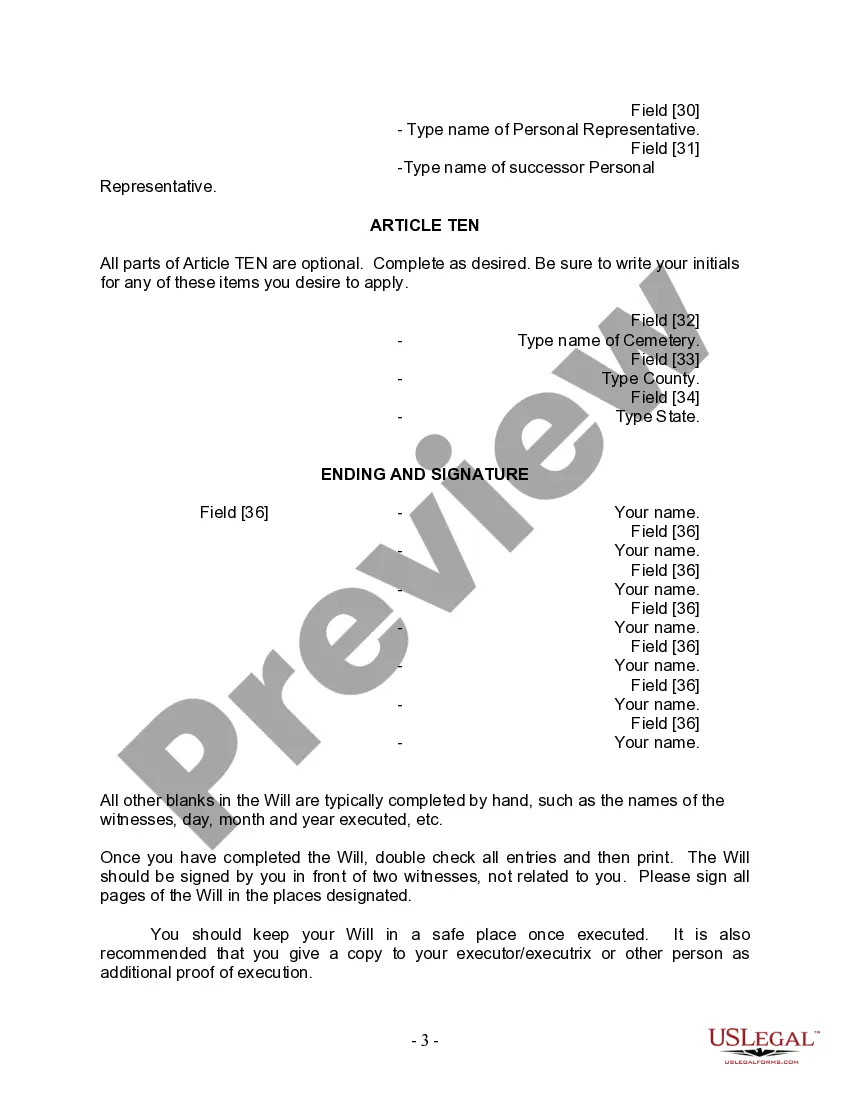
- Appoint a personal representative to manage your estate in your absence.
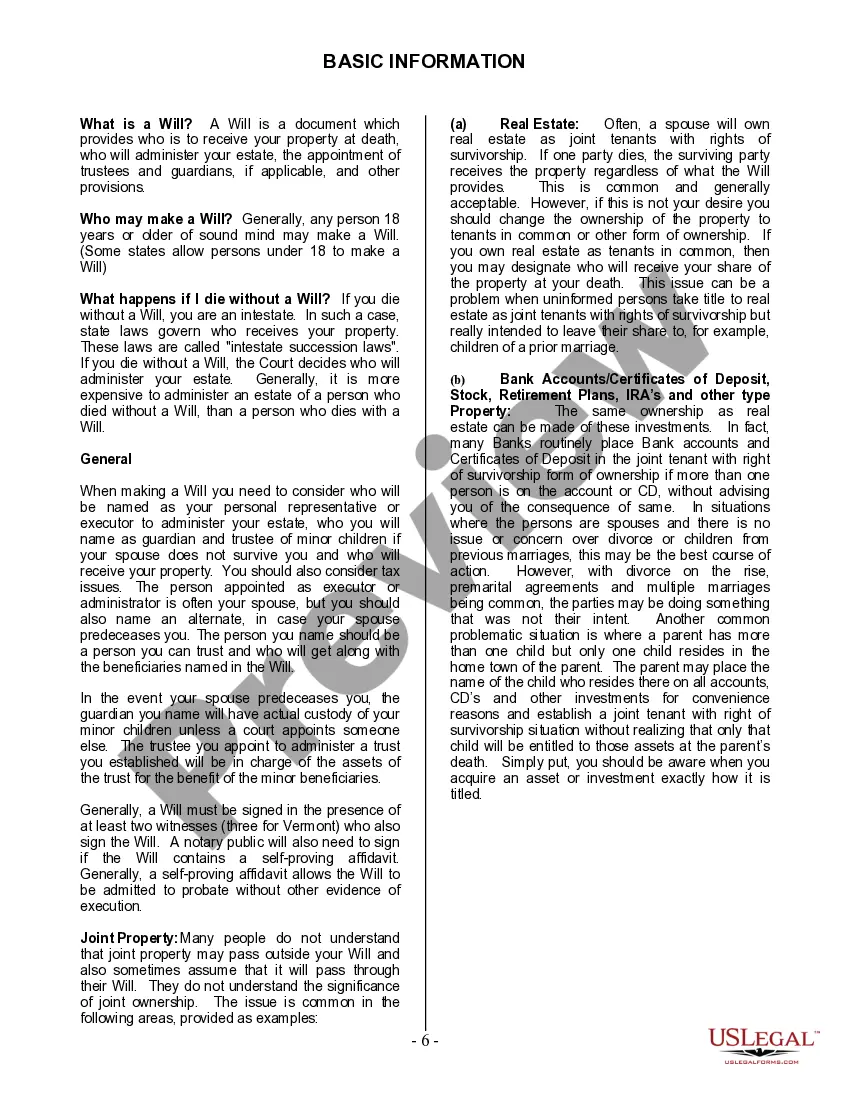
- Sign the document in the presence of two unrelated witnesses and ensure all pages are signed appropriately.
Notarization requirements for this form
This form does not typically require notarization unless specified by local law. However, if your state has adopted a self-proving affidavit statute, it is advisable to have the will notarized to facilitate its acceptance in probate court.
Get your form ready online
Our built-in tools help you complete, sign, share, and store your documents in one place.
Make edits, fill in missing information, and update formatting in US Legal Forms—just like you would in MS Word.
Download a copy, print it, send it by email, or mail it via USPS—whatever works best for your next step.
Sign and collect signatures with our SignNow integration. Send to multiple recipients, set reminders, and more. Go Premium to unlock E-Sign.
If this form requires notarization, complete it online through a secure video call—no need to meet a notary in person or wait for an appointment.
We protect your documents and personal data by following strict security and privacy standards.

Make edits, fill in missing information, and update formatting in US Legal Forms—just like you would in MS Word.

Download a copy, print it, send it by email, or mail it via USPS—whatever works best for your next step.

Sign and collect signatures with our SignNow integration. Send to multiple recipients, set reminders, and more. Go Premium to unlock E-Sign.

If this form requires notarization, complete it online through a secure video call—no need to meet a notary in person or wait for an appointment.

We protect your documents and personal data by following strict security and privacy standards.
Common mistakes to avoid
- Failing to sign the document in front of the required witnesses.
- Not providing complete names or addresses for beneficiaries.
- Neglecting to date the will and clarify its revocation of prior versions.
- Overlooking the specifics of state requirements regarding wills.
- Not keeping the will in a secure location where it can be easily accessed by the executor or family.
Benefits of completing this form online
- Instant access to a professionally drafted legal document that meets your specific needs.
- The ability to fill out the form online, making it easy to edit and customize your will.
- Convenience of being able to download and print your will upon completion.
- Guidance provided ensures that each section is clearly defined, reducing the chance of errors.
Legal use & context
This form is legally enforceable and allows for the testator's wishes to be upheld regarding the distribution of their estate. It minimizes the potential for family disputes by clearly outlining the testator's intentions. However, it is important to ensure compliance with state-specific laws for optimal legality.
What to keep in mind
- This will is tailored for divorced individuals with adult children.
- It includes provisions for specific bequests, distribution of the homestead, and the appointment of a personal representative.
- Properly completing and signing the document is essential for its validity.
- Understand and adhere to local laws regarding witnessing and notarization of the will.
Looking for another form?
Form popularity
FAQ
In the District of Columbia, you can avoid probate by utilizing certain estate planning tools, such as creating trusts or designating beneficiaries on accounts and policies. Additionally, joint ownership of property can also bypass probate. For those considering a District of Columbia Last Will and Testament for Divorced person not Remarried with Adult Children, exploring these alternatives can provide peace of mind regarding the distribution of assets.
To officially register a will in Washington, DC, you must file it with the probate court after the testator has passed away. You will typically need to submit the original will along with the appropriate documentation to initiate the probate process. Utilizing a service like uslegalforms can simplify this process, ensuring your District of Columbia Last Will and Testament for Divorced person not Remarried with Adult Children is handled expertly.
In the District of Columbia, a last will and testament generally overrides marriage, especially if it was created prior to a divorce. However, if you are divorced and not remarried, your District of Columbia Last Will and Testament for Divorced person not Remarried with Adult Children should clearly specify your intentions regarding your assets and beneficiaries. This clarity helps avoid potential disputes.
While there is no requirement to register a will while you are alive in DC, it is essential to keep it in a safe and accessible place. After your death, your District of Columbia Last Will and Testament should be presented to the probate court for validation. By organizing your will properly, you can ensure your wishes are honored.
You do not need to register a will in the District of Columbia while you are still living. However, it is important to file your will with the probate court after your passing. This process ensures that your estate is handled according to the instructions in your District of Columbia Last Will and Testament for Divorced person not Remarried with Adult Children.
In the District of Columbia, inheritance laws dictate how assets are distributed among heirs when someone passes away without a will. If you have a valid will, your wishes specified in your District of Columbia Last Will and Testament for Divorced person not Remarried with Adult Children take precedence over intestate laws. Understanding these laws can help you make informed decisions about your estate.
To create a valid will in the District of Columbia, you must be at least 18 years old, must be of sound mind, and must sign the document in front of two witnesses. Additionally, these witnesses must also sign the will in your presence. If you are a divorced person not remarried with adult children, ensuring your District of Columbia Last Will and Testament is valid is crucial for your estate planning.
A will can be a simple letter if it expresses your intentions regarding the distribution of your assets, but it needs to comply with local laws to be valid. In the context of a District of Columbia Last Will and Testament for Divorced person not Remarried with Adult Children, it is vital to follow legal stipulations to ensure the letter is enforceable. However, opting for a formal will can help eliminate confusion and guarantee that your wishes are honored as you intended.
To draft a will in Washington, D.C., you must ensure it meets state legal requirements. This involves outlining your wishes clearly, signing the document in front of witnesses, and possibly having it notarized for additional validation. For those looking for assistance, using platforms like uslegalforms can provide templates and guidance specifically for creating a District of Columbia Last Will and Testament for Divorced person not Remarried with Adult Children.
In some circumstances, a handwritten letter can serve as a will, known as a holographic will. However, this type of will often must meet certain legal requirements depending on your state. For someone needing a District of Columbia Last Will and Testament for Divorced person not Remarried with Adult Children, it is best to use a formal document that follows the proper legal procedures to ensure your wishes are upheld.