District of Columbia Letter from Landlord to Tenant that Sublease granted - Rent Paid by Subtenant, but Tenant Still Liable for Rent and Damages
Understanding this form
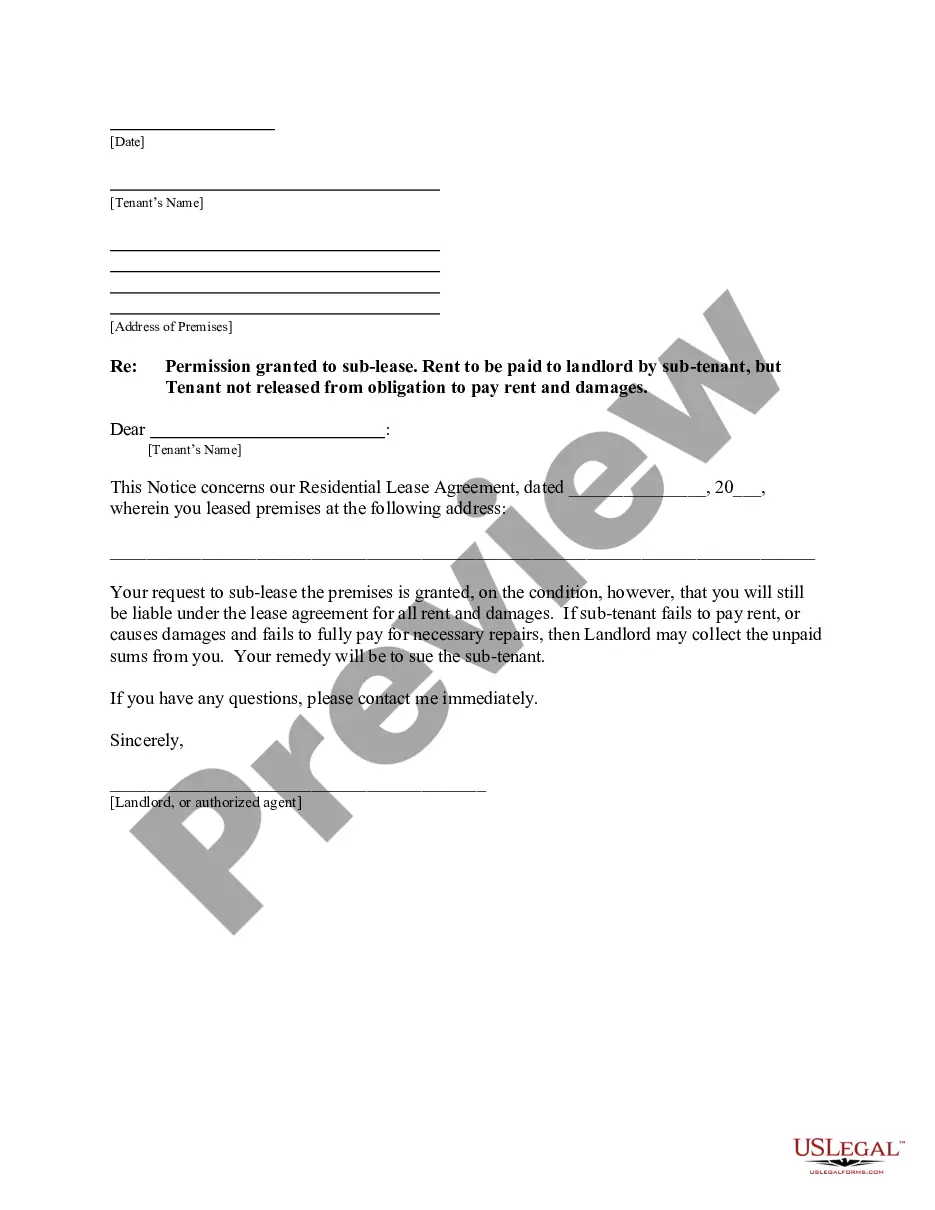
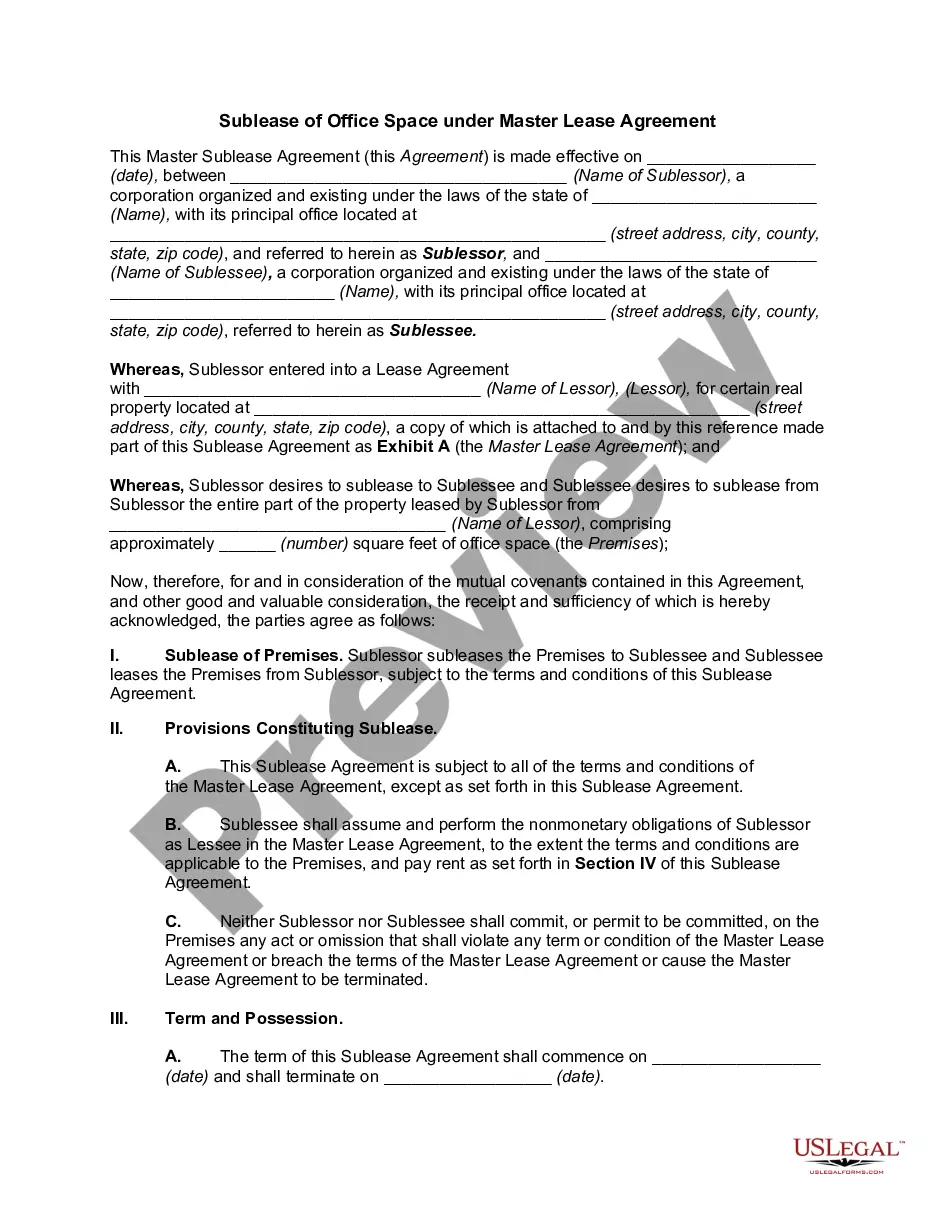
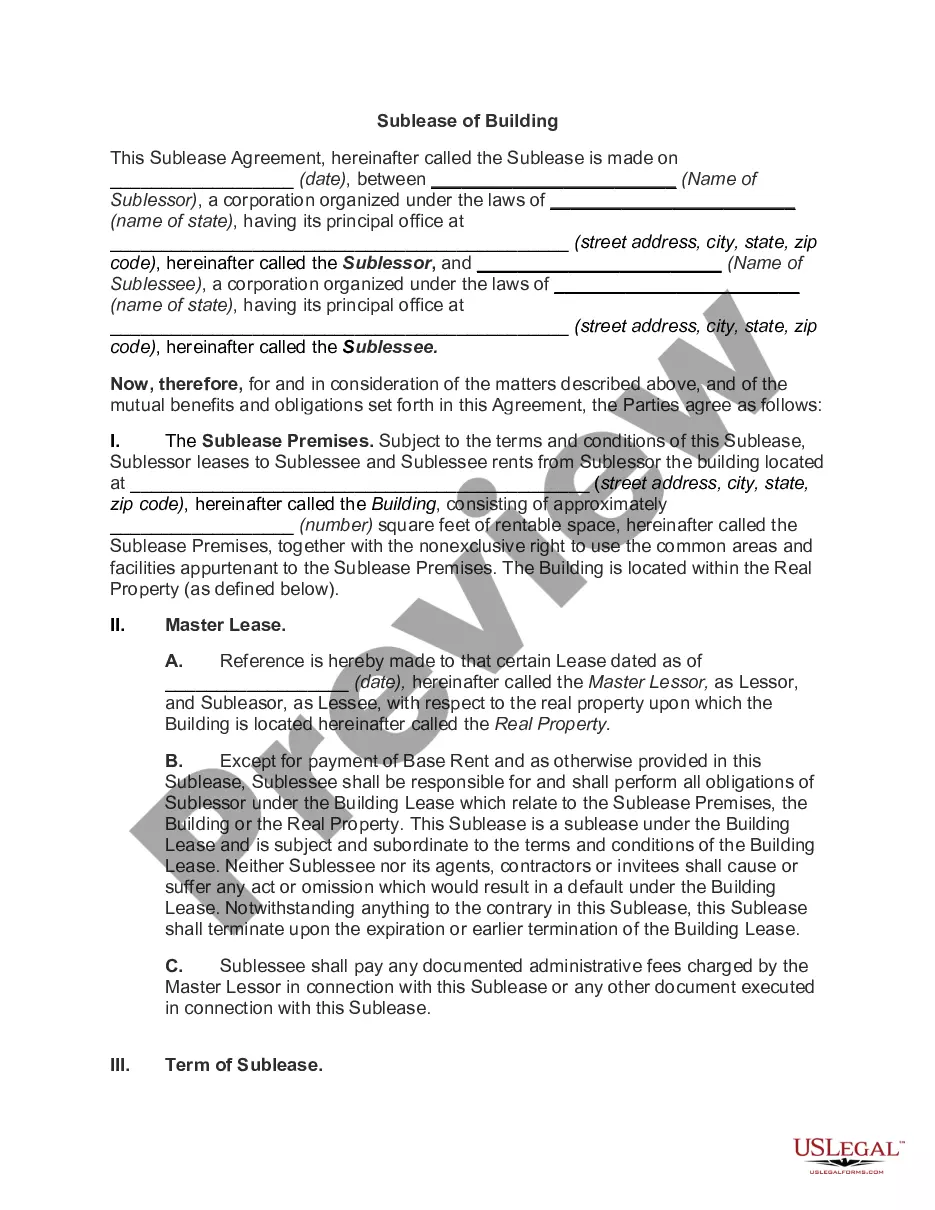
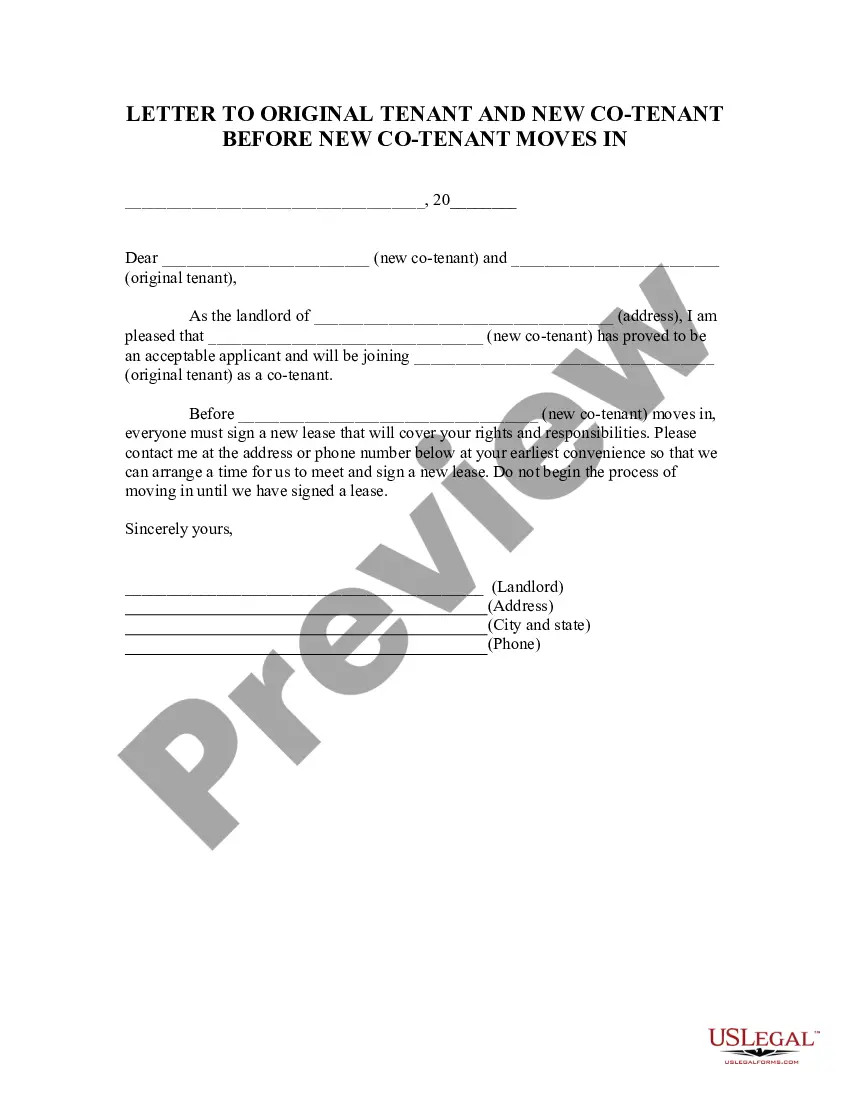
This form is a letter from the landlord to the tenant confirming that a sublease has been granted. It clarifies that while the sub-tenant will pay rent, the tenant remains liable for the original lease obligations, including rent and any damages. This form differs from standard tenant agreements by specifically addressing subleasing arrangements and the tenant's continuing responsibilities.
What’s included in this form
- Statement granting permission for sublease.
- Condition outlining tenant's continued liability for rent and damages.
- Explanation of the landlord's rights if the sub-tenant fails to pay or causes damages.
- Contact information for the landlord or authorized agent.
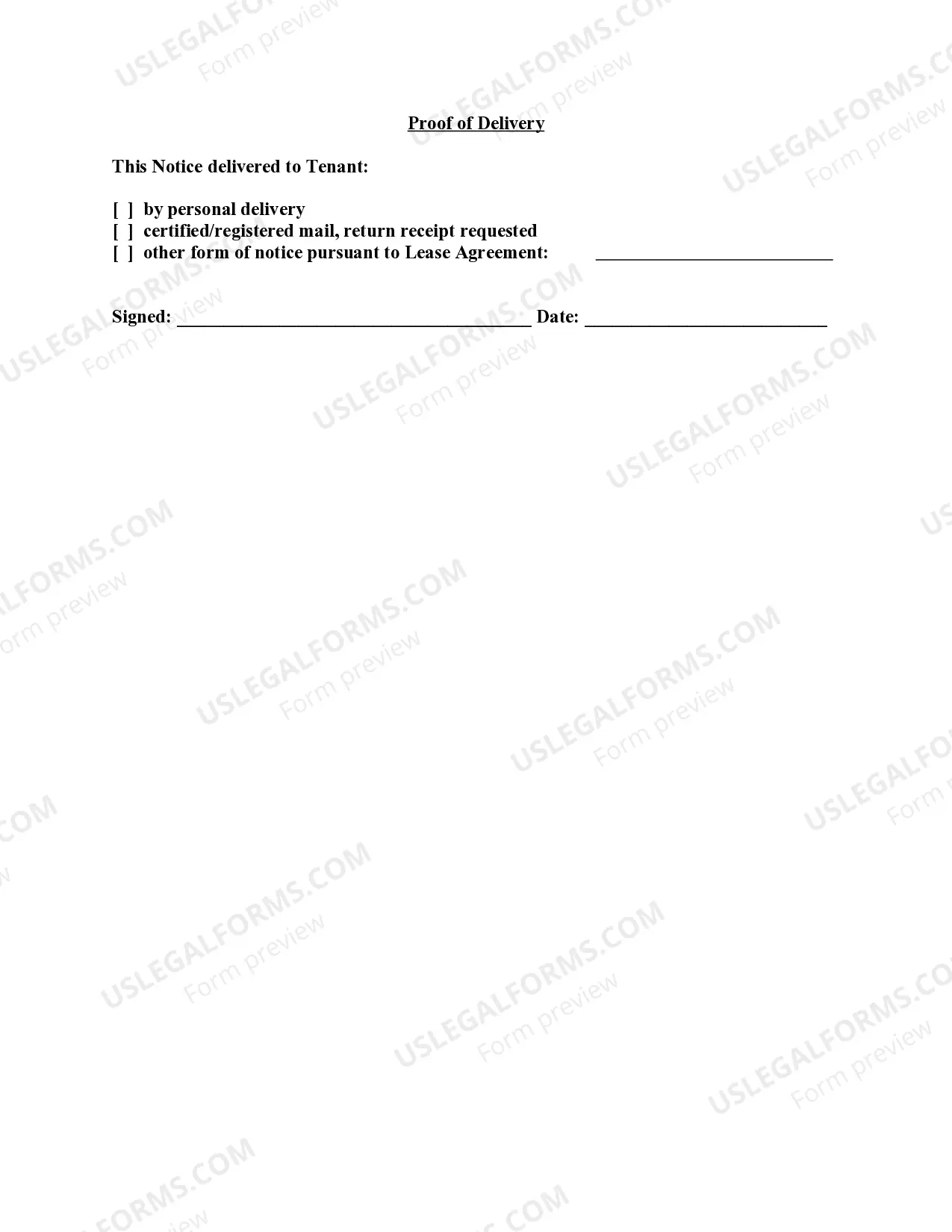
- Proof of delivery method for the notice.

When this form is needed
This form should be used when a tenant wants to sublease their rental property and needs confirmation from the landlord. It is important in any situation where the tenant intends to allow another person to occupy the property temporarily while ensuring that they are still responsible for fulfilling their financial obligations to the landlord.
Who this form is for
- Landlords seeking to provide official communication regarding subleasing.
- Tenants who have received approval to sublease their rented property.
- Sub-tenants needing clarity on their rental agreement with the tenant.
How to complete this form
- Identify the parties involved: the landlord, tenant, and sub-tenant.
- Clearly state the property being subleased and the terms of the sublease.
- Specify the conditions under which the tenant remains liable for rent and damages.
- Include the landlord's contact information for any questions.
- Deliver the letter via personal delivery or certified mail to ensure proper receipt.
Is notarization required?
This form does not typically require notarization unless specified by local law. Review your local regulations to confirm any specific requirements.
Get your form ready online
Our built-in tools help you complete, sign, share, and store your documents in one place.
Make edits, fill in missing information, and update formatting in US Legal Forms—just like you would in MS Word.
Download a copy, print it, send it by email, or mail it via USPS—whatever works best for your next step.
Sign and collect signatures with our SignNow integration. Send to multiple recipients, set reminders, and more. Go Premium to unlock E-Sign.
If this form requires notarization, complete it online through a secure video call—no need to meet a notary in person or wait for an appointment.
We protect your documents and personal data by following strict security and privacy standards.

Make edits, fill in missing information, and update formatting in US Legal Forms—just like you would in MS Word.

Download a copy, print it, send it by email, or mail it via USPS—whatever works best for your next step.

Sign and collect signatures with our SignNow integration. Send to multiple recipients, set reminders, and more. Go Premium to unlock E-Sign.

If this form requires notarization, complete it online through a secure video call—no need to meet a notary in person or wait for an appointment.

We protect your documents and personal data by following strict security and privacy standards.
Common mistakes
- Failing to specify the tenant's continuing liability, leading to misunderstandings.
- Not providing clear delivery proof, which can create disputes.
- Ignoring local regulations about subleasing agreements.
Advantages of online completion
- Convenient access to a ready-made template that can be easily customized.
- Time-saving process with immediate download options.
- Reliability, as forms are drafted by licensed attorneys familiar with relevant laws.
Legal use & context
- This letter serves to formalize the acknowledgment of the sublease.
- It establishes legal responsibilities that may affect the tenant's financial obligations.
- Non-compliance by the sub-tenant may require the tenant to take legal action to recover unpaid rent.
Looking for another form?

Form popularity
FAQ
When writing a letter to remove a tenant, be clear and straightforward about your intention. State the reasons for the eviction, indicating any relevant laws or clauses in the lease agreement. Include deadlines for the tenant to vacate, while ensuring you follow local laws in the District of Columbia. If you need help, platforms like uslegalforms offer templates for eviction letters that streamline this process.
Yes, you can sue a landlord if their tenant causes damage or creates a nuisance that affects others. The landlord has a duty to maintain the property and ensure it does not harm others. However, proving liability may require evidence showing that the landlord ignored issues raised about the tenant's behavior. Consulting legal advice can help you evaluate your options.
A sublease does not make the subtenant a landlord. In the District of Columbia, a sublease involves the original tenant still being responsible for the property and its conditions. The original tenant remains liable to the landlord, and thus, responsible for rent and damages, even if a subtenant pays rent. Therefore, the relationship between the landlord and tenant remains unchanged regarding legal responsibilities.
One primary disadvantage of subleasing is that it can impose additional risks on the original tenant. For instance, if the subtenant fails to comply with the lease terms, the original tenant remains responsible for any damages or unpaid rent. Moreover, poor communication can lead to conflicts between the original tenant and subtenant, impacting the living arrangement negatively. It is essential to have a detailed agreement to mitigate such risks.
A subtenant is someone who has the right to use and occupy rental property leased by a tenant from a landlord. A subtenant has responsibilities to both the landlord and the tenant.The tenant still remains responsible for the payment of rent to the landlord and any damages to the property caused by the subtenant.
If a tenant is subletting without consent, it's likely they will have broken terms in their tenancy agreement. This breach of contract means that the landlord can take action to evict them from their home. Possession proceedings can be started quickly, but it's important to follow the correct legal process.
Subletting a rental is permitted in California if the landlord doesn't expressly prohibit it in the lease agreement.Tenants can legally sublease their unit unless the landlord specifically says they can't in the leaseand even then, depending on where they live, they may have some leeway.
Each state has different laws regarding subtenancy, with most landlords prohibiting subletting a property without prior permission. If subletting occurs without the landlord's knowledge, that landlord has the right to serve a three-day notice of eviction to both the tenant and the sublessor.
A sublease is a legally binding contract made between a tenant and a new tenant (also known as a subtenant or a sublessee).Usually, the first tenant must get consent from the landlord before he/she is allowed to sublease the premises.
If a court finds you guilty of the first offence of unlawful subletting, you can be fined in the magistrates' court.At the magistrates' court, you can get up to six months in prison or a fine, or both. At the Crown Court the maximum penalty is imprisonment for two years or a fine, or both.