District of Columbia Letter from Landlord to Tenant about time of intent to enter premises
What this document covers
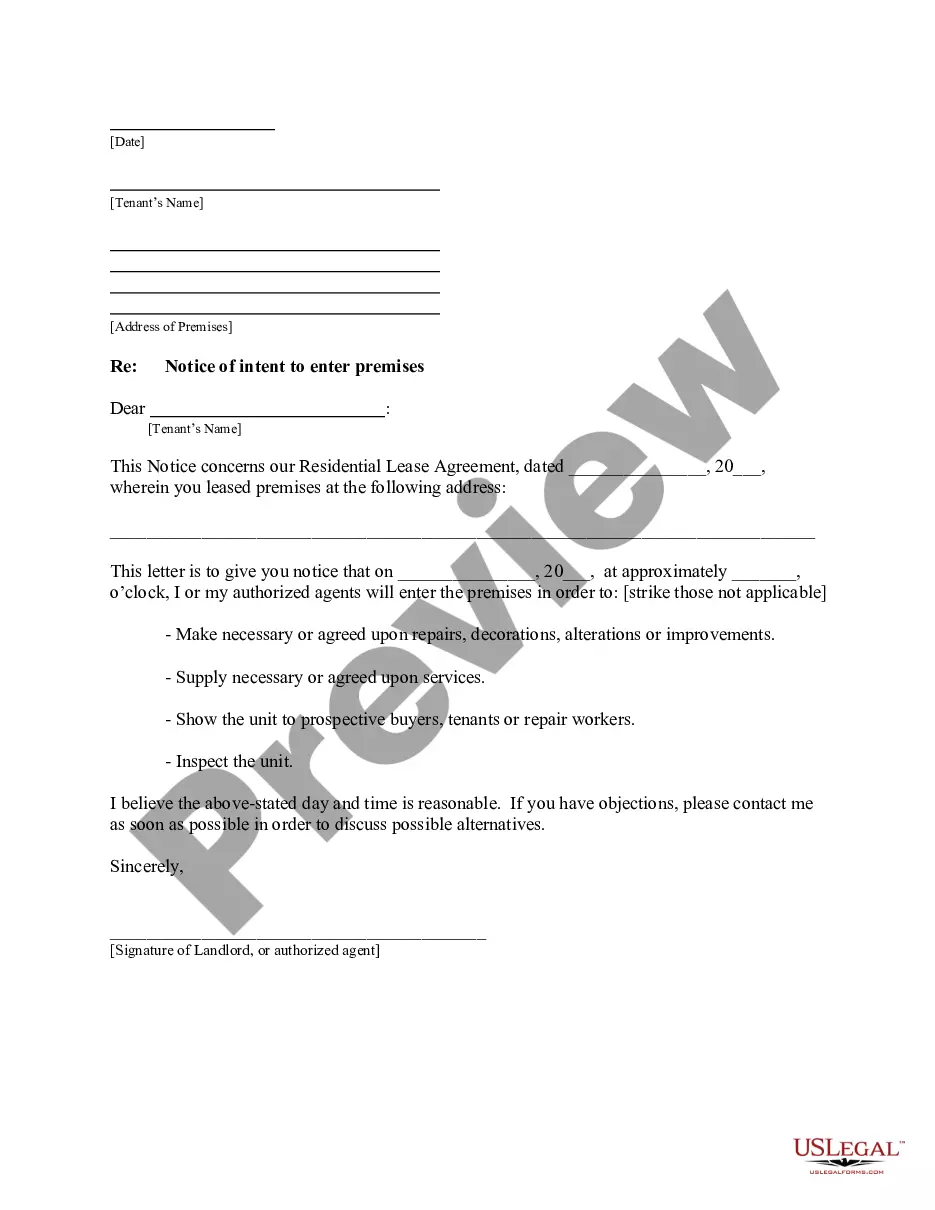
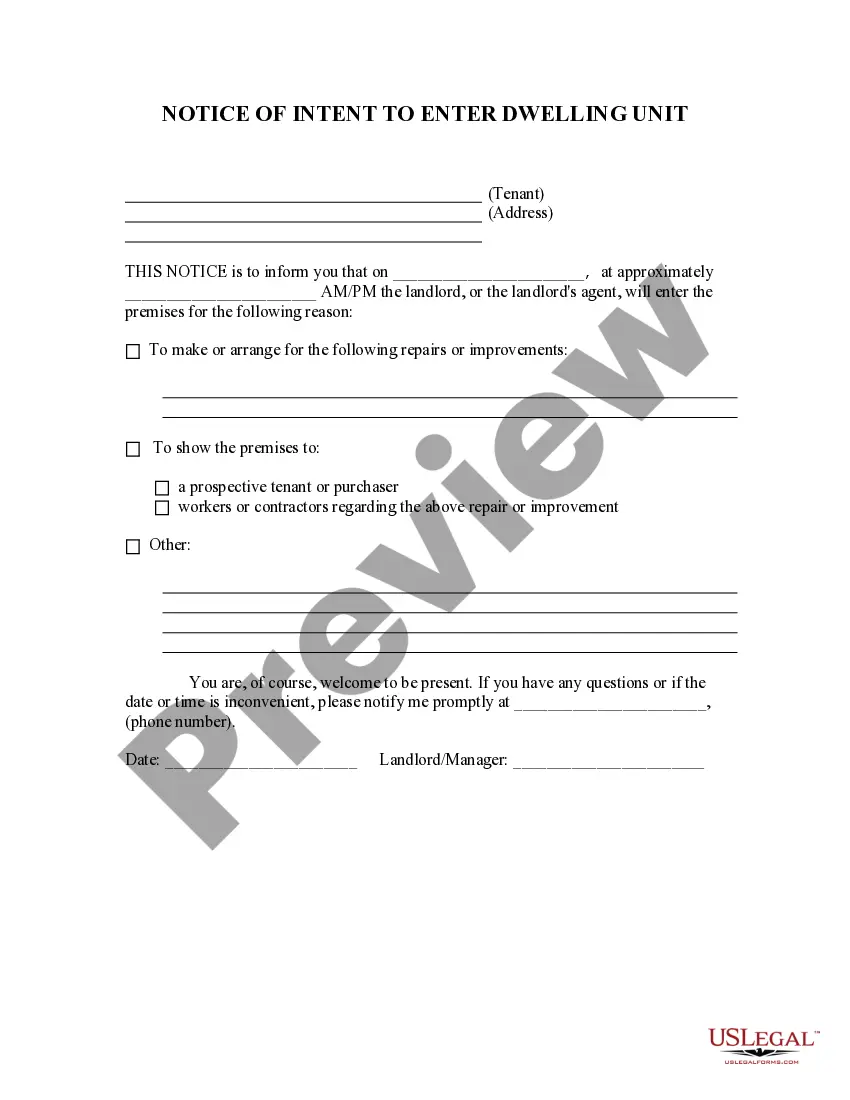
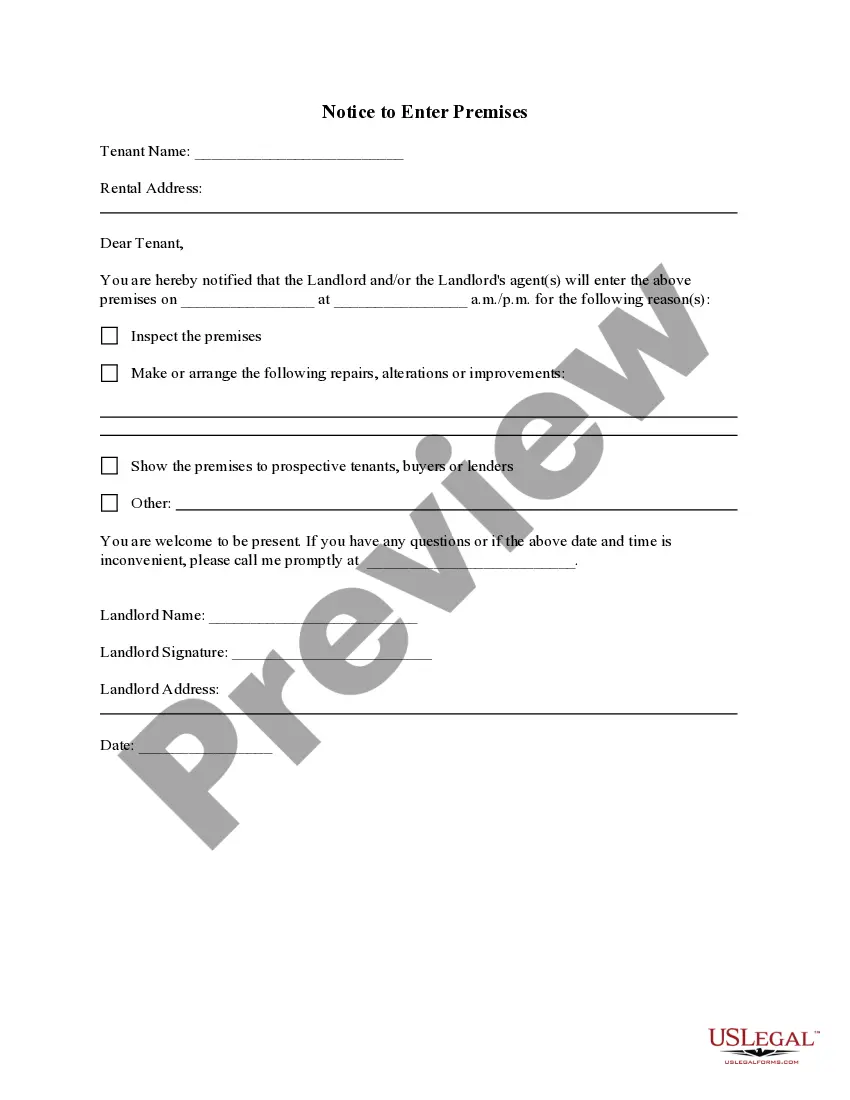
This form is a letter from a landlord to a tenant, notifying them of the landlord's intent to enter the leased premises. It provides essential details such as the purpose and timing of the visit, ensuring compliance with lease agreements and local laws. This legal document is important for maintaining transparency and mutual respect between landlords and tenants regarding access to rental properties.
Key parts of this document
- Identification of the lease agreement date and leased premises address.
- Specific date and time for the intended entry.
- Reasons for entry, including repairs, inspections, and showings.
- Contact information for discussing objections or alternatives.
- Signature field for the landlord or authorized agent.
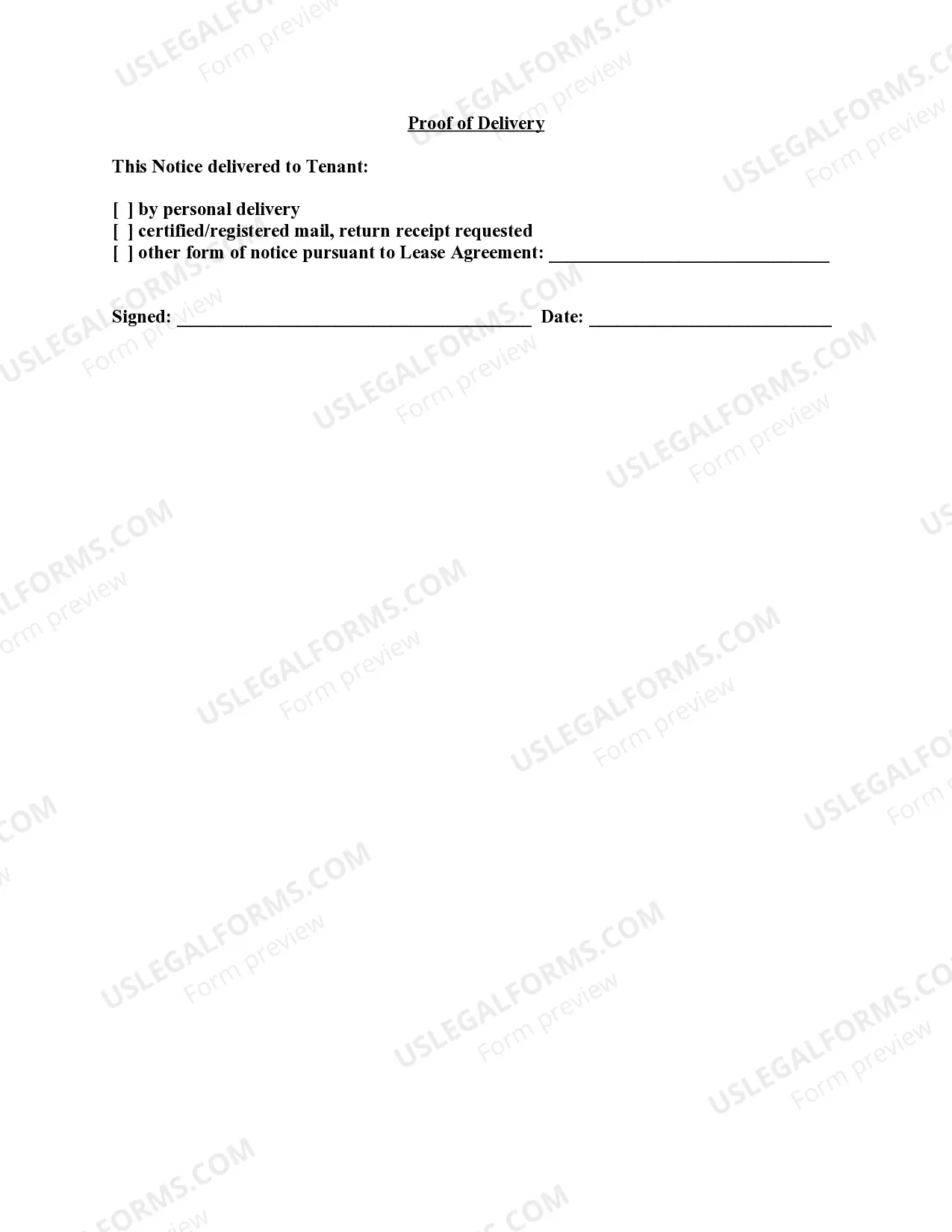
- Proof of delivery options for notifying the tenant.
When to use this document
This letter should be used when a landlord or an authorized agent needs to enter a rental property to perform maintenance, inspect the premises, or show it to potential renters or buyers. It is especially important to provide such notice to ensure tenants are aware and to comply with local landlord-tenant laws.
Who should use this form
- Residential landlords seeking to notify tenants about entry to the rental property.
- Property management companies acting on behalf of landlords.
- Tenants who want to understand their rights regarding landlord entry.
Instructions for completing this form
- Identify the date of the lease agreement and property address.
- Specify the date and time when the entry will occur.
- Choose the applicable reasons for entry by striking through any that do not apply.
- Provide your contact information for the tenant to raise any concerns.
- Sign the letter and date it before delivery to the tenant.
Is notarization required?
In most cases, this form does not require notarization. However, some jurisdictions or signing circumstances might. US Legal Forms offers online notarization powered by Notarize, accessible 24/7 for a quick, remote process.
Get your form ready online
Our built-in tools help you complete, sign, share, and store your documents in one place.
Make edits, fill in missing information, and update formatting in US Legal Forms—just like you would in MS Word.
Download a copy, print it, send it by email, or mail it via USPS—whatever works best for your next step.
Sign and collect signatures with our SignNow integration. Send to multiple recipients, set reminders, and more. Go Premium to unlock E-Sign.
If this form requires notarization, complete it online through a secure video call—no need to meet a notary in person or wait for an appointment.
We protect your documents and personal data by following strict security and privacy standards.

Make edits, fill in missing information, and update formatting in US Legal Forms—just like you would in MS Word.

Download a copy, print it, send it by email, or mail it via USPS—whatever works best for your next step.

Sign and collect signatures with our SignNow integration. Send to multiple recipients, set reminders, and more. Go Premium to unlock E-Sign.

If this form requires notarization, complete it online through a secure video call—no need to meet a notary in person or wait for an appointment.

We protect your documents and personal data by following strict security and privacy standards.
Avoid these common issues
- Failing to provide a reasonable notice period as required by law.
- Not including all necessary contact information.
- Neglecting to specify the purpose of entry clearly.
- Forgetting to sign and date the letter before delivery.
Advantages of online completion
- Convenience of downloading and editing the form at your own pace.
- Ensures compliance with legal standards created by licensed attorneys.
- Quick access to required legal documentation without needing to visit a lawyer.
- Provides a clear format that reduces the risk of errors.
Looking for another form?



Form popularity
FAQ
To write a letter from a landlord, begin with a formal greeting and clearly state the purpose of the letter. Include necessary details, such as the date of entry and any relevant context that prepares the tenant for your visit, much like the District of Columbia Letter from Landlord to Tenant about time of intent to enter premises. Remember to maintain a professional tone and provide your contact information for any follow-up questions.
A letter of intent is generally not legally binding, as it primarily expresses an intention rather than a commitment to take action. However, some clauses within it may hold legal significance if agreed upon by both parties. If you seek clarity on the legal standing of a letter, particularly in the District of Columbia context, consulting resources like USLegalForms can provide helpful insights.
Writing a letter of intent to vacate is straightforward. Start by clearly stating your intention to leave the property, along with the desired move-out date. In your letter, it is also vital to mention your contact information and any requests regarding the return of your security deposit, creating a complete and clear communication similar to the District of Columbia Letter from Landlord to Tenant about time of intent to enter premises.
A letter of intent serves as a formal declaration of intent between parties. In the context of rental properties, it outlines the expectations regarding landlord and tenant interactions. Specifically, in the District of Columbia, a Letter from Landlord to Tenant about time of intent to enter premises communicates the landlord's plans, ensuring transparency and maintaining a respectful relationship.
When a landlord intends to sell the property, D.C. tenants have several rights that protect their living situation. Tenants must receive proper notification about the sale and any intentions to show the property. A District of Columbia Letter from Landlord to Tenant about time of intent to enter premises is essential in this process, as it enables tenants to prepare and understand their rights during this transition.
D.C. Code 42 3208 addresses the rules surrounding the return of security deposits to tenants after moving out. This law specifies the timeline and conditions under which landlords must return deposits, helping protect tenants from unfair practices. If you receive a District of Columbia Letter from Landlord to Tenant about time of intent to enter premises, understanding this code can help ensure your security deposit is handled properly.
D.C. Code 42 3201 outlines the requirement for landlords to provide tenants with proper notice before entering the rental premises. This law emphasizes the importance of communication between landlords and tenants, ensuring that everyone is aware of their rights. For tenants receiving a District of Columbia Letter from Landlord to Tenant about time of intent to enter premises, this statute serves as legal protection and establishes clear expectations.
You absolutely can refuse entry to your landlord under certain conditions. If they do not give prior notice or enter for non-emergency reasons, your rejection is justified. Use a District of Columbia Letter from Landlord to Tenant about time of intent to enter premises as a reference point for your response. Protecting your space is important, and understanding your rights can make all the difference.
No, landlords cannot enter your rental unit without prior permission, except in emergencies. Always demand a District of Columbia Letter from Landlord to Tenant about time of intent to enter premises for any non-emergency entry requests. This requirement protects your privacy and rights as a tenant. Always be clear about your boundaries.
Yes, you have the right to refuse entry to your landlord if they do not provide proper notice or if the request seems unreasonable. Keep in mind that a District of Columbia Letter from Landlord to Tenant about time of intent to enter premises lays the groundwork for this interaction. It's essential to understand your rights and obligations as a tenant. Open dialogue can resolve potential conflicts.