District of Columbia Amendment to Prenuptial or Premarital Agreement
About this form
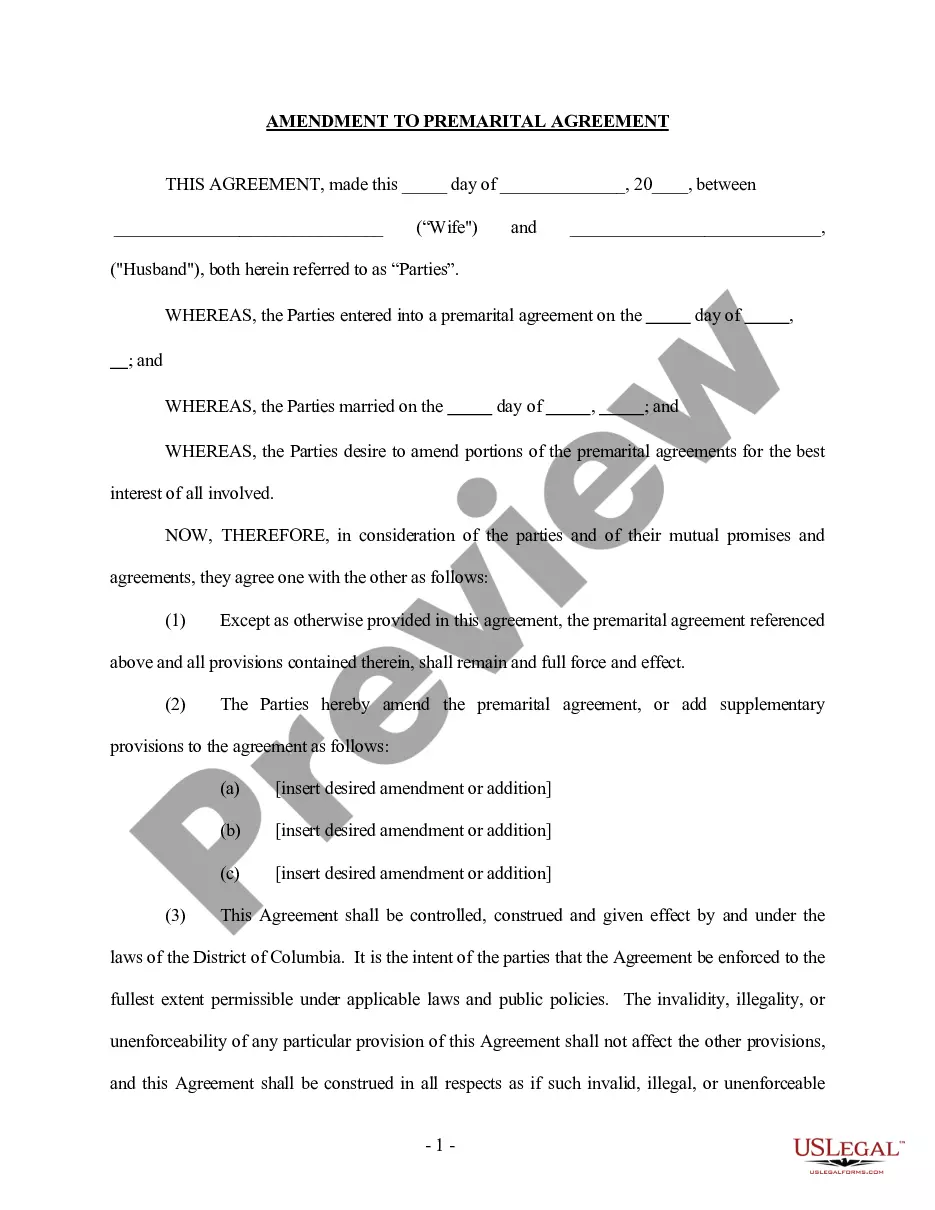
The Amendment to Prenuptial or Premarital Agreement is a legal document used to modify or add provisions to an existing premarital agreement in the District of Columbia. This form helps couples update their agreement to reflect changing circumstances or new agreements, ensuring that both parties are on the same page regarding future obligations and rights.
Main sections of this form
- Introduction stating the date and names of the parties involved.
- Details on how the existing premarital agreement is amended, allowing for specific changes.
- Legal framework that governs the agreement, citing the laws of the District of Columbia.
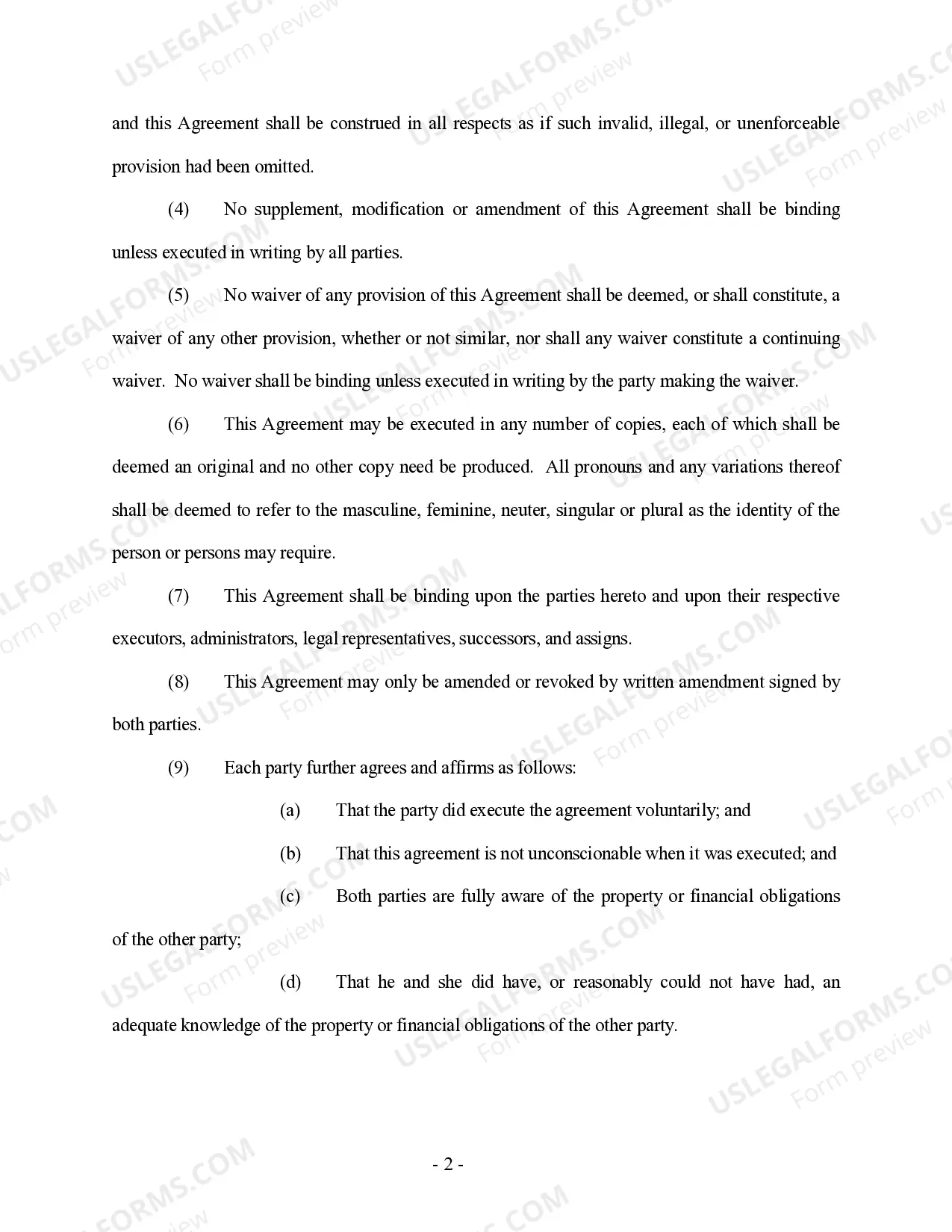
- Clauses regarding the necessity of written amendments and the process for waiving provisions.
- Statement affirming voluntary execution and awareness of financial obligations.
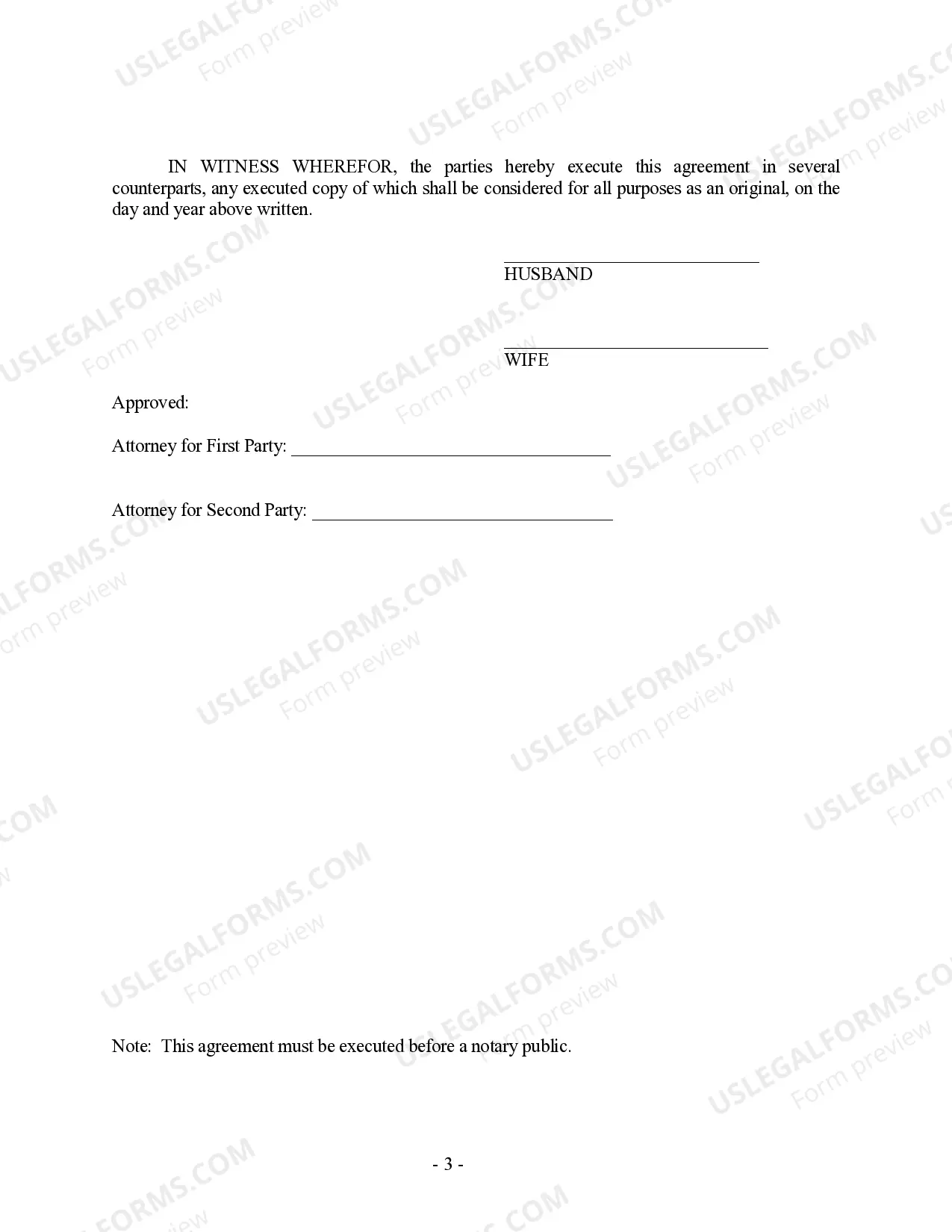
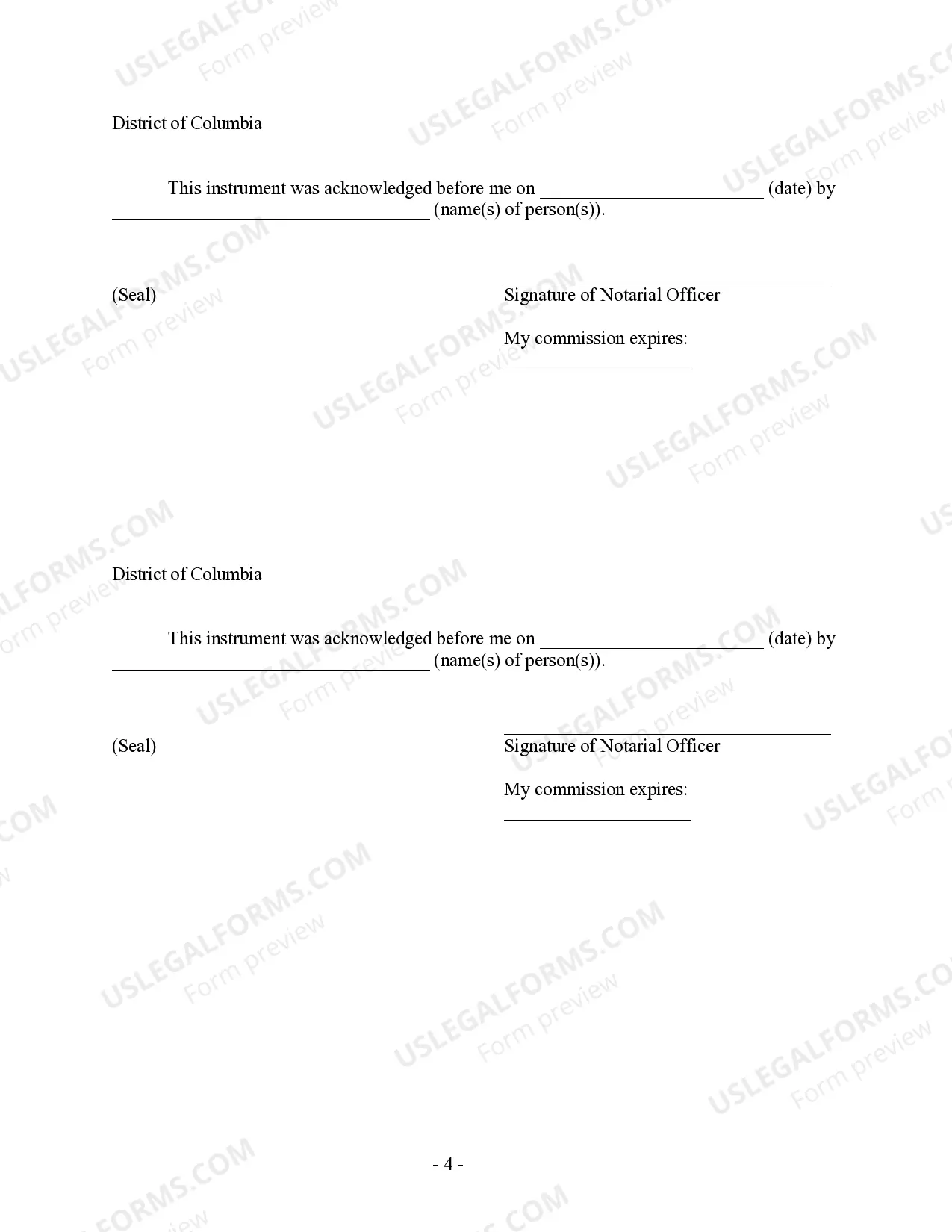
- Signatures of both parties and notarization requirement.
When to use this document
This form should be used when one or both parties wish to amend an existing prenuptial or premarital agreement. Common scenarios for its use include changes in financial circumstances, the birth of children, or revisions to property ownership. If circumstances have changed significantly since the original agreement was signed, this amendment ensures that the agreement remains relevant and enforceable.
Who needs this form
- Couples planning to update their prenuptial or premarital agreements.
- Individuals seeking to make changes reflecting changes in their financial situation or personal circumstances.
- Parties looking to clarify their rights and obligations under their existing agreement.
How to complete this form
- Identify the parties involved by entering their names at the beginning of the document.
- Specify the desired amendments or additions in the designated sections, clearly stating any changes to the original agreement.
- Ensure both parties are aware of their rights and obligations before signing.
- Sign the document in the presence of a notary public to validate the agreement.
- Keep a copy of the signed and notarized amendment for your records.
Does this form need to be notarized?
This form must be notarized to be legally valid. US Legal Forms provides secure online notarization powered by Notarize, allowing you to complete the process through a verified video call.
Get your form ready online
Our built-in tools help you complete, sign, share, and store your documents in one place.
Make edits, fill in missing information, and update formatting in US Legal Forms—just like you would in MS Word.
Download a copy, print it, send it by email, or mail it via USPS—whatever works best for your next step.
Sign and collect signatures with our SignNow integration. Send to multiple recipients, set reminders, and more. Go Premium to unlock E-Sign.
If this form requires notarization, complete it online through a secure video call—no need to meet a notary in person or wait for an appointment.
We protect your documents and personal data by following strict security and privacy standards.

Make edits, fill in missing information, and update formatting in US Legal Forms—just like you would in MS Word.

Download a copy, print it, send it by email, or mail it via USPS—whatever works best for your next step.

Sign and collect signatures with our SignNow integration. Send to multiple recipients, set reminders, and more. Go Premium to unlock E-Sign.

If this form requires notarization, complete it online through a secure video call—no need to meet a notary in person or wait for an appointment.

We protect your documents and personal data by following strict security and privacy standards.
Common mistakes
- Failing to specify the amendments clearly, which can lead to confusion or legal disputes.
- Not obtaining notarization, which can invalidate the amendment.
- Neglecting to ensure both parties fully understand the changes and their implications before signing.
Advantages of online completion
- Convenience of downloading and completing the form at your own pace.
- Editability allows for custom modifications to suit your specific needs.
- Access to legally vetted templates drafted by licensed attorneys, ensuring compliance with DC laws.
Quick recap
- The Amendment to Prenuptial or Premarital Agreement allows necessary updates to existing agreements.
- Notarization is required for legal validity in the District of Columbia.
- Both parties must agree to and sign the amendment in front of a notary public.
Looking for another form?






Form popularity
FAQ
A prenuptial agreement can outline asset division, spousal support, and debt responsibility in the event of a divorce. However, it cannot address child custody or child support, as these matters are determined based on the best interests of the child. It is essential to understand the limitations and advantages of the District of Columbia Amendment to Prenuptial or Premarital Agreement when creating this document.
A common loophole in a prenuptial agreement may arise from lack of full disclosure or coercion during the signing process. If one party did not fully disclose assets or if undue pressure was applied, a court might deem the agreement invalid. Understanding the intricacies of the District of Columbia Amendment to Prenuptial or Premarital Agreement can help you avoid these pitfalls.
Yes, you can amend a premarital agreement under the guidelines of the District of Columbia Amendment to Prenuptial or Premarital Agreement. This process typically involves both parties agreeing to the changes and ensuring the amendment is in writing. Consulting a legal expert can help you ensure that your changes meet all necessary legal standards and protect your interests.
No, prenuptial agreements do not expire after a decade in D.C. They continue to be enforceable as long as both parties adhere to the agreement's terms. However, situations may arise when it's beneficial to revisit and perhaps update the prenup to reflect current circumstances. It is wise to stay informed about the District of Columbia Amendment to Prenuptial or Premarital Agreement to understand your rights and obligations.
Certain factors can nullify a prenup, including lack of voluntary consent or if the agreement is unconscionable at the time it is under review. Additionally, failing to disclose assets properly or not having independent legal advice can render the agreement void. To avoid nullification, it is essential to draft a prenup aligned with the District of Columbia Amendment to Prenuptial or Premarital Agreement and ensure full compliance.
Prenups do not automatically become void after 10 years in Washington, D.C. They remain valid unless altered by mutual consent or challenged in court. However, changing circumstances or significant life events could warrant a reevaluation of the agreement. Understanding the implications of the District of Columbia Amendment to Prenuptial or Premarital Agreement can guide you in maintaining an effective prenup.
Prenuptial agreements in the District of Columbia must be in writing and signed by both parties before marriage. Each party should provide a fair and reasonable disclosure of their property and obligations to ensure transparency. Moreover, both parties should have independent legal counsel to protect their interests, which reinforces the validity of the agreement. Familiarizing yourself with the District of Columbia Amendment to Prenuptial or Premarital Agreement is advisable for legal adherence.
DC Code 46 506 pertains to the enforcement and validity of prenuptial agreements in the District of Columbia. It outlines specific requirements that these agreements must meet to be considered legally binding. This code ensures that both parties are informed and consenting, protecting their rights during dissolution. For those navigating prenuptial matters, referring to the District of Columbia Amendment to Prenuptial or Premarital Agreement could provide valuable insights.
In the District of Columbia, there is no specific time limit on the enforceability of a prenuptial agreement. These agreements remain in effect for as long as both parties abide by the terms outlined within them. However, periodic reviews can ensure that the prenup still meets both parties' needs as circumstances change over time. Explore the details of the District of Columbia Amendment to Prenuptial or Premarital Agreement to understand the longevity of your agreement.
A prenup may be void if it gets proven that one party did not fully disclose their financial information. It can also be challenged if one party signed under duress or coercion. Additionally, if the agreement is deemed unconscionable at the time of enforcement, it may not hold up in court. Therefore, understanding the District of Columbia Amendment to Prenuptial or Premarital Agreement is crucial.