District of Columbia Notice of Default for Past Due Payments in connection with Contract for Deed
What this document covers
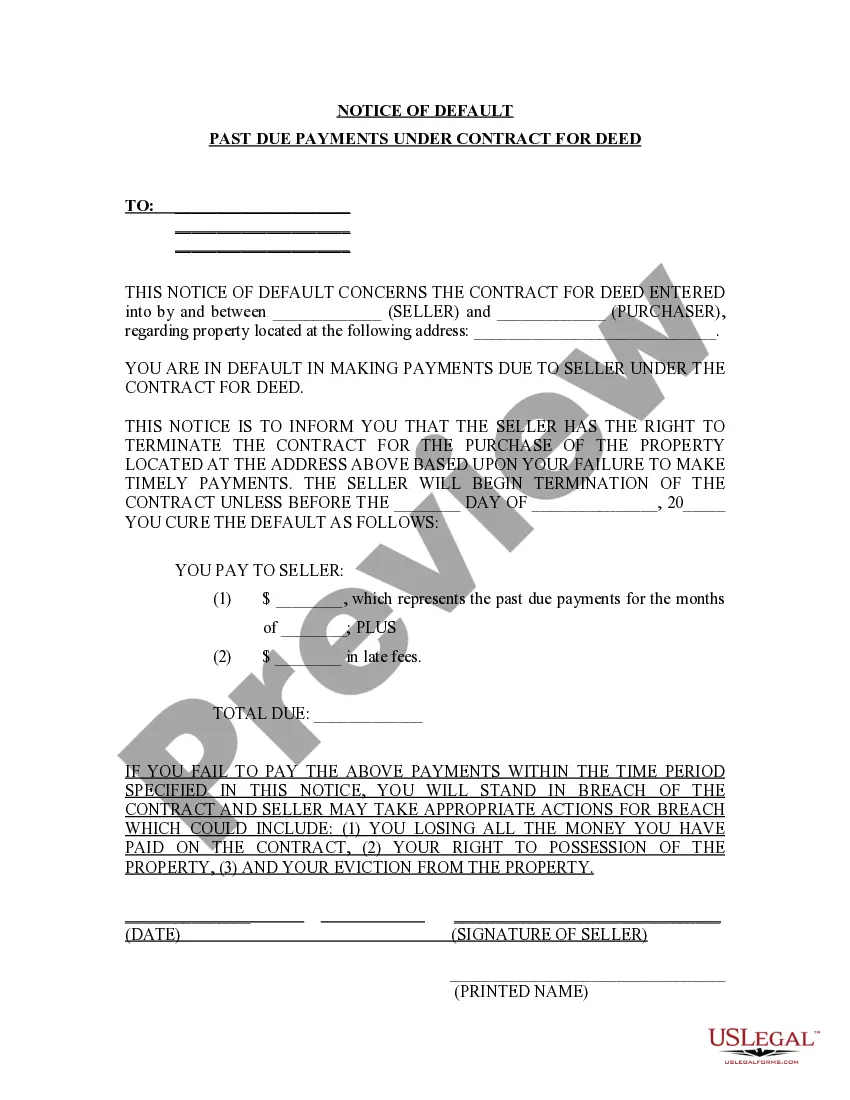
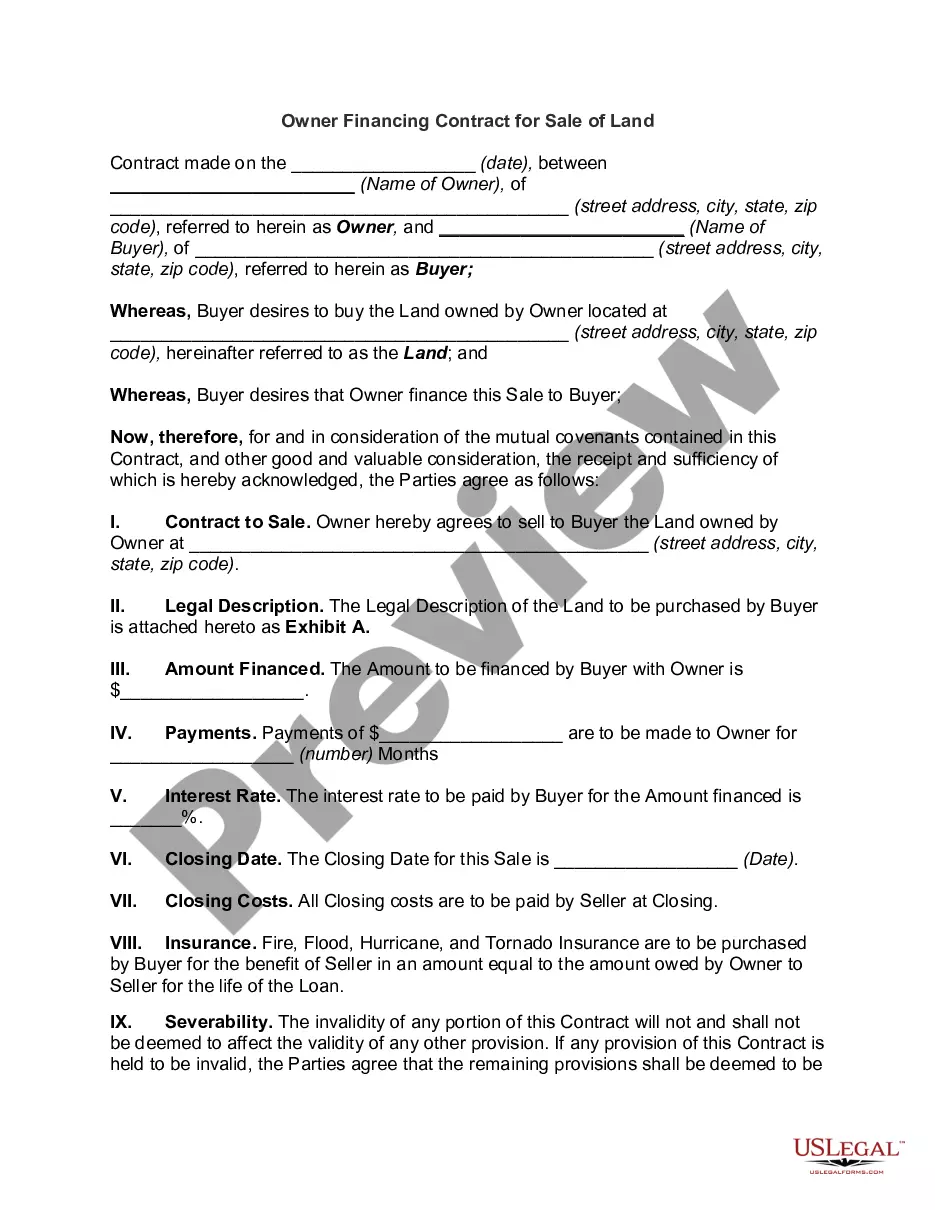
The Notice of Default for Past Due Payments in connection with a Contract for Deed is a formal document used to inform a buyer that their payments are overdue. This notice serves as an initial reminder that the buyer must act quickly to bring their account up-to-date. Importantly, this form is distinct from other types of default notices because it specifically relates to contracts for deed, which are unique arrangements in real estate transactions.
Main sections of this form
- Identification of the buyer and seller involved in the contract
- Details of the contract for deed, including relevant dates
- Specific statement regarding the overdue payments
- Instructions for the buyer on how to remedy the default
When to use this form
This form is used when a buyer has failed to make timely payments under a contract for deed. It can be used in cases where the seller needs to provide formal notice before taking further actions, such as pursuing forfeiture or litigation. Using this notice helps establish clear communication regarding payment issues and is essential in the process of enforcing contract terms.
Who this form is for
This form is suitable for:
- Individuals or entities acting as sellers in a contract for deed arrangement
- Buyers who are behind on their payments and need to understand the ramifications
- Real estate professionals managing contract for deed transactions
Steps to complete this form
- Identify the parties involved: Enter the names and addresses of the buyer and seller.
- Specify the property: Provide a clear description of the property related to the contract for deed.
- Detail overdue payments: Clearly state the amount due and the dates of missed payments.
- Include remedy instructions: Outline the steps the buyer should take to bring their account current.
- Sign and date the notice: Ensure the seller signs the notice to make it official.
Does this form need to be notarized?
This form does not typically require notarization unless specified by local law. It is advisable to check state-specific regulations to determine if notarization is necessary for enforceability.
Get your form ready online
Our built-in tools help you complete, sign, share, and store your documents in one place.
Make edits, fill in missing information, and update formatting in US Legal Forms—just like you would in MS Word.
Download a copy, print it, send it by email, or mail it via USPS—whatever works best for your next step.
Sign and collect signatures with our SignNow integration. Send to multiple recipients, set reminders, and more. Go Premium to unlock E-Sign.
If this form requires notarization, complete it online through a secure video call—no need to meet a notary in person or wait for an appointment.
We protect your documents and personal data by following strict security and privacy standards.

Make edits, fill in missing information, and update formatting in US Legal Forms—just like you would in MS Word.

Download a copy, print it, send it by email, or mail it via USPS—whatever works best for your next step.

Sign and collect signatures with our SignNow integration. Send to multiple recipients, set reminders, and more. Go Premium to unlock E-Sign.

If this form requires notarization, complete it online through a secure video call—no need to meet a notary in person or wait for an appointment.

We protect your documents and personal data by following strict security and privacy standards.
Typical mistakes to avoid
- Failing to include all required details about the overdue payments.
- Not delivering the notice according to state legal requirements.
- Using unclear language that may confuse the buyer about their obligations.
Why use this form online
- Convenience: Download the form anytime, anywhere, without having to visit an office.
- Editability: Easily fill out the form on your computer, saving time and effort.
- Reliability: The form is drafted by licensed attorneys, ensuring legal validity and compliance.
Looking for another form?


Form popularity
FAQ
A legal notice of default is a formal declaration from a lender indicating that a borrower has failed to meet their contract obligations, particularly regarding payment. In the context of the District of Columbia Notice of Default for Past Due Payments in connection with Contract for Deed, it serves as a crucial legal step before foreclosure proceedings. Such notices protect the lender's rights and provide the borrower with an opportunity to rectify the situation before further legal actions occur. It is essential to understand this process to mitigate potential consequences.
Delivering a notice of default must be done accurately to meet legal requirements. Typically, it can be sent via certified mail, personal delivery, or electronic communication, depending on local regulations. When issuing a District of Columbia Notice of Default for Past Due Payments in connection with Contract for Deed, ensure that you maintain proof of delivery. This serves as critical documentation should future disputes arise.
A default notice must include specific information to be valid and effective. Essential elements are the details of the borrower, the nature of the default, and the amounts due. Additionally, referencing the District of Columbia Notice of Default for Past Due Payments in connection with Contract for Deed helps align your notice with legal standards. Ensuring that all these components are included will enhance the notice's enforceability.
Filing a notice of default involves preparing the document and submitting it to the appropriate authority. In the District of Columbia, this typically includes sending the notice to the borrower and filing a copy with the court or relevant local agency. When drafting the notice, refer to the District of Columbia Notice of Default for Past Due Payments in connection with Contract for Deed to comply with local requirements. This ensures that you follow the necessary legal processes effectively.
Writing a default notice requires clarity and specificity. Begin by stating the nature of the default, such as missed payments, and provide the specific dates and amounts involved. Clearly reference the District of Columbia Notice of Default for Past Due Payments in connection with Contract for Deed to ensure that it aligns with local regulations. Always include a call to action, encouraging the recipient to rectify the situation by a specified date.
To write a notice of default, begin by clearly identifying the parties involved and referencing the contract in question. Specify the nature of the default, detailing the missed payments under the District of Columbia Notice of Default for Past Due Payments in connection with Contract for Deed. Include a deadline for the borrower to respond and rectify the situation. Using platforms like US Legal Forms can streamline this process, providing templates and guidance to ensure compliance and clarity in your notice.
A written notice of default serves as an official communication that a party has failed to meet their obligations outlined in a contract. In the context of the District of Columbia Notice of Default for Past Due Payments in connection with Contract for Deed, this document informs the borrower of their overdue payments. It outlines the amount due and requests immediate action to rectify the default. This notice is crucial for initiating any further legal actions, if necessary.
The primary purpose of a notice of default is to inform you of overdue payments and prompt action. It effectively serves as a last warning before potential foreclosure or other legal actions take place. In the case of the District of Columbia Notice of Default for Past Due Payments in connection with Contract for Deed, this document can have significant consequences if not addressed swiftly.
While both a notice of default and a demand letter seek to address overdue payments, they serve distinct purposes. A notice of default formally indicates that a payment default has occurred, whereas a demand letter requests payment directly. Understanding these differences is essential, especially in the context of a District of Columbia Notice of Default for Past Due Payments in connection with Contract for Deed.
To file a notice of default, you generally need to draft a formal document and submit it to the appropriate court or agency. This process often involves providing evidence of the overdue payments and ensuring all legal requirements are met. Using platforms like USLegalForms can streamline your filing process, particularly when dealing with a District of Columbia Notice of Default for Past Due Payments in connection with Contract for Deed.