Connecticut Fiduciary Deed for Executors, Trustees, and other Fiduciaries
What this document covers
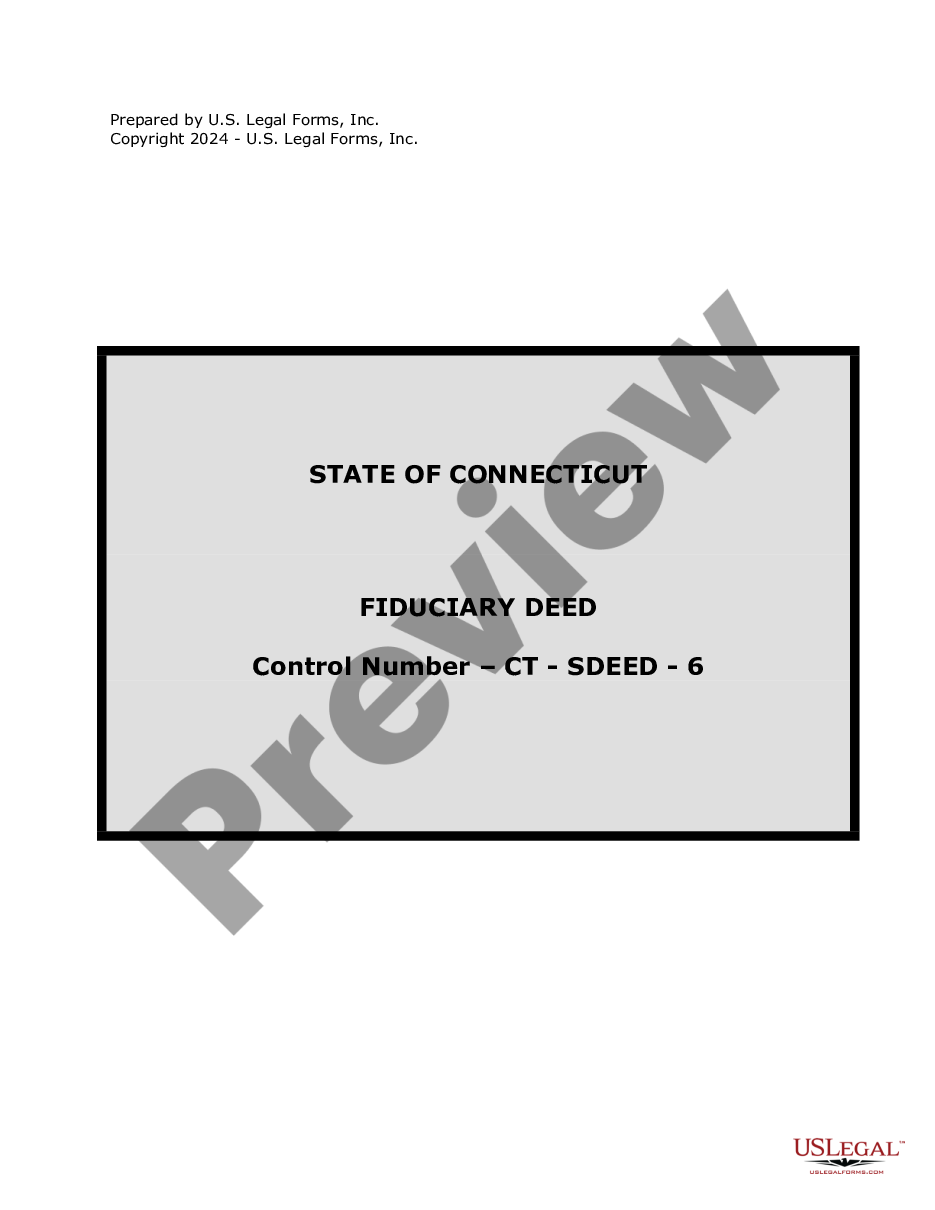
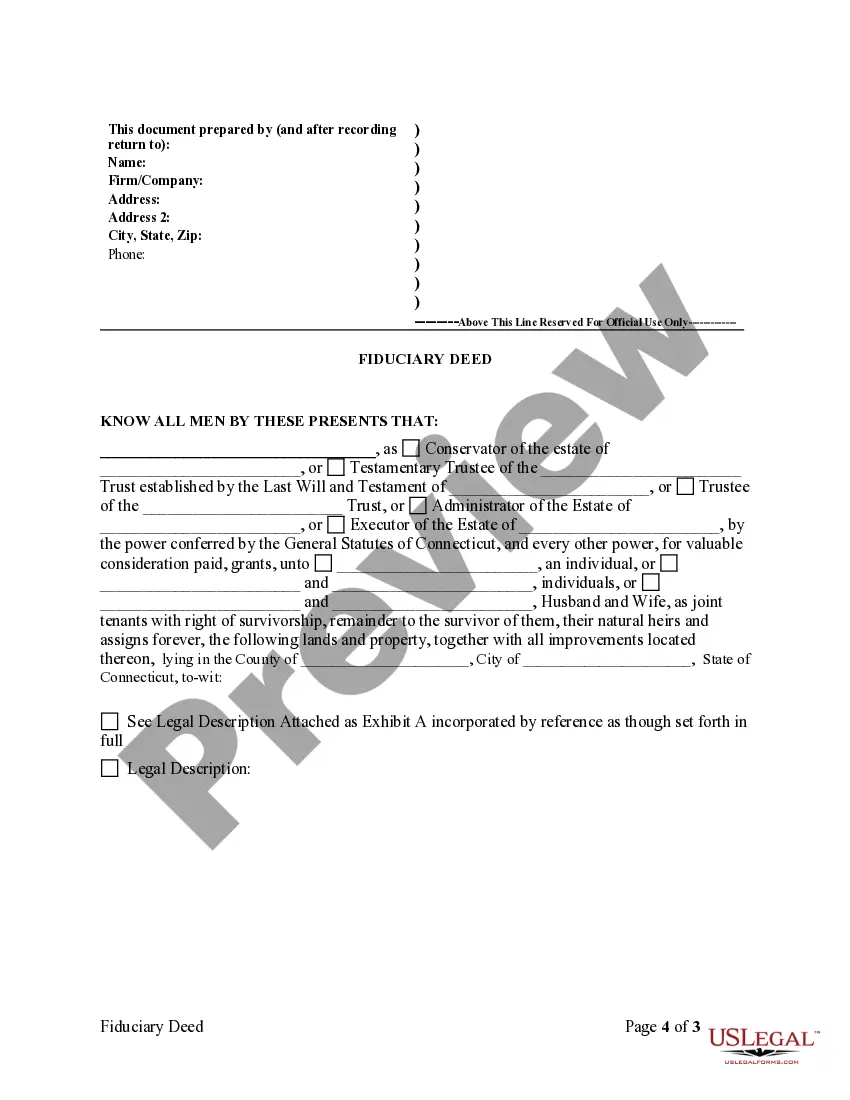
The Fiduciary Deed is a legal document utilized by executors, trustees, guardians, or conservators to transfer property on behalf of another party. This form is distinct from standard deeds as it confirms the capacity of the person transferring the property to act in a fiduciary role, indicating their authority and responsibilities under the law.
Key components of this form
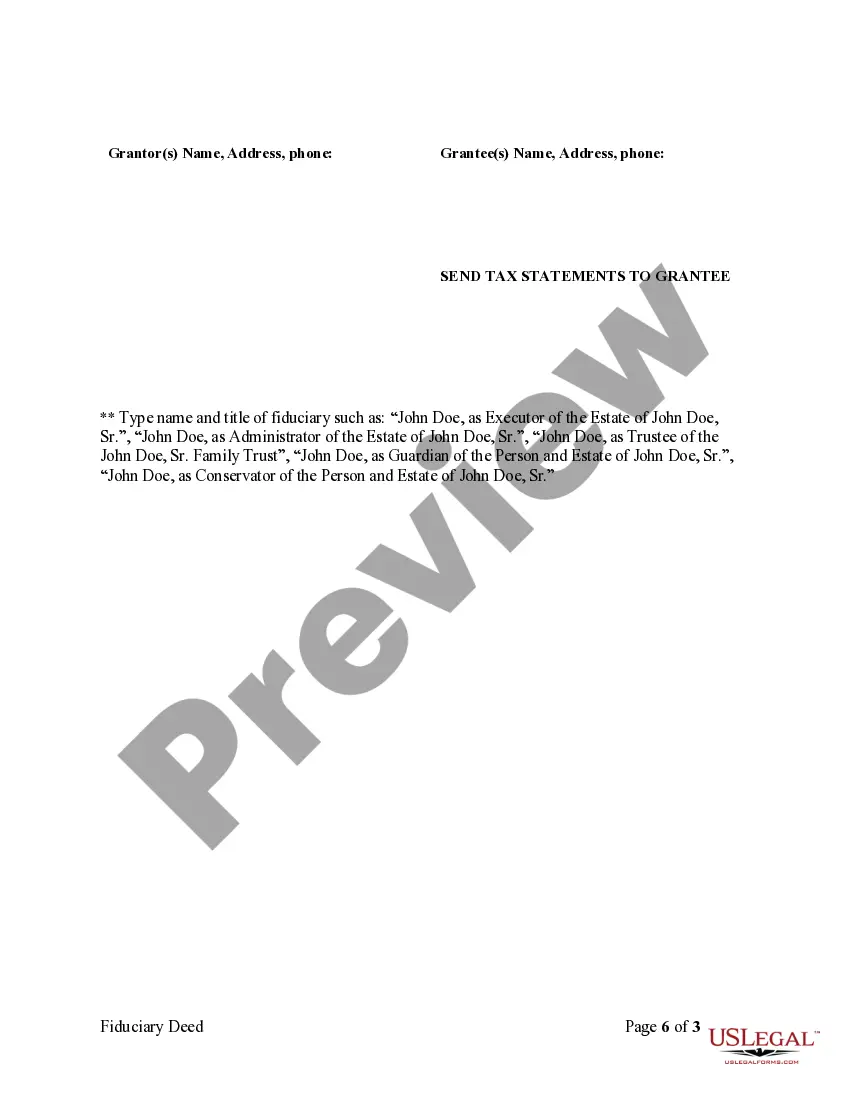
- Grantor and Grantee information
- Legal description of the property being transferred
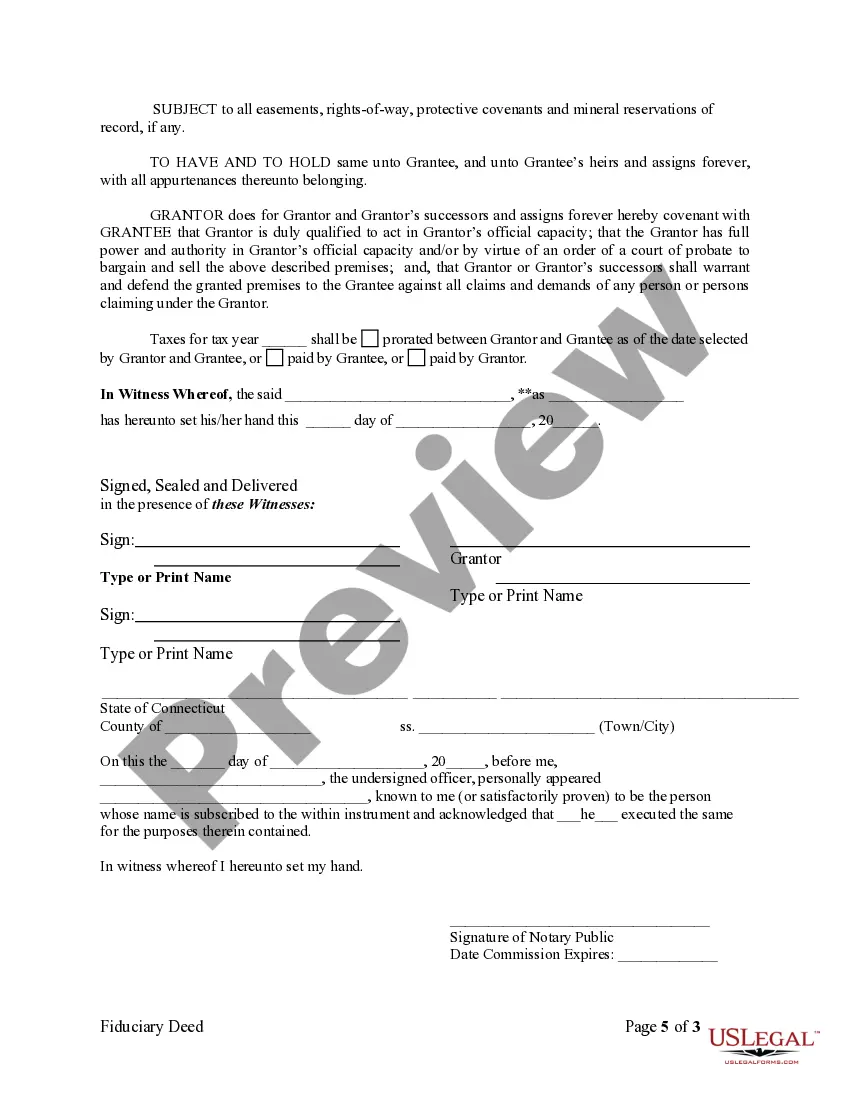
- Provisions regarding tax responsibilities
- Signature section for the grantor
- Notary acknowledgment provision



When to use this document
This form should be used when a fiduciary needs to transfer property as part of managing the estate or trust. Common scenarios include executing a will, managing real estate held by the trust, or transferring assets from a deceased individual's estate to beneficiaries.
Who this form is for
- Executors of wills managing estate property
- Trustees overseeing trust assets
- Guardians appointed to manage property for minors
- Conservators responsible for managing the affairs of an individual deemed unable to do so
How to prepare this document
- Identify the parties involved, including the grantor (fiduciary) and the grantee (recipient).
- Clearly describe the property to be transferred, referencing any required legal descriptions.
- Specify how property taxes will be handled during the transfer.
- Have the grantor sign the document on the indicated date.
- Complete the notary acknowledgment section to validate the deed.
Does this document require notarization?
Notarization is required for this form to take effect. Our online notarization service, powered by Notarize, lets you verify and sign documents remotely through an encrypted video session, available 24/7.
Get your form ready online
Our built-in tools help you complete, sign, share, and store your documents in one place.
Make edits, fill in missing information, and update formatting in US Legal Forms—just like you would in MS Word.
Download a copy, print it, send it by email, or mail it via USPS—whatever works best for your next step.
Sign and collect signatures with our SignNow integration. Send to multiple recipients, set reminders, and more. Go Premium to unlock E-Sign.
If this form requires notarization, complete it online through a secure video call—no need to meet a notary in person or wait for an appointment.
We protect your documents and personal data by following strict security and privacy standards.

Make edits, fill in missing information, and update formatting in US Legal Forms—just like you would in MS Word.

Download a copy, print it, send it by email, or mail it via USPS—whatever works best for your next step.

Sign and collect signatures with our SignNow integration. Send to multiple recipients, set reminders, and more. Go Premium to unlock E-Sign.

If this form requires notarization, complete it online through a secure video call—no need to meet a notary in person or wait for an appointment.

We protect your documents and personal data by following strict security and privacy standards.
Mistakes to watch out for
- Failing to provide a complete legal description of the property
- Leaving out the signature of the grantor or failing to have it notarized
- Not specifying the tax proration arrangements correctly
Benefits of using this form online
- Convenient access to a professionally drafted form
- Easy to complete using a computer with integrated form fields
- Ability to make edits prior to finalizing the document
Looking for another form?

Form popularity
FAQ
The benefit of having a fiduciary lies in their dedication to managing affairs responsibly and ethically. They provide expertise and oversight that can help prevent disputes and ensure that assets are managed according to legal and familial wishes. Fiduciaries also streamline processes, making estate management smoother. By utilizing a Connecticut Fiduciary Deed for Executors, Trustees, and other Fiduciaries, you can trust that property transfers will be handled properly.
The primary goal of a fiduciary is to act in the best interest of the beneficiaries or clients they represent. This involves managing assets responsibly, ensuring transparency, and following legal guidelines. Fiduciaries must maintain integrity and uphold their duties, as they hold a position of trust. With a Connecticut Fiduciary Deed for Executors, Trustees, and other Fiduciaries, they accomplish this mission effectively.
A fiduciary deed is utilized to transfer property when an individual, such as an executor or trustee, acts on behalf of another party. This is critical in estate management, especially when settling a trust or a will. The fiduciary deed provides necessary documentation showing that the fiduciary has authority to act. Using a Connecticut Fiduciary Deed for Executors, Trustees, and other Fiduciaries ensures that property transfers are legally recognized.
While both fiduciaries and trustees manage assets for others, they are not exactly the same. A trustee is a specific type of fiduciary appointed to manage a trust. On the other hand, fiduciaries encompass a larger group, including executors and agents, who are bound to act in the best interest of their clients or beneficiaries. Understanding these roles is essential when dealing with a Connecticut Fiduciary Deed for Executors, Trustees, and other Fiduciaries.
Yes, an executor can certainly be a fiduciary. In fact, the term 'fiduciary' broadly describes anyone who manages assets or property for another person. Executors are tasked with fulfilling the wishes expressed in a will, which includes managing and distributing the estate. A Connecticut Fiduciary Deed for Executors, Trustees, and other Fiduciaries enables executors to perform this function effectively.
A fiduciary deed allows executors, trustees, and other fiduciaries to transfer property on behalf of the estate they manage. This deed ensures that the property changes ownership while adhering to legal responsibilities. The purpose is to provide a clear legal pathway for the fiduciary to act in the best interests of the beneficiaries. In the context of Connecticut Fiduciary Deed for Executors, Trustees, and other Fiduciaries, it simplifies the transfer of estate assets.
The strongest form of deed is often considered to be a warranty deed. A warranty deed guarantees that the grantor has clear title to the property and can transfer ownership. This type of deed offers the highest level of protection to the grantee. For those looking at a Connecticut Fiduciary Deed for Executors, Trustees, and other Fiduciaries, understanding the differences in deeds is crucial.
The fiduciary on an estate return is generally the executor or administrator responsible for the estate's affairs. This individual or representative ensures that the estate's income, expenses, and distributions are accurately reported. Their role is critical for maintaining compliance with tax laws and addressing any potential legal issues. Executors may benefit from using a Connecticut Fiduciary Deed for Executors, Trustees, and other Fiduciaries to manage these responsibilities efficiently.
The fiduciary of an estate is typically the executor named in the will or appointed by the court. This individual manages the estate's assets and executes the terms of the will. It is their duty to act in the best interest of the estate and its beneficiaries, ensuring proper asset management and distribution. A Connecticut Fiduciary Deed for Executors, Trustees, and other Fiduciaries often plays a vital role in supporting fiduciaries in these responsibilities.
Yes, an estate return is considered a fiduciary return. This document reports the income and expenses of the estate during the probate process, ensuring compliance with tax obligations. Executors and fiduciaries must file this return to provide transparency and accountability. Utilizing a Connecticut Fiduciary Deed for Executors, Trustees, and other Fiduciaries can help clarify the handling of estate assets, making the filing process smoother.