Connecticut Statutory General Power of Attorney with Durable Provisions
What is this form?
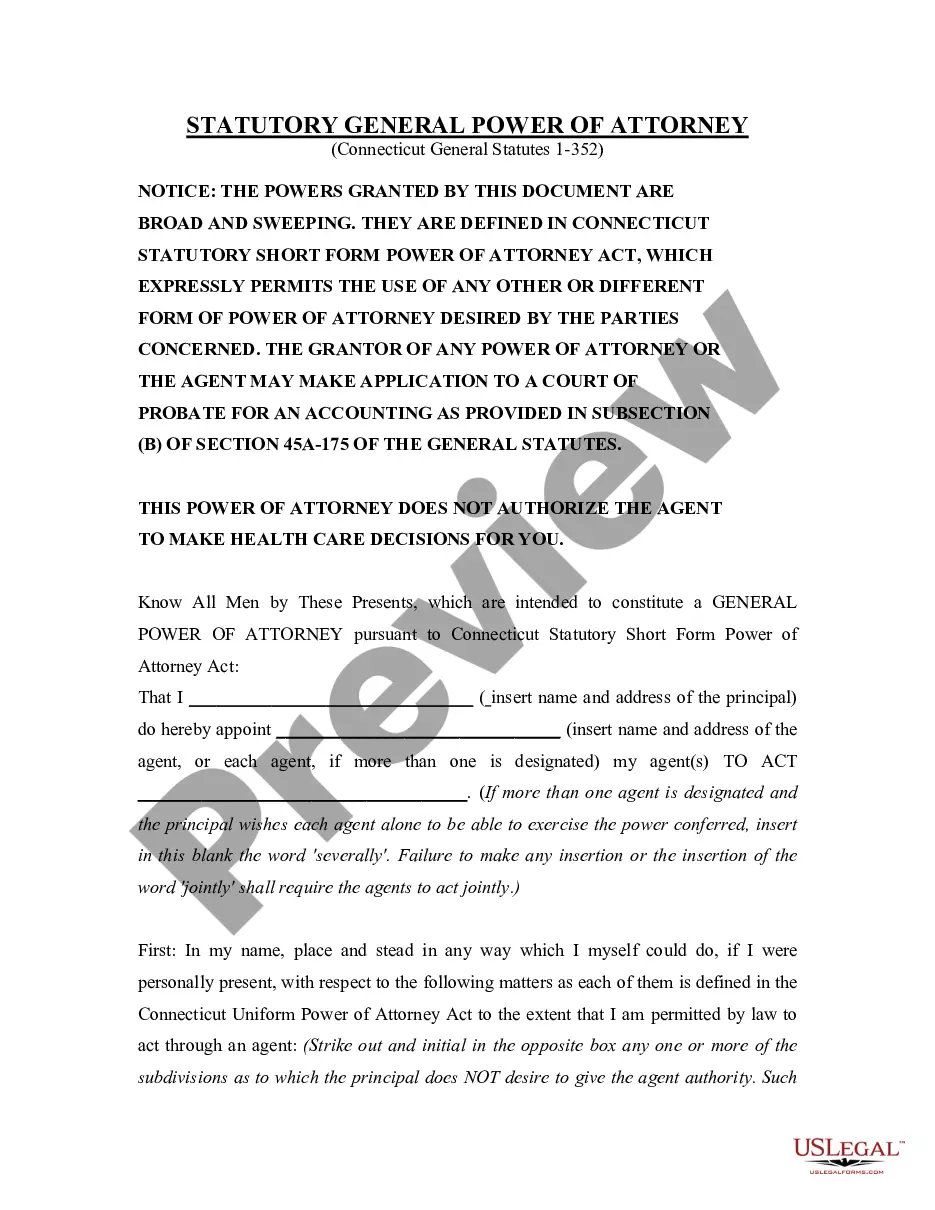
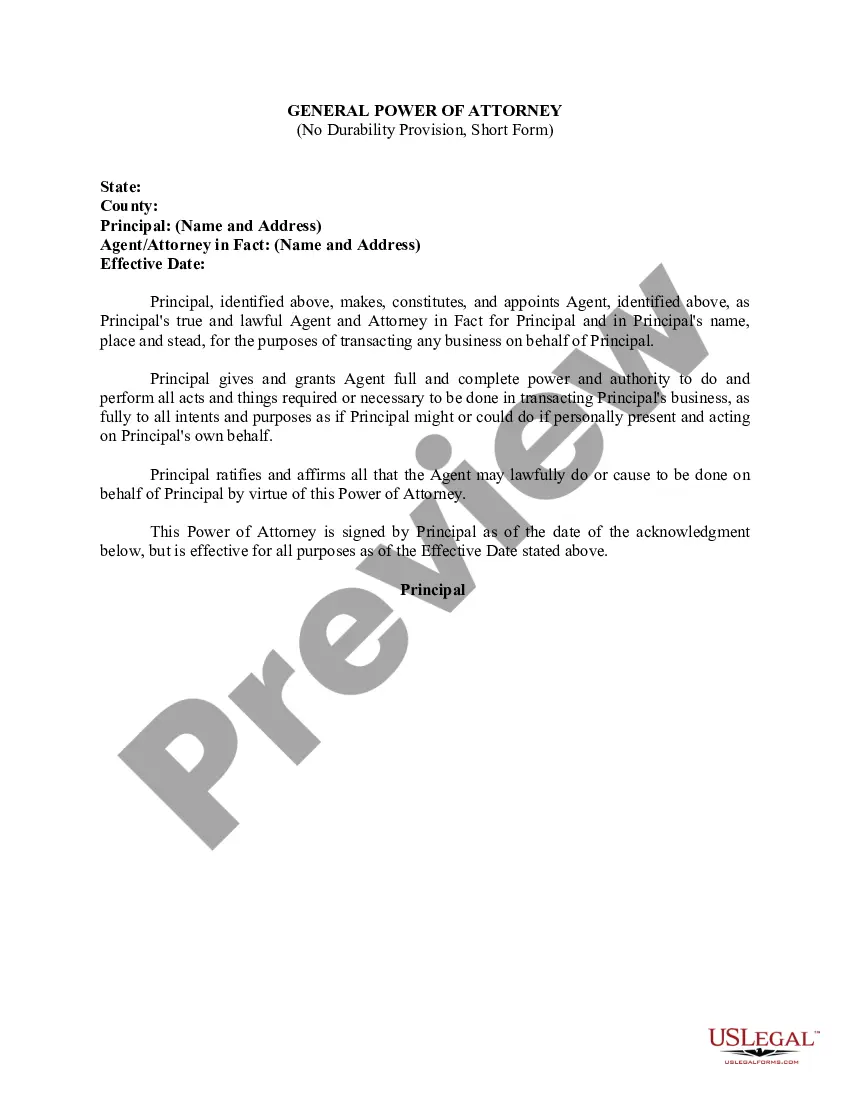
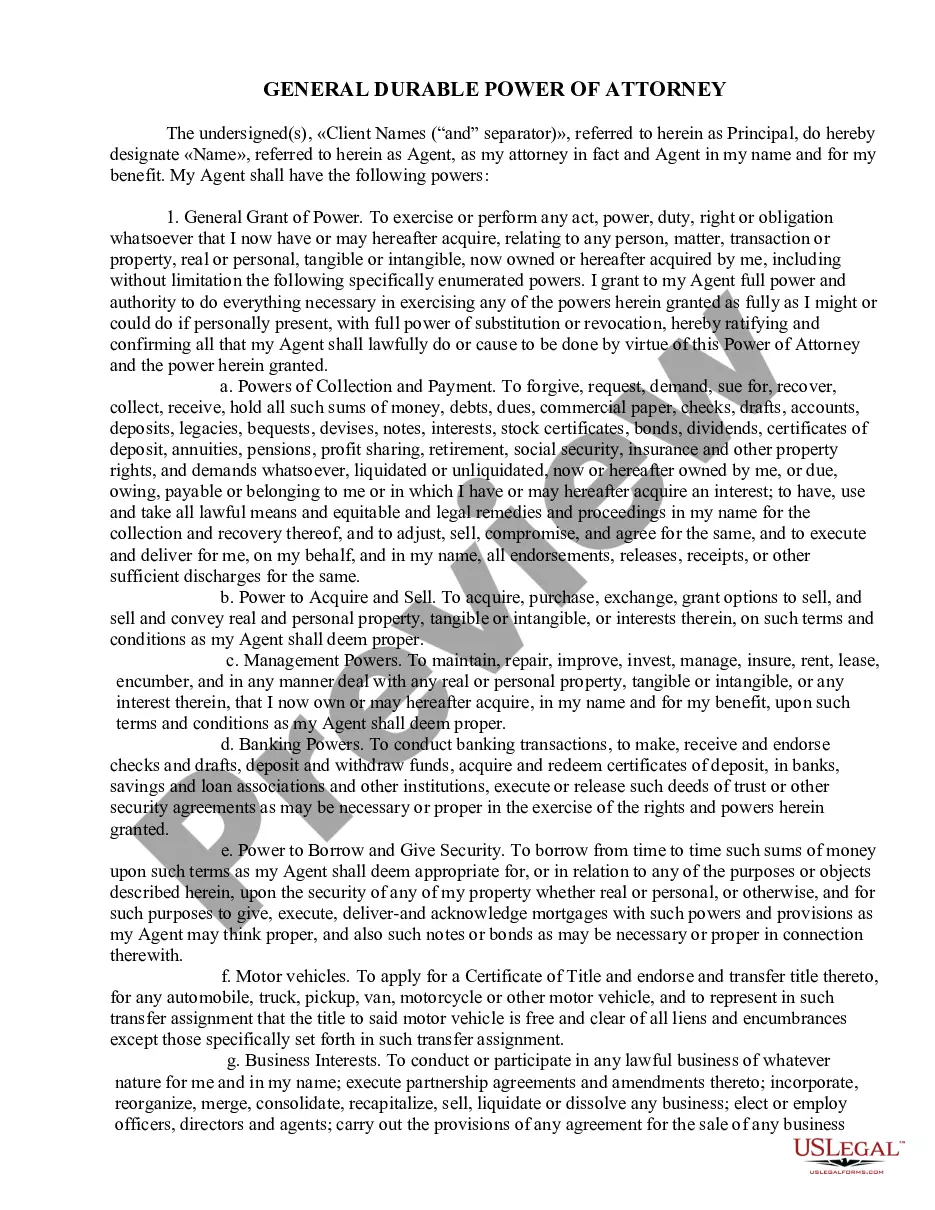
The Statutory General Power of Attorney with Durable Provisions is a legal document that grants an appointed agent extensive authority over your financial matters and property. This form is distinguished by its durability, meaning it remains effective even if you become incapacitated. Unlike medical advance directives, this power of attorney does not cover health care decisions.
Key parts of this document
- Designation of the principal and agent(s)
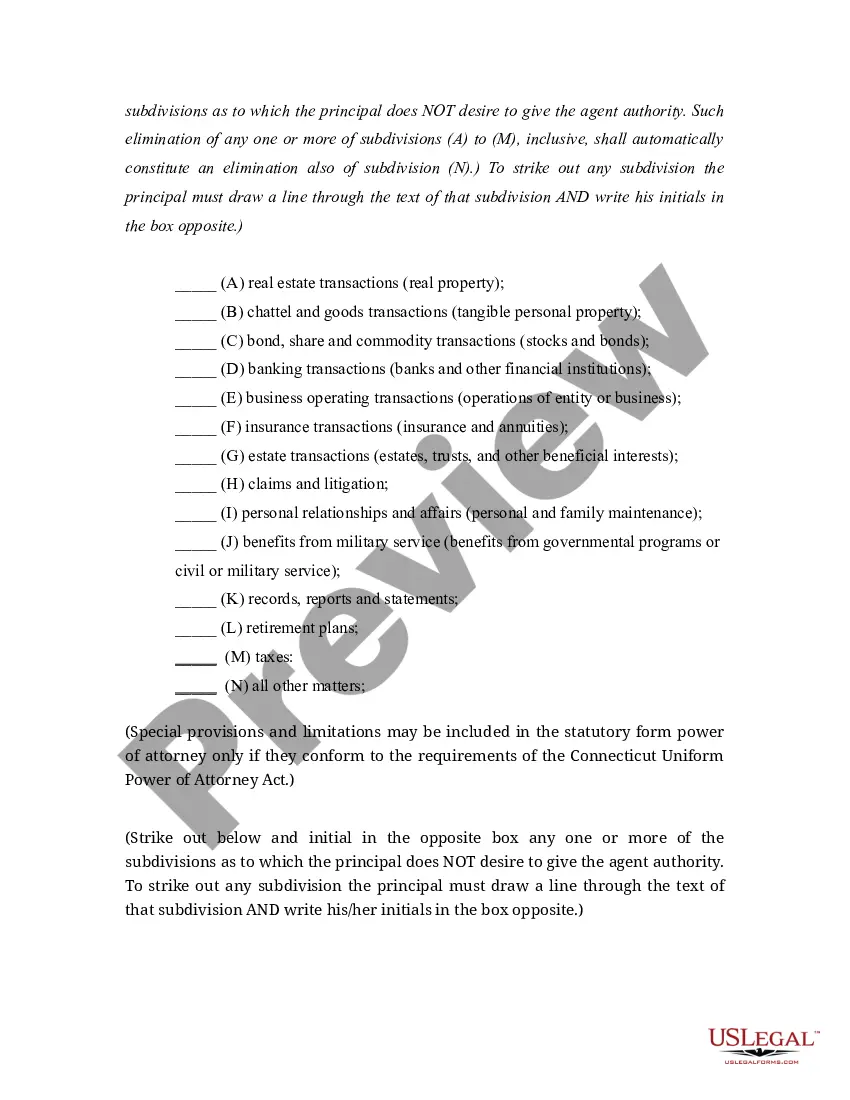
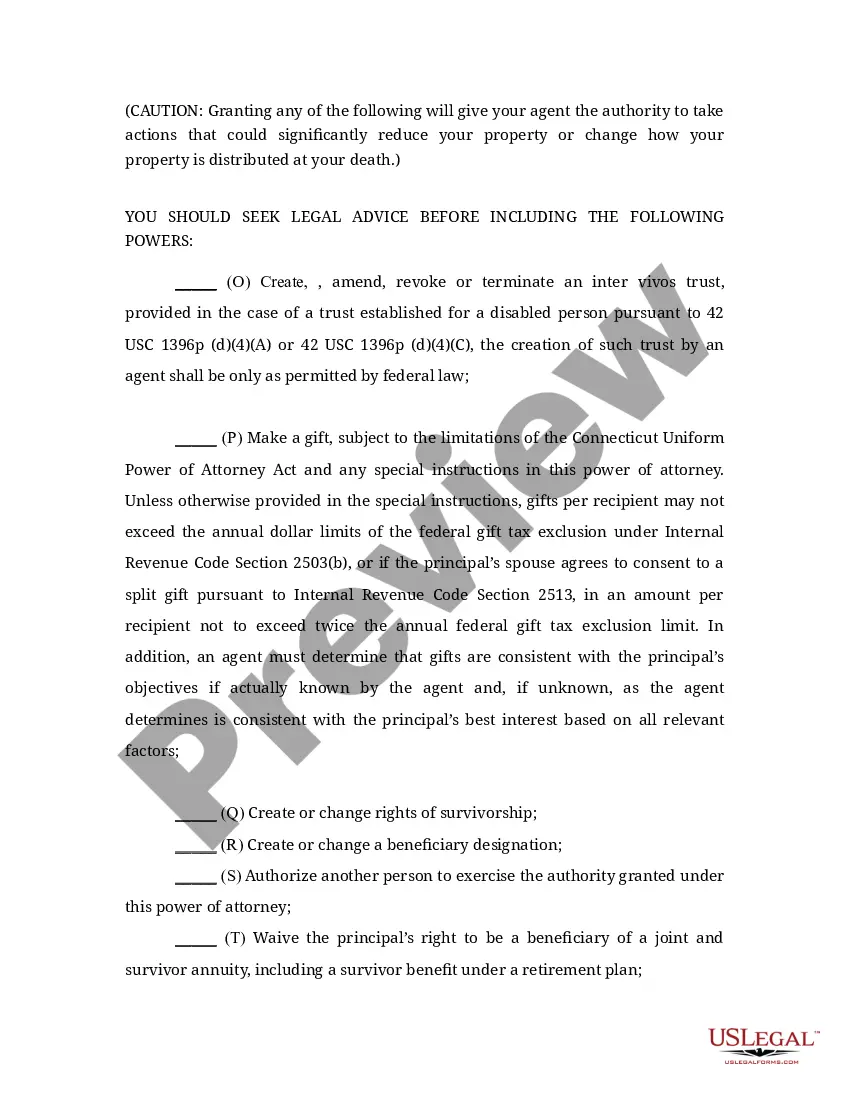
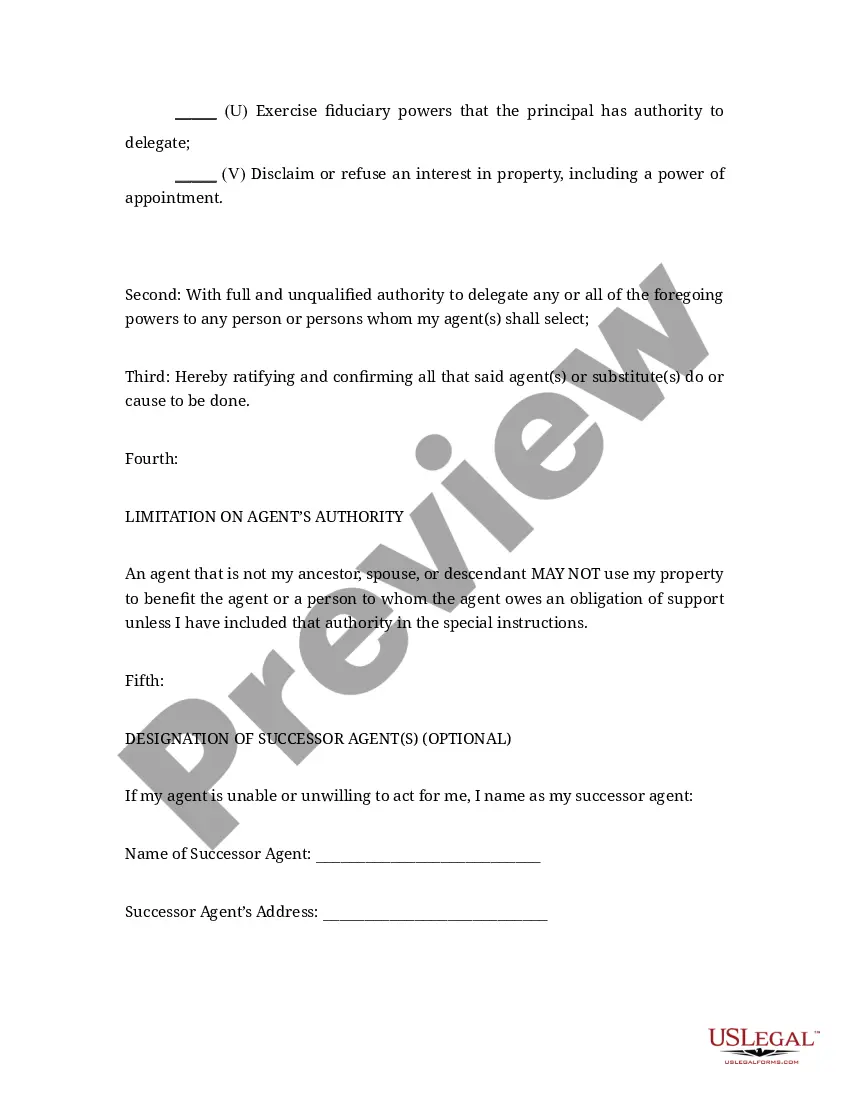
- Broad powers covering real estate, banking, business transactions, and more
- Option to limit agent's authority by striking specific powers
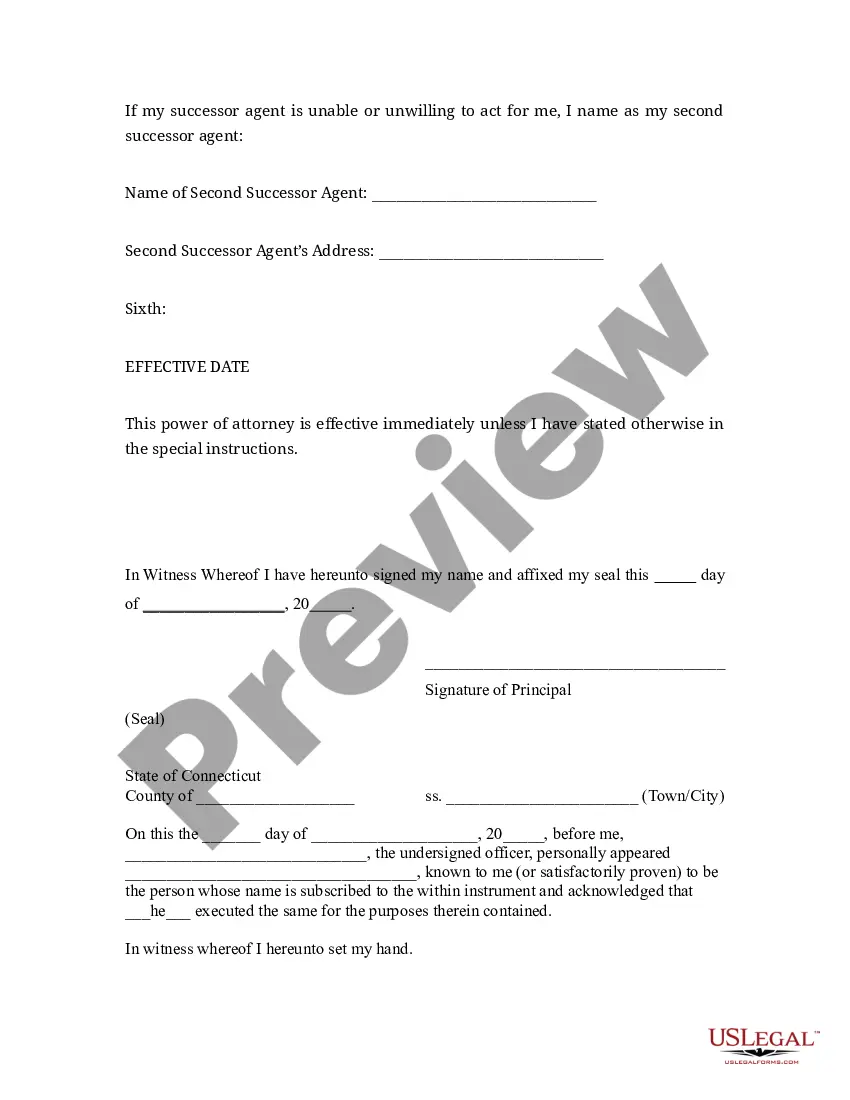
- Possibility to name successor agents
- Effective date indicating when the powers begin

When to use this document
This form is useful when you need someone to manage your financial affairs, especially if you anticipate being unavailable to make decisions due to travel, illness, or incapacity. It is commonly used by individuals who want to ensure their financial matters are handled by a trusted person during challenging times.
Intended users of this form
- Individuals who want to appoint an agent to handle their financial matters
- People seeking a durable power of attorney for long-term planning
- Anyone needing to manage property transactions or financial obligations on their behalf
Instructions for completing this form
- Identify the principal by entering your name and address.
- Specify the agent(s) by including their names and addresses.
- Choose the powers you wish to grant your agent by completing the designated sections.
- Designate any successor agents if desired.
- Sign and date the document where indicated, and ensure it is notarized if necessary.
Does this form need to be notarized?
This form needs to be notarized to ensure legal validity. US Legal Forms provides secure online notarization powered by Notarize, allowing you to complete the process through a verified video call, available anytime.
Get your form ready online
Our built-in tools help you complete, sign, share, and store your documents in one place.
Make edits, fill in missing information, and update formatting in US Legal Forms—just like you would in MS Word.
Download a copy, print it, send it by email, or mail it via USPS—whatever works best for your next step.
Sign and collect signatures with our SignNow integration. Send to multiple recipients, set reminders, and more. Go Premium to unlock E-Sign.
If this form requires notarization, complete it online through a secure video call—no need to meet a notary in person or wait for an appointment.
We protect your documents and personal data by following strict security and privacy standards.

Make edits, fill in missing information, and update formatting in US Legal Forms—just like you would in MS Word.

Download a copy, print it, send it by email, or mail it via USPS—whatever works best for your next step.

Sign and collect signatures with our SignNow integration. Send to multiple recipients, set reminders, and more. Go Premium to unlock E-Sign.

If this form requires notarization, complete it online through a secure video call—no need to meet a notary in person or wait for an appointment.

We protect your documents and personal data by following strict security and privacy standards.
Mistakes to watch out for
- Failing to specify powers that the agent should not have.
- Not designating a successor agent when needed.
- Neglecting to have the document notarized if required.
- Leaving the form unsigned or undated.
Advantages of online completion
- Convenience of downloading the form instantly without needing to make appointments.
- Editable format allows you to customize the document easily.
- Access to templates drafted by licensed attorneys to ensure legal compliance.
Quick recap
- The Statutory General Power of Attorney with Durable Provisions grants extensive financial authority.
- It remains effective even during incapacitation.
- Ensure proper completion, including notarization, for legal validity.
Looking for another form?


Form popularity
FAQ
To file a Power of Attorney in Connecticut, you must ensure that it is properly executed and notarized. You do not need to file the document with the state, but providing copies to all relevant parties, such as financial institutions and healthcare providers, is essential. The Connecticut Statutory General Power of Attorney with Durable Provisions makes this process straightforward, ensuring that your agent has the proper documentation to act on your behalf.
Activating a Power of Attorney in Connecticut typically occurs automatically upon signing, unless stated otherwise in the document. When you utilize the Connecticut Statutory General Power of Attorney with Durable Provisions, you grant immediate authority to your agent. However, if the document specifies activation upon a certain event, such as your incapacity, that condition must be satisfied for the powers to take effect.
A statutory power of attorney and a durable power of attorney are related but not identical. The Connecticut Statutory General Power of Attorney with Durable Provisions combines elements of both, ensuring that your designated agent retains authority even if you become incapacitated. It is vital to understand this distinction when selecting the appropriate form for your needs.
To submit a Power of Attorney in Connecticut, you typically present the completed document to the relevant institution or individual who will rely on it. In most cases, this includes banks, healthcare providers, or legal entities that require proof of your representative's authority. It is crucial to have the Connecticut Statutory General Power of Attorney with Durable Provisions properly formatted and notarized to avoid any issues during submission.
Yes, in Connecticut, a Power of Attorney generally needs to be notarized to ensure its validity. The Connecticut Statutory General Power of Attorney with Durable Provisions requires signature acknowledgment by a notary public. This step helps confirm your identity and the authenticity of the document, providing peace of mind to all parties involved.
The easiest way to establish a power of attorney in Connecticut is to utilize the Connecticut Statutory General Power of Attorney with Durable Provisions. This form simplifies the process, allowing you to designate someone to make decisions on your behalf. You can complete the form online or through a reliable legal resource. This approach saves time and ensures compliance with state laws.
A statutory power of attorney (POA) and a durable POA are not identical, although they share similarities. The Connecticut Statutory General Power of Attorney with Durable Provisions permits your agent to act on your behalf even during periods of incapacity, reinforcing its reliability. In contrast, a standard statutory POA may not provide this same level of ongoing authority. Understanding these differences helps ensure that your financial and healthcare decisions align with your wishes.
The Connecticut Statutory General Power of Attorney with Durable Provisions ensures that your designated agent can make decisions on your behalf, even if you become incapacitated. While both types of powers of attorney serve to grant authority, the key difference lies in the durability. A uniform statutory power of attorney may not always include durable provisions, allowing it to become void under certain conditions. Therefore, it's essential to understand these distinctions when planning for your future.
Filling out power of attorney paperwork involves several steps. First, gather the necessary information about yourself and your chosen agent, then clearly specify the powers you want to grant, focusing on the provisions that cater to your unique needs. Using a reliable resource like US Legal Forms can guide you through the nuances of creating a Connecticut Statutory General Power of Attorney with Durable Provisions, ensuring all legal requirements are met accurately.
A durable power of attorney is generally better if you want your authority to continue even if you become incapacitated. In contrast, a Connecticut Statutory General Power of Attorney with Durable Provisions ensures your chosen agent can act on your behalf during emergencies without interruption. This feature provides peace of mind, knowing your financial matters are managed while you focus on your health or recovery.