Connecticut Letter from Tenant to Landlord containing Notice to landlord to withdraw retaliatory rent increase
Overview of this form
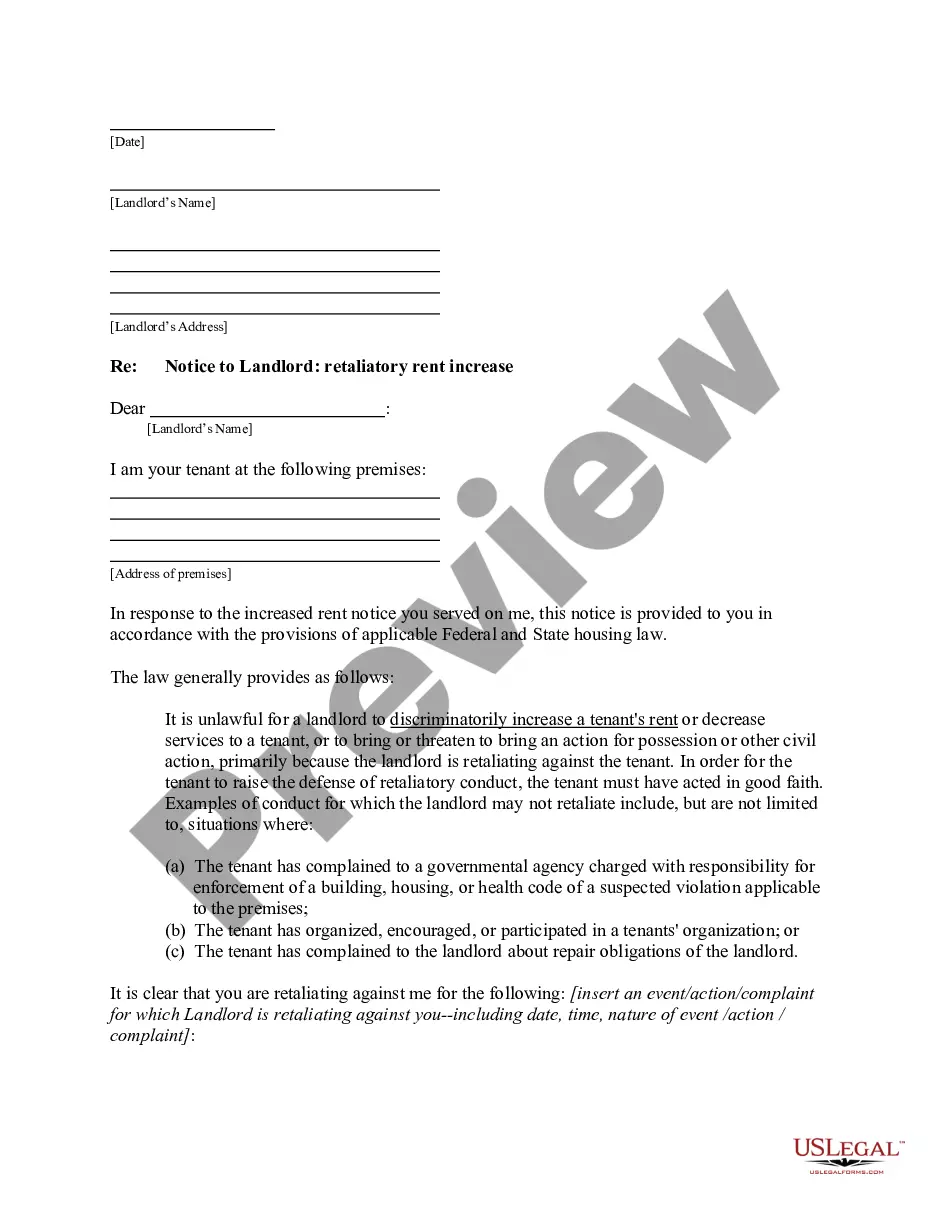
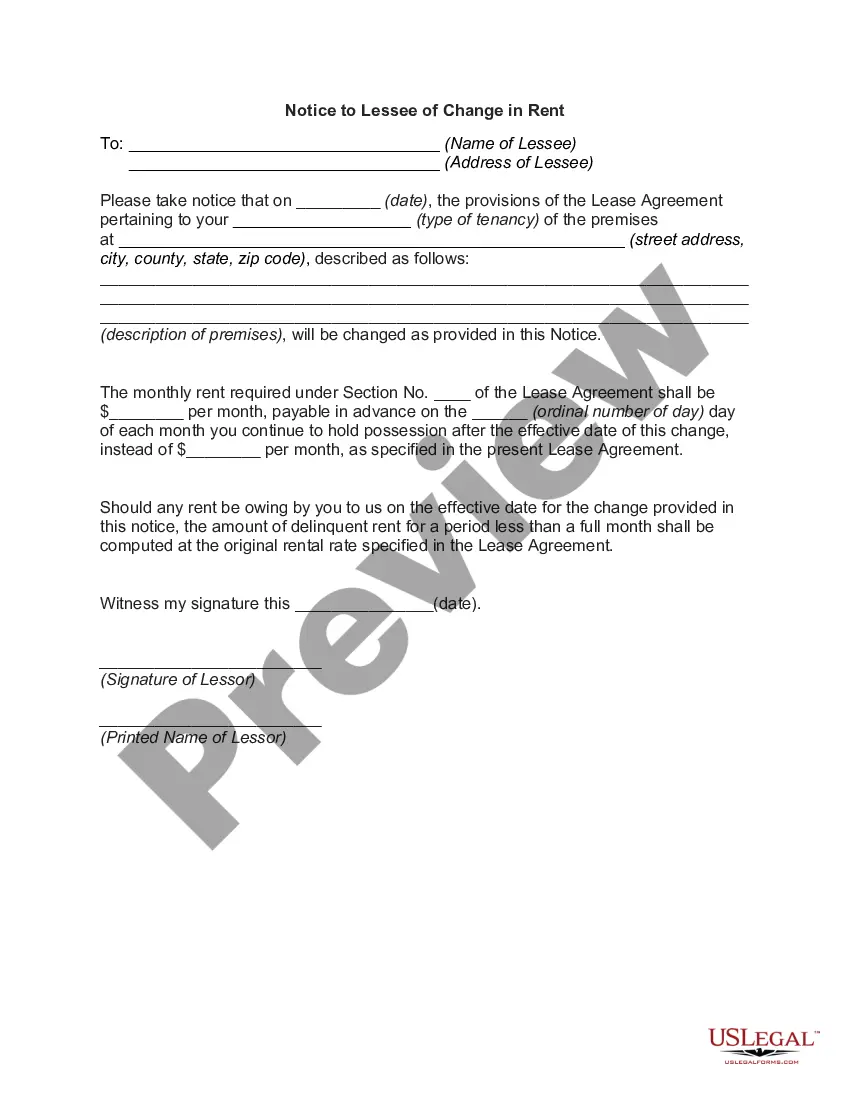
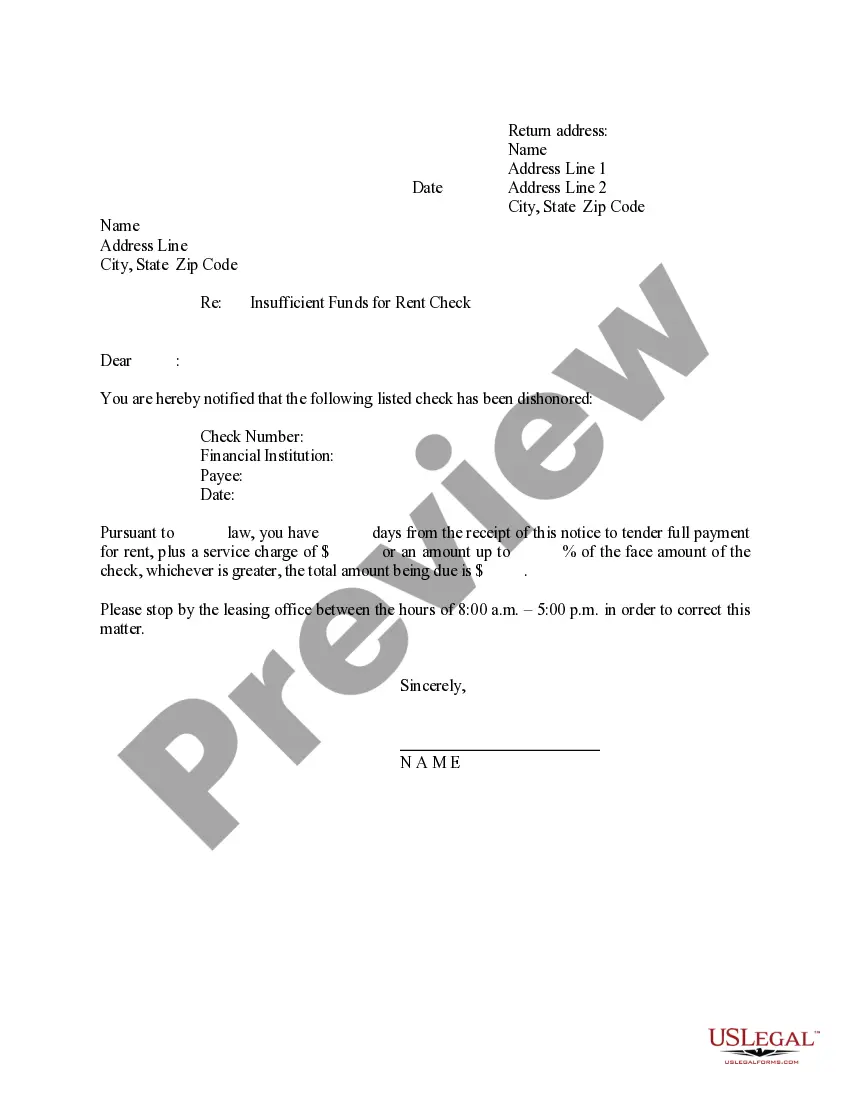
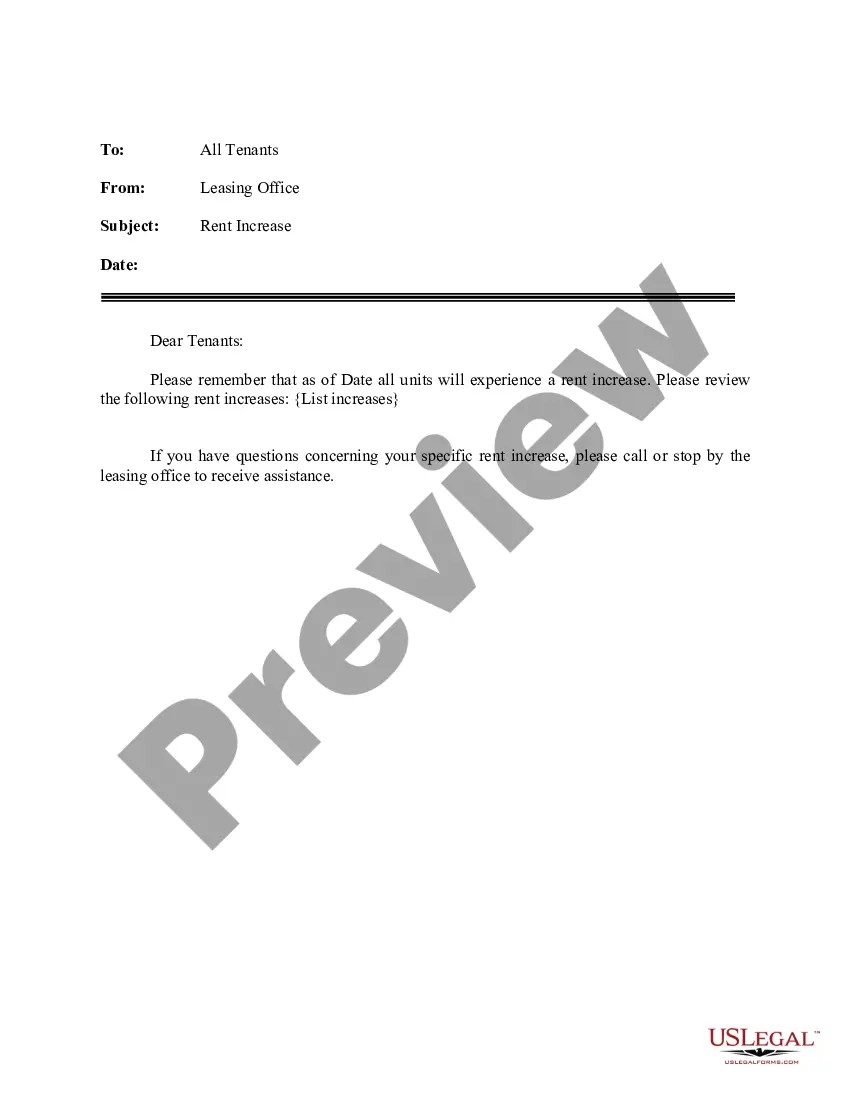
The Letter from Tenant to Landlord containing Notice to landlord to withdraw retaliatory rent increase is a legal document designed to inform a landlord that a rent increase may be considered unlawful if it is in retaliation for the tenant's protected activities. This form provides tenants with a clear and professional way to address rent increases that could be seen as discriminatory or retaliatory, ensuring that their rights are upheld according to housing laws.
What’s included in this form
- Tenant's identification information
- Landlord's identification information
- Clear statement regarding the rent increase and its retaliatory nature
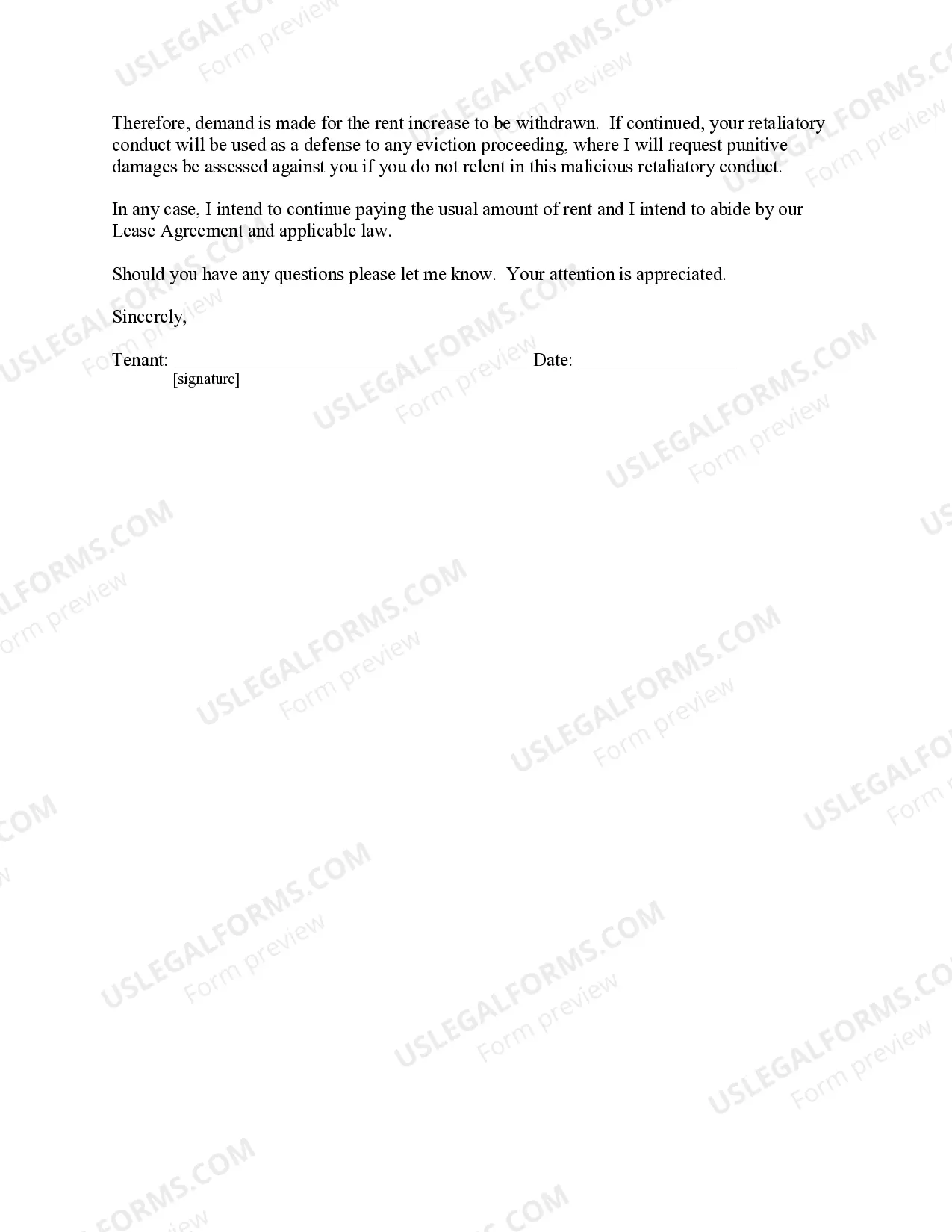
- Tenant's commitment to continue paying the usual rent amount
- Date and signature lines for both tenant and landlord


Common use cases
This form should be used when a tenant receives a notice of a rent increase that they believe is retaliatory in nature. Common scenarios include instances where a tenant has made complaints about housing conditions, reported violations, or participated in tenant organizing. By using this form, the tenant formally communicates their objections and asserts their rights under relevant housing laws.
Who should use this form
- Tenants who have received a rent increase notice
- Individuals who are experiencing perceived retaliation from their landlord
- Anyone involved in a dispute related to rental increases or tenant rights
- Tenants seeking to protect their rights under state housing laws
Instructions for completing this form
- Identify yourself as the tenant and provide your contact information.
- Include the landlord's name and contact details.
- State your objection to the rent increase, citing relevant activities that may protect you against retaliatory actions.
- Express your intention to continue paying the existing rent amount.
- Sign and date the letter before sending it to the landlord.
Is notarization required?
This form does not typically require notarization unless specified by local law.
Get your form ready online
Our built-in tools help you complete, sign, share, and store your documents in one place.
Make edits, fill in missing information, and update formatting in US Legal Forms—just like you would in MS Word.
Download a copy, print it, send it by email, or mail it via USPS—whatever works best for your next step.
Sign and collect signatures with our SignNow integration. Send to multiple recipients, set reminders, and more. Go Premium to unlock E-Sign.
If this form requires notarization, complete it online through a secure video call—no need to meet a notary in person or wait for an appointment.
We protect your documents and personal data by following strict security and privacy standards.

Make edits, fill in missing information, and update formatting in US Legal Forms—just like you would in MS Word.

Download a copy, print it, send it by email, or mail it via USPS—whatever works best for your next step.

Sign and collect signatures with our SignNow integration. Send to multiple recipients, set reminders, and more. Go Premium to unlock E-Sign.

If this form requires notarization, complete it online through a secure video call—no need to meet a notary in person or wait for an appointment.

We protect your documents and personal data by following strict security and privacy standards.
Typical mistakes to avoid
- Not providing sufficient information about the rent increase.
- Failing to include a clear statement about the protected activities.
- Not signing or dating the document before submission.
Why use this form online
- Convenience of downloading and printing directly from your device.
- Editability allows you to customize the form to your specific situation.
- Reliability of legal content drafted by licensed attorneys.
Legal use & context
This form serves as a protective measure for tenants, ensuring that landlords cannot retaliate through rent increases for exercising their legal rights, such as reporting code violations. It strengthens a tenant's position should a dispute arise.
Looking for another form?
Form popularity
FAQ
In Texas, a notice to vacate can be either conditional or unconditional, depending on the situation. A landlord must clearly specify the terms of the notice to avoid confusion. If you find yourself navigating this process, consider using a Connecticut Letter from Tenant to Landlord containing Notice to landlord to withdraw retaliatory rent increase to address any retaliation issues effectively.
When writing a formal letter to request that a tenant move out, it's important to be clear and professional. Start by addressing the tenant directly, state the reason for the request, and specify the last date for the tenant to vacate. If needed, you can reference a Connecticut Letter from Tenant to Landlord containing Notice to landlord to withdraw retaliatory rent increase to clarify any ongoing disputes.
A vacate notice and an eviction notice are not the same. A vacate notice informs the tenant they must leave the property, while an eviction notice is a legal step to remove a tenant. It's important to understand the differences when dealing with rental agreements or responding to a Connecticut Letter from Tenant to Landlord containing Notice to landlord to withdraw retaliatory rent increase.
A landlord has the ability to retract a notice to vacate. It’s essential that they do this in writing to ensure all parties understand the current situation. For additional support, a Connecticut Letter from Tenant to Landlord containing Notice to landlord to withdraw retaliatory rent increase can provide a formal framework for communication.
A notice of termination can indeed be withdrawn by the issuing party. The landlord should provide written confirmation to the tenant regarding this withdrawal. Utilizing a Connecticut Letter from Tenant to Landlord containing Notice to landlord to withdraw retaliatory rent increase may also clarify your intentions and prevent misunderstandings.
Yes, a landlord can withdraw a notice to vacate. They must communicate this decision clearly to the tenant. If you receive a Connecticut Letter from Tenant to Landlord containing Notice to landlord to withdraw retaliatory rent increase, it can also strengthen your position and help address concerns effectively.
To fight a rent increase in Connecticut, review your lease agreement and check if the increase adheres to local regulations. You can negotiate directly with your landlord or provide evidence supporting your case. A Connecticut Letter from Tenant to Landlord containing Notice to landlord to withdraw retaliatory rent increase can be a powerful tool in this process.
In CT, landlord harassment refers to tactics that a landlord uses to create fear or discomfort in tenants. This can include cutting off utilities, ignoring repair requests, or making threats. To protect yourself from such actions, consider using a Connecticut Letter from Tenant to Landlord containing Notice to landlord to withdraw retaliatory rent increase.
To write a letter requesting a rent reduction, clearly state your reasons for the request, such as changes in your financial situation or local market conditions. Be polite, concise, and provide supporting evidence when applicable. Using a Connecticut Letter from Tenant to Landlord containing Notice to landlord to withdraw retaliatory rent increase can be an effective way to approach this situation.
In Connecticut, a landlord must provide a tenant with at least 30 days' written notice before asking them to move out. This notice period may vary based on the lease agreement and the reasons for termination. If you feel this notice is retaliatory, you can respond with a Connecticut Letter from Tenant to Landlord containing Notice to landlord to withdraw retaliatory rent increase.