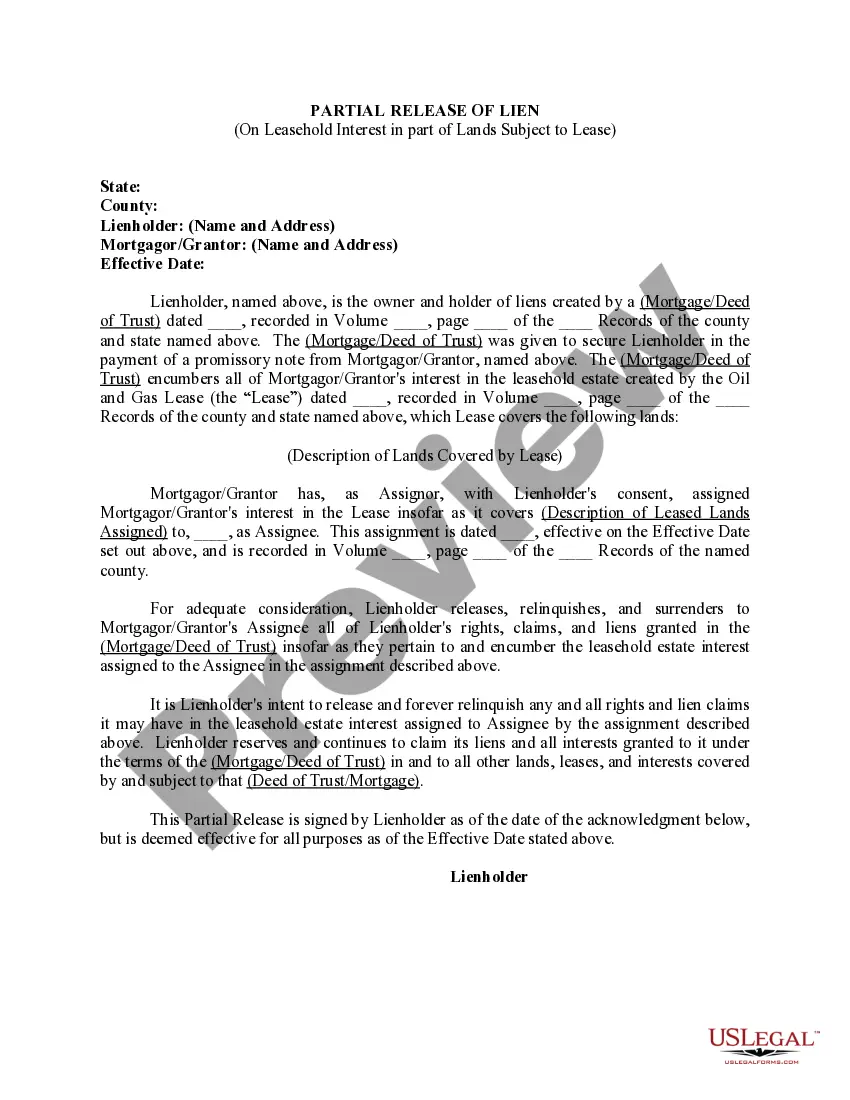
New York Right of First Offer Agreement
What is this form?
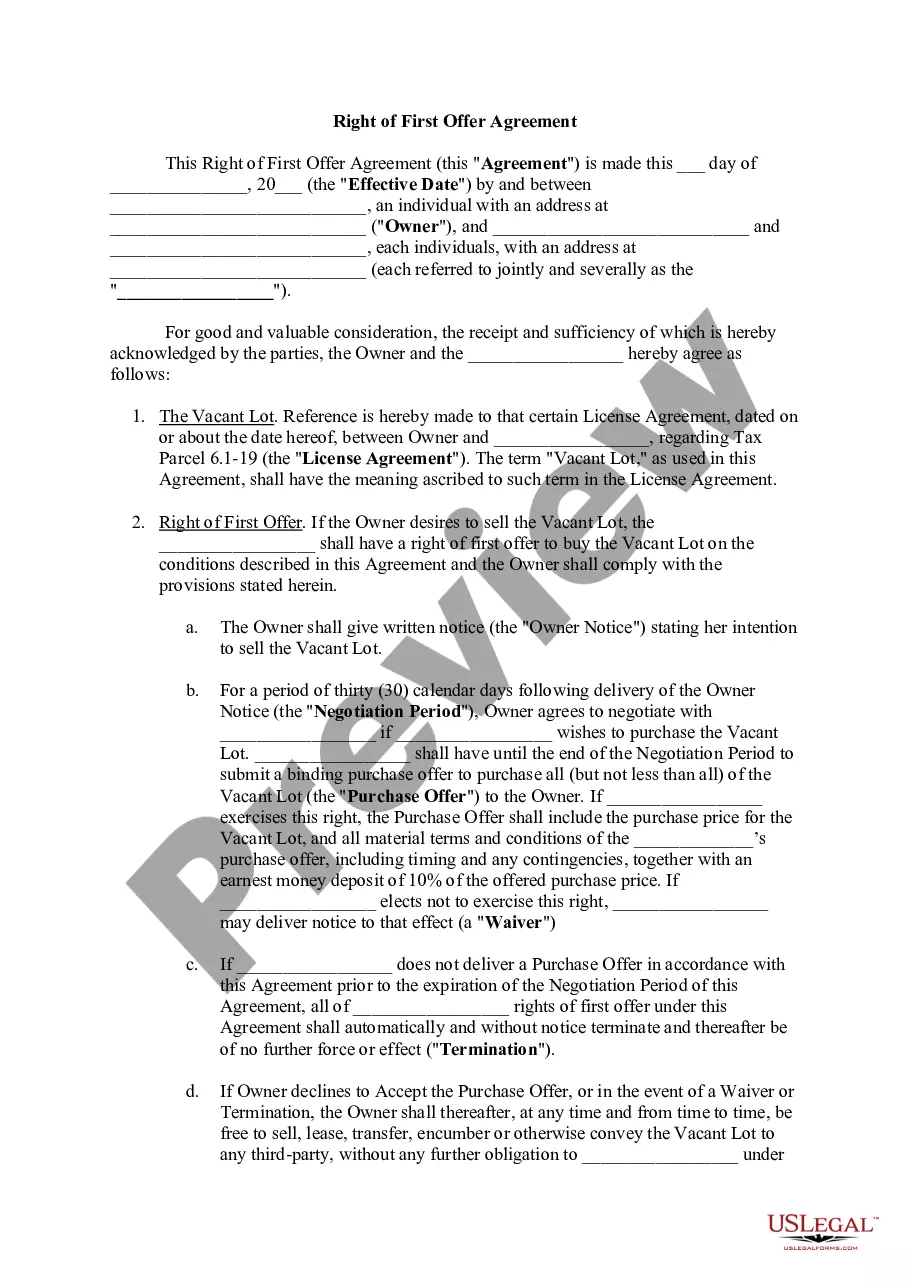
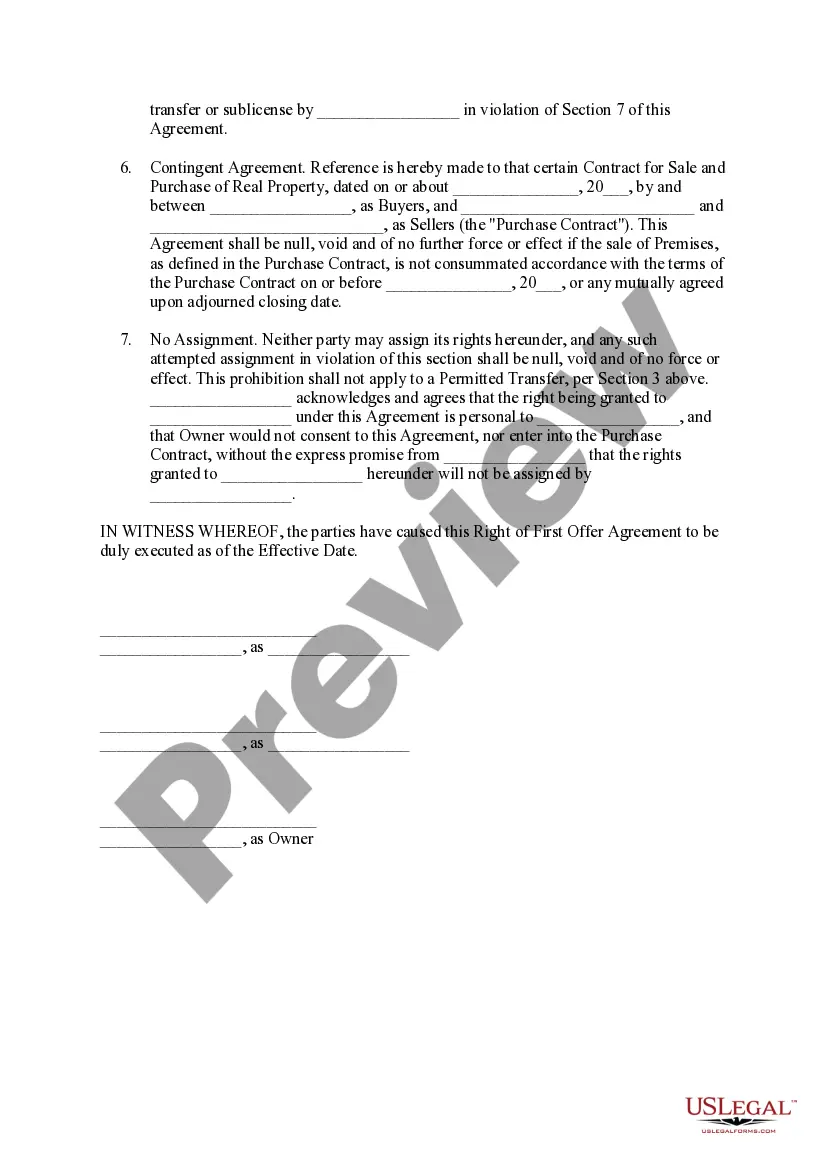
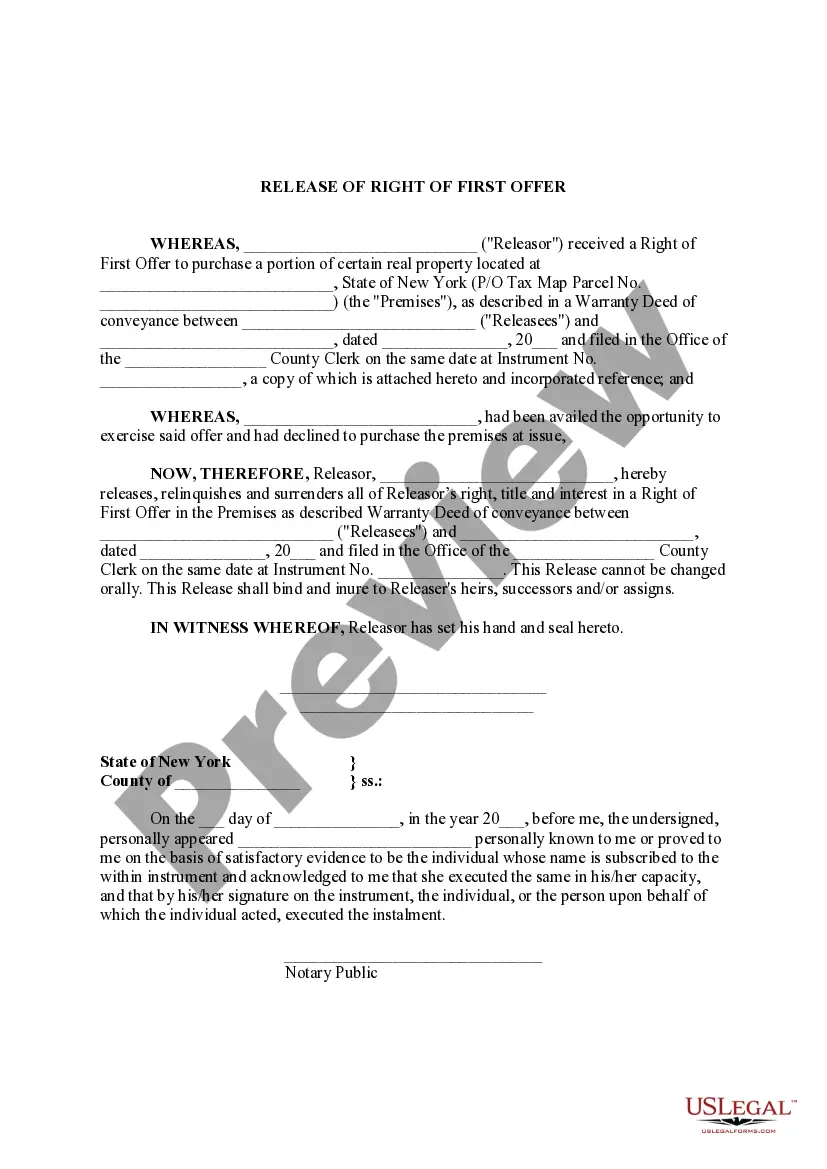
The Right of First Offer Agreement is a legal document that establishes an agreement between two parties involved in a real estate transaction. This agreement grants one party the right to be the first to make an offer to purchase a property if the other party, the owner, decides to sell it. This form is distinct from similar agreements like a Right of First Refusal, as it specifically outlines the purchasing process, conditions, and timelines for making an offer.
Key parts of this document
- Owner and Party Identification: Details of the property owner and the party entitled to the right of first offer.
- Property Description: Identification of the property in question, referred to as the "Vacant Lot."
- Notification Process: Procedures for the owner to inform the other party of their intention to sell.
- Negotiation Period: Specifies a thirty-day period for negotiations following the owner's notice.
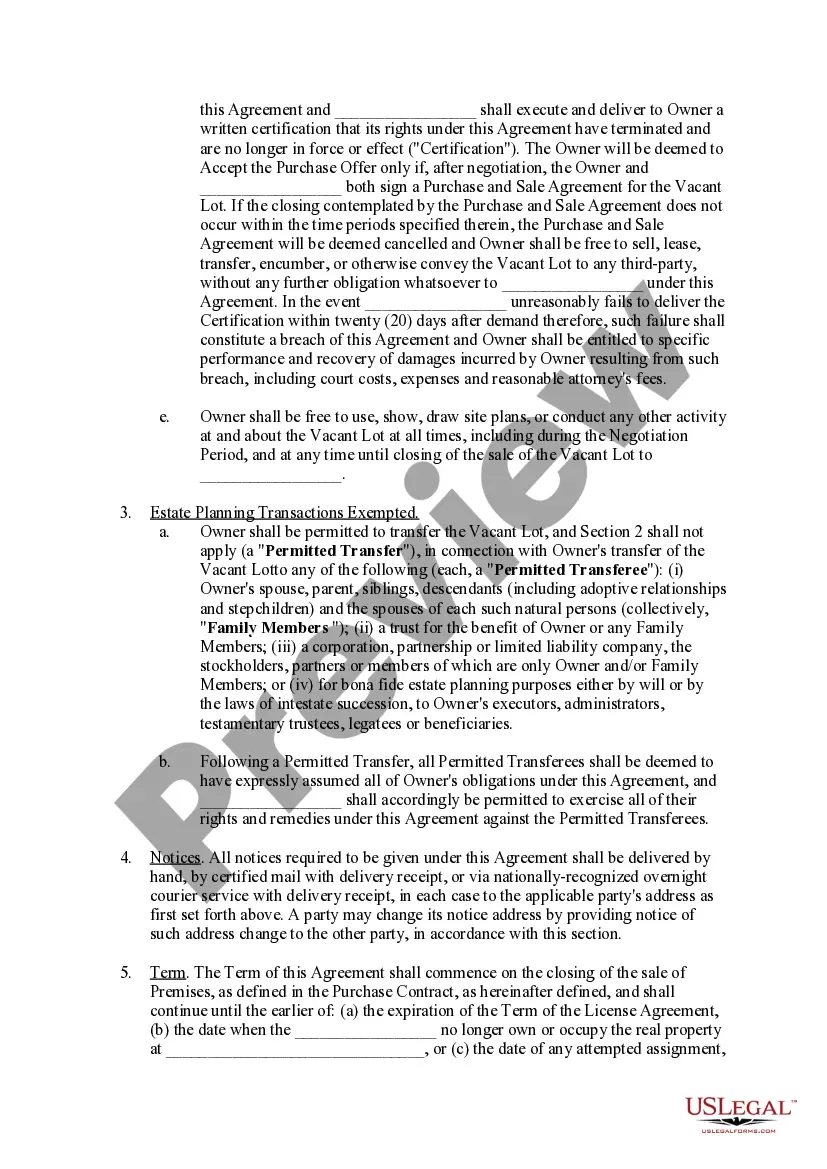
- Acceptance of Offer: Conditions under which a purchase offer is considered accepted or declined.
- Termination Clauses: Conditions that lead to the termination of the rights granted under the agreement.
When to use this document
This form is useful in scenarios where a property owner is considering selling their property, and they want to provide a potential buyer the first opportunity to make a purchase offer. It can be particularly beneficial for prospective buyers who have a vested interest in the property, such as neighbors or business partners, and wish to secure their chance to acquire it before it is offered to other buyers.
Who this form is for
- Property owners looking to sell their real estate while providing a potential buyer the opportunity to make the first offer.
- Individuals or entities interested in securing a right of first offer to ensure they are considered before other potential buyers.
- Real estate professionals facilitating transactions where this agreement might be beneficial for both sellers and buyers.
How to complete this form
- Identify the parties: Fill in the names and addresses of the owner and the party receiving the right of first offer.
- Specify the property: Clearly detail the property being discussed, referring to it as the "Vacant Lot."
- Enter key dates: Include the effective date of the agreement and any relevant timelines for notifications and negotiations.
- Outline the terms: Define conditions under which the right of first offer is exercised, including the negotiation period.
- Sign the agreement: Ensure all parties sign and date the agreement to make it legally binding.
Notarization requirements for this form
This form does not typically require notarization unless specified by local law. However, it is always advisable to check local regulations to ensure compliance with any notarization requirements related to real estate transactions.
Get your form ready online
Our built-in tools help you complete, sign, share, and store your documents in one place.
Make edits, fill in missing information, and update formatting in US Legal Forms—just like you would in MS Word.
Download a copy, print it, send it by email, or mail it via USPS—whatever works best for your next step.
Sign and collect signatures with our SignNow integration. Send to multiple recipients, set reminders, and more. Go Premium to unlock E-Sign.
If this form requires notarization, complete it online through a secure video call—no need to meet a notary in person or wait for an appointment.
We protect your documents and personal data by following strict security and privacy standards.

Make edits, fill in missing information, and update formatting in US Legal Forms—just like you would in MS Word.

Download a copy, print it, send it by email, or mail it via USPS—whatever works best for your next step.

Sign and collect signatures with our SignNow integration. Send to multiple recipients, set reminders, and more. Go Premium to unlock E-Sign.

If this form requires notarization, complete it online through a secure video call—no need to meet a notary in person or wait for an appointment.

We protect your documents and personal data by following strict security and privacy standards.
Common mistakes
- Failing to provide clear property descriptions can lead to confusion about which property is included.
- Not adhering to the notification timeline, which can invalidate the agreement or the right of first offer.
- Missing signatures or dates, rendering the agreement unenforceable.
- Overlooking state-specific laws that may influence the terms or enforceability of the agreement.
Why complete this form online
- Convenience of downloading and filling out the form from anywhere at any time.
- Editability allows users to customize the form to fit their specific needs and circumstances.
- Access to reliable legal templates drafted by licensed attorneys enhances legal validity and clarity.
Looking for another form?
Form popularity
FAQ
In both an option and a right of first refusal, the holder has no interest in the land or equitable estate until the option or right is exercised. In some condominiums, the association of unit owners retains the right of first refusal on any sale of a unit.
Generally, a ROFR is advantageous to the purchaser and the ROFO is advantageous to the seller. With a ROFR, prior to selling your interest to another, you must first allow an existing partner (or other person holding the right of first refusal) the opportunity to match the offer.
Understanding a Right of First Offer The right holder has a specific amount of time in which to make an offer before it the right expires. The seller is free to accept or reject the offer. If the seller rejects the offer, the owner can then sell it to a third party without any restrictions.
Real estate agents often suggest that sellers either accept the first offer or at least give it serious consideration. Real estate agents around the world generally go by the same mantra when discussing the first offer that a seller receives on their home: The first offer is always your best offer.
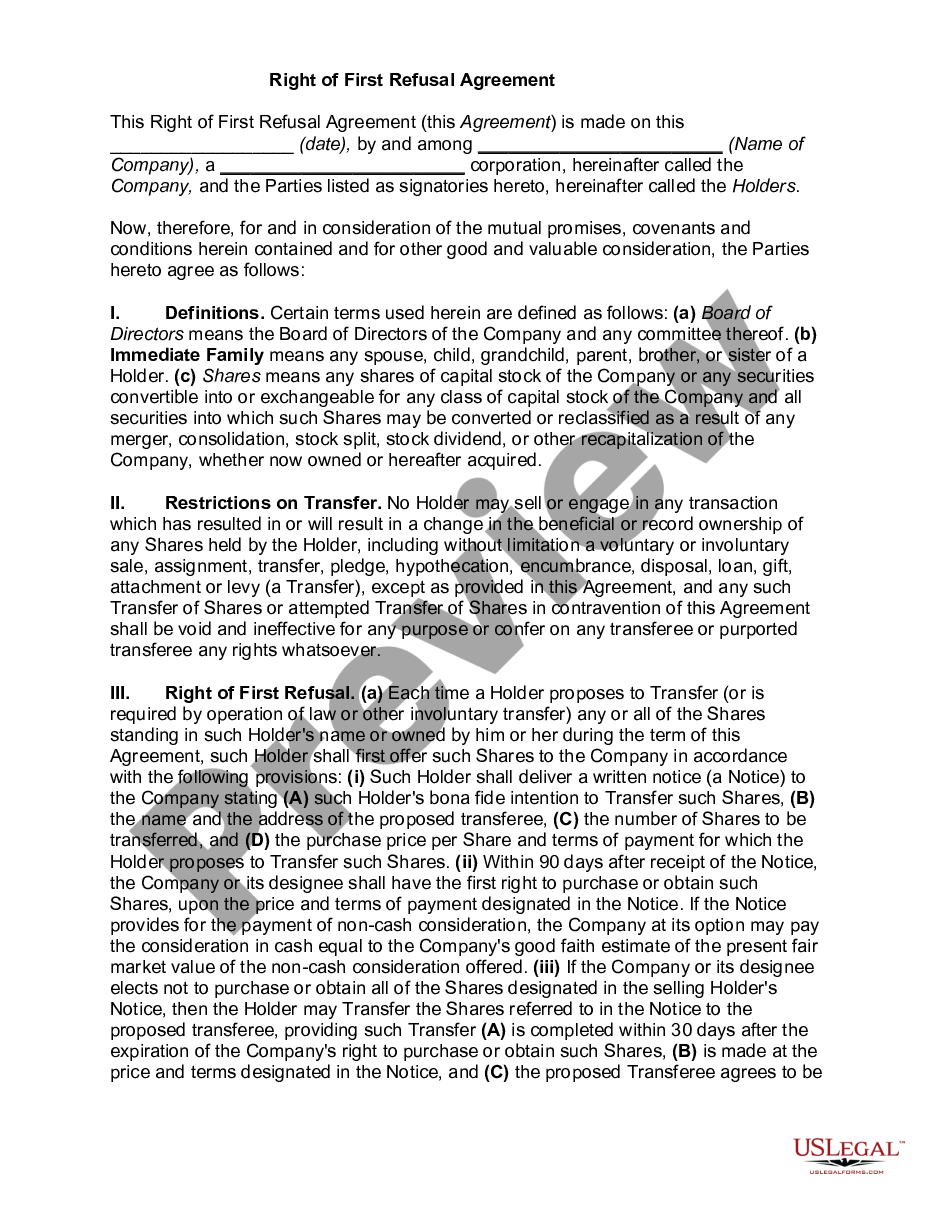
The right of first refusal is usually triggered when a third party offers to buy or lease the property owner's asset. Before the property owner accepts this offer, the property holder (the person with the right of first refusal) must be allowed to buy or lease the asset under the same terms offered by the third party.
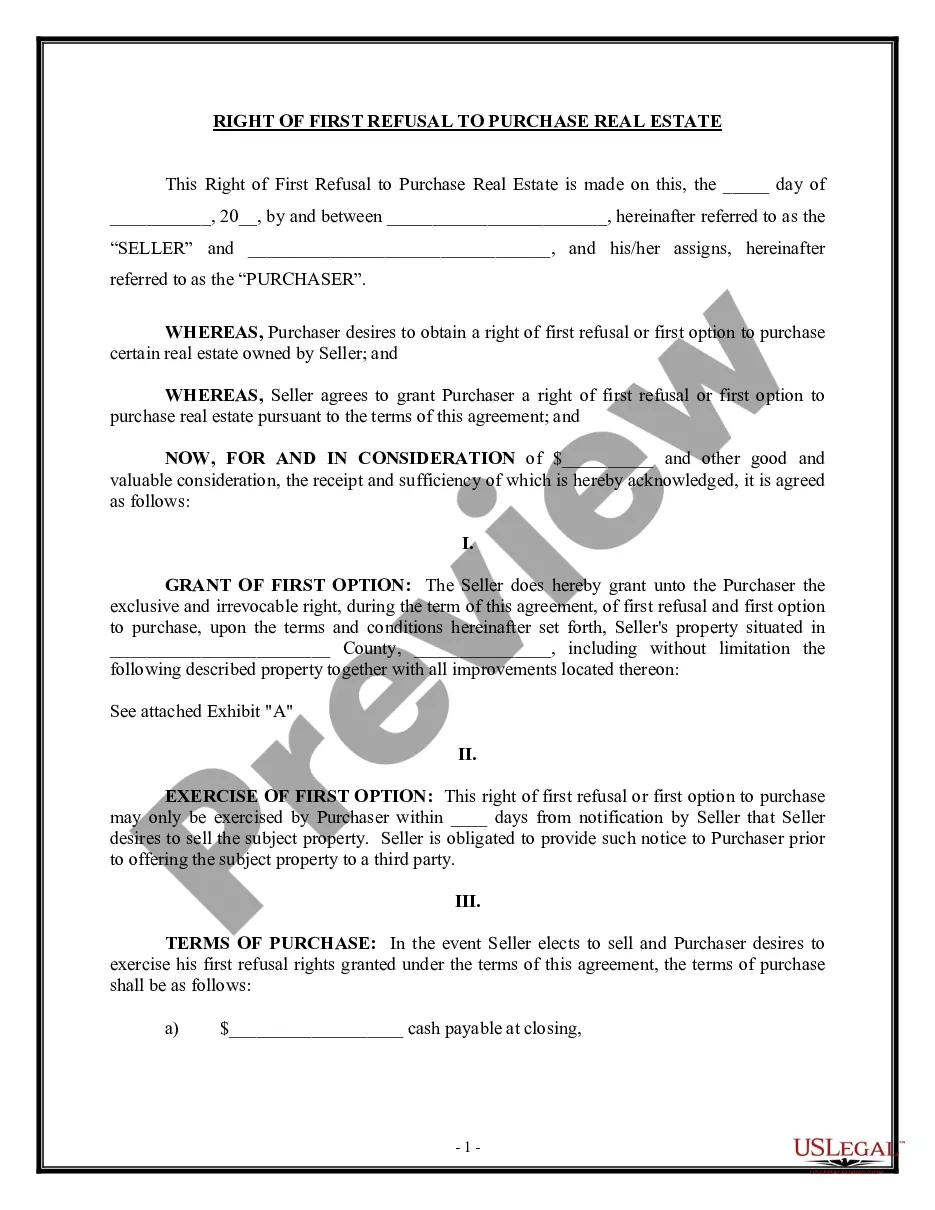
A right of first refusal agreement allows a buyer and seller to enter into an arrangement by which the potential buyer is given the first crack at a property when it goes up for sale.
A right of first refusal agreement allows a buyer and seller to enter into an arrangement by which the potential buyer is given the first crack at a property when it goes up for sale.