Connecticut Quitclaim Deed from Individual to Corporation
Understanding this form
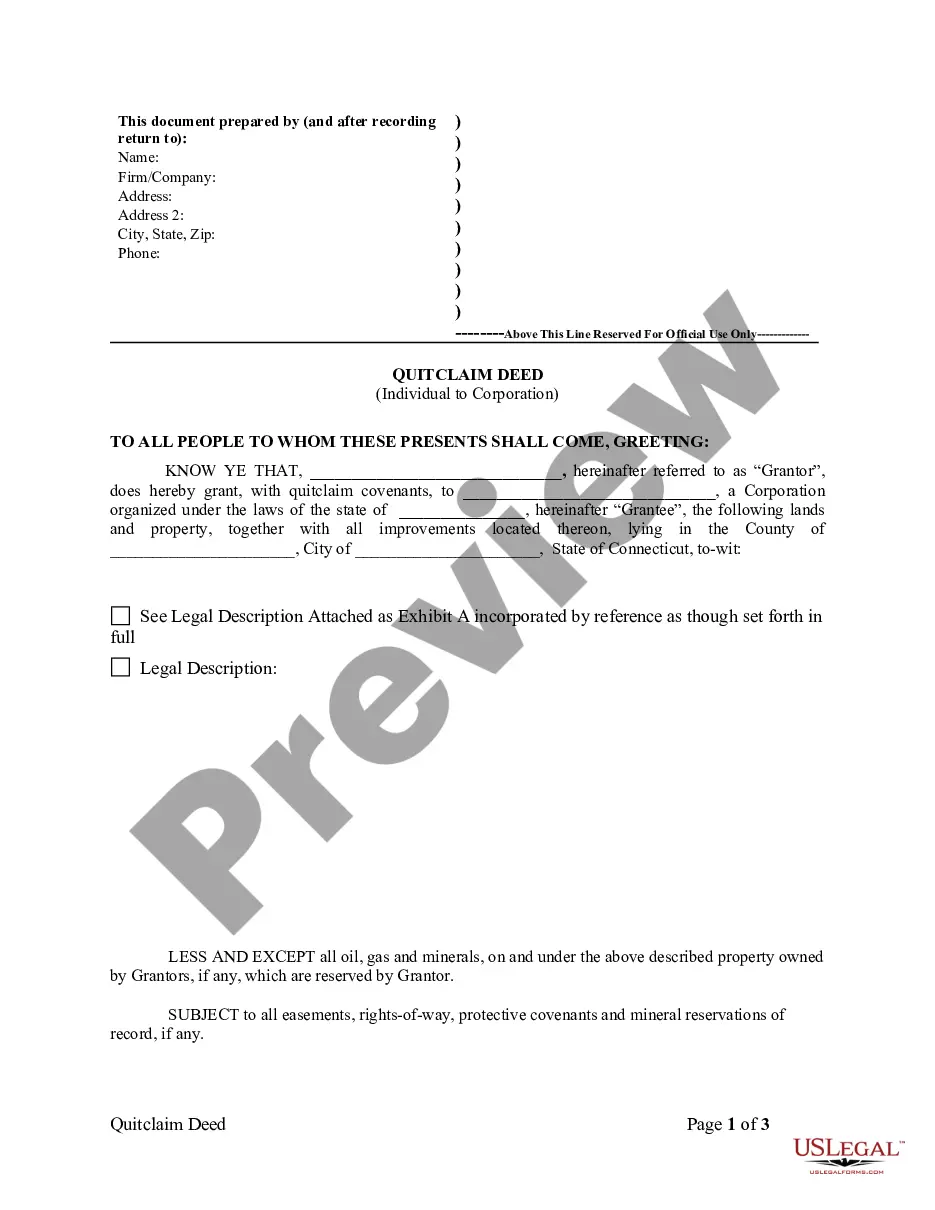
The Quitclaim Deed from Individual to Corporation is a legal document that allows an individual (the grantor) to transfer their interest in a property to a corporation (the grantee). Unlike warranty deeds, which guarantee that the grantor holds clear title, a quitclaim deed does not provide any such warranty. This document is primarily used to transfer property ownership without the typical extensive title search, making it faster and simpler for the parties involved.
Form components explained
- The names of the grantor (individual) and grantee (corporation).
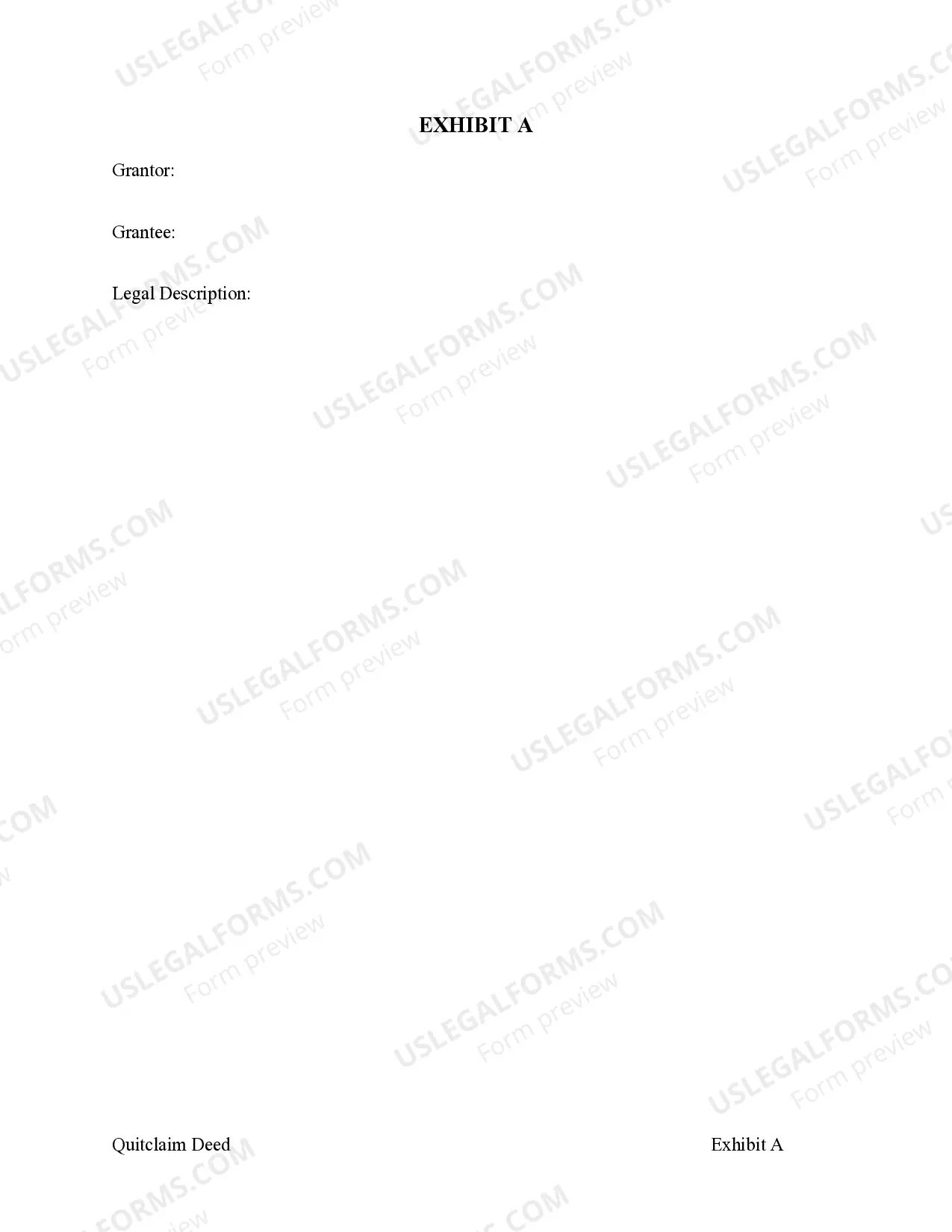
- A description of the property being transferred.
- Details about any easements, rights-of-way, or covenants affecting the property.
- Reserved rights regarding mineral interests if applicable.
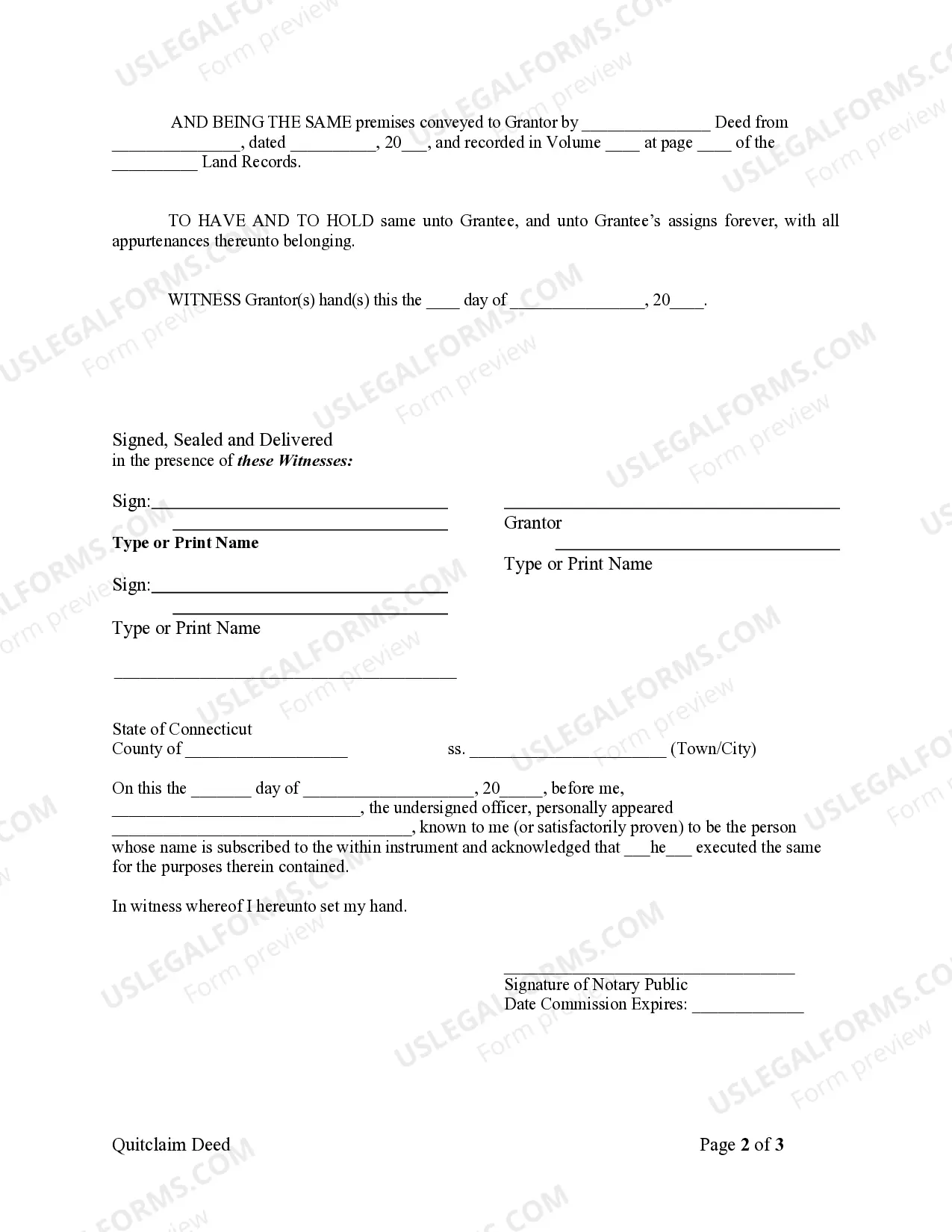
- Signature of the grantor and date of execution.


When this form is needed
This form is appropriate in situations where an individual wishes to transfer ownership of a property to a corporation. Common scenarios include business mergers, property consolidations, or transferring real estate holdings to a corporate entity for tax or liability purposes.
Who this form is for
- Individuals looking to transfer property ownership to a corporation.
- Business owners managing real estate in a corporate structure.
- Estate administrators who need to convey property to a corporate beneficiary.
Steps to complete this form
- Identify the parties involved: the grantor (individual) and the grantee (corporation).
- Provide a complete legal description of the property being transferred.
- Check for any easements or covenants that may affect the property.
- Include the date of the previous conveyance, if applicable.
- Ensure the grantor signs and dates the document in the presence of witnesses, if required.
Does this document require notarization?
This form does not typically require notarization unless specified by local law. However, it is always advisable to have documents notarized to enhance their acceptance and authenticity.
Get your form ready online
Our built-in tools help you complete, sign, share, and store your documents in one place.
Make edits, fill in missing information, and update formatting in US Legal Forms—just like you would in MS Word.
Download a copy, print it, send it by email, or mail it via USPS—whatever works best for your next step.
Sign and collect signatures with our SignNow integration. Send to multiple recipients, set reminders, and more. Go Premium to unlock E-Sign.
If this form requires notarization, complete it online through a secure video call—no need to meet a notary in person or wait for an appointment.
We protect your documents and personal data by following strict security and privacy standards.

Make edits, fill in missing information, and update formatting in US Legal Forms—just like you would in MS Word.

Download a copy, print it, send it by email, or mail it via USPS—whatever works best for your next step.

Sign and collect signatures with our SignNow integration. Send to multiple recipients, set reminders, and more. Go Premium to unlock E-Sign.

If this form requires notarization, complete it online through a secure video call—no need to meet a notary in person or wait for an appointment.

We protect your documents and personal data by following strict security and privacy standards.
Common mistakes
- Failing to include a full legal description of the property.
- Not checking for existing easements or mineral rights that might affect ownership.
- Omitting signatures or dates, which may render the deed invalid.
- Not providing sufficient witness signatures as required by state law.
Benefits of using this form online
- Convenience of downloading and completing a form tailored to your specific needs.
- Editable format allows you to easily make changes as needed.
- Reliable source with templates drafted by licensed attorneys ensuring legal compliance.
Quick recap
- The Quitclaim Deed from Individual to Corporation is used for property transfers without warranties.
- It's essential to accurately describe the property and check for easements or mineral rights.
- Proper completion and signatures are crucial for the deed's validity.
Looking for another form?
Form popularity
FAQ
While hiring an attorney for a quitclaim deed in North Carolina is not required, it can be beneficial, especially if you have questions or complex circumstances. An attorney can provide assistance with legal advice and ensure that the deed is prepared correctly. If you're looking for a straightforward solution for a Connecticut quitclaim deed from individual to corporation, consider using a user-friendly platform like USLegalForms to simplify the process.
You can absolutely prepare your own quitclaim deed, provided you follow the correct procedures and guidelines laid out by your state. In Connecticut, you must ensure the deed is properly executed, signed, and notarized. For peace of mind, platforms such as USLegalForms offer user-friendly templates that make it simple to create a Connecticut quitclaim deed from individual to corporation.
Typically, a quitclaim deed in California can be prepared by a real estate attorney, a title company, or even the property owner themselves. It is essential that the deed complies with state laws to ensure that it will be valid upon recording. If you are considering a Connecticut quitclaim deed from individual to corporation, you might want to utilize services like USLegalForms for specialized templates that cater to your situation.
Executing a quitclaim deed to yourself can clarify property ownership or remove a defect in the title. This action can simplify future transactions involving the property, such as selling or transferring it. In the context of a Connecticut quitclaim deed from individual to corporation, this process can help create a clear and defined ownership structure that aligns with your business goals.
Yes, you can file a quitclaim deed yourself in Connecticut. However, it is crucial to ensure that you complete the deed form accurately, as errors can lead to complications in the future. If you feel uncertain about any part of the process, consider using a reliable platform like USLegalForms to help guide you through filing a Connecticut quitclaim deed from an individual to a corporation efficiently.
To file a Connecticut quitclaim deed from individual to corporation, start by completing the deed form with the necessary information, including the names of the parties involved and a legal description of the property. Next, sign the deed in the presence of a notary public. After that, submit the completed deed to your town's clerk office for recording. This process ensures that the deed is officially recognized and provides public notice of the change in ownership.
To create a valid Connecticut Quitclaim Deed from Individual to Corporation, you need a few essential elements. First, both the granter, or individual, and the grantee, or corporation, must be properly identified in the deed. Next, the deed must describe the property clearly and include the signature of the granter, which must be notarized. Additionally, you must file the quitclaim deed with the appropriate town office to ensure its legality and public record.
Yes, you can prepare a quitclaim deed yourself, but it is advisable to seek guidance to ensure it is done correctly. Online resources, such as the US Legal Forms platform, can provide templates and step-by-step instructions, making the process easier and more efficient. However, you should verify local requirements for signing and notarization to ensure that your Connecticut Quitclaim Deed from Individual to Corporation meets all legal standards.
While a quitclaim deed can provide a quick solution for transferring property, it has notable disadvantages. One significant drawback is the lack of warranty, meaning the grantee receives no guarantee of clear title. This can lead to potential legal issues if there are claims against the property. As such, if you're considering a Connecticut Quitclaim Deed from Individual to Corporation, it’s wise to conduct thorough due diligence.
Yes, when a corporation transfers ownership of property, the deed must be signed by authorized representatives. This is essential to ensure that the Connecticut Quitclaim Deed from Individual to Corporation is valid and legally binding. The signatures must be notarized, confirming the identity of the signers and their authority to act on behalf of the corporation. Proper documentation is vital to avoid future disputes regarding ownership.