Connecticut Warranty Deed from two Individuals to Corporation
What this document covers
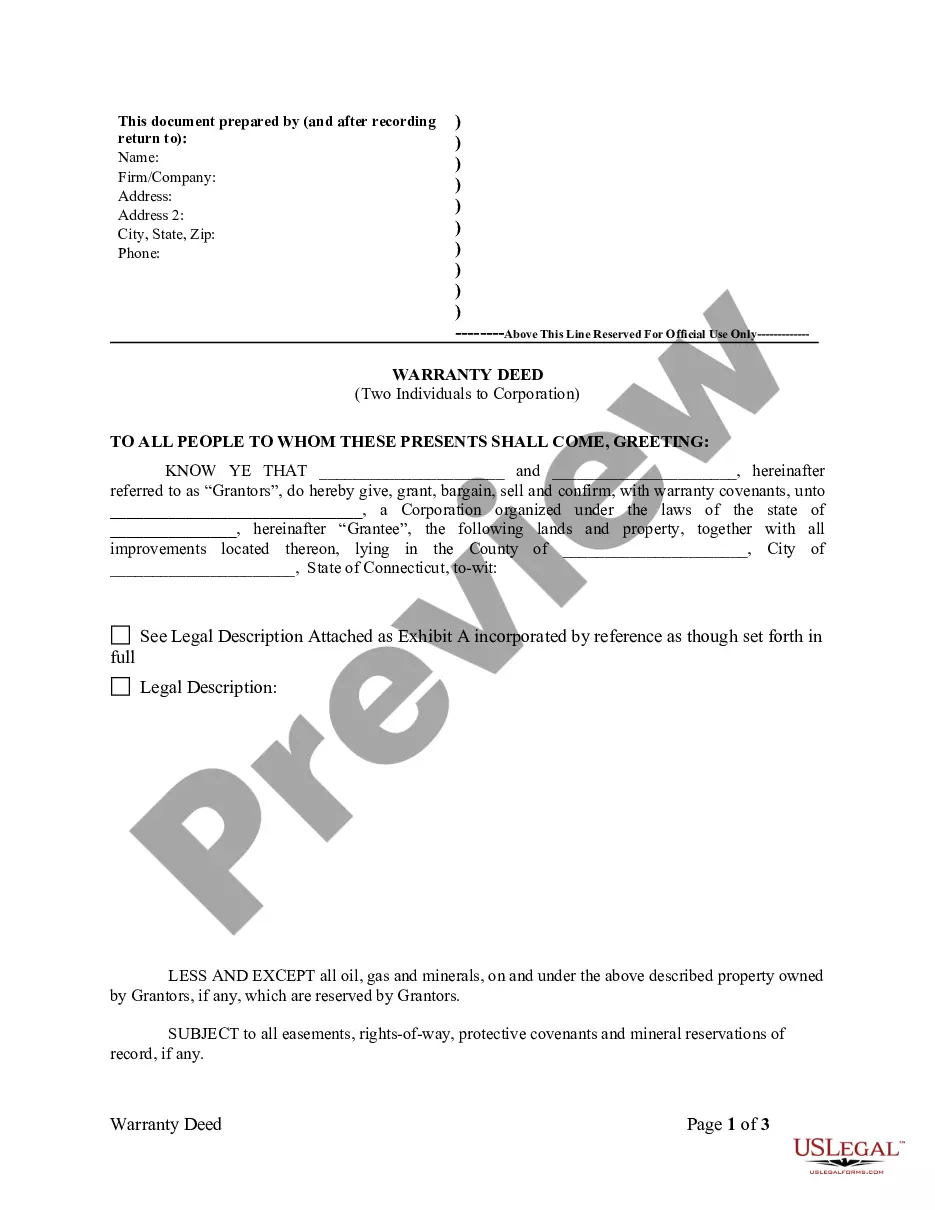
The Warranty Deed from two Individuals to Corporation is a legal document used to transfer property ownership from two individuals (the Grantors) to a corporation (the Grantee). Unlike other deeds, this form specifically caters to transactions involving corporate entities, ensuring that the property is conveyed free of any encumbrances, unless otherwise stated. This form is essential for formalizing property transfers in a structured and legally binding manner.
What’s included in this form
- Identifies the Grantors (two individuals) and the Grantee (corporation).
- Describes the property being conveyed, including any reservations of rights (e.g., minerals).
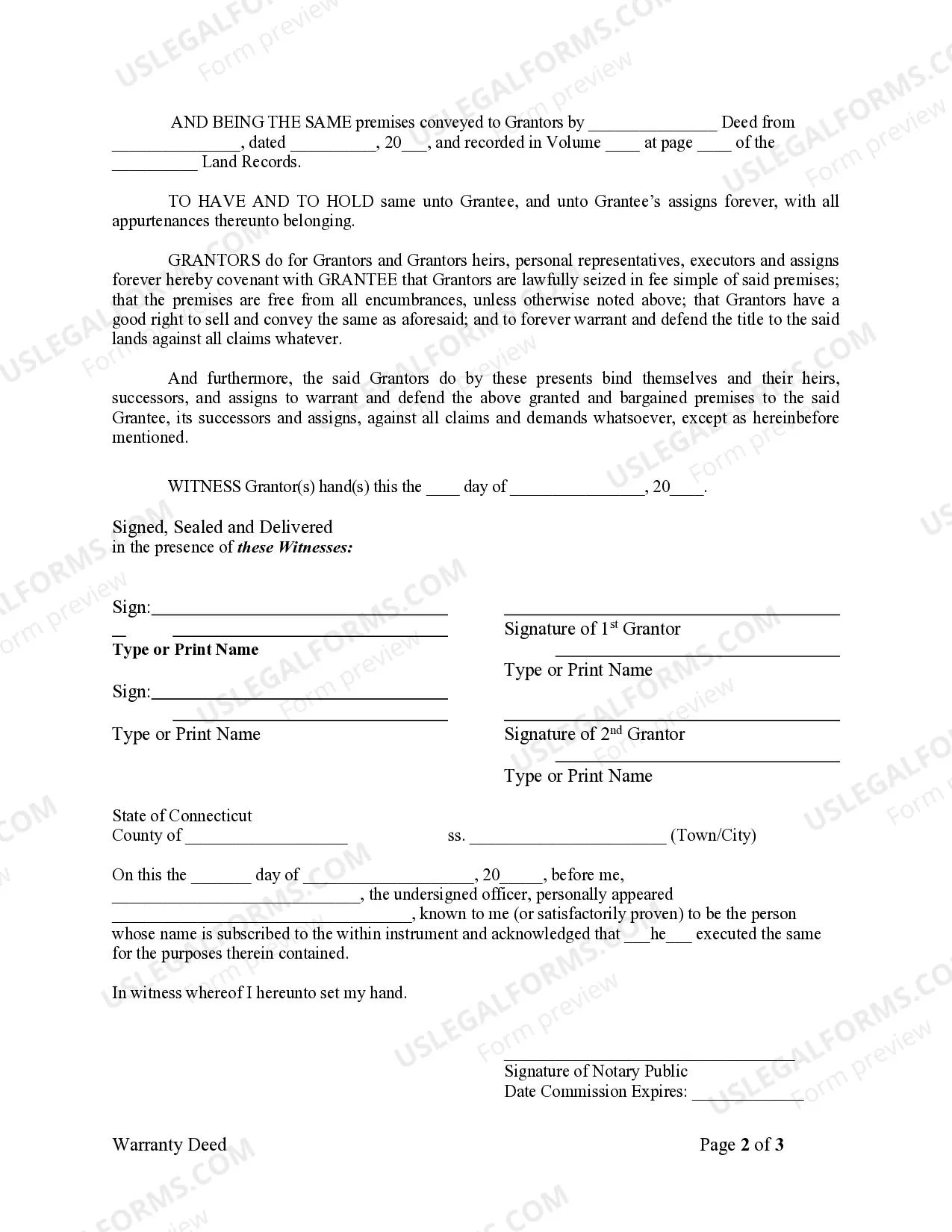
- Covenants to provide the Grantee with clear title to the property.
- Specifies any easements or encumbrances affecting the property.
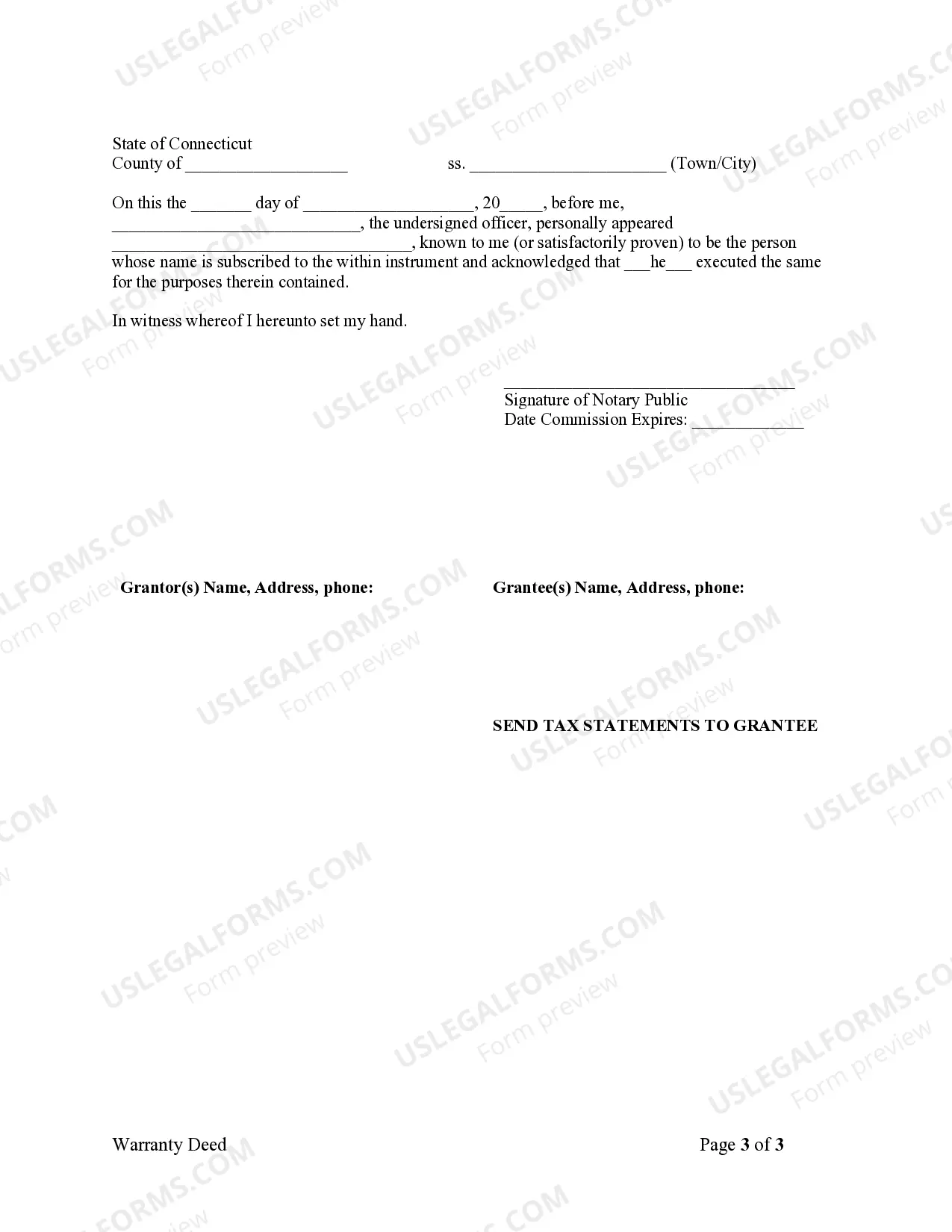
- Includes a notary section for formal validation of the document.


Common use cases
This form is typically used when two individuals wish to convey property to a corporation, commonly seen in business transactions where a partnership or sole proprietorship transitions into a corporate structure. It might be applicable during property acquisitions, reorganizations, or when transferring assets to a newly formed entity.
Who needs this form
- Individuals transferring property to their business entity.
- Corporations acquiring property from individuals.
- Real estate professionals handling property transfers involving corporations.
- Business owners needing to formalize asset transfers in compliance with legal standards.
How to complete this form
- Identify the names and signatures of the Grantors and the corporation as the Grantee.
- Clearly specify the property being conveyed, including any exceptions (e.g., mineral rights).
- Fill in details regarding previous ownership, including the original deed reference.
- Include the date of transfer and witness signatures as required by law.
- Seek notarization to validate the deed, if required by your state.
Notarization guidance
This form needs to be notarized to ensure legal validity. US Legal Forms provides secure online notarization powered by Notarize, allowing you to complete the process through a verified video call, available anytime.
Get your form ready online
Our built-in tools help you complete, sign, share, and store your documents in one place.
Make edits, fill in missing information, and update formatting in US Legal Forms—just like you would in MS Word.
Download a copy, print it, send it by email, or mail it via USPS—whatever works best for your next step.
Sign and collect signatures with our SignNow integration. Send to multiple recipients, set reminders, and more. Go Premium to unlock E-Sign.
If this form requires notarization, complete it online through a secure video call—no need to meet a notary in person or wait for an appointment.
We protect your documents and personal data by following strict security and privacy standards.

Make edits, fill in missing information, and update formatting in US Legal Forms—just like you would in MS Word.

Download a copy, print it, send it by email, or mail it via USPS—whatever works best for your next step.

Sign and collect signatures with our SignNow integration. Send to multiple recipients, set reminders, and more. Go Premium to unlock E-Sign.

If this form requires notarization, complete it online through a secure video call—no need to meet a notary in person or wait for an appointment.

We protect your documents and personal data by following strict security and privacy standards.
Avoid these common issues
- Neglecting to specify exceptions to the property transfer, such as mineral rights.
- Failing to properly identify all parties involved in the transaction.
- Leaving out required witness signatures or notary acknowledgment.
- Using outdated version of the form that may not comply with current laws.
Advantages of online completion
- Convenient downloading and printing options for immediate use.
- Access to templates drafted by licensed attorneys, ensuring legal accuracy.
- Editability allows users to customize the form to their specific transaction needs.
- Secure and straightforward process for completing legal documentation.
Looking for another form?

Form popularity
FAQ
If two people are on the deed, they typically share equal rights to the property. This shared ownership may come with specific rights and responsibilities, such as making decisions regarding the property. If you are moving forward with a Connecticut Warranty Deed from two Individuals to Corporation, consider how this arrangement impacts management of the property.
Joint tenants refer to a form of property ownership where two or more individuals hold the property together, with equal rights to the property. This means that if one owner passes away, their interest automatically transfers to the remaining owners. If you have a Connecticut Warranty Deed from two Individuals to Corporation, understanding this concept is crucial for determining ownership rights.
A corporate warranty deed is a legal document used when a corporation transfers property. It guarantees that the corporation holds clear title to the property without any encumbrances. When utilizing a Connecticut Warranty Deed from two Individuals to Corporation, the corporate entity provides assurance of ownership, protecting the buyer's interests.
Yes, two people can be on a warranty deed. Including both names indicates shared ownership of the property. This is particularly relevant when transferring property through a Connecticut Warranty Deed from two Individuals to Corporation, ensuring all parties have rights to the property.
Yes, two names can appear on a deed. Typically, co-owners can hold the property jointly or in other specific arrangements. If you are considering a Connecticut Warranty Deed from two Individuals to Corporation, including both names ensures clear ownership and rights.
Yes, you can add a name to a warranty deed. This process may require the current owner to execute a new deed that reflects the additional name. When dealing with a Connecticut Warranty Deed from two Individuals to Corporation, it’s essential to follow proper procedures to ensure legal validity.
While it is not legally required to hire a lawyer to add someone to a deed, consulting with one can be beneficial. A lawyer can provide guidance on completing a Connecticut Warranty Deed from two Individuals to Corporation correctly. They can also help you understand the implications of transferring property rights, ensuring that your interests are protected throughout the process. If you choose to navigate this alone, make sure to utilize trustworthy resources like US Legal Forms.
Filling out a warranty deed form involves several steps. First, you need to gather the necessary information about the property and the parties involved. Next, you can find a reliable form through platforms like US Legal Forms, which provide templates for a Connecticut Warranty Deed from two Individuals to Corporation. Finally, ensure all information is accurate and complete before signing the deed to make it legally binding.
No, a person cannot be added to a deed without their knowledge or consent. A Connecticut Warranty Deed from two Individuals to Corporation requires the agreement of all parties involved. This legal document ensures that all individuals understand and accept the transfer of property rights. It is important for all parties to be aware of such changes to avoid future disputes.
Transferring a warranty deed, specifically a Connecticut Warranty Deed from two Individuals to Corporation, involves several steps. First, you must gather the necessary documents, including the original warranty deed and identification for all involved parties. Next, complete the deed transfer form, ensuring that both individuals accurately sign the document in front of a notary public. Finally, file the completed warranty deed with the appropriate county office to officially record the transfer, safeguarding your legal ownership.