Connecticut Quitclaim Deed from Individual to Individual

About this form
The Quitclaim Deed from Individual to Individual is a legal document used to transfer property ownership from one individual (the Grantor) to another individual (the Grantee) without any warranties. Unlike other deeds, such as warranty deeds, a quitclaim deed does not guarantee that the Grantor has clear title to the property. The Grantor conveys the property "as is," which means the Grantee accepts the property in its current condition. This form is essential for simple property transfers where warranties are not necessary, making it a practical choice for informal transactions.
Form components explained
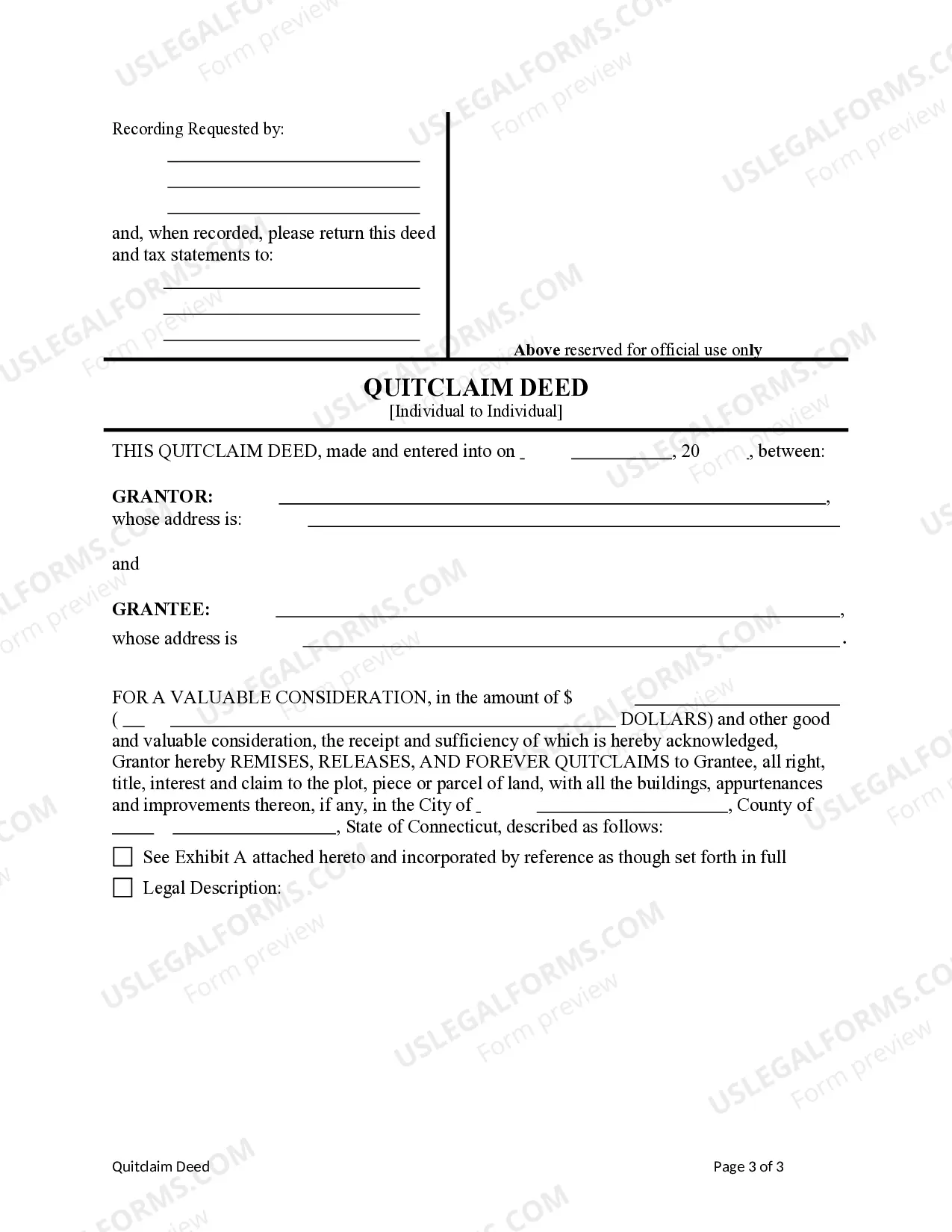
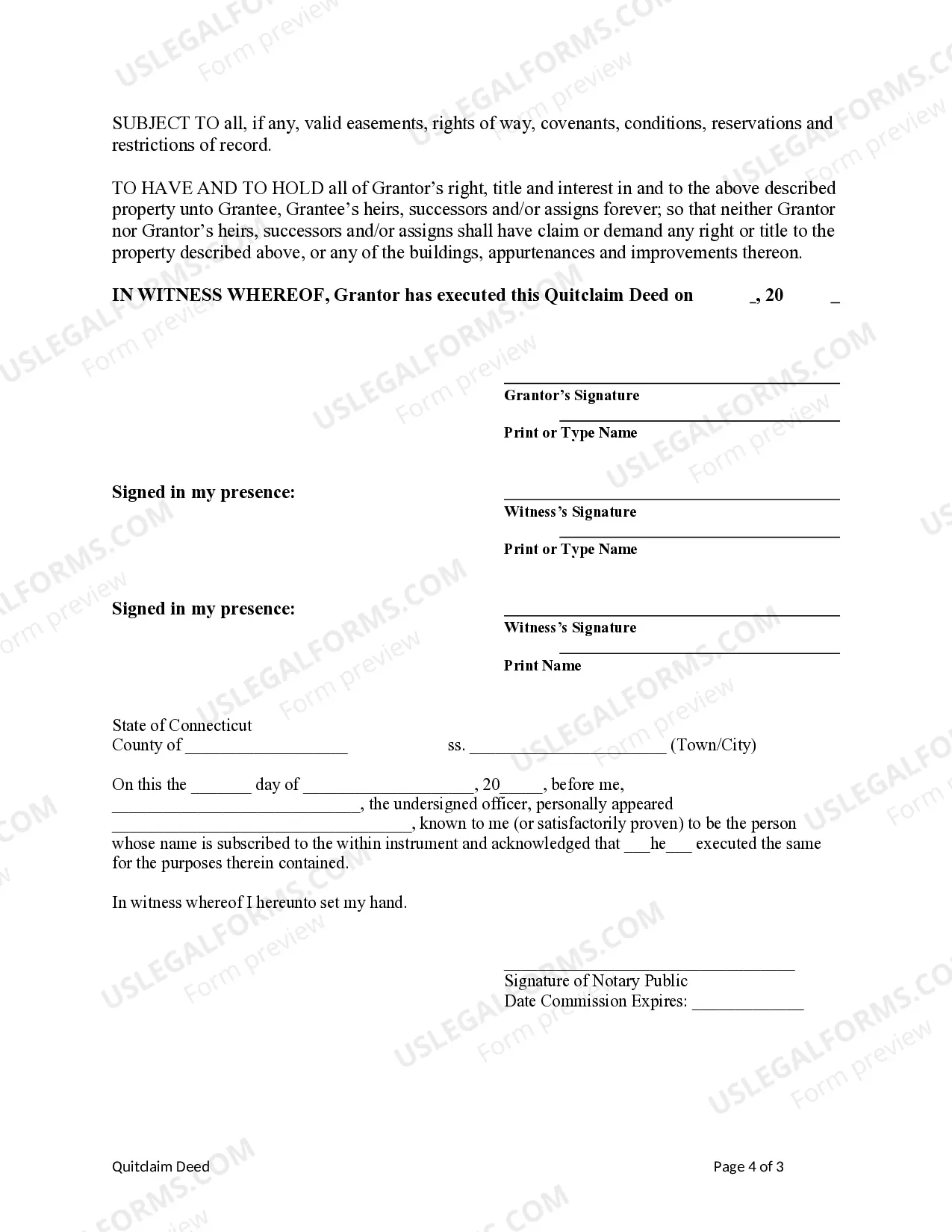
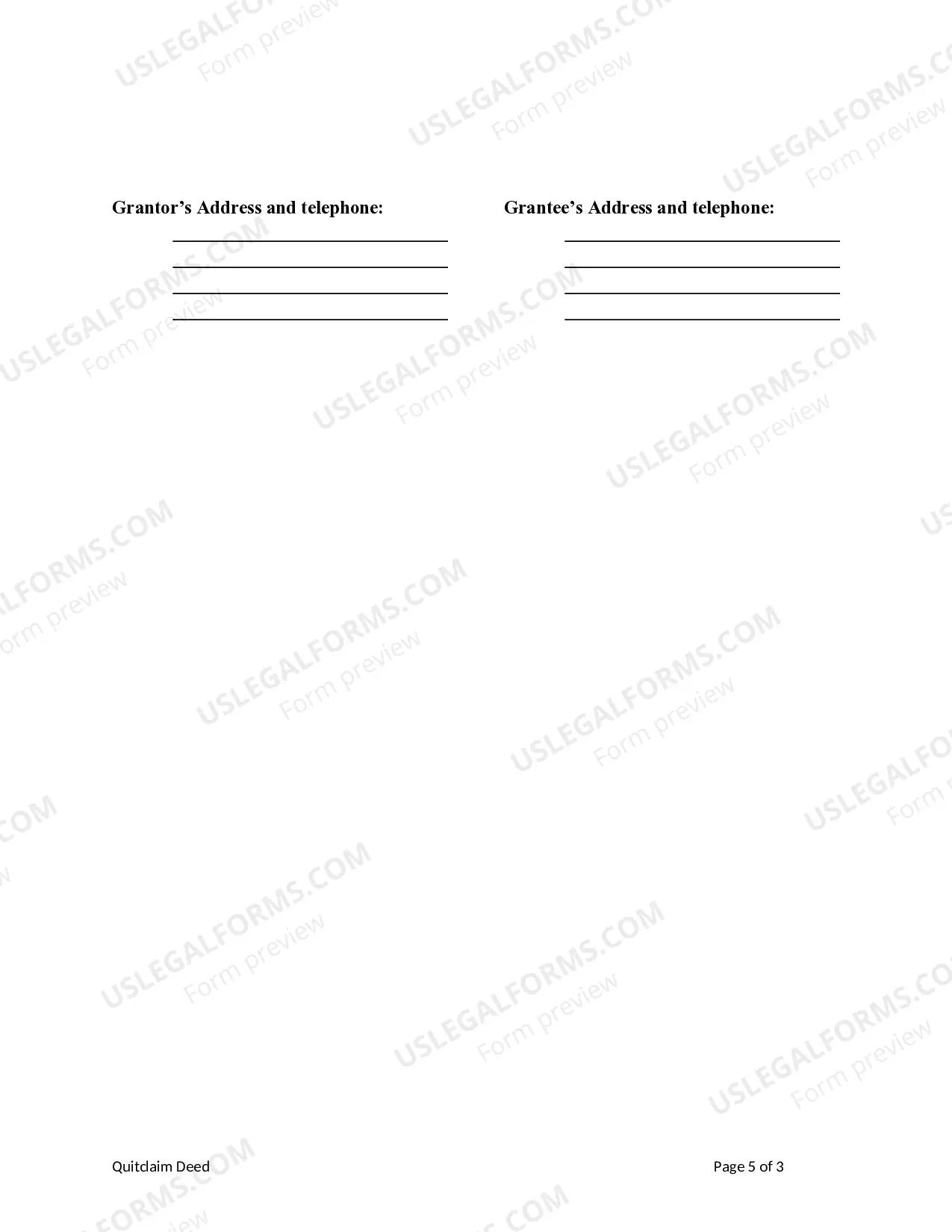
- Grantor's name and signature: The individual transferring the property.
- Grantee's name: The individual receiving the property.
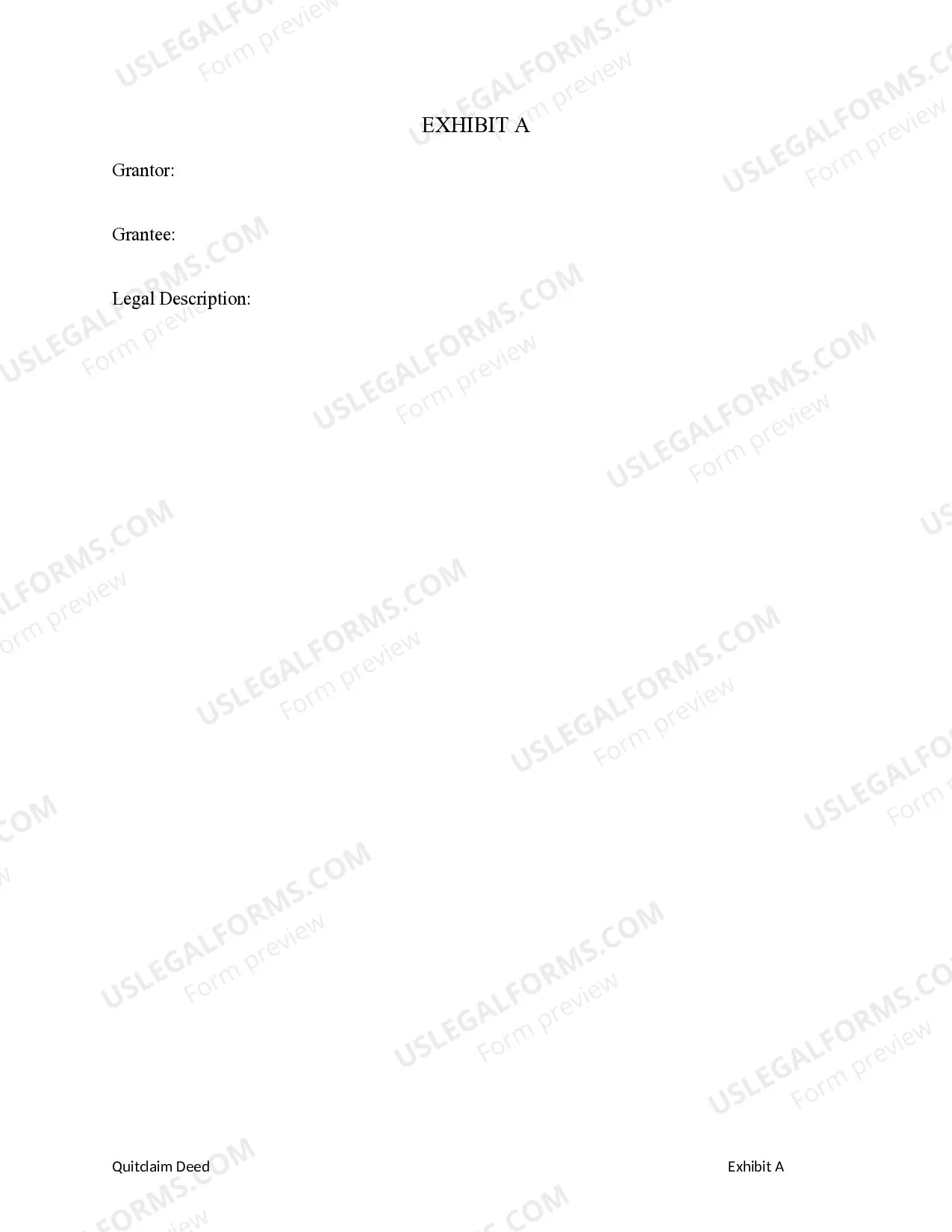
- Property description: A detailed description of the property being transferred.
- Reservation clause: Specifies any reservations, such as mineral rights, that the Grantor maintains.
- Date of transfer: The effective date the deed takes effect.





When to use this document
This quitclaim deed is typically used in scenarios such as transferring property between family members, settling ownership disputes, or transferring properties where the Grantor cannot provide a warranty of title. It is also suitable when a property is being transferred for little or no consideration, like a gift or informal arrangements.
Who this form is for
This form is intended for:
- Individuals transferring property ownership to another individual.
- Family members or friends involved in informal property transfers.
- Anyone who needs to quickly transfer their interest in a property without a warranty of clear title.
Instructions for completing this form
- Identify the parties: Enter the full names of the Grantor and Grantee.
- Specify the property: Provide a detailed legal description of the property being transferred.
- Reservation clause: Include any details about reservations regarding oil, gas, and minerals or other rights.
- Enter the date: Write the effective date of the transfer.
- Sign the deed: The Grantor must sign the deed in front of a notary public, if required.
Is notarization required?
Notarization is required for this form to take effect. Our online notarization service, powered by Notarize, lets you verify and sign documents remotely through an encrypted video session, available 24/7.
Get your form ready online
Our built-in tools help you complete, sign, share, and store your documents in one place.
Make edits, fill in missing information, and update formatting in US Legal Forms—just like you would in MS Word.
Download a copy, print it, send it by email, or mail it via USPS—whatever works best for your next step.
Sign and collect signatures with our SignNow integration. Send to multiple recipients, set reminders, and more. Go Premium to unlock E-Sign.
If this form requires notarization, complete it online through a secure video call—no need to meet a notary in person or wait for an appointment.
We protect your documents and personal data by following strict security and privacy standards.

Make edits, fill in missing information, and update formatting in US Legal Forms—just like you would in MS Word.

Download a copy, print it, send it by email, or mail it via USPS—whatever works best for your next step.

Sign and collect signatures with our SignNow integration. Send to multiple recipients, set reminders, and more. Go Premium to unlock E-Sign.

If this form requires notarization, complete it online through a secure video call—no need to meet a notary in person or wait for an appointment.

We protect your documents and personal data by following strict security and privacy standards.
Mistakes to watch out for
- Failing to accurately describe the property can lead to legal disputes.
- Omitting the reservation clause, if applicable, may unintentionally transfer rights the Grantor intends to keep.
- Not having the deed notarized when required can make the document invalid.
Benefits of using this form online
- Convenience: Easily complete the form from home without the need for an attorney.
- Editability: Make changes quickly and save your information securely.
- Reliability: Access forms developed based on state statutes and ensure compliance with legal standards.
Legal use & context
- Quitclaim deeds are commonly used for transferring property between family members or in divorce settlements.
- This type of deed provides no warranty on the title, meaning the Grantee takes on the risk regarding the title's validity.
- Ensure that the property description is accurate to avoid legal complications in the future.
Key takeaways
- This Quitclaim Deed enables direct transfer of property between individuals without title guarantees.
- It's best for informal property transfers where speed is prioritized over thorough title disclosure.
- Accuracy in completing the form is crucial to avoid future legal disputes.
Looking for another form?


Form popularity
FAQ
To create a Connecticut Quitclaim Deed from Individual to Individual, you need to include certain essential details. First, both parties must provide their names and addresses clearly on the deed. Additionally, you must accurately describe the property being transferred, including its legal description. Finally, the deed needs to be signed by the grantor in the presence of a notary public to ensure its validity. For assistance in preparing your quitclaim deed, consider using the US Legal Forms platform, which offers easy-to-follow templates and guidance.
Quitclaim deeds are commonly used for simplifying property transfers among family members or to resolve issues in title defects. They are often utilized during divorce proceedings or estate settlements when clarifying property ownership is necessary. A Connecticut Quitclaim Deed from Individual to Individual provides a simple solution for these situations.
Filing a quitclaim deed in Connecticut involves preparing the document accurately with the necessary details. Ensure that the deed is signed and notarized before taking it to the town clerk's office for filing. Following these steps will ensure your Connecticut Quitclaim Deed from Individual to Individual is legally recognized.
To remove a person from a deed, you typically need to execute a quitclaim deed, showing the intent to convey that person's interest in the property. This process involves drafting the deed and having all parties involved sign it. Afterward, file the completed Connecticut Quitclaim Deed from Individual to Individual with the local clerk to update property records.
In California, a quitclaim deed can be prepared by anyone, though many opt for legal assistance. Real estate professionals or attorneys often handle these documents to ensure they meet all legal standards. If you need guidance on preparing your Connecticut Quitclaim Deed from Individual to Individual, tools offered by uslegalforms can provide valuable support.
Yes, you can perform a quitclaim deed yourself, which is a straightforward process. Make sure you follow all legal requirements for the deed's preparation and signing. Utilizing online resources can assist you in drafting a valid Connecticut Quitclaim Deed from Individual to Individual.
To file a quitclaim deed in Connecticut, begin by preparing the deed with accurate details regarding the property and parties involved. Next, have the document signed by all grantors and notarized. Finally, file the completed deed with your local town clerk's office to officially record your Connecticut Quitclaim Deed from Individual to Individual.
Absolutely, you can file a quitclaim deed yourself, but be mindful of the required steps. After preparing the document, you must ensure it is signed and properly notarized. Once completed, you can submit it to your local town clerk, ensuring your Connecticut Quitclaim Deed from Individual to Individual is on record.
Yes, you can create your own quitclaim deed, provided you understand the process. It's essential to include all required information and ensure accuracy to avoid issues later. Using templates available online, such as those found on uslegalforms, can help you easily create a Connecticut Quitclaim Deed from Individual to Individual.
In North Carolina, you are not required to hire an attorney to handle a quitclaim deed. However, consulting with one can provide valuable guidance, especially for complex situations. For those unfamiliar with the process, platforms like uslegalforms can offer resources that simplify creating a Connecticut Quitclaim Deed from Individual to Individual.