Colorado Last Will and Testament for a Married Person with No Children
Understanding this form
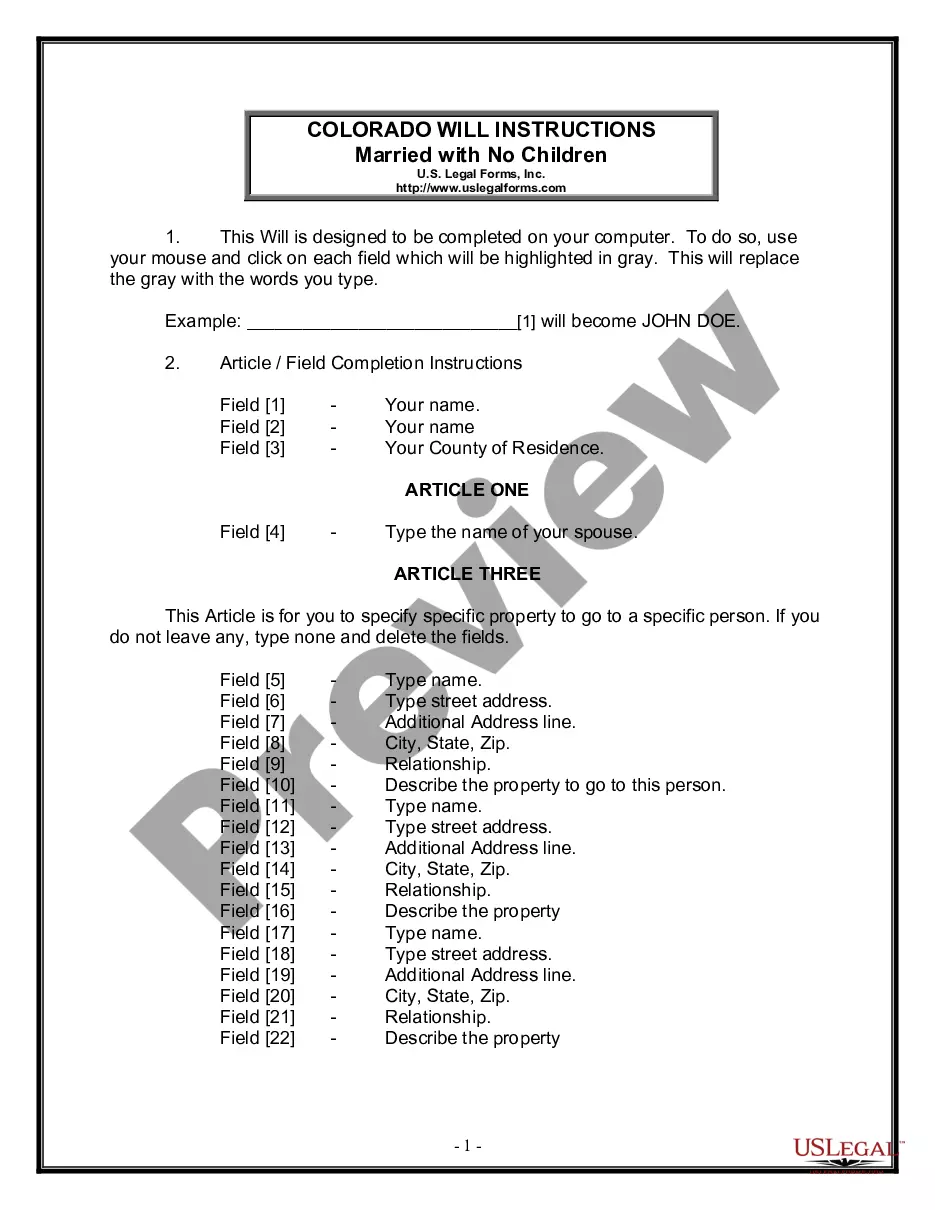
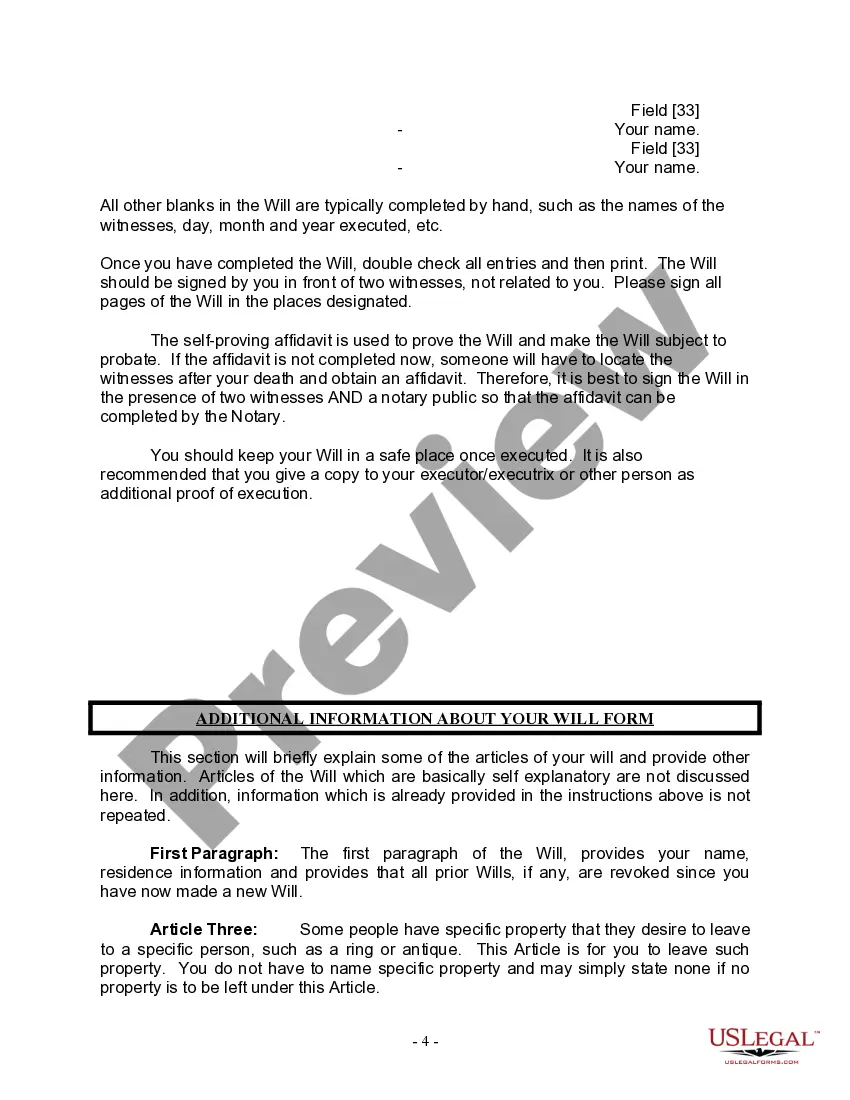
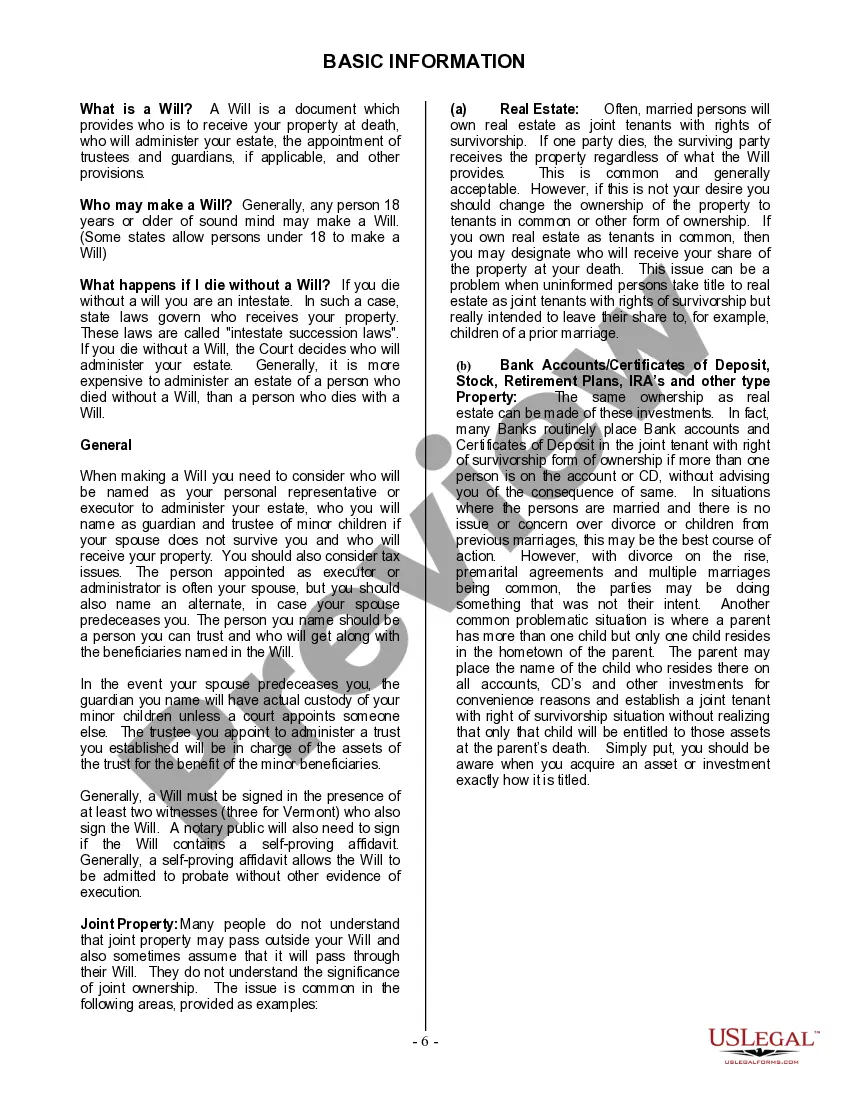
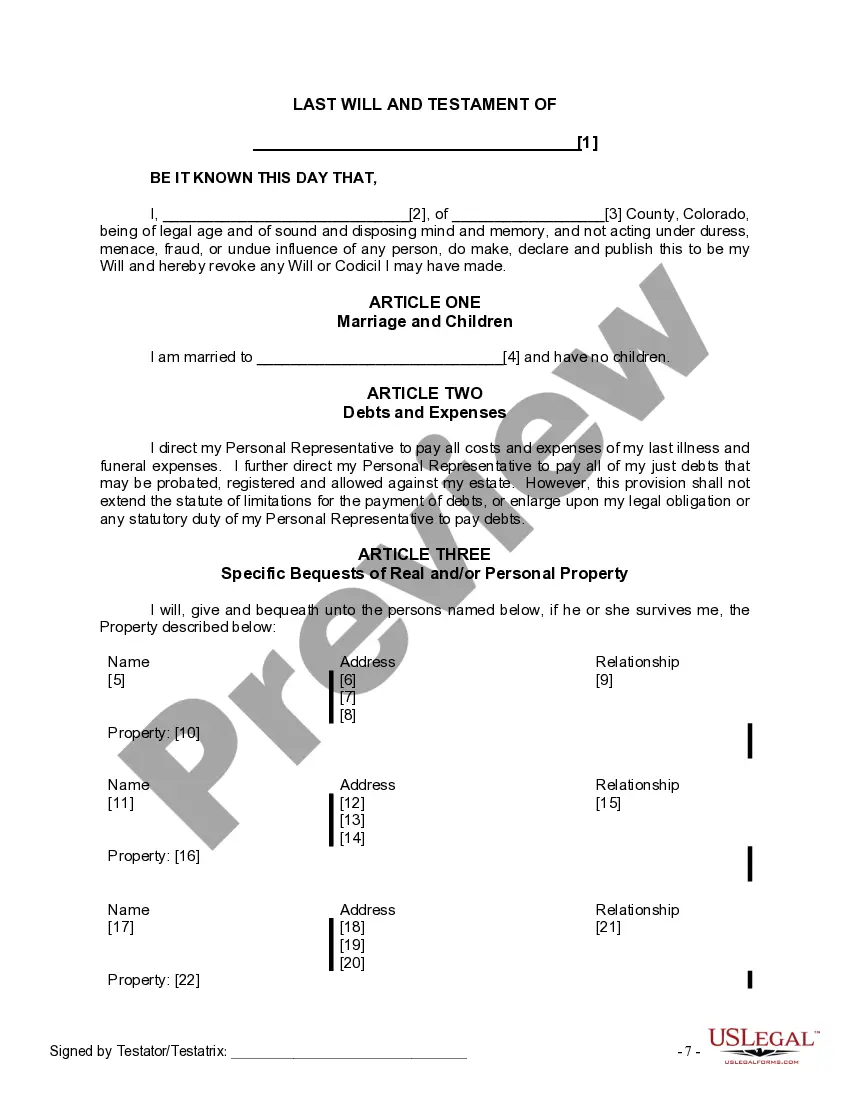
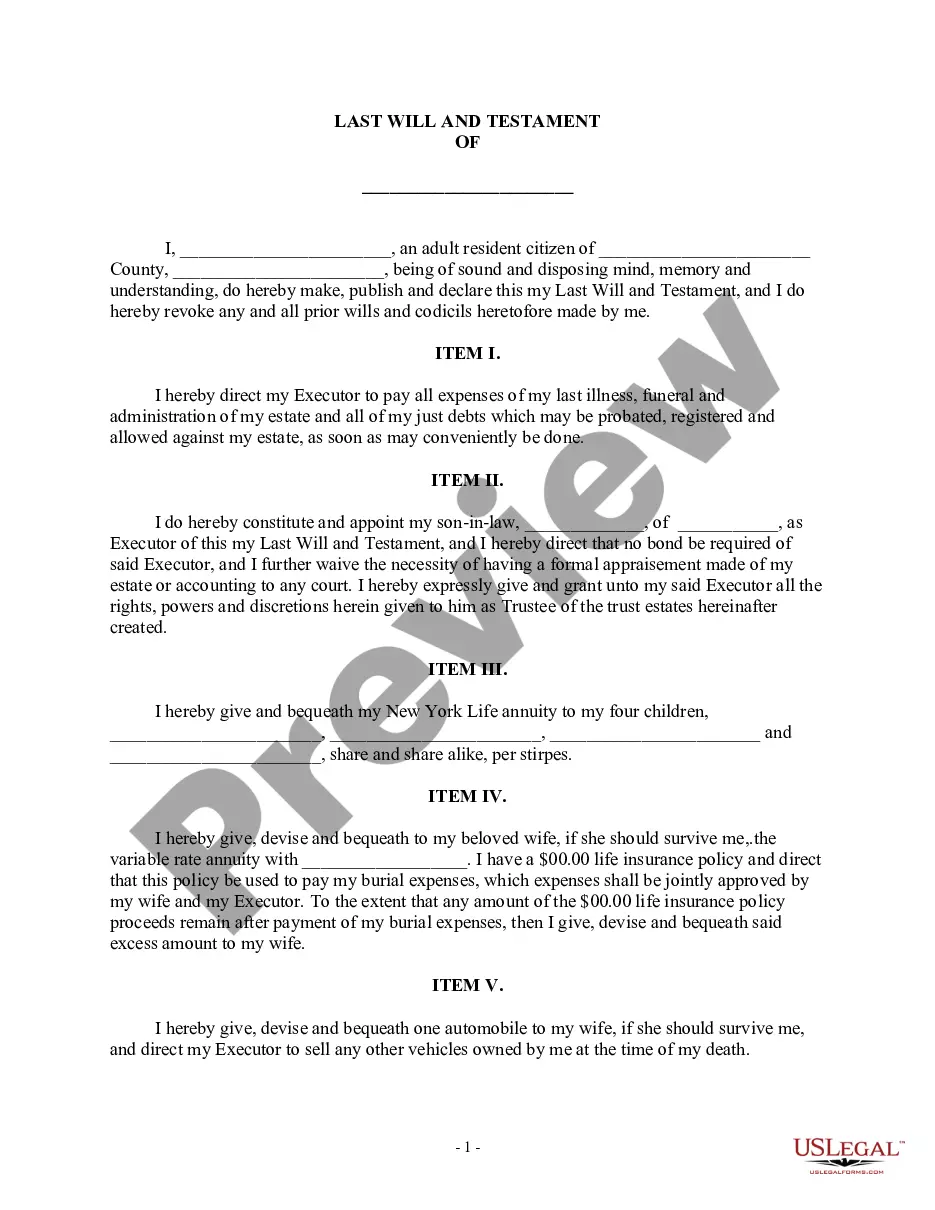
The Last Will and Testament for a Married Person with No Children is a legal document that allows a married individual to outline the distribution of their assets upon death. This specific will is tailored for individuals without children, providing clear instructions on whom to designate as beneficiaries, appoint a personal representative, and establish other important provisions. It differs from other wills primarily by acknowledging the marital status and the absence of children in its stipulations.
Key components of this form
- Article One: Marriage and children declaration.
- Article Three: Specific bequests of property to identified beneficiaries.
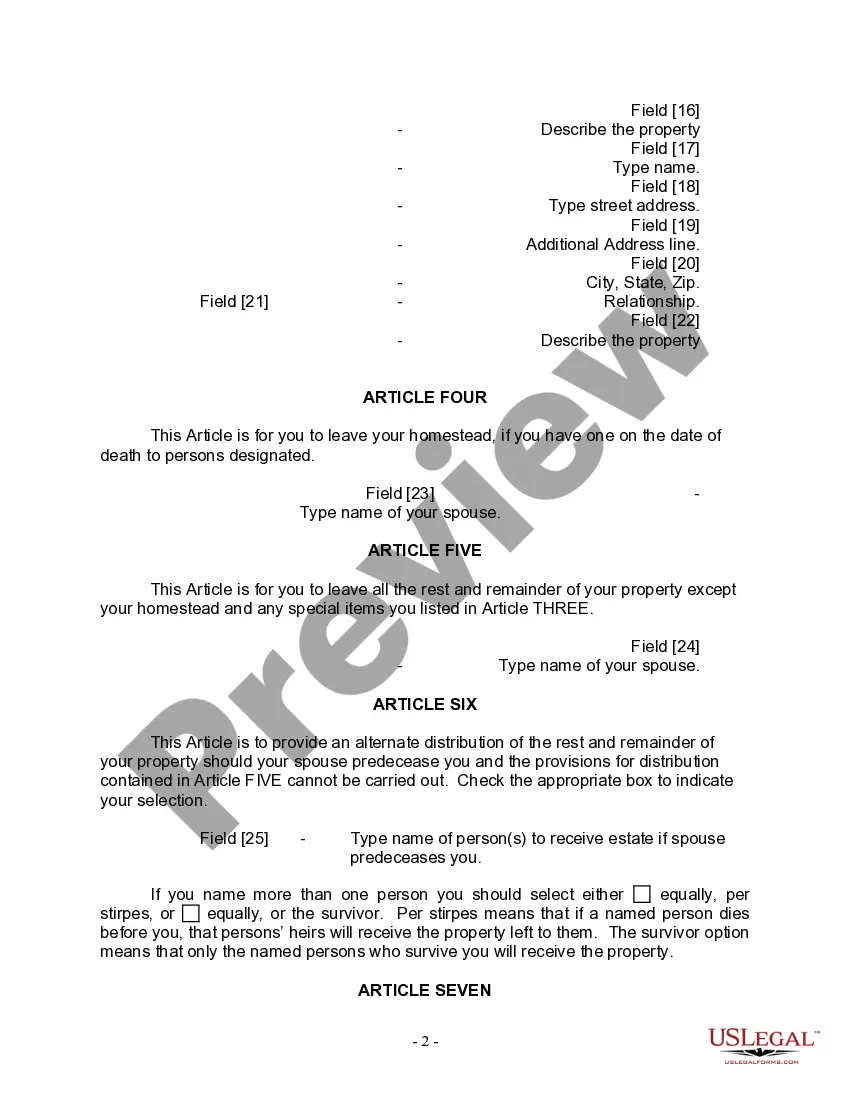
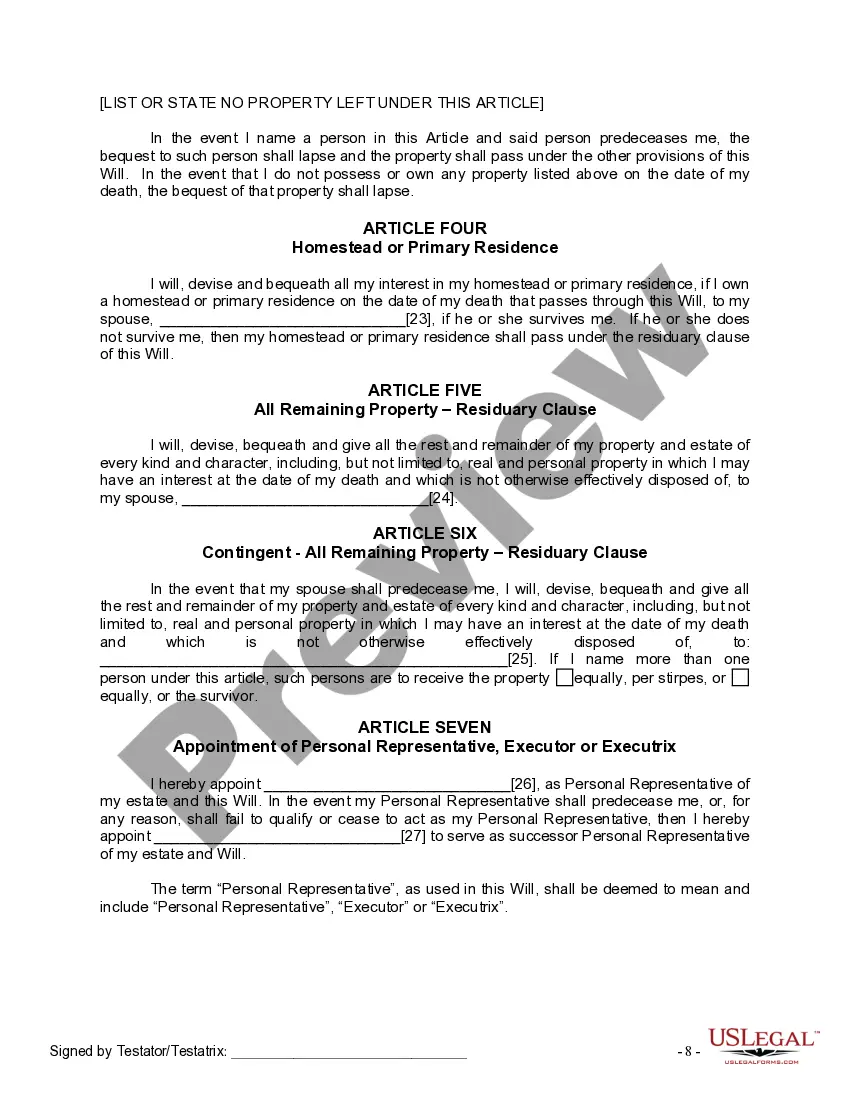
- Article Four: Homestead or primary residence distribution.
- Article Five: Residuary clause addressing the remainder of the estate.
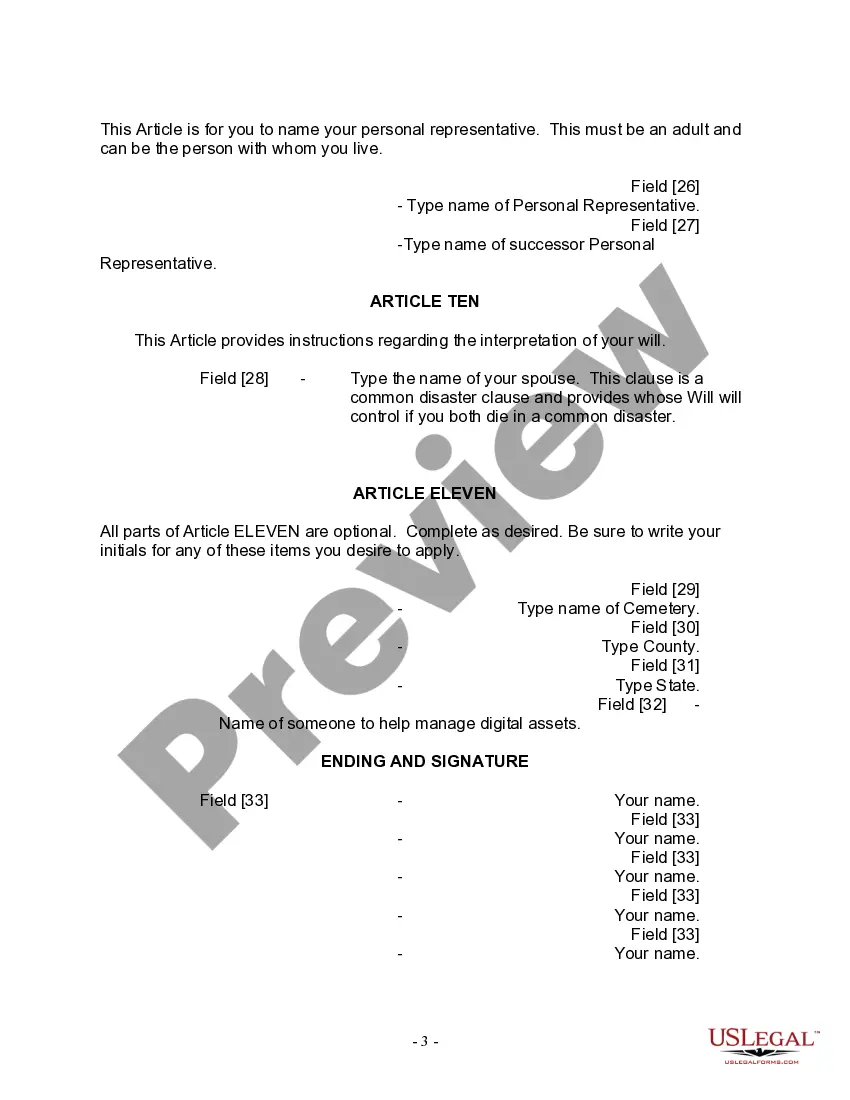
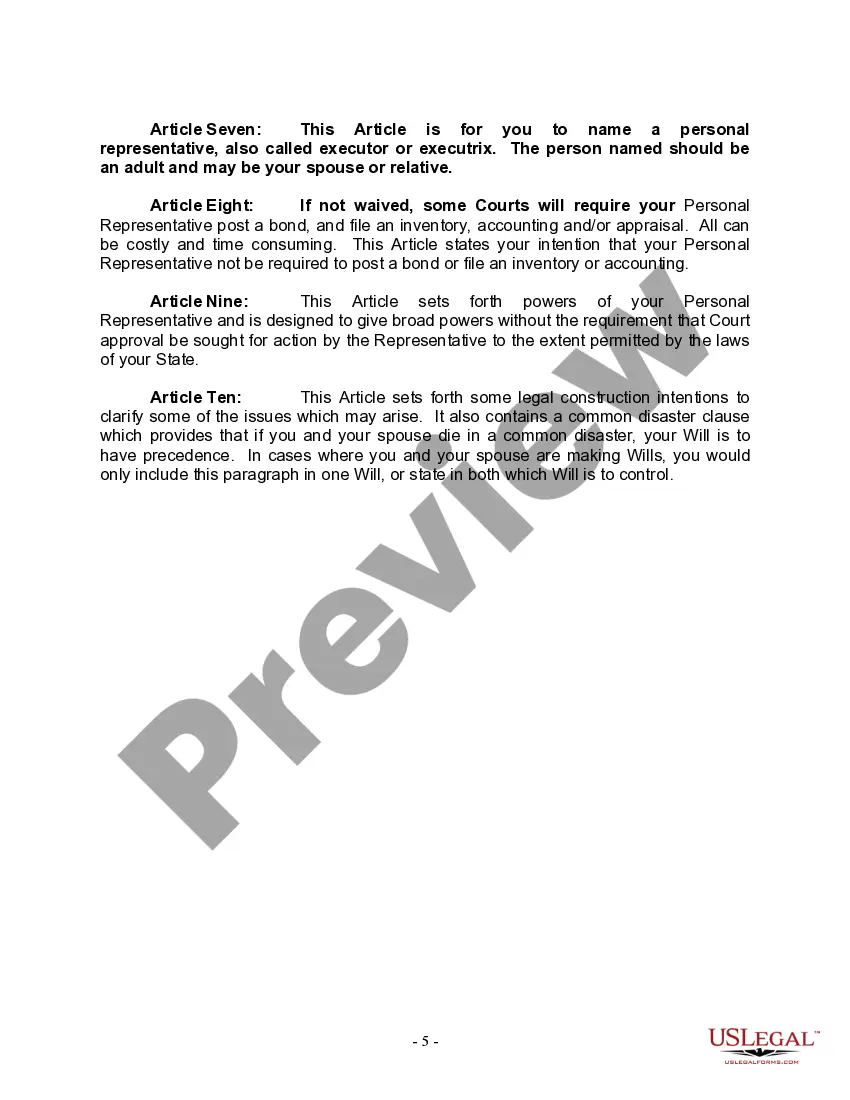
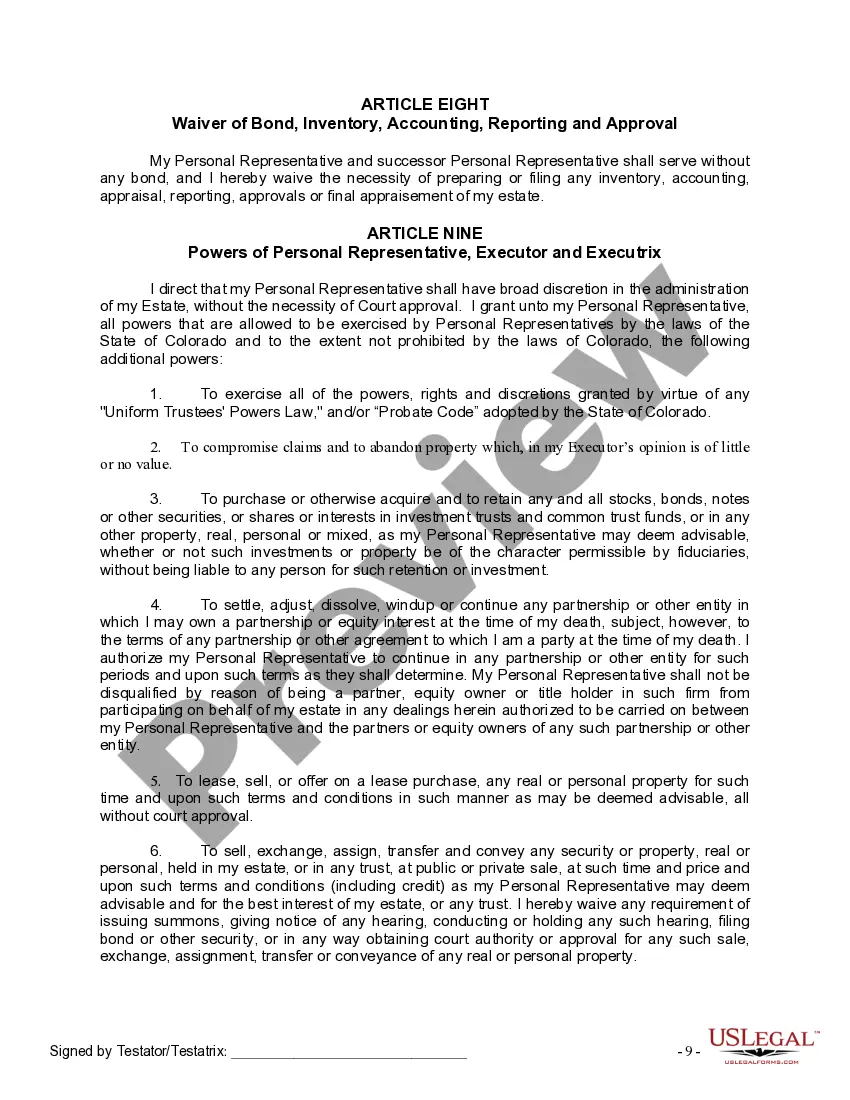
- Article Seven: Appointment of a personal representative to manage the estate.
- Self-Proving Affidavit: Simplifies the probate process by confirming the authenticity of the will.




When to use this form
This will is essential for any married person without children who wants to clearly express their wishes regarding asset distribution after death. It is particularly useful in situations where individuals wish to ensure their spouse receives their property, or when specific items are to be designated to particular individuals. If you are planning for estate management and want to avoid complications during probate, this will is advisable.
Who should use this form
- Married individuals without children.
- Individuals looking to formalize their estate planning.
- Those wanting to ensure their assets are distributed according to their wishes.
- Anyone who requires a straightforward will without the complexity of child guardianship provisions.
Instructions for completing this form
- Identify and enter your full name and county of residence at the beginning of the will.
- List your spouse's name and specify any specific bequests to other individuals within the corresponding sections.
- Appoint a personal representative, ideally someone you trust to manage your estate.
- Clearly state the distribution of your homestead and any other remaining property.
- Ensure you sign the document in front of the required witnesses to validate it, and include the self-proving affidavit if applicable.
Notarization requirements for this form
This form needs to be notarized to ensure legal validity. US Legal Forms provides secure online notarization powered by Notarize, allowing you to complete the process through a verified video call, available anytime.
Get your form ready online
Our built-in tools help you complete, sign, share, and store your documents in one place.
Make edits, fill in missing information, and update formatting in US Legal Forms—just like you would in MS Word.
Download a copy, print it, send it by email, or mail it via USPS—whatever works best for your next step.
Sign and collect signatures with our SignNow integration. Send to multiple recipients, set reminders, and more. Go Premium to unlock E-Sign.
If this form requires notarization, complete it online through a secure video call—no need to meet a notary in person or wait for an appointment.
We protect your documents and personal data by following strict security and privacy standards.

Make edits, fill in missing information, and update formatting in US Legal Forms—just like you would in MS Word.

Download a copy, print it, send it by email, or mail it via USPS—whatever works best for your next step.

Sign and collect signatures with our SignNow integration. Send to multiple recipients, set reminders, and more. Go Premium to unlock E-Sign.

If this form requires notarization, complete it online through a secure video call—no need to meet a notary in person or wait for an appointment.

We protect your documents and personal data by following strict security and privacy standards.
Mistakes to watch out for
- Failing to sign the will in front of the required number of witnesses.
- Not updating the will after significant life changes, such as the birth of children.
- Leaving out critical details in bequests, leading to ambiguity.
Benefits of using this form online
- Convenience of completing the form on your own schedule.
- Editability allows for easy updates to your wishes.
- Access to forms created by licensed attorneys to ensure legal compliance.
Legal use & context
- The will provides clear instructions for asset distribution, reducing uncertainty and potential conflicts among family members.
- Legally binding upon proper execution, ensuring your final wishes are honored.
- Not having a will may lead to intestate succession laws taking effect, which may not reflect your personal preferences.
What to keep in mind
- A Last Will and Testament for a Married Person with No Children is essential for protecting your wishes regarding asset distribution.
- The form ensures that your spouse is prioritized in your estate plan.
- Proper execution and notarization are crucial for legal validity.
Looking for another form?
Form popularity
FAQ
To determine the validity of a will in Colorado, several factors are considered. These include the testator's age, mental capacity at the time of signing, proper witnessing, and that the will meets state legal requirements. Ensure that your Colorado Last Will and Testament for a Married Person with No Children follows these guidelines to avoid complications in the future.
Married couples do not necessarily need separate wills; however, it can be beneficial depending on individual circumstances. Having separate wills allows each spouse to specify different distributions and can provide clarity on wishes regarding assets. This is especially important for a Colorado Last Will and Testament for a Married Person with No Children, ensuring each spouse's preferences are addressed.
Marriage can impact the provisions of your will in Colorado, but it does not automatically override it. Generally, a new spouse may have rights to a portion of your estate unless explicitly stated otherwise in your Colorado Last Will and Testament for a Married Person with No Children. It is wise to review and update your will after marriage to reflect your current wishes.
In Colorado, a living will does not need to be notarized, but it is highly recommended. Having it notarized can strengthen its validity and help to avoid any potential disputes. Just ensure that your document clearly states your wishes for medical treatment, as this is crucial for it to serve its purpose.
In Colorado, you do not need to file your will with the court while you are living. However, once you pass away, the will must be filed with the probate court to initiate the probate process. This is essential to ensure that your wishes, as outlined in your Colorado Last Will and Testament for a Married Person with No Children, are honored.
A valid will in Colorado must be written, signed by the testator, and witnessed properly. Specifically, it should include the date, your signature, and the signatures of two witnesses who were present when you signed. Meeting these legal requirements will ensure that your Colorado Last Will and Testament for a Married Person with No Children is enforceable.
To create a valid Colorado Last Will and Testament for a Married Person with No Children, you must be at least 18 years old and of sound mind. The will must be in writing, signed by you, and witnessed by at least two individuals. These witnesses must also sign in your presence to confirm that you are making the will voluntarily.
Yes, you can write your own Colorado Last Will and Testament for a Married Person with No Children. In Colorado, the law allows individuals to create their own wills, as long as certain requirements are met. You should ensure that your will is properly signed and witnessed to make it legally valid. However, using a reliable resource like US Legal Forms can simplify the process, ensuring your will meets all legal standards and reflects your wishes accurately.
If you are married in Colorado but your name is not on a property deed, your rights may still protect you due to marital property laws. Generally, any property acquired during the marriage is considered marital property, regardless of the deed. To safeguard your rights effectively, consider documenting your wishes in a Colorado Last Will and Testament for a Married Person with No Children.
In Colorado, inheritances received by one spouse are typically regarded as separate property rather than marital property. This distinction means that inherited assets remain with the individual unless they are commingled with marital assets. When planning using a Colorado Last Will and Testament for a Married Person with No Children, this can influence how assets are distributed upon death.