Colorado Medical Durable Power of Attorney
What is this form?
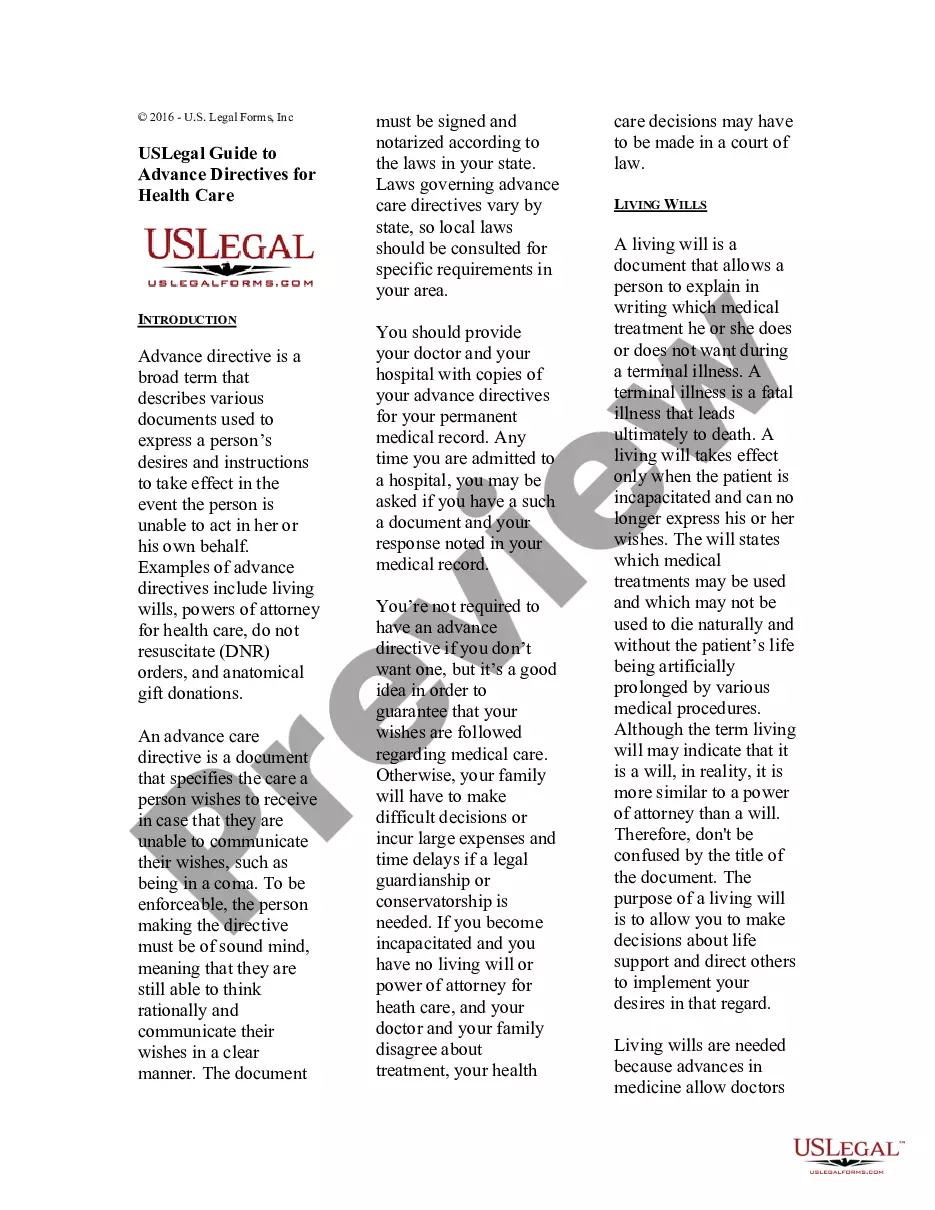
The Medical Durable Power of Attorney is a legal document that allows you to appoint an agent to make healthcare decisions on your behalf when you are unable to do so. Unlike a general power of attorney, which may cover financial and other affairs, this form specifically empowers the designated agent to make decisions related to medical care. It ensures that your healthcare preferences are respected even if you cannot communicate them directly.
Main sections of this form
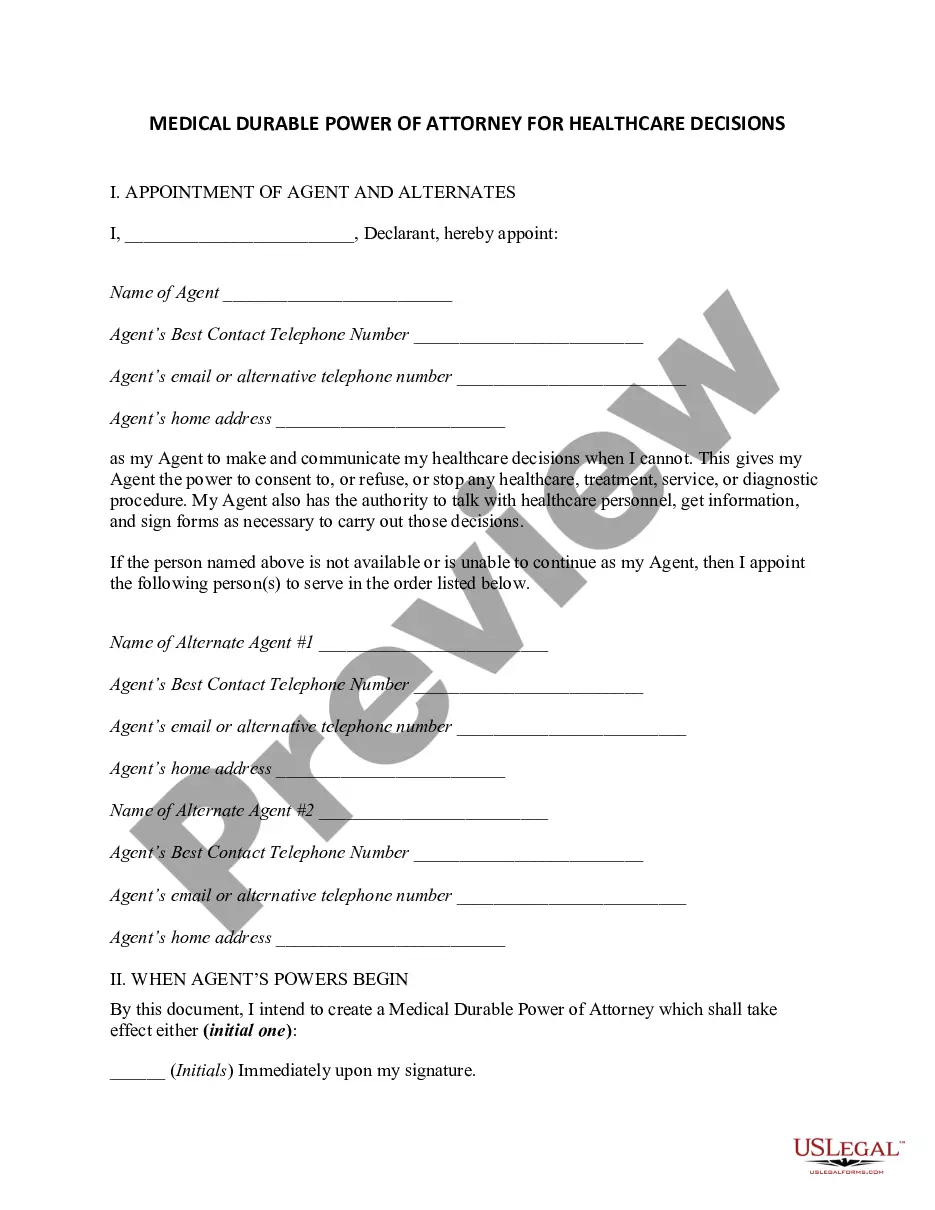
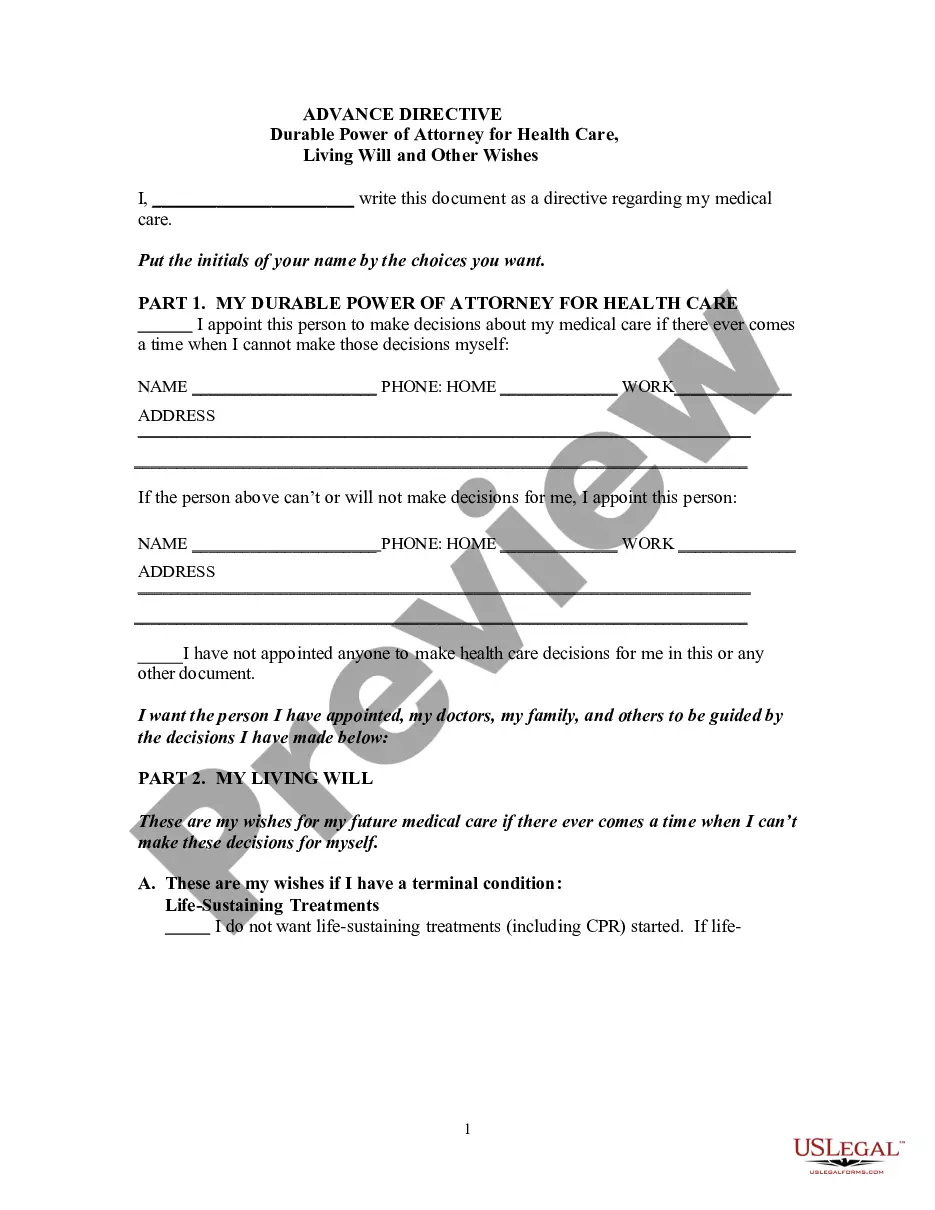
- Appointment of agent and alternates: Designate your primary agent and alternate(s) responsible for making healthcare decisions.
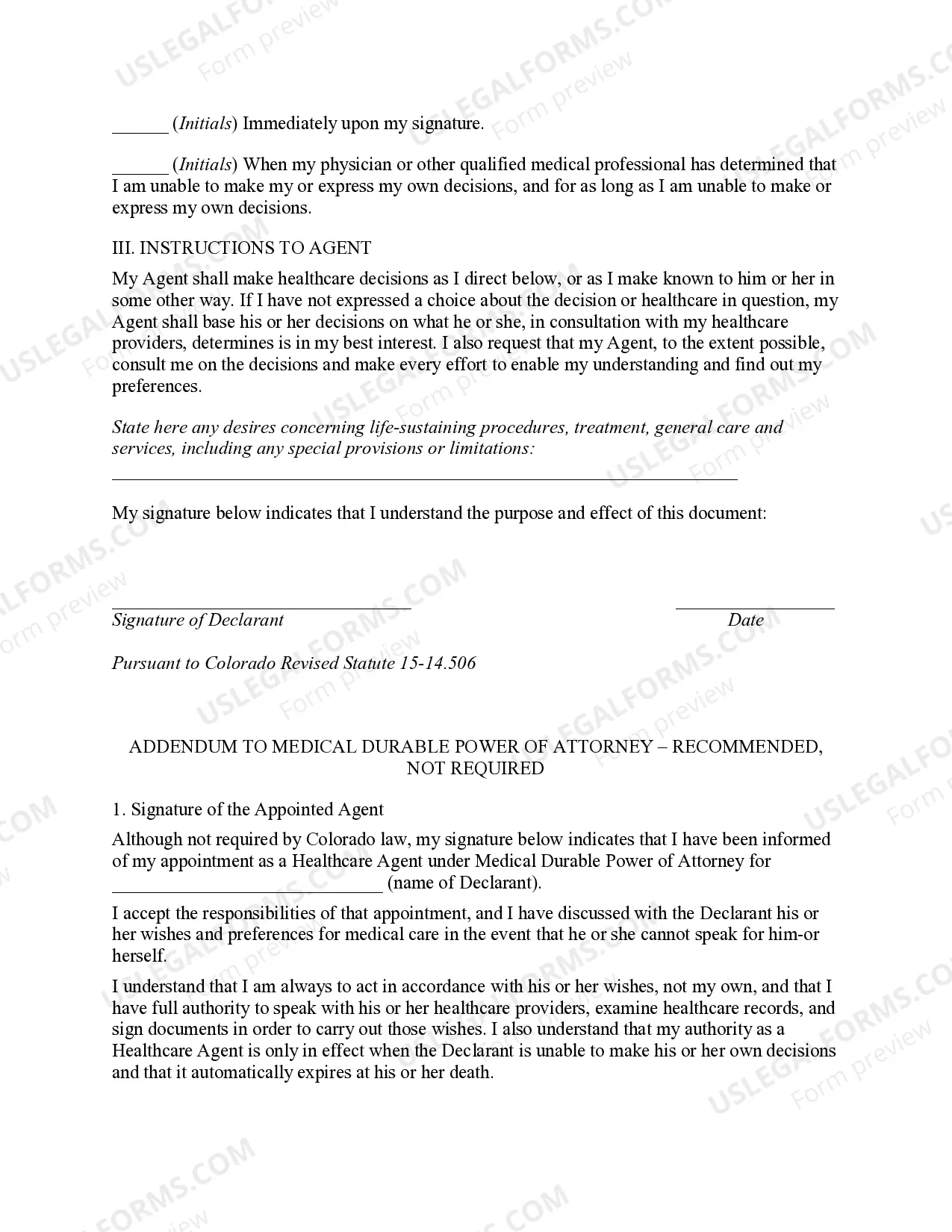
- When agent's powers begin: Specify when the agentâs authority will take effect, either immediately or upon determination of incapacity.
- Instructions to agent: Provide guidance regarding your healthcare preferences and specific wishes about medical treatments.
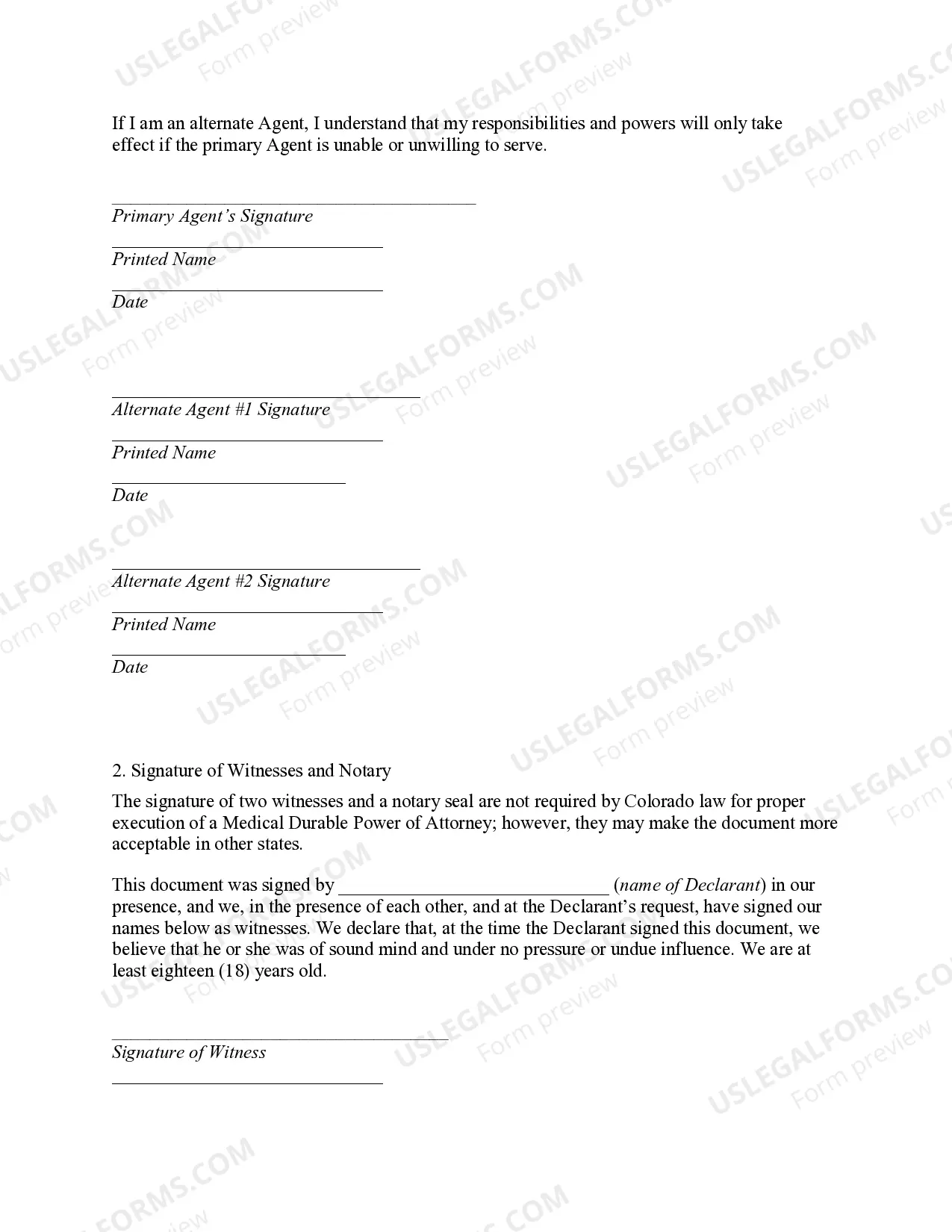
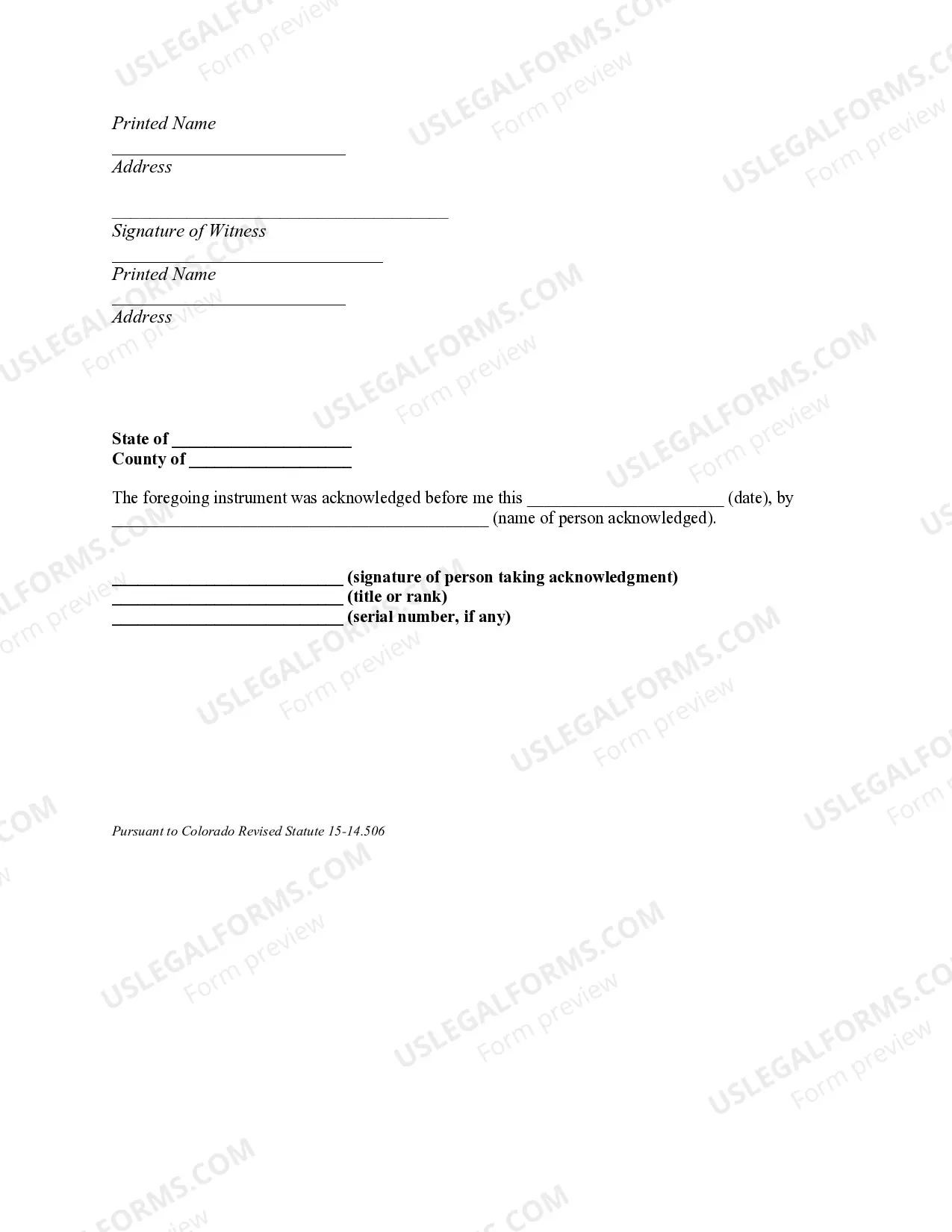
- Signatures: Include your signature and the signatures of appointed agents, and optionally, witnesses and a notary.
- Addendum: Optional signatures from agents acknowledging their appointment and responsibilities.
When this form is needed
This form is particularly useful in situations where you anticipate needing assistance with healthcare decisions due to illness, injury, or incapacitation. You may want to use it if you are undergoing a major medical procedure, have a chronic illness, or are elderly and wish to ensure that your healthcare preferences are followed even if you cannot articulate them.
Who this form is for
- Individuals who want to ensure their healthcare wishes are respected in case of incapacity.
- People undergoing medical treatments or procedures who wish to designate a trusted person to make decisions on their behalf.
- Anyone looking to alleviate burden on family members during difficult medical times by clearly stating their healthcare preferences.
Completing this form step by step
- Identify the declarant: Fill in your full name at the beginning of the document.
- Appoint your agent: Provide the name and contact details of your designated agent who will make healthcare decisions for you.
- List alternate agents: If applicable, include names and contact details of alternate agents in case the primary agent is unavailable.
- Specify initiation conditions: Indicate whether your agentâs powers begin immediately or only upon incapacity, by initialing your choice.
- Provide healthcare instructions: Clearly state any preferences or limitations regarding medical treatments and care.
- Sign the document: Complete the form by signing and dating it to confirm your understanding and agreement.
Notarization guidance
This form does not typically require notarization unless specified by local law. However, notarizing can add an additional layer of security and acceptance in multiple jurisdictions.
Get your form ready online
Our built-in tools help you complete, sign, share, and store your documents in one place.
Make edits, fill in missing information, and update formatting in US Legal Forms—just like you would in MS Word.
Download a copy, print it, send it by email, or mail it via USPS—whatever works best for your next step.
Sign and collect signatures with our SignNow integration. Send to multiple recipients, set reminders, and more. Go Premium to unlock E-Sign.
If this form requires notarization, complete it online through a secure video call—no need to meet a notary in person or wait for an appointment.
We protect your documents and personal data by following strict security and privacy standards.

Make edits, fill in missing information, and update formatting in US Legal Forms—just like you would in MS Word.

Download a copy, print it, send it by email, or mail it via USPS—whatever works best for your next step.

Sign and collect signatures with our SignNow integration. Send to multiple recipients, set reminders, and more. Go Premium to unlock E-Sign.

If this form requires notarization, complete it online through a secure video call—no need to meet a notary in person or wait for an appointment.

We protect your documents and personal data by following strict security and privacy standards.
Common mistakes to avoid
- Failing to designate alternate agents which can lead to delays in decision-making if the primary agent is not available.
- Not clearly stating healthcare preferences, making it difficult for the agent to make decisions in line with your wishes.
- Neglecting to sign and date the document, rendering it invalid.
Why use this form online
- Convenient access to the form eliminates the need for in-person consultations with attorneys.
- Editable templates allow you to customize the form to fit your individual needs seamlessly.
- Reliable and secure, ensuring that your sensitive personal information is protected during the transfer process.
Legal use & context
- The Medical Durable Power of Attorney is recognized in all states, with specific requirements varying by jurisdiction.
- It is essential for ensuring that your healthcare choices are executed according to your wishes.
- Without this document, medical personnel may need to consult family members, which could lead to disagreements and uncertainty regarding your preferences.
Summary of main points
- The Medical Durable Power of Attorney designates an agent for healthcare decisions.
- Clearly outline your wishes to guide your agent in making decisions on your behalf.
- Consult your healthcare agent beforehand to ensure they understand your preferences.
Looking for another form?


Form popularity
FAQ
A durable power of attorney in Colorado enables a designated agent to manage personal, financial, or medical affairs on behalf of the principal. Unlike a regular power of attorney, it remains effective even if the principal becomes incapacitated. Establishing a Colorado Medical Durable Power of Attorney allows you to have peace of mind, knowing your interests are safeguarded by someone you trust.
In Colorado, a power of attorney must be in writing, signed by the principal, and clearly state the powers granted to the agent. It must be witnessed by two people or notarized to ensure its validity. Following these rules helps to create a proper Colorado Medical Durable Power of Attorney that is accepted by medical facilities and financial institutions.
Colorado law recognizes durable power of attorney as a document that grants authority to an agent to make decisions on behalf of the principal, even if the principal becomes incapacitated. This law ensures that your medical and financial decisions can be managed according to your preferences. Using a Colorado Medical Durable Power of Attorney allows you to designate who you trust to act in your best interest.
A legal power of attorney cannot make decisions regarding the principal’s own medical treatment, change a person’s will, or make decisions in a way that is against public policy. These limitations protect individuals from potentially harmful or unethical decisions regarding their estate and health care. When utilizing a Colorado Medical Durable Power of Attorney, it’s crucial to understand these restrictions.
In Colorado, a medical power of attorney does not require notarization, but it must be signed by the principal and two witnesses. This ensures that your wishes regarding medical decisions are clearly documented. Having a Colorado Medical Durable Power of Attorney without notarization can still be valid, but getting it notarized is advisable for added protection.
In Colorado, a Power of Attorney (POA) generally needs to be notarized to be effective. Notarization helps validate the document and confirms it was signed voluntarily. This step is essential for both medical and financial POAs, ensuring that institutions recognize your appointed agent's authority. For completing your Colorado Medical Durable Power of Attorney correctly and efficiently, consider using uslegalforms for guidance.
Yes, a Colorado Medical Durable Power of Attorney must be notarized for it to be legally binding. This process ensures that the document reflects your true intentions without coercion. By having a notary public witness your signature, you add an extra layer of legal protection. Remember, proper notarization is crucial to ensure that your medical decisions are honored.
The Colorado Medical Durable Power of Attorney has certain limitations that you should be aware of. For instance, your agent cannot make decisions that contradict your stated wishes or are outside the powers granted in the document. Additionally, the authority typically ends if you revoke it or become legally incapacitated in a manner not covered by the durable designation. Always clarify these boundaries to avoid confusion in critical times.
To obtain a Colorado Medical Durable Power of Attorney, you need to complete a specific form that designates an agent to make healthcare decisions on your behalf. You can find these forms online or at local legal offices. It’s crucial to fill out the form correctly and ensure it aligns with Colorado state laws. Once completed, share copies with your healthcare providers and loved ones to ensure your wishes are known.
The disadvantages of a durable power of attorney include the potential for misuse of authority if the designated agent does not act in your best interest. There may also be concerns regarding the lack of oversight on the agent's actions. Additionally, if your circumstances change, modifying the power of attorney can become a complicated process, emphasizing the need for careful selection of your agent.